As last year, I would like to thank Colin Steele, who runs the ANU/Meet-the-Author series, for sharing a report on this year’s Canberra Writer’s Festival that was published in the paywalled Books+Publishing*.
The report included some stats:
- the festival sold 10,300 tickets, which is an increase on last year’s figures, but they say that across their full event program, which includes sessions offered at ad hoc times through the year, they have sold 13,000 tickets so far this year.
- the 4-day program included 110 events, featuring 200 authors, with many events sold out, as I know only too well, “and strong audiences for sessions across the program”. Last year’s Festival ran across 5 days, and has 114 events.
Last year CWF presented its inaugural schools program. This was successful, so this year they “tripled” the program, and delivered one primary and two secondary school days for Canberra students at the National Library of Australia.
Unfortunately, this year I was coming out of a bout of Influenza A. I was 8 days in, so no longer coughing or contagious I believe, but my, I was tired, so I felt I went through this year’s festival in a bit of a blur. Having been overseas when the Festival sessions were announced and then falling ill a few days after my return, I left booking quite late. This meant I missed out on the Andrew O’Hagan session that I would like to have attended, and that I scaled back my attendance to six, instead of last year’s seven sessions. As always, of course, the time available, cost and the inevitable clashes – in addition to my reduced energy level – affected decision-making.
That said, it was still a most enjoyable Festival, one that felt nicely balanced across a range of interests, something that early CWFs struggled – to my mind, anyhow – to achieve.
A significant challenge for CWF festival-goers is something I have regularly written about – and is probably not an uncommon issue – is the geographic spread of venues. This year, however, it felt that the Committee had worked very hard to tighten programming and venue options to minimise the impact of this issue. Most of the main sessions were held within the Parliamentary (National) Triangle, making it easier to move between sites. Consequently, this year, I attended three sessions (Friday afternoon, and Saturday) at the National Library of Australia, one session (Sunday morning) at the National Archives of Australian, and two sessions (Sunday afternoon) at the National Portrait Gallery.
Some bits and pieces
I love sharing the Top Ten book sales from the Festival. Last year those came from one of the main participating booksellers, the National Library of Australia Bookshop. This year’s report describes the list as “the bestsellers at the festival (sold by The Book Cow plus venues)”, but I’m not exactly sure what this encompasses. Regardless of how complete this list is across all sites and sellers, it’s at least indicative of what captured people’s attention:
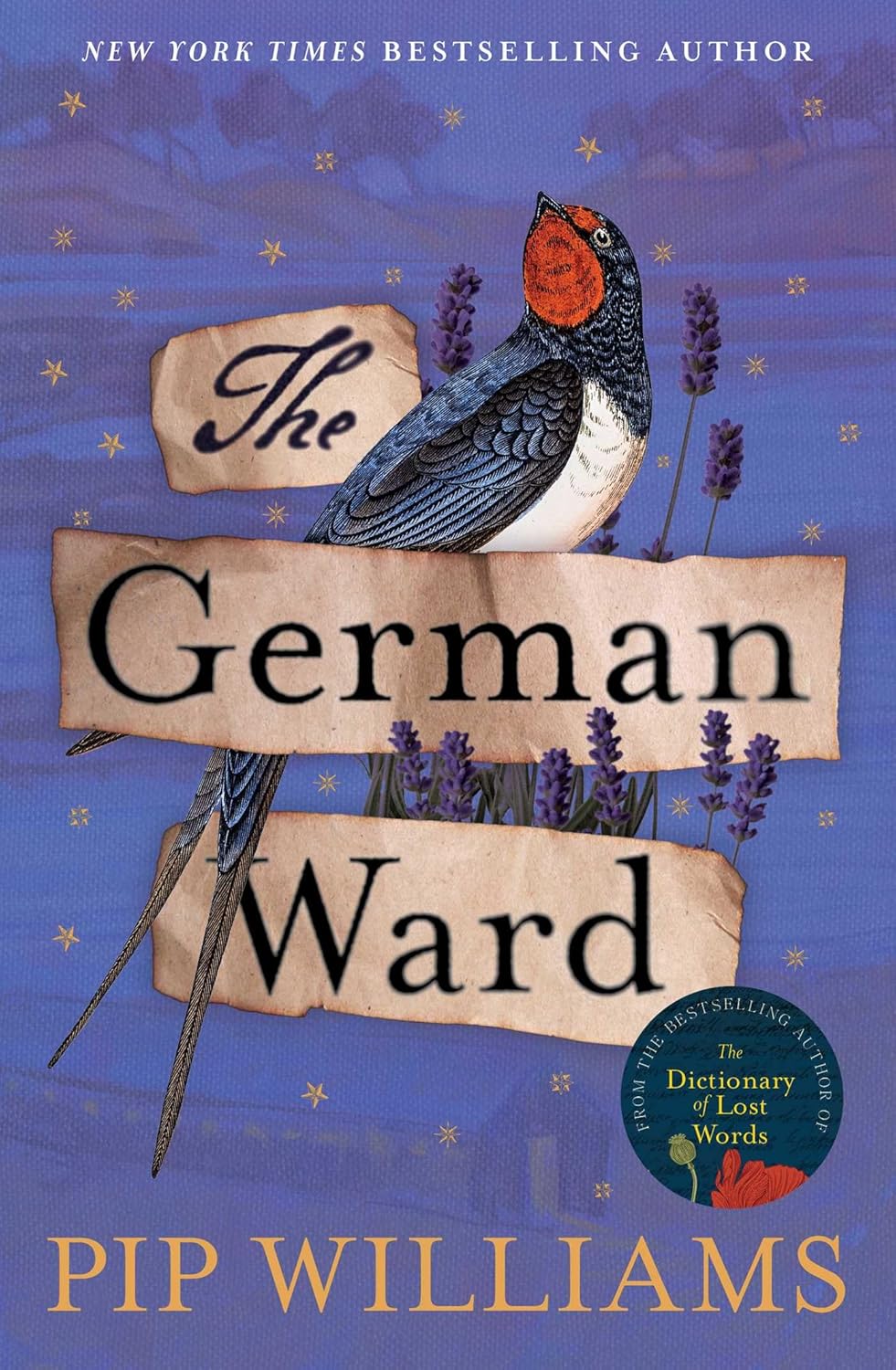
- Pip Williams, The German ward
- Durkhanai Ayubi, She who tastes, knows: A memoir of food, exile and awakening
- Andrew O’Hagan, On friendship
- Michael Robotham, Tell me something true (Hachette)
- Andy Griffiths, illustrated by Bill Hope, You and me and the Peanut Butter Beast
- Chris Hammer, Full Circle (
- George Megalogenis, Three shocks: Who we are becoming in the 21st century
- Marc Fennell, Stuff the British stole
- Corey Tutt, illustrated by Jaelyn Biumaiwai, Before it was called science
- Amy Remeikis, Screw nice
However, in their regular enews email, the National Library Bookshop published its Festival “bestsellers”, which I’m presuming they have listed by order of number of sales, but I don’t know this for a fact. They only list 8:
- Pip Williams, The German ward
- Malcom Knox, Second child
- Chris Hammer, Full circle
- Michael Robotham, Tell me something true
- Andrew O’Hagan, On friendship
- Anna Goldsworthy, The God we made
- Andy Griffiths, You & me and the Giant Knucklehead
- Corey Tutt, Before it was called science
By way of contrast, a couple of weeks ago, Colin also shared the Top 10 books sold during the Brisbane Film Festival, via the festival bookshop, operated by Harry Hartog Carindale, also as reported in Books+Publishing.
- Alice Oseman, Heartstopper: Volume six
- Jacinda Ardern, A different kind of power
- Suzie Miller, Inter alia
- Andrew O’Hagan, On friendship
- Pip Williams, The German ward
- Josh Silver, Fruit fly
- Norman Swan, The brain cliff
- Tahlia Isaac, She is me
- Kate Grenville, The country schoolmaster
- George Megalogenis, The three shocks
So, three overlaps with the Canberra festival lists – Pip Williams, Andrew O’Hagan and George Megalogenis.
In the past I have listed my Festival posts in their order of popularity (that is, by number of hits), but I’m not sure how interesting that is to anyone else, so this year I thought I might share one or two of my takeaways or insights from the sessions I attended. They are not the only ones, but tend to be the ideas that had a wider application than just the session I attended.
- That the best reading is an act of co-creation, meaning when readers are trusted to make their own meaning rather than having it delivered didactically on a plate in neatly finished books (Beejay Silcox, from How to read with joy).
- That a happy ending does not necessarily deny the possibility of total destruction, but if we can’t envisage how the world can be, what is the point? (Elaine Castillo, from How to read with joy)
- That genre offers a shorthand, or way into a work, from which you can then play with readers, bounce off conventions, retell stories, and so on. (Jacob and John, from Indigenous Futurisms)
- That the strict “own voices” movement is undergoing some rethinking, with more nuance (my interpretation of what was said) coming into this space (Mirandi Riwoe, A short history of longans)
- That while much of journalism is about how harrowing life is, the job of fiction is not to reduce characters to the worst thing that happens to them. (Elaine Castillo, AI and All the lonely people)
- That while climate change feels hopeless and the losses are real, there are opportunities to re-make (Inga Simpson and Johanna Bell, Cutting edge cli-fi)
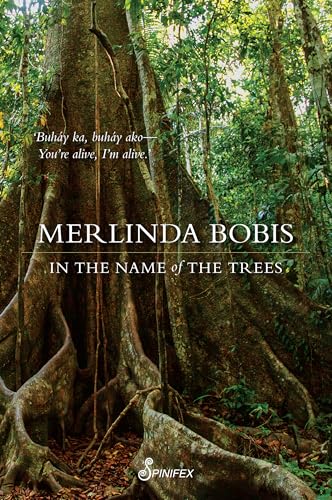
- That story can retrieve you from trauma, knowing is resistance (Merlinda Bobis, ACT Book of the Year Award)
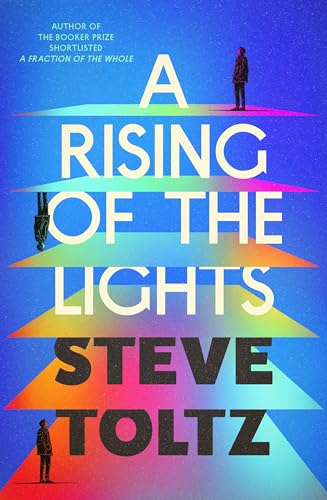
And, perhaps the most provocative of all: Steve Toltz suggested that talking with Chat bots could be healthier than talking with humans on online, because real people can be cruel (from AI and All the Lonely People)
I will end here … and just leave you with the question of whether any of these thoughts speak to you. I’d love to hear from you if they do (or don’t).
* Last year, I checked with the Canberra Writers Festival that they were happy for me to share the information. They were. I didn’t check again this year because I assume they haven’t changed their mind and are happy for any publicity they receive.


Very interesting Sue and sounds like it was a great festival! It is interesting the different lists… ‘She Who Tastes’ is second on your first list but not on the others.. I happened to listen to an interview with the author on ABC on the weekend and found her journey and her love of food quite intriguing. On that basis I would certainly be happy to hear her at a festival…
I’m glad you enjoyed this, particularly the top seller list. I enjoy looking at lists like that. Good catch re She who tastes. You’ve made me think that this might be a good Christmas gift for a couple of people I know.
Hope you’re feeling better soon with more energy. I enjoyd reading that list of seven ideas about reading.
Thanks Pam … I’m glad you enjoyed reading my takeaways. I am pretty much over it, but still a little low on energy.
Well hang in there. A bit warmer weather so I can open the windows would revive me a bit! 🌻🦋🌻
Gotcha … thanks for the advice.
The flu can take such a long time to shake off for good, so glad you are almost there.
It’s always interesting to see what resonates the most with festival participants.
I only man one of the pop-up shops for our BM festival, which only sells books for the authors speaking at the venue where I am stationed, but I can tell you by the reduced stacks, that Pip Williams, Chris Hammer, and a poetry collection by Arrernte (NT) poet Marie Elena Ellis will feature in our top ten.
The longest signing lines went to Bruce Pascoe, Debra Dank and Barry Corr for their joint discussion, Bob Brown was great (or so I’ve heard and I so wish I hadn’t been feeling so unwell by this point otherwise I would have stayed to listen too). However, Hannah Malony is the one all our customers have been talking about this week.
Thanks Brona, me too. I haven’t had flu since I don’t know when. I may have had it in 2016 but didn’t go to the doctor. If it wasn’t flu then, then I think we are talking decades. I started having flu shots after that 2016 illness – very bad cold or flu – because I figured my run was running out! Anyhow, the point is that I have no idea how it goes, so you have reassured me!
Ah yes, some of the CWF venues had that sort of pop-up shot. Thanks for sharing some of the books that went well at the BMWF. I had to look up Hannah Maloney! But as soon as I researched her, I realised that I knew who she was. It’s just that her last name has never fully registered with me. I’m not surprised people talked about her. At least, I’m presuming it was all positive talk. She’s rather gorgeous isn’t she. I remember when she first appeared on the show as a young – newly married I think – presenter.
I saw Debra Dank at a recent CWF, but I don’t think she was at this one – or, if she was, she was at the Museum of Australian Democracy and I didn’t check out the events there.
Are you over your cold – was it a cold – now? When are you off to NZ?
I also had a bad bout of flu around 2015 and started taking the flu shots after that in the hope I could avoid being that sick again. And I did apparently have Influenza A back in 2022 but didn’t know it, except for the several months of feeling so tired & lethargic and when I went to the dr about it and did a blood test, it turned out I had had the flu in the last few months, so yes, the tiredness can linger for quite some time I am sorry to say.
I am still also getting over my cold, the first cold I have had this year, but I am usually slow to get back to full strength after any illness, whereas Mr Books bounces back within days.
But I have motivation to get back on my feet quickly as we fly out next week. I am busy scheduling posts as I type!!
Hannah’s bubbly personality is a big part of her appeal I think, (yes it was all positive feedback) but her sustainability and self-sufficiency message especially speaks to most mountains folk. And our climate is very similar to her Hobart garden, which makes for easy comparisons too.
I enjoyed the summary of quotations and hearing about how many events/tickets were sold this/last year. It seems fairly consistent, and that’s something, in this sector. Hopefully next year you are feeling more yourself (although your tiredness doesn’t show in the posts).
Are you able to do any of the lightest Adrienne programs, even while feeling poorly? I’m thinking of the ones that are just stretches, really? Something to gently prod the underlying tissues and musculature, to try to rout out the most deeply engrained bits of tiredness from the lingering illness? I can’t say just how much of a difference it makes for me, just doing even a couple of stretches, even on the worst days (although sometimes it’s hard to distinguish between worse and worse-r, and it can be very hard to even remember, when you’re quite poorly, which is why I’m asking).
Haha, Marcie. I’m glad the tiredness didn’t show. I did feel I had to push myself a bit more, but I didn’t want to let the posts drag on.
Re Adrienne, not as many as I’d like but yes, I do. She has such a wonderful range of programs doesn’t she that you can search and mind something just right. Sometimes, too, I just do some stretches myself based on my knowledge from doing her programs. It does make a difference, doesn’t it. And more so the older we get.
Oh, good, then you are feeling at least well enough to have that in mind. I have been trying to make it such a habit that, even if I am bedridden, I won’t forget to do even a couple of the most basic stretches and breath exercises while lying there, even on the worst days. We are always told to focus on rest, and I think that’s important too, but we can stretch restfully and I think that’s just as important as we get older and stuff pools and languishes. Pools and languishes: now, that doesn’t sound all bad, does it. lol