Last Novellas in November I wrote one post, November being, as we know, “that” month for litbloggers! Let’s see how I go this year. Before I get going I want to thank Cathy of 746 Books and Rebecca of Bookish Beck) for the work they put into it, because novellas feature highly in my most memorable books. So, I love this month.
These reading months tend to suggest you start with “my year in [whatever the topic is]”, so that is my focus for this post. Last year I had read 7, that is, four novellas, and four novella-length nonfiction. This year, which goes from 1 November 2025 to 31 October 2026, I’ve read 8, but mostly fiction. As last year I’m dividing them into two groups: Novellas, and Novella-length Nonfiction.
Novella
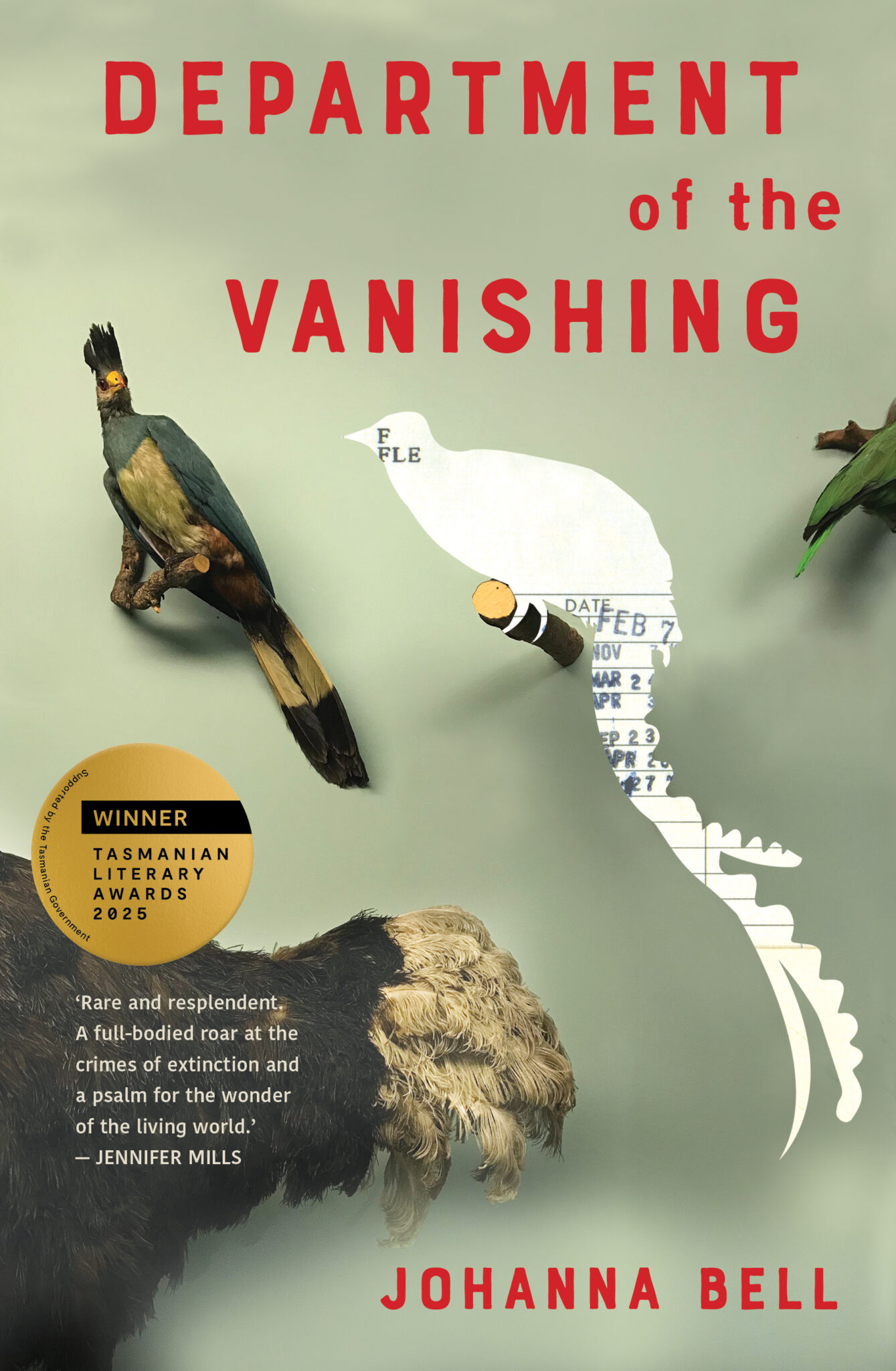
- Johanna Bell, Department of the Vanishing (more than 200 pages but only 30K words) (my review): winner of Best Unpublished Work in 2025 Tasmanian Literary Awards
- Merlinda Bobis, In the name of the trees (my review): winner of the 2026 ACT Literary Award for Fiction, and shortlisted for other awards
- Angus Gaunt, Anna (my review): joint winner of the 2025 Finlay Lloyd 20/40 Prize
- Samantha Harvey, Orbital (136pp.) (my review): won the 2024 Booker Prize, and shortlisted for other awards
- Claire Keegan, Small things like these (116pp.) (my review): won the 2022 Orwell Prize for Political Fiction, and won or was shortlisted for other awards
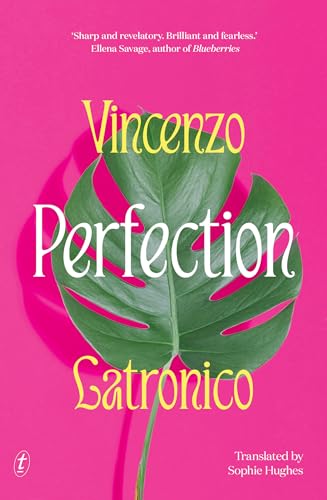
- Vicenzo Latronico, Perfection (150pp.) (my review): shortlisted for several awards
- Angela O’Keeffe, Phantom days (168pp.) (my review)
Novella-length nonfiction
- Kim Kelly, Touched (Memoir, 142pp.) (my review) : joint winner of the 2025 Finlay Lloyd 20/40 Prize
All of the above were published between 2024 and 2026, which, as I said last year, suggests that publishers are currently happy to publish shorter works. In fact, in a recent Secrets from the Green Room podcast with Melanie Cheng, whose novella The burrow I read last year, interviewer Irma Gold observed that publishers seem more interested in novellas at the moment. Is this for economic reasons? Or shorter attention spans? Or just a willingness to be less restrictive? Or?
One of the things I love about my novella reading is that this is where I more often get to branch out into non-Australian and translated writing. This year, three of my eight reads were by non-Australian writers, those being the English Samantha Harvey, the Irish Claire Keegan, and the Italian (and so translated) Vicenzo Latronico.
Novellas are also where we often come across writers experimenting with form, voice, or language, and my selection this year certainly delivered. My books include a one voiced by a book (Phantom Days), a bricolage novel (Department of the Vanishing), a rewrite of a previous novel (Perfection), a sort of plotless meditation over one day (Orbital), and a non-linear, multi-lingual story of history and trauma, place and displacement (In the name of the trees).
What does novella reading add to your reading experience?
Written for Novellas in November 2026.


Lots of memorable reads in your novella selections this year Sue. And thanks for the tip about the word count for Johanna Bell’s book.
Certainly at work, if the publishers send us novella proofs, I jump straight onto them. It makes me feel like I am keeping up-to-date with new releases. And generally speaking I enjoy them, so many hidden gems.
Thanks Brona. Yes, I hadn’t had Bell in my list until I went to the CWF and she mentioned that it’s technically a novella because it was only 30K words.
I completely understand your jumping onto novellas! Do you sense as Irma suggested that their number is increasing?
Definitely. Publishers also seem to be focused on novellas in translation – half of the novellas I read in the last 12 mnths were novellas in translation.
Yes, that makes sense. I have more translated novellas than other translations in my TBR.
Some great books there Sue! I really loved Perfection, it was unique and it still sits with me. I think for me, novellas are going to allow me to sample a large range of classic authors, which I am looking forward too… it will heap guide me for future reading of their larger works!
Thanks Rach, novellas are great for introducing older authors – where they have written them of course. There aren’t many short Dickens’s for example, but there are some! I have a few classics in my TBR too.
I enjoyed Perfection too.
It was such an interesting read wasn’t it, Cathy? It produced a rather varied response in my reading group though.
How do I always miss read-alongs like this? I’m a fan of novellas, but to be honest, I don’t even know how many I own at this point. I should go through my two totes full of books, although that does leave out everything that’s a digital book…
Well, I can’t answer that one Melanie!! Seriously though, I guess it depends on which bloggers you follow, which partly depends on how much time you have to follow blogs? Keeping track of the digital books is tricky isn’t it?
I don’t keep good enough records to know if I read any novellas. O f course I read Anna thanks to you, and recently I read Olga Ravn’s The Employees which mightn’t have worked if it were any longer. I will read Orbital which won the UK le Guin Prize as well as that other one. Right now I’m listening to The Blacker the Berry which is only 5 hours. I wonder if it’s a novella.
Thanks Bill … I like keeping track of these sorts of things, but I am a librarian! If The blacker the berry is the book by Wallace Thurman, and I’m guessing it is, it looks like it just misses out. GoodReads has it at 221 pages. “Real” novellas I think run to no more than 150 pages (and are measured by number of words) but of course it depends on the book design. Those old tiny print classics at 150 pages would be way over. The Novellas in November people “allow” up to 200 pages.
All of this means little to your reading I realise. I’m more interested in the Thurman if that’s what you are reading. GoodReads starts by saying “One of the most widely read and controversial works of the Harlem Renaissance, The Blacker the Berry…was the first novel to openly explore prejudice within the Black community….” I hope you are going to post on it!
Yes Thurman (and yes, I’m disappointed he’s a guy with a (sexually active) female protagonist). I found James Baldwin at around the same time was very consicious of different shades of skin colour, but the colour prejudice Thurman describes within the Black community is eye-popping. My next post is for MARM but I could make it the week after that.
We were talking about memory and I feel I’ve read something on this prejudice within the community but can’t quite get it. I have a few ideas I’ll check tomorrow.
I had an idea last year for MARM but can I remember it? Nope! I’ll be doing something though.
It’s been surprising to see so many bloggers talk about short non fiction books they’ve read. I never seem to see any of those.
I think they are probably a little more frequent than you might think, Karen, but they are not something we often focus on? In Australia, for example, there are have been “little” book series – like Black Inc’s Writers on writers (which are around 100 pages) – and I have read at least three short memoirs just in the last two years. But, I feel they are probably a new-ish thing? Some are the sort of thing you might see on the bookshop counter as you are paying (like candy at the supermarket cash register!)
I never include page numbers, but more and more (and not just when it comes to novellas) I find it’s a very useful piece of information. Just yesterday, reading an older issue of the NYT BR section, I noticed a review that detailed one book as being just 80 pages long. Those stand out, even in novella land, eh? Both Anna and The Employees (you know I’ve read the first, I’ve only glanced at Ravn’s) strike me as books that are exactly the right length for the story they tell: I love it when an author’s intuition seems spot-on with that.
Thanks Marcie. Of course page numbers are tricky when we compare those tightly packed pocket classics and what we call a trade paperback, aren’t they? So you have to have a sense of the type of book design you are dealing with. But, I have been including page numbers in my book details at the end of my posts for a long time. And I’ve just started adding them to my reading group schedule, so everyone knows, but also because one the ways I order the books can be through page numbers, as in I might schedule a 250 page book after a 450 page one, and I will also take into account the time between reads. We aways meet on the last Tuesday of the month, but that could be anywhere from 22nd in a February to 31st in one of those 31-day months. Bumped together the number of reading days between meetings can vary by up to a week. For some that’s important.
And yes, absolutely re authors knowing what’s right for the story, and not padding out because they feel it needs to be longer. Sonya Voumard mentioned that very thing with her winning short non-fiction book, Tremor, a couple of years ago.
I’m adding Perfection and Touched to my TBR. Both sound really good.
They are Jinjer. Several bloggers will attest to Perfection. Unfortunately Touched, being from a small, independent Australian publisher is far less known.