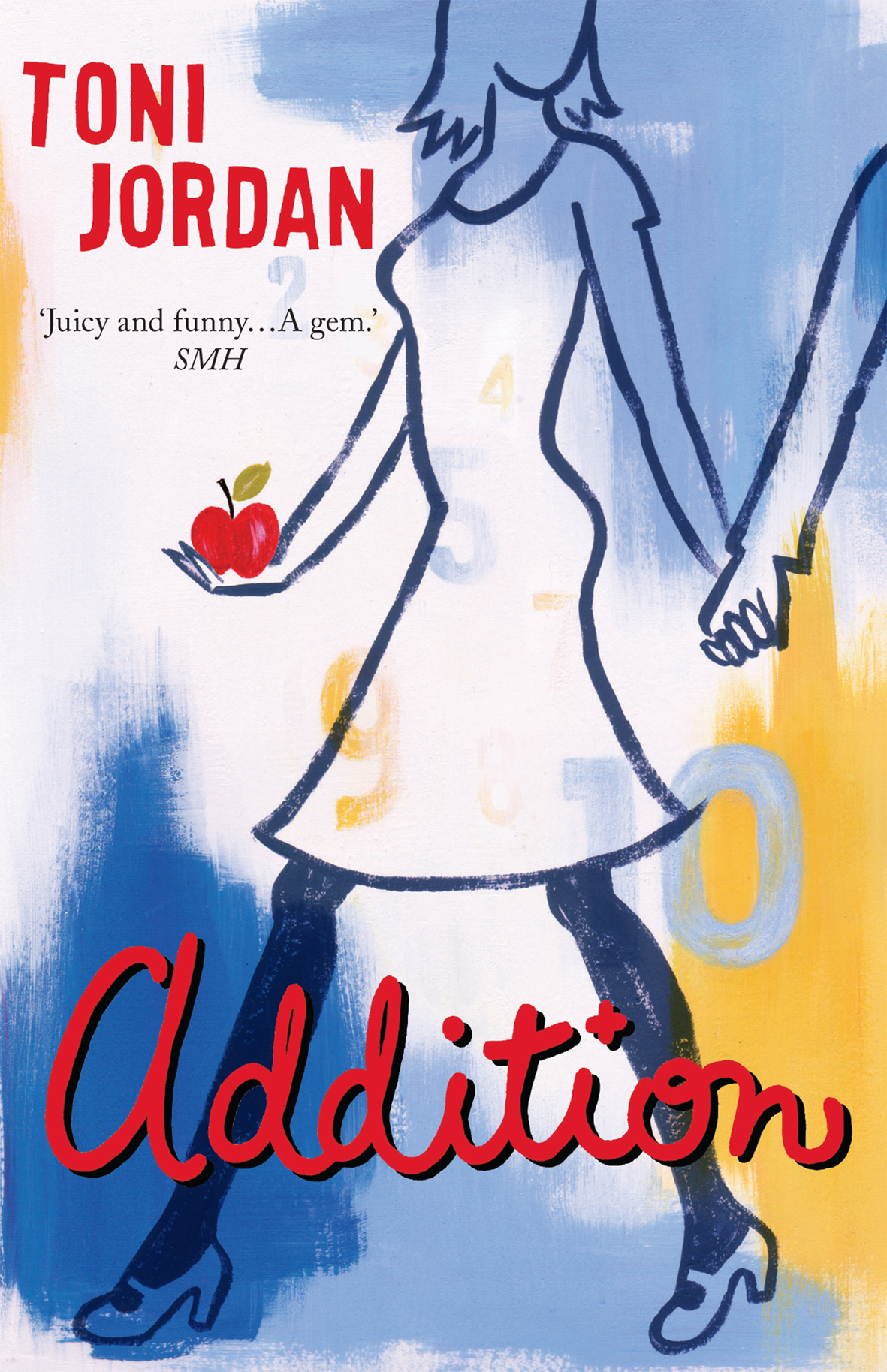
Today, as we drove back to Canberra along the Hume Highway, we listened to another episode of the Secrets from the Green Room podcast. We listen to them a bit randomly, depending on the author being interviewed and the topic podcasters Irma and Karen discuss before the interview. Today, we chose the March 2026 interview with Toni Jordan (whose first three books I have reviewed here). It was another engaging podcast episode, but what specifically inspired this post was a comment Jordan made about liking “to see characters at work”, something she feels is not done enough in Australian fiction.
Hmm, I thought, I like reading about characters at work. Do others too? Mr Gums’ initial reaction was that crime novels, particularly police procedurals and private detective novels, are all about work. True, and it’s probably true of some other genres, like westerns, say, but how often, in general fiction, is work a focus – and do we care? I don’t go looking for novels focusing on characters’ working lives, but I do greatly enjoy them, provided the characters, writing and story appeal of course. It can be particularly engaging if the job is one I know little about, because I learn something.
A recent obvious – albeit non-Australian – example is Samantha Harvey’s novella Orbital (my review). Who didn’t love learning about life and work on the space station? Another work-based novella – given it is Novellas in November month – could be Claire Keegan’s Small things like these (my review). Our protagonist has a coal delivering business and much of the significant action, which stimulates him to seriously consider his values, happens through his work.
Now, let’s get to Australia. I’m not planning to produce a comprehensive list of Australian books which feature protagonists at work, but to share just a few – and then throw it over to you. But, how to organise my selection? Chronologically? By type of book? By type of employment?
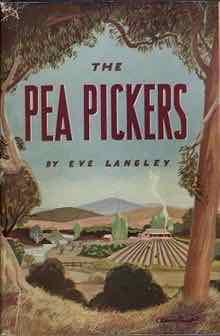
I think I’ll play it by ear, and start with a book that is a bit of an outlier, because it is not easily categorised. It’s also the book Bill would mention if I didn’t, so I’m getting in first. The book is Eve Langley’s The pea pickers (1942, my review). It is a bit modernist, picaresque, coming-of-age, auto fiction, and more, but its relevance here is that the story focuses on two sisters, Steve and Blue, and their lives as itinerant agricultural farm labourers in Gippsland. We learn a lot about the farm labourer’s life, which I believe would satisfy Jordan, though it was not Langley’s driving idea.
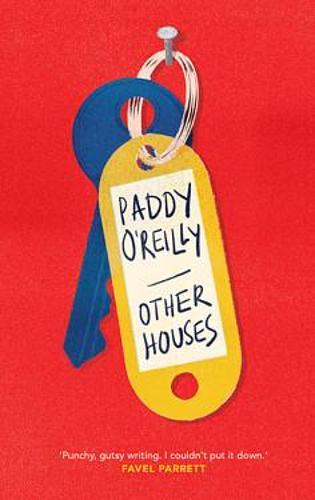
It does, however, lead nicely into books which are driven by the lives of labourers – of the working class. These are the “social” or “social problem” novels. I’m preferring these terms, to avoid getting caught up in the realism/social realism issue, which can bog us down in the specific politics of a specific era. “Social problem novels” is a broader category that can span eras and politics. Some of the novels I’m including were written at the time they were set – like Mena Calthorpe’s “social realist novel” The dyehouse (1961, my review) about mid-century factory workers, and Paddy O’Reilly’s completely-different-era novel, Other houses (2022, my review) about 21st century house cleaners.
Social problem novels can also be historical fiction, and I’ll share one example, Wendy Scarfe’s Hunger town (2014, my review), which is about labourers on the wharves on Port Adelaide River through the Great Depression, between the mid-1920s and ’30s.
Not a social problem novel, but another workplace-set work of historical fiction is Madeleine St John’s The women in black (1993, my review). A large part of the action takes place in the women’s fashion section of a department store at the end of the 1950s. Relationships and social change are the main issues being explored but we get a good look at the lives of department store workers at the time, particularly through the eyes of a young woman in her first job.
Women in black isn’t a romcom, but there is romance. Romcoms often feature work. The protagonist in Anita Heiss’s Paris dreaming (2011, my review) is a First Nations woman who manages the education program at the National Aboriginal Gallery. She proposes an exhibition of indigenous Australian art at a museum in Paris, and off she goes. I wrote in my post that “Most of the people, works and places she [Heiss] mentions are real but there’s an aspirational element too. The National Aboriginal Gallery does not exist but she presents it as a significant player in the Canberra cultural institution scene”.
I’ve mentioned a few workplaces, but, really, anywhere people work can provide a setting for a novel. I will end by sharing a few more workplaces, starting with the farm. Primary industry is, still, significant to the Australian economy, so it’s not surprising that we have a strong tradition of farm-based fiction. Farms offer a ripe setting for exploring relationships and family drama, but they can also feed into discussions about economics and social change, colonialism and First Nations rights, climate change, and more. Alice Robinson’s Anchor point (2015, my review) spans several decades. It explores several of these issues, including climate change, and it does so through a story about a farming family’s struggle against drought, bushfires and land degradation to keep the farm going.

South Australian writer, Stephen Orr, has set a few of his novels on farms, one being The hands (2015, my review). It depicts the hard life of farming families, the struggle to survive, the drought, the debts, the farm accidents, and the tough emotions that often attend such a life.
Lee Lai’s 2026 Stella prize winning graphic novel, Cannon (2025, my review) starts in a restaurant, with Cannon’s work as a chef in this restaurant underpinning the novel. We see her at work, and through that, as much as through anything, we learn about her character, not to mention about the pressures of restaurant work!
My final workplace is a government department – and I have two examples. One is Sara Dowse’s West Block (1983, my review). It is about public servants and the work they do to support their political masters, but it is particularly inspired by Sara Dowse’s experience as a femocrat working with Gough Whitlam’s women’s advisor, Elizabeth Reid (see my post on Unfinished revolution), to effect change for Australian women. It was a bruising experience by the end.
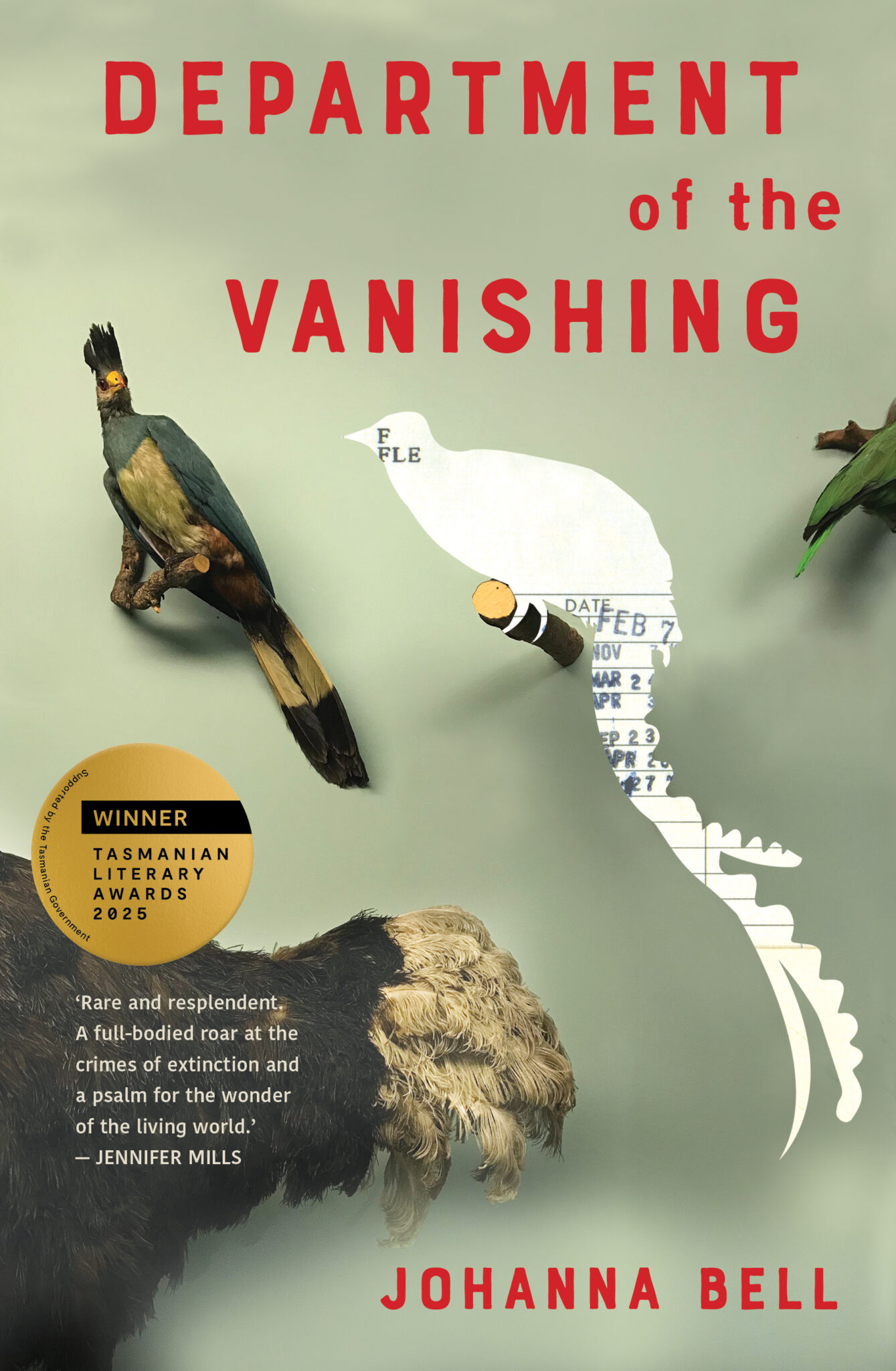
My other example is a conservation department where the protagonist, archivist Ava, catalogues the dead, that is, her job is to document and recreate, as best as possible, extinct bird species from whatever “archival and cultural materials” exist. The book, Johanna Bell’s Department of the Vanishing (2026, my review), is a work of eco-literature, a climate change novel.
So … many different workplaces and jobs, and many different themes and ideas explored, but in each of these novels we see characters working in their jobs, not just talking about their work, but actually doing it. I think this is what Toni Jordan was talking about.
Do you like fiction which features work and workplaces? I’d love to hear your thoughts, and any examples you’d like to share.

