A preamble
The Canberra Writers Festival is back in 2026, and is celebrating its 10th anniversary, which is just wonderful. Last year’s Artistic Director, Andra Putnis (author of Stories my grandmothers didn’t tell me, my review) is also back. But what isn’t back is the old theme, “Power Politics Passion”, which has gradually receded into the background, over recent years. While it initially captured Canberra’s unique position as the nation’s capital, and positioned the Writers Festival as something different, but it needed refreshing. The new theme – For the Love of Books – feels uncontroversial. It was chosen, they say, to celebrate books in a world where they are increasingly under threat, where “screens and scrolls” dominate. It seems appropriate, then that my first event was, as last year, for the ACT Book of the Year.
The ACT Book of the Year
The ACT Book of the Year is broad-based award, which encompasses fiction, nonfiction, plays, and poetry, written by authors who reside in the ACT or can specifically and strongly demonstrate an ACT-based arts practice. It is presented by the ACT Government, and was first made in 1993, making it now 33 years old. I have written about it in a Monday Musings, so won’t say more here, except to share this description of the judging, on the shortlist announcement page:
Books are considered by an independent judging panel, which recommends a shortlist and winning author to the Minister for Business, Arts and Creative Industries. Previous literary contributions by the author may be taken into consideration during the judging process. [my emph]
The winner announcement has been made in various ways over the years, but this is the second year in a row that it has been announced during the first full day of the Canberra Writers Festival. Maybe the announcement has found a home?
But first, there was the shortlist, which was announced on 9 October:
- Sandy Bigna, Little Bones (verse novel for middle-grade readers): a tender and poetic work that explores loss with enduring resonance
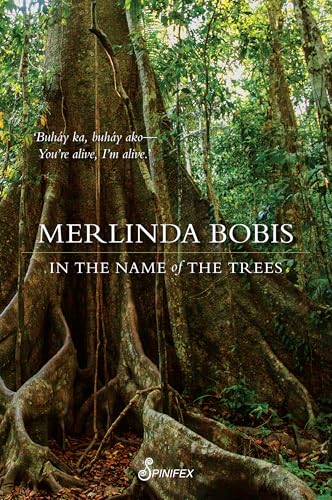
- Merlinda Bobis, In the name of the trees (novel, my review): a richly layered and deeply moving novel exploring memory, heritage and resilience
- Emily Gallagher, Playtime: A history of Australian childhood (nonfiction/history): an insightful exploration of Australian history through the lens of childhood
- Daniel Oakman, Fire in the head (novel): a powerful novel examining trauma, resilience and justice
- Emma Pei Yin, When sleeping women wake (novel): an ambitious historical novel exploring identity, resilience and survival.
- Martin Thomas, Clever men (nonfiction/history): a masterfully written act of truth-telling that challenges established narratives
- Dylan Van Den Berg, The chosen vessel (play): a bold First Nations play that reimagines a classic Australian story
The descriptions come from the announcement website. Last year, all shortlisted books were nonfiction, but this year we have four works of fiction, two of nonfiction, and one play.
The winner’s prize is $10,000, with $2,000 for any highly commended book, and $1,000 for each shortlisted book.
The panel
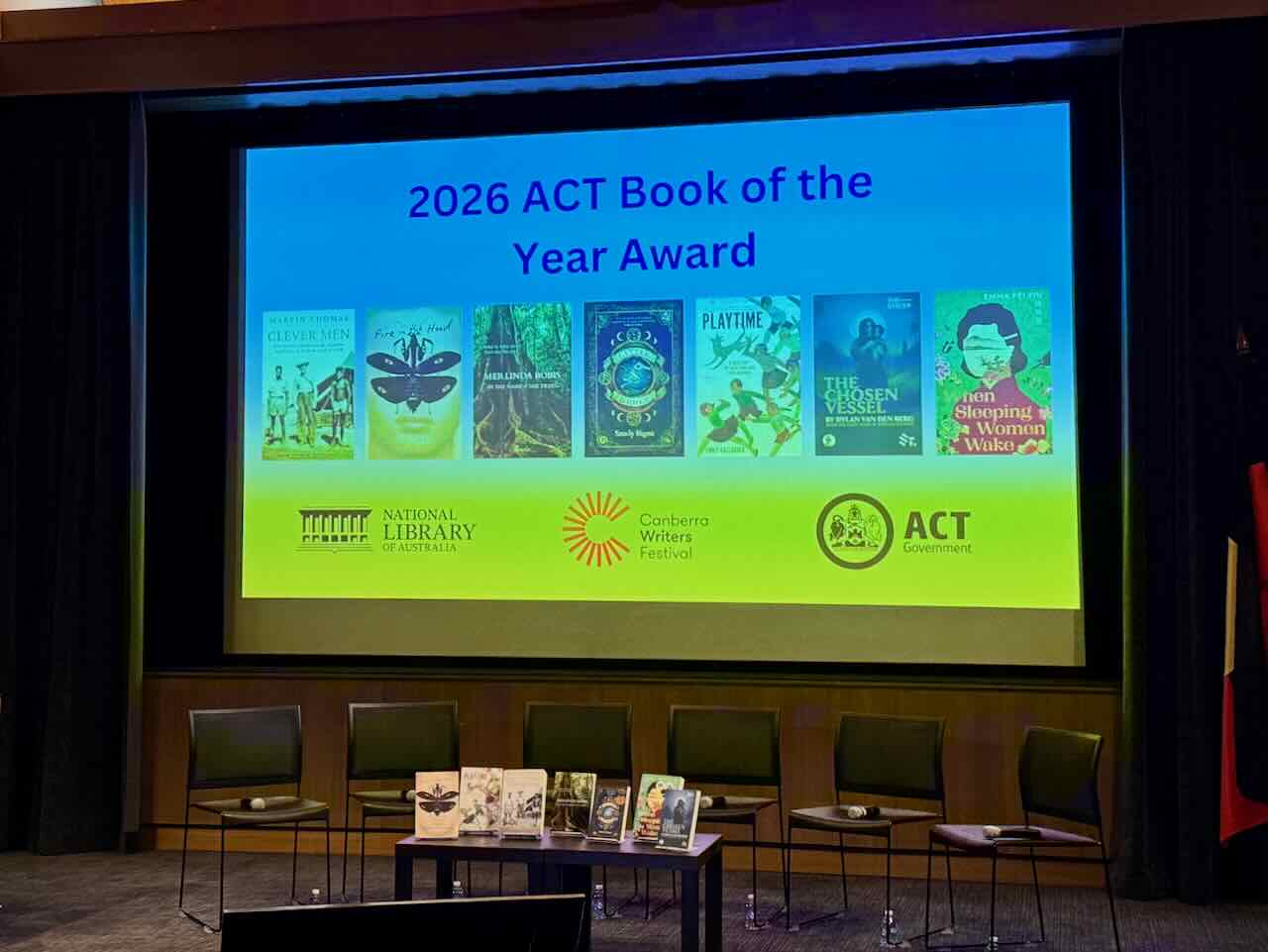
The event comprised two parts – a panel discussion featuring the shortlisted authors followed by the award announcement. But of course, there was also, acknowledgement of country.
So, the panel. Five of the seven shortlisted authors were present: Sandy Bigna, Merlinda Bobis, Emily Gallagher, Daniel Oakman, and Dylan Van Den Berg. It was beautifully moderated by Frank Bongiorno, Canberra-based historian, academic and author. He started by observing that it was a diverse list – authors, genres and forms, subject matter – and yet, he had gleaned a couple of common themes, so he started with those.
On Intergenerationalism
Merlinda said that generations form the basis of her story, but focuses on the grandmother. She is a healer, who passes on story and culture. This healing comprises three parts – knowing, minding/mindfulness, loving – which work together for human beings and also for place, for home.
Daniel’s book is about trauma, and started with a trigger warning because it deals with child sexual abuse. It’s about how silence – and not the story – is handed down through generations. His character needs to reckon with the past to break this pattern/tradition.
Emily’s book about childhood play is not so specifically intergenerational, but it is about the history of children’s play, their cultures, and how they pass on their play. But the focus is the children, not generations.
Dylan’s play reimagines Barbara Baynton’s The chosen vessel (my post), which itself was a response to Henry Lawson’s The drover’s wife. Dylan’s protagonist is a First Nation’s woman, and concerns the inherited trauma of dispossession. Unlike Lawson’s wife, and Baynton’s woman, who are part of the Australian gothic tradition (fear of the bush), the bush is not terrifying to his character.
Sandy said that an intergenerational relationship is the heart of her story. A year before the story starts, Little Bones had lost her brother and is now grieving. Her mother has gone away for work, and she is left with her Nonna, who steps in …
On Trauma and Healing
At this point Frank moved to his second shared theme across the books, and asked Sandy to take about how you write trauma to young people, how you explore it in a way that is not confronting.
Sandy said that young people do experience grief and confront trauma, but she felt that verse novels, which can be naturally sparse and lyrical, and which can incorporate metaphor, work well for exploring these themes.
Merlinda talked about the trauma of leaving home, particularly if you leave because of violence. Women have suffered through layers of trauma – invasion after invasion – in the Philippines. When she writes trauma, she likes to see characters come through. She believes it is the story that will retrieve you from trauma. Knowing is resistance.
Daniel also talked about trauma and survival. His was a difficult book to write. Child sexual abuse is a subject of national shame – and writing it needs care, ethically, legally, and creatively. He felt there has not been enough exploration of children’s trauma in Australian fiction – unlike in other fictions, such as British – and our literature has focused on simplistic understandings like the loss of innocence, and stolen childhoods. In fact, it’s not about absence but the fact that something is left behind. And identities unravel.
Dylan picked up on the idea of something left behind, which, in his case, is a ghost. The woman’s life ends at hands of a swagman, but in his story, a ghost comes back and picks up pieces, passing on a shell necklace (which is part of Tasmanian Aboriginal culture).
Emily doesn’t specifically cover trauma in her history of children’s play, but children can use imagination to rise above or escape the everyday. Also, there are ghosts and monsters in playtime. Children often seek them. They offer a way of grappling with big emotions.
On use of time
Merlinda talked about drawing on how Bikol elders tell stories, which is circularly, particularly when dealing with trauma. It can go clockwise or counter-clockwise (that is, back in time). She uses a “node” (central idea or motif?) to ease transitions between times.
Daniel used past and present tense (which, joked Frank, shocked his historian self) and also first and second person, to give himself freedom to move back and forth, as the past becomes more present in character’s life. He referenced German essayist Christa Wolf, and the material evidence – Stasi files – she was given of her of her past life.
Sandy agreed with Frank that children use time differently. The death of Bones’ brother had occurred in the past, but she didn’t go back (like “you guys”, she said to her co-panelists) but instead found ways to bring the past into the present. She brought Nico to life, and he talks to Bones throughout the book.
On place, and particularly being a Canberra writer
Dylan said that place/country is always a character in his work. He has been living in Canberra for around 15 years, and loves being in, writing about, Canberra.
Merlinda also loves writing about Canberra, though shared that she lived in Wollongong for 24 years, and comes from another place. She feels she is making progress writing about Canberra, and sang an incantation to the place (calling on butterflies, birds, and more).
Emily’s book includes Arrernte children experiencing the arrival of a plane, something not belonging to their country.
Daniel spoke about its being easy featuring Canberra in his book because he knows it well. There’s a practical dimension to writing about something you already know. However, Canberra also worked for him because it has primal places.
Sandy loves writing about Canberra, and said that Canberrans who read her book would recognise the Dickson wetlands, and our beautiful bushland. Hers is a story about healing through nature. She also commented that, because her book has an element of magic, she felt for readers to believe the magic, the setting had to be real. However, in terms of international publication – of bringing Canberra to the world, as Frank put it – there have been some changes of words, such as “sidewalk” for “footpath”! (Really, still?)
Q & A
On whether any had encountered a sense that writing about Canberra is a no-no: Sandy had no pushback from her publisher; while Merlinda said that she writes with wonder to make the place alive. She has a love affair with Canberra’s birds and trees.
On whether her (Sandy’s) book was always going to be a verse novel: She did start writing in another format, because she had been given to feel that verse novels don’t sell, but it wasn’t working.
On writing process, particularly on handling writer’s block: Emily, as an historian, said that she goes to the archives, or to other books, or goes for a walk, or, sometimes, you just have to sit with it. Merlinda finds the answer in the body – be with the body. Dancing has helped her. Dylan puts a reward TimTam on the keyboard, while Sandy likes the idea of turning to another art form, like looking at art, or walking.
On his (Daniel’s) title and book cover: the title comes from WB Yeats (and is in the epigraph). It works because it’s a book about rage, and obsession. The beautiful cover is by Sandy Cull. He was lucky working with a small publisher, and having a team work on the book.
On inhabiting child characters: Sandy has a very strong memory of that transitional grade 6/grade 7 time, which enabled her to get into the head of her characters; Merlinda loves writing about child characters but she has to hear the voice of the child and the pace; and Daniel likes that children are honest.
Craig Cormick, last year’s co-winner, made a statement, not a question, and congratulated them all on being winners.
The announcement
Michael Petterson, ACT Government’s Minister for Business, Arts and Creative Industries, made the announcement. He said there had been 56 books entered for this year’s award. In announcing the Highly Commendeds and Winner, he shared some judges’ comments, but I’m going to cut to the chase.
The two highly commended books and authors were:
- Merlinda Bobis, In the name of trees
- Martin Thomas, Clever men
The winning book and author was:
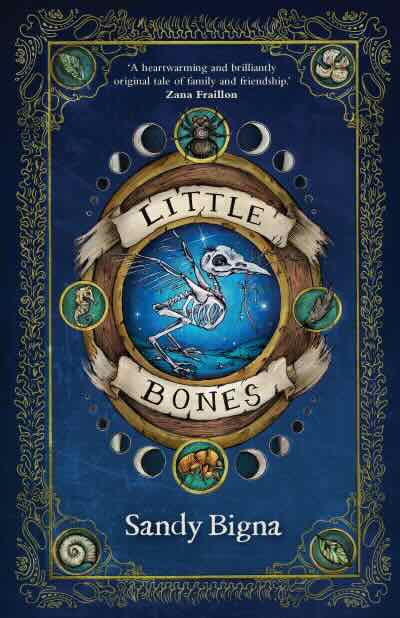
- Sandy Bigna, Little Bones
Huge congratulations to all the authors – winners to not – for their wonderful sounding books, and to Frank for moderating a delightful and informative conversation.
The session ended with afternoon tea served in the National Library foyer, which was a lovely treat for us who attended this free event, and gave us an opportunity to mingle!
Canberra Writers Festival, 2025
The ACT Book of the Year
Friday 15 October 2025, 4.00-5.30pm

