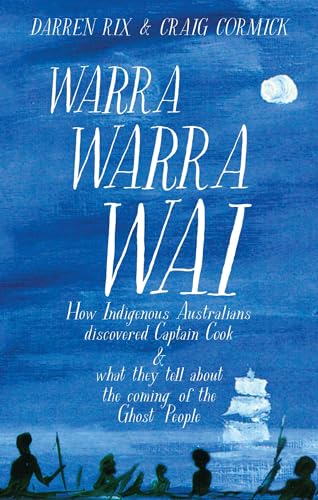
Last month, I reviewed Darren Rix and Craig Cormick’s book Warra Warra Wai: How Indigenous Australians discovered Captain Cook, and what they tell about the coming of the Ghost People, but I didn’t say all I’d like to have said. And I won’t achieve that here either, but I did want to focus on a little tangent that might interest us fiction readers. So, here goes …
As I was reading this book, I kept being reminded of novels I’ve read that intersect in some way with stories I was meeting in this book. Fiction isn’t history and is no source for facts, but good fiction can be a powerful source of truths. Some of the books I mention are by First Nations writers, and some by settler writers, but all have added to my understanding of our shared history. Most are set along Captain Cook’s route, with two ring-ins which are close enough to be relevant, and I’ve chosen them because some idea or fact in Warra Warra Wai brought them to mind.
My first novel is Tasma Walton’s I am Nannertgarrook (my review), though it starts in Nerrm (Port Phillip Bay) in Boonwurrung Nation, a little west of where Cook first sighted Australia. An early settlement story, it starts in 1833 when Nannertgarrook is snatched off the beach and sold to a sealer who takes her with him as he moves slowly west over the next couple of decades to Bald Island, in Noongar Nation, south-western Western Australia. As she is landed in one unfamiliar place after another, Nannertgarrook tries to understand and learn that place, and be respectful of it. In Warra Warra Wai, a First Nations elder makes the point that First Nations people who find themselves in Countries not their own, should get to know the place they are in.
The next novel is probably the most obvious, and among the most controversial, Kate Grenville’s The secret river (read long before blogging) in which Grenville imagines how some of the early contacts between settlers and First Nations groups in Dharug Country, along the Hawkesbury River, might have gone. Warra Warrai Wai briefly mentions the Hawkesbury River, but not its specific settlement history.
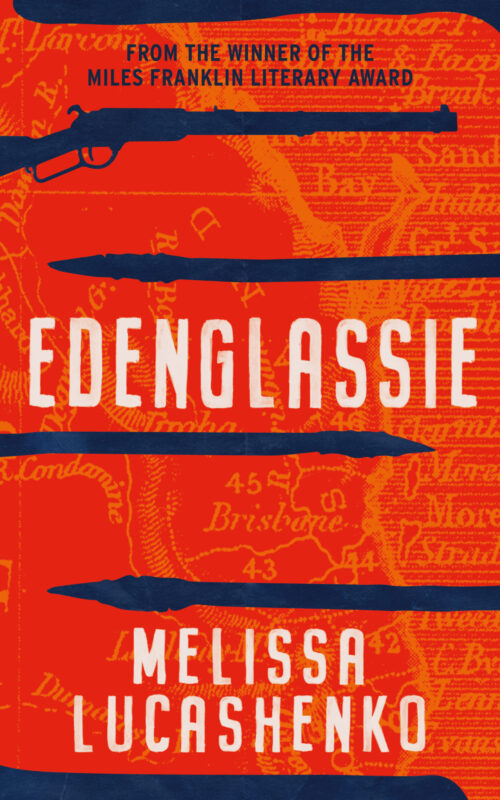
It does, however, mention Tom Petrie, who is a significant figure in Melissa Lucashenko’s Edenglassie (my review). Living in Kabi Kabi and Jinibara Countries, he is introduced in Warra Warra Wai as an example of a settler who, with his father Andrew, had “progressive” attitudes towards the local First Nations people. They managed to obtain some concessions for the local people, but it didn’t last and, as Lucashenko also depicts in her novel, a resistance warrior, Dundalli, stepped in and fought on his people’s behalf for over a decade. My reading of this novel is that Lucashenko is raising, in part at least, that, as Rix and Cormick from their research that “in the early days, coexistence seemed possible” (p. 57).
Another story mentioned in Warra Warra Wai and that has been fictionalised – by Patrick White, for one, in A fringe of leaves – is that of Eliza Fraser. She survived a shipwreck off the coast in Butchulla Country in 1836. Her report is one of being beaten and kicked by the people who took her in, but “fortunately”, say Rix and Cormick, there are contradictory stories from other survivors. First Nations author and lawyer Larissa Behrendt‘s Finding Eliza: Power and colonial storytelling (on my TBR), uses Eliza Fraser as a starting point to analyse how White’s and other stories about Indigenous people (including from other countries) embed stereotypes and assumptions, which have shaped the colonial narrative.
Warra Warra Wai also mentions James Morrill whom I recognised as the inspiration for David Malouf’s novel, Remembering Baylon (again read before blogging). He was a shipwreck survivor who lived with some Bindal people (near today’s Townsville) for 17 years, from 1846 to 1863. Rix and Cormick share Bindal Traditional Owner Eddie Savage’s recognition that Morrill’s detailed stories, captured after he returned to his own culture, have helped them retrieve a lot of their culture. Morrill tried his best to gain some land – “low swampy ground near the coast” – for the Bindal people, but to no avail. His health failed upon returning to settler society and he died in 1865. Morrill is not the only settler who lived with, and were treated well, by First Nations people.
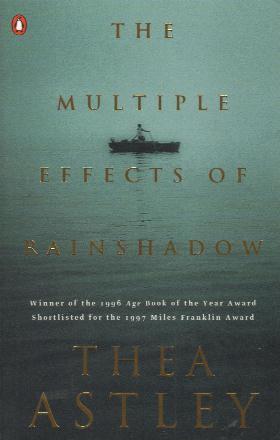
Then we have the terrible Palm Island story, which Thea Astley tells in her novel, The multiple effects of rainshadow (my review) and which Rix and Cormick detail in Warra Warra Wai. It concerns the notorious Palm Island Aboriginal Settlement which operated from 1918 to 1972, and to which people were moved from all over without care for where they truly belonged or their relationships. It is the source of many terrible stories, but this one concerns a harsh superintendant, Robert Curry, who “went berserk, killing his children and burning down several of the Island’s buildings”. He was shot and killed, under instruction, by a First Nations inmate, Peter Prior, who was then charged and imprisoned for several months until the case was dismissed.
Craig Cormick, in a different collaboration, this time with Bulgun Warra man Harold Ludwick, recently published a what-if or alternate history, On a barbarous coast (my review). This book posits what might have happened had Cook and his crew been shipwrecked off the far northeastern coast, instead of suffering the reparable damage they did. It wonders whether Australia’s history might have been different, and how? Its conclusion neatly encompasses possibilities and probabilities.
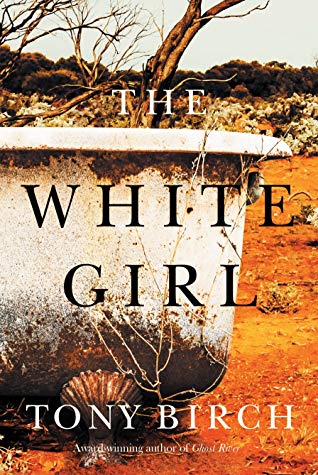
The last novel I’ll mention is probably set around Nerrm (Melbourne) where we started, because that’s where its author Tony Birch lives, but in fact its one of those novels where the author has chosen to fictionalise place to, I guess, universalise the story. In The white girl (my review) we are not talking about a particular place or culture but about the things First Nations people did (and still do), the impossible decisions they needed to make, in order to survive. It is set in the 1960s, just before the relaxation of the various Acts and rules that controlled First Nations people. Grandmother Odette wants to take her granddaughter Sissy to the city to find Sissy’s mother. As an Aboriginal person, she needs a permit to leave her rural home, but the local “Protector” will not give it. Not going, however, is not an option. In the Sydney Review of Books, Claire G. Coleman says the “Not enough has been written about quiet resilience and silent resistance as tools of survival”. But Birch does it here. The relevance to Warra Warra Wai is that this issue of living under a “Protection Act” and comes up in a story left by a descendant of the Ngaro people. Exemption was a two-edged sword: it brought freedom but also a ban on associating with the non-exempt.
Again, I am not arguing that these novels – by First Nations and Settler authors – provide citable historical fact. But they do contribute to our understanding of our history. When reading them, however, it behoves the reader, as with nonfiction, to consider, when the work was written, that is its sociocultural environment, and who the author is.
Darren Rix and Craig Cormick
Warra Warra Wai: How Indigenous Australians discovered Captain Cook, and what they tell about the coming of the Ghost People
Cammeray: Scribner, 2024
334pp.
ISBN: 9781761424021


Behrendt’s Finding Eliza is a direct and well-documented critique of the failures and biases of our literary history. But the novels you cite remain interesting if only for the insight they provide into our gradual acceptance of the ongoing harm caused by white Australia’s settler colonial project.
You are very right Bill. There are also other works of non-fiction I could have included, but I wanted to focus on fiction as a companion to non-fiction in our understanding of First Nations history and culture.
You are designing a lovely little reading project for eager readers, aren’t you!
I’d like to think so Marcie.
I enjoy the idea of books in which multiple people give their perspective of the same event, so I can create a mental composite, but either those books don’t exist or are out of my awareness.
I agree with you Melanie. It would be great to see more such approaches to history wouldn’t it – and I use history in its broadest meaning.
Especially if it were broken into sections. Imagine stories from people who remember the arrival of Cook, then his first days, etc. I see this technique occasionally in fiction, but never in a series of interviews. Now, with everything on the Internet, I’m not sure we’ll ever get this kind of book unless someone agrees to compile it from Internet archives and everyone consents.
I was thinking as I was responding to your comment, about a couple of histories I’ve read – both about women. One drew on women’s diaries and one on interviews. Both explored women’s experience under different headings to show both individual experiences and draw some generalisations as well. I still think about these two books because they were so illuminating.They were about recovering, I guess the history of a minority. But, in the case of contested histories common in colonialism, it’s an approach that can be even more powerful.
Nicely spotted Sue. I will keep an eye out for these fictional connections as I make my way through Warra Warra Wai too.
Thanks Brona … that would be interesting if you did.