A couple of weeks ago, I announced the 2026 shortlist for independent non-profit publisher Finlay Lloyd’s fourth 20/40 Prize.
20/40 is a novella-length manuscript award for prose works that are between 20,000 and 40,000 words. It is not limited to debut or young or women or any other subgroup of writers, as some manuscript awards are. Indeed the works can be “all genres … including hybrid forms”.
Their aim is to choose two winners, preferably one fiction and one non-fiction, which they did in 2024 and 2025. However, this year, as happened in the inaugural year, the two winners are both fiction. Publisher Julian Davies said of the winners (in the press release on the announcement):
The contrast between these two lively and moving fictional worlds affirms the valuable purpose of a publishing prize that encourages Australian writers to tackle the compact challenge of works between 20,000 and 40,000 words.
For this fourth year of the 20/40, the judging panel has awarded the prize to two short novels, both chosen for the strength and highly engaging quality of their writing, and both, by strange coincidence, about imaginary friends. While this accidental parallel sets up an inevitable and interesting comparison, the two books take very different paths in their exploration of invented confidants—one inventively comedic (but underpinned by deeper questions), the other psychologically astute (but shot through with irony).
So, the winners are …
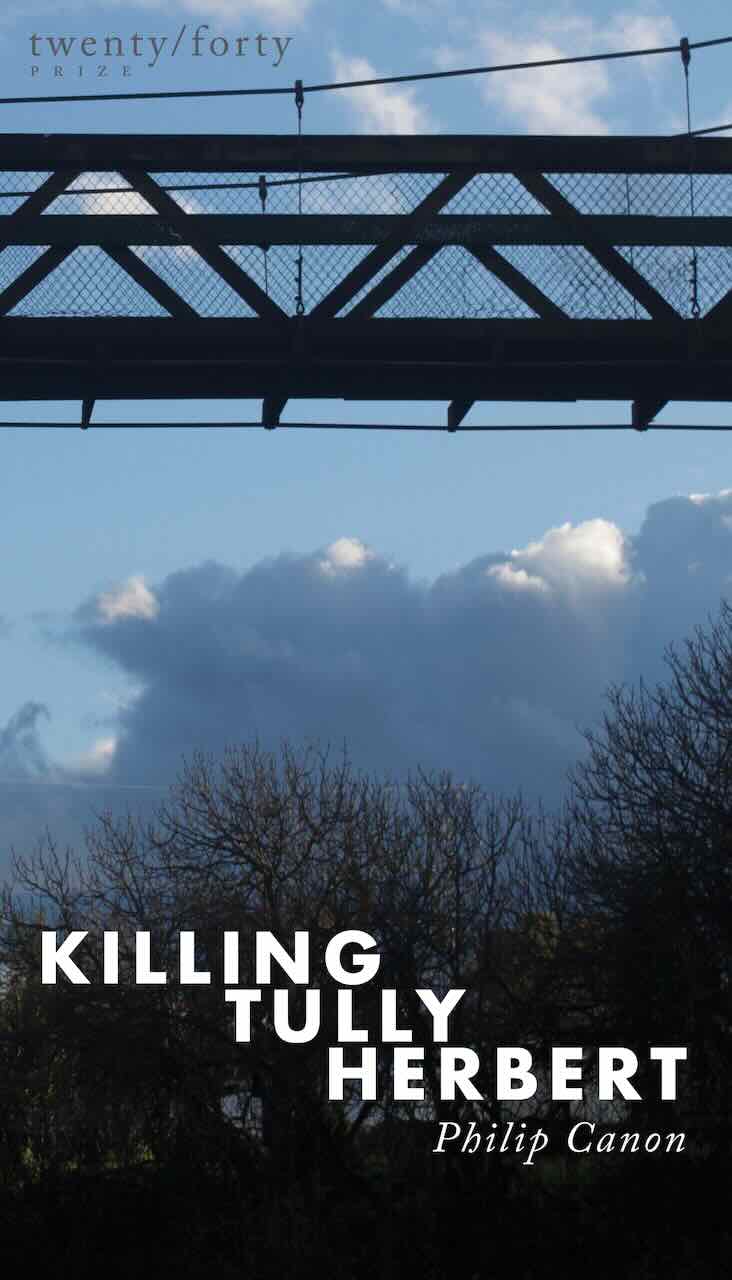
Philip Canon’s Killing Tully Herbert
FL’s summary from the shortlist announcement was: Beth Border, the narrator of this vividly realised short novel, shares with the reader her fixation with an imaginary friend, Anastasia. ‘Together’, they try to navigate Beth’s place in a world undermined by her deeply complex sense of responsibility for the death of a friend.
The judges said:
Why this book is different: Beth Border, the narrator of this vividly realised short novel, shares with the reader her fixation with an imaginary friend, Anastasia. ‘Together’, they try to navigate Beth’s place in a world undermined by her deeply complex sense of responsibility for the death of a boy, Tully Herbert.
Why we liked it: The quality of the writing in Killing Tully Herbert is as perceptive as it is alert and ironic. Its liveliness and empathy swept us into the specifically fraught and shifting psychology of an adolescent girl, while achieving the fine double act of feeling timeless and universal.
The Press Release provides this background for Philip Canon: He a writer and educator who teaches English and English Language in an independent secondary college in Melbourne. He has also worked in a range of educational contexts in Auckland, London and Frankfurt. He has taught creative writing through the RMIT Short Courses program, and his short fiction has been published in literary journals and anthologies.
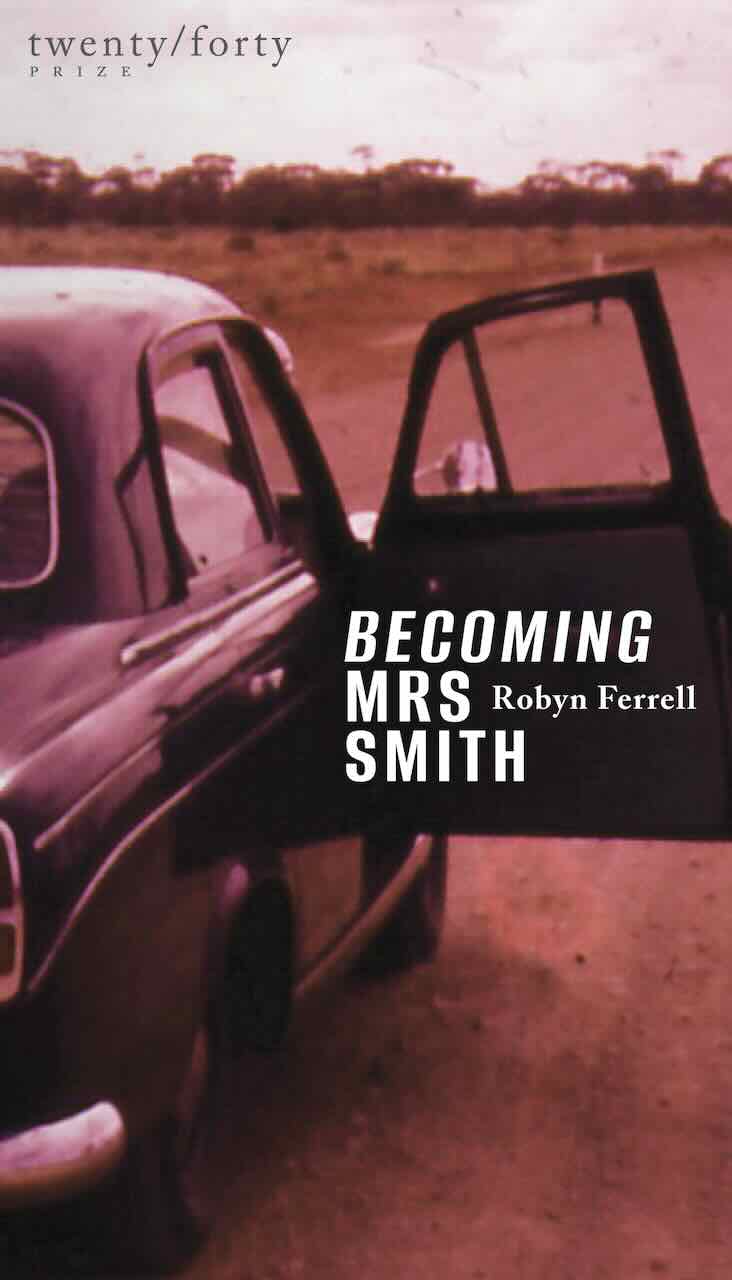
Robyn Ferrell’s, Becoming Mrs Smith
FL’s summary from the shortlist announcement was: In a university psychology seminar, the narrator of this inventive and playful short novel is reminded, with some surprise, of an imaginary friend from her childhood—a stout and intrusive middle-aged woman. And so begins an intriguing and amusing escapade about the shifting nature of identity.
The judges said:
Why this book is different: In a university psychology seminar, the narrator of Becoming Mrs Smith, is reminded, with some surprise, of an imaginary friend from her childhood—a stout and intrusive middle-aged woman. And so, the reader is off on an intriguing and amusing escapade about the shifting nature of identity.
Why we liked it: Writing where imagination intersects with notions of reality, biography and intellectual endeavour can be riskily ambitious, so we were delighted to meet this wonderfully playful, comedic, inventive and insightful book. It reaches far more widely and deeply than the compact number of its pages.
The Press Release provides some background for Robyn Ferrell: She is a writer and researcher, who trained as a journalist on the Sydney Morning Herald before completing her doctorate in philosophy. She has taught philosophy and creative writing at Australian universities and has written several books of fiction and non-fiction. Her recent titles include Private Language and Philosophical Essays on Free Stuff.
You can listen to interviews with the winners at the Finlay Lloyd website.
Finally …
This year’s judges were Dr Meredith McKinney, Kevin Brophy AM and Julian Davies, and, according to the prize’s tradition, last year’s winners, Kim Swivel (aka Kim Kelly) and Angus Gaunt.
Just to give them a little more air, the other two shortlisted books were:
- Madelaine Dickie, Tormenta: FL’s summary is: A young couple cut free to head off on a surfing trip in Mexico, taking their small child with them. But their laidback adventure quickly descends into a disorienting and threatening nightmare. This is a short novel written with a vitality that is both nuanced and suitably feverish. Dickie, on the other hand, should be well known to readers here as I have reviewed her two novels, Troppo (my review) and Red can origami (my review), and her co-written biography/memoir with Wayne Bergmann, Some people want to shoot me (my review). Tormenta, though, could be her first novella.
- Louise Martin-Chew, Uncomfortable silence: FL’s summary is: This memoir by mother about her daughter’s ‘selective mutism’, takes the reader into the fraught and moving journey of a child’s withdrawal from communicating with the adults around her, the hidden forces at its source, and the implication of wider, societal silences around us. Louise Martin-Chew, according to UQP is “a freelance art writer” who “has contributed to magazines, newspapers and catalogues for over twenty years”, but this submission for the 20/40 prize sounds like something different and more personal.
I have reviewed all the winners to date: Rebecca Burton’s Ravenous girls, Kim Kelly’s Ladies Rest and Writing Room, Penelope Cottier and NG Hartland’s The thirty-one legs of Vladimir Putin, Sonya Voumard’s Tremor, Angus Gaunt’s Anna, and Kim Kelly’s Touched.
Congratulations to the winners. The books will be available through bookstores – my local independent always carries them – and through publisher Finlay Lloyd, which is offering a 10% discount (so $23.40, instead of $26) through to the end of December 2026.

