When this SixDegrees goes live, I will be travelling from southern Germany to the Austrian Tyrol, a week into a five-week holiday that will see us travelling through Germany, Austria, Italy and Switzerland to France, returning home in early October. My blog commenting will be severely impacted though I have scheduled a few posts over the five weeks to keep things moving! Now, let’s get onto the main business, Six Degrees. As I always say, if you don’t know what #SixDegrees is and how it works, please check Kate’s blog – booksaremyfavouriteandbest.
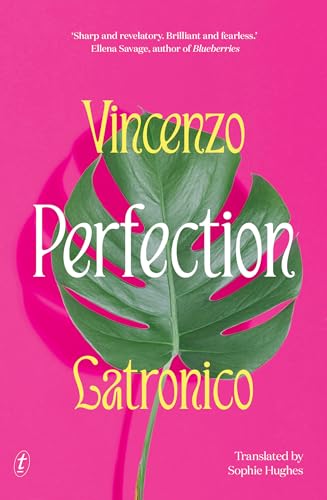
The first rule is that Kate sets our starting book, and this month she did something tricksy, as she occasionally does. Her challenge was to “start with your book group’s current selection (if you’re not in a book group, start with the book that you’re currently reading)”. But, how do I define “current”? The book my reading group read at the end of August or the one scheduled for September. I have gone with the former, partly because it was one I suggested after several bloggers I follow had recommended it (including Brona, JacquiWine, Rach). It’s Vincenzo Latronico’s Perfection, though I haven’t got my review up yet. It’s about a millennial couple seeking for purpose in their seemingly lovely lives.
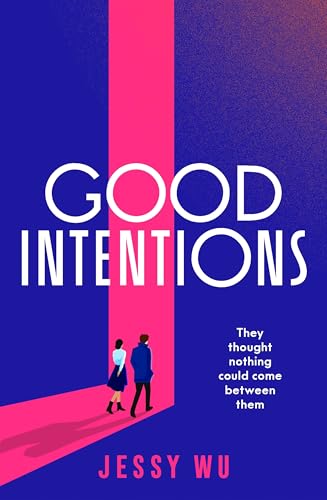
My first link is to another novel in which millennials (or perhaps Gen Z-ers) want to live a life of purpose, One did start out as a corporate high-flyer while the other stuck to his ideals from the start, but neither option is simple. The book is Jessy Wu’s Good intentions. I am breaking my rule that I only link to books I’ve read and reviewed – the starting book doesn’t count because technically it’s Kate’s choice! – but I did attend an author conversation, so I’m hyperlinking that post.
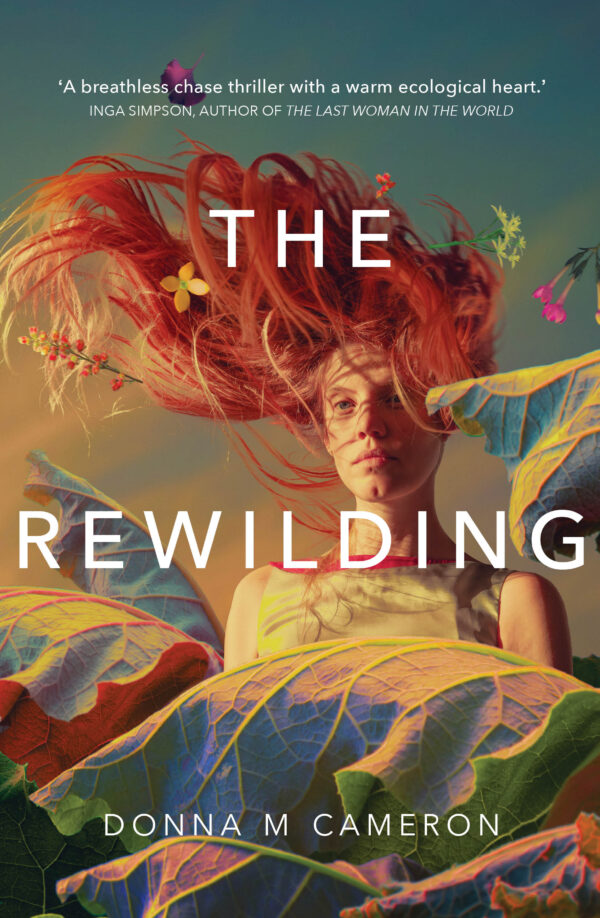
My next link is to another novel in which two millennials – one a whistleblower and the other an activist/eco-warrior – have decided to live an ethical life, aka a life of purpose. But, it’s not easy and, indeed, is putting them at serious risk. The book is Donna M. Cameron’s The rewilding (my review)
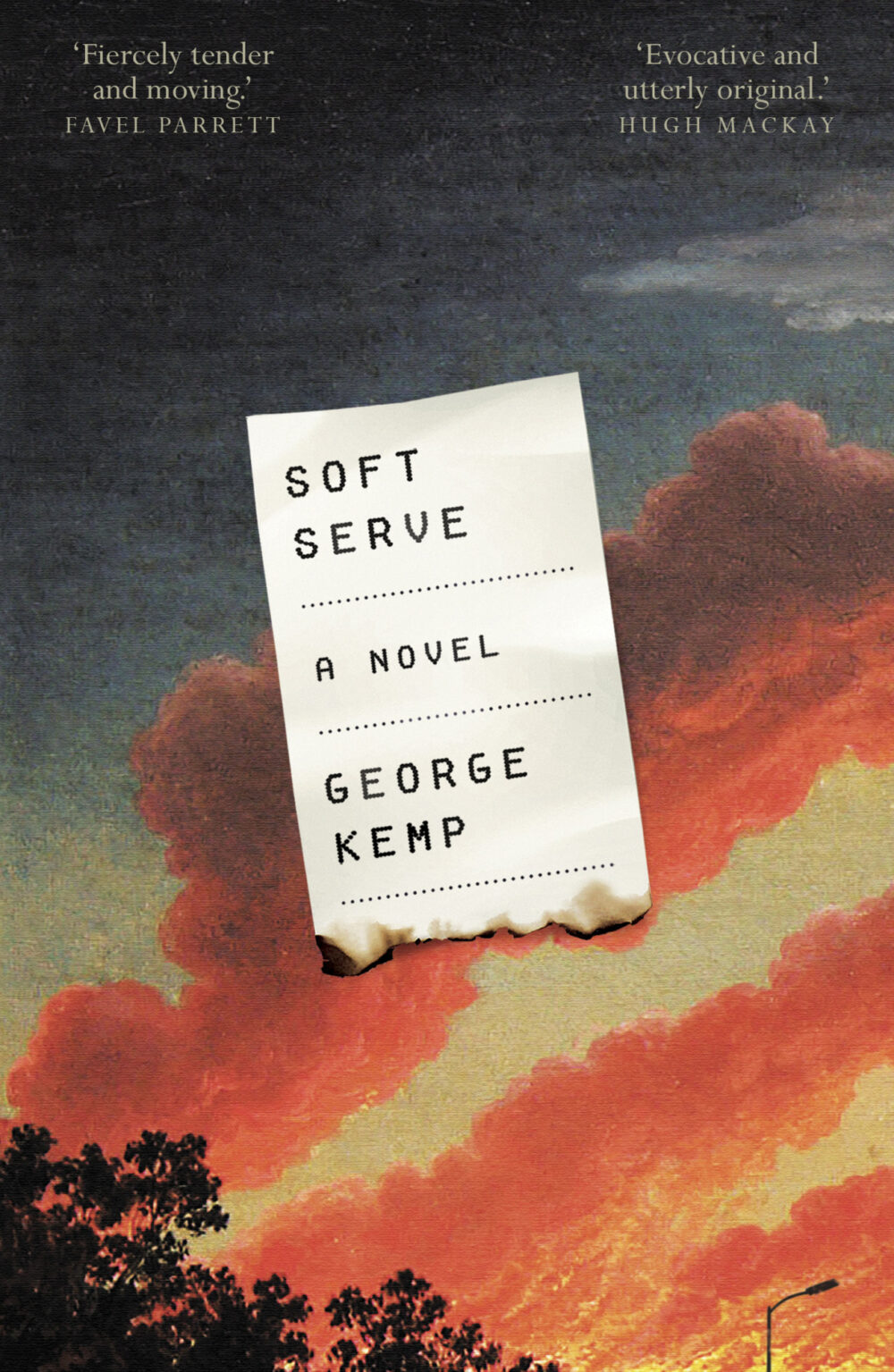
My third book is another recent work of eco-literature, George Kemp’s Soft serve (my review). It takes place in a MacDonalds on a day when a bushfire is threatening. It is also a coming-of-age story as well as one about grief. The environmental issue isn’t laboured, but as I have heard said, every modern book is a climate change book! That’s a stretch, really, but it would certainly be understood by readers of this book!
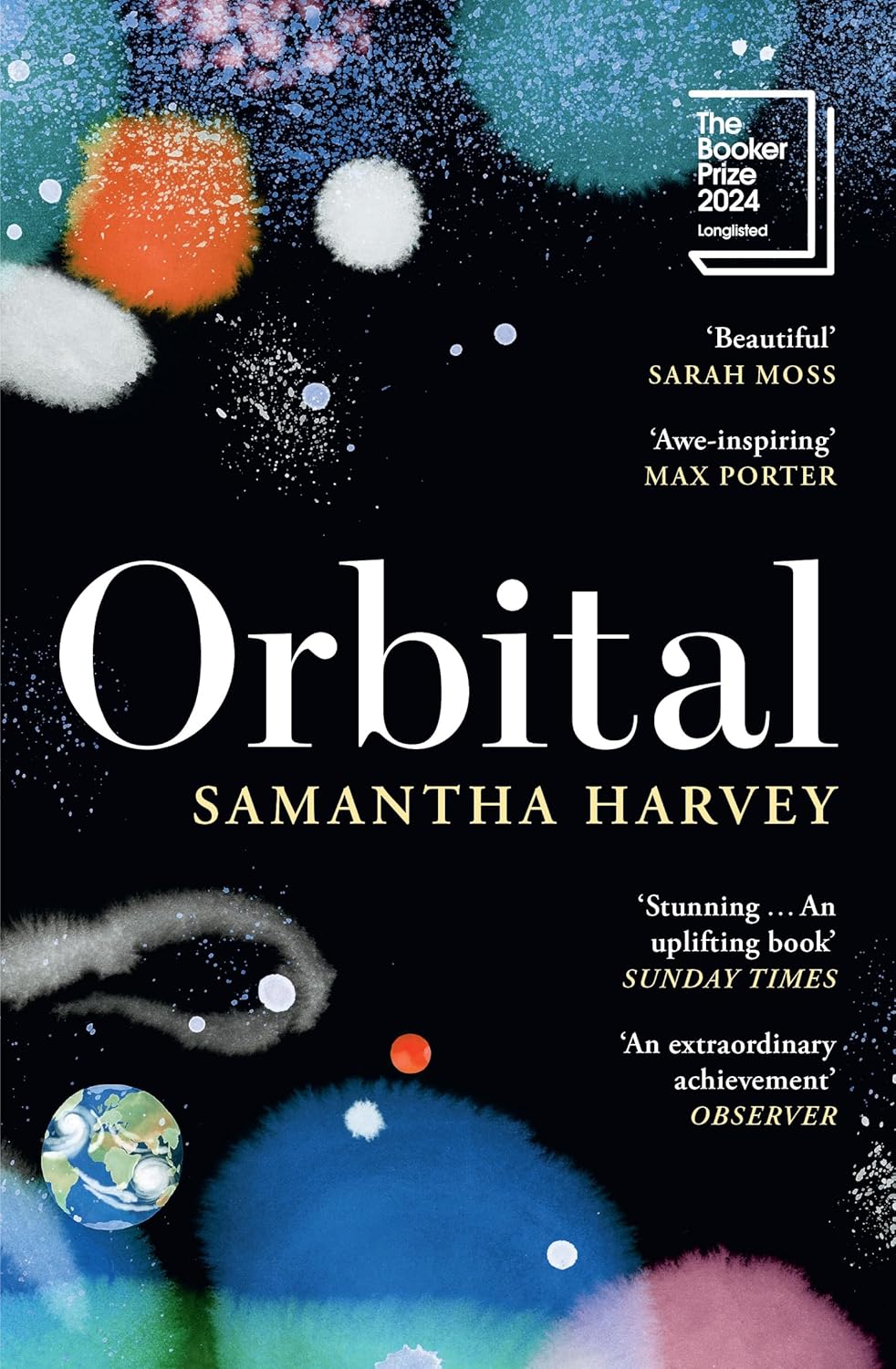
In addition to being a cli-fi novel, a coming-of-age novel, a novel about grief, not to mention also bein about challenged rural towns, Kemp’s novel is one of those novels set in a day. So that is going to be my next link, and the particular novel set in a day that I am choosing is Samantha Harvey’s Orbital (my review).

Now how to define this novel in another way that will provide me with a good link? Perhaps I could go with the – can I call it – cosmic structure? Orbital is structured by the 16 orbits the International Space Station makes around the earth in a 24-hour period, while Eleanor Catton’s The luminaries (my review) also has a specific cosmic structure which is based on both the zodiac and the lunar cycle. And, if you don’t buy that, then both won the Booker Prize!

For my final link, I am choosing setting. The luminaries is historical fiction set in New Zealand’s goldfields, 1860s Hokitika to be exact. My link is set in a fictional town in contemporary Victoria, but it was once a successful goldfields town (from Victoria’s mid-19th century gold-mining boom), and a new gold-mine is coming. The book is Carmel Bird’s Field of poppies (my review). In it, she exposes the area’s violent past – including the violence associated with colonial dispossession – and the threats posed by the planned new goldmine.
Does the Field of poppies link back to Perfection? I think we could argue it does, because while Perfection is about a millennial couple seeking purpose, Field of poppies is about older tree-changers looking for peace and beauty. In other words, both books interrogate, in different ways, that age-old question, how are we to live.
Have you read Perfection? And, whether or not you have, what would you link to?


Hi Sue, what a great trip you are experiencing. I am in two book clubs and my present reads are ones that I can link. Memorial Days by Geraldine Brooks and Tell Me Everything by Elizabeth Strout; My other links are The Secret Landscapes by Clara Brack; A Hymn to Life by Gisele Pelicot; The Loneliness of Sonia and Sunny by Kiran Desai; and Departures by Julian Barnes.
Thanks as aiways for joining in Meg … We are having a good holiday. It will be over too soon!
I enjoyed your links – and love your current Bookgroup selections.
Can’t wait to hear what you and your book group thought of Perfection. As you know I really enjoyed it.
it was quite mixed Brona. Some of us really liked it, and a few really disliked it. It was the day before I left for Europe so I won’t get to wrote my post until my return I think. Just so much going on. Those who didn’t like it couldn’t engage with the characters at all, with one or two feeling, I think, that millennials were being stereotyped and demonised. Almost all of us have millennial children, but not all of us felt they were being demonised.
A wonderful book set in the NZ gold rush is Rose Tremain’s The Colour (2003)
Thanks for this, I know that writer but not that book!
Great chain Sue, hope you have an amazing trip!
Thanks Cathy, so far so good! If I don’t get to your chain now I’ll do it later. Time is tight.
Not my generation but I enjoyed Perfection. I’d like to know what millennials think of it. Your trip sounds a wonderful. I’m off to Germany, Austria and Hungary but in early October when you may be on your way home!
Yes, Susan, my reading group wondered the same and hoped we might get some of our millennials to read it.
Have a great trip … we are leaving for home on 2 October.
Thank you! We leave for Bonn on the 4th.
I’ve not read many books about millennials (being a Boomer, myself), so I don’t know these books. But I like the way you connect your last book to the first in a way that a Boomer like me can appreciate!
Both the millennial books seem to be piquing my interest (because I am one?, though probably not) but so does the Luminaries. Must read Orbital sometime soon too. Reading chains is really no good for the TBR 😀 A very enjoyable chain, Sue.
Thanks Mallika. I like books about Baby boomers, but I also like books about other generations too, so I think it’s natural to be interested in writing about your generation. And you are right about these chains.
I have not read Perfection. In this case, though I will draw on our own book club.
Today I have started the book Bitch: On the Female of the Species by Lucy Cooke, to be discussed at the next meeting of our neighborhood book club. It has 290 pages before the notes, with the equivalent of about 150 pages of information. However, since it is about a field of science, I can build a chain from that. Degree 1: Lab Girl by Hope Jahren, an excellent book about what goes into scientific work, in this case in botany. Degree 2: Adventures in the Atomic Age by Glenn Seaborg, a noted chemist. Degree 3: Surely You’re Joking, Mr. Feynman, an as-told-to book by Richard Feynman and a collaborator. (Both Seaborg and Feynman won Nobel Prizes, Seaborg for chemistry, Feynman for physics.) Degree 4: Beyond the 100th Meridian: John Wesley Powell and the Second Opening of the West by Wallace Stegner: Powell did important work in exploring, geology, and ethnography. Degree 5: The Journal: 1837-1861 by Henry David Thoreau, as being full of observations of nature. Degree 6: philosophy rather than science, but drawing considerably on science, Man and Beast: The Roots of Human Nature by Mary Midgeley.
What an interesting set of links. I still haven’t read orbital, but will get there eventually. Have a wonderful holiday! Here’s my chain for this month: https://maamej.wordpress.com/2026/09/06/six-degrees-from-raising-hare-to/
It’s a good read maamj, but there are many good reads aren’t there?
Far more than will ever be possible to get through!
Grüss Gott WG!
I hope you and Mr Gums are enjoying your Austro-Deutschland travels!
I haven’t read ‘Perfection’ but your one-liner description and your final title in your list prompted my mind to the recent TV series ‘The Luminaries’. There early pioneers in NZ seek to make a life. In some cases, beautiful, powerful and apparently successful characters achieve this by shocking betrayal and at the expense of others. Swinging 180 degrees to the West though and still thinking of ‘light’, Julia Baird’s beautiful and healing work ‘ Phosphorescence: on Awe, Wonder and Things That Sustain You When the World Goes Dark’ is a wonderful read and one that I’ve given as a gift. I was delighted to see Samantha Harvey’s ‘Orbital’ in your list. I loved that work and have also given it as a gift. (This is my second attempt to respond, so I hope it doesn’t become an accidental double posting!) Stay well and enjoy your late Summer/Autumn in Europe! And Happy Fathers Day to Mr Gums!
Grüss Gott again WG! It’s Treble Clef here….. It was my post above, but as I had trouble logging into the WordPress, somehow my post took on a completely new name of anchorcreativelyfaa0f34cbd If you are surprised/mystified, well so am I! Cheers/Zum Wohl!
What a fun twist this month!
Thanks Stefanie…
I have not read Perfection but have both Orbital and Luminaries on the TBR. I will also use my reading group as a starting point and we are reading Pig City by Andrew Stafford. I have actually read this before and think it is a wonderful history of Brisbane’s music scene. It is still in print from its initial release in 2004.
So, with that music link I will head to another excellent read and that is Stranded: The Secret History of Australian Independent Music by Clinton Walker. This one is written as a personal history of his involvement in the Australian underground/independent music scene. From the impact of The Saints on the Punk Rock / New Wave scene of the late 70’s through to the rise of Nick Cave in the 90’
And that leads to another music scene from over in New Zealand. In Love With These Times: My Life With Flying Nun Records by Roger Shepard. For anyone interested in the life and times of New Zealand’s wonderful Dunedin Sound and with that the independent record label Flying Nun, this autobiography by founder Roger Shepherd is essential reading.
And that leads to Positively George Street by Mathew Bannister. Who needs the rich and/or infamous in the music world to tell a good story. Most of them in fact don’t. This is easy to read and is also about the Dunedin Sound.
And then why not add one of the worst books I read that came out of the autobiography of Billy Thorpe called Most people I know. Billy and his Aztecs made some good music and were in some parts of the world famous. With that fame came this memoir by the good Billy, a memoir about Billy’s sex life. T’was all a bit too much for me.
With all this looking back to the past music wise I will lead to Retromania: Pop Culture’s Addiction to Its Own Past by Simon Reynolds. What was it Winston Churchill who said those that fail to learn from history are doomed to repeat it? In the case of modern pop music it may as well be a case of those that play pop music are doomed to repeat it.
And that leads to Musicophilia: Tales of Music and the Brain by Oliver Sacks. I do recommend this very interesting book. If one is curious as to why music and the brain can work together in mysterious ways this will be more than useful.
Enjoy your holiday 😊
Hah, well, I do “buy” the links between the structural details of Orbital and The Luminaries, but it is a nice cherry for the top of the sundae that they both won a Booker!