Usually, I have my Six Degrees post scheduled in advance, but this month I kept putting it off, partly because I’d start down one path and not like it only to start down another that turned out equally unappealing. I think I like what I ended up with – well enough anyhow! I wonder whether it will make sense to you. If you don’t know what #SixDegrees is and how it works, please check Kate’s blog – booksaremyfavouriteandbest.

The first rule is that Kate sets our starting book. This month, she nominated a book that has hit the ground running, and that sounds like one I could like. It’s Maggie O’Farrell’s Land. GoodReads reviewer Karma – whom I once knew via a wonderful online reading group – started her review with “Land is the story of a place and how it changes over generations, a saga about multiple generations of people who inhabit that place over millenia, and a reflection on colonialism and how history and language are recorded and by whom”. I had been playing with these ideas, but the way she put it gave me a start I could develop.

My first link is to another novel which tells the story of place over time, this one the Illawarra Region in Australia, from the 1700s to 2700s, so one millennium, not many but good enough because in fact that land does have a history reaching back millennia. The novel is Catherine McKinnon’s Storyland (my review). The explorer George Bass tells his young sailor that “the land is a book, waiting to be read”, and this, essentially, is what the book’s about.

My next link is to a book that’s close to my heart, given it’s by my brother, Ian Terry. Titled Uninnocent landscapes (my review) it explores, in his words “What memories do the landscapes of lutruwita/Tasmania hold? What stories are embedded in the rocks, the trees and grasses, the waters of rivers and lagoons? What could the landscape tell us about invasion, colonisation and the destruction of First People’s life and culture? What could it tell me about my own life here on this island?” In other words, it’s about reading the land.

My third book is set in a community whose landscape, which had been essentially untouched for centuries except by weather and nature, was about to be changed by electrification, that is, by the installation of wooden poles across the land. These poles provide a visible metaphor for the massive social and cultural change that electrification heralded. The book is Niall Williams’ This is happiness (my review).
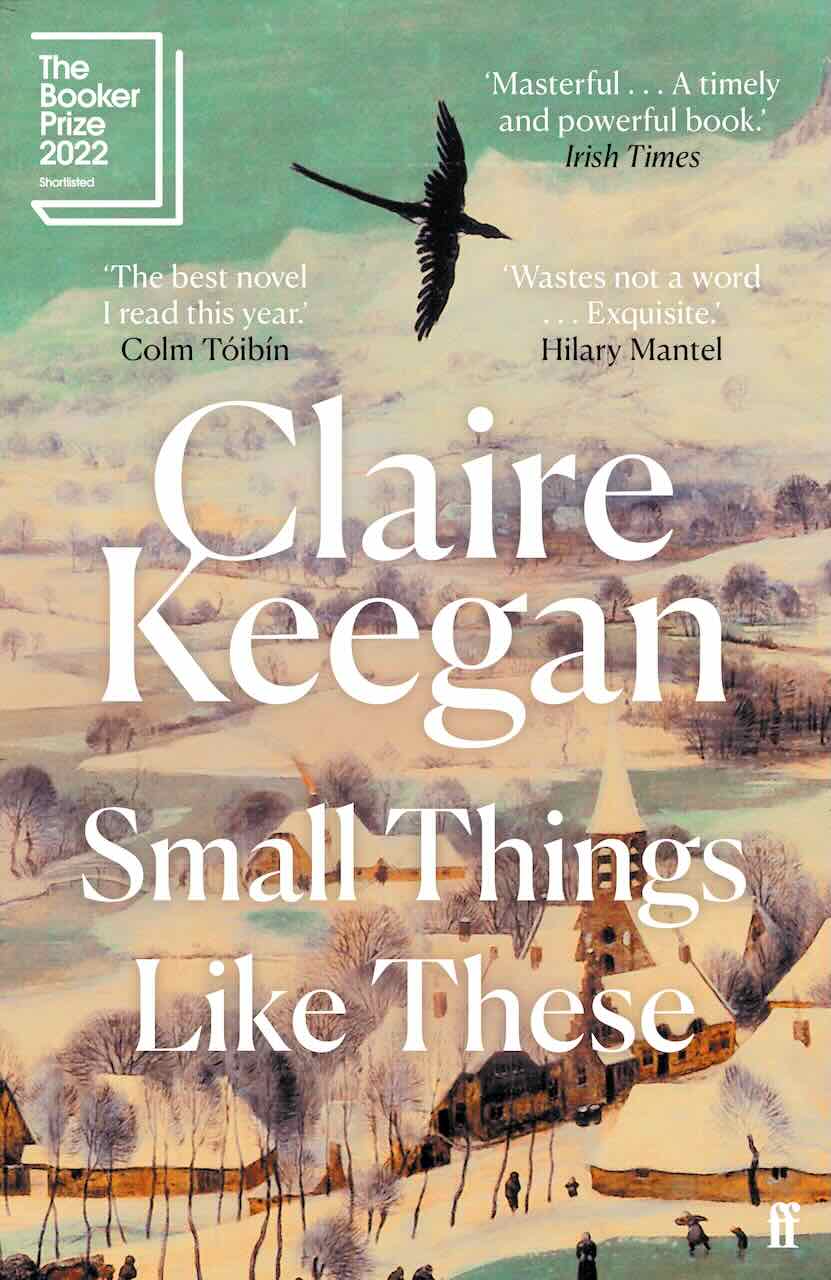
Williams’ novel is set in a small fiction community in western Ireland in 1958. Another book set in a small community in Ireland – this one a real community in the southeast – is Claire Keegan’s Small things like these (my review). It is set thirty years later, in 1985. As a coal and timber merchant, Bill Furlong, knows his community well, particularly its hardships, but he had not known what was really going on at “training school” run by the Good Shepherd nuns, though he’d heard the rumours. Once he knows, he cannot let it go, though others in the community suggest he should.

Many novels deal with moral dilemmas, but the one I am linking to, because it is also church and child-abuse related, is John Clanchy’s In whom we trust (my review). Set mostly around 1910’s Victoria, it features another man who, in this case, is forced into confronting his and others’ moral failings.
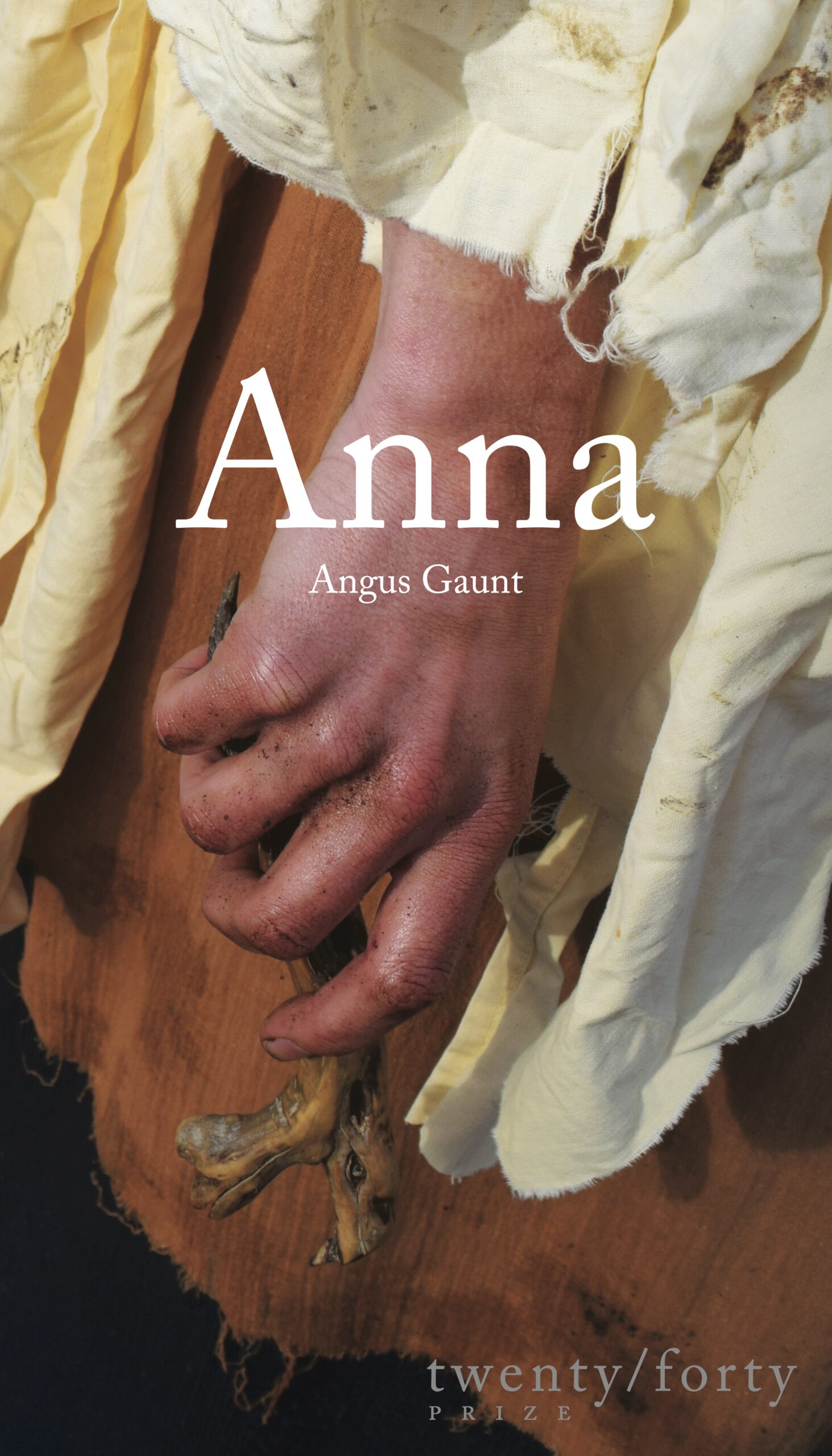
For my final link, I am picking up on the issue of trust, albeit played out in a very different scenario. The book is Angus Gaunt’s Anna (my review). It starts with a young woman, Anna, walking in the woods, being followed by a young man, whom she recognises as a guard from the place she’s just left. Through their initial interaction, we learn that “the war is over” and the gates had been opened, so he has no jurisdiction over her. But, she is wanting to get to the place of exodus, and may not be able to do that on her own. The question is can she – or, how far can she – trust him?
I’m not sure there is an easy link back to Land, but I suspect that in Land, trust and connection may also play a role. This chain has seen us spend time only in Ireland and Australia, which is unusual for me. Even more unusual, is that four of my six authors are male! These are all books that have moved me.
Have you read Land? And, whether or not you have, what would you link to?


I have not read Maggie O’Farrell’s Land. I do though see a word and from that I have a habit of breaking into a song inside my head and just about without fail. “Oh, give me land, lots of land under starry skies above, don’t fence me in.” by Cole Porter came into my brain. This happens so often. A word a song.
That leads to Musicophilia: Tales of Music and the Brain by Oliver Sacks. This explained why that happens and plenty more about how music affects some of us.
And from the land we can see the sea and that brings me to Water by John Boyne, the first in his very confronting Elements series. A powerful tale from an island of Ireland that covers grief, unwanted truths, denial and other fraught emotions that is not for all but I could not put it down.
And that leads to The Coast Watchers by Eric A. Feldt. I have a very battered and unread copy that tells the story of coast watching in the island’s north and northeast of Australia during WW2. One day I will get to it.
And watchers? Well novels that have watchers can be called metatextual so with that I have selected the amazing The French Lieutenant’s Woman by John Fowles where the narrator enters the story as a passenger on a train, sitting opposite the main character and openly deciding how to write the ending.
And as I have brought metatextualism into the separations I will add the book I have just finished, the fantastic The Half Brother by Lars Saabye Christensen where the major character acts as a watcher of his family and all those around him to convert into a film script.
And then there are novels of film with The Plains by Gerald Murnane being notable. I enjoyed this when I read it many moons back but had to reread parts to understand what was trying to be being achieved by the author. And the plains are part of the land. Not sure how I got back there but I did.
Love that you started with song, John. My first thought would probably have been, If I had a hammer. But Don’t fence me in is a good one! I enjoyed your links and know all but two of the authors. Though I’ve only read the Murnane and the Fowles.
If I Had a Hammer is now going through my head.
Sorree, John!
Haa haa, all good. My wife and I have been playing Pete Seeger and Peter Paul and Mary on YouTube.
Nice – the golden oldies, eh?
You have linked some very lovely books. One in particular. Hmmm😄
Haha, Pam, I think so too! Thanks!
An Australian-Irish chain That’s a new one. But apparently an excellent one. Te Irish ones I know and like a lot. The Australian ones look interesting but possibly hard to source here in the UK. Well done for being able to include a family link!
Thanks Margaret. Yes, I’m not sure about being able to source the two last Australian ones in the UK, more’s the pity. Storyland is a few years old now, but was published by Fourth Estate so could be easier to track down. I know, too many books, but just thought I’d say.
Very good chain here – especially that first link that seems to echo what Land is all about. Brava!
Thanks Davida – that first link took much longer this time than I usually do.
I’ve had that happen to me as well.
Weird when it happens, isn’t it?
Yeah… it’s like… hey, where did my brain go?
This made me laugh!
😊
Nice chain – some great Irish writers in there!
Haha, Cathy, yes, there were this time! I do love Irish writing you know, though haven’t read enough since blogging.
I enjoyed Small Things Like These – it’s so powerful for such a short book. Storyland sounds fascinating.
Thanks Helen. Storylands is one of those books that keeps coming back to me. I don’t think it got quite the recognition it deserved.
How lovely to include your brothers book which fits so well with the others. Echoing Margaret in that the Irish titles are familiar to me but not the Australian ones.
Thanks re my brother’s book Susan – and of course I understand your point about the Irish books being more familiar to you than the Aussie ones.
I’m interested in reading This is Happiness. Storyland too, as I lived further down the South Coast for twenty or so years, near enough to the Illawarra to know the area a little. The story stretching into 2,700 is intriguing. Terrifying, too, considering climate change.
Thanks Rose, I can highly recommend both this books you name.
I want to read everything in your chain, Sue, but most of all Storyland. I’m going to have to hunt for a secondhand copy, as there’s nothing on Bookshop.org to say it’s currently available.
I like the sound of your brother’s book, too. I’d like to read his reflections on the place where he lives and its history.
Thanks Jan. I am loving the fact that the two books that people have particularly commented on in my chain have been my brother’s and Storyland. I do hope you find Storyland somewhere because it is a good read. (As of course, is my brother’s, but it’s not available, having been published in a small print run.)
That’s fun that you jumped back and forth between Ireland and Australia. My chain this month stayed completely in the British Isles.
Thanks Joy … I will come look at yours. I can live with a chain that stays in the British Isles!
These seem like great choices. I thought Small Things Like These was fascinating and exactly the sort of book that needs discussion to really work. I read it with my lawyers book group several years ago and then with my real book group and the conversations were very different, which was also fascinating.
I thought I had read This is Happiness but now I remember my book group read a different book of his and kept saying This is Happiness is better. It didn’t make me want to run read it but perhaps because of having spent last week in Ireland, I am more interested now. Anna also looks very interesting.
Your brother’s project sounds amazing and must have been absorbing for the entire family, not just him. I love that you describe it as a truth-telling project and that the local community accepted him and his project (not easy to balance all the conflicting issues/feelings in this day and age). Is your brother a professional photographer or is he a very gifted amateur?
Constance
Love your comments Constance. I am fascinated, but not surprised, that your very different groups had very different discussions about Small things like these.
I don’t know what your reading tastes are but I absolutely loved This is happiness, which may say is the one to start with, though some in my group who started with another, didn’t necessarily agree!
By brother is not a professional photographer though the quality of his work begs the question, I guess, of what is professional. In skill I think he is professional (having honed it, since the 198os), but he hasn’t made money from it. His main career was a an historian.
Great list.. I am not sure what I would have gone but I do like your thoughts about the land and the history of it, that is really a strong theme for me at the moment. I am in Rzeszow, Poland, which has been a town since the 13-14th century, but being at one point on the border of Russia, it is a town that has seen so much conflict. It was privately owned for years and had good owners and bad, but on the major trading route, it has been attacked by the Tatars, the Russians, the Austrians, the Germans and others! It is hard to think of what it would have been like, especially tonight as we watch hundreds of locals eat, drink and their kids play in the square. Peace is beautiful.
Thanks Rach. I have barely been in Poland. I’ve read a lot about Poland over the years, but your story adds another layer.
I would use Land as a point of departure for books about American land:
Degree one is The Invasion by Janet Lewis, the fortunes of an Anglo-Irish/Ojibway/American family from the 1790s through the 1930s, mostly along Lake Superior.
Degree two is Go Down Moses by William Faulkner, short stories and a novella set in western Mississippi. The dispossessed are there, represented by an old Indian hunter; the Black population is there; and the White population is clearly in command but only somewhat content.
Degree three will be Leaving Cheyenne by Larry McMurtry, three ranching families in the Texas hill country from about 1920 to about 1960. The previous inhabitants are represented by Mexicans, mostly laborers, now and then on the edge of vision.
Degree four will be Beyond the Hundredth Meridian by Wallace Stegner, about the explorations of John Wesley Powell, and about his accurate but ignored predictions about the difficulties of farming land that only occasionally has enough rainfall for crops.
Degree five will be Ceremony in Lone Tree by Wright Morris, set in the short-grass country of Nebraska. Farming is more or less tangential to the story, though evidently some of one family is in the cattle business.
Degree six is In This House of Sky by Ivan Doig, a memoir of growing up in Montana in a sheep-raising family. The land and the sheep are generally somebody else’s; the Blackfeet show up as leasing reservation grassland to outside operations.
Great chain George, partly because I like your focus. Also, I recognise most of these authors. Only Lewis and Morris are new to me. Pretty much all of them would interest me too. I’m hard pressed to choose which I’d most go for, but perhaps the Doig and the Stegner (because of the Montana setting for the former, and that I like Stegner for the latter. We have some of those predictions here too, specifically Goyder’s line.)
EXCELLENT chain. Very thoughtful.
Thanks Lisa.
I’m still undecided about whether or not to read Land. I didn’t get on with Hamnet thanks to her use of tropes and jarring time jumps and I’ve read she uses the same techniques in this book…so maybe I have made up my mind after all!
Anyway, love the Keegan and Williams as you know, so keen to try Anna on that basis – thanks.
I don’t feel so negative about O’Farrell Brona, but I’ve read two of hers and don’t necessarily feel the need to read more. If my reading group wanted to read this however, I wouldn’t be negative. I think Anna is a really interesting read.
Hi Sue, I do have Land sitting on my TBR tables! I loved This is Happiness. My links are The Plains by Gerard Murane: Orbital by Samantha Harvery, Cutting for Stone by Verghese Abrahm; Bush by Don Watson; The Story of the Forest by Linda Grant: and Voss by Parick White.
Love this Meg, including the fact that you are the third person I’ve seen to include The plains in your chain.
All very good links, apart from one, perhaps, Sue! Thanks for the plug.
Which one do you mean!?! Not much of a plug when the book is out of print, but you never know, the creator might produce another!
Love that you linked to your brother’s book!Also loved the Claire Keegan books I have read so far! Must get back to them soon!
Thanks Marg. I loved being able to do that.
I have not yet read Land but it is sitting on the shelf over my desk and I keep looking at it and wondering when I will manage to pick it up. That is so awesome you were able to include your brother’s book as one of your links!
THanks Stefanie. It suddenly came to me as linked and I was thrilled!
Enjoyed your chain very much, Sue. I haven’t read land (or Hamnet for that matter), but I love how you link it to Storyland. And I like the concept of your brother’s book a lot–it sounds like something I would very much enjoy. (making note of it). Also a good reminder to pick up Small Things… I loved Foster and really need to get to her other writings!
Thanks Mallika. I’m glad several books attracted your attention. I enjoyed doing this chain, in the end.
Storyland looks fascinating as does Uninnocent Landscapes. I was lucky enough to live in Australia for a couple of years and have been eager to learn more about the original dwellers of the land and their rich culture.
Thanks David … these books are great but if you want to learn more about First Nations Australians I’d start with books written by them.
Any suggestions? Here in the UK it’s very rare for any Australian book to get any publicity, let alone ones written by or dealing with First Nations people. To be honest, your two are the first I have seen mentioned.
Let me recommend Melissa Lucashenko’s Edenglassie. I think that would be a good place to start and she probably has some international recognition. An older one is Kim Scott’s That deadman dance. These two I think offer good introductions to where it all started. I have others … and you could look at my First Nations tag in the right sidebar to see other reviews or posts on FN writing. Thanks for bring interested.
This is Happiness sounds like a really lovely book. But slow, just like LAND. I thought LAND just meandered along. What did you think?
https://headfullofbooks.blogspot.com/2026/08/6degrees-starting-with-land-and-ending.html
I haven’t read Land so can’t compare Anne, but I loved this is happiness. I enjoy quiet meandering if the characters, writing and ideas grab me. Plot is the least interesting thing to me.
I enjoyed your chain. I’d comment, as you know, if I could sign in as Whispering Gums, so I’ll just comment here. I recognise all the authors except the first one. The first book I think of when I think of a story about a piece of land over time is in fact a children’s one, My place by Nadia Wheatley, which was published in 1988. A significant read at the time for introducing children to the history of place, among other things.