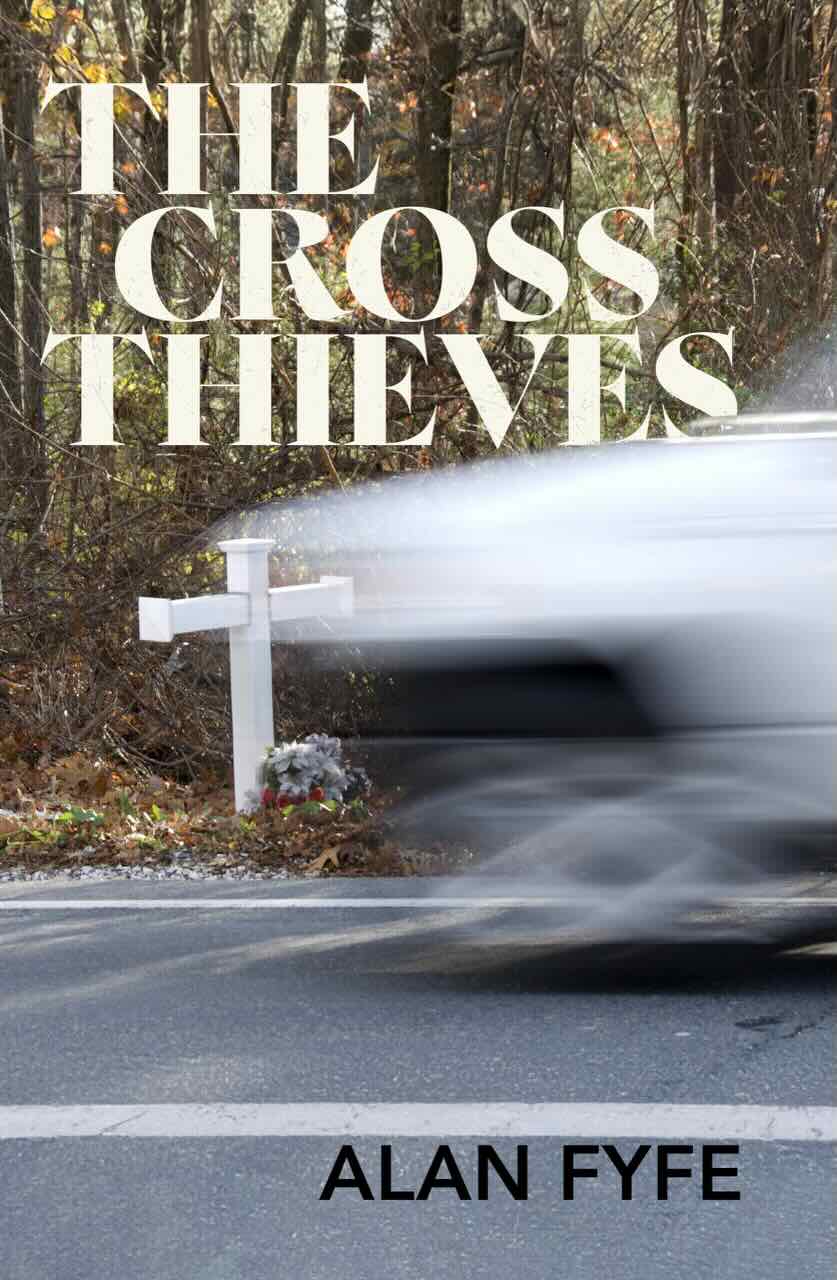
In my recent post on Alan Fyfe’s novel The cross thieves I described it as a modern social realist novel and tagged it as a social problem novel. Wikipedia calls these novels Social novels (defining social realism as primarily an art movement). Whatever we call them, I think you know what I mean. However, for clarity’s sake, I’ll just share the Encyclopedia Britannica’s (EB) definition from Wikipedia that the social novel is a “work of fiction in which a prevailing social problem, such as gender, race, or class prejudice, is dramatized through its effect on the characters of a novel”. In my experience of these novels – looking at, say, Charles Dickens and Elizabeth Gaskell – I would see poverty and labour exploitation or oppression as common prevailing social problems, in addition to those the EB identifies.
These sorts of novels are among my favourite, because they address the way we live, focusing particularly on everyday working life (especially as experienced by working classes), economic hardship, and social pressures, the things that can be fixed if we – politicians and voters – cared enough. In other words, these are books that tend to be politically driven by writers who would like to see change. This means for me that they are stories where the personal is severely impacted and the main solution – rarely achieved in the books themselves – is political.
For this post, I’m focussing on the 21st Century. The issues tend to be socioeconomically driven, with race and class being significant factors. I am not including issues like climate change. You could argue they are related, and thus come under the modern “social novel” banner but I want to keep this tightly focused on the personal impact, on people who have little agency in their lives. Many climate change novels, like Donna Cameron’s The rewilding (my review), for example, feature activists who have agency. Likewise, in Heather Rose’s Bruny (my review), about corporate greed and late capitalism, the protagonists have the ability to choose their paths.
Another book that came up in my research was Charlotte Wood’s The natural way of things (my review), but it is dystopian than realistic, and I see realism is an essential part of social problem novels. I’d love to include Wood’s novel though because it draws from the real stories of women who were scapegoated in a range of sexual scandals involving powerful men. It consequently exposes misogyny, which is an ongoing social problem.
Some modern Australian examples
My focus here then is the sort of socioeconomic oppression that means people are unfairly treated – and marginalised – on the basis of their class or wealth, their race, or other aspects of their lives which effectively “others” them, thereby reducing their agency. This sort of marginalisation takes many forms, but the Social Novel tends to focus on that which is systemic, which traps people in ways that are hard to escape.
I thought about breaking them down in some way – First Nations oppression, drug culture, urban poverty, rural decay – but there are so many crossovers that this felt a bit forced. So, I’m just going to share a small selection, in alphabetical order by author.
- Shankari Chandran, Chai time at Cinnamon Gardens (2022, my review): I tagged this suburban Sydney-set novel as migrant literature, but it is also a social novel in its exploration of the dark-side of multicultural Australia – an issue very much in the news now – and the disastrous consequences of racism.
- Alan Fyfe’s The cross thieves (2026, my review): the story of two starving brothers in Mandurah, south of Perth, focusing on homelessness and food insecurity, on the fight for survival in a community where the methamphetamine drug trade and capitalist exploitation create desperate people who act desperately.
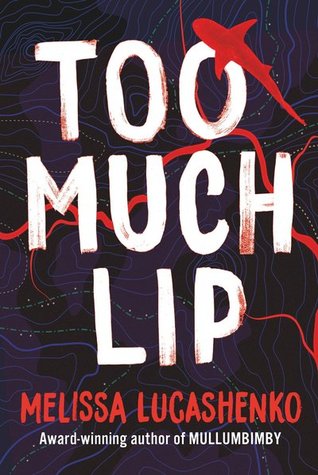
- Melissa Lucashenko’s Too much lip (2018, my review): the story of a marginalised Bundjalung family, which is trying to survive in a dying regional town in northern New South Wales. It shows how what colonial settler societies have done to First Nations Australians reverberates through the generations, in the form of constant poverty, violence and dysfunction, while developers want to take over yet another piece of First Nations land, a sacred island.
- Paddy O’Reilly’s Other houses (2022, my review): about a working class couple who struggle payday to payday, but want more for their now 15-year-old daughter, who had started to run wild, so they move to a “better” suburb. It questions the idea that upward social mobility is the answer to the problems posed by socioeconomic inequity.
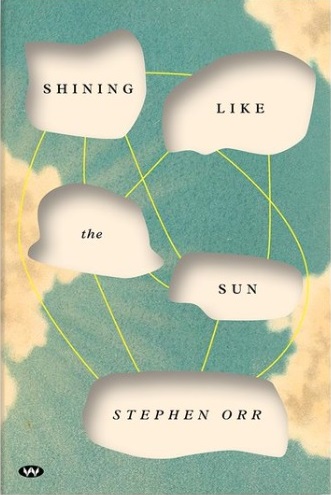
- Stephen Orr’s Shining like the sun (2024, my review): set in a dying town in South Australia, it explores the socio-economic challenges facing small towns which are being allowed to die through neglect and poor policy. Farms are not supported, rural jobs are not supported, so poverty increases and power gets a foothold.
Other books were suggested when I did internet searches but I can’t possibly be comprehensive. Instead I aimed to represent at least some of the wide range of issues and locations, and I think I’ve achieved this with my five books. They cover urban and rural settings, and include issues like poverty, precarity, and social mobility; racism (against First Nations people and migrant people of colour); oppression, drugs, violence and family dysfunction. Most books encompass more than one of these issues because they are often interrelated, and most know the solutions – but there is no naive assumption that they will be achieved.
So, over to you. Have you read modern “social novels”? And if so, I’d truly love to hear about them.
Related, somewhat overlapping, Monday Musings posts: Realism and Modernism, Factory Novels, Precarity and Late Capitalism


While I’m trying to think of an Australian ‘social’ novel let me ask you about the statement “farms are not supported”. Farms are businesses. Do you think we have a duty to prop them up? The evidence, worldwide, is that farm subsidies go mostly to the already rich.
I have so few contemporary Australians (should I be embarrassed?) but I’ll suggest AS Patric, Black Rock White City about the experience of a migrant from Serbia.
Hmm, Bill, I guess that was a bit of a woolly statement. I don’t think we must “prop” up failing businesses, but farming is a complex issue. Firstly, food security is important so I don’t see farming as a business the way I might see, say, the fashion industry. Second, I am a bit of a “small is beautiful” fan so I think there are things governments can do besides subsidies to support farming and therefore also support rural communities – things like making loans easier, supporting improvement (particularly improvement that is good for land – soils, water, energy use – etc) through good research, partnerships, grants etc, income tax initiatives (such as income averaging over say a 5-year window that evens out good and bad years).
I love your suggestion of AS Patric. That book was on my list and I nearly included it, in fact, but decided to stop at 5.
The government gave farmers income averaging a few decades ago and they manipulated it – making the highs higher and the lows lower to reduce or defer tax (don’t ask me how, but it’s true).
I’m not sure I agree with arguments that say because something didn’t work once it can’t work again? But I also appreciated that where honesty is the prime factor, it does seem like – unfortunately – that humans on the whole can’t be trusted?
Great post, Sue. I don’t think enough of these stories are actually published. I really had to scratch my head to think of an Australian novel (aside from Fyfe’s) that could be described as social realist and the only one I could think of was Max Easton’s Paradise Estate about a group of millennials living in a share house confronting economic/career uncertainty.
Oh thanks kimbofo, I agree with you. You reviewed that one didn’t you? It rights a bell but didn’t come up in my searching. While Tsiolkas’ The slap did, which I can see some argument for, but other books are closer. Soft serve also came up, which has an element (thread) of this “form”, but it is more about grief and coming of age (and climate) than specifically focused on socioeconomic issues.
Yes, reviewed here: https://readingmattersblog.com/2023/12/08/paradise-estate-by-max-easton/
Thanks kimbofo. Others may be interested.
I don’t usually share links to reviews in comments (cos I think it’s sort of rude) so thanks for letting me do so here.
No, I don’t either for the same reason, but I invited you didn’t I!
These are some good examples. Social novels seems to cover a great number of books. There are so many issues one could cover. The one that springs right to mind is The Trauma Cleaner. Though that was also memoir and written awhile back but it covered a few issues.
Thanks Pam … and of course memoirs often cover similar ground don’t they with some subjects going on the advocate the change they see needing to be done.
The Words in My Hands by Asphyxia would go in this group. At first, I thought you were describing what we call in the US “issues books,” in which the issue the author wants to discuss practically takes over the plot, characters, etc. It always feels heavy handed. I do not like such on-the-nose writing. However, I have read The Words in My Hands and Too Much Lip and don’t think they qualify as “issues books.” So, I see a distinction now is what I’m trying to say.
Thanks Melanie. I remember that book. It is I think borderline because it’s a near future book. I considered a few like those when I was considering this post. What marks out the books I’m talking about is that they are very much set in reality. But I think you do understand the distinction re the books I’m talking about. This is probably an old example, but I’m guessing by issues books you would include those Jodi Picoult books like My sister’s keeper? And if so, yes, you are right, they are not what I’m talking about here.
Basically, if someone says, “I’ll write my book around [whatever] issue.” A book can be about a specific issue and read beautifully, it’s just when characters are sacrificed in the name of the issue. The book starts to feel like a giant moral lesson, preachy, if you will. I tend to see it happen a lot in popular novels for teens, and I don’t know that they need messages spelled out to them. They’re pretty smart.
Oh yes, I remember reading some of those books when my kids were young. You are right about not sacrificing characters and life’s complexity in the name of message.
Intriguing post Sue!. What immediately jumps to my mind is Ocean Vuong’s ‘The Emperor of Gladness’ which deals with social problems of ethic expectation, drug abuse, homelessness, dementia etc, but it is not Australian. I had to think harder about that. Perhaps ‘A Long Way From Home’ – Peter Carey – deals with racism in the 1950s…
Oh and noted re posting links in comments… I didn’t know this was considered rude.. There should be a blog etiquette posted somewhere 😀
Thanks Rach … I liked your suggestions. I think I have that Carey but I feel I haven’t read it. Sounds like I should because I enjoy a lot of his work.
Please don’t worry re linking. It’s a grey area. For memes, like Kate’s SixDegrees or Kaggsy and Simon’s Year Clubs, for example, it’s part of the process. Otherwise, however, it’s generally not seen as good etiquette because it can look like “come away from there and look at me”. So, for example, if I comment on a blog post about a book I’ve read I might say something in the comment that shows I’ve read it, and then let people use the link on my comment name to decide whether they want to check my thoughts out further. But please don’t feel you’ve offended if you’ve done this. I certainly haven’t been aware of your overstepping the mark!
Thank you! I am reading Carey at the moment – Oscar & Lucinda… I like him too. And thanks for the heads up. I will tame my excitement when I see someone has written a review of a book I have read and reviewed… lol
Haha Rach … just be you!! I used to think Oscar and Lucinda could be a GAN contender but I’d need to reread it to see if I still think so. And of course these days perhaps the GAN should be something by an FN writer, like Alexis Wright’s Carpentaria?
I’ve been trying to think of modern social novels and the closest I could come up with was Monkey Grip and Loaded (Tsiolkas). And of course going back further there is The Battlers and I guess pretty everything Tennant wrote.
In the children’s picture book category I will offer up Jeannie Baker’s books, esp Home in the Sky (about homelessness), and Millicent (ageing women, loneliness).
Thanks Brona … they are good examples. I did think particularly of Tsiolkas. I was trying to find how this “genre” is faring now given it was big in mid to late 19th century, and then the 1920s-50s? I read The cross thieves and realised Fyfe was specifically focusing on socioeconomic issues and wondered how this type of writing was faring. I think it appears these days more in FN and migrant literature than “mainstream” (if I can call it that) literature. Your challenge as a bookseller to find current ones says something I think?
I do not know those two Baker books at all, though I remember her, so am intrigued to check them out! Thankyou.