Jessie Fauset’s short story “Mary Elizabeth” is the seventh in the anthology Great short stories by African-American writers, which my American friend Carolyn sent me. I read it in August, before I went overseas, hoping to schedule a post for Short Story September, but that didn’t happen, so here we are now. Unlike the previous two authors, significantly more is known about Jessie Fauset, so please read on …
Jessie Fauset
The biographical note at the end of the anthology provides basic life details for Jessie Redmon Fauset (1882-1961). It says that after obtaining degrees at Cornell University and the University of Pennsylvania, she studied at the Sorbonne, that she devoted much of her life to teaching French and Latin, and that she was also actively involved in The crisis, the journal which published our previous two stories by Emma E. Butler and Adeline F. Ries. The crisis was published by the National Association for the Advancement of Colored People, and Fauset was its first literary editor from 1919 to 1926. The note says that during this time she discovered and promoted many of the writers of the Harlem Renaissance. She also worked on a children’s magazine that was established by W.E.B. Du Bois.
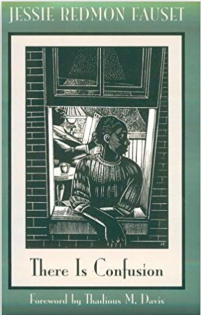
She sounded interesting, so I was pleased to found more about her through the internet, including an article in Wikipedia and a post by Lannyl Stephens in the Greenwich Village Association’s blog, Off the Road. Fauset wrote four novels between 1924 and 1933, as well as poems, short stories and essays. (Wikipedia lists much of her output). Stephens adds that her four novels, which represent the largest output “of any writer during the Harlem Renaissance”, were “known for their portrayal of middle-class African American life.” The anthology’s note explains that she “believed literature could educate readers and correct misconceptions about African-Americans” and that she was “concerned about the ways racism and sexism joined to restrict black women”.
For many, though, her greatest significance lies in her role in the Harlem Renaissance. The anthology’s note states that she was “an important and influential figure of the Harlem Renaissance”, and Stephens quotes Cheryl A. Wall, who wrote Women of the Harlem Renaissance:
The Harlem Renaissance as we know it would not have been possible without her participation. I think we lose a bit of our literary history if we do not acknowledge the contributions of Jessie Fauset.
Nonetheless, after seven years at The Crisis, Fauset left and returned to teaching, which she did until 1944, and which supported her as she continued writing novels. Three of her four novels – There is confusion (1924), Plum bun (1928), The Chinaberry tree (1931), and Comedy, American style (1933) – were written in this period.
Her fortunes decreased through the 1930s, with the Great Depression and the Second World War bringing changes to the literary scene, until she was, as Wikipedia says, “forgotten”. She was not re-discovered until the 1980s, after the second wave of feminism. (A story we know well in Australia too.) Now, she is recognised for her contribution to the Harlem Renaissance. American and African-American literature professor Ann duCille “compares [her] to other Harlem Renaissance writers such as Nella Larsen for expressing feminism in her literary work”.
I came across various and somewhat conflicting assessments of her writing, which may stem from a sense that she was more agenda-driven than interested in pushing expressive boundaries in her writing. Encyclopedia.Com says this:
… in 1958 Robert Bone relegated her to the ranks of the “Rear Guard,” those writers who “continued to write as if the Victorian world were still intact”; and in 1985 Deborah E. McDowell hailed her as a “black woman [who dared] to write—even timidly so—about women taking charge of their own lives and declaring themselves independent of social conventions.”
Shockley suggested that “her novels have been accorded more respect in recent years as a result of the new awareness of the problems she wrote about” and further noted, “By choosing unpopular topics for her fiction [and poetry], Fauset challenged the preconceptions of the publishing industry and opened the way for literature which would appear in succeeding decades.”
So, it seems the jury is still out somewhat, but in her time, her contributions were appreciated by young Harlem Renaissance writers, such as Langston Hughes, who is quoted by Stephens:
Jessie Fauset at The Crisis, Charles Johnson at Opportunity, and Alain Locke in Washington were the three people who midwifed the so-called New Negro literature into being. Kind and critical—but not too critical for the young—they nursed us along until our books were born.
“Mary Elizabeth”
WARNING: SPOILERS (so read the story first, at the link below, if you wish)
As far as I can tell, the first story of Fauset’s to appear in The crisis appeared over 1912/13, making 1919’s “Mary Elizabeth” the product of at least some experience? The story concerns a Black middle-class northern couple, Sally and Roger Pearson, and their elderly house-maid, the titular Mary Elizabeth. It is told first person in Sally’s voice, and starts with her describing a disagreement with her husband, resulting in his storming out, all to do with her inability to make his breakfast when Mary Elizabeth had not arrived on time.
In terms of genre, the story sits within a romance framework. The young couple have had a tiff, but instead of there being a third person, a rival, there is the maid Mary Elizabeth. She turns up for work late, takes in the situation – Sally’s red eyes and the barely eaten now-cold breakfast – but instead of attempting to comfort and sympathise with Sally, she launches into a story about the previous night with her octogenarian husband, which leads into the story of another marriage, that of her parents who were slaves (“so of course they wusn’t exackly married. White folks wouldn’t let ’em”). Soon after Mary Elizabeth was born, their master sold her father, Cassius, “down South”. Her parents didn’t see each other for another 26-years by which time both were “married for real”.
For Sally this is an “unspeakable tragedy”, and she sends Mary Elizabeth home with a gift, saying she, herself, will put on dinner for her husband that night (something she has already told us she finds easy. It’s just breakfast she can’t do!) She reflects that she hadn’t thought about slavery for a long time, and that, in fact, none of her family had been slaves. Roger soon returns home, and the story has the expected romantic resolution.
So, did Mary Elizabeth know what she was doing? That is, showing a young comfortably-off woman how lucky she was? Probably. Was Fauset’s aim here to remind such young couples, and her readers in general, of their heritage? Maybe. But here is the point I really want to make. The story end with this:
‘… Dear loveliest, if I had been Cassius,’ — he caught my hands so tight that he might hurt them, — ‘and I had married fifty times and had come back and found you married to someone else, I’d have killed you, killed you’.
Well, he wasn’t logical but he certainly was convincing.
So thus, and not otherwise, Mary Elizabeth healed the breach.
“I’d have killed you, killed you”. I don’t know whether Fauset meant this to be a happy ending, but surely these hints of male entitlement (he could marry “fifty times”) and power (“I’d have killed you”) are there for a reason, and that Fauset is subtly conveying that young Sally does not have agency. Indeed, as a well-off middle-class woman, she seems to have less than the poor Mary Elizabeth? That line – “Well, he wasn’t logical but he certainly was convincing” – seems chilling to me. At the very least, this story confirms the anthologists’ note that Fauset was aware of sexism’s impact on women.
Was Fauset a subversive writer? Robert Bone, quoted above, sees her as conventional, but Deborah McDowell recognises something more. I’d need to read more to know, but with my 21st century eyes, I feel like Fauset was treading a fine line here.
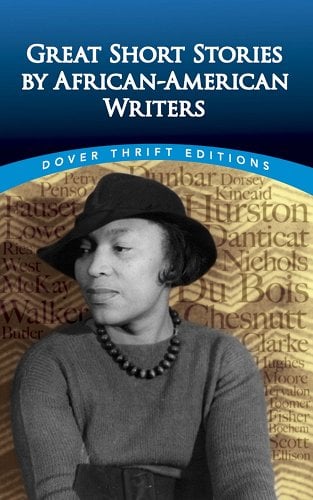
Jessie Fauset
“Mary Elizabeth” (first published in The crisis 19, December 1919)
in Christine Rudisel and Bob Blaisdell (ed.), Great short stories by African-American writers
Garden City: Dover Publications, 2015
pp. 64-71
ISBN: 9780486471396
Available online

