My reading for Buried in Print Marcie’s annual MARM month has been both sporadic and minimal, to say the least, though last year I did read a whole book, as against the short stories I did the previous two years. This year, I have read nothing. My excuse is – well, no-one wants to hear excuses – so I’ll just say that travel, some major volunteer commitments and a bout of Influenza A over the last three months have got me rather behind in blogging.
However, I did want to contribute something, and suddenly an idea came to me. I mentioned, in my latest Monday Musings, a visit Margaret Atwood made to Canberra in 2001 during which she was interviewed by one of Canberra’s most loved and recognised writers, Marion Halligan. (It wasn’t the first time Atwood had been to Canberra. Back in 1982, she was the third author featured in the literary lunches I featured in that Monday Musings. She was so popular, wrote The Canberra Times, that they had to move the lunch from the Great Hall in University House to the Canberra Rex Hotel!)
Anyhow, as I wrote in my post, that 2001 conversation between Atwood and Halligan was unforgettable, largely because of Atwood’s slipperiness and fierce intelligence. My reading group friends and I loved the way Halligan rose to the challenge with humour and grace. Intelligent, herself, she was no pushover. I have tried to find a report of that event, but so far with little luck. I did find a reference to Margaret Atwood’s being in Canberra in 2001, in an article in The Canberra Times. The journalist Bron Sibree says:
Erudite and clever, with a keen sense of play, Atwood is as unpredictable in conversation as she is in her novels. And, just like her novels, which sparkle with insight, wit and a probing intelligence, she is, without fail, excellent company for the long haul.
That sounds about right. “Unpredictable” and “probing intelligence” is what we experienced.
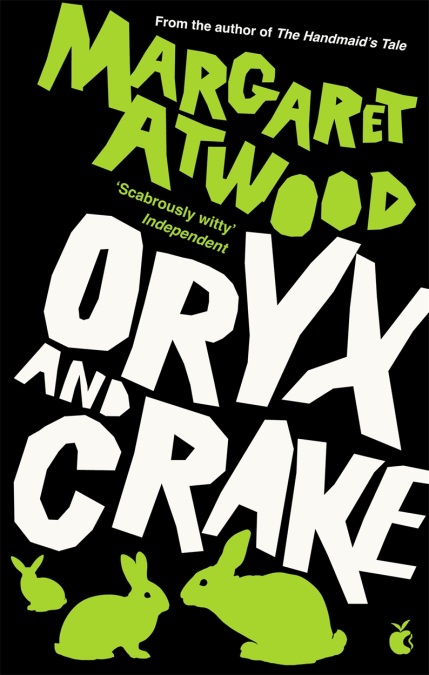
Margaret Atwood was back in Canberra in 2002 to promote Oryx and Crake. Marion Halligan reflected on their interview, years later in 2019, when she was reviewing The testaments:
She [Atwood] displayed habits that I have since observed in the interviews for her latest work: she simply does not answer any questions about the book. She is entirely charming about it but just doesn’t do it. This was quite hard for Andrea and me, since there was a theme we were supposed to be discussing. We did our best. We told ourselves that she was tired from her book tour, something like seven cities in six days.
Nonetheless, it was apparently a wonderful event, partly because, in response to a question during question time, Margaret Atwood “made a whole series of loon calls, wonderfully musical and most apposite to the book.” Moreover, Halligan wrote that
I have to say I am absolutely sympathetic with her reluctance; her point is that she has written the book, you have it to read, no need to say anything more about it. And I am going to follow her example in this review and not talk about what it’s about …
(Oh, we miss Marion. Genuine, warm, and fiercely intelligent herself. Interestingly, Halligan and Atwood were born 5 months apart)
All this is a very long intro to my idea which was that it might be interesting to see what Halligan thought of Atwood’s writing. So, in the rest of this post, I will share some excerpts from a few of her reviews of Atwood’s writing.
On Atwood’s novel, Bodily harm (1981)
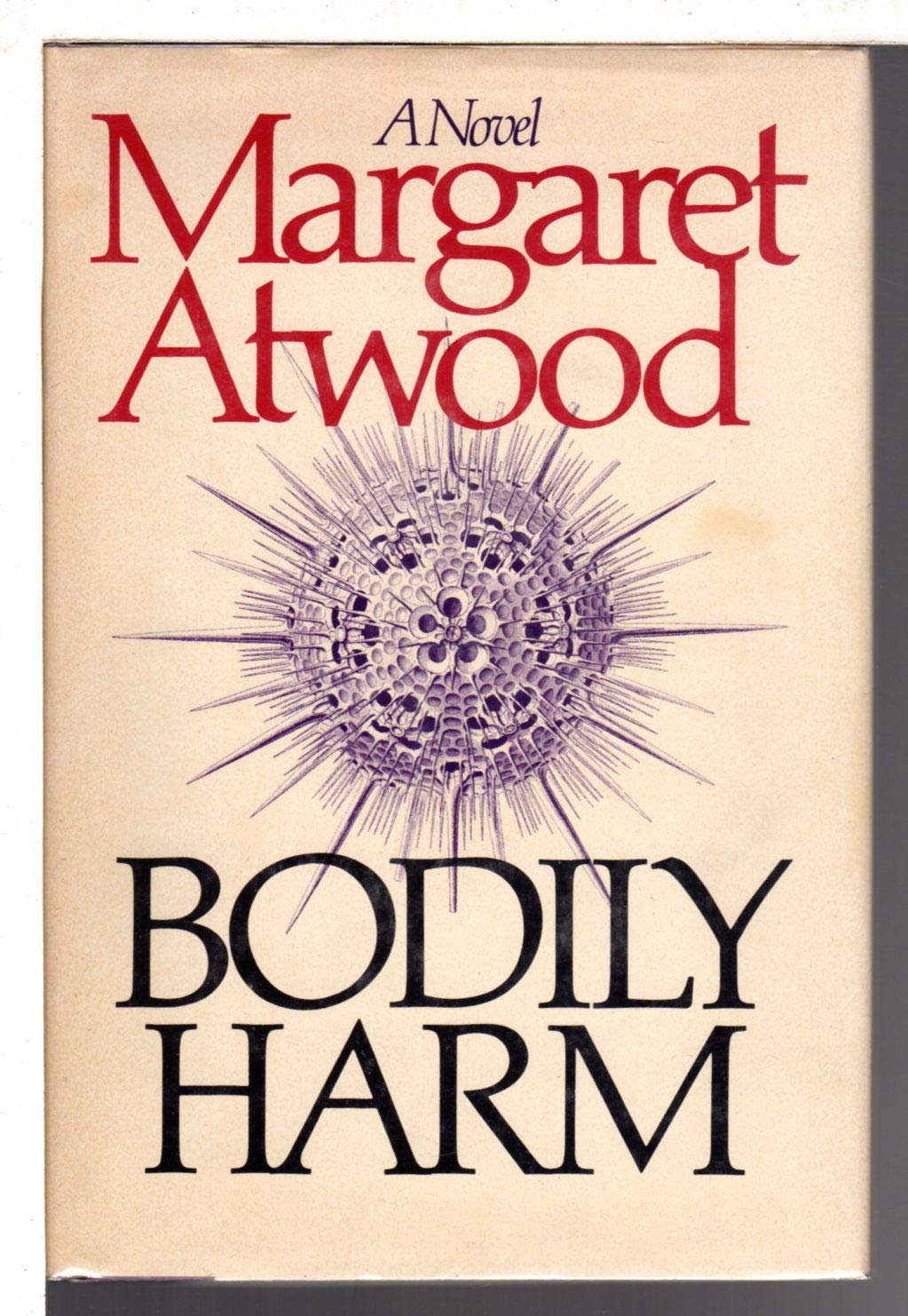
In her review of Bodily harm in The Canberra Times in 1982, Halligan describes the book’s story at some length, and then says,
‘Bodily Harm’ is a rather uncomfortable book. Rennie is honest and worried and brings out the bleakness of the world she inhabits. It’s a quite different experience from a previous Atwood novel, ‘Lady Oracle’; there, life is real, life is earnest indeed, but while it is the stuff of such high comedy it is not at all difficult to take.
But, Atwood was a writer as well as a reviewer, and she loved words. She concludes:
Her own prose [as against her character Rennie’s] is superb; a kind of highly-wrought vernacular, elegant and perceptive, and capable of carrying much meaning. If in this novel it is not so rich as in ‘Lady Oracle’, and the tours de force less spectacular (though present, in the voices of Lora and Jocasta, for instance), if it is a book more spare, less gay, more difficult in its subject matter, it certainly both offers and demands an honesty that compels our respect.
On Dancing girls (1977)
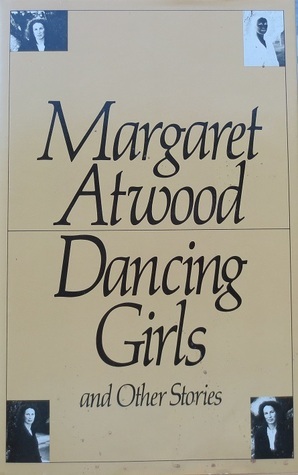
While Atwood’s debut short story collection was first published in 1977, in 1983 Halligan reviewed the 1982 edition published by Jonathan Cape (but my dull cover is not that one!) Like Atwood, Halligan was also an excellent writer of short stories so was well positioned to review this collection too. A few paragraphs into the review, she again focuses on the writing, and mentions a recurring theme concerning the idea of an outsider:
It’s a pleasure to taste again her lovely lucid vernacular, that prose highly yet subtly wrought, that art apparently artless. Some of the stories — all written in the ’70s — are in the first person, the narrator, sometimes the protagonist, sometimes a person trying to understand.
The tone varies, but mostly they are informed by the awareness of an outsider, a person who, often through cleverness, is apart from the comfortable ordinary world.
She then writes about Atwood’s recognition of the challenges of “language” and communication in life – and in writing. Indeed, the review is titled, “Apposite words on language failure”. She concludes with:
Canada is a relatively modest ex-British country dwelling on the edge of superpower America, just like Australia. I think readers in this country will find her perceptions of life there remarkably apposite to their own experience.
On Murder in the dark (1983)
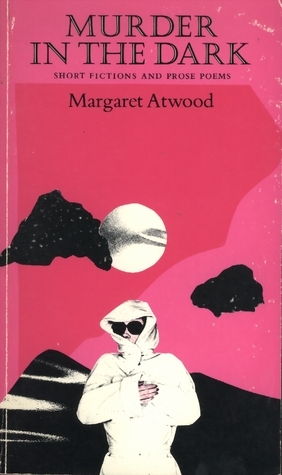
I’m not familiar with this book, but in her short 1984 review, Halligan describes it as having “the quality of a commonplace book, and of a notebook”. I love the sound of it. She describes it as
an artist delighting in her craft, playing with, wooing, polishing, teasing, pursuing the words she evidently loves, persuading them to stretch themselves to her meanings, and all with a simplicity that is breathtaking in its deception.
She then briefly discusses the content and the experience of reading it, and concludes, “simply a pleasure”.
Finally
I could go on, finding more reviews, but you get the gist. Halligan admired Atwood as a writer. She also admired the way she tackled the significant issues we confront, including gender, power, survival, the environment and, particularly, how language operates to oppress or can be used to fight back. Her review of The Testaments is a good example of this, and you can read it here. For Halligan, Atwood is “one of the great mistresses of English prose”. The fact that so many have been taking part in #MARM for several years suggests that many of us agree.
Written for Marcie’s #MARM2026

