When this post is published Mr Gums and I will be in Germany, having just spent three days in Vienna, so I thought to write something about Australian novels set in Germany. I wrote this post before we left, because I knew I’d have little time while we’re travelling.
Mr Gums lived in Germany for around a year in the mid-1970s, and we have visited it a couple of times since then, most recently in 2013 when we spent time around Baden-Württemberg, then in Weimar, Berlin and, more briefly Leipzig, Mainz and Bonn. This trip we are focusing on the south – Bavaria and its lakes – before heading into the Austrian Tyrol, then through the alps (mainly in Northern Italy) before ending up in France, where we will spend about ten days before returning home.
I have read a few Australian novels set partly or completely in Germany, and knew of a few more, but my research uncovered so many more that my list will end up being more selective than I had initially expected. Why such fascination with Germany? Well, that would take an essay for which I don’t have time now. Modern German culture (music, literature, and art from the 17th century on) has influenced Australian culture, directly or indirectly, from early in the colony, through to post-war migration, and beyond, particularly with the re-invigoration of German life – and counter culture – after the fall of the Berlin Wall. German explorers (such as Leichhardt), artists (Eugene von Guerard, Austrian-born but of the Dusseldorf School), anthropologists and missionaries (Carl Strehlow and his Australian-born son Ted) made their way here in the 19th century.
This long connection between Australia and Germany has continued, barely broken by the wars. Germans continue to come to Australia to live, or as tourists or on cultural exchange. And Australians seek out Germany, particularly for its high culture (in the 19th century) and counter-culture (in the 1930s and post-1989).
My research turned up quite a lot of nonfiction too, but I hope to share those in another post.
How to list them? By Region? Alphabetically by author? Chronologically by publication date? Chronologically by setting? Each one has merit. I’ve decided to go setting, divided into periods, and then alphabetically by author.
19th to early 20th century
Novels from this period are hard to categorise, but reflect the intellectual excitement of Germany during this time. It was a major centre for higher education, classical music training, and scientific research. These are reflected in the novels set during this time.
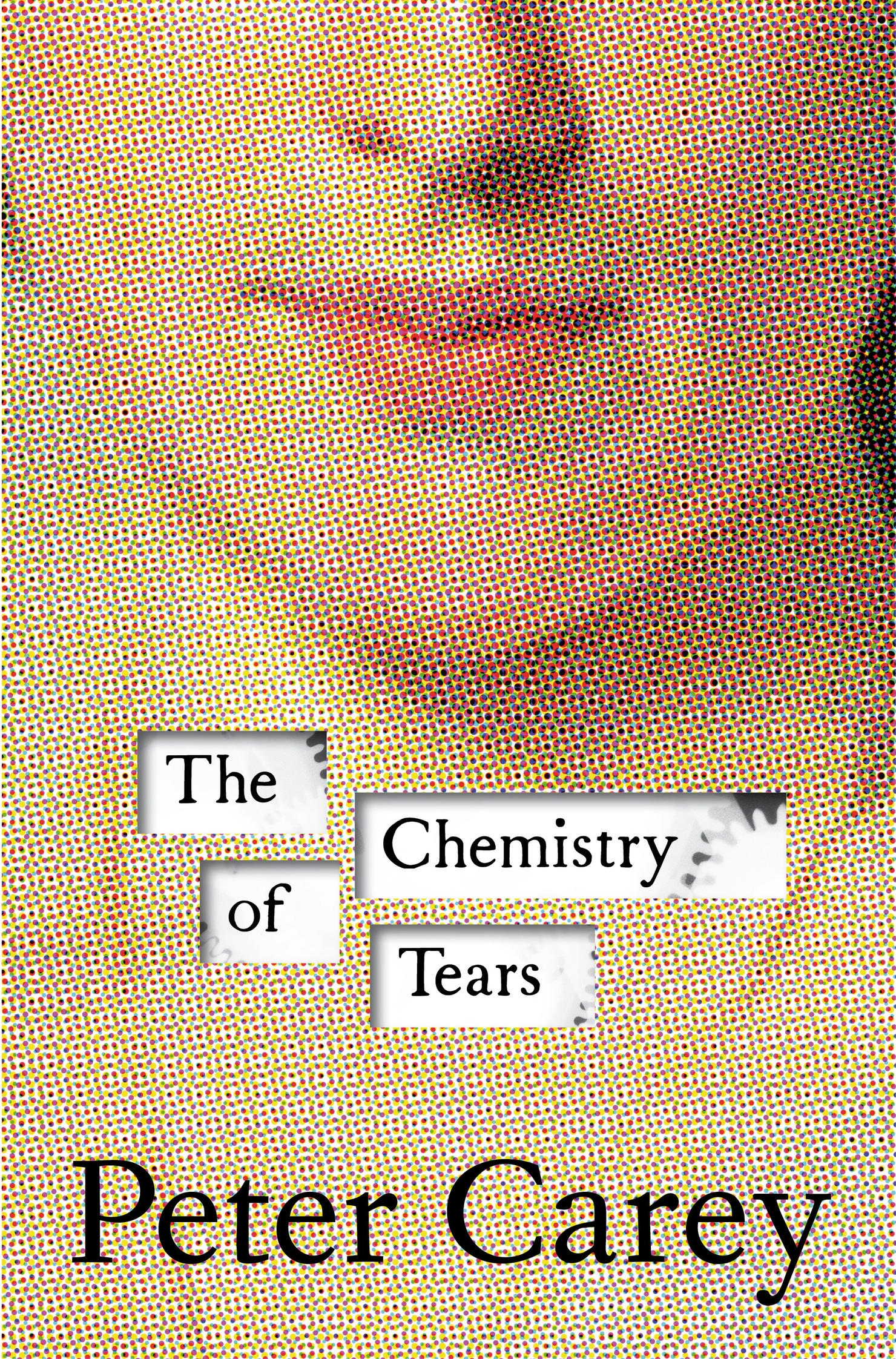
Peter Carey, The chemistry of tears (2012, my review): draws from the scientific aspect; it moves between London (2010) and Furtwangen (1854), and is set around the commissioning, and later conservation of, an automaton (mechanical clock).
Henry Handel Richardson, Maurice Guest (1908): draws from Germany as a musical mecca, and is set in the musical circles of turn-of-the-century Leipzig; it is about a love affair between a young English would-be pianist Maurice Guest and an Australian woman, Louise Dufrayer, who has been left by her violinist lover.
Elizabeth von Arnim, Elizabeth and her German garden: (1898, read long before blogging, Brona’s review): Is it a novel? And, is Elizabeth von Arnim Australian? Both questions are valid and the answers to both are equivocal, but I include it here because when I first read it in the late 1980s, von Arnim was presented to me as Australian! (She was born here, but moved to Europe with her family when she was 3.) This diary-style novel draws on her life in the German garden of her wealthy husband, and conveys a woman champing at the patriarchal bit!
Other books I found include Valerie Volk‘s, In Search of Anna (2020), which starts in 1889 Germany, but moves to Australia where protagonist Anna Werner goes to search for her son becomes enmeshed in Australia’s German immigrant community. And, Les Murray‘s Fredy Neptune, an epic, monumental, sprawling novel-in-verse follows a German-Australian sailor who, after witnessing an atrocity in Turkey during World War I, suffers a psychosomatic loss of his sense of touch. His picaresque journey includes the horrors and absurdities of early 20th-century Germany.
1930s through to the fall of the Berlin Wall
Not surprisingly, World War 2 and the Cold War, culminating in the fall of the Berlin Wall in 1989, interested Australian writers. The war-time stories deal with themes like survival, from those who tried to live within the Nazi regime to those did what they could to oppose it. The later set novels include stories about the politically-motivated and the more personally-find-yourself ones.
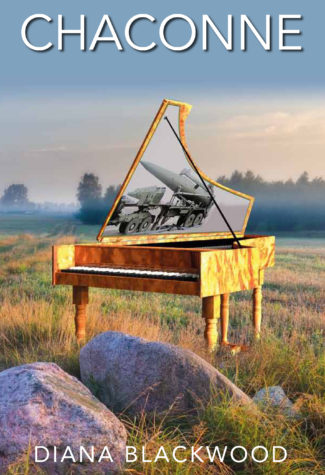
Diana Blackwood, Chaconne (2017, my review): set in the 1980s during the Cold War, starts in Paris but moves to Germany when the protagonist, a musician, follows a man to a village; a coming of age novel that references both Germany’s musical culture and the moral challenges of living with complex politics.
Steven Conte, The zookeeper’s war (2007): set in 1943 during World War II, the story takes place within the Berlin Zoo, and follows a young Australian woman, and her German husband, who is the zoo’s director and the decisions they must make to keep the zoo going, within an atmosphere or fear and distrust.
Dymphna Cusack, Heat wave in Berlin (1961, Lisa’s review): set in post-war west Berlin amongst the elite, but telling a politically-motivated story about an underbelly of yearning for a return to Nazism.
Kate Forsyth, The beast’s garden (2015): set in wartime Berlin between 1938 and 1943, a retelling of the Grimm brothers’ Beauty and the Beast about a young woman who joins the resistance movement while trying to survive the Nazi regime.
Anna Funder, All that I am (2011, on my TBR, Janine’s review): set in Munich, Weimar Berlin, London, and based on the real-life stories of a network of anti-Nazi activists and writers in 1930s Germany as they attempt to expose Hitler’s regime; a story of bravery and betrayal, risks and sacrifices.
Stephen Orr, Dissonance (2012, Lisa’s review): set in 1930s Germany, and inspired by the ‘Frankfurt years’ of the Australian composer Percy Grainger and his mother Rose; a story about maternal ambition and possession as Germany moves towards war.
Markus Zusak, The Book Thief (2005, my review): set in Germany during World War II, this book, narrated by Death, follows a young girl named Liesel living near Munich with the family who fostered her and the young Jewish man they hide in their basement.
Other books I found include Tania Blanchard‘s The Girl From Munich (2017) and sequel Suitcase of dreams (2018), which start in Germany in the final years of WW2 before moving to Australia for a German-Australian immigrant story. There are also many WW2-set books set in other places but featuring German characters, including these two based on real people or events: Thomas Keneally’s Schindler’s ark (1982) which is set in Poland during World War 2, but is about the German industrialist who saved over 1000 Jews; and Steven Conte’s The Tolstoy Estate (2020, my review), most of which takes place at the end of 1941, when a German army medical unit established and ran a hospital in Yasnaya Polyana, Tolstoy’s estate, south of Moscow.
Contemporary Germany, later 20th century to the present
The later-set novels tend to focus on younger protagonists, looking “to find themselves” in one way or another. Many were drawn to the excitement of Berlin, a city remaking itself against the backdrop of its rather bleak city-scape. It’s perfect for myth-breaking, or, is it new myth-making, away from the seemingly simple sunniness of Australia.
Pip Finkemeyer, Sad girl novel (2023): set in Berlin, and follows a 20-something Melbourne woman living in the city’s expat community who is trying to write her masterpiece. A GoodReads review concludes that it offers “an intellectual exploration of sadness and self-discovery amidst the backdrop of an intriguing Australian expat’s life in Germany”.
Melanie Joosten, Berlin Syndrome (2011, kimbofo’s review): psychological thriller, set in Berlin, about an Australian backpacker who has a fling with a local Berlin teacher, but passion turns to nightmare when he keeps her locked in his apartment. It’s about power dynamics and obsession, but kimbofo makes the point that Berlin is a good choice of setting, “as the city holds very many secrets of its own”.

Gail Jones, A guide to Berlin (2015, kimbofos review): set in post-Wall Berlin, the novel follows a group of international expatriates living in post-Wall Berlin, exploring grief, memory, the vibrant, gritty nature of the city through a mutual love of Nabokov.
Other books featuring modern Germany include Christos Tsiolkas, Dead Europe, which concerns young Australian photographer who travels through Europe – including Germany. GoodReads quotes Tsiolkas as saying:
In attempting to trace back through the mythologies, lies and truths of history, I want to examine how the legacies of the past still actively disturb our sleep in the present.
It feels like this could be true of many of the books listed here. Regardless, it will be clear from this little survey that Berlin features strongly in these books, although other parts of Germany – including Munich and Leipzig – also pop up. But, over the last couple of centuries Berlin has been a significant drawcard for artists (writers, musicians, visual artists, performers), and this – along with the angst, passions and obsessions so often associated with artists in literature – features strongly in Australian fiction set in Germany, particularly in novels not about the wars.
I did find several other German novels – including by Alan Gould, Leah Kaminsky, Alex Miller, and Gretchen Shirm – but I would love to know about your experience of German set novels written by non-Germans.


Fascinating, thank you. I will read it in detail (so don’t publish this very minor comment!). Moira
It’s automatically published Moira … because you are a pre-approved commenter. I will remove your personal details which seem to come through as I guess you are commenting from the email notification?
I’ve read a few of the books you have listed, mostly pre-blog, but to answer your question I recent read The Nights Are Quiet in Tehran | Shida Bazyar, tr. Ruth Martin about the Iranian immigrant experience in Germany. Pointed Roofs by Dorothy Richardson is about a young woman’s time in Hanover as a teacher at a finishing school for girls.
Australian children’s writer Morris Gleitzman has written a whole award-winning series about Germany and WWII now known as the Felix stories. And Voss is about a German explorer in Australia, to go the other way 🙂
Thanks Brona … the Bazyar sounds worth reading. We are conscious here of Angela Merkel’s huge generosity towards Syrians ten years ago.a huge humanitarian gesture.
I don’t know that Gleitzman series, so thanks for adding that to the list.
It could be a good series to share with your grandies in a few years time.
I will note that down. I have liked the few Gleitzmans I’ve read.
The real question is did you buy more novels in Germany!
Haha Melanie … no, or not yet anyhow.
All That I Am was riveting!!!!!!
Thanks Jinjer … I really should read it.
In trying to think of American fiction set in Germany, I don’t come up with much. Chapters set in Germany appear in Santayana’s The Last Puritan and Erica Jong’s Fear of Flying. And? I guess that there is a German chapter or two in Tender is the Night.
Germany had a considerable influence on American thought, but somehow not American fiction. There are plenty of American novels set in France (including much of Tender is the Night) and Italy. On the other hand one can probably major in philosophy at a good American university without reading a French philosopher later than Descartes, or looking into Croce.
Are you visiting Bozen/Bolzano on your trip? We found it most interesting.
Yes, we are George. Only two nights so don’t have a lot of time but if you have any suggestions we’d love to hear them.
Re Germany and American novels. Does Edith Wharton set anything there? I guess she was more France oriented too.
Interestingly, I was thinking of doing a French version but didn’t get it done before I left. I didn’t find it as easy to find examples.
You should look into the archaeological museum, which is largely about “Oetzi”, the iceman. It can be a bit macabre, if you bother to see the mummy. In general it is fascinating. The museum has what is said to be the world’s oldest snowshoe, six thousand years old.
When we were there, the modern art museum had an exhibit of Olympic torches over the years, which was surprisingly interesting.
And if you are curious about fascist architecture, the old Fascist HQ is an easy walk from the city center.
Thanks George, I have noted all those. All sound interesting to me.
oh darn it George, we didn’t get to these. 1. You had to book, and when we tried to book we found it was booked out two days ahead, so not available until after we left; 2 was a toss up between that and the cathedral, and because the weather had turned foul, the cathedral direction ie into town won; 3. The rain the rain. We came across references to Ötzi though on our Großglockner Drive day so we understand him, but the museum would have been great!
How interesting! I can only think of the Canadian writer Jessica J Lee (via England and Taiwan, I believe) who writes the kind of non-fiction that seems to be about everything all at once, with details about her writing life emerging along the way. Her first book, Turning, talks about her time living in Germany and swimming in the waterways there, and her observations about the natural world and how things/people connect and don’t… but I feel like this experience in Germany emerges in small ways in the other books, later, too. Anyway, I’m sure it was a fabulous trip, even if you didn’t buy any books! Pffft.