Australian Women Writers 2015 Challenge completed

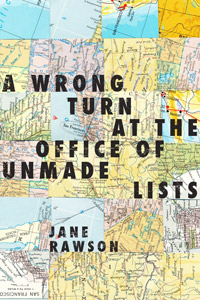
As most of you have heard now ad infinitum, I only do one challenge – the Australian Women Writer’s Challenge. As in previous years, I signed up for the top level, Franklin-fantastic, which required me to read 10 books and review at least 6. I have now exceeded this. Although I plan to continue to add to the challenge, as I’ve done in previous years, I do need to write a completion post so I’m doing it now. I have, so far, contributed 12 reviews to the challenge. RawsonWrongTurnTransitHere’s my list in alphabetical order, with the links on the titles being to my reviews:

Only one of these – Cusack’s – is for a classic and only one – Van Neerven’s – is by an indigenous author. I hope to broaden my reading for the challenge in the second half of the year but given the way the year is shaping up, it may not work out quite the way I’d like. My final post for this year’s challenge will tell the tale.

Do any of you do challenges? And if so, what do they add to your reading? I often see challenges that appeal to me, such as those ones to do with working through your TBR, or reading in an area I’d like to explore more, like Japanese literature, but I feel the completion stress would counteract the value so I resist.

Blogging highlights for 2014

Top posts for 2014

According to my tags and categories, my most popular posts according to WordPress still relate to Australian literature, Women writers, Australian writers, 21st century literature and Review-Novels. However, as in 2013, my most “hit” post* for 2014 was a short story by an English woman, Virginia Woolf’s “The mark on the wall (reviewed in March 2012), presumably because it’s a set text for schools/universities.

My other “top” hits for 2014 were:

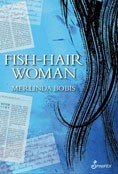
  • Merlinda Bobis Fish-hair woman

    Cover courtesy Spinifex Press

    Australian novel (second highest hit overall): Merlinda Bobis’ Fish-hair woman (reviewed in April 2013). Interestingly, a large percentage of the hits came, I believe, from the Philippines – in the second half of the year. Was it set for study? Was it only just published there? Will it retain this position in 2015?

  • Australian short story (fifth highest hit): Barbara Baynton’s “The chosen vessel” (reviewed in November 2012). It was my top Australian hit last year. I’m guessing that, like the Woolf, it’s a set text.
  • Non-Australian novel (sixth highest hit): Pramoedya Ananta Toer’s This earth of mankind (reviewed in June 2009, about five weeks after I started blogging).

The interesting thing is that my top ten reviews are heavily slanted to older novels and short stories. Is this because newer works are widely reviewed across the web resulting in searches first reaching prime sites like newspaper reviews, whereas older works are covered more sporadically so that searches are more likely find them on blogs like mine? Regardless, for me one of the joys of blogging is giving life to older works on the web.

I’m also aware that many of my top hits are for older posts, which suggests that there’s some longterm value in this here litblogging! Then again, perhaps I’m drawing some long bows from minimal data!

Monday Musings on Australian Literature

When I started Monday Musings in August 2010, I’d been blogging for 15 months. I had no idea that I’d still be blogging over four years later, let along still writing Monday Musings, but here I am … I have, I believe, written 224 Monday Musings posts. At times I have wondered what on earth am I going to write about this week, but I’ve discovered that I enjoy the challenge of finding a new angle or a new piece of news or a new theme to explore. One of the reasons I enjoy it is because of all of you who read and comment on them. I love the conversations that often result – and have learnt much from the sharing that has happened. So, thank you for joining in with such enthusiasm and good grace.

Now, what shall I write about tomorrow?

Searches that reached my blog in 2014

Like most bloggers, I love to look at what the people who find my blog have searched on. Due to Google’s encrypted  searching, WordPress captures less information about search terms now, but we still get a few. Here are some of my favourites from this year:
  • describe wolf hall in 20 words: good luck with that. I wonder if my post helped!
  • poem for boys in love and gun: hmm … two of my posts mention poetry and guns so I suppose that’s what the seeker found, but whether s/he found what s/he was looking for I have no idea.
  • australian landscapes nice and simple: well, of course, I mention landscape a lot on my blog but I’d love to know what this person was looking for. A travel blog? An art blog?
  • pickingjob lengly night: no idea what this means but I’m guessing it brought the seeker to my review of Eve Langley’s The pea-pickers.
  • i got the wooden spoon my pants pulled down: whatthe? I think this reached my Delicious descriptions from Carrie Tiffany post.
  • smacking wooden spoon Facebook irish: see above!

Australian Women Writers’ Challenge

awwchallenge2015Of course, I plan to continue to participate in the Australian Women Writers’ Challenge this year, so let this be my announcement post. We are asked to choose a level or create our own. I plan to stick to the top level, “Franklin, read 10, review 6”. I always exceed it, but I don’t plan to challenge myself to read more than I did last year. As I’ve said before, my doing this challenge is a “cheat” because Australian women writers have been my particular interest since the 1980s. If I wanted to undertake a “real” challenge it would be to increase my reading of non-English language writers, but, as I don’t do challenges, I’ll leave that alone!

And finally …

Thanks to everyone who read, commented on and/or “liked” my blog in 2014. I really do appreciate your visiting me here. I wish you all happy reading in 2015.

* The ranking I’m giving excludes the top hit by far which is “Home page/Archives”. I don’t think that counts really.

Reading highlights from 2014

Unlike last year when I crammed all my highlights into one post, this year I’m returning to the two-post approach. This keeps the posts shorter, which better suits this lazy time of year (southern hemisphere speaking anyhow!) So, this post will focus on literary/reading highlights, and the other will share my blogging highlights (such as they are!)

Literary event highlights

I didn’t get to many literary events this year, partly because my year was fragmented with many small trips out of town (overseas and within Australia). Consequently, I only have two event highlights, and a special – well, you’ll see:

  • Les Murray, probably the current grand man of Aussie poetry, at Poetry at the Gods. What can I say about this except that getting a chance to see and hear one of Australia’s most significant living poets in an intimate venue was a treat, and something I’ll treasure.
  • Mansfield Park Symposium during the Jane Austen Festival of Australia. For some reason I didn’t write this most enjoyable event up on my blog. It involved four academics talking about Mansfield Park from different aspects: Janet Lee on letters and letter-writing, Heather Neilson on education, Gillian Dooley on music and its relationship to morality, and Christine Alexander on landscape gardening and the urge for “improvement” in the era. I’m hoping the 2015 festival includes another targeted symposium.
  • Meeting overseas readers. I began discussing books on the Internet eighteen years ago in January 1997 when I joined the “bookgrouplist”. Through this and other online book discussion groups, I’ve “met” a lot of wonderful readers, cyberly! Over time I have also managed to meet some face-to-face. In 2014 I added to my “met” list by seeing* Emmy, Merrilee and Murph in Toronto, Canada, Cheryl in Montreal, and Trudy (a re-meeting, in fact) in Redondo Beach, California. All lovely people. It’s special being able to put faces to the names, and, of course, meeting locals adds to the joy of travel. I thank them all for making the time to catch up.

* POSTSCRIPT: I’m mortified that I forgot to mention meeting cheeky Cheryl and her husband Tony in Montreal – and receiving three sample jars of Tony’s delicious homemade maple syrup. Never name names because you’ll aways forget one!

Aussie reading highlights

Once again, rather than trying to list my “top [X] books of the year”, I’m going to share some highlights:
  • Classics: I didn’t make great headway this year in my reading of Australian classics, but I did read the last two short stories in Barbara Baynton’s Bush studies collection, having started it in 2013. She’s a significant Aussie writer who offers an important counterbalance to the bush-writing of people like Henry Lawson and Banjo Paterson. I have another classic part-read on my Kindle. With any luck you’ll see a review of that appear some time soon …
  • Juvenilia: At the aforementioned Mansfield Park Symposium I met one of the speakers, Christine Alexander, who also happens to be Director and General Editor of the Juvenilia Press. They have published several volumes of Jane Austen’s juvenilia, but they also publish juvenilia from around the world, including Australia. I bought several, and to date have enjoyed Mary Grant Bruce, Eleanor Dark and Ethel Turner. Fascinating stuff if you are interested in writers and their writing lives.
  • Awards: Three of this year’s award winning books particularly impressed me: Evie Wyld’s somewhat controversial All the birds, singing (Miles Franklin Award), Richard Flanagan’s generous The narrow road to the deep north (Prime Minister’s Literary Award, among others), and Clare Wright’s The forgotten rebels of Eureka (Stella Prize).
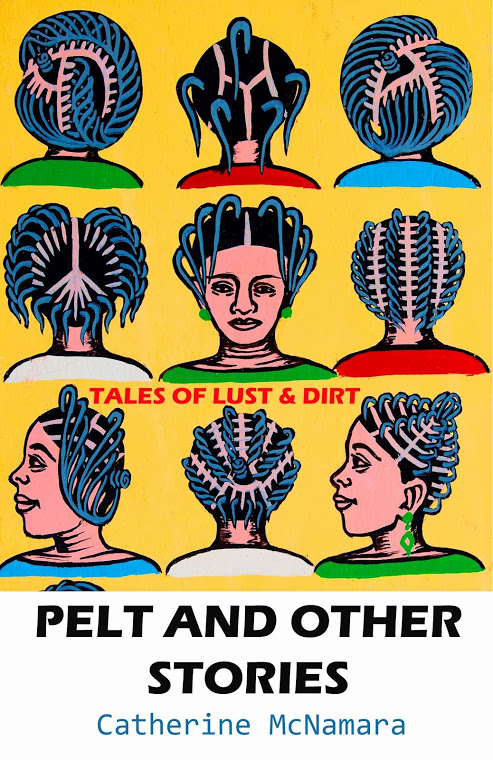
  • Catherine McNamara, PeltShort stories: While I always read short stories, I read more anthologies and collections in 2014 than in 2013. The standout anthology was Australian love stories edited by Cate Kennedy. It left me with such a buzz, for the variety of stories and styles, and the depth of emotions presented. I also loved the latest Margaret River competition anthology, The trouble with flying and other stories, and The great unknown edited by Angela Meyer. And I enjoyed expat author Catherine McNamara’s Pelt and other stories for its unsettling subject matter, often involving exploitation and power imbalances in relationships, and for her richly expressive style.
  • TBR reading: I actually read 4 books from my TBR pile. Three were Australian – and all were well worth diving into the pile for: Jessica Anderson’s One of the wattle birds, Sara Dowse’s Schemetime, and Tara June Winch’s Swallow the air.
  • Non-fiction: I read 7 Australian non-fiction books this year, including four memoirs and a biography. I was particularly moved by Margaret Rose Stringer’s tribute to her husband in And then like my dreams, and Olivera Simić’s passion for non-violence in Surviving peace. And I loved Helen Garner’s latest foray into non-fiction, This house of grief. I admire the way Garner can wear her heart on her sleeves while writing with such perspicacity.
  • Small presses: Once again I read some excellent offerings from our small presses, including Nigel Featherstone’s The beach volcano (Blemish Books), Howard Goldenberg’s Carrots and Jaffas (Hybrid Publishers), and Margaret Merrilees The first week (Wakefield Press). They deserve a shout out.
These are just a few from what was another great year of Aussie reading.

Reading highlights from other parts of the globe

While the greatest percentage of my reading was Australian this year, I did read some excellent books from elsewhere. Highlights were:
  • Simone de Beauvoir’s Memoirs of a dutiful daughter. It reminded me that no matter how radical people are, they can never completely escape their childhood influences and the values of their times.
  • Adam Johnson’s Pulitzer prize winning The orphan master’s son. A surprisingly compelling, yet discomforting novel critiquing politics and power in North Korea.
  • Wallace Stegner’s Crossing to safety. My fourth TBR pile read. I love Stegner’s ability to get to the heart of relationships – with warmth and generosity.

Innovative/experimental/different works

Finally, here are a few books that impressed or excited me because of their voice. Some are pretty grim, but I like my reading fare to include books that shock and/or surprise and/or test my expectations …

  • Kirsten Krauth’s just_a_girl: a story that challenges us to think about young girls, their sexualisation and how they might safely traverse our on-line world.
  • Morris Lurie’s Hergesheimer in the present tense: a novel in thirty stories about an ageing writer coming to grips with love, life and writing.
  • Annabel Smith. The arkEimear McBride’s A girl is a half-formed thing: a confronting story about family, disconnection and the urge to self-harm, told in an idiosyncratic voice that reaches your core.
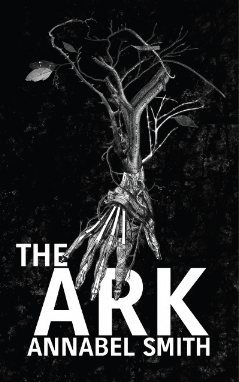
  • Annabel Smith’s The ark: an inventive modern epistolary novel/app/e-book, dystopian speculative fiction set in a post-peak oil world.
  • Ouyang Yu’s Diary of a naked official: another challenging story, this one about sexualisation and self-indulgence in a materialistic world.

All in all, an exciting year of reading that included some challenging, confronting and controversial reads. I wouldn’t have it any other way.

What were your standout reads for the year?

Monday musings on Australian literature: Australian Women Writers’ Challenge 2014


awwchallenge2014As I’ve done over the last two years, I’m devoting my last Monday Musings for the year to the Australian Women Writers Challenge. This challenge, which most of you probably know by now, was instigated by Elizabeth Lhuede in response to concerns in Australian literary circles about the lack of recognition for women writers. I am one of Elizabeth’s band of volunteers – responsible for the Literary and Classics area – and, of course, am also a challenge participant.

The challenge has had another successful year with continued commitment by a wide range of reviewers. In 2015, we will be moving to a self-hosted site and plan to produce a single searchable database of all reviews logged since the challenge started in 2012. This will provide an excellent entree to a wide variety of Australian women’s writing across all forms and genres that has not been easy to access to date.

As last year, the Challenge ran some special events during the year, including a focus on indigenous writers, writers from diverse backgrounds, and writers with a disability. These events have included interviews and guest posts, and I thought I’d share some with you here, because they are worth reading and because they demonstrate the depth of diversity the Challenge reaches for:

  • Honey Brown (Women writers with a disability): on living with paraplegia and the surprising links between creativity and coping with adversity.
  • Eleanor Jackson (Queer women writers): on how being a “bisexual, biracial female writer” affects her art.
  • Ambelin Kwaymullin (Indigenous women writers): containing reviews of 5 works by Aboriginal women (including one by an Aboriginal community) which “offer insights into Aboriginal culture and existence”.
  • Donna McDonald (Women writers with a disability): on the struggle for rights for people who are deaf or hard-of-hearing, and how exhausting it is.
  • Yvette Walker (Queer women writers): on two queer writers – Elizabeth Bishop and EM Forster – who have inspired her.
  • Jessica White (Women writers with a disability): on her deafness which brought isolation and dislocation but some consolations too!

If you are interested in the challenge, you can check it out here. I don’t believe the sign up form is ready for 2015, but keep an eye on the site. We’d love you – whether you are female or male – to join us next year. The challenge can also be found on Facebook, Twitter (@auswomenwriters), GoodReads and Google+.

As regular readers know by now, the Australian Women Writers’ Challenge is my only challenge. This year I posted 30 reviews for the challenge, three more than last year. My breadth is similar to last year, except interestingly, I reviewed no poetry this year, whereas last year I contributed three poetry reviews. What happened? However, I am pleased that I managed to read four books from my TBR pile for the challenge. Now that is something worth crowing about! Anyhow, here’s my list (with links to the reviews):

FICTION

SHORT STORIES

NON-FICTION

ESSAYS

JUVENILIA

Again, I have enjoyed taking part in the challenge – and plan to take part again next year, both as volunteer and participant. I particularly want to thank Elizabeth and the rest of the team for making it all such a cooperative, and enjoyable experience. I look forward to 2015.

Monday musings on Australian literature: Guest post by Dorothy Johnston, writer and Barbara Jefferis Award judge

Literary awards, their role and import, have come under frequent discussion here at Whispering Gums. So, when writer Dorothy Johnston, whose The house at number 10 and Eight pieces on prostitution I’ve reviewed and, more relevantly, who was one of the judges for this year’s Barbara Jefferis Award, suggested a guest post on the Award, I was more than happy to take her up on it.

I have never met Dorothy but I have “known” her for a long time as she was one of Canberra’s famous Seven Writers who published the anthology Canberra Tales in 1988. I became “reacquainted” with her more recently via blogging and her appearance in The invisible thread anthology edited by Irma Gold for Canberra’s centenary last year. It’s been a lovely rediscovery. Dorothy has published nine novels – literary fiction, and crime-mystery novels, mainly. Two of her novels – One for the master and Ruth – have been shortlisted for the Miles Franklin Award. Dorothy blogs at her website Dorothy Johnston.

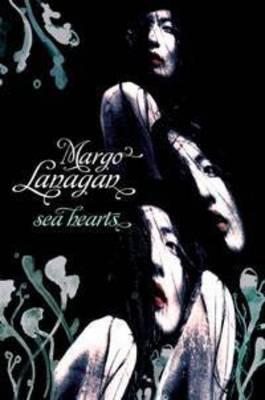
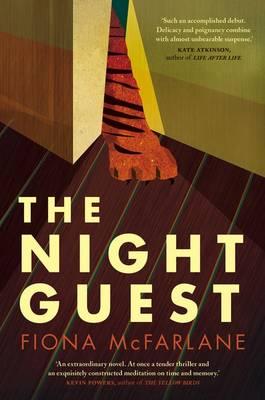
For those who haven’t heard, this year’s Barbara Jefferis Award was shared by Margo Lanagan’s Sea hearts and Fiona McFarlane’s The night guest. Here is Dorothy’s story about her experience as a judge.

***

The idea of splitting the Barbara Jefferis Award between The Night Guest and Sea Hearts did not come up before the three judges (myself, Margaret Barbalet and Georgia Blain) met at the Australian Society of Authors (ASA) in Sydney, at the end of September.
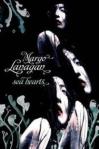
LanaganSeaHeartsI enjoyed working through the 72 entries, making notes, keeping in mind the selection criteria, (a work of literary merit that showed women and girls in a positive light), starring the books I knew I would want to go back to. I had no idea whether my favourites would find favour with Margaret and Georgia.

After about 6 weeks, we exchanged our long lists. One novel was common to all three of us – Fiona McFarlane’s The Night Guest, a brilliant study of a woman who believes there is a tiger in her house. Others on my long list didn’t show up on those of the other two judges, but both had included Margo Lanagan’s Sea Hearts. I went back and re-read it more carefully, and was, as the saying goes, blown away.

These two entries stayed at the top from then on, while we emailed back and forth. Part of the reason for having 72 entries is that the award covered 2 years – 2013 and 2014 – and included self-published titles. By far the greatest number of entries came from the big publishers – Penguin, Allen & Unwin, Random House – though, as it turned out, 4 of the 7 shortlisted book were published by small, or small to medium presses.

We didn’t have to make a firm decision on our shortlist before the meeting; but once in Sydney we only had a morning to finalise it, then choose a winner, and then we had to spend the afternoon writing our report.

I’d had to give up some of the books on my long list because they didn’t find favour with Margaret or Georgia, and the same went for them. One I regretted letting go was Elemental by Amanda Curtin, a terrific story of a young girl growing up in a Scottish fishing village, and what happens to her subsequently. On the other hand, All The Birds Singing, by Evie Wyld, which the others both included, and which, as readers will know, won the Miles Franklin, I thought was over-rated.

McFarlaneNightGuestIf I had to make one general remark about the books that made it onto the shortlist, I would say that each one is utterly itself. What do I mean by this? I mean that, a few pages in, I recognised the voice as original, distinct, perfect for the narrative; they fitted hand and glove. So often I found that an author began promisingly, but then could not sustain the voice. Or, right from the beginning, the author pandered to one contemporary fashion or another. When you’re reading your way through 2 years of entries, you quickly learn that following the fashion is a bad idea.

There’s no whiff of conformity amongst the shortlist. Amy Espeseth’s Sufficient Grace focuses on two young women and their difficult lives in an isolated religious community. The Life and Loves of Lena Gaunt, by Tracy Farr, introduced me to an extraordinary musician and her instrument, the theremin.

Pilgrimage, by Jacinta Halloran, is about two sisters, one of them a doctor, and what happens when their mother is diagnosed with motor neurone disease.

Margo Lanagan’s Sea Hearts takes ancient selkie legends as its starting point and moves in a wholly original direction. Fiona McFarlane’s The Night Guest is another novel that borders the surreal in an original and quite wonderful way. The First Week, by Margaret Merrilees, is, by contrast, a realist tale that cuts to the bone.

The Mountain by Drusilla Modjeska, an ambitious and far-reaching story of Papua New Guinea in the years since independence.

We also highly commended Laura Buzo’s Holier Than Thou.

But back to that meeting at the ASA. We already knew each other’s preferences. We’d picked the same top two and could not choose between them. There didn’t seem a hair’s breadth, or knife point to tip the balance. We called in Lucy Stevens, who was overseeing the judging process. Lucy sat at one end of the table balancing the two books in her hands while we reached the decision to award the prize to both.

The presentation was held in the renovated foyer of St Barnabas Church, Broadway, a lovely light-filled space. It was a beautiful Sydney spring evening. There was music and champagne. I realized – not that I hadn’t known it before, but it came to me suddenly – that we were here to celebrate books and their authors. Angelo Loukakis, Executive Director of the ASA, welcomed us. David Day, who is Chair of ASA’s Board of Directors, spoke about Barbara Jefferis and the bequest. Tara Moss spoke about women and the arts. I looked around me. Everyone in the room cared about, and many worked hard to foster and promote, Australian literature. When I stepped up to the podium, to give my judges’ speech, I had a big smile on my face.

***

Thanks a bunch Dorothy for giving us your insider’s perspective on awards judging. I can see it wasn’t an easy job and love that you’ve shared your thoughts with us.

Dorothy (I’m sure) and I would love to hear your thoughts – on awards, on judging, on these particular books, or on anything else her post has inspired you to think about.
My View from Here is over at BookerTalk

My Social Media Pic

My Social Media Pic

Karen who writes the BookerTalk blog asked me to write about reading and writing here in Australia for her inspired View from Here series.

If you’d like to read what I wrote, check out my post on her blog. If you’re an Aussie, I’m sure Karen would love you to add your own perspectives in the comments, because I couldn’t say all that I’d love to have said. Of course, if you’re not an Aussie, please comment too!

If you’d like to read the other View from Here posts, check out this list. You might be surprised by what you find. I’ve certainly enjoyed them.


Monday musings on Australian literature: Reading Matters’ ANZLitMonth

ReadingMattersANZLitLogoThis is the third year that expat journalist Kim has hosted an Australian Literature month on her blog Reading Matters – except that this year, for the first time, she has included New Zealand literature in her scope. As she writes in her introductory post, her aim is to celebrate and “raise awareness of the amazing range of literature produced by these two countries, much of which never gets publicised beyond their shores”. 

Over the month, which is nearly over, she has reviewed several books from the antipodes, highlighted some current award winners and interesting shortlists, used Australian bloggers for her Triple Choice Tuesdays, and published some specific suggested readings posts (including two guest posts). 

With Kim’s permission, I’m providing links to the suggested readings posts in today’s Monday Musings. As a reader of my blog, you’ve already shown an interest in Aussie literature, and so it’s likely the most of you will probably have heard of many of the books listed in these posts, but you never know …

Kim’s Triple Choice Tuesdays are always worth checking out. In them she asks her chosen blogger to name three books: a favourite, one that changed his/her world, and one that deserves wider recognition. The Aussie bloggers featured (so far) this month are:

  • Kirsten Krauth, author of just_a_girl (my review)
  • Book to the Future (Michelle McLaren), whose plan is to read (and review) a book from every year of the 20th century in chronological order
  • Alan Carter, crime novelist who was born in England but emigrated to Australia in 1991

These links provide just a sample of what has been happening over at Reading Matters this month. To see more, check out this link to all posts for the month …

Thanks Kim for hosting another month promoting our literature – and for the opportunity to write a guest post. I look forward to next year’s event!

Five years old today!

I woke up in cold-ish Toronto this morning to a congratulations message from WordPress telling me that it’s 5 years since I joined WordPress. I knew it was coming up this month but hadn’t taken note of exactly when.

I’d like to have written a more considered post about this landmark but I’m so taken up with travelling, and seeing our lovely daughter for the first time in 21 months, that my mind is “confuzzled”. That’s my new favourite word heard in the charming Indian movie 2 States that we saw yesterday.

But, I can’t let this day pass without thanking all you readers who have made writing this blog such a delight. I started it primarily as a discipline for writing up my thoughts on my reading. I figured that having a blog would make me get my ideas together. It has. But I was nervous about the public aspect and did my best to keep a low profile.

However, it’s hard to stay completely quiet when there are so many great blogs out there to read and comment on, and so many wonderful commenters on my own blog to respond to – and so it is to all of you that I say thanks today. I love reading the blogs of those of you who have them. And, of course, I love reading the comments made on my own, and enjoy the conversations we have. It does cut into my reading time but, since reading is only one aspect of a literary life, that doesn’t really matter does it? It’s the conversation that reading engenders which enhances our lives … Or so it seems to me.

A man [a person!] only learns in two ways, one by reading, and the other by association with smarter people. – Will Rogers

Thanks to all of you who have helped me learn …

Australian Women Writers 2014 Challenge completed

awwchallenge2014Regular readers here know by now that I only do one challenge, and that’s the Australian Women Writer’s Challenge. As in previous years, I signed up for the top level: Franklin-fantastic. This required me to read 10 books and review at least 6. I have now exceeded this. I will continue to add to the challenge, as I’ve done in previous years. However, one of the requirements of completing the challenge is to write a completed challenge post. Here is that post.

I have, so far, contributed 14 reviews to the challenge.

Here’s my list in alphabetical order, with the links on the titles being to my reviews:
Only two of these – Baynton and Anderson – are for non-recent works. I would like in the second half of the year to read more backlist, more classics. Let’s see what happens when I write my end-of-year post for the challenge.


Notable reads and highlights from 2013

Last year I wrote two highlights posts – a general one on blogging and reading, and a specific one targeting books. This year, I think I’ll revert to one post and combine the two. (I’ll provide links to my posts where relevant – not to promote myself, but to make it easy for those of you who’d like to check out anything I refer to that you missed first time around).

Literary event highlights

Sara Dowse text

Sara Dowse (Courtesy: NewActon.Com)

I managed to get to a few literary events this year – including some great book launches – but the three that most stood out for me were:

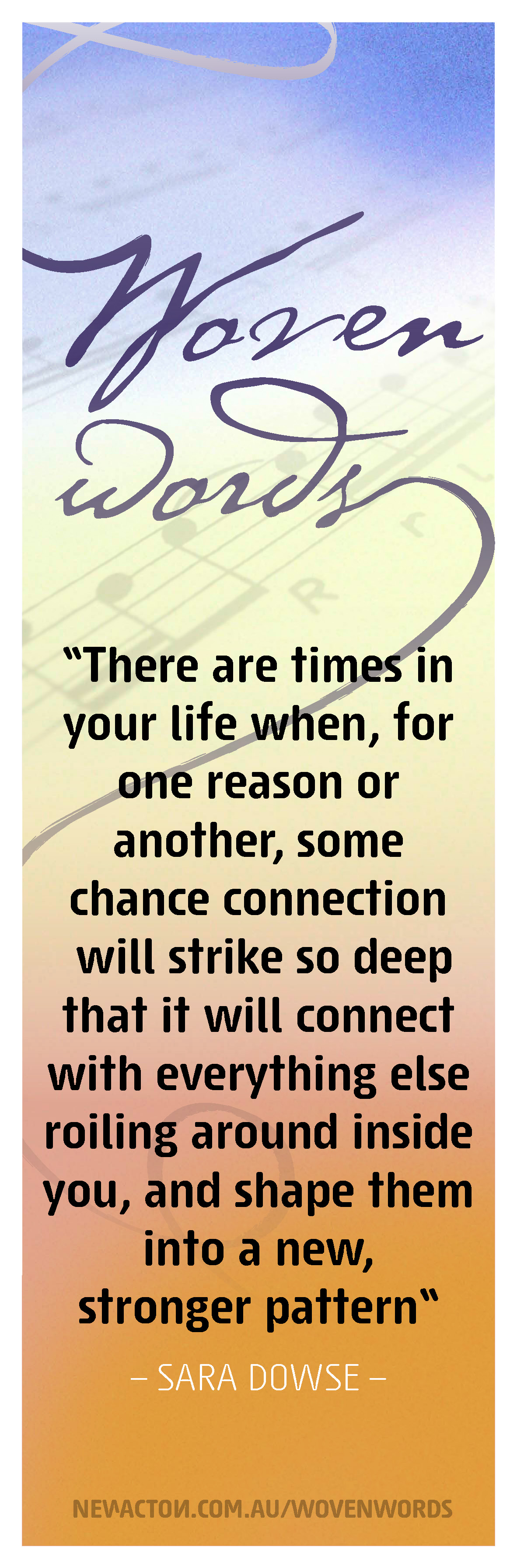
  • Woven Words: an inspired and inspiring night, associated with The invisible thread anthology, that blended words with music chosen by the guest authors.
  • Writing the Australian Landscape Seminar: a wonderful weekend of speakers organised by and held at the National Library of Australia. Not only was it wonderful to hear some favourite writers in person but the content gave me much to think about. Two ideas that have remained with me are Murray Bail’s suggestion that Australians rely too much on the strangeness of our landscape to construct our identity, and the wider issue regarding reconciling settler Australians’ experience of landscape with indigenous Australians’ relationship to country.
  • Childers Group’s forum on The role of the public arts critic. I particularly loved the idea that the critic is “a trader in ideas”, It takes away the notion of assessment and judgement and focuses us on what the arts are really about – which for me is to provide us with an opportunity to reflect on who we are, what we think, where we’ve come from and/or where we are going.

Aussie reading highlights

I don’t like to list my “top [name your number] books of the year” because it is such a subjective and moveable thing. I prefer instead to name some highlights:
  • The classics: I read a few Aussie classics this year and all were well worthwhile reading, but the two highlights were being able to read Patrick White’s first (buried) novel Happy Valley, which was published by Text Australian Classics, and finally reading a Christina Stead, For love alone.
  • A debut: I haven’t yet read this year’s most touted debut, Hannah Kent’s Burial rites. That pleasure, as I’m assured it will be, is coming this year. But I did read a few debut novels. Courtney Collins’ The burial was a standout for me. I loved the unusual and confronting narrative voice, the strong descriptions, and the fact that it was inspired by the story of a little-known Australian woman bushranger.
  • Awards: While I couldn’t tell you who won all the major literary awards in Australia this year – and have been slack about maintaining my sidebar awards list – two winners were standout novels for me this year: Carrie Tiffany’s Mateship with birds which won the inaugural Stella Prize and Michelle de Kretser’s Questions of travel which won the Miles Franklin award (among others).
  • Canberra Centenary anthologies: Canberra’s centenary year has ended but we have two wonderful books – The invisible thread edited by Irma Gold and Meanjin’s The Canberra issue – to dip into again and again when we want to think about what Canberra means to us, its residents, and the wider us, Australians.
  • Small presses: I’ve read so many excellent books from small presses, books that just don’t get the exposure they deserve. Dorothy Johnston’s e-book Eight pieces on prostitution published via the Australian Society of Authors website, Lesley Lebkowicz’s The Petrov poems (Pitt Street Poetry), Rachel Hennessy’s The heaven I swallowed (Wakefield Press), Gabrielle Gouch’s Once, only the swallows were free (Hybrid) and Susan Hawthorne’s Limen (Spinifex Press) are just a few of this year’s small press treasures.
I feel badly about limiting my list to just these few – I read so many good books this year. Just because they are not listed here doesn’t mean I’ve forgotten them!

Other reading highlights

This year really was a year of Australian reading. However, I did read some excellent books from foreign lands. The highlights were – and I swear I didn’t choose them for the initial of the author’s last name:
  • Hilary Mantel’s Bring up the bodies. What can I say? I loved how Mantel continued Cromwell’s story but with a different theme to the first novel in the trilogy. Can’t wait for the third book. What will she explore in it?
  • Diego Marani’s The last of the Vostyachs which was not only a great read but synchronised well with what turned out to be a major theme of my reading this year – the relationship between language and culture.
  • Bill McKibben’s Oil and honey: the education of an unlikely activist. McKibben does a great job of chronicling his transition from writer on activist issues to an activist who also writes, and he beautifully articulates the development of his activist strategies, making this book work both as memoir and how-to.

Blogging highlights

  • Australian Women Writers’ Challenge: this is such a positive project to be part of, and I am proud of what we as a team are achieving in terms of promoting Australian women writers. I’d love to know whether those writers who are living are seeing any increase in sales or, even, wider recognition, since the challenge started in 2011.
  • Commenters: I’d love to name you all because you have made blogging this year such a positive experience for me. I’ve enjoyed all the thoughtful and honest comments you’ve posted – asking questions, posing different ways of looking at issues, adding your experiences to the conversation. Thank you so much.

Short stories rule: Top posts for 2013

WordPress consistently tells me that the most popular topics I write about – according to my tags and categories – are Australian literature, Australian writers, Women writers, 21st century literature and Review-Novels. However, my most “hit” post last year was a short story by an English woman: Virginia Woolf’s “The mark on the wall (reviewed in March 2012). I presume, partly because of the sorts of searches that find it, that this is because it’s a set text for schools/universities, but still, it’s great seeing short stories being read.

Interestingly, my top “hit” Australian post (and third on my Top Posts for 2013) is also for a short story: Barbara Baynton’s The chosen vessel (reviewed in November 2012). This one I find more intriguing. Is this a set text too? If you can throw light on this, I’d love to know.

Searches that reached my blog in 2013

Every now and then I take a look at what people who come to my blog have searched on. As Google is now offering encrypted  searching, less information about search terms can now be captured by WordPress, but some still are. Here are some of my favourites from this year:
  • non living elements that help a echidna (I have no idea what post this one found as I can’t replicate the search to find me)
  • what significance does “whitaker’s table of precedency” have in “the mark on the wall”? (From the very specific wording of this one, I’m guessing this was a test/essay question?)
  • my sporty.com in sex gum girl (I can’t help thinking he/she was disappointed to find me!)
  • what page of midnight empire does drone attacks start (From someone else reviewing Croome’s book?)

And finally …

Thanks to everyone who has read, commented on and/or “liked” my blog over the last year. I may not know you all, in person, but I really do appreciate your visiting me here. I wish you all happy reading in 2014 … and, meanwhile, would love to hear of your blog or literary or reading highlights of the year.