This month’s SixDegrees occurs the weekend we here in Australia celebrate (or, commemorate, depending your point-of-view) Easter. Yes, I know that we are not the only country to do this, but I also know that not all countries make it a four-day weekend as we do. So, I just thought I’d share this little bit of Aussie culture. The other point of course is that for us it is autumn so all the spring-focused cards and decorations that we used to be – and still do tend to be – regaled with, really don’t make literal sense for us. Now, having burbled on too much, I’ll move on to the meme, starting with the usual reminder that if you don’t know this meme and how it works, please check Kate’s blog – booksaremyfavouriteandbest.
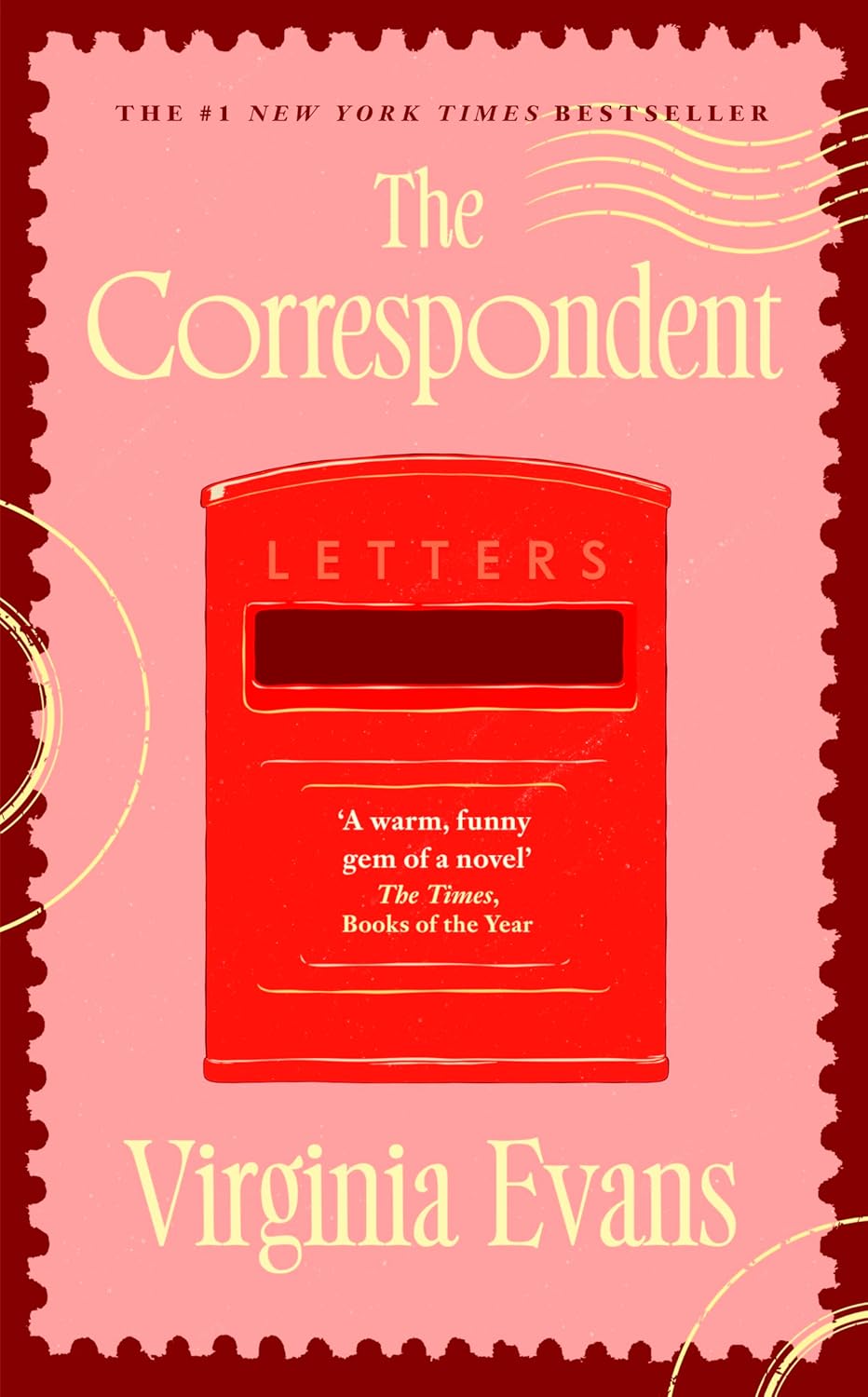
The first rule is that Kate sets our starting book. This month, she nominated a book I haven’t read, though I have been told I would like it, Virginia Evans’ The correspondent. From what I’ve heard, I suspect it would be up my alley but whether I’ll get to it is another thing. It is apparently about a 73-year-old woman who writes letters every morning – to friends, family and others including apparently someone to whom she never actually mails the letter. It is also, apparently, an epistolary novel as the story is told through these letters and emails.
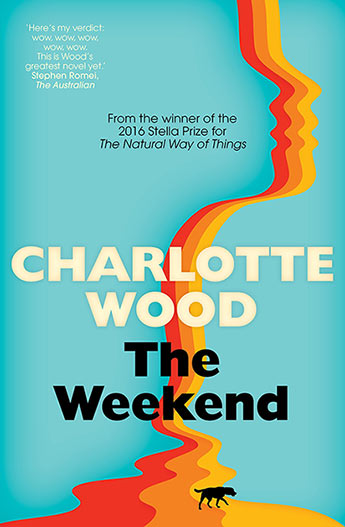
The obvious thing for me would be to link to an epistolary novel, but most of those I’ve reviewed here I’ve linked before and I don’t feel like going down that path. Instead, I’m going down the 70-something woman path. Charlotte Wood’s The weekend (my review) features not one or two, but three 70-something women. The story takes place over a weekend during which they come together to clear out the house of the recently departed fourth member of their group. Without her as their glue, their relationship is tested but, the centre holds in the end.
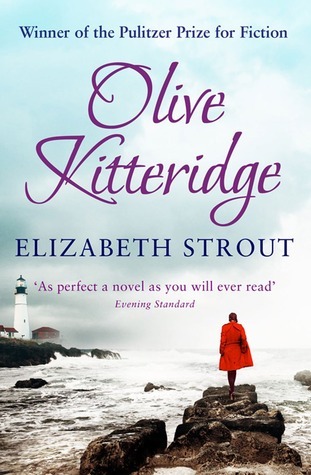
The women in The weekend are not your stereotypical older woman – the invisible grandma who cooks and knits for the family. They are professional women who are facing aging and ageism, and are still actively engaged in life, ready to fight for what they want (when they are not arguing amongst themselves). Another character who is definitely not your stereotypical sweet old lady is Elizabeth Strout’s Olive Kitteridge (my review). She is retired (and moves into her 70s during the novel), but is still a force around town, compassionate at times but definitely not the cuddly, apple-pie type.

Another strong, older 70-something woman, albeit getting us into grandmother territory, is the protagonist in Elizabeth Jolley’s Orchard thieves (my review). This is a deliciously wise and meditative, warm and witty book about generations, seen from a grandmother who worries about her daughters and grandsons, and uses all the wisdom she can to re-stabilise rising tensions. There are no pat answers, but a realistic understanding of the changes we all go through in life and how those changes impact family relationships as stresses – financial, health, the pressures of just plain living – rise and fall.
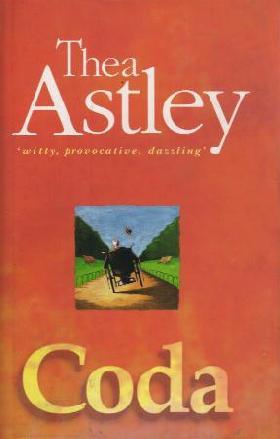
Shining a very different light on ageing women is Thea Astley in her memorable novella, Coda (my post). Kathleen’s age is not given, but she must be at least 70s. The point is she is moving into dementia. “I’m losing my nouns” is the novel’s opening line. This is a witty, but darkly clear-eyed interrogation of ageing and the loss of agency that comes with it – with or without dementia, really – and of children who are unable to cope let alone empathise with what is happening to their mother.
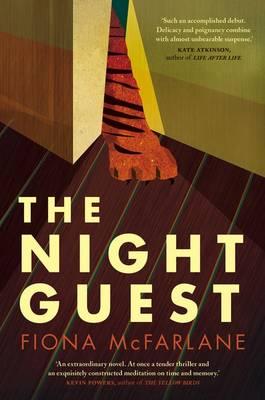
Another older woman who is losing her memory is 75-year-old Ruth in Fiona McFarlane’s The night guest (my review). This is not a satirical novel like Astley’s but its subject matter – including ageing, the loss of agency, and duty of care – are similar. McFarlane tells her story through a number of visitors and/or visitations – real and imaginary – and keeps us about as unsettled as Ruth is while we try to comprehend what is going on for her.

Another woman living alone, but not experiencing dementia, is Rabih Almeddine’s 72-year-old divorced, childless protagonist in An unnecessary woman (my review). Living in Beirut, she is a reader and a translator of the books she reads into Arabic. It is her life’s work, though her translations are never published. She has lived through war. Both lonely and alone, she is aware of how others see her, and of challenges to come, but when I read it, I was most interested in what she had to say about reading and literature.
I did something different this month, which was to stick with one theme – older women protagonists. Most ended up being Australian, mainly because, while I have read many non-Australian older protagonists, most were before blogging. I liked the range of women I met in these books. They all face their challenges with strong presence of mind (even where the mind is going). They prove what most of us know. Age does not stop us engaging with life. These books provide a great opportunity for us to learn from the experiences of those ahead of us, and to think about how we want to do it.
Have you read The correspondent and, regardless, what would you link to?


Interesting six degrees! I have read the Correspondent and I would link it to 84, Charing Cross Road or (written in letters) or A Man Called Ove (grumpy happy troupe!). Lol, but I love your connections – very good.
Thanks Rach … yes, 84, Charing Cross Rd would be a good choice. I have read a few epistolary novels but that one would probably match The correspondent the best out of those I’ve read.
I really like the way you have formed your chain, from which I have only read (and not really enjoyed ) Olive Kitteridge. The Rabin Almeddine looks appealing: certainly not the choices with dementia as part of the plot. As I’m well into the target age group I live in terror of developing dementia!
Thanks Margaret. My reading group did Olive Kitteridge last year. All but one of us liked it, so I know that it (she) is not universally liked! An unnecessary woman is a great read. Quiet and reflective, but if you like that then it’s worth your adding to your TBR list! I too am in or approaching the target age group – what is it, the 70s or 80s? – for dementia but I don’t mind reading books about it. I’m the sort who leans into bleak or concerning things, because it helps me to understand whereas I know that for others it does the opposite.
I’m definitely doing all I can to stay revoltingly healthy, both physically and mentally. Whilst dodging reading about it!
And good for you … life’s too interesting isn’t it, to not do all we can to keep enjoying it.
👍
I think when you first reviewed The Weekend, I put it on my Book Depository wish list. Since that’s dead and gone, I’ve just put it on my Awesome Books wish list. Thanks for the reminder. (I’m getting close to 70 myself – I turn 69 this year!)
Then it’s just about the right time for you as it was for my reading group – we were all late 60s to early 70s. Most of us liked it with some reservations but I know another reading group of women mid to late 70s who hated it. So I’d be interested in your opinion.
Thanks. I try to get a copy. Unfortunately, with the war, flights including postal ones, are pretty precarious, and there’s no way of knowing when a package will come.
I love this chain! It’s always good to find books with strong older characters and I haven’t read any of these. I’m tempted by the Fiona McFarlane as I’ve read one of her other books and liked her writing.
Thanks Helen, I am so glad. I loved the McFarlane and flagged her to read more of but I never seem to get to her. Which did you read?
Hi Sue, I have read the Correspondent and it was a good read. I do like your connection to Coda. My Links are focused on grief. They are On Earth We are Briefly Gorgeous by Ocean Vuong; We Need to Talk About Kevin by Lionel Shriver; The Phone Book at the End of the World by Laura Imai Messina; The Echoes by Evie Wyld; Memorial Days by Geraldine Brooks, and The Year of Magical Thinking by Joan Didion.
Great links Meg. I”ve read some of those – well, Shriver and Didion – and I have Brooks on my TBR. I haven’t heard of Messina or that book at all, though. Great title.
I like your theme! I enjoyed the McFarlane and I’m always delighted to see Olive Kitteridge given a mention. One of my favourite characters in contemporary fiction.
Isn’t it interesting Susan now divisive Olive Kitteridge is. Before I read it, I hadn’t really taken all the conversation about her and the novel. I just kept hearing how loved the book was. But I’ve discovered that feelings run high in both directions. As you will have guessed, I’m in the positive direction.
Love this chain! I really liked The Weekend and The Night Guest really appeals.
Thanks Cathy … my guess is you’d like The night guest.
It is tempting to take up the epistolary thread, start with Love and Freindship and move on. But I’d rather take up the theme of a search for parents.
Degree one is The Golden Spur by Dawn Powell: a young man moves to New York from Ohio in hopes of discovering who his true father is. Each of a couple of candidates is happy to believe that he is the one.
For degree two, Percival Keene by Frederick Marryat also includes a pursuit of a father, though its settings are far more dramatic.
Degree three will be The World According to Garp by John Irving. Here a mother has disappeared, and in the early going her daughter looks out for her return. (Mary Beth Hurt, who died recently, played the grown daughter in the movie).
Degree four is The Works of Love by Wright Morris, where the protagonist is an increasingly absent father.
In degree five, Marilynne Robinson’s Housekeeping, both parents are gone, and the daughters’ loyalties are split between an eccentric aunt and what appears to be normal small town life.
Degree six is The Plot by Jean Hanff Korelitz, because in a particular detail it looks back to Housekeeping.
I have not read The Correspondent, though my wife did for the most recent meeting of her book club. Of the books you list, I have read only Olive Kitteridge.
It was tempting I agree, though I might have gone with Lady Susan. After all, she was a woman of a certain age, though not quite as certain an age as The correspondent’s protagonist.
However, I like your search for parents theme. And there you start with Powell again!! I haven’t heard of Wright or Korelitz, and I only know of Mr Midshipman Easy by Marryat but I see he wrote quite a lot.
The Weekend and Olive Kitterage are both sitting on my bedhead waiting to be read. Its so satisfying when you can find a theme for these
And both are worthy bedhead books I reckon, by which I mean they are both interesting reads and, while both are meaty, they’re not of the not-before-bed variety (I think).
Nice work. I’ve only read the first two. Interesting choices.
The first two is good, Lisa. I did hope that most readers of my post would have read (or would at least know) one of two of my books.
I’ve read the Strout and the Wood and enjoyed both. I’d like to read the Correspondent. The premise of it appeals. I like books about hand written letters, etc and I like books about older women.
I would too Pam … I’ve been told I’d like it!
Fabulous theme, Sue! I’ve read the first three books in your chain and have added the last three to my list. There should be more books about older women!
Thanks Rose … there sure should be!
I have not read The Correspondent by Virginia Evans but I have read other epistolary novels and am at this point reading David Irelands The World Repair Video Game. This is my 2nd read this year, as I am having a series deep dive into its meaning. This leads to Mary Shelley’s Frankenstein that I have never read but picked up a copy this week in one of the local neighbourhood swap libraries. Next is Flowers for Algernon by Daniel Keyes, main character Charlie tells of him undergoing an experimental treatment that dramatically boosts his intelligence. This was a great read. The Secret Diary of Adrian Mole, Aged 13¾ by Sue Townsend I read many a long year ago and recall enjoying it. Last March by Geraldine Brooks is another find in the local libraries but not yet read.
Now this is a fascinating set of books John, of which I’ve only read the last two, though I’ve heard of the others except for Ireland’s. I’ve heard of Ireland of course but not of this book. It came out a long time after his preceding novel I see. That is always interesting to think about.
I read that March is about the father in Little Women or something like that. I have never read Little Women, so I am looking out for a copy prior to reading March.
It is. While I think Little women provides context, particularly for the role of the Marmee character, March is really a Civil War novel. The Father is largely absent from Little women, because he is away at war. Brooks’ late husband was a Civil War tragic.
I like your choice of older protagonists and the theme of age and ageism running through your chain, Sue. Something that needs to be discussed much more than it is, I feel and can only gain in relevance given increasing longevity. It often strikes me as absurd how on the one side there are so many efforts towards to combatting disease and increasing longevity while on the other the older population is constantly subjected to disrespect or denial and often invisibilised. Something that needs to be addressed without delay.
Like you, I’d heard a lot about The Correspondent but haven’t read it yet either. It does seem an appropriate book for a letter-writer though!
Interesting, your comment that you’ve heard/had some anti-Olive chatter since having actually read OK by ES yourself. I bet they’re all too much like Olive to see the similarities! (Surely we all have a little of Olive in us, so I’m not standing on the margins there either.)
Ha, interesting point Marcie. I think you are right – and it’s not necessarily a bad thing either. She’s not a pushover, is she?
Love the “old lady” theme! I have not yet read The Correspondent. I wasn’t interested for the longest time, but then I realized it’s a book I actually would enjoy and now I’m #2075 in the holds queue at the library. There are something like 50 copies, but it’s going to take a very long time before my turn comes around.
Yes I was the same Stefanie about that book. It took me awhile to realise it would be at my alley. I’ve heard someone in Australia who has the same issue as you at her library. #2075 is amazing. Good luck!