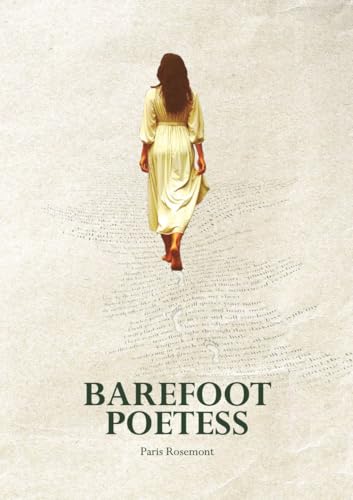
Coincidentally, I reviewed a book of poetry by Paris Rosemont just as the longlist for the current Blake Poetry Prize was announced, and it includes a poem by her. The timing seemed right to give this prize some air. I have mentioned it before – but only in passing in my 2024 Poetry Month post in which I wrote about the Kings College Choir Cambridge Performing an Australian poem set to music. The poem was On finding Charlotte in the anthropological record by poet and visual artist, Judith Nangala Crispin, and it won the Blake Poetry Prize in 2020 (see the poet read it online here).
The Blake Prize is named for William Blake, who, England’s Blake Society writes, was “unusually … equally a writer and a visual artist”. Indeed the Society apparently laid a stone on his grave that reads ‘Poet Artist Prophet’. Now you may have noticed that I wrote “the Blake Prize”, because in Australia it was, initially, an art prize. Australia’s Blake Society and the prize were established in 1951, with the prize awarded annually until 2015. From 2016, it has been awarded biennially. Originally titled the Blake Prize for Religious Art, it is now, simply, the Blake Prize, with the criterion broadening out to, says Wikipedia, “art that explores spirituality”. You can read some of the complicated history of the prize – including controversies concerning the definition of “religious” – in the Wikipedia article.
Meanwhile, I’ll get to the Blake Poetry Prize. It is related to the above prize, and is now managed by the same organisation, the Liverpool Powerhouse, but in conjunction with WestWords. It is for “a new work of 100 lines or less, focused on non-sectarian spiritual and religious topics”, and is worth A$5,000. WestWords currently describes it as
an open poetry prize that challenges poets, both national and international, in conversations concerning faith, spirituality, religion and/or belief.
Further down the page, it reiterates that the prize is “strictly non-sectarian” and says that “all poems entered must have a recognisable religious or spiritual integrity and demonstrate high degrees of artistic and conceptual proficiency”.
AustLit summarises the prize’s short but chequered history:
The Blake Poetry Prize was established in 2008 by The Blake Society, in partnership with the NSW Writers’ Centre and sponsored by Leichhardt Council in NSW. From 2016 (after a loss in funding), Casula Powerhouse Arts Centre (CPAC)* and Liverpool City Council took over funding and managing both the art prize and the poetry prize, with events moving to Casula. From 2017, management was intended to shift to Liverpool City Library, in conjunction with CPAC, but bookshop Westwords ultimately took the library’s role in the partnership.
WestWords, in its current iteration, is far, far more than a bookshop (as you can read here), but it must have started as a bookshop.
Like the art prize, the poetry prize is now presented biennially. And I am confused, because Wikipedia and AustLit say the Poetry Prize was established in 2008, and it has been biennial for a few years, yet this year’s longlist is labelled the 69th. It seems that the Poetry Prize numbering is aligned with the numbering of the Art Prize.
Blake Poetry Prize Winners (2008-2024)
The winners to date are:
- 2008: Mark Tredinnick, “Have You Seen”
- 2009: John Watson, “Four Ways to Approach the Numinous”
- 2010: Tasha Sudan, “Rahula”
- 2011: Robert Adamson, “Via Negativa, The Divine Dark”
- 2012: Graham Kershaw, “Altar Rock”
- 2013: Anthony Lawrence, “Appellations”
- 2014: Dave Drayton, “Threnodials”
- 2017: Julie Watts, “The Story of Julian who never knew that we loved him”
- 2020: Judith Nangala Crispin, “On Finding Charlotte in the Anthropological Record”
- 2022: Simone King, “Surfing Again”
- 2024: Coco X. Huang, “Three Lessons”
69th Blake Poetry Prize Longlist (2026)
This year’s prize was judged by three poets – Natalie Damjanovich-Napoleon, Kevin Brophy and last year’s winner, Coco X. Huang.
The longlist for this year’s prize was presented on the WestWords site in a seemingly random order – poetic licence, perhaps? But, it’s a long longlist so, because I am librarian-trained and like to make finding information easy, I have reorganised it into alphabetical order by poet’s last name (to the best of my knowledge). Apologies if I have upset any listing or naming conventions. I have not, however, changed the capitalisation of the titles (to suit my editorial convention) as poets can be particular about things like punctuation. Links on poets are to any posts I have tagged with the poet’s name, though the posts are not necessarily on their poetry!
- Sela Ahosivi-Atiola, Mending Skies
- Allison Browning, There’s No Such Thing as Astrology (Or: The last Trump/Odious Joy)
- Gayelene Carbis, Divinations
- Phillippa Cordwell, Father
- Gregory Day, The Church Was Strangely Empty But The Day Outside Was Full: his collection Southsightedness is on my TBR
- Adrienne Eberhard, Ten Blessings of Upper Blessington
- Jo Gardiner, Giornata
- Ross Gillett, Cave Faith
- Ross Gillett, The Room and the River
- Stephanie Green, Equilateral
- Catherine Johnstone, THE DRAWING: a sestina
- Cliff Kemmett, Ahead Of Us, Our Past Burns Still
- Cate Kennedy, Suddenly Getting Religion
- Moira Kirkwood, Tiny home
- Jeanine Leane, Gundyarri-galang bila-gu
- Wes Lee, Prayer at the Cove
- Wes Lee, The broken smashed rubble of everything I owned
- Gershon Maller, The Transcendentalist
- Shey Marque, The Body as Tidal Scripture
- Freshta Nawabi, Jigar in a Jar
- Kerrie Nelson, Why would you drive on a day like this, unless for good reason
- Vuong Pham, Father
- Jenny Pollak, A faint echo from the South
- Omar Sakr, Ode to Prednisone
- Kathryn Reese, Post Vespers
- Paris Rosemont, Verdigrisleeves
- Josephine Shevchenko, Invisible but Potent
- Laura Jan Shore, Sometimes A River Wave
- Ella Skilbeck-Porter, Intonation
- Terri Slanovits, Aftermath
- David Terelinck, Watching the Storm from My Hospital Bed
- Mark Tredinnick, Nothing Will Be Lost: won the inaugural Montreal International Poetry Prize in 2011, and a previous winner of this prize (among others)
- Anders Villani, Under the Banner of Heaven
- Chen Wang, The Woman Who Refused the Kingdom of Forgetting
- Julie Watts, Ad honorem Patti Smith
- Kimberly Williams, St. Mary and the Hula Dancer
- Beth Yahp, Visitation/Turtle-Shaped
Some of these may be available online, but I decided I’d rather spend my time reading than check every one in the hope of finding a couple! Sorry!
The shortlist will be announced on 2 April, and the winners on 1 May.
Have you read any of these poets, or do you follow and poetry prizes? I’d love to hear your thoughts …
* Now the Liverpool Powerhouse.


WG! I worked very hard to come up with a comment about poetry, but poetry AND religion, that’s too much.
I’m currently reading a Jesuit SF (The Sparrow) and it’s wearing me out.
Sorreee… as they say …. Bill. You could talk about your favourite Blake poem, you know, like Tyger, tyger! Seriously though I appreciate your intention, and promise to do the same when you post on your Jesuit SF…
I confess I only know a handful of the poets mentioned in this longlist and have not read any of their nominated poems, although I have read other poems and/or stories by Gregory Day, Cate Kennedy, Omar Sakr & Beth Yahp over the years. But like Bill, I am not inclined to read ones with a religious theme, so I can’t say I will be seeking them out.
A bit like me Brona … though I’ve probably read even fewer of these particular poets than you. I think the whole point – but it seems like I didn’t make it clear enough – is that that the Prize’s focus is spirituality and belief in the broadest sense. From
the little I’ve read of Gregory Day for example, he’s not capital-R religious is he? But he does have a spiritual response to nature. I see my own spirituality very broadly as coming from my experience of nature, the arts, and community, from those things that fill my being. I don’t think of it in terms of belief in a supreme power or being.
Fair enough
“art that explores spirituality” — this phrase caught my attention because I’ve been thinking a lot about spirituality lately. I realized I’m not even sure I know what it means. For instance, some people say they are “spiritual” to mean that they believe in some kind of being watching out for them but not in an organized religion kind of way. There are “spirits” meaning ghosts. Of course, there are the alcohol spirits, too, haha. I’ve heard of “spirited” horses that are hard to break. Recently, I was thinking about being healthy in my spirit, meaning my sense of self. Anyway, none of this is really relevant to your post, but you do have a talent for getting me thinking.
I love that this got you thinking Melanie, and I think “healthy” in spirit is closest to my thinking except that I am more likely to see spirit as something a bit more abstract? I have thought about this for decades now, ever since I realised I wasn’t “religious”. I’d say healthy in “mind” but my spirit is more about the things that lift and/or calm me (mostly “lift”) … nature is the most obvious one but music can do it, watching people perform can do it, having a wonderful conversation or time with friends and family can do it. I guess it could also be about the things that drag me down but somehow I see that simply as mood – as being me-focused – whereas the things that lift me involve something bigger. They make me feel part of something bigger than just me and that also creates a feeling of well-being.
I love all those examples. I probably think of spirit as meaning my brain is neutral or happy, which could just be labeled mental health. Basically, when a person has anxiety, there is a triangle of things that are affected, and we bop around among the three like a pinball machine. There are thoughts, emotions, and physical sensations. If all three are doing well, I would say I’m sound of spirit.
That makes sense to me too … and I think this prize would accept all these understandings of spirituality if they are well conveyed.
Hi Sue, I only know a few of the poets in both lists. I know there is the Ada Cambridge Poetry Prize for the Williamstown Literary festival. I also know of Slam poetry, and have attended a couple of their events. My spirituality is connected to nature. I am not religious but I do like Gerald Manley Hopkins poems.
Thanks Meg … when I was thinking religious poetry GMH was one that came to mind. I particularly like his nature focused religious poetry over his more angsty ones though there are some great poems among those too. As I recollect he had times of deep religious doubt.
My interest in poetry prizes is sporadic, but they have brought some good reading into my stacks over the years. And I know that I wouldn’t have “discovered” Anne Carson’s work, for instance, if there hadn’t been a lovely little prize-winner’s badge on an early volume of her work, decades ago, on a shelves of a university-town bookshop. (Even in the beginning she was definitely too smart for me, but I still found her lines beautiful to read!)
I like and can relate to this – “Even in the beginning she was definitely too smart for me, but I still found her lines beautiful to read” – Marcie. I have to say that I’m the same about poetry prizes, but we really can’t keep up with everything can we?