Nearly two weeks ago, the longlist was announced for the Mark and Evette Moran Nib Literary Award. This is a significant award that has been going since 2002, and I have written about it before. But, I have never focused on one of its aspects, the People’s Choice Award, so this is where we are going today. Not specifically this one, but the idea in general.
So let’s look at the idea? Broadly, these are popular book prizes where the general public votes for the winners rather than a small group of critics or expert judges. They are often seen as showing what everyday readers love to read. I admit to not taking these awards as seriously as “judged” awards. Is this snooty of me? I can see some of the benefits. Depending on what they are and how they are run, they can engage more readers, can give prize opportunities to books that may not otherwise be in the running, and help different books, perhaps those by new or indie authors, reach bigger audiences. A prize sticker on a book is worth a bit I believe.
Indeed, several of the big Australian literary awards feature a public “People’s Choice” category or the like, usually allowing readers to select their favourite from a given list. These Awards include:
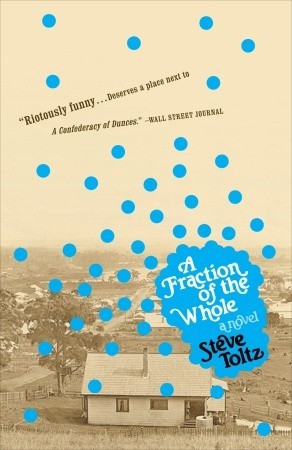
- NSW Premier’s Literary Awards, The University of Sydney People’s Choice Award: Established in 2009 to commemorate the 30th anniversary of the awards, and sponsored by the University of Sydney since 2023, it is based on votes by New South Wales residents from the works shortlisted for the Christina Stead Prize for fiction. The first winner was Steve Toltz for A fraction of the whole (my review), and the 2026 winner was Emily Maguire’s Rapture.
- Queensland Literary Awards, The Courier-Mail People’s Choice Queensland Book of the Year: First offered in 2103, a year after this “new” literary awards were created in 2012, this award is voted from from a shortlist, comprising fiction and nonfiction. The inaugural winner was Kate Morton’s The secret keeper, and the latest, 2025 winner was Laura Elvery’s Nightingale. It looks like this year, 2026, the award has a new sponsor, and is called The Lord Mayor’s People’s Choice Queensland Book of the Year Award. People will vote from 10 books, comprising two judges’ picks each from the Fiction and Non-Fiction award categories, plus six more eligible titles based on Queensland sales and Brisbane City Council library borrows.
- Victorian Premier’s Literary Awards, People’s Choice Award: Seems to have been first offered in 2011, as part of a major restructuring of the awards that year, which included The Wheeler Centre taking over the administration of the prize suite. People vote from all the shortlisted and highly commended books. That’s a large list! The first winner was Anna Krien’s Into the woods: The battle for Tasmania’s forest (my review), with Abdel-Fattah’s novel Discipline being the 2026 winner.
- Mark & Evette Moran Nib People’s Choice Prize: Presented via Waverley Council, this award is voted by readers from around Australia for their favourite from the Nib Literary Award shortlist.
But, not everyone likes them. The popularity aspect can mean that famous – already well-selling – authors win because they have more fans. Those who see awards as being about the “best” argue that books that win these awards are of lesser literary quality. Then there’s the issue of fairness and integrity. The voting system needs to be able to prevent vote-stacking, but even with that assured, there’s the unavoidable fact that there is no requirement for those voting to have read – or even have seriously considered – every book.
In 2016, literary critic Susan Lever, who has judged several literary awards, wrote an article on literary awards for Inside Story. In it, she briefly discussed People’s Choice awards. She said:
Some award managers seem to want books, like paintings or singing recitals, to be a communal public experience subject to a voicing of popular opinion. I recently took the opportunity to vote in the People’s Choice category of the NSW Premier’s prize for a novel; I had read only three of the six shortlisted novels, but that’s probably two more than many other voters. Promoting readers’ participation in this way seems harmless but it shouldn’t be mistaken for promoting the interests of writers. It would be fairer to them to release a long and inclusive list of all the good books that have a chance of the award, then simply announce the lucky winner.
New Zealand author and literary academic, Paula Morris, also wrote about awards, “Book Awards: a brief and personal history“, for the Academy of New Zealand Literature, and like Lever she briefly includes mention of People’s Choice awards, which were offered as part of New Zealand’s Ockham New Zealand Book Awards from 1996 to 2014 (first called Readers’ Choice). Talking about the issue of funding awards, touching on the problem of inequitable prize money for different prizes, she comments:
When some people complain now – wanting larger amounts of prize money to match the endowed fiction prize, wanting more nonfiction categories to reflect current publishing trends, wanting to bring back some version of the Peoples’ Choice award to (in theory) recognise more ‘commercial’ titles – they rarely suggest ways of coming up with the cash.
Another, but non-Australian, example is the 2025 New Hampshire Writers’ Project People’s Choice Award. I’m mentioning it because it explains what it is – and why. It “gives readers, fans, and community members the opportunity to support the writers who inspire them most”. I like that clarity about what you are voting for. And then they say that “every vote helps lift up our state’s vibrant literary community”. Again, lovely clarity about what it means. They are also clear about voting, and how they will ensure integrity of the process (except for that unavoidable issue of course!)
Have you ever voted for a People’s Choice Award? Whether or not you have, I’d love to hear your thoughts.


lol, you got me. I thought, “well that seems a bit uppity of Sue!” and then you asked, “Does that make me snooty?” One of the issues I have with judged prizes is that those people function as gatekeepers of quality regardless of how readers feel about a book. Think of how many times a person will say such-and-such a book changed their lives, but when you read it, it seems like a bit of nothing. I think the emotional impact of reading is what’s important. If anything, I want gatekeepers who protect the stats of books published, confirming fairness in gender, race, ethnicity, location, etc. The only type of people’s choice award I can think of is on Goodreads, which, incredibly, increases awareness of different genres of writing, marking a difference between memoir and nonfiction, humor and horror, poetry, YA, and children’s books. If anything, I learn more about books I wouldn’t have otherwise because of this prize. Poetry has become more popular, and I see the Goodreads winner of poetry in bookstores now. I agree with you that some of these prizes award people who are already super popular, but Goodreads always has a best debut prize. It’s not perfect, but I do enjoy seeing what book is burning through the reading community like a wildfire. Most of the time when I read a prize winning book….I admit to finding myself disappointed by how inaccessible it is.
Oh dear Melanie, I am a bit uppity, aren’t I, because I take no notice of those GoodReads awards because firstly, I see so many poor GoodReads reviews (from my perspective of what I look for in reviews) and secondly because each person voting is voting from their own subset of that genre (or whatever) and everyone’s subset is different. I’d love it if you posted after the announcement of some of these awards on what value they are to you. That would really interest me.
Also I do think we need some gatekeepers of quality. You read books that you feel are poor quality by your standards, and you critique what who see as poor – characterisation, plot, ideas. I think we are all gatekeepers of quality to a degree.
I think your concern is that the big literary awards have a different type of quality in mind, often a quality that pushes boundaries in writing (language, style, structure) and that “can” make those books more inaccessible than the bestsellers. The issue is more the attitudes of the gatekeepers, isn’t it? Are they generous to all or are they snooty, thinking theirs is the only marker of quality?
I honestly don’t think you’re snooty. 🤭 You’re always very kind!
I remember when I was in college circa 2003 it was common for people to create their own chapbooks, often making copies and stapling together pages to give away for free. The drive to create is strong, but I think going through publishers discourages people from continuing to write. Interestingly, self-publishing breaks some of those barriers. Consider how no one would publish The Martian, so the author self-published, it became a sensation, and then the publishers wanted to buy it. I think the gatekeepers should be readers, not judges. If it’s not of interest to anyone, that will be obvious because no one will read it.
Thanks Melanie … I loved your “that’s a bit uppity” comment because I think we know each other well enough now to understand where our hearts are really coming from. Keep commenting just the way you do.
I remember chapbooks appearing – through my contacts with younger people. As you say the urge to create is great and i appreciate that it’s a challenge for people to find an appropriate outlet. I don’t know what the answer is. We have stories here, like your The Martian example, of writers who self published when they couldn’t find a publisher and then did so well the publishers were clamouring. I don’t want to completely blame publishers though because life‘s not easy for them either. Even the big ones I think have to balance the best sellers with the loss leaders. Of course there are the risk takers and the conservatives in all fields including publishing, aren’t there.
In theory I think you are right about gatekeepers and in fact I think in the final analysis readers probably largely are. Judges might decide awards but it’s who buys the books and keeps buying them who have the last laugh, don’t you think?
I do think readers who buy the book have the last laugh unless it’s one of those books people buy because it won an award and then they can’t even/don’t want to finish it. Seeing comments about people feeling ripped off by a book they bought always gets to me. I used to buy loads of books from funky small presses here in the US that publish experimental works because that was where my creative writing professors were published, and as time went on, I realized that I was buying stuff that was incomprehensible to me, so not only did I stop buying from those presses, but most of the books I have a solid 25 pages. If I couldn’t understand anything going on, I stuck them in the Goodwill box.
Agreed … but I think we need to remember that there are also people who buy books those ripped-off-feeling people loved and are so bored by what they feel is same-same? Don’t you think? I think I am somewhere in the middle. I like to be challenged by what I read but I do want it to be comprehensible.
Yes! 100% agree with your comment about being challenged but also reading something comprehensible. Every month I go to this book club that has about 25 people there. I rarely read the book because it’s always something that’s way too easy and leaves very little for discussion, but I like the person who hosts the book club, so I go to get out of the house. I’m thinking of exactly that kind of book that’s just too easy. I think with how hard things are right now, I really don’t mind that people are reading easy books. You’re definitely right about people feeling ripped off by any kind of book; I guess I’m thinking more of how a lot of award-winning books are published as hardcovers and they’re really expensive, whereas something that appeals to the masses and is more like pop fiction often comes out as paperback.
Oh I think we’ve discussed this before. It’s been a long time since most books were published in hard back here. It’s the exception. Cannon is one.
I take your point about easier books being popular right now. Reminds me of World War II, not that I was around then but I believe that screwball comedies became popular than as an escape from the grimness of war.
I put ‘people’s choice’ awards in the same category as things like Dymock’s Book Shop’s ‘100 Best Books of the Year’ (which customers apparently vote for). While I don’t participate, I do enjoy reading such lists, thinking about why they include the titles that they do/ the audience/ the judges etc It’s the same as round-ups of best books at the end of each year – hugely subjective but a bit of fun.
I think it’s fun to have a people’s choice category – it builds engagement with readers who might otherwise not think these kinds of awards are for them. And as long as it’s branded “people’s choice” so you know it’s been awarded by popular vote rather than any critical judging criteria, I reckon that’s fine.
I don’t generally check out ‘People’s Choice’ Awards. But the ‘awards’ I really dislike are journalists’ top tens, often around xmas, in the news media. Too often, even on the ABC, they choose whatever is currently fashionable in the US.
Yes, that’s a good point about those end-of-year lists. I’m often disappointed about that too. Sometimes I wonder whether it’s because they dont want to play favourites among those they’ve interviewed/reviewed so they take the easy non-national option.
Put me in the snooty corner, please. I particularly distrust the GoodReads Awards because I have so many questions about the integrity of how data is used from/on that site, given the ownership (and that company’s record of putting profit before everything else, including their own workers). If LibraryThing had an equivalent award, in the context of their focus on independence, I might be more interested? But, even so, I’ve heard so many stories about how the best intentions to protect integrity in this sort of voting situation (not always in the literary context) have gone awry, that my focus naturally falls more towards other ways of highlighting good books. Which aren’t perfect either, of course. Everyone has their favoured sources of rec’s I suppose, eh? And they don’t always make sense?
Agree with pretty much all you say Melanie. I understand Melanie’s point but I don’t believe in their process. As you say though, we all have our preferences and reasons for them.