Back in March, I wrote a Monday Musings on the Blake Poetry Prize, which is a poetry prize managed by the Liverpool Powerhouse in conjunction with WestWords. WestWords is one active organisation, and is clearly good at finding partners to further its aims. Based in Parramatta in Western Sydney, the WestWords Centre for Writing describes its guiding philosophy as “a belief in the power of literature and literacy (written, oral and visual), self-expression and creativity to change lives and the experience of communities”. It keeps popping up, so I will write a post on it in the future. Today, however, I’m sharing another of its partnerships.
This one is ConSYDeration 2026, an inaugural event – aka con/conference or festival – for NSW writers of speculative fiction. The partnership is with Sydney Speculative Scribes. The event will take place from 11 to 13 September this year, at Old Government House in Parramatta. It will include, says the WestWords website, “a gala event, panels and workshops” as well as “other exciting events and opportunities for local writers to build their own community”.
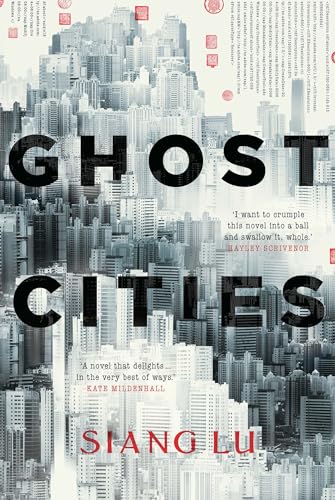
By speculative fiction, they mean science fiction, fantasy and their subgenres. The event is intended to provide an opportunity for emerging and established writers “to meet as a community, explore ideas, refine craft, and form lasting connections”. Their inaugural Guest of Honour is Siang Lu, who won the 2025 Miles Franklin award with Ghost cities.
The full program is available on the Sydney Speculative Scribes website. It looks excellent, encompassing practical, philosophical and ethical issues. Workshops include Publicity 101: A Beginner’s Guide to Book PR and Short Story Essentials – From Idea to Publication. Other interesting sessions include Using and Abusing History and Sometimes Speculative: Genre-switching in a body of work. But these are just a selection from what looks – to an outsider like me – to be a well-conceived program. You won’t be surprised, though, to hear that I recognise few of the names of the session participants, but if you are an enthusiast you might. (Just click on the link!)
… and some poetry
Meanwhile, I’ll return to the Blake Poetry Prize, because it is Poetry Month, and I did say that this year’s Prize would be announced in May but I never did get back to it. The prize was judged by three poets – Natalie Damjanovich-Napoleon, Kevin Brophy and last year’s winner, Coco X. Huang. And I should reiterate, before going further, that it is a “religious” prize, but in its widest meaning. In my original post, I quoted WestWords which described it as “strictly non-sectarian”, but saying that “all poems entered must have a recognisable religious or spiritual integrity and demonstrate high degrees of artistic and conceptual proficiency”.
Before I share the winner, here is the shortlist:
- Allison Browning, There’s No Such Thing as Astrology (Or: The last Trump/Odious Joy)
- Adrienne Eberhard, Ten Blessings of Upper Blessington
- Freshta Nawabi, Jigar in a Jar
- Vuong Pham, Father
- Kathryn Reese, Post Vespers
- Omar Sakr, Ode to Prednisone
- Terri Slanovits, Aftermath
- Chen Wang, The Woman Who Refused the Kingdom of Forgetting
With a Special Mention for Philippa Cordwell’s Father.
And the winner was: Chen Wang, The Woman Who Refused the Kingdom of Forgetting, with Adrienne Eberhard and Vuong Pham being Highly Commended.
Apparently, there were nearly 700 entries.
All shortlisted poems – including of course the winner – are on the WestWords website, both as text and read by the poets. A real value-add.
Have you read a great poem this year?


That Ghost City novel sounds great. It actually reminds me of the current landscape in Detroit, Michigan. It was a MASSIVE city that now has areas that are just total blight and have no access to trash services, EMT, etc. Basically, people left the city for the suburbs, and without enough residents to contribute taxes to pay for necessary services, things have broken down in the system. I’m wondering if the Ghost City book has a similar situation. I didn’t realize there were empty places in large Chinese cities (which is what the synopsis says the book is based on).
It does sound interesting, I agree, Melanie. I haven’t read and have heard mixed reactions from those who have, but that may be due to the sorts of books they prefer to read, which is a reason why I haven’t jumped at it. Chances are I would like it, because it does sound interesting, partly for the reason you give.
ConSYDeration seems weighted towards Horror and Fantasy. The one session I thought appealing was “Spec Lit | On the emergence of literary techniques and craft in speculative fiction”. I feel guilty that I make no effort to read Australian SF (as distinct from literary dystopias). Maybe next year.
Yes, Bill, fair point. I guess it’s due to who they could get.
And, yes I saw that session and thought it looked the most interesting to me. It’s the one Siang Lu is part of isn’t it? I also thought the Use and abuse of history one sounded interesting.
Thanks for bringing both these events to our attention Sue.
A pleasure Brona. Both seemed worth noting.
That’s a lot of entries: impressive! And those classes do sound interesting.
I have read a few good poems this year, but the one in my mind in this moment is one by Wendell Berry, who died a couple of weeks ago at 92, one of the first writers I became aware of who set his books around the same small town, so that readers could come to know a whole community. I will post a few lines of it in a post before long (I don’t think it’s available online, as it was new work) as I’m sure you’ll like it too.