Over the years I have written posts about and reviews of books with strong socioeconomic underpinnings. In the nineteenth century these novels tended to be described as Social Novels (and I am have just an English one for reading group, review coming) or were seen under the banner of the Realist movement. In the early to mid twentieth century, books dealing with these concerns were seen as part of the Social Realism movement. I’m playing a bit loose here, because I don’t intend to get into the weeds about definitions. I simply want to note that these novels, to quote Wikipedia’s article on Social Realism, aim to explore the “socio-political conditions of the working class as a means to critique the power structures behind these conditions”. I have written at least two Monday Musings about writing in this area, one on Factory Novels and one on Realism and Modernism, but the issues have popped up frequently in individual reviews too.
In recent years, new terms have entered the popular sociopolitical lexicon, and these include “precarity” and “late capitalism”. Precarity, with its focus on the lack of job security and all the social and psychological ills that flow from this, may be a relatively new term in sociopolitical discussion, but its broader meaning encompassing the idea of living precarious lives, has underpinned most nineteenth and early twentieth century “Social” and “Realist” novels.
Similarly, Late Capitalism is a complex “term” with a history going back many decades, but is popping up increasingly frequently across all types of writing. Wikipedia covers it in detail, but I’m using one definition from PhD student David Espinoza at the University of Sydney (2022). If you are interested, you can read more at both sites. Basically, Espinoza says that the term wasn’t taken up widely until Belgian Marxist economist Ernest Mandel’s treatise on the topic was published in English in 1975. Espinoza says that
Mandel used the idea to describe the economic expansion after the second world war … a time characterised by the emergence of multinational companies, a growth in the global circulation of capital and an increase in corporate profits and the wealth of certain individuals, chiefly in the West.
For Mandel, “late capitalism” is not so much a change in what capitalism is as “expansion and acceleration in production and exchange”. He says that “one of the main features of late capitalism is the increasing amounts of capital investments into non-traditional productive areas, such as the expansion of credit”. Espinoza says late capitalism is behind the increasing number of financial or economic crises we have had since the 1970s.
There is more, but this is the essence. It’s a bit loosey-goosey I know, but I’m not an expert in economics. However, I hope this is accurate enough and makes enough sense for our needs.
Now, last week’s Monday Musings was inspired by critic/artistic director/literary judge Beejay Silcox’s article in The Guardian on new Australian releases. As I wrote in that post, Silcox grouped the releases under headings. One was “Eco-lit flourishes”, which I discussed last week because it’s an area that interests me. Another area of interest also caught my eye, the one she called “The cost of living”. It inspired this post. Don’t worry, I am not going to go through her whole article in this way. That would be too cheeky for words!
Precarity and Late Capitalism in Australian fiction
I don’t want to repeat the books I included in those previous Monday Musings, but I will name a handful of other Australian novels (and short satires) that I’ve read that encompass these issues (though probably the most searing fictional critique I’ve read recently is Scottish writer Andrew O’Hagan’s Caledonian Road):
- Donna M. Cameron, The rewilding (my review): capitalism and its impact on climate
- Julie Koh, Portable curiosities (my review): satirical short stories which skewer multiple aspects of capitalist culture, including housing and banking
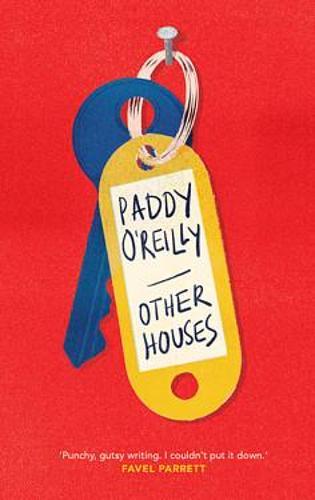
- Paddy O’Reilly, Other houses (my review): social mobility and the desire to provide better opportunities for children
- Heather Rose, Bruny (my review): satire, on globalised capital, and the conspiracies and political corruption that ensue
These books show there are many ways in which contemporary authors approach this topic, from a more traditional working-class novel (like Paddy O’Reilly’s) through to thrillers and eco-literature, and that satire is still alive as a means to expose the extremes. I would also argue that many of the recent novels by First Nations Australian writers, like Melissa Lucashenko, encompass responses to the depredations of late capitalism.
Now to Beejay Silcox’s list of what is coming in 2026. She introduced this section with the statement that “From the housing crisis to the care sandwich: an emerging and caustic theme in Ozlit (and beyond) is late capitalism and financial precarity”. As with my Eco-literature post, I will dot point the books she lists, in alphabetical order by author, for simplicity’s sake, but will include any description she provided:
- Alan Fyfe, The cross thieves: “set in a riverside squat”, Transit Lounge, March, on my TBR
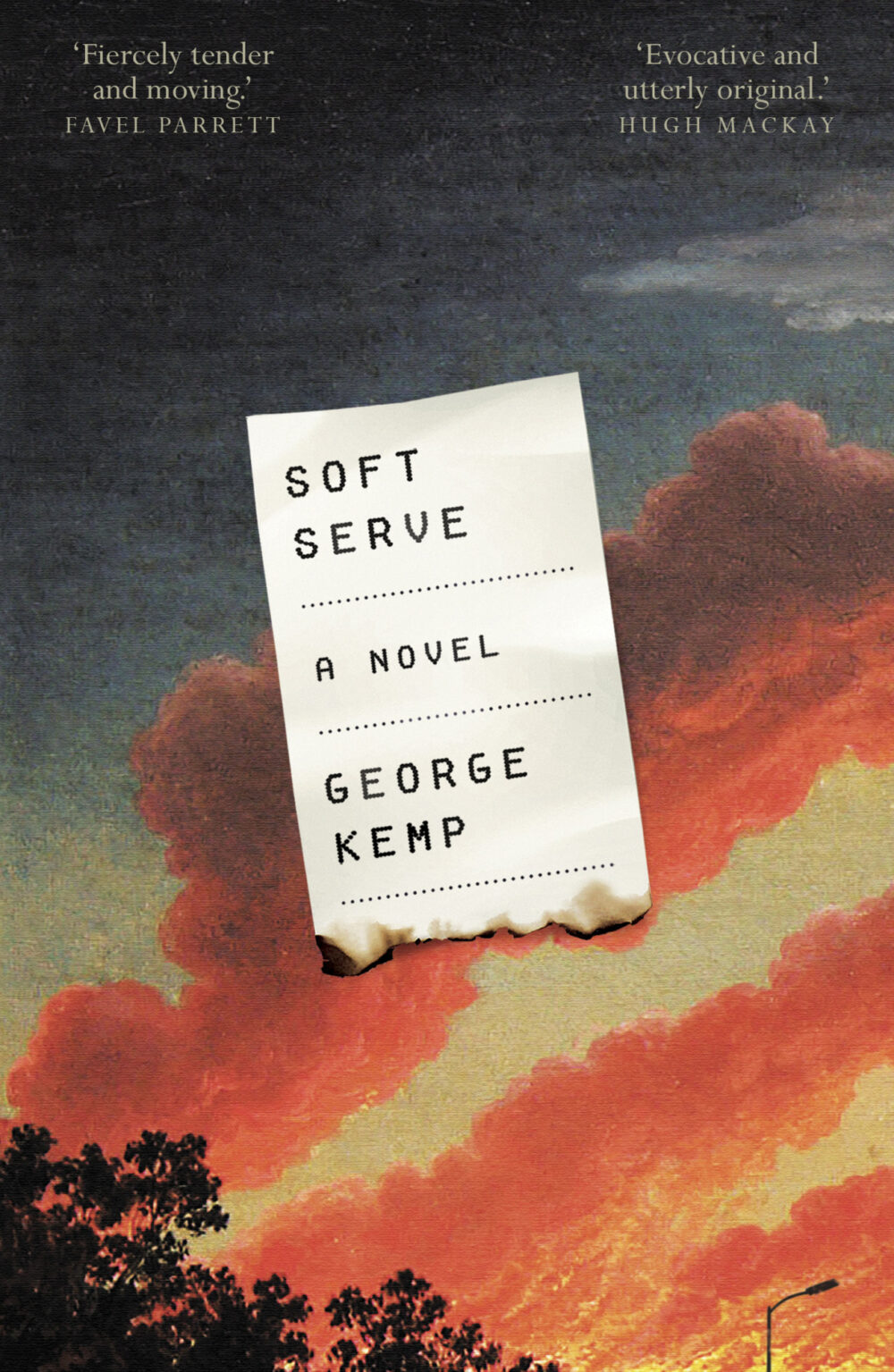
- George Kemp, Soft serve: “traps his cast in a regional McDonald’s as a bushfire closes in”, UQP, February, on my TBR
- Jordan Prosser, Blue giant: “sends a hungover millennial to Mars”, UQP, August
- Ellena Savage, The ruiners: “follows an anarchist waiter from inner-city Melbourne to a decrepit Greek Island”, Summit, April
- Fiona Wright, Kill your Boomers: “captures the mood”! Harumph, says this Boomer, watching her back (though, having children, I do understand), Ultimo, March
For the record, Silcox also names a couple of nonfiction titles on the theme: Lucinda Holdforth’s Going on and on: Why longevity threatens the future (Summit, April), and Matt Lloyd-Cape’s Our place: How to fix the housing crisis and build a better Australia (Black Inc, September).
Can you recommend any standout books you’ve read about contemporary precarity and late capitalism? Doesn’t have to be Australian. I’d love to hear.
 Whispering Gums
Great post, Sue.
The first book that springs to mind is Max Easton’s Paradise Estate about the precariousness of jobs and housing in modern day Sydney. It’s a terrific read.
How did I miss that when you posted it Kimbofo? (Probably because it was in what is always my worst week in December, the second week!) I haven’t heard of this novel. I’m sure I searched your blog for “capitalism” to see if you’d reviewed anything but this didn’t appear – though you use the word in your text.
I’m not familiar with this author though the name rings a vague bell. I loved Nathan’s “commune” response to poor Alice! BTW, I tried to comment on my phone but the comment form was greyed out. I’ll try to check on my laptop later.
Oh no, sorry to hear for the comment problem. WordPress and phones can be so tempremental — I tend to use the Jetpack app and rarely have issues with it.
As for missing my Paradise Estate post, well I missed most people’s posts from mid-October 2025 to early January 2026 because of the puppy! Only now getting back into the swing of reading, reviewing and commenting on blogs but I have a three month black hole where I missed so much blogging action!
Paradise Estate is a sequel to The Magpie Wing (which I haven’t read but will get to eventually) — it made my best of year list the year I read it and still occasionally think of it, a ramshackle house surrounded by new-build apartment blocks. It would make a terrific TV series as there’s plenty of characters to follow.
I mostly use the Jetpack app on the phone too but as this was an older post I think I used the browser on the phone to reply. I say “think” because I use so many devices and apps/browsers through the day that I can’t always be sure what I did!
Mein gott, ST ! – there is apparently no topic under the sun that isn’t going to capture your interest and cause your typing fingers to get going ! 🙂
Dunno that I can bring myself to say aught but ‘precariousness’ because that’s the version from Some Years Back, as I feel myself to be. But I would never have thought of either presentation of the word while reading “Bruny” – one of my favourite novels (as you might remember). This proves nothing so much as my complete lack of Thinking Enough About Stuff. Sighhh …
I suspect I’m going to continue to be like this for the rest of my days (11 years, as I’ve posited before); but I am, nonetheless, fascinated to find via you how much I’ve overlooked in my reading|listening ! 🙂
Oh MR … first I know that precariousness seems to be your lot about which I feel sad particularly, well I think you know what I mean.
But as for Bruny, don’t question your thinking! I used it more as an example of Late Capitalism per se than of Precarity.
Precarity is a word I was not familiar with. I’ve been collecting some new vocab words lately in my Commonwealth journal. I’ll have to add this. I find this whole topic just interesting yet painful.😃🌻
Thanks Pam … I’m not sure how new it is in sociological economic balance but I THINK it’s not been a commonly used word until recent times. It’s a good word though.
I love it that you looked for definitions of Late Capitalism. I’ve recently read Alison Bechdel’s ‘COmic novel’ Spent in which her main character, named Alison Bechdel, sets out to create a comic novel about life under Late Capitalism. She sits down at her desk and realises she doesn’t know what the term actually means. She has to google it – and ore a copy of Das Kapital from Amazon (or Shamazon as it’s called in the comic)..
I have a couple of books on my TBR that fit the Wikipedia definition of Social Realism. One is on my list of books for winter (Minding the Store) and the other is called Gig. A memoir about jobs and economy that I want to read is called You’re Leaving When? Adventures in Downward Mobility by Annabelle Gurwitch. It’s about Millennials moving back in with parents, struggling to find jobs, etc. Since you are interested in eco-lit, I would encourage you to get The Words I My Hands by Asphyxia. She’s a Deaf Australian writer whose book is a gorgeous collage of art and story about a deaf girl in Australia after many natural resources, and even food, have become largely unavailable. I should buy a copy so I can read it again. I added Soft Serve to my TBR.
Thanks for all this Melanie. I’m glad to have your recommendations.
I think you reviewed Asphyxia? Thanks for reminding me – particularly re its eco-lit credentials.
I’m reminded of Salvage the Bones by Jesmyn Ward, one that I actually listened to as an audiobook and which I have never been able to forget. (I think she’s a remarkable writer beyond her debut too). Another American writer, but a debut from an independent press, was a story of a father and young son who spend at least some time living out of the father’s car, and I just wish I could remember the details because the flourish of titling the chapters in dollars-and-cents to chronicle the details of their finances was brilliant. That’s going to bug me… I’ll have to suss it out somehow. (As for the above comment about Bechdel’s Spent…such a great read. In and of today’s times but it left me heartful at the end of it all, not despairing.)
I have still to read Jeremy Ward Marcie, so thanks for that. And if you can remember the father-son book I’d love to know. As for Bechdel, thanks for the reinforcement. I do like serious books that offer a little heart or hope, even if it’s just a glimmer.
All I could remember was the colour scheme on the cover, but then it occurred to me to check the busiest year in my reading log (which is mostly just a blur) and it worked! Jakob Guanzon’s Abundance, published by the American Minneapolis indie Graywolf. My short review is here, but more of the tenderness of the novel has remained than the grind, which is interesting. (He hasn’t published a novel since, but I hope he does.)
Oops that darned autocorrect! I was thinking m, why do I still have to read Jeremy Ward!! Haha.
It is interesting what remains isn’t it. Sometimes I go back to a review and find I liked a book less or more than I remember – and often for different things.
I read the very good Bodies of Light by Jennifer Down and read that described as a novel on late capitalism. The Sellout by Paul Beatty was also described as such in a review I read at the time. That one required a lot of research by me while reading to “get” the satire etc, but I will state that at the end I considered it a virtual satirical masterpiece on US culture. What a great read that was.
Jordan Prosser! Now there is a name I am glad to see. I read his debut Big Time and loved it. I have always wondered why it passed the reading public by, and I suppose that was because it was essentially seen as Sci Fi, but IMO it covered late capitalism and was a scathing satire of modern life and also the white moany male of the species, superannuated up to his ears but still unhappy. I will be reading Blue Giant, thanks for the link Sue, I had no idea he had written anything else.
Thanks John. I really must read Bodies of light. And you have convinced me about The sellout. As I love a good social satire.
As for Prosser, I only recognised the name so am glad to hear more from you. Thankyou.
I am way down here because I can’t suggest anything.
There have been times in my life when I thought precarity might do me in, and for all my revolutionary politics I’m not sure late capitalism was blame.
As a young man interested in theory I would have thought Late Capitalism was the stage before revolution became inevitable. Right now we are back to that point in the cycle where just a few families have most of the wealth, but the Australian working class doesn’t seem to have been pushed down sufficiently for them to want to rise up (However, I live in hope).
That’s a really good point Bill re the definition of Late Capitalism … because I was surprised to read how long people have talking about it. I started to wonder whether there’s late, late late, and maybe too late capitalism!
UK author Natasha Brown tackles late capitalism in her novellas and I would call Caledonian Road another UK example.
Oh Catton’s Birnum Wood could be another one to try.