Over recent months, I’ve been picking up little hints of concern about Australian publishing, not about its being hard to get published so much as that too many books are being published. I’ve done a little research and thinking, but I also want to throw it open to the brains trust here. If you are not Australian, you are very welcome to answer in terms of what you see happening in your own neck of the woods.
The issue

Last December, longstanding publisher Terri-Ann White (now of Upswell Books) wrote on ArtsHub:
Do we publish too many books? The answer has to be yes. Reading tastes are narrowing and escapism is the go, whether it be sexy dragons, celebrities or crime (which might sound like a cheap joke, but is unintended). Sometimes when an industry sector starts to turn downwards it cranks up the product supply, throwing it all at the wall and hoping some of it might stick.
She wrote more, including that over 22,000 Australian books are published each year. Her article is worth reading, but since then others have picked up the issue, albeit each with their own spin.
In June this year, when the issue started to come to my attention, The Guardian’s Catriona Menzies-Pike wrote an article titled “Australia is publishing books too quickly – and everyone is losing out”. Essentially, her point, as the article summary offers, is that:
Thanks to rushed deadlines, financial pressure and overworked staff, titles are going to market before they’re ready – and then sliding from view immediately.
Her main point then is speed and quality, more than quantity. She’s concerned that publishing is happening too quickly, resulting in poorer quality writing (because it’s not been properly edited and not well shepherded through the whole process), poorly timed publication, and too little support for writers once their book is out.
Then in July, Kill Your Darlings published an interview with various industry people, including publishers, booksellers and administrators. Titled “Should we be publishing fewer books in Australia“, it was inspired by Terri-Ann White and Catriona Menzies-Pike, and includes almost as many different answers to the question as there are interviewees (10). So, I’ll just share some, Joel Naoum, publisher of Hachette Australia’s Letterwing imprint, for example, says:
Fewer, better books has been the stated aim of every house I’ve worked in. Saying it is easy. Knowing which books to let go of is not.
It’s always been a balancing act. Publish fewer books without taking chances on new voices and there’s no next generation of Australian authors. Take chances on everything and nobody gets the support they deserve. A sustainable industry needs discipline and risk at the same time, and a publisher’s real work is holding those two things together without dropping either.
Adam Ouston, author and new independent publisher of his own company Evercreech, says he’s “not sure it’s a problem”, that “too many books are published, but you can find gold in there if you dig”.
I also liked the broader perspective given by David Ryding, director of Melbourne’s UNESCO City of Literature Office:
I’d be nervous about any model that restricts the number and diversity of voices in a sector which already struggles to reflect the full range of what makes up Australia in the 21st century. Framing the problem as one of too much volume also risks missing the real issue, that the infrastructure that supports the sector is unbalanced and under-resourced.
He believes we should not be publishing less but “investing in the structures, funding, distribution and readership development” that ensures our literary culture thrives.
Barry Scott of Transit Lounge essentially agrees, arguing we can never have “too much art, culture, books”, and asserts that “surprising books” can be found in genre fiction as well as literary fiction. He, like some others, worries about the way the industry has “pivoted towards BookScan figures and sales trends” which drives decisionmaking away from developing author careers. He worries less about quantity than that “too many similar books are published at once”. Even their covers feel “tiringly bland”.
Finally, literary agent Martin Shaw doesn’t find the question “illuminating”. What, after all, is a “good” quantity? He is more concerned about “the ever-worsening health of Australia’s literary ecosystem”. This includes consolidations. The resultant “fewer publishing professionals is a loss to the industry, whatever way you look at it”.
So, not a lot of agreement here, except that there are problems that need to be addressed!
Then, a few days ago, Patrick Marlborough, who writes for The Guardian and several literary journals, wrote “Is Australia publishing too many books? Or not enough literature?” in The Yeah Nah Review. After satrising some of Australian publishing’s recent output, he makes the point which picks up more closely where Terri-Ann White left off, not to mention people like Barry Scott:
Yeah/nah, It’s clear to anyone who isn’t living in a permanent haze of the two midday chardonnays + a benzo lunch that the problem isn’t just that we are producing too many books, but rather, that we are producing too many of the same books.
In his satirical way, he also addresses Martin Shaw’s concern about consolidation giving more power to the Top 5, and he agrees with White’s concern about publishers “throwing it all at the wall and hoping some of it might stick”. But, his bottom line is:
So yeah, there could be too many books. That’s kinda the point, but.
And yet, there definitely isn’t enough literature.
He suggests that the publishing industry’s
aversion to art, formal experimentation, innovation, originality, and imagination means that a generation of brilliant Australian writers have been overlooked, shunned, and pushed aside to make way for quick-to-market, predictable, forgettable, fast-spoiling slop.
So, is Australia publishing too many books?
OK, so here is my problem. I agree with much of what Marlborough says, but – notwithstanding my own preferences – we also need to recognise that many readers, probably the majority of them, like what the Top 5 produce. They want the familiar, they want whatever is in the zeitgeist, because they want to escape or they want to be in the know. They do not want to be confronted by difficult ideas presented in challenging language or forms. What he calls “slop” is someone else’s relief from the challenges of their daily lives.
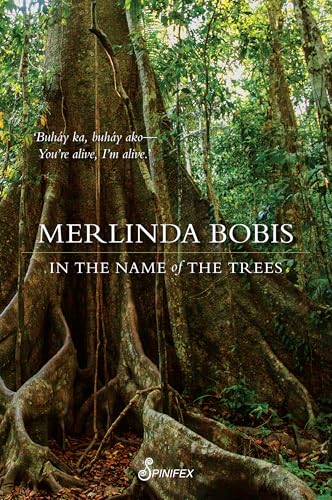
However, clearly there are problems. I don’t understand the economics, and I would love to see more government support for authors as several KYD commentators argued for. I love the independent publishers – like Giramondo, Transit Lounge, Finlay Lloyd, Spinifex Press (whose book by Merlinda Bobis just won the ACT Literary Award for Fiction) – but there must be room for all readers and all writers, and I don’t think it helps to ridicule them. Of course, Marlborough is taking a satirical tone to make a point, and I enjoyed that. Maybe I would also enjoy his satirical, madcap debut novel, Nock Loose too. It just happens to be published by another wonderful – and long-lasting – independent publisher, Fremantle Press.
Meanwhile, where does that leave us? I don’t know. What is “too many” as some commentators asked? If we define success by numbers, then it looks like the industry is booming. This means, for example, as Adam Ouston says, there’s probably never been a better time to for first-time authors to get their work published, and, as others said or implied, more publishing can more diverse voices being published and heard.
Perhaps the question is a different one, and it’s how can we better support Australia’s literary ecosystem?
Writers need the time to write, which means an income. Publishers need to be able to give books the editorial and marketing care they need. Booksellers need the support to promote books through events and other channels. All of these need government support, and there are plenty of international models to look at.
And readers can help too. We can, for a start, think about how and where we spend our reading dollars (if we have the money).
What say you?


Perhaps it’s not that there are too many books but there are too few readers?
Now there’s a thought. Good question worth exploring a bit more.
I agree entirely. In my immediate circle of male pals we are all readers but outside that? I have had many an aghast “you read books?” comments as if I am some kind of cultural outsider. With the rise of many other media there are so many other forms of entertainment nowadays that competition is fierce for one’s time so how to compete with all the streaming services just as one example.
Yes, good point John. I know a few people who were readers but have been one completely distracted by their devices – including games. I keep hoping. I am enjoying my grandson’s interest in books as sources of information, though he also likes “google”. That’s ok, so do I!
I guess that an emphasis on quantity can reduce the signal-to-noise ratio, and make it harder to find worthwhile reading.
This is far from the first time that such a question has been raised: https://dc20011.blogspot.com/2020/12/catalogues.html
Thanks George … you are right. Most questions about books, reading, publishing aren’t new are they. I’ll check your post.
I guess that is why it is important to keep supporting the independent publishers, as they do publish something different..
It sure is Rach. I was lying in bed this morning and thinking I should have made that point specifically in the things readers can do … buy from independent booksellers, seek out books from independent publishers, order backlists if the shops don’t have them on their shelves, look past the “new release” displays.
I guess it is sad that when an author becomes known though that they often move to a bigger publisher… I admire Helen Garner as she stayed with Text, but they have now been bought by Penguin and you cannot get much bigger than that!
I agree. I remember feeling that about Fremantle Press when – if I remember correctly – Elizabeth Jolley moved from them to Penguin. But I guess if Penguin calls, particularly back then, it made a big difference to your visibility.
Of course Garner started with McPhee Gribble… but then they went to Penguin! Gribble helped establish Text, so I suppose you are right! More or less. Picador published Joe Cinque…but then Text has done the next books.
Catriona Menzies-Pike captures my first reaction to your question – it’s quality that matters more than quantity. I can’t answer for the situation in Australia but generally I see too many books issued that are clearly “me too” versions of a blockbusting novel even down to the title and the cover design.
Thanks Karen … yes, me-too is a good way of putting it. I guess it satisfies some people but I’m only likely to be interested if the me-too takes the idea in a different direction. You might have noticed that one of the commenters mentioned book covers.
I understand why publishers do it – riding on the back of a success is an easy way to get sales. But I don’t find it satisfying at all.
Agree, but we are just one set of readers, I guess, aren’t we?
True. And I’d rather people read popular stuff than nothing so I suppose if there’s a market,the publishers will keep issuing those kinds of books.
Yep! I guess it’s all part of the literary ecosystem.
It seems folks in you quote have wants and realities. They want higher quality writing and books. But who is going to buy them? At first I was thinking anything that would be a bestseller could just be made into mass market paperbacks, but fans want nice books and are fussy about the cover, design, and even the edge of the pages now. In the US, small presses put out more experimental books from people with academic backgrounds, but who’s buying them? I have a theory and it involves cronyism. If big publishers has a quota, it would become a checklist of money-making authors and non-white people for the appearance of things, and we don’t want that.
I think you have hit a few of the nails on the head Melanie, capturing the complexity of the issue. Certainly here too, small presses take the greater risks on more experimental writing and more diverse authors. There are exceptions of course, but that’s certainly the trend. They also – as a generalisation at least – seem to spend more time on editing. They tend to be less profit driven – by definition almost I guess – so spend the time.
I agree that the independent publishers have some good quality coming out but they need to as they can’t afford their good stuff to cover for what’s not so good as the big publishing houses can. I disagree with Adam in so far as each book costs $30.00 plus but you have to dig. I don’t want a book with a weak storyline that needs further editing and hope this is the one. The only thing I really notice is so many books seem to need more editing. So many need to cut out lengthy rambling. Most people get the point. You also don’t want to lose diversity. All in all it is a conundrum . (I just love that word😎).
Thanks Pam. I’m not sure what you mean by disagreeing with Adam? I read him to mean that with a lot of books being published you just have to dig a bit more to find what you think is quality, but that the quality is still there? Did you read him differently to that?
I think editing is a big issue right now. All the more reason to go for a novella! Not that they are immune from needing to be edited but there’s perhaps less opportunity for “padding” or unnecessary explication?
I thought he meant it’s ok there are so many books published but you need to dig through all of them before you find a well written, well edited book. I wasn’t prepared to do that but then again how do you know? Do you have to read 9 bad books before funding the great one? Maybe you do. Just thinking out loud.
Thanks Pam … I guess I think that’s pretty much how it is anyhow? Lots of books are published and we ferret out the ones we think are worth reading – via blogs and reviews, author talks, scanning bookshops, reading friends. Do you think he’s saying something different?
Probably not. 😄🌻
I think this debate misses the point. There are going to be more books in the future, not fewer, as paper books go the same way as paper newspapers, and electronic publishing including self-publishing becomes more prevalent.
I can see a future where lit.bloggers and not bookshops are the gateways to new writing, and where writers get all the income from sales as some journalists do even now (eg. Michael West).
Fair point Bill. I did see in my readings some reference to more being published/self-published through digital platforms.
I think you might have more faith in the power of litbloggers though than I do. And I’m not sure printed books are going anywhere for a while. There is a bit of a return to analog media and I think this includes books? As for writers getting all the income from sales, are you suggesting they self-publish? With no input from anyone else? So no bookshops? All digital? In the words of someone I won’t name, can you “Please explain” a bit more?
Not a fan of the ‘too many books’ discourse, which we also have here in the UK… it seems to miss the point that if we reduce the number of books we publish, we’re not going to lose the millionth romantasy, we’re going to lose the more offbeat, awkward, doesn’t-quite-fit a genre novels that will be some readers’ absolute favourites.
Oh yes, good point Laura. Better to stick with Adam Ouston’s argument, and just dig for the gold.
I tend to think that readers find the books they like to read whenever they browse in a bookshop. The young female readers always gravitate towards the fantasy and romance sections, older men & women head to crime, more men than women linger around the history and politics section and the kids always find the picture books and manga.
I like when the cover clearly flags the content of the story; it makes it easier for the readers to scan sections like the new release shelves. If you want romance, then the pastel, cartoon style cover with a guy wearing hockey gear is for you, if you want crime, the dark cover with a figure walking away down a lonely road makes it easy to find on the shelf and fantasy is easy to spot with dragons, fairies and entwined ivy, thorns, flowers trailing all over the cover. Young women are the biggest buying market right now, so it is only natural that the books they like to read are proliferating.
Lit books with quirky covers are my magnet these days and the distinctive Fitzcarraldo covers lure me in every time.
I do feel that books are not being edited as well as they used to be. And publishers are quick to jump on a trend. All of that is true, but again it is what the majority of readers want right now. If it’s trending on TikTok or Insta, we know about it in the bookshop pretty quickly. But what I love is when people come in looking for a specific book they’ve heard about online and we lead them to the area where the book is shelved, and their eyes light up thanks to all the other choices very similar to the book they want. And they walk out with an armful of books.
Oh I love this bookseller perspective Brona. Most of what you say makes complete sense, but I am fascinated by the fact that young women are the biggest buying market right now. I have been thinking recently that I sense a lot of book influencers are young women. I don’t watch TikTok, and I don’t see many on Insta but somehow I “feel” their presence. It’s great. I don’t love the little bit of book influencing I’ve seen, as it feels superficial to old baby-boomer me, but if they are having a good time and buying books and encouraging others in book excitement, who am I to criticise.
TikTok has been great for classics reading in particular for all young people. We are in a tourist area and on the weekends we have lot of young people coming up to go for hikes. Late in the afternoon they turn up in our shop and decimate our classics spinners ever single weekend. They are often the slimmer volumes like White Nights by Fyodor Dostoyevsky, Mary Shelley’s Frankenstein (we stock five different editions!), The Picture of Dorian Gray,
The Death of Ivan Ilyich, Camus, Wharton and I Who Have Never Known Men By Jacqueline Harpman are probably our biggest sellers – every single weekend. So they’re not just reading ‘dragon, fairy porn’ as B25 likes to call the books his GF reads 😀
This is fantastic to hear Brona. I guess I was partly responding to the sense that there’s a lot of “dragon, fairy porn” but also that the discussion that I see is superficial, showy, “here is this book” and “you must read that book” without much else. But I am not on TikTok and I don’t follow many Bookstagrammers so I’m probably being unnecessarily prejudiced. I love that they are reading those books – go the classic novellas I say.
I think this comment of mine was a response to the fact that quite coincidentally I came across some “here are great selections for your bookgroup” posts on Instagram this morning and nearly all of them were current or recent American bestsellers. There were no classics – American or otherwise. I didn’t recognise any Native American writers. I saw no translated fiction, or much if any fiction in fact from other English speaking countries. It was all about these books make for good bookclub discussion because, clearly, they are about contemporary issues, as if that’s ALL we read for! There was the occasional Madeline Miller which at least picks up some different perspectives. I saw one male whose selection was a little more diverse. (His 15 or so books included James McBride, Percival Everett, Sally Rooney, Ernest Hemingway, and Yaa Gyasi, a Ghanan born American). It was so comparatively refreshing.
I think that is true of many book influencers, they pick a niche that works for them, then go at it 100%. If you start googling ‘classic books trending on tiktok’, as I do occassionally for work, they will eventually appear on your reels too 😀
Hmmm … do I want to do that? Maybe I’ll just look out for your occasional reports?!
It seems to be a good and worthwhile convo to have, with all the disagreement in the mix, even if there is no real resolution to this kind of question. For me, “what can we do?” always comes down to investing time and energy, and letting others know where and how you invest time and energy, learning how other readers practice this too. That word is troubling me now, ‘invest’, because it suggests money straightaway, but maybe that’s just part of the conversation: how do we value words and stories, books and storytellers? Does the way we spend our time reflect how we say that we value them? And what about our sourcing: do we download illegal copies and cut authors out of the loop, buy from retailers who prioritise mainstream publishers at the expense of indies, give Amaz*n data about our habits while saying how important small publishers in the lit landscape? There’s always something else to think about, something else to try, some other way to narrow the gap between what we can do and what we are actually doing.
What a great conversation you started! Overall I don’t think there are too many books, though I do think there are too many books of the same kind so that everything starts to be very same-y. These days I mostly stay clear of the big publishers here in the US and look more closely at the independent, nonprofit publishers because I find that they are the ones who most often publish the interesting books. But then I also live in a country where reading is in decline and fewer than half of adults read even one book last year. So perhaps part of it is not that there are too many books but too few readers. Still, personally, even with the flood of books each year, I never have any trouble finding more to read than I actually am able to 🙂
Haha, Stefanie agree with all you say here, including your concluding comment. I guess we wouldn’t have it any other way would we?