The Griffyn Ensemble’s paean to the weather

It’s pretty much a given that a Griffyn Ensemble concert will be both entertaining and challenging – and their latest concert, Cloudy With a Chance of Rain, was no exception. But this concert had an added fillip: it was unashamedly political in addressing the thorny (for some) issue of climate change. Good on the Griffyns I thought.

Before I continue though, I’ll list the current line-up:

  • Kiri Sollis (Flute, etc)
  • Matthew O’Keeffe (Clarinets)
  • Wyana O’Keeffe (Percussion – hmm, it seems there’s been another wedding amongst the Griffyns as Wyana was previously Etherington)
  • Meriel Own (Harp)
  • Susan Ellis (Soprano)
  • Michael Sollis (Director, Composer, and Mandolin, etc)

That’s six, where there was once seven. I wonder what has happened to Carly Brown, their French Horn player? Anyhow, for this concert there was a seventh – geomorphologist and ex-weather presenter, Rob Gell.

So to the concert, which was described in the program as including works “spanning geography and genre contextualised through the four seasons, from the ancient ice ages to the distant future.” It commenced with Rob Gell introducing the climate theme by talking about the ice age and leading us nicely into the first part of the concert, labeled Winter, because the concert was organised by the four seasons. It was, in fact, the four seasons without the Four Seasons! Now that’s original programming, though poor old Vivaldi probably turned in his grave!

The music itself was highly varied, as we expect from the Griffyns. The concert started with a moody, contemporary piece, “White Scenery”, by Latvian composer, Pēteris Vasks. Originally a piano piece, it had been arranged by the Griffyns for harp, mandolin, flute and vibraphone. The other wintry pieces were Debussy’s “Snow is Dancing” played on harp, and Schubert’s song “The Linden Tree”. We then moved through the seasons, hearing a mix of traditional classic, contemporary, jazz and popular music. I can’t possibly list all the pieces now (which, in addition to Europe, came from places as varied as Japan, Uruguay and the southern US) … so will move onto …
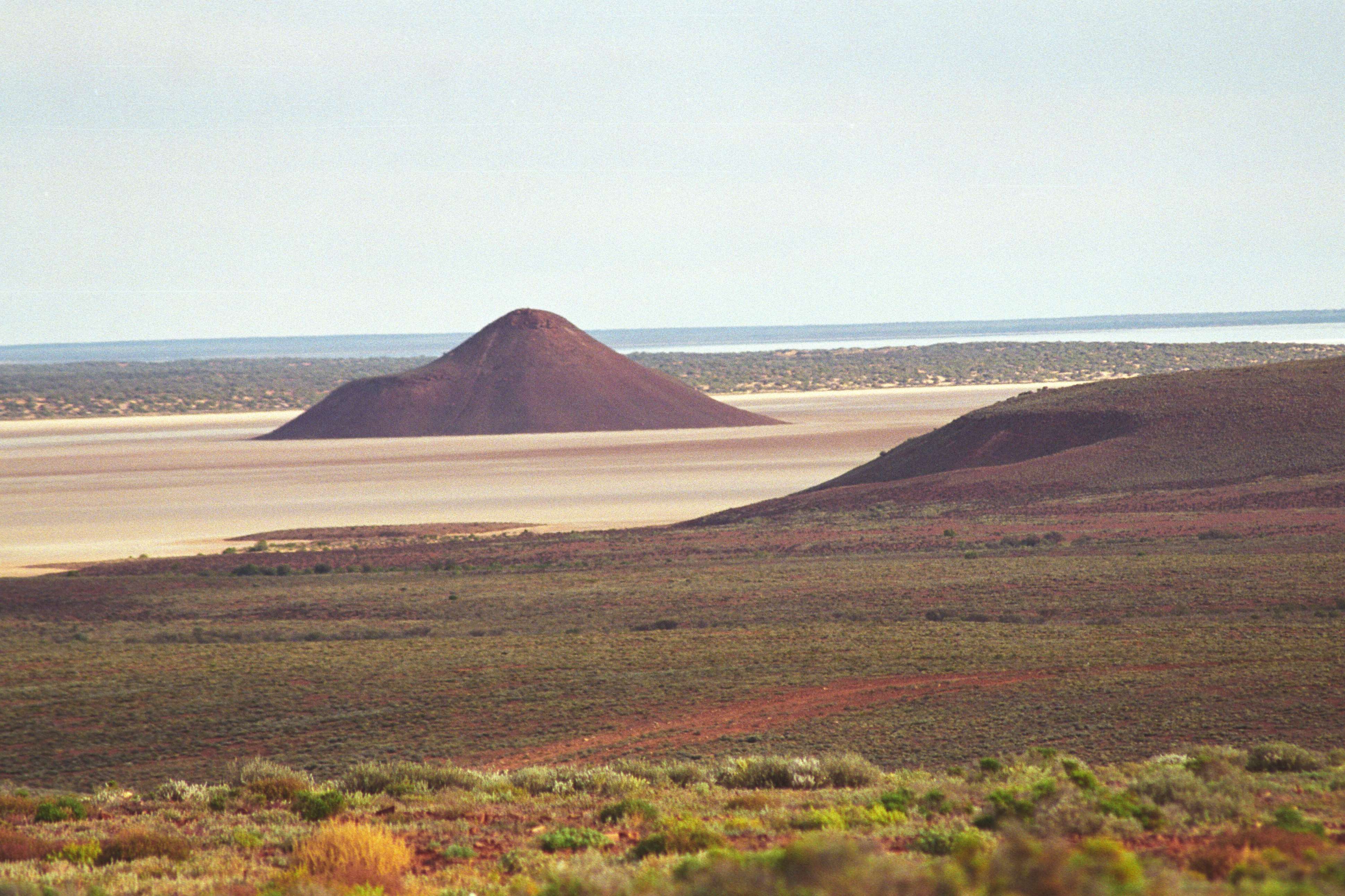
Desert south of Woomera, South Australia

Desert south of Woomera, South Australia

What I, a reader who enjoys music, particularly love about the Griffyns: there’s always a literary element to their concerts and they always credit writers in their simple but useful programs. In this concert there were songs set to works by Wilhelm Müller (“The Linden Tree”), Ruth Valadares Corrêa, Rainer Maria Rilke and Herman Hesse among others, as well as an original work inspired by Patrick White. This work, “Mirage”, was composed by the group’s director, Michael Sollis, for piccolo and glockenspiel. It was inspired, the notes say, by “Patrick White’s image of the harsh Australian desert landscape – full of emptiness, desolation, relentless heat, and an unnerving sense of ritual”. Now, if I was intrigued and impressed by how the comparatively high registers of the flute could convey the depths of winter in Vasks’ “White scenery”, I thoroughly enjoyed the piccolo’s representation of a mirage for this summer piece. The piece played out a little like a cat-and-mouse game between the two instruments, with, surprisingly for the subject matter, an element of humour. Kiri Sollis and Wyana O’Keeffe did a lovely job with what was a musically and intellectually challenging but evocative piece. It was in the Summer narration that Gell made his strongest points about climate change, sharing some now well-known but still scary data about increasing temperatures, increasing rain, and the havoc these will cause.

I would love to list all my favourite pieces from the concert, but that would be most of them. While Vivaldi, thankfully really, wasn’t there, another obvious selection was – “Summertime”. I also loved Susan Ellis’ rendition of another favourite of mine, “Autumn Leaves”. The notes describe it as a 1945 French song made famous by Edith Piaf, but I know it best in a version by the lovely Eva Cassidy.

It was a good concert. It may have had a rough spot here and there, but it had life, and it teased our minds and moved our hearts. I’ll close with some words from Wilhelm Müller’s “The Linden Tree”:

When dreaming there I carved
Some words of love upon the bark
Both joy and sorrow
Drew me to that shady spot

“Joy and sorrow” in a “shady spot”. That just about says it all.
Monday musings on Australian literature: National Bookshop Day (Belated)

Saturday 11 August was National Bookshop Day here down under but I decided to delay writing about it until this week’s Monday Musings as it seems a worthy subject. However, Lisa of ANZLitlovers and Louise of A Strong Belief in Wicker did their posts in a more timely way.

National Bookshop Day is a new concept here. In fact this was its second year, having been inaugurated last year by the Australian Booksellers Association. Its logo is “celebrating bookshops in the community” and its aims are, I think, both celebratory and promotional, regarding bookshops, literature and, more generally, culture. I guess it doesn’t take much thought to work out why they feel the need to have such a day, what with the internet ‘n all?

I like this comment from Bite the Book, the blog of Pages and Pages* bookshop in Mosman, Sydney:

The internet makes it easier for everyone to find what they are looking for but what a boring place the world would be and how uninteresting our lives would be if we only ever found what we were looking for. As much as I enjoy reading the next book from one of my favourite authors there is nothing quite like that feeling of reading a book you found from left field through a recommendation or the serendipity of finding it on a shelf.

I like this because it recognises that there’s no turning back the clock. Technologies change. The three-volume book gave way to the single volume, paperbacks brought book-buying to a new level, and now e-books are on the rise. The point is they are all books and one thing remains the same: People continue to read. A day that celebrates this while also promoting one of the places that we readers love the most can only be a good thing. Browsing an online store, while possible and getting smarter, is nothing like browsing a bookshop surrounded by other booklovers and by books of all shapes, sizes, colours and contents.

I’m embarrassed to say that, unlike Lisa and Louise, I did not get to a bookshop on THE day, but I do go to bookshops regularly. Bookshops have had a tough time in the national capital over that last few years with significant chain stores disappearing view: Collins, Angus and Robertson and Borders. Just two chains survive, Dymocks and QBD. It’s good to see them survive. Chain bookshops** have their place after all, but they are not my bookshops of choice. My favourites tend to be independent stores, particularly:

  • Paperchain – has the best remainder table I know, as well as other great books of course, and many author events
  • Electric Shadows – has a particular focus on film, media and the performing arts as well as a good selection of Aussie lit, and also has author events
  • Smiths Alternative – has books you don’t always find elsewhere including a good selection of translated fiction, and in line with its alternative, socially-conscious vibe, holds a variety of events in fiction, poetry and music
  • National Library of Australia’s Bookshop – is the one I frequent the most. It’s in a beautiful building belonging to our premier literary institution, specialises in Aussie literature,  and offers a generous discount to Friends of the Library. And there’s a gorgeous cafe across the foyer. What’s not to like?

Just for the record, I have recently bought books from a bookshop (the National Library one): Luke DaviesInterferon psalms (book of poetry, for me), Robert Newton’s When we were two (YA novel, for my nephew), and one I won’t name because it is a gift that hasn’t been bestowed yet.

Did you, if you’re Australian, attend a bookshop on National Bookshop Day? I’d love to hear about it. And, if you’re not Australian, is there something similar where you are? Are bookshops in your area thriving?

* On National Bookshop Day, Pages and Pages donated $1 for each book sold to the Indigenous Literary Foundation. Many bookshops held events, offered discounts and prizes. Let’s hope, for all their hard work, they attracted some new customers to their fold.

** My favourite chain in Australia has to be Kinokuniya. Its depth of fiction, from many nations, is simply hard to beat – but we don’t have a store in my city.

Delicious descriptions from Down under: Mary Durack on Patrick White

I am slowly – very slowly – reading True North, Brenda Niall‘s biography of Mary and Elizabeth Durack. Life is rather getting in the way of reading at present so, contrary to my normal practice, I am going to post a Delicious Description from it before, rather than after, my review. For those of you who don’t know, Mary and Elizabeth Durack belonged to the Durack pastoral dynasty which made its name in the Kimberley region of Western Australia. Mary wrote the best-selling Kings in grass castles which tells her family’s story starting with her ancestors’ migration from Ireland in mid-19th century and following them through New South Wales and Queensland to their pioneering life in the Kimberleys.

But, Mary also wrote novels – including children’s books which were illustrated by her sister Elizabeth – and worked as a journalist writing articles, columns and reviews. I loved coming across, in Niall’s book, a discussion of her review of Patrick White‘s The tree of man in Westerly, in 1957. I’m always interested to hear what writers, who are contemporaries, think of each other. I was thrilled to discover that Durack liked and appreciated White, because some literary luminaries of the time, like AD Hope and Florence James, were not impressed with his modernist style. According to Niall, Durack said that “the critic who dismisses [White’s] often broken and unfinished sentences” would also have to dismiss much of Joyce and Faulkner.

Niall also quotes this excerpt from Durack’s review:

I have little doubt that this is a book destined to become an important part of our literary tradition. It probes deep below the surface to the inner lives of men and women, the emotions, the sensations and dreams they cannot express, either through diffidence, or because they lack words in which to embody them … It is full of the beauty and poetry of nature, the turn of the seasons and the passing for the years expressed in words that ring as clear and true as the stockman’s Condamine bell.

And she was right! Not only has White entered our pantheon of writers, but he is the only Australian to date to be awarded the Nobel Prize for Literature. The more I read this book, the more I’m liking this woman…

Monday musings on Australian literature: Some favourite Aussie film adaptations (1)

In support of Australia’s National Year of Reading the National Film and Sound Archive is, later this year, holding an exhibition on film adaptations. And that made me think about my favourite film adaptations, which in turn made me think it might be a good Monday Musings topic. So, here I am. This post will focus on films adapted from novels and short stories. I will write other posts in future on adaptations from plays and adaptations for TV.

The Australian film industry, like most, has drawn from novels, plays and stories since its early days. Some of Australia’s best known silent films are adaptations, including The sentimental bloke (1919) (CJ Dennis), On our selection (1920) (Steele Rudd), and For the term of his natural life (1927) (Marcus Clarke). For this post, however, I’ll be focusing on my favourites from the last few decades.

Are you one of those people who refuses to see a film until you’ve read the book? I’m not really, though if it’s a book I’m keen to read I do prefer to read it first. I take a pretty free and easy (wishy-washy, did I hear you say?) approach to film adaptations. That is, I don’t expect them to replicate the work they are based on and am very happy for artistic licence to be taken. Film and Literature are different media and it’s impossible, in my view, for one to replicate the other. This might sound a bit ingenuous, but I’m just not too fussed about getting my knickers in a knot over the issue. I care more about whether I enjoyed the film (and, of course, whether I enjoyed the book).

I have to admit that some (though my no means all) of my favourite Aussie film adaptations are of books or stories I haven’t read or that I read after seeing the film. However, they are still adaptations and they are films I like, so I’m going to list them here (with the work they are based on). Like all lists it’s going to be hard to limit it, but limit it I must, so here goes, in film date order …

  • Picnic at Hanging Rock (1975) is credited with kickstarting the renaissance of Australian film in the 1970s. It was based on a novel of the same name, by Joan Lindsay. It was quite controversial at the time – not the film itself – but the question of whether it was based on fact or not. It wasn’t! It’s a great story, beautifully filmed by Peter Weir – and has become pretty much an iconic Aussie film.
  • My Brilliant Career (1979) was based on Miles Franklin‘s novel of the same name. It was made during a period when the Australian film industry was dominated by nostalgia (or period drama). When you’re on a good thing, stick to it, and all that … but this film had something special. It spoke to the second wave of feminism in its story of Sybylla who gives up a man to stay true to her dream of being a writer, and it launched the career of pioneering woman film director, Gillian Armstrong.
  • Three dollars (2005) was based on a novel of the same name by Elliot Perlman whose latest novel, The street sweeper, I’ll be reading and reviewing  later this year. I love this film (and book, which is one of those I did read first) because it’s about a man who sticks by his principles, who won’t let corporate greed or urban apathy get in the way of his humanity despite significant cost to himself. And it starred David Wenham (aka the luscious Diver Dan from a favourite television series).
  • Jindabyne (2006) is a bit of a ring-in here because it was based not on an Australian work but on a short story by the American writer, Raymond Carver. The story is titled “So much water so close to home” and has been transplanted to Australia and overlaid with an indigenous theme, but the essential story about men who, on a fishing trip discover a dead (murdered) girl and, rather than hike out to report the death immediately, continue their trip, remains the same. It’s a taut, tight, visually beautiful film about moral responsibility.
  • The eye of the storm (2011) is based on Patrick White’s novel of the same name. White is often described as “unadaptable” – and later this year I plan to write on the saga behind an attempt to make a film of Voss. We are still waiting – though it was adapted for opera, with David Malouf the librettist. Meanwhile, I reckon The eye of the storm effectively shows that White can indeed be adapted to film. The film had an amazingly long run (in my city anyhow) for not-the-best-known book by an author generally regarded as “hard”.

These are just five of many that I’ve seen and enjoyed over the years – I might also have mentioned Bliss, CandyLooking for Alibrandi and Romulus my father, for example – but for all those I’ve seen, I wonder about the ones that haven’t been made. Over the years, we hear books are optioned – like Jessica Anderson’s Tirra Lirra by the River, Thea Astley‘s Drylands, Murray Bail’s Eucalyptus, and Tim Winton’s Dirt Music – and we wait, and wait, and wait to see them, but they never appear. Given that adaptations can often guarantee an audience (though perhaps less so of literary fiction), it’s surprising to me that so many of our wonderful novels have not yet been adapted. I can only wait and hope…

Meanwhile, do you enjoy film adaptations, and what are your favourites?

Melissa Lucashenko, The silent majority (Review)

I have reviewed many individual short stories by Americans (through the Library of America), but not by Australians. Time to rectify that a little, and why not with a short story by Melissa Lucashenko, an Australian writer of European and indigenous Australian heritage. She is an award-winning novelist and an essayist, but I hadn’t read her – until now.

You might be wondering why I chose her and this story? But it’s obvious really. I was pottering around the web and came across this:

It is a truth universally acknowledged, Jo decided, that a bored teenager with a permanent marker is a pain in the bloody neck.

How could I go past it? I had to read it to see what it – and Lucashenko whom I was keen to read – was all about. It’s a short, short story, well suited, I suppose, to publication in a magazine like the Griffith Review. Jo is a single mum of indigenous heritage and during the course of the story is mowing the grounds of the cemetery in the small northeastern NSW town of Mullumbimby. Her teenage daughter Ellen is supposed to be babysitting her young nephew Timbo while Jo does her mowing but, like a teenager, gets bored and “tags” Timbo with slogans such as “Better Conditions or I ring DOCS*” and “Pay me a living wage”. The daughter is needling her mother, but there is of course double meaning for the reader in these slogans, messages about the conditions many indigenous Australians face.

The story mainly comprises Jo’s thoughts as she gets on with her mowing. She reflects on those who lie in the ground beneath her – the Protestants and Catholics, in their separate sections. They are the literal “silent majority” of the title, and she wonders about their stories, now lost with the erasure by time of their details on the gravestones. Jo wonders about

These stories that had once been so important to the town, that had needed carving in granite: where were they now.

Stories, though, are important to Jo – and, in my experience, are an important treasured part of indigenous Australian culture. Jo is a little worn by her “previous life and its discontents” in which an Eeyore-like man Gerry kept dragging her into “his tight white world”. In fact, she appears not to have much time for people, with her “favourite humans living in the pages of books” and her preferred living creatures being horses. She quotes Walt Whitman – I found that interesting – on horses:

They do not sweat and whine about their condition.
They do not lie awake in the dark and weep for their sins.
… not one is demented with the mania of owning things.

Hmmm … this certainly conveys to me a sense of cynicism about humans, of all colours. But the real point of the story comes in the third last paragraph, with her pondering on what the land was like before, when it was

not yet doomed by the axes and greed of men who – months and years from anything they thought of as home – had tried to slash and burn their way to freedom here.

So what we have here is a meditation, in a way, on stories and their importance, on animals and land, and on walking a line between white and indigenous culture. It’s not all melancholic, as what I’ve said here might suggest. There are some touches of humour. Overall, I was intrigued by her writing and I liked the story, though it felt a little undeveloped. I understand that Lucashenko’s next novel is set in the Mullumbimby area. I wonder whether this story is part of it – or, at least, whether Jo appears in it. I hope so.

Melissa Lucashenko
“The silent majority”
Published in the Griffith Review, Edition 26, November 2009
Available: Online at the Griffith Review

*The Department of Community Services which is feared by struggling parents for fear their children will be taken away.

Virginia Woolf on Jane Austen’s Love and freindship

A couple of weeks ago I reviewed Jane Austen‘s juvenilia work, Love and freindship. I wanted, then, to share with you Virginia Woolf‘s take on Jane and the work, but decided it would be better as its own post, so here I am again.

Woolf was quite an essayist, as you probably know, as well as a novelist, and she wrote several essays about Jane Austen (as well as featuring Austen in her famous A room of one’s own). Today’s post was inspired by an essay that is simply titled, “Jane Austen”. You can read it at Project Gutenberg. The essay was published in 1925 in her book, The common reader, though it may have been previously published in a newspaper or journal. It says something, I think, that in an essay of just a few pages she devotes a couple of paragraphs to a piece of juvenilia (that is, Love and freindship). This is what she says:

To begin with, that prim little girl whom Philadelphia [a cousin] found so unlike a child of twelve, whimsical and affected, was soon to be the authoress of an astonishing and unchildish story, Love and Freindship, which, incredible though it appears, was written at the age of fifteen. It was written, apparently, to amuse the schoolroom; one of the stories in the same book is dedicated with mock solemnity to her brother; another is neatly illustrated with water-colour heads by her sister. These are jokes which, one feels, were family property; thrusts of satire, which went home because all little Austens made mock in common of fine ladies who “sighed and fainted on the sofa”.

Brothers and sisters must have laughed when Jane read out loud her last hit at the vices which they all abhorred. “I die a martyr to my grief for the loss of Augustus. One fatal swoon has cost me my life. Beware of Swoons, Dear Laura. . . . Run mad as often as you chuse, but do not faint. . . .” And on she rushed, as fast as she could write and quicker than she could spell, to tell the incredible adventures of Laura and Sophia, of Philander and Gustavus, of the gentleman who drove a coach between Edinburgh and Stirling every other day, of the theft of the fortune that was kept in the table drawer, of the starving mothers and the sons who acted Macbeth. Undoubtedly, the story must have roused the schoolroom to uproarious laughter. And yet, nothing is more obvious than that this girl of fifteen, sitting in her private corner of the common parlour, was writing not to draw a laugh from brother and sisters, and not for home consumption. She was writing for everybody, for nobody, for our age, for her own; in other words, even at that early age Jane Austen was writing. One hears it in the rhythm and shapeliness and severity of the sentences. “She was nothing more than a mere good-tempered, civil, and obliging young woman; as such we could scarcely dislike her–she was only an object of contempt.” Such a sentence is meant to outlast the Christmas holidays. Spirited, easy, full of fun, verging with freedom upon sheer nonsense,–Love and Freindship is all that; but what is this note which never merges in the rest, which sounds distinctly and penetratingly all through the volume? It is the sound of laughter. The girl of fifteen is laughing, in her corner, at the world.

I like the way Woolf looks at Austen with a writer’s eye – in regards to both content and style. I particularly love the line – “She was writing for everybody, for nobody, for our age, for her own; in other words, even at that early age Jane Austen was writing”. I like her recognition of Austen’s technical skill when she describes “the rhythm and shapeliness and severity of the sentences”. On top of all this, Woolf sees Austen’s humour, her ability to laugh at the world. The humour in this little piece of juvenilia is broad, but it’s there and Woolf saw and appreciated it.

And that’s all I’m going to say, because these two paragraphs stand on their own, don’t they?

Monday musings on Australian literature: It’s all about sport, or is it?

I’ve written previous Monday Musings on themes and motifs in Aussie literature – like the lost child, the beach, mountains and even sheep – so, with the Olympics now on, it seemed appropriate to add sport to this list.

Whether we all like it or not, Australia has somewhat of a reputation for being a sports-focused country. We’ve had our moments in the sun as a cricketing nation, a tennis nation, a swimming nation, a golfing nation, and so on. We’ve even won the Tour de France and the America’s Cup! Given all this, I started to wonder last weekend about how sport has been presented in our literature … and I must say I struggled to come up with many examples (from my own reading anyhow). This will be a short post, methinks, but it has to be done!

My first encounter with sport in Aussie literature was in my childhood, through ballads. My two favourite examples are Thomas E Spencer’s “How McDougall topped the score” (1898) and Banjo Paterson‘s “The Geebung Polo Club” (1893). The former is a comic poem about a country cricket match between two towns. It celebrates the triumph of the underdog (a popular Aussie theme) through (bush) cunning. While Spencer’s poem is about one of Australia’s most popular sports, “The Geebung Polo Club” is about a far less widespread sport, polo (of course). Polo works as an effective vehicle for depicting another common theme in Australian culture, the ordinary man versus the toff (which, in this poem, is compounded by the country versus the city conflict). The ballad also celebrates the “never say die” spirit, and is what I’d call a tragicomedy. I can’t resist giving you a flavour:

Here are the Geebungs:

But their style of playing polo was irregular and rash –
They had mighty little science, but a mighty lot of dash:
And they played on mountain ponies that were muscular and strong,
Though their coats were quite unpolished, and their manes and tails were long.

And here is a description of their opponents, the Cuff and Collar team:

For the members were distinguished by exclusiveness and dress.
They had natty little ponies that were nice, and smooth, and sleek,
For their cultivated owners only rode ’em once a week.
So they started up the country in pursuit of sport and fame,
For they meant to show the Geebungs how they ought to play the game;

You get the drift, I’m sure.

The next work dealing with sport that comes to my mind is a play (later made into a film) by Australia’s best known contemporary playwright, David Williamson. Much of his work is satirical and his play The club (1977) is a great example. The sport in question is a particular type of football, Australian Rules, and the play explores the tensions between commercialism and traditional club loyalties, which, reminding me of “The Geebung Polo Club”, also translates into an exploration of class conflict. More broadly, though, it is about the struggle for power, something Williamson explores in other settings besides sport.

Okay, so I’ve discussed a couple of poems (ballads) and a play, but when I turn to literary fiction my mind goes pretty blank. There is Tim Winton‘s Miles Franklin Award winning novel Breath (2009). It’s about surfing, and is primarily about masculinity and risk-taking. Winton’s interest is more psychological than the socio-political explorations of the other works I’ve mentioned. And there’s Gillian Mears‘ recent novel, Foal’s bread, about horse high jumping. As I wrote in my review, I loved the way it, like Breath, introduced me in the most visceral way to a sport I have never experienced. It draws on some of the themes from those 19th century ballads – in particular the hardship of country life – but while they tend to romanticise the lives they depict, Mears’ work, while having an element of the heroic about it, also deals with the struggle to survive, psychologically as well as physically.

There are many novels in which sport appears (like say, Craig Silvey’s Jasper Jones) but not many, that I can dredge up, for which sport provides the principal setting. Is this because sportspeople and writers tend to be diametrically opposed? I’d love to hear your thoughts on this, and whether you have any favourite novels in which sport is centre stage.

What do Anna Funder and Amarcord have in common?

Leipzig! It’s funny isn’t it how some person, place, idea (or whatever) that you hadn’t come across in who knows how long suddenly makes its presence felt more than once in a short amount of time. This is what happened to me this week when I attended, on Sunday, a conversation at the National Library of Australia with Miles Franklin award-winning author, Anna Funder, and then two nights later a Musica Viva concert by all-male a cappella group, Amarcord. For those of you who know these people, the Leipzig connection is pretty obvious, but for those who don’t, I’ll explain. Anna Funder’s first book was the non-fiction work Stasiland which explores the impact of the Stasi on those affected by it. And Amarcord was founded in Leipzig from members of the St Thomas’ Boys Choir (which was established in 1212!).

The connection, though, is a little more complex than a purely physical one. In talking about Leipzig and her book promotion tour there, Funder commented on the paradox of being in the building* in Leipzig that the Stasi operated from and that had also been used by some of the world’s greatest musicians such as Bach (who is buried in St Thomas’ Church) and Mendelssohn. Amarcord, during the concert, talked of Leipzig’s musical heritage – of Schumann, Mendelssohn and Bach – but in the programme they also referred to the time under the Stasi:

Living in East Germany required conditioning. You needed to know whom you could trust. I really had to be careful what I said to whom. And then we had the privilege of a choir that was an island of relative freedom of speech and thought. That of course attracted children from families who needed that freedom of speech. Even as a child I felt that atmosphere strongly. In the choir, I could breathe again. (Daniel Knauft, bass)

I won’t say much more about Amarcord except that the concert was magnificent. The program, themed “The Singing Club – Four  Centuries of Song”, comprised music mostly from the Renaissance and Romantic eras, but concluded with a small selection of folk songs from around the world, including Korea and Ghana. It was a beautifully varied program, each of the singers addressed us during the performance to explain the pieces being sung, and the singing was glorious. I love performers that are serious about their music, but don’t take themselves too seriously. That was Amarcord, and if they come again, I’ll be lining up at the door.

But now to Anna Funder. She was a very thoughtful considered interviewee, which is not surprising I guess from someone who took 5-6 years to write her last novel, All that I am. She talked, for example, about how Stasiland had started as a novel but that she’d decided “it didn’t seem right” to use other people’s lives for a fictional purpose. She also talked about the challenge of believability. In All that I am she said she modified the facts because in fiction authors ask readers to jump into a world they create, but she felt there were things about the “real” story behind All that I am that are “unbelievable”, that no-one would believe in a novel! As one who doesn’t find it too hard to suspend disbelief, I was intrigued by the care she takes to make sure her fiction is believable – and she is probably sensible to do so!

While her main concerns, she said, are social justice and what it means to be human, her aim in writing fiction is not “to make an argument” but “to make a beautiful piece of work, a literary artefact”. Every nation, she said, has something in their history that is “disenchanting” (don’t we Aussies know it) but the function of literature is to “enchant us”. I must say I was enchanted by the way she juggled these two conceptual balls, by her clear fundamental commitment to her art and to her moral-ethical world view.

Louise Maher, the host of the conversation, asked her about awards and prizes, and referred to Funder’s letter to Premier Campbell Newman regarding his cancellation of the Queensland Premier’s Literary Award in which she described his action as “a step towards the unscrutinised exercise of power”. She told us that given the book she’d just written – about a totalitarian state – she had to write what she did. Funder clearly supports prizes – and has won a goodly many. She sees them as a “signpost to quality” and said that while they don’t make writing easier, they improve the likelihood of having your next work published.

I did enjoy my little forays into Leipzig this week – and the places they took me.

* Probably the “Round Corner” house, though I don’t recollect her actually naming the building.

Monday musings on Australian literature: Prime Minister’s Literary Awards 2012

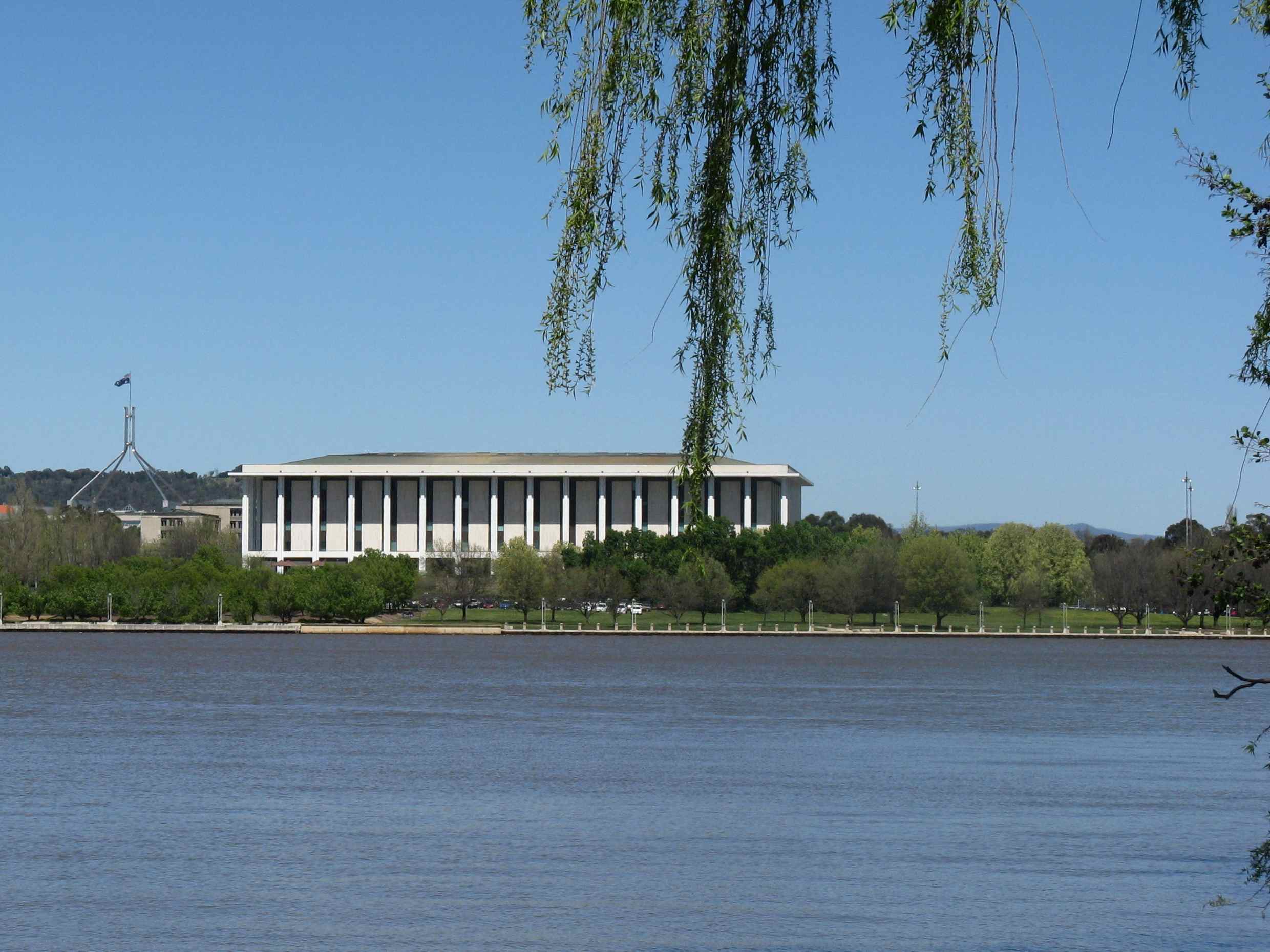
National Library of Australia

National Library of Australia, viewed from Commonwealth Park on the opposite side of Lake Burley Griffin

Last year I attended and reported on the post-announcement panel for the Prime Minister’s Literary Awards, held at the National Library of Australia. I attended again this year and, since it occurred today, Monday, I’ve decide to devote this week’s Monday musings to it.

First, the winners:

  • Fiction: Gillian MearsFoal’s bread (My review)
  • Poetry: Luke DaviesInterferon psalms
  • Young adult fiction: Robert Newton’s When we were two
  • Children’s fiction: writer Frances Watts and illustrator Judy Watson’s (illus.) Goodnight, mice!
  • Non-fiction: Mark McKenna’s An eye for eternity: The life of Manning Clark
  • History: Bill Gammage‘s The biggest estate on earth: How aborigines made Australia

Last year’s four awards were expanded to six this year by rolling the separate Prime Minister’s History Prize into them and, hallelujah, adding in a prize for Poetry. The awards are, I believe, the most generous of Australia’s publicly funded awards, providing $80,000 to each winner and $5,000 to each shortlisted author.

The panel members were Luke, Robert, Mark and Judy. Unfortunately, Bill Gammage is currently overseas, and Gillian Mears who suffers from multiple sclerosis had attended the announcement but needed to rest before her afternoon engagements. I was disappointed not to see her but of course can’t begrudge her putting her health first. The panel was chaired by local ABC radio announcer Louise Maher.

I won’t summarise the whole panel but just cherry pick a few interesting thoughts and ideas that came out of it. During a discussion about the writing process, in which Robert Newton said that he when he starts writing he rarely knows where his story is going to end, Mark McKenna offered a favourite quote from David Malouf:

I don’t write to record what I know. I write to find out what I know.

I like this. It makes me feel that we readers are on a journey with the author rather than being told what to think by the author.

There was, of course, the usual discussion about the impact of technology on books and reading and, while the responses weren’t quite as conservative as I felt they were last year, there still seems to be some resistance to thinking positively about change. I understand that. Livelihoods – of writers, publishers and booksellers – are at stake BUT, whether we like it or not, the change is coming (is here, in fact) and so our best chance is to embrace it.

Louise approached the question from a slightly different angle by asking how reading, which takes effort and time, fits into contemporary culture. Mark believes that the one-on-one aspect of reading is under threat, due I suppose to competition from other stimuli, and said that awards like these are important because they can bring more readers to books. (This point was, in fact, a bit of a mantra for him.) He suggested that the act of reading, the way we read, is changing and that the solitary experience is becoming rare. He noted that in just a few more decades the majority of people around will not have grown up with books the way we in the audience had. Their experience and expectations will be different, and books are likely to be produced in different formats with content and presentation varying between the formats. Mark also made the significant point that much of the change that is occurring is in the culture around the book rather than in reading itself, and I guess he’s right. The way books are sold – and published – is changing. Electronic books can’t be physically browsed in a bookshop. It’s not easy to lend an electronic book. You can’t get your electronic book signed. And so on …

Rob’s response that reading and technology will have to grow together was a pragmatic one. But he also commented, regarding the effort involved in reading, that he likes “the idea of books making kids work a bit”. Judy talked of inculcating a reading habit with children when they are young, and said she limits her (young) children’s time with technology. I liked Luke’s honesty when he said that attention span is the issue and that he can see it in himself, that he finds himself being drawn too often to “fiddly” little things on the Internet, like favourite blogs, and away from concentrated reading. But, he also said that he believes that our “emotional and spiritual” relationship with words will always be there. That makes sense. The forms and formats might change but our love affair with words and the ideas they express surely won’t! As one person said, we need to respect the new forms but recognise that the story, the empathy, will always be the thing.

There was a question from the floor late in the session regarding what difference the monetary prize would make to their lives. The answers weren’t really surprising but were interesting nonetheless:

  • Luke, who admitted to being more broke now than he has been for many decades, said he will pay off his debts and that the remaining money will give him a buffer enabling him to say no to jobs that he “shouldn’t” be doing, that aren’t, he said a little self-consciously, in response to his muse.
  • Rob said he’d buy a new surfboard and a laptop with working shift and caps lock keys, and that he’d consider taking some time off from his job as a firefighter to write full-time.
  • Mark said it would buy a little financial independence and provide some seed money for his new book, which will tell the history of Australia through some selected places that he will need to visit.
  • Judy also said it would take off some of the financial pressure and allow her to work on what she wants to rather than on jobs “for the money”.

A great session. I thank the National Library for again providing the opportunity for members of the public to “meet” the authors this way, and I thank the authors for giving up their precious writing time to talk with us!

Jane Austen, Love and freindship (Review)

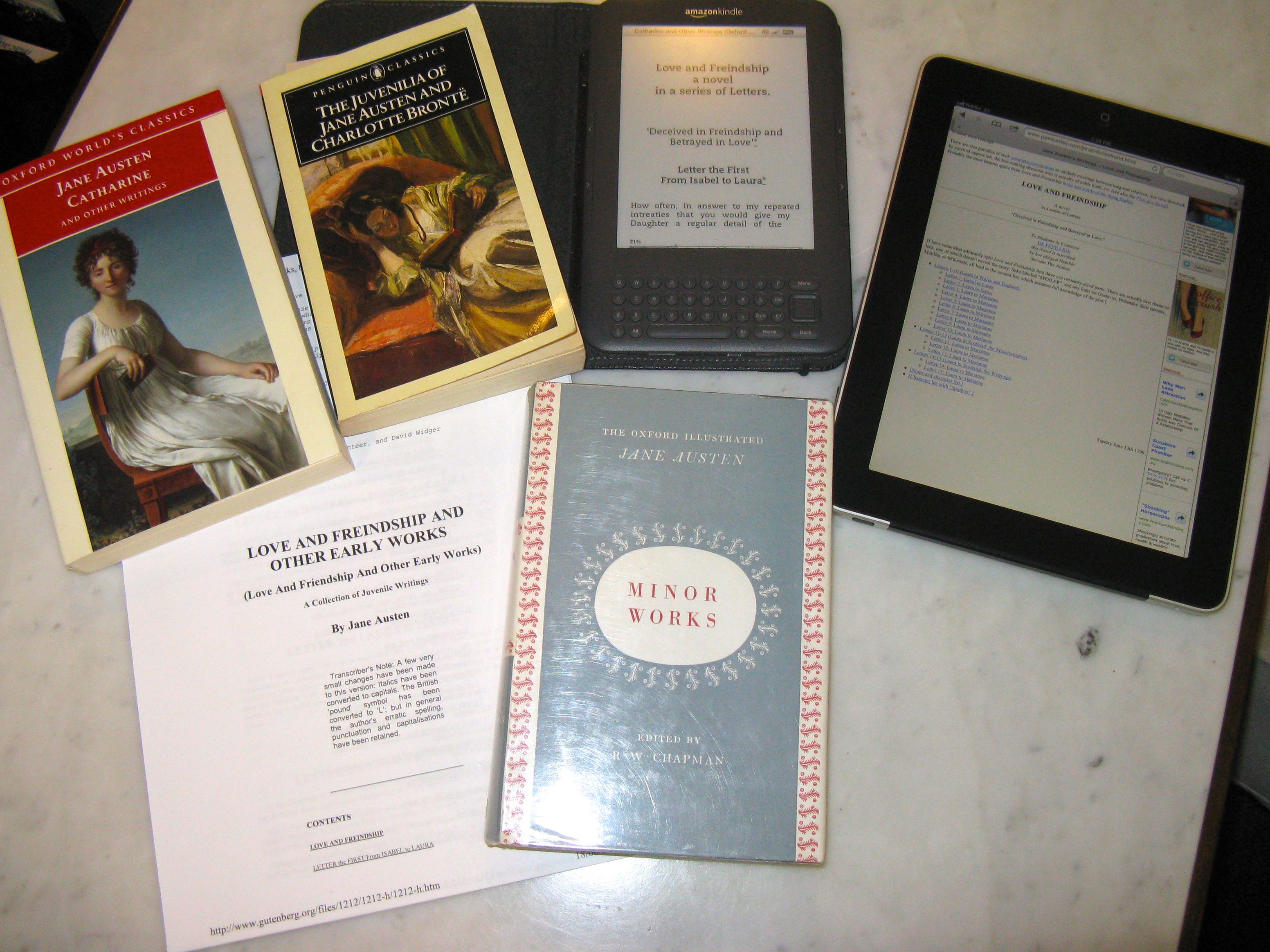
Love and Freindship editions

Love and Freindship editions

If you are a Jane Austen fan, you don’t just read her six novels. You read her letters, her unfinished works and her juvenilia. And you read them more than once. So it is that I have just – for my local Jane Austen group – reread Love and freindship (sic), the short epistolary novel she wrote in her 15th year. It is a fun – and illuminating – read. It’s the illuminating part that I plan to focus on here.

But first, a little about the plot. It commences with a letter in which Isabella asks her friend Laura to tell her daughter “the Misfortunes and Adventures” of her Life. “You are this day 55”, she says, and surely now safe “from the determined Perseverance of disagreeable Lovers and the cruel Persecutions of obstinate Fathers”. Laura, while rejecting that she is too old for such “unmerited” misfortunes, agrees to tell her story  to Isabella’s daughter Marianne as a “useful lesson”. What follows is a melodramatic story of sudden friendships, quick-not-always legal marriages, and wild coincidences, accompanied by much fainting and “running mad”.

This doesn’t sound much like the writer described by Charlotte Bronte as “sensible and suitable” does it? And, in fact, this wildly improbable, effusive story isn’t much like her. Or is it? This is the point I’d like to explore a little in my post, because there are many seeds here of the writer Austen was becoming – of the things that were to concern her and of the style she was developing.

The thing that concerned her most was to make fun of silly or ridiculous people and ideas. The most obvious of these in Love and freindship was the late eighteenth century’s cult of sensibility, which involved the favouring of sensibility over sense, the fostering of an overactive imagination (as evidenced by the popularity of Gothic novels). But what is exaggerated and parodied in Love and freindship become more considered subjects in her first novels, Northanger Abbey and Sense and sensibility.

There are, for example, obvious similarities between Laura, here, Catherine Morland in Northanger Abbey and Marianne in Sense and sensibility, but Laura’s complete refusal to recognise that sense has any place in her life is modified in Catherine and Marianne who learn through experience that their imagination and sensibilities, if left uncurbed, can get them into trouble. (Intriguingly the recipient of Laura’s letters is a Marianne. A little Austen in-joke perhaps?). Pride and Prejudice’s Lydia could perhaps be seen as Laura’s true heir: Lydia is not described in quite the same terms as Laura, but she certainly pays no credence to anything remotely sensible.

Now I’m going to be lazy and simply illustrate Austen’s changed approach with some comparative examples. Here is Laura on an older man, her husband’s father:

for what could be expected from a Man who possessed not the smallest atom of Sensibility, who scarcely knew the meaning of Simpathy, and who actually snored.

And here is Marianne, in love with the dashing Willoughby, on Colonel Brandon:

He was silent and grave. His appearance, however, was not unpleasing, in spite of his being in the opinion of Marianne and Margaret an absolute old bachelor, for he was on the wrong side of five-and-thirty; but though his face was not handsome his countenance was sensible, and his address was particularly gentlemanlike.

While Laura ends her tale with:

I took up my Residence in a romantic Village in the Highlands of Scotland where I have ever since continued, and where I can, uninterrupted by unmeaning Visits, indulge in a melancholy solitude my unceasing Lamentations for the Death of my Father, my Mother, my Husband, and my Freind.

Catherine learns her lesson and

… was completely awakened. Henry’s address, short as it had been, had more thoroughly opened her eyes to the extravagance of her late fancies than all their several disappointments had done. Most grievously was she humbled. … The absurdity of her curiosity and her fears — could they ever be forgotten? She hated herself more than she could express.

Exaggeration and parody are the tools used in Love and friendship, while the adult Austen used the more sophisticated, though no less funny, tools of wit and irony to achieve her satire.  And again, I’ll demonstrate with comparative examples. In Love and freindship she satirises novel-reading with broad humour:

“Where, Edward in the name of wonder (said he) did you pick up this unmeaning gibberish? You have been studying Novels I suspect.”

But in Northanger Abbey, the plot itself demonstrates the foolishness of reading novels unwisely, while a respected character conveys Jane’s truth:

The person, be it gentleman or lady, who has not pleasure in a good novel, must be intolerably stupid.

Love and friendship is unsubtle, and is clearly the work of a youthful writer, but it is a hoot to read and we are lucky to have it (and her other juvenilia) to show us an author in the making.

Note: Love and friendship (1790) is available in many formats and manifestations. My first copy was in RW Chapman’s edition of her Minor works, but this time I read it on my Kindle using a bought version, the Oxford World Classics edition titled Catharine and Other Writings. However, you can read (or obtain) it online at Project Gutenberg.