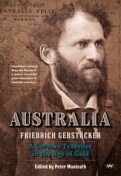
Friedrich Gerstäcker, Australia: A German traveller in the Age of Gold (Review)

Friedrich Gerstacker, AustraliaFriedrich Gerstäcker’s Australia: A German traveller in the Age of Gold was first published in its original German, as Australien, in 1854. Gerstäcker did prepare, at that time, an English language version of his travels, but the section on Australia, at least, was much shorter than his German edition, and is all English readers have been able to access – until now. Amazing really.

You may remember that I mentioned this book back in November, because it inspired a Monday Musings on 19th century travellers. It is a beautifully conceived book. It has a brief note on the text at the beginning, and an afterword at the end. There is also a decent index, and extensive end notes sharing editor Monteath’s in-depth research. These notes added significantly to my enjoyment and understanding of Gerstäcker’s writing.

So, who was this Friedrich Gerstäcker? A German, he travelled around the world from 1849 to 1852, partly funded by a German publisher. Australien was the fourth of five volumes. His writings were loved in Germany and he was, apparently, a household name there for many years – starting when his mother, unbeknownst to him, gave the diaries he was sending home during his 1837-1843 American travels to a publisher!

Now, as I said in my Monday Musings, historical travel writing can provide valuable “primary” insight into different times and places. But the best travel writers are those who, in addition to that, use language well and give us themselves. Gerstäcker is such a writer.  He provides revealing insights into mid-nineteenth century Australia. But, in addition, his writing is engaging: it has touches of humour mixed with deeper reflection, it includes some gorgeous descriptions, and we get a sense of who he is.

“the truly astonishing number of public houses” (p.21)

Gerstäcker arrived in Sydney in March 1851, and left it at the very end of September in the same year. He provides a fascinating picture of Sydney life at the time, commenting on the plethora of drinking establishments (or “public houses”), but also expressing some astonishment that his prejudices regarding visiting a “criminal colony” were ill-founded. It was not, as expected, full of “an indefinite number of murderers, thieves, burglars and other dreadful, horrible, characters”. He then travels, by the Royal Mail, canoe and foot, from Sydney, via Albury and the Murray River, to Adelaide. The chapters describing this trip (Chs. 2-5) are probably the most interesting in the book.

In South Australia, his focus is on visiting some of the German communities there, particularly in Tanunda, in the Barossa wine region. He sees his role partly as providing “real” information about places for would-be German emigrants, and reflects thoughtfully on what emigration means. He notes that Germans had made themselves a living, one that many “would never have been able to establish in Germany in that time and with those means” but he also sees the cost. He writes:

Now the question still remains of course, how much the heart is still attached not only to old habits but also to old friends and loved ones and perhaps even the old homeland itself, and whether it really was so impossible to secure a living back there that one really had to tear oneself away from everything one held dear and transplant oneself in cold foreign soil. Sometimes – and how often! – a slightly better living is too dearly bought through emigration …

He also writes about the practice of religion by the Australian Germans, particularly the tensions between different groups, and he describes in some detail how government-supported education works in South Australia, pointing out some of its illogicalities. This would have been of interest to prospective immigrants, and is now to current readers and researchers. The material most relevant to contemporary Australians, though, was his navigation of the Murray. How navigable was it was the question on administrators’ lips and Gerstäcker was able to provide first-hand knowledge.

He returns to Sydney by boat, in August, and notices a dramatic change there, providing an on-the-ground insight into the impact of the beginning of the gold rush. In his “short absence” Sydney had changed from “a busy city, but otherwise calm, to all appearances perfectly reasonable” to a city in which everyone was “dizzily, yet tirelessly dancing around the glistening false God of the newly found gold”. His departure being delayed for boat repair reasons, he decides to visit some of the goldfields and the picture he draws is one of frenzy, excitement, and loss. He overlays this with common-sense advice, based on his Californian goldfields observations, that it is generally more profitable to work one claim systematically than to be forever upping stakes to chase another chance to strike it rich.

Interestingly, he castigates the media – the newspapers, in other words – on several occasions. He writes, for example, of people’s failure to make their fortunes, and comments:

All of this is not reported in the Australian newspapers: they only highlight the positive elements of the picture and their purpose and goal is easily recognisable. They want people to come to Australia, workers …

Ah, the media … but that’s another whole story.

“indestructible, unavoidable, unbearable gum trees everywhere” (p. 43)

Gum trees

A boring forest of gum trees (Southern NSW)

You have probably realised by now that while Gerstäcker’s writing is generally informative, it is also limited by the perspective of his times, and by his own cultural biases. For example, imagine my horror at his ongoing disparagement of our gum trees! They are “sorry specimens”, “dull, green” or “dun-coloured”.

Soon after his arrival in Sydney he writes that “strangely enough, all the beauty of the scenery is restricted to the sea and to the nearby coast of Port Jackson”. He shows his cultural hand, most obviously, when he heads into the, admittedly beautiful, Blue Mountains region near the end of his trip, and writes of Mount Victoria that

this was the first place in Australia where I have seen real scenery of a quite impressive nature. Mount Victoria is itself a fairly significant mountain, rugged and picturesque, sloping down into a depression that surrounds it on three sides, forming a wide, deep, densely wooded valley. The vegetation is, however [oh dear, here it comes], the same as in all other parts of Australia that I have seen so far. Gum trees, nothing but gum trees, which makes the remaining countryside so terribly monotonous …

He does admit, a couple of sentences on, however, that seen in the distance “decorated … with the sunlight and … draped … in colourful, misty veils” they have a “mysterious aura”. But then he continues that “in reality they are also just plain, dun-coloured gum trees, all with the same leaves”. I could retort that any single-tree-species forest can be monotonous, but it’s not worth it. He won’t hear me!

There’s a lot more to share and enjoy, but I can’t finish this lengthening post without mentioning his descriptions of Australia’s “Indians” as he calls indigenous Australians. Strangely, Monteath only discusses, in his Afterword, the sources Gerstäcker uses for the extensive information he provides about indigenous life and culture in chapters 8 and 9. He doesn’t comment on Gerstäcker’s attitudes to the “Indians” in his travels, attitudes which are mostly derogatory and fearful, often based more on hearsay than on experience. For example, Gerstäcker repeats the stories he’d heard of the “Indians” killing people for their “kidney fat”, a widely-held belief at the time that Monteath explains in his very useful end-notes.

On his first sighting of “Indians”, near Albury, Gerstäcker writes of finding himself

in amongst the eternal dreary gum trees and amongst the black, dirty, treacherous, murderous people of these forests.

Funny how, despite this, he manages to survive his long trip from Albury to Adelaide, with minimal incident even though he did much of it alone and was carrying items of great interest to the “blacks” he met! Most of the time he repeats stories of “their” treachery, and he regularly describes them as dirty and ugly, but he also says that he does not agree with “acts of cruelty against Indian tribes”. It is “right and proper to apply restraint”, he says, but

we can hardly expect that they should immediately conform to rules and practices which, after all, have been imposed on them by the whites.

And right at the end of his trip, while visiting islands in northern Australia, he comments that he is

firmly convinced that the primary cause of all hostility, indeed of all acts of cruelty toward the savage tribes, is the white man himself.

This is an engrossing book that I took some time to read. It’s certainly not a page turner, but it is full of information, observations and reflections that would appeal to diverse interests. For this reason, it’s probably difficult to market. How lucky we are to have publishers like Wakefield Press willing to take a risk on books like this.

Friedrich Gerstäcker
Australia: A German traveller in the Age of Gold
(Ed. Peter Monteath; Trans. Peter Monteath and his team)
Mile End: Wakefield Press, 2016
303pp.
ISBN: 9781743054192

(Review copy courtesy Wakefield Press)
Monday musings on Australian literature: Angela Savage and setting in fiction

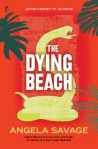
Angela Savage, The dying beach

I have several ideas for my next few Monday Musings, but another one popped up on the weekend as I was perusing my Twitter feed. I don’t check Twitter regularly enough – it’s impossible to keep up with all the social media sites don’t you think? – but when I do I regularly find a treasure or two. Anyhow, this tweet was from Angela Savage promoting the short piece “Take me to a different land” that she wrote for the Desert Nights, Rising Stars Writers Conference being held next month at the Virginia G Piper Centre for Creative Writing at Arizona State University. This is an annual conference for “writers, readers, and lovers of literature”, though it seems to me that the main focus is on writers, as it describes itself as devoted to “the science and art of creative writing, including world building, plot/narrative structure, and character development to more specialized topics like writing about climate change, working with different cultures, and pulling material from fairy tales and myth”.

Saguaro, near Tucson

Beautiful saguaro, near Tucson. (Just because I can!)

I was inspired to delve further for a few reasons: I’m interested in anything to do with the process of writing fiction; I wanted to know what Angela Savage had to say having enjoyed her crime novel The dying beach (my review); and, less relevant to this post, I love Arizona!

Now, setting is one of those aspects of fiction that readers often discuss. And, in fact, Savage starts her piece by quoting a reader from a rejection letter she received for her first Thailand-set novel, Behind the night bazaar:

I didn’t really feel that I had been taken to Thailand… I think there needs to be more of a sense of the sights and smells of Thailand, of being taken to a different land.

Savage says that at the time she was writing the novel she’d been living in SE Asia for six years, including 18 months in Thailand. She realised that it had become too familiar to her. She needed, she said, to step back and remember what it was like when she first arrived, and “try to conjure the little things that made the place unique”. She describes the process she went through to give that first novel the feeling of Thailand, and then says that for her later Thailand-set novels she’s returned to the country “with the express purpose of conducting fieldwork to inform my fiction”.

She goes on to say that as well as working on conveying “the sensory texture of different locations—the sights, smells, sounds, tastes and touch”, she “walks the streets in the shoes” of her characters, “imagining the landscape as they would see it, based on their state of mind.” Her aim in doing this is to closely relate the setting to the character. She recognises that a “strong sense of place” can transport readers, “adding to the pleasure and excitement of reading” but that the writer’s challenge is to ensure place enhances the story, rather than be a distraction.

I’ve written about setting and place a few times on this blog. In one post, I talked of this sensory aspect, saying that “my favourite descriptions are sensory, enabling me to feel and see the place and its impact on the characters”. This is largely what Savage is talking about here, isn’t it?

In another post I reported on a panel with the 2011 Prime Minister’s Literary Award winners. The chair, Caroline Baum, asked fiction winner Stephen Daisley about writing on place. She said that roughly 50% of authors writing about foreign places say they must visit a place to write about it, while the other half argue that this isn’t necessary. Daisley admitted that he’d not visited all the places he’d written about in Traitor, resulting in Baum asking how one can write about a place without visiting it. Daisley’s answer was Google!

Author Nigel Featherstone, was asked, in an interview he offered to my blog, about his writing on landscape in his novel, Remnants. He said

Even today, as I drive around the Southern Tablelands, I’m struck by the character of the landscape, its moods, its reticence, but always the amplification of self. As a writer, I’m interested in place as character as much as I am in human beings as character.

So, that’s what some authors say. What do readers say?

Commenting during a discussion of my 2011 Prime Minister’s Literary Awards post, Louise (A Strong Belief in Wicker) wrote:

But if an author chooses to set a story in a real place, and they name it, then I think they should get it right. I want the details to be right, and if they aren’t (and I notice that they’re not, that’s another big step) then it spoils my enjoyment of the rest of the story. I don’t necessarily mean it to, but it just does.

Regular commenter on my blog, Meg, agrees, commenting on my recent Spotlight on Georgia Blain post that:

I do prefer factual detail about people and places. When I read fiction I want to believe what the author is telling me. I don’t want to have to question something I know to be different.

And then just a few days ago, John (Musings of a Literary Dilettante) commented on Lisa (ANZlitLovers) post on Bernhard Schlink’s latest novel, Woman on the stairs. He agreed with Lisa’s criticism of the book, saying:

Thank God – I’m not alone! I found this dull too, and very poorly edited. For example: when the narrator says he loves the botanical garden in Sydney, he says it is bordered by a cathedral to the north and by the Opera House to the south. Wrong! It’s the Opera House to the *north*, the cathedral to the *south*…

And finally, Cally73 (a GoodReads reviewer) commented on the abovementioned Stephen Daisley’s Traitor that:

A little more explanation of the New Zealand setting would have been beneficial – as a New Zealander, I was able to work out where it was set, but those unfamiliar with the geography of NZ may find it difficult.

Oh dear, and that’s a place he has been to!

What I sense here – based on both the few examples here and more conversations over the years – is that readers can be very critical if they think authors have got the “facts” about place wrong, whilst for authors, the focus is more on the “sense” of the place and whether it serves their purposes. Many know they will be picked up if they get the “facts” wrong, but that’s not their focus. For authors who like doing research, it’s not a big issue, but for those who don’t it’s probably safer, as Louise above implies, to create a fictional setting, even if it’s based on a real place. Call Canberra by another name, and readers can go with the flow – but that doesn’t help of course if the issues the author wants to explore are place-centric (such as the shrimp-farming industry in Angela Savage’s The dying beach.)

I’d love to be a fly on the wall when setting is discussed at the conference. What issues will concern the authors most?

Olive Ann Burns, Cold Sassy Tree (Review)

Olive Ann Burns, Cold Sassy TreeAs I explained in my post last year on Annie Dillard’s The Maytrees, we are slowly listening to some of the audiobooks we gave Mr Gums’ mother in the last years of her life, and have just finished Olive Ann Burn’s epic-length, Cold Sassy Tree. From what I’ve read in Wikipedia, Olive Ann Burns was another late bloomer (albeit not an Australian one of course). Born in 1924, she didn’t publish Cold Sassy Tree, which was her only completed novel, until 1984. It was so successful that her readers pleaded for more, for a sequel, that is. She started it, but died of a heart attack in 1990 before finishing it. It, Leaving Cold Sassy, was apparently published unfinished, but with her notes, in 1992.

Now, when authors write historical fiction – particularly one that is not about a specific event, like, say, World War 2, or a person, like, say, the ever popular Ann Boleyn – my first question is why have they decided to write about a past time? Cold Sassy Tree is set in the American South in 1906, though if I remember back to the first CD correctly, the first person narrator, Will Tweedy, is telling the story some 8 years later (which would make it on the verge of the World War 1 – not that that is relevant given the USA’s delayed entry into the war.) According to Wikipedia, Burns was a journalist and columnist, and it wasn’t until 1971 that she “began writing down family stories as dictated by her parents. In 1975 she was diagnosed with lymphoma and began to change the family stories into a novel that would later become Cold Sassy Tree”. So, I guess, there’s my answer: she was capturing the stories from her family’s past. Will Tweedy, I believe, is based on her father. And it is, fundamentally, a simple, but charming, family story.

But, like all family stories, there is a little more to it than that. The American South is – or was, particularly, at the turn of the twentieth century – conservative, religious and prejudiced against other (coloured folks, poor folks, and so on). This is the society that Will Tweedy is born into. Luckily for him, he was also born into a family with an independent-thinker, live-by-his-own-rules, grandfather, E. Rucker Blakeslee. Early in the novel, Cold Sassy Tree (for that’s the name of the town), and particularly Will’s mother and aunt, are thrown into turmoil when 60-odd-year-old Rucker, just three weeks widowed to a wife he clearly loved, ups and marries the 33-year-old Yankee, Miss Love Simpson, who was working as a milliner in his general store.

Will, just entering adolescence, is the perfect narrator in what is, partly, a coming-of-age novel. He adores his grandfather, and becomes a sometime confidant, sometime unwitting but not unwilling eavesdropper, of the newly married couple. He has a mind of his own but is still obedient enough to mostly do what he is told. He soaks up what is going on around him, and is prepared to take risks and listen to new ways of doing things while also maintaining some of that level of shock about change that his parents have.

I’m not going to write a long post on this, partly because I listened to it over a long period of time and partly because, having listened to it, I don’t have good quotes to share. Burns has written the book in southern dialect, but it’s not hard to follow, and she uses some lovely fresh appropriate imagery – similes, in particular – which adds to the enjoyment. The coloured man, Loomis, for example says that religion is “like silver”, you “must keep polishing” it.

Besides the main story of this “shocking” marriage – which has its own trajectory to which Will becomes privy – we see the introduction of motor cars to the small town, the lack of opportunity for the children of the poor working class, the changing role of women, the economic challenges faced by small towns, and the stultifying effect of narrow religious beliefs. It’s not, in other words, all light. There’s drama – a near train accident, a returned would-be lover, a suicide, to name a few. There is also awareness of racism, but Burns glosses over this a little, preferring to show, overall, positive, more humane attitudes. She doesn’t necessarily gild the situation, but she doesn’t draw out the ugliness either.

This is not, probably, a book I would have picked up and read of my own accord, but as a book to listen to during hours on the road it did an excellent job with its engaging characters, its light touch, its warm but clear-eyed view of small-town life, and its sense that although times have changed people haven’t all that much.

Olive Ann Burns
Cold Sassy Tree (audio)
(read by Tom Parker)
BlackstoneAudio, 1993
12H 30M on 11 CDs (Unabridged)

Delicious descriptions: Louise Mack’s dialogue and satire

Over Christmas, during one of my conversations with Son Gums, he commented how he tires of meaningless conversations, conversations, for example, in which people discuss a television series they’ve seen but say nothing of note. He mimicked the sort of conversation he meant … well, imagine my surprise when, in one of those surprising synchronicities, I came across exactly that sort of conversation a few days later in Louise Mack’s The world is round (my review). Here is part of it – the two speakers are at a social gathering, and published author Musgrave is eavesdropping:

It was the girl who pushed the ball this time. ‘Have you ever read a book called Lost in the Zodiac?’
‘No, never read it. Who’s it bai?’
‘I don’t know. I never look who a book’s by. Do you?’
‘No. Tell you an awfully naice book. Read it on board coming out, Miss Nobody of Nowhere.’
‘I haven’t read it. Is it good?’
‘Very good. Very er–er–interestin’.’
‘Is it? I must get to that. Do you know who it’s by?’
‘One of those French fellows, I think. Sounds like  a Frenchman. One of those detective plots, you know.’
‘Oh yes, I know. Like that book everyone was reading the other day, I forget the name of it.’
‘Yes. Sort of detective yarn you know. Very good.’
‘There’s a book called A Painted Polyanthus’ – Musgrave gave a sigh for a man he knew who would have revelled in this with a joy as keen as his own. ‘They say it’s very good. I haven’t read it yet.’
‘Neither have I.’
Musgrave was disappointed.
‘Have you read Speech in Passing?’
‘Oh yes, I read that. I cried over it.’
‘No? Did you? Bai Jove!’ leering sentimentally.
‘Yes, I couldn’t help it.’
‘The “sulky man” – he was a rum cove, wasn’t he? He was funny wasn’t he.’
‘I don’t think he was a sulky man at all.’
‘Neither do I. The only called him that,’ boldly.
Her voice changed.
‘”And Ida died,”‘ she quoted, in tones that suggested to you that she was just going to burst into tears.
Musgrave turned his head to see how she was looking. Just as he thought. Her head was a little on one side, her eyes were staring sadly straight back in front of her, and her mouth was doing its best to look pensive and full of feeling.
‘”And Ida died,”‘ she said again.
That was evidently the one point about the story that had struck her most impressively. Unfortunately hers was not the face to express the feeling she would fain have conveyed …

You can see why those early critics praised her dialogue and satire, can’t you? It’s quite delicious.

Note: The strange spellings, like “bai”, are attempts to phonetically capture the Australian accent – and is clearly being satirised.

Monday musings on Australian literature: Some New Releases in 2017

This is the last of what seems to have become my set of end-of-year-beginning-of-year posts – and it’s about, as if you couldn’t tell, the books that will be published this year. Obviously, I can’t list them all – even if I could know them all – but it’s fun to share a few that look interesting.

Now, luckily for me, part of my work has already been done by Elizabeth Lhuede who posted coming releases by Australian women writers on our challenge blog. I don’t plan to repeat that here because you can check it out there – though I may highlight one or two of particular interest to me. This means, of course, that my list – mostly drawn, like Elizabeth’s, from an article by Jane Sullivan in the Sydney Morning Herald – will primarily feature men (because, yes, I do read them too.) And, because this is a Monday musings on Australian literature post, the list will be further filtered to include just Australian authors.

Authors I’ve read before

  • Alex Miller’s The passage of love (Allen & Unwin). Miller had said he’d finished writing novels, but clearly not, and a good thing too (though on this blog I’ve only reviewed his Lovesong).
  • Kim Scott’s Taboo (Picador, August). That deadman dance , which I’ve reviewed here, is for me one of those unforgettable books. I wonder if this one will be too? By the way, Fremantle Press is re-releasing Scott’s first Miles Franklin winning book, Benang, in its Treasures series.
  • Ouyang Yu’s Billy Sing (Transit Lounge, April). This is about a “half-Chinese Gallipoli hero” so very different I expect to the book I’ve reviewed here, Diary of a naked official.

Authors I haven’t but maybe should have read before

  • Steven Carroll’s A New England affair (Fourth Estate, September). The final book in his six-part Glenroy series chronicling life, from the 1950s, in an outer Melbourne suburb.
  • Brian Castro’s Blindness and rage: A phantasmagoria (Giramondo. April). Castro is one of the shameful gaps in my reading to date.
  • John Kinsella’s Old growth (Transit lounge, February). A short story collection.
  • Stephen Lang’s Winderran (UQP, July). An author I don’t know much about, but I should because he’s won and/or been shortlisted for some significant awards.
  • Adrian Mitchell’s The beachcomber’s wife (Wakefield Press, January). Another  author I’m not greatly aware of but he writes literary historical fiction (and non-fiction), so I clearly should be!
  • AS Patric’s Atlantic black (Transit Lounge, October). By the middle of the year I’ll be able to move this to the “authors I’ve read” category as I will be reading his Miles Franklin award-winning Black rock, white city in a few months.
  • Alex Skovron’s The man who took to his bed (Puncher and Wattman, May). A collection of short stories from a multiply-published poet.
  • Chris Womersley’s City of crows (Picador, September). Hmm, about 17th century witchcraft apparently.

Debut authors – so I can’t have read them before

  • Charlie Archbold’s Mallee Boys (Wakefield Press, May). I’m determined to visit the Mallee this year (I’ve only touched its edges before) so this may be the book for me.
  • Michael Fitzgerald’s The Pacific room (Transit Lounge, July). It’s about Robert Louis Stevenson in Samoa.
  • Dennis Glover’s The Last Man in Europe (Black Inc., July). Another historical fiction about a well-known character, this time it’s Orwell and his writing of Nineteen Eighty-Four.
  • Tony Jones apparently has a political thriller coming out with Allen & Unwin later in the year. I normally wouldn’t have mentioned this – given there’s no title and it’s not really a key genre for me – but Jones is well-known in Australia (unlike most of these debut authors) for his work on television as a political commentator and current affairs show anchor. (Sullivan lists a number of crime and thriller books coming out, so if you’re interested do check out the article link above).
  • Gordon Parker’s In Two Minds (Ventura, April). Parker is the founder of the Black Dog Institute, and Sullivan describes this book as “a rollicking tale of mental illness”!
  • Peter Polites’ Down the Hume (Hachette, March). He’s described as “the new Tsiolkas or Luke Davies” so this is likely to be urban and gritty.

Some women writers I must mention

  • Bernadette Brennan’s biography. A writing life: Helen Garner and her work (Text, April). A high priority for me. I hope it’s as book as Karen Lamb’s biography of Thea Astley.
  • Rebekah Clarkson’s Barking dogs (Affirm Press). A bit of an anomaly in this list as I don’t know Clarkson, but she is apparently an accomplished short story writer, and I do like Affirm Press.
  • Sara Dowse’s As the lonely fly (For Pity Sake, May?). Dowse, like Farmer below, hasn’t published for some time so it’s great to see a new work coming out. I’ve reviewed her Schemetime here.
  • Beverley Farmer’s These waters: Five tales (Giramondo, July). I read and loved her back in the 1980s to early 1990s. This is a collection of short stories.
  • Kate Grenville’s The case against fragrance (Text, February). Listed by Sullivan under “politics and big issues”! Sounds interesting.
  • Marilla North’s book on Dymphna Cusack, whom I’ve reviewed here a couple of times, is well due I think.
  • Jane Rawson’s From the Wreck (Transit Lounge, March). I so enjoyed Rawson’s imaginative A wrong turn at the Office of Unmade Lists that I’m intrigued to so what she comes up with next.
  • A web of friendship (Miegunyah Modern Library from the University of Melbourne, February), which contains selected letters of Christina Stead, and Loving words (Brandl and Schlesinger, June), containing letters between Vance and Nettie Palmer. Both of great interest.
  • Alexis Wright’s Tracker Tilmouth: An essayed memoir (Giramondo, October). Essayed memoir? Is that how I should have described Fiona Wright’s and Georgia Blain’s memoirs last year? Anyhow, this is about an indigenous activist.

Do you actively look out for coming releases, or just wait until they appear and you read or hear about them?

Six degrees of separation, FROM The girl with the dragon tattoo TO The natural way of things

Stieg Larsson, The girl with the dragon tattooOk, I admit it, I’m hooked on this meme, not only because it’s a fun intellectual challenge to find links between books, but also because it gives me an opportunity to revisit books I’ve read, which helps keep them fresh in my mind. For those who haven’t caught up with this meme, it’s the Six Degrees of Separation monthly “meme”  and it’s currently hosted by Kate (booksaremyfavouriteandbest). Each month, she nominates a book, and then we who play create a chain of seven books, linking one from the other as the spirit moves. Unfortunately, like last month, I haven’t read the starting book, Stieg Larsson’s The girl with the dragon tattoo but I promise I’ve read all the books in my chain!

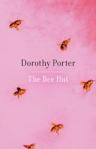
The bee hut, by Dorothy Porter

Now, you might expect me to link Larsson’s The girl with the dragon tattoo to another crime/mystery novel or, perhaps, to another novel by a Swedish author or one set in Sweden, but I’m not going down these paths. This novel, as you may know, was published posthumously – and this is the tack I’m going to take. It has led me straight to Australian poet Dorothy Porter’s collection, The bee hut (my review), which was published after she died from breast cancer. This is one of those books that I don’t need to be reminded of, because its ending is so powerfully generous. She wrote, just two and a half weeks before her death, the following lines: Something in me/despite everything/can’t believe my luck. Now that’s inspiring!

Izzeldin Abuelaish, I shall not hateGenerosity of spirit – a willingness to view the world positively – is something I prize. If we were all only a little more generous to each other, surely the world would be a better place, or am I naive? Anyhow, one of the most generous books I’ve read since starting this blog was Izzeldin Abuelaish’s memoir I shall not hate (my review). If anyone had a reason to hate, it’s he – he lost three daughters and a niece in an attack on Gaza by the Israeli Defence Forces  – and yet he chose the “path of light” over that of “darkness” because he believes in “co-existence, not endless cycles of revenge and retribution”. If he can do it, surely the rest of us can?

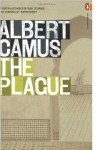
Albert Camus, The plagueNow Izzeldin Abulaish also happens to be a medical doctor, which reminds me of a fictional doctor, Rieux in Albert Camus’ The plague (my review), who, albeit in a different circumstances, evinces generosity of spirit or selflessness. This is a book I’ve read a few times, and will very likely read again, because it’s about people being prepared to take a stand, people who put themselves at risk. Rieux himself talks of people who, by “refusing to bow down to pestilences [whether these be natural or man-made, like, say, Nazism], strive their utmost to be healers.”

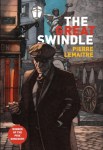
Pierre Lemaitre, The great swindleAnd now, to get off this generosity/selflessness bandwagon, albeit it’s a worthy topic to discuss, I’m going to do the more obvious thing and link via the author’s nationality. I haven’t read a lot of French authors on this blog, but one I did read one fairly recently, Pierre Lemaitre’s The great swindle (my review). Its story of France in the aftermath of the First World War is a powerful one, but one of the issues that my reading group discussed when doing this book was its translation. Some felt it was a bit uneven. I didn’t feel that – I felt the author intended an unevenness or jerkiness – but I am always a little bothered about reading translations because there’s a mediator between me and the text.

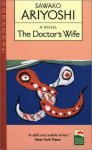
Sawako Ariyoshi, The doctor's wifeHowever, this doesn’t stop me reading translations because they are the only way, given I’m not fluent in multiple languages, that I can read works from non-English writers. Hence, my next link is to another translated work, Sawako Ariyoshi’s The doctor’s wife (my review), which is historical fiction about the Japanese doctor, Hanaoka Seishū (1760-1835) who is purported to be the first to use general anaesthesia to perform surgery. However, as the book’s title suggests, the Ariyoshi’s main concern is not him, but the women in his life, his wife and controlling mother. She explores the competition that occurs between these two women who play a secondary role in the life of the important man.

Charlotte Wood, The natural way of thingsA recent book which explores the secondary role of women to men is Charlotte Wood’s The natural way of things (my review). It’s a very different book, which takes as its starting point the way women’s sexuality is used against them in the support if not furtherance of male power. But it does have a subtext, that we also see in Ariyoshi, to do with ways in which women can be their own worst enemy.

And so, quite unintentionally as I just followed my nose, I see that I have come almost full circle from a novel set in Sweden which reflects misogynistic behaviour to an Australian novel which confronts such behaviour head on! In between we’ve travelled to Australia, the Middle East, France and Japan, and explored, in some at least, the best in human behaviour! Such is the reader’s lot.

Where would The girl with the dragon tattoo take you – your first step at least?

Louise Mack, The world is round (Review)

Louise Mack, The world is roundI’ve had Louise Mack’s debut novel, The world is round, on my TBR for about 20 years. Published in 1896, when she was 26 years old, it’s a fairly straightforward tragicomedy about a young well-to-do 21-year-old girl, Jean, who aspires to be a writer, and the two men who love her, the 30-plus-year-old self-confident, successful lawyer-and-writer Musgrave, and the around-25-year-old, shy and financially struggling Harrison. It’s a short work, a novella really, being just 93 pages in my edition.

Now, when I was searching Trove for information about Mack for this week’s Monday Musings, I found a couple of articles about her writing, amongst a myriad about her lecture tours. One was written in 1895, before this novel was published but after some of her verse and short prose pieces started appearing in journals like the Bulletin. The article quotes Mrs Bright, editor of Cosmos:

In these early days it is not possible to predict the place that Miss Mack is destined to fill in Australian literature. At present she shines chiefly in dialogue and a quaint, satirical style; peculiarly noticeable in sketches like “A study in Invitations.” In time she may develope [sic] a faculty for descriptive writing, which will supply the only quality now lacking to ensure her high rank among the popular novelists of the day.

The other was written in 1896, soon after the publication of her novel. The writer says:

Miss Mack has a particularly taking satirical style, but her descriptive writing is hardly up to her ability in the other department. Were she to but slightly improve in that qualification it would enhance the already strong position she has attained in the ranks of popular writers.

So, the praise is qualified. Her niece, the writer Nancy Phelan who wrote the introduction to my edition, discusses her not living up to this early potential. She notes that a common view is that she was “praised too soon, told she was good and encouraged to rush into print” when she needed time to sit back and think, and “be disappointed”. Phelan writes:

She wrote instinctively … but without proper guidance and criticism her work too often became facile. Facility, with a fertile imagination and love of inventing stories, made her a successful romantic novelist but it eroded her talent, and years of formula writing elbowed aside the poet. She never lost her poetic awareness but had little occasion to use it. Haste, lack of reflection, putting words on paper before they were ready robbed them of their true value; it was quicker and easier to write of trivial events than to try to address deep, difficult thoughts and emotions.

Yet in all Louise’s books there are glimpses of the writer she might have been. Even in her most idiotic novels there are occasional patches of true feeling or sensitive descriptions …

Why have I written all this? Well, partly because it might explain why this particular writer from the past has sunk from view. However, I’d argue that The world is round is worth reading – for a couple of reasons. One is that it is a good read, in which you can see why she received early praise. As our 1895 and 1896 writers above say, her dialogue is good and she has a lovely, light, satirical eye. (I’m going to share an excerpt which shows both of these in a Delicious Descriptions next week.) The other is that it is a good example of why “classics” (or older works) are worth reading. I’m going to focus my post on these two points.

a “brilliant little study”

The 1896 writer notes that “the reader’s report” for this novel described it as a “brilliant little study of two men and two women, sparkling and witty, and told in a graphic style”. It is a fun read, still today. It has a light touch, never wallowing in the issues it raises, and not weighed down with long explication or too many adjectives that you sometimes find in debut novelists. There are moments of sadness or pathos – obviously at least one of the would-be lovers is going to be disappointed, for a start – but Mack never becomes sentimental. (You can see this skill in those columns I referred to in my Monday Musings.)

The story is told third person, chronologically, in named chapters – “Musgrave”, “Jean”, “In which a friend is brutal” – and takes place in various interiors, such as James Musgrave’s chambers, Harrison’s classroom, and Jean’s home. Mack draws on the life she knows, presenting a picture of a small group of characters moving around each other in a small environment. This is very reminiscent of Jane Austen, to whom there is a tongue-in-cheek allusion in this conversation between Jean and Musgrave:

“I don’t suppose I will ever be a George Eliot, or a Thackeray, but perhaps I may be a–”
“Miss Austen.”
Miss Austen! oh, surely I’ll be something b–I mean surely I won’t be like her.”
“She did some good work.”

I mean to say! Anyhow, Mack’s descriptions of her small group of people and their interactions ring true, while also drawing on standard literary tropes, like the well-to-do heroine and her poor friend, the experienced confident suitor and the awkward poor one. The plot plays out, perhaps more through little vignettes than a flowing narrative, but it is enjoyable to read, largely because these vignettes are well-drawn, and confidently mix a light tone with the occasional darker one. I’ll leave the story there.

on reading “classics”

As I was reading this old book or forgotten “classic” (let’s not get into the definitions of “classic” here now), I started thinking about why we read such books. It’s easy to explain those classics that belong to the canon: they address the big universal themes or ideas, their writing is skilled and timeless, and, often, they have innovated or contributed something to literary culture. But, what about what we might call the second rung, books like Mack’s The world is round? Are they really worth reading over contemporary writers? I’d say yes, and one of the justifications is in the first line of Mack’s novel. It starts:

Sydney was revelling in the clear, cold weather of June, the most delicious month of the Australian seasons.

Now, that is not an attitude most Australians would have today, but is clearly how the colonials, those transplants from mild temperate Britain, felt about Australia’s climate. In other words, books written in a different time can provide a fascinating insight into the attitudes and values of that time. They might be fiction, but they can’t help also betraying their era. For students of colonial Australia, Mack’s novella offers some delightful insights into “the life and times”.

I don’t want to bore you with details, but will just share one more example. It concerns the poor friend who tells Jean that she “can’t write about Australia, it doesn’t appeal” to her. She admits she’s a “Colonial” but she knows nothing of bush life. She says, “I’ve never taken my country into my soul, and never will until I get away from it”. However, she’s poor, and is offered a job governessing in the bush on a cattle station. She learns to love the Bushies and to prefer them over “the posturing, pseudo-intellectual Sydney set”. She writes several pages to Jean on the subject. Now, this friend plays a role in the plot in terms of providing a counter assessment of Jean’s literary skills and there’s a plot reason for sending her away, but I can’t see much reason for this little outburst, except for Mack to make some point about colonial society and its values.

So, there you have it. This is less review, more wandering reflections, but I hope I’ve convinced you that Louise Mack is a worthy addition to the list of past writers who should be kept alive.

aww2017-badgeLouise Mack
The world is round
Pymble: Angus & Robertson, 1993 (orig. pub. 1896)
93pp.
ISBN: 9780207180163

Blogging highlights for 2016

It seems that I’ve established a bit of an end of year trifecta with my Australian Women Writers’ Challenge wrap-up post, followed by posts on Reading highlights and Blogging highlights. This post, obviously, is the Blogging one. I do it as much for my own record, because I enjoy tracking trends on my blog, so please don’t feel obliged if you’ve had enough!

Top posts for 2016

Hannah Kent, Burial Rites bookcover

Courtesy: Picador

For the last three years, my most “hit” post has been Virginia Woolf’s short story “The mark on the wall“. This year, finally, an Aussie book topped the list, Hannah Kent’s Burial rites, which ranked 3rd last year. However, while last year, four Australian works appeared in my Top Ten posts, only three did in 2016:

Tenth in the list was, interestingly, my page on Australian Literary Awards. I must make sure I keep it up to date! My Red Dog post has proved consistently popular since I posted it. With a follow-up movie, Red Dog: True Blue, about to be released into cinemas, I presume it will continue to receive hits this year.

In 2014, Barbara Baynton’s short story “The chosen vessel” (posted November 2012) ranked 5th, and last year it ranked 9th. It’s still ranking well, but dropped again this year to 12th. Some of my other posts on her short stories also feature in the top twenty or so. It’s wonderful seeing such a strong, original voice from the past being still read.

What I find particularly interesting, in fact, is that short works, including Baynton’s above, continue to rank well, several appearing in the Top Ten:

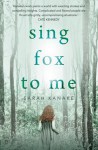
Sarah Kanake, Sing Fox to meMy most popular 2016-written post – ranking 66th – was, unlike last year, for an Australian work, Sarah Kanake’s debut novel Sing fox to me. And it’s closely followed by another Australian work, Stephen Orr’s The hands.

So, once again, my top-performing posts are older ones, which suggests that litblogs are contributing, hopefully usefully, to wider literary culture.

Finally, there is a surprising post in my Top Ten, but you’ll have to read on to see what it is.

Random blogging stats

I love sharing some of the searches that find my blog, so here are some of this year’s more interesting ones:

  • freemasons secret magnify glass: what the?
  • ginger gits: ditto.
  • what pages are the best quotes on in red dog: haha, was this someone trying to short-cut writing an essay?
  • whispering gums means: I’d love them to tell me if they found out!
  • write a short note on the picturesque: presumably a homework question but I love that s/he seems to have typed in the whole question.

And then there were multiple searches relating to my 8th most popular post this year, What do you say when you order food at a restaurant (posted November 2014). The search terms included what else can i say in place of orderin restaurent, to place order in a restaurant what we say?, fine some expression ordery meal ins the restaurant, and when ordering food restaurant may i have. What a hoot, particularly when, quite coincidentally, the topic of what to say in restaurants became a bit of a family joke over Christmas!

Other stats tell the story of my year. This year was rather frenetic for me with some major family commitments but I managed to write more posts, 164 in fact, than last year’s paltry 133. My blog visitors came from 172 countries, and while Australia, the USA, Britain and Canada filled the top four slots, I love that India, the Philippines and Germany followed them. My most active commenters this year were: Lisa (ANZLitLovers), Stefanie (So Many Books, So Little Time), Ian Darling, Bill (The Australian Legend), and Meg. A big thanks to them, and to everyone who reads and/or comments on my blog. Whether or not you comment, it is a joy to share books and reading with you.

Challenges/Memes

awwchallenge2016As I wrote in my AWW Challenge wrap up, I will participate in the Challenge again this year. I won’t set a formal goal but expect to read around 30. (See here for the Sign Up page). I will also probably do the AWW Bingo Card challenge again, though, as with this year, I expect to do it more by serendipity than by design. It was fun seeing whether my reading was varied enough to slot into the set categories.

Late last year, I started doing the #sixdegreesofseparation meme, currently run by Kate (booksaremyfavouriteandbest). I enjoyed the way it made me look back at past reading, thereby refreshing my memory, so I plan to join in again when I can this year.

And to wrap up my wrap-ups …

I’ve already said it in my Reading Highlights post, but I’ll reiterate it: thanks to everyone who read, commented on and/or “liked” my blog last year – and thanks to all the other wonderful bloggers out there, even though I don’t always manage to visit everyone as much as I’d like. You prove that cyberspace can be a positive place. I wish you all happy reading in 2017.

And finally, a big thanks to the authors who wrote the books that we love to read and talk about, and to the publishers and booksellers who get the books out there. May 2017 be a great one for you all.

Monday musings on Australian literature: Louise Mack

I promised in my Reading Highlights post that my first review of the year would be for a book from my TBR pile, and so it will be – hopefully in a couple of days. However, I suspect that the book, and maybe even the author, will be unknown to most of my readers here so I’ve decided to use my first Monday Musings of the year to introduce the author, Louise Mack.

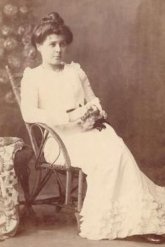
Louise Mack, 1890s

Louise Mack, by Kerry & Co, 1890s (Photo:
National Library of Australia, nla.pic-an23474744, via ADB)

I’ve had Mack’s first novel, The world is round, on my TBR since the mid 1990s when I found it on a remainder table. It had been published under Imprint Classics by Angus & Robertson in 1993, and although it’s only 93 pages, I somehow didn’t read it then, and kept not reading it – until now. But, more on it later this week.

Louise Mack was born in Tasmania in 1870, the seventh child and first daughter of a family which ended up numbering 13! Her father was a Wesleyan minister, and they moved around, ending up in Sydney by the time Mack was in high school. She went to Sydney Girls’ High where she met and became friendly with Ethel Turner (who was also born in 1870). I wrote in my post on Ethel Turner’s juvenilia that Ethel and her sister, Lilian, established a magazine Iris when the school’s newspaper, Gazette, which was edited by Louise Mack, rejected Ethel’s contributions! However, I understand that they were very good friends and, in fact, Turner apparently met her husband at the Mack family home.

Australian author Nancy Phelan, who was Mack’s niece, wrote the entry about her in the Australian Dictionary of Biography (ADB), and also the introduction to the novel I’ve read. I don’t want to reiterate what you can read in the ADB, but here’s a potted history. After school she worked as a governess before being becoming “a regular contributor to the Bulletin in the late 1880s”, with the encouragement of owner-editor J. F. Archibald and editor A. G. Stephens. Phelan suggests that Mack perhaps received too much attention and praise, implying that it impacted the development of her talent. She married, but it failed and she went to England, around 1900, where she wrote novels and serials, travelled, and worked as a journalist, including as a war correspondent. She returned to Australia in 1915 and became a touring speaker or lecturer, something she did right through to the 1930s. During this time back in Australis, she wrote more novels and married a second time (more happily), before dying in 1935, “possessionless”.

“little lady”

They’re the dry facts. She was quite a colourful character, with Phelan describing her as “fair, pretty, extroverted, audacious, unpredictable, a genuine Bohemian who chose a life of adventure and insecurity”. Phelan writes in my novel’s introduction that Mack “grew up in a series of large, shabby, untidy parsonages, with no luxuries but plenty of books … books, as necessary as bread, were constantly discussed”. I found an article in Trove which announces her as a rising literary star. It suggests that:

Miss Mack owes much of her development to her mother’s literary tastes, and the varied training that an intellectual father can bestow on his children. (The Methodist, 23 Nov 1895)

My Trove search retrieved pages and pages of hits on her name, many of them from newspapers all around Australia – from Dubbo to Perth – announcing her lecture tour on her war experience, which included experiencing German occupation and bombardment in Belgium and going behind German lines. In her mid to late 40s at the time of the tour, she is, patronisingly to our modern ears, described in these announcements/reports, as “this charming little lady” or “the pretty and charming little lady”. This is the woman who, one of these articles says, was asked by Scotland Yard to report on a meeting of spies with Germans in Antwerp to which she’d been an eye-witness. This article’s writer also calls her a “little lady” but a bit later describes her more appropriately as “this daring and travelled lady”. S/he reports on an interview with Mack:

“I just love lecturing,” Miss Mack said; “it is the most fascinating work I have ever taken up. Indeed, I may say that I just live for the moment when 8 o’clock strikes, and I and my pictures begin to tell the story of a Woman’s Experience in the Greatest War this world has ever known.” (Western Mail, 17 September 1915)

Mack, you see, went the whole hog and illustrated her talks with moving pictures. Reports suggest that she was an excellent and engaging speaker. Some of these talks were given under the auspices of, and raised money for, the Red Cross. Her book, A woman’s experiences in the Great War, was published in 1915

I’m not going to discuss her writing in any detail here, because I’ll do that in my review post. Instead I’ll share a couple of columns that she wrote in the 1930s in the Australian Womens Weekly, for whom I’m guessing she must have been a columnist. These columns –  Louise Mack’s Diary and Louise Mack Advises – provide some insight into her values and sense of humour.

In a Diary column I found this on Mrs Bradfield, wife of Australian engineer and designer of the Sydney Harbour Bridge, John Bradfield:

I’VE always been wondering what would happen if Dr. Bradfield got his title, and dear Mrs. Bradfield became Lady Bradfield, and somehow, between myself and my diary, I must confess I’m glad that Mrs. Bradfield is still there. Dozens of times coming back from hospital, getting out of the train at Gordon, I would find my suitcase seized, or my parcels grabbed, and there’d be Mrs. Bradfield trotting along besides me, coming out of her way so that she could help carry someone’s burdens.

Could Lady Bradfield have done that? Ah, yes! Title or no title, this little simple, pale, absolutely natural woman, all kindness, with a quite remarkable craze for carrying other people’s parcels, would always have been Mrs. Bradfield. That’s her real title, her many friends think.

I like her focus on kindness, on the unimportance of “titles”, and her light humorous touch.

And, one of the advice columns. It’s called “The gentle art of giving” and asks “Do you give? Or Do you grab? The commonest way of giving is to give what you can spare. But that’s not giving at all, ethically speaking”. Fascinating. It made me think of Australian ethicist Peter Singer and his views on giving. However, let’s not get sidetracked by that now. Mack goes on to suggest that giving is good for your looks! She suggests getting on a tram and looking around:

Can’t you tell at a glance who hoards and who gives? It is written on their faces. It is graven around their lips. It is mirrored in their eyes, giving, or grabbing. The face that gives has a better complexion because the blood flows happily through capillaries kept open by the light-heartedness of generous doings. The face that gives has brighter eyes and sweeter lips. Oh, particularly about the lips does the will to give reveal itself in its full beauty.

She then gives examples of women who give and don’t give, ending with Myrtle who has almost no food left, when in comes her brother. Mack writes:

And there before my eyes took place a metamorphosis. Ovid wasn’t in it. One moment Myrtle was a grey woman with a quarter of a loaf of bread and a cold chop, and now she turned into a gracious creature, all wealth and possessions, that she was handing away to Tom. She whisked a bit of tea into one parcel, a quarter loaf into another, two potatoes and an onion into another, a cold chop out of her safe, two apples for the children, then pressed threepence into poor old Tom’s hand, with, “It’s pouring; take a tram.”

That was giving, indeed.

Giving is when you press your thumb down, down on the indicator of your heart—and, pressing still, and yet again pressing, send your will to give up, up, up, to the very highest storey of your soul.

Louise Mack sounds like a woman worth knowing … and yet is, I believe, unknown to most Australians. Such is life!

Reading highlights for 2016

And so we finally say goodbye to a year many of us would like to forget, but before we do, I would like to share my 2016 reading highlights. As usual, I won’t be naming top picks, because I’m a wuss. It’s too hard. So, instead, I’ll be sharing highlights which combine best reads with those that were interesting for some reason or another.

First, though, this year’s …

Literary highlights

By literary highlights I primarily mean literary events. I went to a smaller number this year but they were good ones:

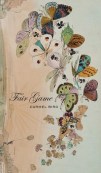
  • Carmel Bird, Fair gameTenth anniversary celebration for regional publisher, Finlay Lloyd. Held at the National Library of Australia, this was a most enjoyable occasion, with several authors, including Carmel Bird, Alan Gould and Paul McDermott, speaking about their FL books.
  • Canberra Writers Festival on which I wrote four posts (Day 1, Day 2, Day 3 and Recap): What a thrill to have a writers festival here again after a very long hiatus. Although my messy year meant I didn’t plan well enough in advance for the event, it was great being part of the buzz. What I attended was excellent, and I understand funding is guaranteed for another couple of years. Woo hoo.
  • The annual Seymour Biography Lecture, given this year by David Marr. Titled Here I stand, it was a fascinating talk which provided much for me, and commenters on my blog, to ponder on, particularly regarding Marr’s exhortation for the biographer to keep out of the biography.

Reading highlights

As in previous years, I’m going to discuss this year’s reading under categories which reflect this year’s experience.

The reading …

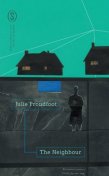
  • Julie Proudfoot, The neighbourDebut novels: I enjoy including debut works in my reading diet. This year I read around six, of which my two favourites would probably be Josephine Rowe’s A loving faithful animal for tackling the Vietnam War and the devastating impact of PTSD on a family, and Julie Proudfoot’s tight, powerful novella, The neighbour, which still has me thinking months after reading it.
  • Memoir/Autobiography: This was the surprise trend of the year (as Historical Fiction was last year). It certainly wasn’t planned but I ended up reading 8 memoirs/autobiographies, plus Anna Rosner Blay’s Sister, sister which, while mostly biography, had a touch of memoir about it too. I can’t possibly describe them all here but I do want to mention the three World War 2 mother-daughter stories, Blay’s book, Halina Rubin’s Journeys with my mother, and Susan Varga’s Heddy and me. I liked the way these daughters blended the forms of biography and memoir to produce something substantial yet engagingly personal. Then there were the two essay-collection-memoirs, Fiona Wright’s Small acts of disappearance and Georgia Blain’s Births deaths marriages, which played with the form in a different way. And oh dear, I loved them all, but I’ll name just one more, Gerald Murnane’s Something for the pain. My how I loved the sly way he told us about his wider life through describing his love of the turf.
  • Indigenous Australian writers: Shamefully, I only read four works by indigenous Australians, but at least I continued my education into indigenous Australian life and culture. I’ll name just two: Ali Cobby Eckermann’s beautiful and generous historical fiction verse novel Ruby Moonlight, and Bruce Pascoe’s more overtly political Dark emu.
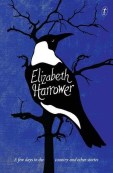
  • Elizabeth Harrower, A few days in the country and other storiesShort stories galore: As always, I read a goodly number of short stories this year, though fewer complete collections than in 2015. The standout collection was Elizabeth Harrower’s A few days in the country and other stories. Such a great read, I’d recommend it to anyone. Debut author Cassie Flanagan Willanski’s Here where we live was also an excellent read particularly for telling about life in remoter parts of Australia. My favourite individual short stories included Ted Chiang’s “The story of your life” (adapted to the film Arrival) and the group of stories I read from Christina Stead’s Ocean of story for Lisa’s Christina Stead Reading Week.
  • From elsewhere: I read only two overseas works this year that weren’t English or American, but both were truly excellent. One was the African classic, Chinua Achebe’s Things fall apart, which I’ve been wanting to read for years. The other was Pierre Lemaitre’s contemporary Prix Goncourt winning novel, The great swindle. Excellent as they were, I must try to do better next year. My other favourite book from elsewhere was American author Anthony Doerr’s All the light we cannot see. Amazing how many stories can still be told, differently, about the Second World War.
  • Biggest surprise: I hadn’t read Stephen Orr before, but his pastoral novel The hands, which was one of my first reads of the year, is still vividly with me as the year closes. The way he captures the relationship, particularly through dialogue, between father and sons just bowled me over.
  • Biggest disappointment: This was  a surprise for one who loves classics, but I really wouldn’t have been sorry not to have read William Makepeace Thackeray’s The luck of Barry Lyndon.
  • The ones that got away: As always there were books I wanted to read during the year but just didn’t get to. Prime among them are Jenny Ackland’s The secret son, Larissa Behrendt’s Finding Eliza, Carmel Bird’s Family skeleton, and Kim Mahood’s Position doubtful (another memoir!) Roll on 2017.

Some stats …

For my interest really:

  • 65% of the authors I read were women (2% less than 2015)
  • 32% of the works I read were not by Australian writers (5% more than 2015!)
  • 63% of my reading was fiction (short, long or in-between!) (10% less than 2015)
  • 35% of the works I read were published before 2000 (a whopping 15% more than 2015)

A couple of interesting trends here. There’s the significant reduction in fiction, which is partly due to the big jump in memoirs (about which see above!) And, while I like to read contemporary authors, I also love delving into the past, so I’m pleased to see the increased number of works before 2000. Surprisingly, I managed to read more works overall than last year – a big plus. However, once again, I made woeful inroads into my TBR so, to get me off to a good start, I hereby proclaim that my first 2017 review WILL be for a TBR book. I hope you like it. I’m sure enjoying reading it.

Overall, it was a good reading year, made especially so by you who joined me here. So, a big thankyou for reading my posts, engaging in discussion, recommending more books and, generally, being all-round great people to talk with. I hope 2017 is good to you, and look forward to seeing you here again whenever something takes your fancy.

What were your reading or literary highlights for the year?