Once again it’s Karen’s (Kaggsy’s Bookish Rambling) and Simon’s (Stuck in a Book) “Year Club” week. This time, it is 1961, and it runs from 13th to 19th April. Once again, I am devoting my Monday Musings to the week.
I have already written about 1960s for the 1962 Club. It was an exciting decade, one in which we thought we were really going to change the world for the better. Older and wiser now, I can see how naive that was. But, idealism is not a bad thing, and some good changes did happen. Just not enough. This decade was also the height of the Cold War. Literature reflected all of this – the enthusiasm for change looking towards a fairer more equitable world, the fear of communism, and the tension between the two. In Australia, the conservative government of Robert Menzies had a strong grip.
A brief 1961 literary recap
Books were, naturally, published across all forms, but my focus is Australian fiction, so here is a selection of novels published in 1961:
- James Aldridge, The last exile
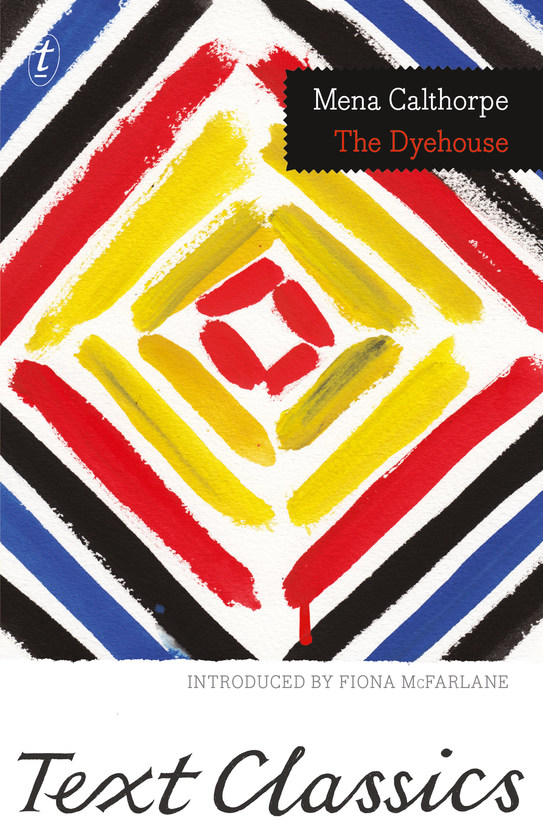
- Mena Calthorpe, The dyehouse (my review)
- A. Bertram Chandler, The rim of space
- Kenneth Cook, Wake in fright
- Dymphna Cusack, Heatwave in Berlin
- Nene Gare, The fringe dwellers (Bill’s review)
- Xavier Herbert, Soldiers’ women
- Elizabeth Kata, Be ready with bells and drums
- H.A. (Harold) Lindsay, Janie McLachlan
- John O’Grady, No kava for Johnny
- Ruth Park, The good looking women (aka Serpent’s Delight)
- Hal Porter, The tilted cross
- F. J. Thwaites, Beyond the rainbow
- George Turner, A stranger and afraid
- Arthur Upfield, The white savage
- Judah Waten, Time of conflict (Bill’s review)
- Morris West, Daughter of silence
- Patrick White, Riders in the chariot (Lisa’s review)
Several short stories, and short story collections were published, including by some favourite writers of mine like Thea Astley and Shirley Hazzard, by other writers I’ve posted on here before like D’Arcy Niland and Hal Porter, and by one Ray Mathew, an Australian expat whom I discovered around a decade ago when I attended my first Ray Mathew annual lecture at the NLA.
The thing about the 1960s is that we start to see more authors appear that we still hear of today, even if not all are still keenly read.
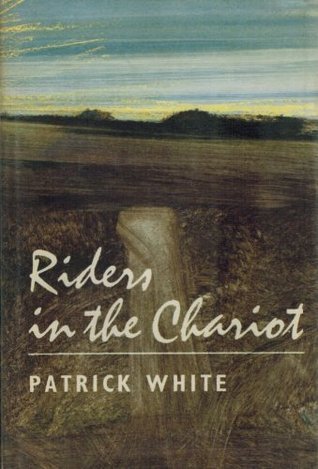
The main literary award made this year was the Miles Franklin, which went to Patrick White’s Riders in the chariot. The ALS Gold Medal was not awarded in 1961.
Novelists born this year include Jordie Albiston (who died in 2022) and Richard Flanagan (who should need no introduction).
The state of the art
As for previous club years, I checked Trove for what newspapers were saying about Australian fiction. However, because 1961 is less than 70 years ago, I frequently confronted roadblocks, with Trove regularly telling me that “This newspaper article is still within its copyright period and can’t be displayed on Trove right now. The National Library of Australia will make it available as soon as copyright permits, or with the copyright holder’s permission”. Fortunately, some newspapers have – generously – released their material “ahead” of time! Thank you The Canberra Times, and more specialist papers like The Australian Jewish Times and Tribune.
Communists and other reformists
Communism was still a hot topic in the 1960s, and several writers in my 1961 list were Communists or, if not, Marxist or leftist writers, writers like Mena Calthorpe, Dymphna Cusack, Judah Waten – and Frank Hardy, whose nonfiction book about his most famous novel Power without glory, The Hard Way: The Story Behind Power without Glory, was published in this year.
I’ll start with Frank Hardy, who wrote a piece for Tribune (June 7) about The Communist Party of Australia’s Draft Resolution for its 19th Congress. ALS reviewer Teri Merlyn wrote in 2005 that “Hardy’s commitment to literature as a vehicle for working-class education and the Australian radical literary tradition was unwavering”. This is on display in his response to the Draft Resolution, for which he proposes the following additional lines:
An important part in interpreting Australian reality is played by realist literature and art. Art which lays bare the contradictions of capitalism, exposes the ramifications of monopoly, affirms class struggle, and reveals the worth and dignity of the working people and their ability to transform society.
While the “Party’s work has been decisive in the development of the working class literature and art movement”, this work has, he says, been “marred” by “errors”. He briefly discusses these, before concluding that literature and art are part of “the working class arsenal”, and the Party must make it a “whole party” issue.
Given the period, many of our serious writers were keenly interested in reform. What is interesting is how contemporary reviewers saw their works. For example, Mena Calthorpe’s The dye house is a factory novel, which, says The Canberra Times‘ reviewer, R.R. (16 September) ‘is “formula” novel, set in a Sydney textile factory’, and, “despite its immaturity of style … an impressive piece of work”. It’s a mixed review, panning much but also suggesting she has potential. R.R. suggests that editing out ‘schoolgirl words as “clatter,” “click clack,” and “tic tac,” which jangle irritatingly through it, would improve it immensely’. I, however, loved this language, as I wrote in my review.
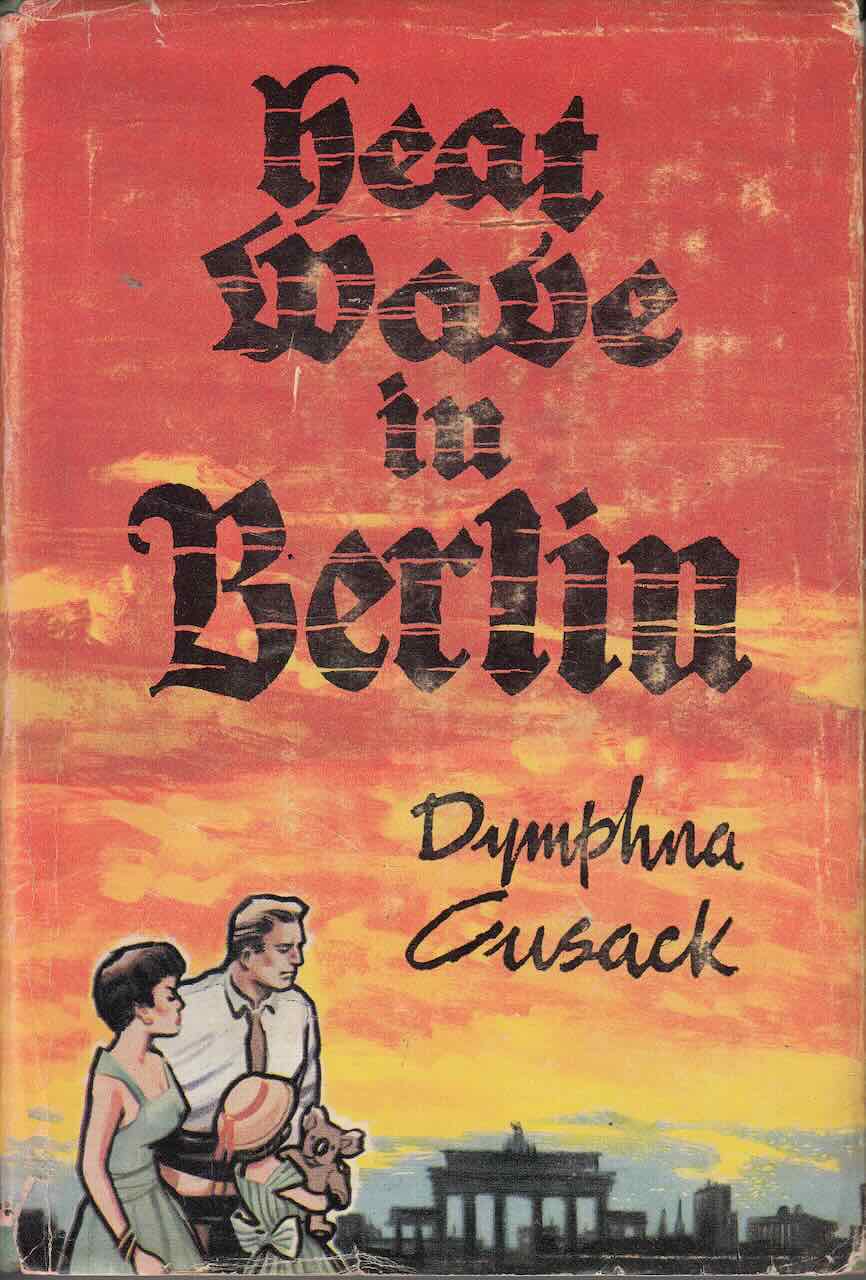
Similarly, M.P., writing in The Canberra Times (13 May) about Dymphna Cusack’s Heatwave in Berlin, is less than complimentary. S/he describes its political content, adds s/he is not qualified to confirm the facts, and then critiques the book as
something which cannot be taken very seriously. The characters have the larger-than-life quality of figures in a melodrama, and they speak with something of the same staginess.
Not having read the book, I can’t comment, but there are some reviews from, for example, Hungarian and Estonian readers on GoodReads whose reflections offer some fascinating perspectives.
The aforementioned R.R. also reviewed Nene Gare’s novel, The fringe-dwellers, in The Canberra Times (21 October). S/he is far more complimentary about this one, calling it “a most compelling book and one of the best written on this theme”. Today, it would be critiqued for not being an “own story”, for being a story about First Nations people by a white writer. However, this was 1961, and Gare, I think, brought an important story into the main culture. It draws from her experiences in Geraldton, Western Australia, between 1952 and 1954, when her husband was District Officer with the Native Welfare Department. R.R. writes that Gare
captured completely the atmosphere of the part-aboriginal community—its pride, its squalor, and its terrible inertia — people caught between two ways of life and belonging to neither.
S/he says that it has a few – but not serious – false notes, and pronounces it “an outstandingly good, pertinent, and touching story”.
On reviewing
In my last Year Club post (for 1925), I shared some examples of reviewing style. I found some more interesting examples for this year, but will share just one here, by “Tinker”, who reviewed four books in The Canberra Times (12 August), including two by Australian writers, One rose less, by Pat Flower, and And death came too, by Helen Mace. Tinker – who must surely be a “he” – writes of the four books that, three
are by women authors, another saddening fact drawing evidence to the sex’s determination to invade almost every field of male activity.
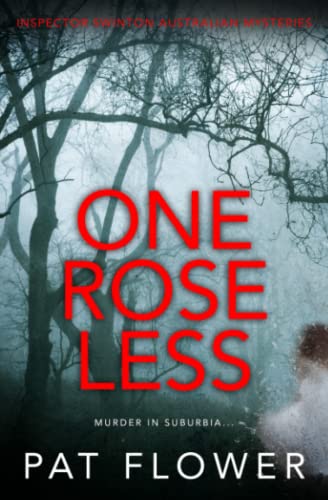
What? Further, while “he” thinks that Flower’s book is the better of the two Aussies, he says she “just cannot resist the feminine love for tidying up”! Mace’s novel which “has some reasonably good word pictures of the Victorian countryside, but not so good as Pat Flowers’ Sydney scenes” also “unfortunately … suffers from the female tidying up complex”. Feminism still has battles to fight, but reviewers would be unlikely to get away with this today! Incidentally, several of Pat Rose’s novels have been republished in the 2020s.
I found much more, and might write a Part 2 next week. We’ll see … meanwhile I hope this post has piqued your interest about 1961.
Sources
(Besides those linked in the post)
- 1961 in Australian Literature (Wikipedia)
- Joy Hooton and Harry Heseltine, Annals of Australian literature, 2nd ed. OUP, 1992
- Teri Merlyn, “Review of Frank Hardy and the Literature of Commitment, edited by Paul Adams and Christopher Lee” [Book Review], Australian Literary Studies, 22 (1), 2005
Previous “Year Club” Monday Musings: 1925, 1929, 1936, 1937, 1940, 1952, 1954, 1962 and 1970.
Do you plan to take part in the 1961 Club – and if so how?


I read Judah Waten’s Time of Conflict which is historical fiction (recent, I know) about the role of communists in the unemployed workers movement of the 1930s. I might get it written up next week.
I’ve reviewed The Fringe Dwellers which I first read as a set text in school. It was interesting discovering that it was set in Geraldton, because that wasn’t clear initially, though it is obvious once you’re told.
Thanks Bill. You know, I did a search on Gare on your blog before I finished this post, and the first couple of hits were not this book so I assumed you had not reviewed it. After your comment here I searched on “fringe” and it was the first hit! Weird. Anyhow, I have now linked your post, which makes some good points. Do you think it is really STILL set as a text in schools? I’d be sad if it was. In its time, I – though, who am I to say, really – think it was better than nothing but now that’s it’s not a case, as you say in your review, of there being nothing, so we should be reading those own-stories now.
Good on you for reading the Waten. I look forward to your review.
Absolutely fascinating post as always – thanks so much for covering 1961 in Australia, much appreciated!
Thanks Karen … I rather enjoy doing these and always look forward to seeing what the next year is!
I’m reading Helen Trinca’s biography of Elizabeth Harrower at the moment. Several of these writers turn up in the narrative., and I think she published The Catherine Wheel in 1961? Not that I’ve read any of these books, except for Power & The Glory in the early 70s, which as a left-leaning then 18-year-old, has stayed with me for many years.
Thanks Gwendoline. I read that biography, and as you say some of these writers do turn up in it. I did check Harrower, and I thought Catherine Wheel was published in 1960? Does Trinca say 1961? I’ve read most of Harrower’s books, but not this one.
You are correct. Trinca says Cassell UK published Catherine Wheel in October 1960 (p.55) Not sure where I plucked 1961 from.
I’m slogging through the biography. I wanted so much to like it, as it is signed by Trinca after my purchasing from her inspiring talk. But attending that event also gave me the opportunity to have her sign my copy of “Waterfront – The Battle that Changed Australia”. She was pleased to see it and said it was a collector’s item now 🙂
I’ve just reread your review of “Looking for Elizabeth” and realise I already told you all that. Anyway, your review has inspired my flagging interest, which, I confess, has at its root that I have never read Harrower’s books and am now trying to read her background as the last thing before lights out.
Note to self: must do better.
Interesting Gwendoline but I think I can understand your reaction. I really enjoyed the book but I have no idea how it would have felt had I not read her. There are strong autobiographical elements to most of the novels – even though they are definitely fiction – so I came to the book with a lot of knowledge and questions. (I’d also read a few years of her letters to Shirley Hazzard … from about 1966 I think to just after Gough’s “fall” in 1975.)
I will definitely add her to my TBR. I loved discovering Kylie Tennant, and of course, I was already a Ruth Park addict – particularly her memoir Fence Around the Cuckoo. (Which also puts me in mind of Janet Frame’s “An Angel at My Table” – but that is probably more word association than content.)
I think so Gwendoline … they were very different people weren’t they. I liked both those books though.
I don’t recognise any of those titles from AusLit but I find the alternate title for Ruth Park’s novel curious! It was a quiet year in CanLit comparatively speaking.
I’ve chosen two: one Canadian novel I’ll be shocked if anyone knows (even other Canadian readers) and one international that I figure everyone will know. But look at you, already finished your homework and the week barely started!
Thanks Marcie. I should have commented more on the Ruth Park – but while I did my homework it was under a bit of duress! I intended to look for reviews in Trove for all the writers but in the end I did a generic search and based this post on that. However, if I have the energy I might do a second post, even though it will be next Monday, the day after the challenge ends.
You have me intrigued about both your choices. I’ll be watching out for them. (I am currently en route home from Melbourne, arriving back tomorrow, Thursday.)
Fantastic list of yet more hard-to-find Australian literature, always educational, thank you. I did look up Mr Upfield in the North Wales library catalogue as I recognised the name and found that a lot of his work has been put into audiobooks
Thanks Mandi – is it? Yes, I think many of his books have been republished, including in audio form. I love that your recognised the name.
Hi Sue, I have read most of the books listed, but not in 1961 and more likely in the 70s. All good reads. I will look at the 1961 list, but doubt if I will engage. I have far too many books to read.
Thanks Meg, I know the feeling.
I thought The Dyehouse was pretty amazing too (I still think about it in fact) and I loved her use of onomatopoeia too. And I will certainly keep an eye out for Heatwave in Berlin – it sounds really interesting.
I reviewed one of Hazzard’s stories from 1961 here – https://bronasbooks.com/2022/01/19/collected-stories-shirley-hazzard-awwshortstories/
Thanks Brona … it’s a book I regularly think of again. It’s fascinating seeing the different responses to books over time. Often the “approval” decreases as books date but that’s not always the way is it? Heatwave in Berlin sounds interesting to me too.
I’ll check out your Hazzard review. I am hoping to do a short story for the Year Club, but I didn’t check my anthologies before I went to Melbourne. We are back in Canberra tomorrow so I will check then. I would love to do a Hazzard or Astley, but I’ll do anything I find that I have!
Such an interesting post😃
Thanks Pam … I enjoyed doing it.
Fabulous resource! Alas, I have only read Patrick White, and not this one: The Tree of Man – very impressive
Thanks Emma … I love that you’ve read The tree of man – and that you liked it. He is a great writer.