My literary week (3), mid-winter 2016

Today pretty much marks the middle of winter for us downunder, and what an unusually cold and wet winter it’s been, at least in my city. We’ve had more rain than usual, and we’ve had snow, which is rare for us though not unheard of. Our average July maximum is around 12-13°C but this last Wednesday it barely made it to 7°C. No wonder, as I write this, I am en route to slightly warmer climes, on the New South Wales central coast, where we expect to experience temperatures of 18-22°C in the coming week. Whew. But, none of this relates much to my literary week, so on with the show …

Kibble Award Winners

The winners for the Kibble Literary Awards for life-writing by women were announced this week. I’m thrilled that Fiona Wright’s honest, moving collection of essays, Small acts of disappearance (my review) about her experience of an eating disorder, won the Nita B Kibble Literary Award, which recognises the work of an established Australian woman writer.

Lucy Treloar’s historical fiction novel, Salt Creek, won the Dobbie Award for a first published work by an Australian woman. I’m yet to read it, but as it’s been shortlisted for this year’s Miles Franklin Award I would like to try to fit it in. You can check out Lisa’s review at ANZLitLovers.

Both these books were shortlisted earlier this year for the Stella Prize. As happy as I am about Fiona Wright’s win – it’s an excellent book – I did have a secret little wish that Elizabeth Harrower’s A few days in the country, and other stories (my review) would win. She hasn’t been recognised nearly enough.

Helen Garner on mothers and daughters

Helen Garner, Everywhere I lookI am currently reading Helen Garner’s beautiful collection of essays, Everywhere I look. A review will follow soon-ish – that is, as soon as I finish the book instead of  soaking up some sun. In the meantime, I’ll share a quote from her essay about her complicated relationship with her mother. Helen, born in 1942, was the eldest of 6. She writes:

When, in the street, I see a mother walking with her grown-up daughter, I can hardly bear to witness the mother’s pride, the softening of her face, her incredulous joy at being granted her daughter’s company; and the iron discipline she imposes on herself to muffle and conceal this joy.

This brought tears to my eyes.

New ways of telling stories

Finally, I want to share some ideas I heard last Saturday from ABC Radio National’s Future Tense program. It explores change from all sorts of angles. In this particular session they interviewed three novelists about new forms of story telling. My comments below are based on some quick notes I made at the time, while I was doing some housework. I haven’t had time to listen to it again, but you can do so at the link I’ve provided if you’re interested.

First off, and the least “controversial”, was Australian author Nick Earls on his recent series of novellas. Wisdom Tree. (Lisa has reviewed the first two at ANZLitLovers.) Novellas aren’t new of course, but Earls sees them as meeting the needs of contemporary readers (though he believes that big books will never be completely replaced) and as having excellent podcast potential. The thing that interested me most about this interview, however, was his requirements for a good story: it must be authentic; readers must be able to connect with the characters (he didn’t say we must “like” or even “engage” with them); and there needs to be something at stake that will interest the readers and make them want to read on.

Next was Naomi Alderman, an author-cum-video game developer from London. She argued that video games are the new “story form”. I was fascinated by this, partly because of recent discussions I’ve had with Son Gums. He has always loved stories. In his primary school years, he got into comics, alongside his love of “chapter books”, but by his late teens, comics and graphic novels had become his main fare. He never, though, really got video games the way his friends did – until very recently! Now in his early-thirties, he’s come to them quite late. I was surprised, but the reason he gave was the new style of story-based games. If I hadn’t had these conversations with him, I may not have connected quite so quickly with Alderman. Anyhow, she also gave her story requirements: the characters must be real; the worlds created must be coherent, in that the players must be able to imagine humans in them; and there needs to be meaningful themes like justice, revenge, freedom. In conclusion, though, she said quite categorically that if you want to understand story culture today, you must understand games and the way they use storytelling.

Finally, we heard Sydney novelist Mike Jones on virtual reality. He has created a piece of crime fiction called VR Noir. It premiered at this year’s Vivid festival in Sydney. I was interested in his idea that we tend to choose what we read/see/experience on the basis of what “choose to feel”. In other words, when we look at a selection of movies at the local cinema, we choose what to see on the basis of what we want to “feel”. I think there’s a lot of truth in that, though I’ve never quite thought about it that way. VR feeds into this “experiential” need, he says –  the “reader” (“user”) is put into the story and experiences it from within. VR, he said, draws from both video games and interactive theatre, and is still very new.

Do you think our story-telling (story-reading) needs have changed in our modern digital, interactive, connected world?
Australian Women Writers 2016 Challenge completed

The time has come to write my annual completion post for my one challenge of the year, the Australian Women Writer’s Challenge. As in previous years, I signed up for the top-level, Franklin, which involves reading 10 books and reviewing at least 6. I’ve exceeded this, and I plan to continue to add to the challenge, as I’ve done in previous years, but half-way through the year seems a good time to write my completion post.

I have, so far this year, contributed 14 reviews to the challenge.

Jane Jose, Places women makeHere’s my list in alphabetical order, with the links on the titles being to my reviews:

This is quite different to last year’s completion post list which included one classic and one book by an indigenous author. I like to read classics, and I also like to read indigenous authors, but this year so far I’ve read neither. Instead, I seem to have read significantly more non-fiction, six out of 14 in fact. By the end of last year’s challenge, I’d read seven non-fiction out of 27 books in total. Looks like I’ll exceed that this year unless I stop reading Australian women’s non-fiction pretty well right now.

It’s also a little different because it includes two books by an author, the wonderful Elizabeth Harrower. Of course, it’s not that I don’t read multiple books by authors – but this usually happens over time. I tend not to find an author and immediately go hell-for-leather with that author – not because I don’t want to, but because I have books lined up, which brings me to …

… plans for the rest of the year. I know I’ll be reading at least one indigenous woman, Ali Cobby Eckermann, and I do have a couple of classics I really want to get to this year, but the review copies are piling up and there’s my reading group schedule, so I’m just going to see how it goes. The best laid plans, and all that!

Do you plan your reading in advance – and if so, do you keep to it – or do you just read what comes? 


My literary week (2), or so

No, I’m not going to write weekly “My literary week” posts – my last one was, anyhow, two weeks ago – but sometimes things happen that I want to share, and bundling them up seems the best way to do it.

Miles Franklin Award Shortlist

The shortlist for Australia’s best known literary award was announced last week – actually, just over a week ago, hence the “or so” in my post title. I had only read two books on the longlist – you are quite justified in wondering what on earth I’ve been reading over the last months! – and neither of them were on the list. The two I had read were both by male authors, but the shortlist of five comprises four female authors and one male. The list is:

  • Hope Farm, by Peggy Frew
  • Leap, by Myfanwy Jones
  • Black rock white city, by A.S. Patrić
  • Salt Creek, by Lucy Treloar
  • The natural way of things, by Charlotte Wood

Last year was the same, and the previous year four of the six shortlisted books were by women. Indeed, since 2012, the year the Stella Prize was established (first awarded in 2013), women have featured very well on the shortlists. The main change, though, has not so much been in gender balance of the shortlists, but in that of the winners. Up to 2011, male writers had won the prize over three times more than women had – but women have won the last four years. Is this gender politics at play? I hope not, because that denigrates the value and meaning of the prize. Or, does it signify an increasing acceptance of more diverse subject matter and voices? I hope so, because that is what the move to promote women writers has been about.

Oh, and, while we are talking imbalances, I should point out that all five authors are apparently Melbourne-based, but we’ll let that through to the keeper this year. Those of us in other states will be watching though! (Just joking!)

Meanwhile, you can expect a review of Charlotte Wood’s book next week.

Quote of the week

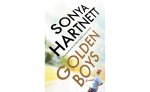
Sonya Hartnett, Golden boysI nearly wrote a post just to share the following quote. My fellow bloggers will know how frustrating it is when we can’t include all our favourite quotes from a book in a post. Well, this week, I’m going to share one more quote from Sonya Hartnett’s Golden boys (my review) because it’s a beautiful example of her use of imagery. The quote comes early in the novel when tough, street-wise, working class 10-year old Syd meets the similarly-aged but soft, dependent, well-to-do Bastian:

Syd and Bastian look at each other, and it’s like a Jack Russell being introduced to a budgerigar: in theory they could be friends, but in practice sooner or later there will be bright feathers on the floor.

Need she say any more?

PS I have another favourite quote this week, but I have already posted it in my Washington Irving post. It’s his statement that he hides his morals from sight, disguising it with “sweets and spices” so that the reader might “have a bolus of sound morality popped down his throat, and be never the wiser for the fraud”. Don’t you love the cheekiness of it?

… and then there was lunch

During the week, I lunched, with a good friend who is also in my reading group, at Muse, a favourite local cafe which describes itself as “a space where good food, great wine and the magic of the written word come together”. In other words, it is a cafe, bookshop (for new and secondhand books) and event venue located in one of Canberra’s boutique hotels. I have bought a signed first edition Thomas Keneally, Three cheers for the Paraclete, here. I treasure it. Anyhow, before my friend arrived, one of the owners and I chatted books, what we were currently reading – he saw me reading Charlotte Wood’s The natural way of things – and upcoming events, which will include Arnold Zable. Yes!

And then my friend arrived and we continued our discussion, from reading group the previous night, of Sonya Hartnett’s Golden boys – because there’s always more to discuss when you read a good book! We particularly talked about the ending – how well did it work – and about Hartnett’s decision to set it in the 1970s given its concerns – pedophilia and domestic violence – are very relevant today. No great resolutions, of course, but it was good to tease out ideas a little more.

My literary week (1), in a sense

I say “in a sense” because my reading has been slow this week as Mr Gums and I have been getting back up to speed after our Lake Eyre trip. However, in terms of the literary world, much has been happening and I thought I’d share some with you, documenting it at the same time for my own future benefit.

Gillian  Mears

I’ll start with the sad news, the death of the wonderful Australian writer, Gillian Mears, who had suffered from multiple sclerosis for over 20 years. Her disease was so debilitating that she appeared in 2011 before state (NSW) hearing on the Rights of the Terminally Ill. The Sydney Morning Herald quoted from her submission in 2013. Here is part of that submission:

Not a day goes by that I don’t wish that I were dead. It would be so much easier than living in a body beleaguered now by advanced multiple sclerosis. I’m in my 17th year of living with this disease [she was diagnosed at the age of 30] and I’ve very nearly had enough.

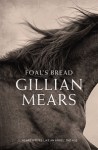
Gillian Mears' Foal's bread
Foals’ bread cover (Courtesy: Allen & Unwin)

I had not been aware of her condition until she won the Prime Minister’s Literary Award in 2012 for Foal’s Bread and was unable to take part in the post-announcement panel, which I attended, because she needed to conserve her energy for other commitments. I first read her (The Mint Lawn) with my reading group, and we loved it, but that was way before blogging. However, I did review Foal’s bread, which also won the Miles Franklin award, here. She was a fine writer, and this book, in particular, is one you don’t easily forget.

Her death represents a tragic sad loss for Australian literature, because it was too early – she was only 51. But, given the situation she found herself in, it was clearly for her, in the end, a release. Vale Gillian Mears.

NSW Premier’s Literary Awards

The annual NSW Premier’s Literary Awards were announced earlier this week, as it usually is, to coincide with the Sydney Writers Festival Week. You can read all the winners on the State Library of NSW’s site, so I’ll just share the few that are particularly relevant to my blog’s interests:

  • Christina Stead Prize for Fiction: Melinda Bobis’ Locust girl: A love song (I have reviewed her Fish-hair woman, which I loved, but for a review of this novel you can check out Lisa’s of ANZLitLovers)
  • UTS Glenda Adams Award for New Writing (Adams being another of our writers who died too young): Sonja Dechian’s An astronaut’s life (also longlisted for the Dobbie Literary Award)
  • Indigenous Writer’s (biennial) Prize: Bruce Pascoe’s Dark emu (which is on my radar, but has also been read by that voracious reader, Lisa! as well as by Michelle at Adventures in Biography)
  • Douglas Stewart Prize for Non-fiction: Magda Szubanski’s Reckoning (which I really MUST read). (Interesting that poet Douglas Stewart’s name is used for the non-fiction prize. He did write some criticism and autobiography too but they’re not what he’s known for.)

There are also awards for Poetry, Scriptwriting, Multicultural writing, among others, but I’ll just leave it at these for today.

Sydney Writers Festival

I’d love one day to get to the Sydney Writers Festival, but its timing in May is always tricky for me, so I end up relying on ABC RN and bloggers for my fix. I’ll share just two examples for you to check out if you are interested:

  • Jonathan Shaw of Me fail, I fly has written multiple posts, one for each day, of his experience of the Festival. Start at Day 1, and work your way through from there. I have quickly scanned his posts but will be adding my comments later. Thanks as always, Jonathan, for helping me enjoy this festival vicariously.
  • ABC RN’s Books and Arts Daily program usually broadcasts – live or later on – several events from the Festival, but I’ll just share the link for their live panel session which I listened to live. The topic was to discuss the “pleasure and challenges of writing and reading in a globalised world”. The panelists were Australian comedian Magda Szubanski (author of Reckoning), Dutch author Herman Koch (whose upcoming novel is Dear Mr M), and French writer Marie Darrieussecq (whose latest novel is Men: A novel of cinema and desire). It was a fascinating discussion in which the writers teased out a range of issues. To give one example: they discussed Herman Koch’s The dinner and the idea that even where a book’s themes may seem universal – such as parental love for children – reactions/responses can vary greatly depending on the culture of the reader.

The scandalous Lady W

Joshua Reynolds painting of Lady Worsley
Joshua Reynolds [Public domain], via Wikimedia Commons

To end on something completely different and not entirely literary is the story of Lady Worsley (born Seymour Dorothy Fleming, 1758-1818) as told in the BBC telemovie The scandalous Lady W, which my local Jane Austen group viewed this weekend. She was apparently the inspiration for Sheridan’s play School for Scandal and was painted by Joshua Reynolds.

Lady Worsley was involved in a high profile adultery (“criminal conversation”) trial brought by her husband against her lover. However, the story was far from straightforward, her adultery being “commanded” by this very husband who turned out to be a voyeur who preferred to watch his wife have sex with others than do so himself. The inevitable happened and she eloped with one of these lovers. This is a story of women-as-property, of women-not-having-access-to-their-own-propety, and of a woman who was brave enough to stand up for herself. She didn’t win, entirely, but my, did she make her point, as the film shows. The story reminded me that although women – western ones anyhow – have more legal rights now, this idea of “you are mine” is surely behind much of the domestic violence that still occurs.

The main reason my group watched this movie was because Lady Worsley lived during Austen’s time (Austen’s dates being 1775-1817) and lived part of her life near Austen’s home. What, we wondered, did our Jane, a keen reader, know of Lady Worsley? It was the talk of the town.

Monday musings on Australian literature: AWW Reading Bingo Challenge

I did have another post planned for today, but it can wait – indeed, it might be better written if it waited – because I’d like to tell you about a special sub-challenge in this year’s Australian Women Writers (AWW) Challenge. A Reading Bingo.

awwchallenge2016If, like me, you are not really up on blogger challenge culture, you may not know what a Reading Bingo is. You may not want to know, either, but I figure it never hurts to share knowledge about what’s going on in the lit-blogosphere.  The AWW Challenge’s Bingo was created by Kelly of Orange Pekoe Reviews, who has done them before. Her idea was to inject a little fun into the Challenge, and perhaps encourage a different set of readers to join in. So, here is how it works … You

  • Choose one (or both) of the two Bingo Cards created for challenge. (Each card contains 9 boxes suggesting different topics or categories of books – written on course by Australian women writers – that you might like to read.)
  • Read a book in each of the categories on the card (or cards) you’ve chosen, until you complete the card – between 1 January 2016 and 31 October 2016.
  • Review each book you read on a blog or GoodReads or other reviewing site.
  • Write a wrap up post on your blog and post a link to it  – or post links to your GoodReads (or other) reviews – on the Bingo post on the AWW Challenge site.

There will be prizes. Currently, we have prizes for Australian residents, but we are hoping to organise prizes for overseas readers as well.

You can find all the details about the Bingo challenge online here, but here are the categories to get you thinking:

Bingo Card One:

  • A book with a mystery
  • A book by someone under thirty
  • A book that’s more than 10 years old
  • A book by an indigenous author
  • FREE SQUARE
  • A bestseller
  • A book set in the outback
  • A short story collection
  • A book published this year.

Bingo Card Two:

  • A book set in your favourite town or city
  • A forgotten classic
  • A book you heard about online
  • A funny book
  • FREE SQUARE
  • A book by someone of a different ethnicity to you
  • The first book by a favourite author
  • A book with poems
  • A book of non-fiction

So, if you are taking part in the challenge now, or would like to take part, this might be a way of helping you mix up your reading and explore some areas of writing that you don’t usually read. Or, it could encourage you to get to some books on your TBR that you just need that little bit of extra impetus to pick up. I have just the book for the Forgotten Classic box, one that I’ve picked up and put down may times over the last decade. This might very well be its time!

I guess this is all a bit whimsical. I’m not sure it will change my reading practices much, except for that classic, because I’m pretty confident that I read enough variety that books will naturally fill the spots! It will be interesting to see.

Do any of these categories speak to your TBR? (You can answer with non-Aussie women’s books if you like!)

Blogging highlights for 2015

So, I’ve done my Australian Women Writers’ Challenge wrap-up, my Reading highlights, and now, to complete what’s become my annual trifecta, my Blogging highlights. I hope I’m not boring you – but I’m doing this partly for my own record!

Top posts for 2015

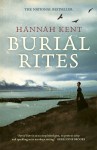
Hannah Kent, Burial Rites bookcover

Courtesy: Picador

As in 2013 and 2014, my most “hit” post for 2015 was a short story by Virginia Woolf, her “The mark on the wall (posted March 2012). I presume it’s a set text for schools/universities.

However, for the first time in my blog, Australian works occupied 2nd to 5th place:

Last year’s fifth highest hit, Barbara Baynton’s “The chosen vessel” (posted November 2012), continues strongly at 9th, and I’m thrilled that indigenous writer Tara June Winch’s Swallow the air (posted July 2014) ranked 10th. My most popular non-Australian novel post was Jeanette Winterson’s Oranges are not the only fruit (posted April 2010), which came in 8th. My most popular 2015 post – albeit 45th in the list of top posts – was for Fyodor Dostoevsky’s Crime and punishment.

As last year, many of my top hits are for older posts, which suggests that there’s some longterm value in litblogging.

Random blogging stats

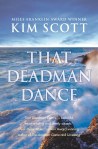
Kim Scott That Deadman Dance

(Courtesy Picador Australia)

I always love to share some of the searches that find my blog, and this year, as always, there were some interesting ones:

  • what new stories does that deadman dance tell: an interesting question – I’d love to know why it was being asked
  • how useful are hachette writers retreats: now, there’s someone doing their research
  • custard apple cultivation in india: I have no idea
  • chic lit gum: I suppose this found chick lit reviews (such as for Toni Jordan’s books)
  • unrevised japanese girl adult pictures: again, keine Ahnung

My busiest day this year was November 19th with 611 views. The most popular post that day was Don DeLillo, Midnight in Dostoevsky. Last year, my busiest day was October 28th with 436 views. Guess what the most popular post that day was? Yes, Don DeLillo’s Midnight in Dostoevsky. It must surely be a first semester set text in the US somewhere?

Other stats tell the story of my year. As many of you who read my blog regularly know, it was a very disrupted year, and this shows starkly in my posting stats. This year I wrote 133 posts, some 19 fewer than last year’s 152 (neither of which is anything like Lisa’s rate of posting!) This didn’t stop you visiting though – and for this I thank you. According to WordPress, my blog visitors came from 168 countries, and my most active commenters this year were: Stefanie (So Many Books, So Little Time), Lisa (ANZLitLovers), Ian Darling, M-R (author of the memoir, And then like my dreams), and Meg. Thanks to everyone who reads and comments on my blog. I love “my” little blogging community (and I worry when some of you disappear at times! I want to know you’re OK. You are allowed not to comment, of course, but …)

Monday Musings on Australian Literature

I have been posting Monday Musings since August 2010. WordPress tells me that Monday was my best posting day with 51 posts. Funny that! To be honest, I’m surprised I’ve managed to keep it going this long. It’s an interesting challenge, and makes me appreciate even more those newspaper columnists who have to keep producing to get paid! However, as I said in last year’s highlights post, it’s all of you who read and comment on my musings that encourages me to keep going, so, rest assured, you’ll see another one tomorrow!

Australian Women Writers’ Challenge

awwchallenge2016As I wrote in my AWW Challenge wrap up, I will participate in the Challenge again this year, so let this be my announcement post. I plan to stick to the top level – Franklin, read 10, review 6 – though, for fun, I may have a go at a Bingo Card challenge. (See here for the Sign Up page). I will read more of course, but I’m not in this for the challenge so much as for the community and supporting Aussie women writers.

And finally …

I’ve already said it in my Reading Highlights post, but I’ll say it again: thanks to everyone who read, commented on and/or “liked” my blog in 2015. You demonstrate what a positive place cybersphere can be. I wish you all happy reading in 2016.

And, of course, thanks to all the wonderful bloggers I visit, the authors who wrote the books that make it all possible, and the publishers who get the authors’ works out there for us to read. May 2016 be a stellar one for you all.

Reading highlights for 2015

Well, dear readers, we have turned the calendar to 2016 so I can now reveal my highlights for 2015. As usual, I won’t be naming top picks. I find that too hard to do. Instead, I’ll discuss highlights which combines best reads with those that were interesting for other reasons. I’d love to mention every book I read, as every one had something to commend it. I have too little time for reading to read books that have no value!  (Seriously. I know I’m retired, but …)

First, though, this year’s …

Literary highlights

By literary highlights I tend to mean literary events, and I went to a few this year (though no writer’s festivals. One day!) What I did attend, though, gave me such pleasure, not to mention new things to think about:

  • Carmel Bird’s launch of Marion Halligan’s latest novel, Goodbye sweetheart, at one of Canberra’s best independent bookshops, Paperchain. This was particularly a thrill because, out of the blue, Carmel Bird emailed me asking me if I’d like to post her launch speech on my blog. I would and I did. I’m embarrassed to say though that the book is still on my TBR. This has been a bad reading year. Bird and Halligan are two of Australia’s literary treasures. Unfortunately, I was travelling in Tasmania when Bird returned to Canberra later in the year for an In Conversation event with Halligan. (And here, I’ll sneak a reference to Carmel Bird’s clever, delightful essay Fair Game which I did read and review!)
  • Jane Austen Society of Australia’s biennial weekend conference titled this year, Emma: 200 years of perfection. I wrote three posts on this wonderful weekend, here, here, and here. No matter how often I read Austen, or how many academics write about her, there’s always to something new to learn.
  • Robert Drewe’s talk titled Who, me? for the National Library of Australia’s Seymour Biography Lecture. Halligan* needn’t feel too badly about her book still being on my TBR pile, because Drewe’s second memoir, Montebello, that I bought at this event, is there too.
  • Author talk with Kate Llewellyn, Barbara Hill and Ruth Bacchus, focusing on Hill and Bacchus’ edition of selected letters written by Llewellyn (my review).
  • Griffyn Ensemble’s Utopia Experiment concert was a musical event, but its focus on poet Dame Mary Gilmore made it, for me, a literary musical event – and a most enjoyable one at that.

Reading highlights

As I’ve done in previous years, I’m going to discuss this year’s reading under categories which reflect this year’s experience.

Literary trends … in my reading, anyhow

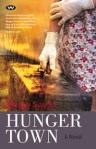
  • ScarfeHungerWakefieldHistorical fiction: I don’t see myself as a reader of historical fiction, and yet it seems to feature significantly in my reading fare. I guess it’s a case of interesting stories will out, no matter when they are set. Not surprisingly, most of these stories deal with the poor, or disadvantaged, such as Eleanor Limprecht’s Long Bay about a young woman gaoled for manslaughter in early 1900s Sydney, Wendy Scarfe’s Hunger town set on the Port Adelaide docks in the 1920s-30s, and Emma Ashmere’s The floating garden about a woman losing her home through construction of the Sydney Harbour Bridge in early 1930s Sydney. Emily Bitto’s The strays is not about disadvantaged people, but her Bohemian arts community of 1930s Melbourne comprises people on the edge of society in another way. I’d happily recommend all these books for the way they evoke their respective eras – and for the variety of their subject matter.
  • Farm stories: Although Australia is one of the world’s most urbanised nations, we do have farmers! Given climate change, concerns about food security, not to mention, here in Australia, the dispossession of indigenous people from their land, it’s good to see “literary” authors tackling these issues, such as Jessica White in Entitlement and Alice Robinson in Anchor point. Coincidentally, my first review for 2016 will probably be a farm story …
  • Climate change: Speaking of climate change, I’m keen to continue reading novelists who tackle this issue, and have created a cli fi tag to identify them. This year, in addition to the above mentioned Anchor point, I loved Jane Rawson’s inventive A wrong turn at the Office of Unmade Lists.
  • Danielle Wood, Mothers Grimm, book cover

    Courtesy: Allen & Unwin

    Is it a novel?: I love it when writers play with form, and two Australian books I read this year thrilled me with their use of the short story/long short story/novella forms to produce fascinating works: Ellen van Neerven’s Heat and light and Danielle Wood’s Mothers Grimm. And then there was Julian Davies’ Crow Mellow, with its exhortation on the back page that “This book is a novel. It has drawings on every page”. It is a novel – but the drawings add another dimension to the reading experience.

  • Short stories rule: I read some excellent short stories this year, and particularly enjoyed John Clanchy’s Six and Paddy O’Reilly’s Peripheral vision. Angela Meyer’s collection of flash fiction, Captives, also captivated me!
  • From over the seas: Contrary to how it might look, I did read some books that weren’t Australian. The three standout novels were Vincenzo Cerami’s A very normal man, Aminatta Forna’s The hired man, and Neel Mukherjee’s The lives of others.
  • It wasn’t all fiction: While fiction is my main fare, I do enjoy non-fiction too. Standouts this year were Karen Lamb’s biography Thea Astley: Inventing her own weather, Richard Lloyd Parry’s true crime work People who eat darkness, and Biff Ward’s memoir In my mother’s hands.
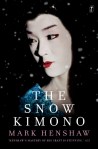
  • Mark Henshaw, The snow kimonoSpecial mentions: I can’t complete this list without mentioning two books that don’t fit the above categories but must be mentioned: Mark Henshaw’s The snow kimono and Fiona McFarlane’s The night guest. Both take their readers on a merry (or not so merry really, but you know what I mean) dance, and are very satisfying reads.

Serendipitous Reading Stats

Just because I like them (these percentages are for this year of course):

  • 67% of the authors I read were women.
  • 27% of the works I read were not by Australian writers.
  • 73% of my reading was fiction (short, long or in-between!)
  • 20% of the works I read were published before 2000
  • 30% of the works I read were published in 2015
  • I reviewed multiple (2) works by two authors – Jane Austen, and Ellen van Neerven

I did not achieve my one real goal for the year, which was to read more from my TBR, and, for reasons which regular readers here know, I did not manage to read more books. But, I had a great reading year, nonetheless, and I want to thank you all for joining me in my journey – for reading my posts, engaging in discussion, recommending more books to read and, generally, being all-round great people to know (cyberly, anyhow). I wish you all a wonderful 2016, and hope to see you here whenever the spirit moves you.

What were your reading or literary highlights for the year?

* I nearly missed the autocorrect of Halligan to Halogen!

Monday musings on Australian literature: Australian Women Writers’ Challenge 2015

awwchallenge2015For the fourth year now, I’m devoting the year’s last Monday Musings to the Australian Women Writers Challenge*.

The challenge continues to be supported by a wide range of reviewers. This year we moved to a self-hosted site which enabled us to produce a single searchable database of all reviews logged since the challenge started in 2012. We now have reviews for nearly 3,000 books across all forms and genres of Australian women’s writing. An impressive resource, I’d say, for its breadth and accessibility.

As usual, the Challenge ran some special events during the year, including a focus on Lesbian/Queer women writers,  author Q&As, and an In Conversation With series. These were organised by some wonderful challenge volunteers, particularly Jessica White, Marisa Wikramanayake and Annabel Smith. I think these posts deserve more air, so will share them here:

The Australian Women Writers’ Challenge is the only challenge I do (or have ever done). This year I posted 27 reviews for the challenge, three fewer than last year. I managed a similar variety in my reading, but unlike last year, I didn’t manage to read one book from my TBR pile. It was, I must say, an erratic year for me and I feel that I lurched from book to book, scrabbling to keep up. If I set myself one goal for next year it would be to tackle the TBR pile a little! On the plus side, three Australian women feature in my top ten posts for the year – Hannah Kent, Barbara Baynton, and Tara June Winch. What a diverse group that is!

Anyhow, here’s my list of works read for this year (with links to the reviews):

FICTION

SHORT STORIES

NON-FICTION

There are some subtle differences from last year’s list to this. For example, last year nearly all the non-fiction reads were memoirs, whereas this year only two are. I read a similar number of novels as last year, but twice the number of historical fiction novels, 4 versus last year’s 2. I will talk more about that in another end of year post. I would like to have read more classics/older books.

Anyhow, if you are interested in the challenge, you can check it out here. I don’t believe the sign up form is ready for 2016, but watch the site. You are most welcome – whether you are female or male – to join us. The challenge is also on Facebook, Twitter (@auswomenwriters), GoodReads and Google+.

Finally, a big thanks to Elizabeth and the rest of the team – including Lewis, our wonderful database developer – for making it all such a cooperative, and enjoyable experience. Roll on 2016.

* This challenge was instigated by Elizabeth Lhuede in 2012 in response to concerns in Australian literary circles about the lack of recognition for women writers. I am one of the challenge’s volunteers – with responsibility for the Literary and Classics area.

Life … sends you detours

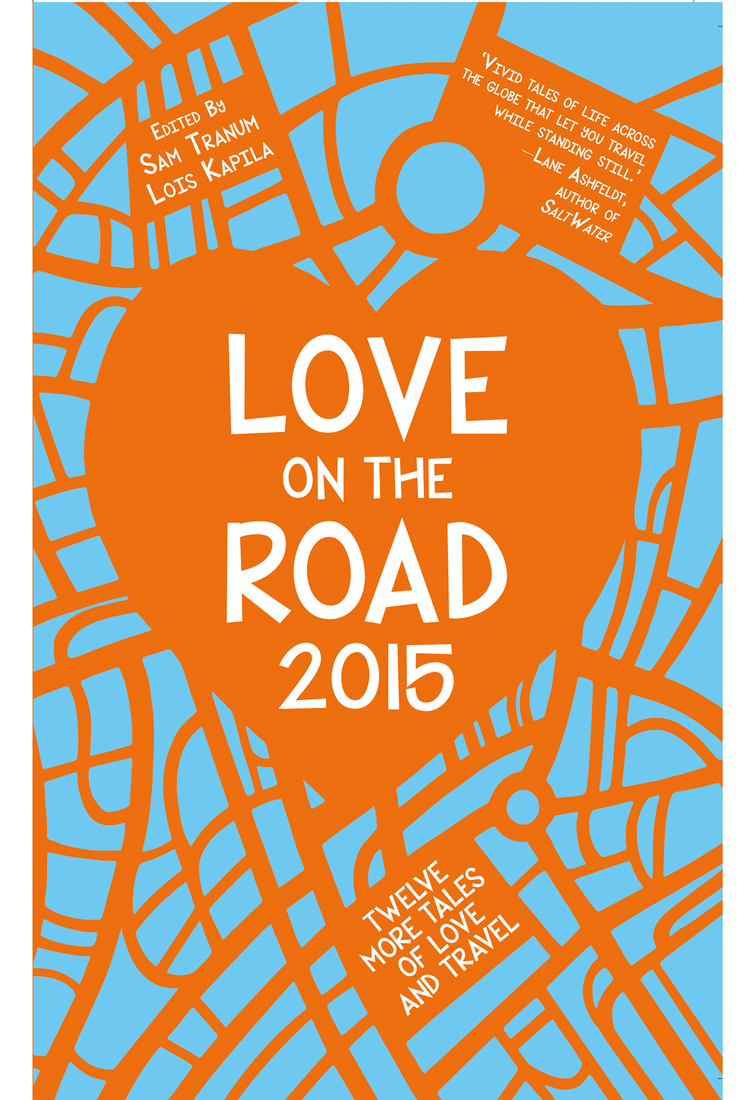
Love on the road 2015, book cover“Life … sends you detours” is a line I quoted from the short story “Sunrise over Sausalito” in the last review I posted here at Gums. That review, posted on 11 July, was for the short story collection Love on the road 2015. Unfortunately, since then we have experienced our own love-on-the-road detours. This is why, as some of you may have noticed, my posting here has slowed to a crawl – the last three posts were in fact written more than a fortnight ago and scheduled for posting over the last two weeks – and why you have not seen me commenting on blogs that I do try to visit regularly. I have, in fact, not opened a book in the last two weeks, even though I have always had one or two near at hand.

Here in a nutshell is the story. On 18 July we were heading off on a trip through Central and Northern Australia with two friends. However, on 17 July one of those friends found herself in hospital undergoing surgery for a broken hip. In one of those coincidences we’d hate in fiction, at exactly the same time she was under the knife in Canberra, Son Gums was under the knife in Seoul for a badly broken arm. He was in Korea on a brief teacher exchange but a team-building water sport activity went a little awry for him and … life, as they say, sent him a detour!

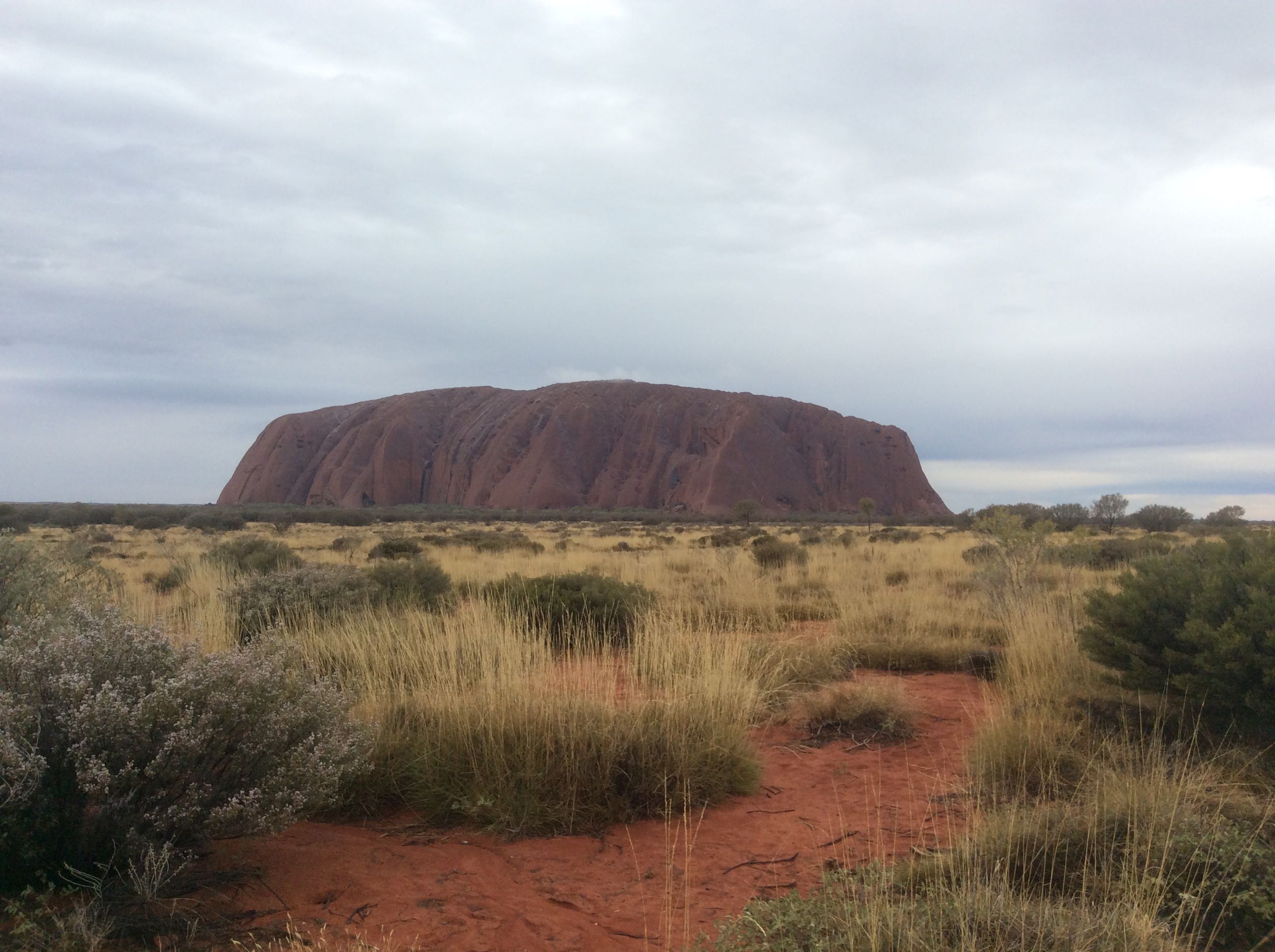
Uluru, on an unusually grey winter day

Uluru, on an unusually grey winter day, but rather suiting our mood

So, we rather reluctantly set off on our holiday as a twosome rather than a foursome and rather expecting that we’d have to cut our holiday short if our son returned to Australia – which is exactly what happened a week into our trip. So, any spare time during our trip was spent not relaxing with a book but rejigging, and then re-rejigging our travel plans, or communicating with relevant parties about the two patients.

I won’t bore you with more – both patients are on the mend now – but I did want to explain that a) I will get back to visiting your blogs soon and b) I am not in a reading slump. It’s simply that the love of children and friends has taken priority for the moment and detoured us from the road we had planned for this July.

Now, where is that book …

Monday musings on Australian literature: Guest post by Annette Marfording of the Bellingen Writers Festival

Courtesy: Annette Marfording

Courtesy: Annette Marfording

Having been intrigued by comments made by Annette Marfording, Program Director of the Bellingen Readers and Writers Festival, about running a literary festival, I approached her about writing a guest post for my blog. I thought her experience might intrigue at least some of my readers here too.

Marfording chairs one-on-one conversations and panels at the Festival, and is also a broadcaster at Bellingen’s community radio station 2bbb fm for which she created a monthly program on Australian writers and their work. Marfording’s recently published book, Celebrating Australian Writing: Conversations with Australian Authors, is based on in-depth interviews broadcast on this program. All profits from the sale of the book will go to the Indigenous Literacy Foundation. What a generous gesture! I have bought a copy of this book, which includes writers like David Malouf, Cate Kennedy and Larissa Berendt. You can too at lulu.com.

Now, here’s Annette’s post …

Some time ago, Sue asked me as Program Director of the Bellingen Writers Festival (full name Bellingen Readers and Writers Festival) to do a guest post for her wonderful blog on the joys and challenges of organising a writers’ festival. I’m delighted to do so.

This year the Bellingen Writers Festival (full name Bellingen Readers and Writers Festival) had its fifth birthday. In the period since our first in 2011, there’s been an explosion of new literary festivals all around Australia. With the exception of big city specialised sub-festivals, such as the Sydney Jewish Writers’ Festival and its Festival of Speculative Fiction, and some school or suburb festivals, such as the Abbotsleigh Literary Festival and the Sutherland Shire Writers’ Festival, most of the new festivals are in small regional towns and not specialised in any particular genre. Even though not all of them survive (for example the Gloucester Writers Festival), at the time of writing there are at least nine such regional festivals in New South Wales alone in addition to the big ones: the Sydney Writers’ Festival, the Byron Bay Writers’ Festival and the Newcastle Writers Festival.

On the one hand, this proliferation of festivals is wonderful for readers and book sales and demonstrates that the book is not dead. On the other, for several reasons, it is cause for concern:

  1. All these festivals compete for government grants and sponsorships.
  2. They also compete for authors, and understandably authors tend to prefer the greater publicity and book sales associated with the big festivals. Our invitations are often declined on the grounds that the author is overseas at the time/wants to concentrate on her/his next book/can’t possibly attend every writers’ festival in the country.
  3. Several of the festivals are scheduled in winter, enhancing the competition for authors during those months.
  4. Sadly these difficulties are compounded when other regional festivals choose to schedule theirs at the exact same time as another, as the newer Batemans Bay Writers Festival did with the Bellingen Writers Festival. Thus two of the authors we had invited appeared in Batemans Bay instead. Similarly it is confronting to find that other regional festivals have copied your advertising slogan, as the Southern Highlands Writers’ Festival in Bowral did with their adoption of ‘Be a part of the story‘ (in comparison to Bellingen’s ‘Be part of the story.’

Even if there were only one literary festival in the country, organising a festival is not for the faint hearted. The large festivals attract big money from government agencies and sponsors while the smaller ones have to make do with far less. That usually means that large festivals have a large number of paid staff, while the smaller ones tend to be organised and run by volunteers.

In Bellingen all festival committee members work as unpaid volunteers, which means they have to be brimming with passion and enthusiasm for there is a lot of work to be done: books must be read, authors and chairs selected and invited, contracts drawn up, funding applied for, sponsorship sought, venues booked, an experienced bookseller chosen, transport and accommodation organised, possibly a schools program organised, the program put together and proof-read multiple times for print and website, newsletters written for the website, social media and print publicity employed to spread the word. For the event itself, you need an event producer/organiser, sound engineers, microphones for all venues and multiple speakers, additional volunteers and an organiser for those volunteers. After each festival there are clean-up tasks, author payments and accounting to be done. Over the five years we have lost several festival committee members due to burn-out or the need for an income-generating job. We have also gained a few new ones each year, but they don’t always stay. Only four members have been involved since the beginning.

Government funding bodies often demand the introduction of a new aspect or theme for each year’s festival. For 2013 the Bellingen Writers Festival chose Celebrating Women Writers and Women’s Stories, because 2012 marked the beginning of a conversation about gender in literary culture. In 2013 the Stella Literary Award was awarded for the first time. As the readers of this blog may remember, a number of women authors, critics and publishers pushed for the introduction of an award for women writers after women had been left off the shortlist for the Miles Franklin Literary Award for Fiction for two years in a row. Another response was the creation of the Australian Women Writer’s Challenge. For 2015 the Bellingen Writers Festival chose Politics and Society and attracted a number of politicians, journalists, screenwriters and fiction writers exploring social issues and added three forums on mental health issues with Professor of Psychiatry Gordon, clinical psychologist David Roland and author of Australia’s first memoir on youth suicide Missing Christopher Jayne Newling.

Festival visitors often don’t realise that authors need to be paid not only for their transport costs and accommodation, but also earn a fee for every festival appearance (in accordance with standards set by the Australian Society of Authors). In small regional towns such as Bellingen, where small businesses often struggle, it is very difficult to attract sponsorship from local businesses, especially since Bellingen hosts several music festivals as well. Government grants are difficult to obtain on a recurring basis, especially in these times of funding cuts to the arts. This means that smaller festivals become ever more reliant on ‘big name’ authors to attract visitors prepared to pay for tickets. The further away authors live from the festival location, the higher the authors’ transport costs. This means that authors who live on the other side of Australia, in Tasmania, let alone the US, are unaffordable for the Bellingen Writers Festival.

I think it’s obvious from the above that the challenges are formidable. The joys of organising a writers’ festival require far fewer words, but nevertheless win in the end for those who are engaged and passionate about reading and/or writing. The joys of introducing favourite authors to new readers, observing the audience’s enthusiastic faces, rapt attention, and long queues for books and autographs. Even better if the authors have a good time, too, and in Bellingen, they always do. For me personally, involvement in the festival has also made it easier to interview some of the authors in my recently released book Celebrating Australian Writing: Conversations with Australian Writers which has sold 80 copies in the first two weeks – to the benefit of the Indigenous Literacy Foundation, which will receive all the profits from the sale.

****

Thanks so much Annette for this wonderful behind-the-scenes insight into running a festival. Readers like me owe a big debt to people like you who are willing to undertake the hard yakka of putting on a regional festival. I wish I lived closer to Bellingen!