Reading highlights for 2016

And so we finally say goodbye to a year many of us would like to forget, but before we do, I would like to share my 2016 reading highlights. As usual, I won’t be naming top picks, because I’m a wuss. It’s too hard. So, instead, I’ll be sharing highlights which combine best reads with those that were interesting for some reason or another.

First, though, this year’s …

Literary highlights

By literary highlights I primarily mean literary events. I went to a smaller number this year but they were good ones:
  • Carmel Bird, Fair gameTenth anniversary celebration for regional publisher, Finlay Lloyd. Held at the National Library of Australia, this was a most enjoyable occasion, with several authors, including Carmel Bird, Alan Gould and Paul McDermott, speaking about their FL books.
  • Canberra Writers Festival on which I wrote four posts (Day 1, Day 2, Day 3 and Recap): What a thrill to have a writers festival here again after a very long hiatus. Although my messy year meant I didn’t plan well enough in advance for the event, it was great being part of the buzz. What I attended was excellent, and I understand funding is guaranteed for another couple of years. Woo hoo.
  • The annual Seymour Biography Lecture, given this year by David Marr. Titled Here I stand, it was a fascinating talk which provided much for me, and commenters on my blog, to ponder on, particularly regarding Marr’s exhortation for the biographer to keep out of the biography.

Reading highlights

As in previous years, I’m going to discuss this year’s reading under categories which reflect this year’s experience.

The reading …
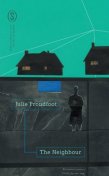
  • Julie Proudfoot, The neighbourDebut novels: I enjoy including debut works in my reading diet. This year I read around six, of which my two favourites would probably be Josephine Rowe’s A loving faithful animal for tackling the Vietnam War and the devastating impact of PTSD on a family, and Julie Proudfoot’s tight, powerful novella, The neighbour, which still has me thinking months after reading it.
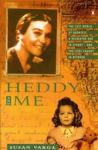
  • Memoir/Autobiography: This was the surprise trend of the year (as Historical Fiction was last year). It certainly wasn’t planned but I ended up reading 8 memoirs/autobiographies, plus Anna Rosner Blay’s Sister, sister which, while mostly biography, had a touch of memoir about it too. I can’t possibly describe them all here but I do want to mention the three World War 2 mother-daughter stories, Blay’s book, Halina Rubin’s Journeys with my mother, and Susan Varga’s Heddy and me. I liked the way these daughters blended the forms of biography and memoir to produce something substantial yet engagingly personal. Then there were the two essay-collection-memoirs, Fiona Wright’s Small acts of disappearance and Georgia Blain’s Births deaths marriages, which played with the form in a different way. And oh dear, I loved them all, but I’ll name just one more, Gerald Murnane’s Something for the pain. My how I loved the sly way he told us about his wider life through describing his love of the turf.
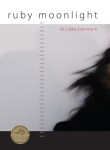
  • Indigenous Australian writers: Shamefully, I only read four works by indigenous Australians, but at least I continued my education into indigenous Australian life and culture. I’ll name just two: Ali Cobby Eckermann’s beautiful and generous historical fiction verse novel Ruby Moonlight, and Bruce Pascoe’s more overtly political Dark emu.
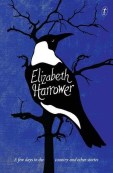
  • Elizabeth Harrower, A few days in the country and other storiesShort stories galore: As always, I read a goodly number of short stories this year, though fewer complete collections than in 2015. The standout collection was Elizabeth Harrower’s A few days in the country and other stories. Such a great read, I’d recommend it to anyone. Debut author Cassie Flanagan Willanski’s Here where we live was also an excellent read particularly for telling about life in remoter parts of Australia. My favourite individual short stories included Ted Chiang’s “The story of your life” (adapted to the film Arrival) and the group of stories I read from Christina Stead’s Ocean of story for Lisa’s Christina Stead Reading Week.
  • From elsewhere: I read only two overseas works this year that weren’t English or American, but both were truly excellent. One was the African classic, Chinua Achebe’s Things fall apart, which I’ve been wanting to read for years. The other was Pierre Lemaitre’s contemporary Prix Goncourt winning novel, The great swindle. Excellent as they were, I must try to do better next year. My other favourite book from elsewhere was American author Anthony Doerr’s All the light we cannot see. Amazing how many stories can still be told, differently, about the Second World War.
  • Biggest surprise: I hadn’t read Stephen Orr before, but his pastoral novel The hands, which was one of my first reads of the year, is still vividly with me as the year closes. The way he captures the relationship, particularly through dialogue, between father and sons just bowled me over.
  • Biggest disappointment: This was  a surprise for one who loves classics, but I really wouldn’t have been sorry not to have read William Makepeace Thackeray’s The luck of Barry Lyndon.
  • The ones that got away: As always there were books I wanted to read during the year but just didn’t get to. Prime among them are Jenny Ackland’s The secret son, Larissa Behrendt’s Finding Eliza, Carmel Bird’s Family skeleton, and Kim Mahood’s Position doubtful (another memoir!) Roll on 2017.

Some stats …

For my interest really:

  • 65% of the authors I read were women (2% less than 2015)
  • 32% of the works I read were not by Australian writers (5% more than 2015!)
  • 63% of my reading was fiction (short, long or in-between!) (10% less than 2015)
  • 35% of the works I read were published before 2000 (a whopping 15% more than 2015)

A couple of interesting trends here. There’s the significant reduction in fiction, which is partly due to the big jump in memoirs (about which see above!) And, while I like to read contemporary authors, I also love delving into the past, so I’m pleased to see the increased number of works before 2000. Surprisingly, I managed to read more works overall than last year – a big plus. However, once again, I made woeful inroads into my TBR so, to get me off to a good start, I hereby proclaim that my first 2017 review WILL be for a TBR book. I hope you like it. I’m sure enjoying reading it.

Overall, it was a good reading year, made especially so by you who joined me here. So, a big thankyou for reading my posts, engaging in discussion, recommending more books and, generally, being all-round great people to talk with. I hope 2017 is good to you, and look forward to seeing you here again whenever something takes your fancy.

What were your reading or literary highlights for the year?
Monday musings on Australian literature: Australian Women Writers’ Challenge 2016

AWW Logo 2016For the fifth year in a row, I’m devoting my last Monday Musings of the year to the Australian Women Writers Challenge*.

This year has been one of consolidation rather than of huge change for the Challenge, as we got used to our self-hosted site to which we moved in 2015. The big advantage of this move was that it enabled us to produce a single searchable database of all reviews logged since the challenge started. It now contains reviews for nearly 3,600 books across all forms and genres of Australian women’s writing, an increase of 20% on last year’s total. A good achievement n’est-ce pas?

Once again the Challenge ran some special events during the year, achieved some milestones, and introduced some new initiatives. These include:

A big thanks to author/researcher Jessica White for her special posts on diversity – the Migrant heritage, Aboriginal and Torres Strait Islander Heritage, and writers with a disability  posts – and to Kelly (Orange Pekoe Reviews) for creating the Bingo Challenge, which we hope to run again in 2017. And a shout out too to Brona, Debbie Robson and Elizabeth who often commented on my AWW round-up posts.

The Australian Women Writers’ Challenge is the only challenge I do (or have ever done). This year I posted 30 reviews for the challenge, three more than last year. I managed a similar variety in my reading, but only dipped once into my TBR pile (to read part of Christina Stead’s Ocean of story for Lisa’s ANZLitLovers’ Christina Stead Week). Last year, I challenged myself to tackle my TBR pile and I failed, miserably. I also let the ball drop this year in one of my favourite areas, classic Australian women’s fiction. I’m therefore making no promises, setting no goals (at least publicly!) for next year.

Anyhow, here’s my list of works read for this year (with links to the reviews):

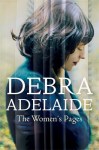
Debra Adelaide, The women's pagesFICTION

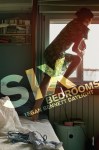
Tegan Bennett Daylight, Six bedroomsSHORT STORIES

POETRY and VERSE NOVELS

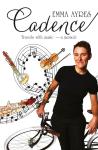
Emma Ayres, CadenceNON-FICTION

As in each year, there are subtle differences in this year’s list, though none are big enough to suggest my reading tastes have changed! For example, last year 48% of the reviews were for novels, while this year only 40% were. Half of these were debut novels. This year saw a return to 2014’s heavy emphasis on Memoir in my non-fiction reading, though there was some interesting playing with form. Not only were a couple of memoirs told through essays, but I also read three mother-daughter stories which combined elements of memoir with biography.

aww2017-badgeAnyhow, if you are interested in the challenge, you can check it out here. The 2017 sign up form is ready so do consider joining up, as we welcome all – women and men – to join us. I’ll be there again. The challenge is also on Facebook, Twitter (@auswomenwriters), GoodReads and Google+.

Finally, a big thanks to Elizabeth and the rest of the team – including Lewis, our wonderful database developer – for making it all such a cooperative, and enjoyable experience. I look forward to seeing what 2017 brings.

* This challenge was instigated by Elizabeth Lhuede in 2012 in response to concerns in Australian literary circles about the lack of recognition for women writers. I am one of the challenge’s volunteers – with responsibility for the Literary and Classics area.

Six degrees of separation, FROM Revolutionary Road TO Fateless

Richard Yates, Revolutionary RoadSix Degrees of Separation is a monthly “meme” hosted by Kate (booksaremyfavouriteandbest). Each month, she nominates a book, and then those who choose to play create a chain of six books, linking one from the other as the spirit moves. Now, I hadn’t planned to play this time because I haven’t read Richard Yates’ Revolutionary Road (nor did I even see the movie), but I need to make an embarrassing confession. I’ve cheated on the last two “memes”. I’ve only done SIX books, not SIX degrees of separation from the chosen book making SEVEN. Where was my brain? Well, wherever it was, I have it back now, so have decided to prove it by playing this time after all …

Lesley Lebkowicz, The Petrov PoemsYates’ Revolutionary Road is set in suburban America in the 1950s. Wikipedia quotes Yates saying he intended the book to be an “indictment of American life in the 1950s. Because during the Fifties there was a general lust for conformity all over this country, by no means only in the suburbs—a kind of blind, desperate clinging to safety and security at any price”. It was much like this in Australia too – and it’s understandable given people’s very real memories of World War II – but not everyone dreamed these suburban dreams. There were, for example, the Communists who had a different vision of how life should be. Lesley Lebkovicz’s verse novel The Petrov poems (my review) tells the story of a very different couple to Yates’. They were Soviet intelligence agents posted in Australia, and their lives derailed badly as their spying was uncovered.

Ali Cobby Eckermann, Ruby MoonlightThere are many places I could go from here, but I’m keen to encourage more people to try verse novels, so I’m going to link by form and choose Ali Cobby Eckermann’s Ruby Moonlight (my review). Like Lebkowicz’s novel, Ruby Moonlight is historical fiction, but set in a very different world. Indigenous author Eckermann tells the story of early contact between indigenous people and white settlers in remote South Australia around 1880. It’s a beautiful (and accessible) read, one that is both uncompromising in identifying the wrongs that have been done, and yet also open to seeing pain and loneliness among the settlers. I do admire such generosity.

Ellen van Neerven, Heat and light, book coverSomething else I’m keen to encourage is for us (myself included) to read more books by indigenous writers. I’ve read a few here over the years, but the one I’m going to choose is Ellen van Neerven’s Heat and light (my review). This is one of those books which defies definition in terms of its form, but I’m not going to engage in that now. What I want to draw from here is its middle section, “Water”, which is an edgy dystopian story set in the near future. It manages to addresses contemporary political issues regarding environmental degradation and indigenous ownership through a clever story about “plant-people”.

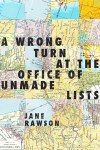
RawsonWrongTurnTransitAnother edgy dystopian book set in the near future is Jane Rawson’s gorgeously titled, A wrong turn at the office of unmade lists (my review). Actually it shifts a bit between a sort-of imaginary 1997 San Francisco and a 2030 Melbourne, and belongs to that new genre, cli-fi, though it crosses other genres too, including time-travel. It’s a rather mind-bending (as well as genre-bending) read, because Rawson has one of those quick-witted imaginations that can address something very serious while maintaining a playful edge. And I do like playful writers, so next I’m going to choose …

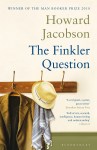
Howard Jacobson's The Finkler questionA non-Australian book, to give all my non-Australian readers a bit of a fighting chance with this list. How about Howard Jacobson’s The Finkler question (my review)? I am a bit of a sucker for Jewish humour, and this book, as my family will tell you, really tickled my funny bone. I mean, whoever heard of a Gentile wanting to be a Jew. (Well, yes, we all have I’m sure, but I think you know what I mean …) The book is full of wordplays and jokes, all the while addressing personal concerns like identity, love and loss alongside more political ones to do with issues like Zionism and, more broadly, what it means to be Jewish.

kerteszfatelessNow, where can that lead me to for my all important SEVENTH book? Well, I think at this point, I might turn serious, not that playful writers like Rawson and Jacobson aren’t serious, because they are, but having raised the Jewish question (ha!) I think I should continue with it. I have read and reviewed some excellent memoirs by Jewish writers, but I think I’m going to go for the jugular and choose Imre Kertesz’s Fateless (or Fatelessnes, depending on your translation) (my review). I say “jugular” because this is one of those books that needs a bit of nutting out; it engages with some fundamental ideas about the human condition, about what is fate, what is freedom.
And so, we have moved from an American couple in the 1950s, through Australia past and future, taking a little side trip back to America, before moving on to contemporary England and ending up in Hungary during World War 2. If my first 6-degrees meme had a certain circularity, this one seems to be rather more linear.

Where would Revolutionary Road take you – your first step at least?

My literary week (5), or, those reading coincidences

Last time I wrote a My Literary Week post it was because I’d scarcely read that week, but had some literary moments to share. This time it’s because I’ve been reading things which have generated some thoughts that I want to document, but not in long dedicated posts. (I’m feeling lazy). Most have been inspired by those reading coincidences (or synchronicities) where you read something in one place and then it, or something related to it, pops up in another.  See what you think …

Critical critics (and Jane Austen)

Georgette Heyer Regency BuckA week ago, I read a post about Georgette Heyer by blogger Michelle who, knowing my love of Jane Austen, wondered what I thought about Heyer, given she was an avowed Austen fan and wrote about the Regency. I’m afraid I disappointed Michelle because I confessed that I’ve never read Heyer. I tried one a couple of years ago, but I just. couldn’t. get. into. it. I commented on Michelle’s post that what some of those (not Michelle I might add) who try to compare Heyer and Austen miss is that Heyer was writing historical fiction, while Austen was writing contemporary fiction. Austen was writing about her own time, and this makes their works very different. Heyer doesn’t write Jane-Austen sorts of stories. Her stories are not about small villages and a small number of families, but are set on bigger stages and mostly amongst the wealthy. War and high drama are more her subject matter. Austen’s characters are mostly middle class, and even those who are wealthy live in the country and attend quiet social events. Her themes involve critiques of society and human behaviour.

And here comes the synchronicity, sort of. As I was preparing for my local Jane Austen group’s meeting this weekend on Austen’s grand houses, I read the essay “Domestic architecture” by Clare Lamont in Janet Todd’s (ed.) Jane Austen in context. In it, Lamont notes that critics have expressed disappointment at the lack of architectural information or descriptions of interiors in her novels. But, but, but, I say, Austen was writing contemporary fiction. She was writing for readers who knew the homes the wealthy, the middle-class, the parsons, farmers and others lived in. Austen did not have to describe these in detail. Historical novelists do though! So Austen, being the sort of writer she was, used her descriptions to convey character, not to tell us what the places were like.

When we read, it is so important to know the context and genre within which we are reading before we start casting aspersions!

What contemporary readers know

And this brings me to another comment on the topic of what contemporary readers – that is, readers reading books around the time they were written – know. I was mooching through Instagram this morning, and came across an image of mini-pineapples by Iger aforagersheart. She wrote that she’d read a history of pineapples which told her, among other things, that they were used as a symbol of wealth for “fancy Europeans”.

Aha, I thought, Jane Austen used this – and her contemporary readers would have recognised it for what it was, a pointer to the pretensions and focus on money of the character involved, General Tilney in Northanger Abbey. He has “a village of hot-houses” but, oh dear, “The pinery had yielded only one hundred [pineapples] in the last year” he complains to our heroine Catherine. General Tilney, we gradually discover, values people by their money, and is ungenerous to those without. This starkly contrasts with the admirable Mr Knightley in Emma who grows strawberries and apples, in fields and orchards, and shares them willingly with neighbourhood families. He even gives his last keeping apples, to his housekeeper’s dismay, to the poor Bateses:

 Mrs. Hodges … was quite displeased at their being all sent away. She could not bear that her master should not be able to have another apple-tart this spring.

We readers of later times see, of course, this generosity, but we may not know what the pineapples symbolise, and are therefore likely to miss that little early hint to where Austen was going with General Tilney.

Hungary and the war

Susan Varga, Heddy and me Book cover

Penguin edition

The third reading coincidence relates to my review last weekend of Susan Varga’s Heddy and me, in which she tells of her mother’s life in Hungary before, during and after the war, and her (and the 1943-born Susan’s) immigration to Australia. A great read. Then, I opened my digital edition of The Canberra Times this morning, and what did I see but an article about local food-blogger Liz Posmyk’s recently published book, The barber from Budapest, which tells the story of her parents through two world wars in Hungary, the challenge they faced in living postwar under Communism, and their subsequent migration to Australia.

There are still many stories to tell about people’s experiences of the two world wars, and about what happened postwar. Whether we’ll ever learn the lessons they provide is another thing.

Christina Stead Week

And finally, of course, I can’t let the post finish without mentioning Lisa’s (ANZLitLovers) Christina Stead Week, with which she has aimed to raise the profile of, and gather together a list of blog reviews for, this often overlooked writer. Stead was, Lisa shares on her post, described by the New Yorker as “the most extraordinary woman novelist … since Virginia Woolf” and by Saul Bellow as “really marvellous.”

I have contributed two posts – one on the story, “Ocean of story”, and another on the first three stories in the Ocean of story collection. I thoroughly enjoyed reading these, and thank Lisa for giving me the impetus to read them.

Christina Stead, Ocean of story, Pt 1: The early years – Australia (Review)

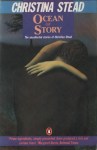
Christina Stead, Ocean of storyContribution no. 2 for Lisa’s Christina Stead Week from Ocean of story: the uncollected stories of Christina Stead.

My first post was on the titular story, “Ocean of story”, which is also used as the collection’s Introduction. After this Introduction, the stories have been organised into 7 sections by editor RG Geering. These sections are presented chronologically, Geering says, reflecting Stead’s timeline, not when they were written. The first is, therefore, logically titled “The Early Years – Australia”. It contains three stories – “The old school”, “The milk run” and “A little demon” – all of which have children as their central subject, which is, perhaps, interesting given Stead had none of her own.

Now, if you ever went to primary (or elementary) school, and that’s all of you I presume, you will enjoy “The old school”. If you were a girl, you’ll probably enjoy it even more. “The old school” was, Geering says, one of the few things Stead worked on in the last years of her life. It was published in Southerly in 1984. It’s like a little slice of life, and like the other two stories, starts with a fairly detailed setting of the scene before she gets to her main subject matter.

So, “The old school” starts with a description of the school, followed by a description of what happens at the school, or, more precisely of what the rumours say happens. But, we are told, in spite of this, “cause and effect” are clearer at school than at home, and “mostly concerned the boys”. Boys who are bad – who truant for example – will go to “the reformatory”. And if you go to the reformatory, your next stop will be prison. And who knows all this? Why “the informants” of course. And who are these “informants”, these “small sages”? Well, Stead writes, they are the “natural moralists, two or three to a class and as far as I knew, all little girls”. From here we are regaled with stories about these informants’ moral pronouncements by this “I”, this “I” who appears in two of the stories and who is an observer, rather than a participant, from within. In “The old school” then, the “I” is a student at the school.

The rest of the story explores the “moral questions” debated by these “informants”, whom Stead describes in more detail:

The informants, our moralists, had clean dresses, pink, blue or sprigged, patent leather shoes and white socks, and curls natural or rag. They did clean school work too, even when we got pen and ink. Goodness alone knows how, with their pink cheeks and shiny curls and neatly dressed brink little mothers, they got all this news about jails, reformatories, judges and sentences, lashings, canings, bread and water.

They are, of course, often little tyrants, deciding which child will be approved and which won’t. The rest of the story chronicles some of their pronouncements and their impacts on their peers. Whenever anything happened in the school “they knotted together, a town moot: they discussed, debated and delivered an opinion.” What the teachers said was to them only “hearsay”. Our “I” character doesn’t have an opinion. She “thought then that cruelty and injustice were natural and inevitable during all of a poor creature’s life”. (The use of “then” would be worth exploring.)

The main story concerns poor little Maidie Dickon who is, literally, “poor” and thus ostracised by our “natural moralists”. She didn’t have the right shoes, didn’t bring the right notes from her mother, and didn’t have her own pen and paper and so would be given some from the school supply. “It isn’t fair” cry the well-provided “informants” who also prove, mystifyingly to our “I”, to be excellent “newsgatherers”. They somehow know about Maidie’s roadworker father, who is (illegally, in those days) striking, and washerwoman mother.

You are getting the drift I’m sure of the story and will be realising that Stead’s focus is on the “natural” justice delivered by these “sages” or “moralists” to those less able to defend for themselves, while the “I”, Stead’s young self, tries to make sense of it all, of how the world works. The ending is gorgeously sharp. The story could take up a whole post – I loved its vivid picture and its passion – but I’ll move on.

“The milk run” was published in The New Yorker in 1972 (and later appeared in a Penguin anthology, The Penguin book of the road, published in 2008). It is set in the same area of southern Sydney as “The old school”, but it tells the story of a family and a little boy whose job it is to get the family’s milk from the grandfather’s dairy a mile away. Stead takes some time setting the physical scene, and describing the family and the boy, Matthew, who worships his father.

It is a beautifully detailed story of a particular place and time. Stead captures ordinary family life and tensions with such precision – a comment here, a brief conversation there, convey all we need to know about the various relationships. It conveys a child’s eye view of the world, the child’s incomprehension of adult behaviour. Things happen. Sometimes they make sense to Matthew, sometimes they don’t. Sometimes the father he worships supports him, sometimes he doesn’t. But, after a lucky find, Matthew gathers to himself a warming thought, something that offers him comfort when all else is uncertain.

And finally, “A little demon”, which was published, Geering says, in “an almost identical version” in the Harvard Advocate in 1973. It’s a satire, which again starts with setting a wider scene by describing a large and successful but rather insular family, the Masons. On the surface, they seem to be perfect, but asides and hints suggest that the surface is just that. There’s something a little claustrophobic and inward-looking about them with their “same notions” and suspicion of travel.

Into this family is born Stevie, the titular “little demon”. We hear a lot about him – the horror of his behaviour and what a trial he is to his mother, though, strangely, not to his teacher who finds him “very good” – but we don’t meet him until the last couple of pages. We are told what an “adorable” person his mother is, and how much she loves her two dogs, Duff and Rags. And here come some hints about who this adorable Mariana really is because, you see, she loved Duff and didn’t want her to ever have puppies. Why would you, after all, “spoil” that beautiful dog by letting her have puppies? Hmm, does this tell us something about Mariana’s attitude to motherhood? Ironically though, she falls in love with Rags, one of Duff’s unwanted puppies, the irony doubled because she doesn’t love her own offspring.

It all starts to go bad for Stevie when the cat that he found upset the dogs. He took the cat’s part, “just for a day or two; and then he saw which way the wind was blowing and lost interest”. And here the rot sets in. Stevie is depicted as having no feelings for animals, and as doing everything he can “to be disagreeable, to annoy, to tease”. How old is this Stevie that everyone – except perhaps his grandmother who defends him – hates? About 5!

It’s a satirical story in which Stead skewers shallowness and self-centredness, not to mention lack of maternal feeling. The language here is more heightened, using exaggeration and exclamation, than the more natural language of the previous two stories. It also has a somewhat stronger plot: we are set up to want to meet this Stevie, and there is a delicious little twist or sting in the tail, which the other two stories don’t have.

I’ve enjoyed reading these stories for Christina Stead Week. I’ll try to read more down the track, but in the meantime they have given me added insight into Stead, into the variety in her writing and into some of her broader themes. Thanks Lisa for the little push to read at least a bit of Ocean of story!
AWW Logo 2016

Christina Stead
“The old school”, “The milk run” and “A little demon”
in Ocean of story: The uncollected stories of Christina Stead
Ringwood: Penguin Books, 1986
552pp.
ISBN: 9780140100211

Christina Stead, Introduction: Ocean of story (Review, possibly)

Christina Stead, Ocean of storyI am so glad Lisa (ANZLitLovers) has given me an excuse, her Christina Stead Week, to finally pick up Ocean of story: The uncollected stories of Christina Stead. I bought this book, in 1991, from a sale table for all of 98 (Australian) cents! What a bargain. I then popped it on my Australian literature TBR shelves, where it has sat, and sat, and sat – until now.

Before I get to it, though, I must confess that this post’s title is a bit of a lie. Christina Stead just called this story “Ocean of story”, but RG Geering, the editor of this “uncollected” collection, made it the Introduction to the book. I decided that I could use this to differentiate in my post title that the post is just about this introductory story. Fair enough?

Now to the overall collection. I am on record as stating that I don’t read introductions to books before I read the book itself. I would in fact prefer these “introductions” to be called “afterwords” and placed at the end. And that’s what Geering has done here except, being perverse, I’d rather that for such a “curated” collection it had been at the beginning! Consequently, I didn’t see it until I’d read the first story and, finding it a little unusual, wondered why there wasn’t some sort of editor’s introduction. So, I went looking. And there, at the end, was his Afterword!

Geering writes that the book

brings together for the first time most of the short prose writings that appeared in various places (journals, magazines and newspapers) outside the thirteen volumes of fiction published during her own life, along with other unpublished pieces found among her personal papers after her death.

And then he says that he has grouped the pieces “according to their settings and contents rather than chronologically”. In this way, they will “follow the contours of [her] somewhat wandering life.” Then, right towards the end of his Afterward, he finally describes the opening piece: it’s

a contribution to ‘The International Symposium on the Short Story’ in Kenyan Review, 1968 … [and] is a highly personal essay, rather than a conventional article.

And that is exactly what it is, a “highly personal essay”, one that, by its end, has given us a “highly personal” understanding of what stories, and particularly short stories, meant to Stead. It starts:

I love Ocean of Story, the name of an Indian treasury of story; that is the way I think of the short story and what is part of it, the sketch, anecdote, jokes cunning, philosophical, and biting, legends and fragments. Where do they come from? Who invents them? Everyone perhaps. Who remembers them so that they pass endlessly across city life? I know some of those marvellous rememberers who pass on their daily earnings in story; and then they are forgotten to become fragments, mysterious indications. Any treasury of story is a residue of the past and a record of the day.

I love the open-endedness of her conception. It’s a free-flowing one that allows stories to take all forms. She goes on to say that “what is unique about the short story is that we all can tell one, live one, even write one down.”

Then she turns autobiographical, starting with her childhood with her father. She was, she says, “born into the ocean of story, or on its shores”, the daughter of a “lively young scientist”. He

told his tales. He meant to talk me asleep. He talked me awake.

Ha, the impact of stories on an imaginative child, which Stead clearly was. He told her stories drawn from his zoological work, and “stories of the outback…and even a few historic events.” But then comes the important thing – the thing that is important to all who read – that is, what stories do for us. She writes that the thousand stories she heard between two and four and a half

formed my views – an interest in men and nature, a feeling that all were equal, the extinct monster, the coral insect, the black man and us; and another curious feeling in me, of terrestrial eternity, a sun that never set.

This feeling came via her father’s nature-related stories which taught her that while death was necessary, there was always “a frail print” left. However, the storytelling – these times that allowed her “to see the unseen” – ended when she was four and a half and her father remarried. The magic was imprinted by then though!

“the million drops of water”

Indeed, she sees stories as “magical”. You only need for someone to say, she says, “Here’s a story; it happened to me” and all will listen. We seek stories – even those “twisted, inferior, cramped, and sterile stories on TV” – because we hope to recognise and “have explained our own existence”. She’s right – on both superficial (what am I doing) and deeper, more psychological (who am I) levels – don’t you think? She continues:

It isn’t necessary that these stories should be artistic or follow formula or be like Chekhov or the last metropolitan fad, or anything. The virtue of the story is its reality and its meaning for any one person: that is its pungency.

She argues that while the “masterpiece” might be appropriate for professionals, “the essential for us is integrity and what is genuine.” She then, interestingly given she wrote this in 1968, harks back to stories of the 1930s:

not all are memorable (some are) but all record the realities of the days when America was suffering and looking for a way out and thinking about its fate; and – look at those same today – they are a vivid and irreplaceable memento. That is what is best about the short story: it is real life for everyone; and everyone can tell one.

In other words, “the story has a magic necessary to our happiness”! We seek “the powerful story rooted in all things which will explain life to us”. I love all this. It is such an argument for the importance and value of the arts.

Stead concludes by telling a story about a group near London that she once joined. All were asked to stand up and tell a story, and

everyone, those stuffy and snug people came to life, became mouths out of which bubbled stories poor and ordinary or before unheard of.

There it was, she says, “the ocean of story”. And this happens everywhere, anytime. So,

The short story can’t wither and, living, can’t be tied to a plan. It is only when the short story is written to a rigid plan, or done as an imitation, that it dies. It dies when it is pinned down, but not elsewhere. It is the million drops of water that are the looking-glasses of all our lives.

I classed this post as “(Review, possibly)” because I haven’t really written a review. Rather, I’ve described/shared Stead’s attitude to stories – and to story-making and storytellers. I love her egalitarianism, even when describing stories that are “poor and ordinary”; I love her flexible idea of what makes a story; I love her chatty, idiosyncratic style; and most of all I love her passion for the importance of stories (particularly short stories) to our lives. I look forward to reading at least some of those in this book.

AWW Logo 2016Christina Stead
“Introduction: Ocean of story”
in Ocean of story: The uncollected stories of Christina Stead
Ringwood: Penguin Books, 1986
552pp.
ISBN: 9780140100211

Six degrees of separation, FROM Never let me go TO The paper house

I rather enjoyed playing Kate’s #6Degrees “meme” last month so, while I don’t expect to play every month, November’s starting book, Kazuo Ishiguro’s Never let me go, was far too tempting to let go! Once again, read on to see why …

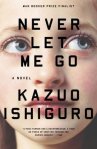
ishiguroneverletmegoI read Kazuo Ishiguro’s dystopian Never let me go before I started blogging, and have only reviewed one of his works since then. I’m thrilled, therefore, to have an opportunity to record that although I haven’t read all of his books, I have read most of them, because I enjoy his writing immensely. I particularly like his tone, which often comprises a sort of matter-of-fact, almost emotionless description of things which, we come to realise, are pretty unpleasant. And these things are usually told to us by narrators who, themselves, don’t recognise the truth of what they are seeing/describing (or certainly don’t recognise it fully). They are, in other words, often unreliable.

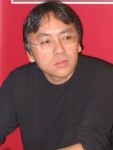
Kazuo Ishiguro

Kazuo Ishiguro, 2005 (Courtesy: Mariusz Kubik CC-BY-SA 3.0)

I rather like unreliable narrators, partly, I’m sure, because most of us aren’t wonderfully reliable at narrating our lives. We see our own stories from our own perspective and, if we ever see the fuller picture, it’s often in retrospect, don’t you think? So, for my next book I’m going to choose the only Ishiguro book I’ve reviewed here, Nocturnes: Five stories of music and nightfall (my review). This is a collection of short stories, some of them linked. In all of them, as I wrote in my post, “the narrator is either unreliable or in some other way not completely across what is going on. This is the Ishiguro stamp … as is the overall tone of things not being quite right, of potential not being quite achieved, of people still looking for an elusive something but not necessarily knowing quite what that is.”

Emma Ayres, CadenceNow, I could link to another book with an unreliable narrator, but that would get boring, so instead I’ll go with content. As the full title of Nocturnes suggests, the book features music and musicians in most of the stories, with the last story being titled “Cellists”. That reminded me of Emma Ayres’* memoir Cadence: Travels with music (my review) about her bicycle trip from England to Hong Kong. It’s a thoughtful, engaging book in which she reflects on her life as a musician, and her desire, violist that she was, to be a cellist! See the neat link!

Jamil Ahmad Wandering falcon coverOf course, as well as talking about her two main loves, cycling and music, she talks about the places she rides through. One that she fell in love with, despite all the warnings she’d received while planning her trip, was Pakistan, where she was treated with kindness and generosity almost without fail. Her experience of Pakistan brought to mind a book I read for the Man Asian Prize Shadow Jury in 2011, a book that I can’t forget, in fact, Jamil Ahmad’s Wandering falcon (my review). It is set in the decades before the rise of the Taliban and explores life in the multi-tribal region on the borders of Pakistan, Afghanistan and Iran. It highlights what happens when political borders cross tribal lands. The writing evokes the unforgiving landscape and the often brutal justice beautifully. While I don’t remember the details now, its overall impression and theme have stayed with me.

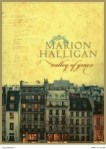
Marion Halligan Valley of grace

For my next book, I’m not going to link by content or tone, but by author. You see, Jamil Ahmad was a late bloomer. He was born in 1933, but Wandering falcon, his first book, was not published until 2011 (though apparently he wrote the stories in the 1970s). I’ve written a post on late bloomers, so I’m going to choose one of those, but which one? Well, I reckon Marion Halligan, for three reasons: she lives in my city, I love her books, and she’s a stalwart supporter of the arts in the ACT. The last book of hers that I’ve read, though I have a couple on the TBR pile, was Valley of grace (my review). It’s set in Paris, where Halligan lived for several years. It’s a beautiful book and is, as I wrote in my post, Halligan’s “meditation on children – who they are, what they mean to us”.

Anna Spargo-Ryan, The paper-houseSo, where to from here? This journey from Kazuo Ishiguro’s Never let me go (which, interestingly, is about children/young adults) has not been plotted in advance. For my final book, I have a few options: I could stick with an author connection, or return to a content link, or launch into something new. Something new? Yes, why not? I’m thinking book designer, because Valley of grace is really beautiful to hold and to read. It was designed by Sandy Cull, an award-winning book designer who also designed a book I read very recently, Anna Spargo-Ryan’s The paper house (my review). Not only is this book’s cover gorgeous, but its interior design is important, particularly in the increasing use of white space later in the book to convey the main character’s heightening mental illness. (There is a content link with this book, too, as it turns out, because The paper house is about parents and children.)

And, there you have it … another fun, for me anyhow, Six Degrees of Separation Meme. I’m surprised, in a way, where I ended up, because Never let me go is a dystopian novel, and I do read such novels, but somehow I led myself off in another direction! I only have myself to blame.

Anyhow, if you’ve read Never let me go, what book would you choose to link from it?

* Since writing this book, Emma Ayres has transitioned to Eddie Ayres. I’ve used the female pronoun here because he wrote this book as a woman.

AWW Bingo 2016 Challenge Completed

For a blogger of more than 7-years standing who doesn’t take part in memes and challenges, I’m doing a good job this month. First it was 6 degrees of separation earlier this month, and now it’s a bingo game. I have good reasons for these exceptions, but I don’t expect you really want to know those, so let’s just get on with it.

AWW Logo 2016Back in April, Kelly from Orange Pekoe Reviews created two Bingo cards for the AWW Challenge and posted them on the blog. The date for completion was set as 31 October. A couple of days ago, AWW participant Christy Collins became the first person to post that she’d completed the challenge. Now, my life has been so busy these last 6 months or so that I’ve not actively pursued the challenge. However, I’ve kept the cards next to my work area and have checked them every now and then. After Christy posted her completion, I had another look and blow me down but I’d complete one! Now, that’s the sort of challenge I like as you know, one that’s not a challenge!

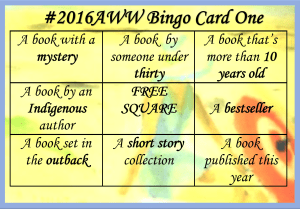
So, here’s my post recording that I completed Card One:

2016 Bingo Card One

  • A book with a mystery: Not being a big reader of crime/mystery books, I was initially glad that this didn’t say “a mystery book”, because it meant I could choose any book which contained a mystery. However, as it turned out, I did read a crime mystery this year, Dorothy Johnston’s engaging Through a camel’s eye: A sea-change mystery (my review). It’s first in her new series set around where she lives on the southern Victorian coast.
  • A book by someone under 30: I really thought this would be the stumbling block for me. I  read quite a few books by young women writers, but which ones are under thirty and which are just over? It’s not always easy to find out. Fortunately, I was saved by Leah A who titled her book perfectly for my purpose, Ten silly poems by a ten year old (my review). Can’t be clearer than that. Thanks Leah! And thanks for your delightful book too.
  • A book that’s more than ten years old: I haven’t read as many classics this year, but I did read Kate Jennings’ autobiographical novel Moral hazard (my review), which was first published in 2002. Not only did it help me meet this challenge but it introduced me to the existence of “business novels”.
  • A book by an indigenous author: I’ve read a few indigenous authors this year, but the one I want to choose here is Ali Cobby Eckermann’s mesmeric verse novel Ruby Moonlight (my review). If I’d been going to do Card 2, I would have saved it for that, because it would have satisfied that card’s “book with poems” category”.
  • My choice (Free square): Oh dear, what to choose here? It’s a toss-up between two collections of essays, Garner’s Everywhere I look and Fiona Wright’s Small acts of disappearance, and Julie Proudfoot’s award-winning novella, The neighbour. But, for her honest handling of such a difficult subject, the experience of an eating disorder, I’ll choose Wright’s book (my review).
  • A bestseller: Fortunately, the challenge didn’t define what it meant by “bestseller”, otherwise I might have had a challenge here, but Charlotte Wood’s The natural way of things (my review) was listed a few times in Melbourne bookshop Readings’ Top Ten sellers of the week. I think that qualifies, don’t you?
  • A book set in the outback: I tend mostly to think of “the outback” as Australia’s dry remote regions, but for this category I’m submitting Sarah Kanake’s debut novel Sing fox to me (my review) set in a remote mountainous area of Tasmania.
  • A short story collection: Now, in this category I have a few excellent choices, including books by Tegan Bennett Daylight and Cassie Flanagan Wilanski, but I’m going to choose Elizabeth Harrower’s A few days in the country, and other stories (my review). That woman can so write, and I’m determined that now re-discovered she’s not going to disappear again.
  • A book published this year: Again, I could choose from several books, but for her wonderful turns of phrase and exploration of mental illness, I’m choosing Anna Spargo-Ryan’s The paper house (my review)

Now, that wasn’t too hard … I rather enjoyed looking at this year’s reading from a different angle, and being reminded of some very fine reading I’ve done.

If you had done this challenge, what books would you have chosen in any of these categories. (Unlike us challenge participants, you don’t have to limit yourself to Australian women!)

Six degrees of separation, FROM Extremely loud and incredibly close TO The women’s pages

I have never played this #6Degrees “meme” before but when Kate (BookasAreMyFavouriteAndBest) announced that Jonathan Safran Foer’s Extremely loud and incredibly close (her response) would be the October starter, I knew I had to do it. Read on to see why …

Jonathan Safran Foer, Extremely loud and incredibly closeI have read Extremely loud and incredibly close and as I recollect I enjoyed it. I don’t remember the details now, but I did think that Foer managed well that fine line between warmth and sentimentality. However, the book is memorable to me for another reason, which stems from the fact that one of my online reading groups discussed it. A member of that group had great trouble with the title. It is, after all, not only a bit of a mouthful, but rather abstract, with nothing that you can particularly hang your memory on. Anyhow, in one email my online-bookgroup friend described it as “Foer’s Amazingly and Suddenly (I’m sorry I can’t keep that title straight)”. Every time I think of Foer, I think of her and smile! Hello, Susan!

Andrew O'Hagan Book CoverAnd this makes me think of other books with long or hard to remember titles. One I’ve reviewed here is Andrew O’Hagan’s The life and opinions of  Maf the dog and of his friend Marilyn Monroe (my review). This book entertained me at the time because of the way it plays with reality, art and the imagination. Maf, the dog, suggests that “we are what we imagine we are: reality itself is the true fiction.” I love this paradoxical way of viewing ourselves, of seeing the artifice in “reality”. However, the point is that while I usually remember Foer’s title, I always have trouble with this one. I had to do a keyword search on my blog to get it exactly. All I knew was that it had “dog” and “Marilyn” in it!

But now, where to go? I could move to a book whose cover design comprises mostly words. There are a few of those around. But I really can’t go past another “life and opinions” book, Laurence Sterne’s The life and opinions of Tristram Shandy, gentleman. It’s been many a decade since I read this book – back in my university days – but its tongue-in-cheek-take-the-reader-along-for-a-ride style, its purporting to be what it isn’t, that is, a biography, was an eye-opener to my young literature-student self. It also introduced me to the picaresque style of novel. This is a style I always look a bit askance at, and yet usually enjoy when I get down to it, because it tends to be satirical – and I’m never averse to a bit of satire.

Peter Carey, Parrot and Olivier in AmericaAn Aussie example of the picaresque – though it’s not set in Australia – is Peter Carey’s Parrot and Olivier in America (my review). The object of Carey’s satire, that “great American experiment, democracy”, seems rather apposite given the current presidential race shenanigans. Donald Trump represents the very values and attitudes – the unquestioning belief in capitalism – which Carey satirises. Another issue Carey questions in this novel is whether “high” art and “total” democracy are mutually exclusive? Do you let the majority decide what art they will support and fund? If or when you do, what art will they choose, he ponders.

Steve Toltz, Quicksand, soverArt, the making of it, is also one of Steve Toltz’s targets in his satirical novel Quicksand (my review) but his angle is slightly different. Part of it is the way people plunder the lives of others to make art, and part is an exploration of why we make art. Is life easier with or without art is one of his questions. Protagonist Liam at one stage desires a life “unencumbered by art” whereas art teacher Morell suggests we make art to understand who we are and why we’re here. In the end, though, like many good satires, there’s no simple answer.

Debra Adelaide, The women's pagesBut, shock, horror, my first five books are all by men, even though women writers comprise well over 50% of my reading. How did this happen? I’m not sure, but I can’t end without one woman writer! Debra Adelaide’s protagonist, Dove, in The women’s pages (my review) is, like Liam in Quicksand, writing a novel – but Adelaide’s is not a satirical novel. It’s a more personal drama about the urge to write fiction (create art, in other words), about how fiction might illuminate life’s meanings, and about how we tell and use stories.

I’ve come a long way from Jonathan Safran Foer’s Extremely loud and incredibly close, a 9/11 story, and yet not so far really, because both books – Foer’s and Adelaide’s – are about grief and loss, and both, one indirectly the other directly, are about how art might play a role in resolving the tragedies that confront us. That seems to make a rather nice circle, albeit comprising 6° not 360°!

If you’d like to read other responses to this “meme” check out Lisa’s (ANZLitLovers) and Jenny Ackland’s (Seraglio).

My literary week (4), or, not a page read

Would you believe that today is the first time in a week that I have opened my current novel? Terrible! But it’s just been one of those weeks of being driven by other things, so much so that reading time has taken a big hit. There have, however, been a few literary moments which I thought I’d share.

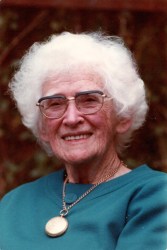
My lovely Gran

Gran

Gran, on her 65th wedding anniversary

On Monday I wrote a post based on the introduction to the Golden treasury of Australian verse which I found in my aunt’s house. The book belonged originally to my grandmother, and was given to her in 1914. Gran was the daughter of a Presbyterian minister, and the important thing to her was to live a good (Christian) life. However, she didn’t proselytise God. Rather, she promoted treating people well. We grandchildren all remember her Bambi and Thumper ornaments. They were there to remind us all of Mrs Rabbit’s advice to Thumper who had criticised baby Bambi’s wobbly walk. Mrs Rabbit said, as I’m sure many of you know, “If you can’t say something nice… don’t say nothing at all”. None of us have ever forgotten this, though I suspect we don’t always live up to it!

Anyhow, my point is that written in the back pages of the book, and on sheets of paper tucked inside it, are some sayings or inspirational quotes collected by Gran. One comes from Rudyard Kipling:

If we impinge never so slightly upon the life of a fellow-mortal, the touch of our personality, like the ripple of a stone cast into a pond, widens and widens in unending circles across the aeons, till the far-off Gods themselves cannot say where action ceases.

Another she dated 1/8/24 and noted it as “author unknown”, though using the Internet I’ve tracked it down in a webpage called “Bad Poetry”. The poet is Edgar Guest. The concluding lines read:

I never can hide myself from me,
I see what others may never see,
I know what others may never know,
I never can fool myself — and so,
Whatever happens, I want to be
Self-respecting and conscience free.

It might be sentimental poetry, but I do love my Gran’s heart and aspiration.

There are others, including one from Francis Bacon, but the final one comes from the Koran: “If I had two loaves of bread I would sell one and buy hyacinths for they would feed my soul”.

I’ll be keeping this book, needless to say.

My reading group

My reading group had its July meeting this week, and our book was Charlotte Wood’s The natural way of things (my review). It was a very lively meeting in which the realists in our group faced off against the willing suspenders of disbelief, with a couple of fence-sitters in between. Ne’er the twain did meet, I’m afraid, but while positions were maintained throughout, the discussion was, as always, respectful.

Charlotte Wood, The natural way of thingsThe problem was that the realists couldn’t work out why the ten women hadn’t ganged up to overpower their two guards, why they didn’t work out they could dig their way out under the electric fence. The women were twits, one said. They should have fought back. She also felt the rabbit trapping was far more successful than you’d expect and that the book had the longest mushroom season ever! It just wasn’t plausible. The willing suspenders, on the other hand, talked more about the book in terms of metaphor, allegory and parable, though they didn’t all agree on which of these the book represents, if any! We defenders felt that Wood, in the opening scenes, showed the disempowering of the women, explaining why they didn’t fight back.

I won’t go on, but the conclusion was that any book which garnered such an engaged discussion must be a good book!

More on my Jane

You know of course to whom I refer, Jane Austen of course, and this week Mr Gums and I went to see the latest Austen movie, Love and friendship which, strangely, is an adaptation of her juvenilia novella Lady Susan (my review) and not of her juvenilia piece actually titled Love and freindship (sic) (my review). We enjoyed it. Kate Beckinsale, who played Emma in a 1995 movie adaptation of that novel, played that “most accomplished coquette in England” Lady Susan with a light touch. Austen’s juvenilia is known for its broad humour/satire, though Lady Susan, being a transition work between her juvenile and adult period is more restrained than the earlier works. I thought director Walt Stillman balanced the tone nicely, here. His use of humorous title cards to introduce the characters sets the satiric tone but this is off-set by a more straight playing of the script, except perhaps for the comic relief provided by Tom Bennett as the foppish, silly Sir James Martin.

But, there was another Jane Austen event this week, a talk which members of my group attended. The topic was Austen’s continued popularity, and the speaker started with – coincidentally – Kipling, who praised Austen in 1924, saying “Praise the Lord for making her, and her for all she made”.

The speaker was enthusiastic about Austen, but her focus tended to be more on Austen’s Regency legacy – fashion, food, beauty – whereas my group is more interested in her ideas about, insights into, human nature, insights that we can find even in her early work. I’ll end this post with one of those insights that I love from Lady Susan. It was included in the film. Lady Susan says that “where there is a disposition to dislike, a motive will never be wanting”. Oh dear, this is too true. My Gran would, I’m sure, have had a saying to encourage us not to have such dispositions in the first place … though, she didn’t know Lady Susan!