Canberra Writers Festival, Day 2: A morning tea, a launch and some conversations

Let’s get the guilt admission over first. I ditched the session I’d paid for this afternoon to attend three free events. I reckon I got my money’s worth. I did this for a couple of reasons. Firstly, I didn’t realise that the afternoon event – on adapting a book (Rosalie Hamm’s The dressmaker) to film – occupied the whole afternoon. I’ve read the book, seen the film, and had seen Rosalie Hamm at my morning (paid) event, so decided that would suffice in the face of other temptations. Secondly, that event was on the other side of the lake and, having found a parking spot with a little challenge in the NLA precinct, I didn’t feel like losing it. Finally, there were two events at the NLA that I really wanted to see, and I couldn’t do them all. Such is life!

Now, a couple of warnings. Today’s post will be longer than yesterday’s, as I attended more sessions. Ignore, skim, or read it all. Your choice. I won’t know. And, while I did my best to take good notes, I may have skewed the odd thing. It’s hard to listen, reflect and take notes in these thoughtful, vibrant sessions.

Morning Tea (at Hotel Realm) with Marion Halligan and Rosalie Ham, introduced by Karen Viggers

This was a lovely way to start the day. We got to sit down at tables, with food and drink (self-served from a buffet), and be entertained by three writers. They, however, I was sorry to see, had to stand!

Using the tried-and-true format, session chair Karen Viggers, herself an author, posed a number of questions to Halligan and Ham. There were those expected questions – like how did you come to be a writer, where do you get your ideas from, how do you go about writing – as well as some more specifically geared to Halligan and Ham. The answers were lively, sometimes humorous, and all worth hearing, but I’ll just share a selected few.

Both talked about how they see stories all around them, how everything they see has potential. And that, dear readers, is why they’re the writers and I’m the reader! Anyhow, Ham said that her novels start with an idea, with “whatever is up my nose”, and that she’s currently into questioning verities. The novel she is writing now questions accepted views about irrigation. If it doesn’t work, she said, she’ll return to family squabbles!

Concerning the process of writing, Halligan, unlike Ham who starts with a synopsis of her story, said she doesn’t know where her stories will go when she starts. She quoted author Rodney Hall who said that the way to take your reader on a journey is to go on one yourself. And anyhow, she said, plots, as her readers know, are not the essential thing – which is perfectly fine with me.

The conversation also turned to death, grief and loss which both have written about. Halligan talked about losing her husband in 1998, and how she saw everything through grief. People tell you time heals, she said, but grief is always there, tucked away in a little corner. (She’s right, it is.) She told how her novel The fog garden was her response to her husband’s death, but its sex scenes were too much for her publisher, Penguin. They weren’t for Allen & Unwin, so she’s been with them ever since! Her latest novel, Goodbye sweetheart, is all about death – about reactions to death, and secrets.

Both writers said more about grief, death and sex, but what was said in the room stays in the room. Instead, we’ll move on to Viggers follow-on question from Halligan’s comment re secrets. Why are secrets so good in novels, she asked. I loved Ham’s simple, to-the-point answer. It’s because, she said, they relate to power. (Yes, of course.) She has seen the way secrets work in life this way – in staff rooms, for example, and sports clubs, and country towns (in which she grew up)!

There was more conversation, but I’ll share just one other insight and that’s Halligan’s comment that she has to like her characters. If you don’t like them, she said, why should your readers? I’d love to have followed this up in terms of that common complaint from readers that they don’t like a book because they don’t like the characters. Did their authors like them I wonder? I suspect that what an author means by “like” and what some readers mean may be two different things? Anyhow, question time ran out – and so has my time on this event (engaging as it was). Let’s move on …

Waking the Dead: Paul Daley, Sulari Gentill, Ros Russell

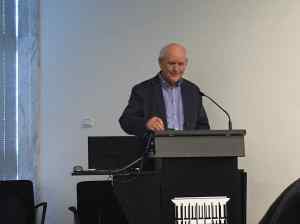
Russell, Daley and GentillThis session was a very different kettle of fish. Chaired by NLA curator Robyn Holmes, its aim was to explore how authors use archival/historical materials in their writings. She, like Vigggers above, had come armed with a good set of questions – and the answers were considered, sometimes provocative, and more than I could perfectly capture.

For those who don’t know them, Paul Daley and Ros Russell are Canberra-based, Daley being a journalist and writer of fiction and non-fiction, and Russell an historian who has also written a novel. Sulari Gentill is a writer of historical crime fiction.

Holmes started by asking what “waking the dead”, that is, exploring archival materials, meant to them. Daley said it meant looking for voices that will drive the narrative, such as for his current project, a novel about the impact of 1930s-1940s anthropologists on black-white relations in Australia. Russell agreed, saying that for her latest history, High seas and high teas, she looked through diaries for voices to animate the story. She said that she often finds evidence that overturns some of her perceptions while confirming others.

Gentill, on the other hand, said she looks for holes in history, for the gaps where she can “make stuff up”. (The audience laughed.) Historical fiction, she said, is about writing “plausible tales” about what might have happened which gives insight into what did happen. (I like this.) It’s about playing in the shadows.

Holmes then asked about how collections determine the direction of their writing? Daley said, among other things, that every time he goes into an archive he comes back with five more book ideas! Russell talked of how archives can take you in directions you hadn’t expected when you started. A mundane diary, for example, can suddenly include a surprising story that you decide to feature.

The ever-humorous Gentill told us that her husband is a 1930s historian, which is the era she writes in. “I married my collection”, she announced! She doesn’t research in advance, but as she goes. She talked about the newspaper articles (found in Trove – yes!) that she includes in her novels’ chapter headings. Using them is her response to publishers telling her that she’d taken things too far. Those things were always things that had actually happened she said. But, you lose readers, she said, if they think you’ve gone too far – hence the newspaper “proof”.

Daley also referred to this issue of believability when he said that research can provide details like names and practices of the time, the sort of detail that gives authenticity. And later in the session, Russell also mentioned the importance of research to underpinning plausibility. It was critical for her historical fiction book, Maria returns, that she find a Barbados plantation owner who was also an abolitionist. She did!

Regarding the sorts of resources that can best bring stories to life, Russell mentioned unexpected places like government papers and reports. You have to cast your net widely, she said, to find the stories that illuminate. Daley said he loves photographic collections, and used his current research into 1930s/40s anthropologists as an example. He found a trophy-like photograph of American anthropologist Frank Setzler posed with human remains. This helped him write his composite character, because he felt he could see from the photo what the anthropologist was thinking.

Gentill said that she attracted primary resources, that historians send her materials that fit the period she writes in. She hasn’t experienced, she said, the oft-talked about historian-historical fiction writer divide. She also said that since, fundamentally, she writes about people, she relies on her own memory archive, her experiences and knowledge of people.

Gentill said that she makes up her protagonists, but often uses real people for her secondary characters. She always makes sure that she doesn’t say anything more heinous about the person than the historical record shows, but the rest she makes up. And here she said something beautifully clarifying: her aim is not to present an absolute or rounded version of an historical person but an angle or perspective of that person that is true. In other words, she presents that person, let’s say, Earle Page, from the perspective of her character, who may not like that person. It is not a complete picture of Page, but an aspect of Page as experienced by her character.

There was much more – writing about place, using oral histories, and the like – but I’ll close with two final topics. One concerns blurring the line between fiction and history. Gentill said that she is a fiction writer and that her whole purpose is to blur the line. The fiction writer’s job, she argued, is to give a bit of history by stealth – which is another issue I’d liked to have explored further. Daley said that his non-fiction writing is “true” and based on archival research, but in his fiction he can be more creative, such as messing with dates to make a story work. I’ve heard other writers say this. Seems fair enough to me, because I know I’m reading fiction, but will all readers who are getting their “history by stealth” make the distinction between historical “facts” that are played with (messed around) and the “truths” that are the writer’s real story?

And finally, there was a discussion about ethical responsibilities. Russell said that historians must not distort what they find, must be true to their sources, but that she always looks out for things that might say something different to the prevailing narrative. Somewhat similarly, Daley said that if something confronts his preconceptions he must address it. For example, in his current anthropological research, he was assuming he’d find a cruel man, but he found a kind one. This will affect his narrative.

Gentill said she looks for other perspectives to the prevailing ones, that she likes to find people who have been forgotten, but who are interesting. (I guess these are minorities, the “little” people, the women, and so on?) She sees this as doing a service to Australians.

All in all, it was a thoroughly engrossing session and I’m glad I decided to attend it.

Richard Begbie’s Cotter: A novel (launched by Tim Begbie and Jack Waterford)

I had not planned to attend this session, but given my decision to not go over the lake, I had an hour to fill between the two sessions I’d flagged, and so decided to attend this session launching an historical novel set in the Canberra area. I was glad I did, because I learnt something more about this region I call home.

Richard BegbieCotter: A novel tells of the local early nineteenth century settler family – after whom our lovely Cotter River is named – and their relationship with indigenous people of the region. Garrett Cotter, an Irishman from Cork, arrived in Australia in 1828, and became friendly with the local indigenous chief Honyong. He formed a good relationship with Honyong, but was also, of course, part of “the inexorable forces” which led eventually to the dispossession of Honyong and his people. Retired editor of The Canberra Times, Jack Waterford, who helped launch the book, described it as “a well-written book of our country, our neighbourhood and a good yarn”.

Richard Begbie told us that he had researched the book intensively with the descendants of both the indigenous people and the Cotters, and said there had recently been an event – not a launch – at which both groups had got together to renew a friendship that had been initiated 200 years ago.

He gave a brief reading from his novel of the moment when Cotter, working on the farm owned by the (also still local) Kenny family, first met Hongyong. It sounds like an engaging read written by someone who knows this area well.

In conversation: Melinda Bobis “Love, climate and the politics of care” (with Lucy Neave)

I should explain here that the Festival’s theme – fitting to our national capital setting – is Power, Politics, Passion. Consequently, there are several sessions involving political writers and journalists. Merlinda Bobis, however, is not one of them, but she is highly political, and politics underpinned much of this session, which was conducted thoughtfully by author Lucy Neave.
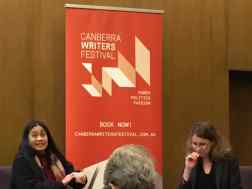
BobisFor those of you who don’t know her, Bobis, whose novel Fish-hair woman I’ve reviewed, is a Philippine-born trilingual poet, novelist, performer, scholar and retired academic. Leave explained that the session would  focus on two of her novels – Fish-hair woman (woo-hoo) and her latest one, Locust girl: a love song – and would explore how we tell stories and the politics of caring. Politics, you see! Like Waking the dead, this session was full-on, so will be hard to condense, but condense it I will – which means omitting a lot.

Bobis gave a couple of readings and included “performance elements” – singing and chanting – in the process. Lucky us. Neave asked why she performed, and her answer was a practical one. She arrived in Australia as a published poet, but could not get published here. She started performing her poems, and found that people listened. Then she started dancing. Her strategy, she said, suddenly became an art form!

I enjoyed the discussion of Fish-hair woman because while I felt I’d grasped its main meaning, I knew there were things I’d not fully comprehended. She talked about hair as a metaphor for memory, with memory here being mainly of trauma, grief and loss. She reminded us how grief and trauma can can turn hair white or even cause hair loss, but she inverts this in her novel and has Estrella’s hair keep on growing as the losses build.

Fish-hair woman is also a novel also about writing a novel and, because it contains both Philippine and Australian stories, it is about collaborative story-telling and grieving, and about not privileging one group, one grief, over another. Do we grieve for losses equally, she asked, referring to philosopher Judith Butler’s work on the politics of grievability, on differential grieving. Whose losses, whose stories do we validate? Is an Arab body mourned equally to a Western one? And here, you see, we were at politics again, the politics of mourning.

Bobis talked about our current political climate and the politics of fear. She argued that we need to encompass a new story, the politics of care. She referred to new indigenous MP Linda Burney’s statement that she’ll bring grace and kindness to parliament. Not a soft kindness, said Bobis, but kindness with spine!

She discussed how we define politics in terms of governance, or talk about it in terms of the personal being the political, but to her politics is feeling, thinking, doing. The central question of Fish-hair woman is, she said, how much can the heart accommodate. Can it accommodate even those we don’t love?

Locust girl continues and extends these concerns to how we care and love across borders. It’s about countering the politics of fear with the politics of love, extending the question of how much can the heart accommodate to how do you care for other. While Fish-hair woman has its hair metaphorhere it is the locust, which stands for extreme other, for fighting against demonising other.

Neave then led the discussion on to the environment. Bobis said that in Fish-hair woman, which is set during the 1987 Philippine government’s war against communist insurgents, she was worried about river. She said war is an environmental issue, it damages the planet. Locust girl is set in the desert, which represents climate change, the loss of water, a place where nothing grows, the drying of the human heart, and that there will be environmental refugees. (I hope I’ve got all this Locust girl stuff right, as I haven’t read it.)

She and Neave talked about projects they are working on, separately or together – in Spain, Philippines, Singapore – because writing is not enough. Bobis called it developing a creative arts practice in which storytelling becomes action.

Some interesting ideas came out of the Q&A at the end. I particularly liked her response to a question about her use of magical realism which is, she said, her favourite device. It’s part of her culture to believe that there is another world, but magical realism can also be seen as a post-colonial strategy, as a way of challenging the real, of challenging our established worldview.

Another question concerned how the imagination might relate to the politics of caring. Bobis said we need to imagine scenarios: “imagine this, and if this happens, what do you do”. We must give multiple imaginings to parliament she said, and if something has already happened, we must ask what can we imagine to address it.

She concluded by reading a love poem from her new poetry collection. Looking up from her paper, and looking directly but warmly at us, she read the last line: “there is hope for us”. What more can I say?
Canberra Writers Festival, Day 1: Two book launches

Well folks, finally we have another writers festival here in Canberra. From 1983 to 2001, we had something called the Word Festival (though its name varied a little over the time). Since then, to the best of my knowledge, we’ve only had the one-off Canberra Readers’ Festival (on which I posted) in 2012, so it was a thrill to hear many months ago that a Writers Festival was once again in the offing – and now it is here. I do hope there are plans for it to continue. If today’s buzz is evidence of success then I hope the organisers are feeling positive about future events.

However, here’s the thing. This year has been a topsy-turvy one for me, so I didn’t book a season ticket, and missed out on a couple of events that I would like to have attended, but that’s no biggie. I’ve booked some appealing events and look forward to those. Today, though, due to other commitments, I decided to just attend a couple of free afternoon events (so I missed, for example, Anne Summers). Oh well, I can’t do everything, and I know that whatever I choose to do I will enjoy. I’m easy that way!

Carmel Bird’s Family Skeleton (launched by Marion Halligan)

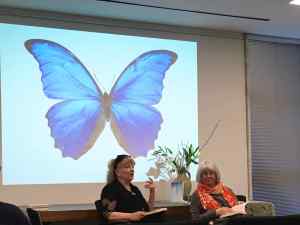
Carmel Bird and Marion Halligan
Bird, Halligan and butterfly, 2016

I’ve written about Carmel Bird and Marion Halligan before, when Bird launched Halligan’s Goodbye sweetheart. I realised then, and it was clear again today, that they are good friends. So when they launch each other’s books which they’ve done for each other a couple of times now, there’s no formality or stiffness, and they almost make it up as they go, making for a delightfully relaxed but nonetheless meaningful launch.

I won’t summarise the whole launch but just share a couple of points that struck me. First though, something about the book. It’s a black comedy – which, if you’ve read Bird, wouldn’t surprise you – and is largely narrated by a skeleton. It is about the O’Day family, and particularly about Margaret, the family’s widowed, wealthy matriarch. The epigraph, by Bird’s fictional character Carrillo Mean who provides all her epigraphs, goes like this: “The Storyteller knows what the Storyteller knows, and the Storyteller tells what the Storyteller tells”. But, said Halligan, does the Storyteller tell all that he knows? I think this is a book for me, so I’ve bought it.

And so the launch proceeded, with a couple of expressive readings by Bird, and engaging repartee between Bird and Halligan about Bird’s love of words and the naming of characters; her inspiration for the novel (which was seeing an Edwardian hearse on a country road in Victoria); and death, sex and butterflies, and whether the novel’s butterflies are a trope or a motif! I’m not a creative writing specialist, said Bird airily, passing off this issue! Fair enough. Leave that to the reviewers!

There was a lot more, but what I mainly wanted to share was Bird’s statement that she is always “looking for virtue” in her novels. That made us all sit up. Novels, she said, always explore evil, because evil is more interesting than goodness, but the end point of it all is always “where is the good, where is the hope?” An audience question had her clarify this a little further by saying this hope could for things like goodness, reason, happiness, beauty. I immediately thought of those grim, depressing books that many readers feel have none of this, like, for example, Charlotte Wood’s The natural way of things (my review)and the fact that in most of those books I do usually find a hint of hope. I can’t help thinking that most writers are like Bird, that is, that they want to end with some little bit of positivity, even when they also want us to remember the serious issue they are exploring.

Carmel Bird
Family skeleton
Crawley: UWA Publishing 2016

Nicholas Hasluck’s The Bradshaw case (launched by himself)

Nicholas Hasluck
Nicholas Hasluck, 2016

A completely different kettle of fish was the launch of Nicholas Hasluck’s The Bradshaw case, partly because he launched it himself and partly because it’s a very different sort of book – a fact-based courtroom drama about contemporary political issues regarding native title.

I haven’t read Hasluck before, though he’s won The Age Book of the Year and been shortlisted twice for the Miles Franklin Award. The packed room for his launch was evidence of his renown I’d say.

Again, I’m not going to going to summarise the whole session. He started by telling us he was launching a “device” called a book, in which thoughts and images could be conjured up in your mind from the pages you read. We all liked that, of course.

His book, he said, mixes fact and fiction. It explores, via a court case, some controversial issues about the origin of rock art in the Kimberley and how this plays out in terms of native title. He provided quite a lot of background about the rock art at the centre of this controversy – the Bradshaw images and the Wandjina images – a controversy I’ve come across in some of our outback Australia holidays. Hasluck was inspired to write his novel by the ambiguity surrounding this. But this is not what I want to share here.

What I was particularly interested in was some of his general comments regarding novels and history. Novels, he said, can both cast a light on what happened in the past and on what is said about the past now. They can explore (expose?) contested versions of the past.

Commenting on his use of fiction to tell this story, he said “give a man a mask and he will tell the truth”. I like that – as regular readers here who’ve read me on truth and fiction would expect. He also said that he chose fiction because he’s not an expert in the area and that many specialists have, and are, going the non-fiction path.

Discussing the question of how readers should approach the fact-fiction nexus of historical fiction, he said that the author-reader contract is that readers will assume everything they are told is true. (Note that he didn’t say “factual”). He hopes that people, once intrigued by something they’ve read in fiction, might then question what they’ve read and do their own research. This brought us back to the central controversy about the images, and what this means for indigenous people – and it resulted in his making a statement that, like Bird’s regarding looking for virtue, made me sit up. He said that the odd thing about Australian literature is that novels are not seen as part of current debates, unlike the USA, where works by Gore Vidal and Thomas Wolfe (Bonfire of the vanities), for example, do enter such debates. Australians, he said, see fiction as something quite separate. I’d love to know what others think about this claim – but for me, again, it made me think of Charlotte Wood’s The natural way of things and the contribution she clearly wanted to make to the misogyny debate.

The issue we didn’t really discuss, though it was touched on, concerns indigenous Austrlians’ reaction to this story being told this way by a non-indigenous writer. All Hasluck said on this point was that his book is about “cultural integrity”. It will be interesting to see.

Nicholas Hasluck
The Bradshaw case
North Melbourne: Arcadia, 2016

STOP PRESS: AS Patric’s debut novel Black rock white city has just been announced the winner of the Miles Franklin Literary Award. Congratulations to him! Another book for the TBR!

Delicious descriptions: Robyn Cadwallader’s voices

Robyn Cadwallader, The anchoressIn my recent review of Robyn Cadwallader’s The anchoress, I included very few quotes or excerpts to show her writing. Somehow my post ended up in other directions. But, she had some wonderful ways of describing the world she created, and I’d like to share one aspect to demonstrate this.

Locked away in her cell, Sarah had to rely on her senses, particularly hearing, to experience and understand her world. I greatly enjoyed Cadwallader’s descriptions of people’s voices.

Sarah’s first confessor-advisor, was old Father Peter:

His voice, though old and weary, was blue-green behind the black curtain, like the quiet water where the river deepens beyond the mill. Sometimes I didn’t hear the meaning of his words but let them float away, the murmur of flowing water calming me.

Gorgeous, isn’t it? (And this is how I often read “difficult” books – I let the words flow over me, rather than worry at them, and they often make sense, eventually.)

And here is young Father Ranaulf, fairly early in Sarah’s enclosure when she is starting to get into self-destructive behaviours, believing she’s following the advice of a past (now dead) anchoress:

Agnes? Guiding you? What do you mean? His voice had the edge of a plough blade, blunt but cutting.

Father Ranaulf for much of the novel comes across to Sarah as inflexible – because he is – but he starts to shift as people help him understand, empathise with, Sarah and her life. So, here he is later in the novel bringing her some, well, rather subversive papers:

Father Ranaulf’s voice sounds like stone that will not crumble. I have resented it, wanted to shout and scream at it, shake his dry words until they lose their order and their certainty. But that day, the day he brought the pages, his voice had tiny grains in it, specks of sand that shifted as he spoke, as if uncertain where to settle.

Of course, it’s not just the sound of the voices that are important to Sarah, but the words themselves. Well into the novel, Sarah hears the village men talking in the church about the Lord’s plans for using the common land that is critical to their livelihood:

Words were coloured grey and brown and black, with quick touches of red. Gradually, I recognised the men’s voices from what their wives had told me about them.

And one last one. It comes when Sarah is starting to realise what the Lord, Thomas, has been up to:

Thomas had returned to Friaston, but his words clung to the stones.

Given the importance of stones in the mediaeval world, the consistency of this imagery works really well to evoke Sarah’s world and her experience of it. It also contributes to our understanding of her character. Similarly, Cadwallader uses birds throughout the novel to convey some of her themes – freedom from body, freedom of the spirit, aspiration and risk. But that’s another story, which I’ll leave for you to discover.

Monday musings on Australian literature: Arnold Haskell’s Australia

Arnold Haskell, Waltzing MatildaWho is Arnold Haskell you are probably asking, if you are anything like me. The answer will probably surprise you: he was a British dance critic, who wrote many books on ballet, and was, in fact, involved in the development of the Royal Ballet School. But, he also visited Australia a couple of times, first in 1936, as a publicist-reporter with the Monte Carlo Russian Ballet. He returned to Australia in 1938 to research his book Waltzing Matilda: a background to Australia, which was published in England in 1940 (though not published in Australia until 1944). And guess where I found this book? Yep, in my aunt’s house.

So, he visited Australia a couple of times before the Second World War, but his book was published during the war. I find that quite fascinating – who would be interested in what is really a travel book in such  abnormal times? (I looked at the records for this book in Trove. There are several editions: most are categorised as “description and travel”, but some as “civilisation” and “history”. I think the former is better, but it just goes to show that categorisation is never easy!)

Anyhow, here is how he starts his Introduction:

I happened on Australia four years ago, at four days’ notice and by complete accident. Had I been given a week’s notice I probably would not have come at all. I was completely, even aggressively uninterested in that continent. … When I let my friends know where I was going, they said “Why?” which did not encourage me, and left me speechless for once.

His lack of interest wouldn’t surprise Australians who are aware that for the British, particularly at that time, we Australians were simply colonials, and had nothing of interest to offer, and particularly nothing for those who saw themselves as sophisticated. Haskell saw Australia, for example, as offering “hospitality, hearty but uncouth”. He says in this first paragraph that he was “bribed” to accept the trip, partly by the work (the ballet company) and partly by the opportunity to visit Ceylon (now Sri Lanka) and Honolulu, en route. Harrumph!

However, he “became … enchanted”, and so returned later for 6 months to see more. As there were no books that described Australia in the way he as a traveller wanted, he decided to write it himself:

Australia, in comfort at all costs, in luxury if possible; Australia, stressing the modern plumbing in the most modern hotel in Sydney rather than the lack of plumbing in the dead centre [had he visited his own counties I wonder?]; recounting the lives, thoughts and works of many eminent painters rather than the pathetic state of the rapidly dwindling aboriginal; in fact to write of Australia as one writes of Europe or America: positively and without the eternally negative point of view.

It would be easy for us to take exception to this, but it’s more interesting to read it as a reflection of (a certain segment of) the times, and as something that can provide insight into the world as it was then. And anyhow, he goes on to say that he want to trace

the evolution of a society from brutality and chaos to as perfect an expression of ordered democracy as can be found, to show the amazingly rapid transition from an unhappy group of felons, often not so bad, and their gaolers, often not so good, of overbearing petty Himmlers and dictator governors to a civilised community of amazingly tolerant people living in a country freer from crimes of violence than any other, in a continent that has never known the hatred, violence, hypocrisy and destructiveness of Europe.

Ah, it would be lovely to pat our own backs at this, except that we know that there has been violence here. It just wasn’t spoken of back then.

He goes on, completely oblivious to Australia’s long history of occupation by indigenous people, talking about how Australia’s history is still mainly a “family tradition rather than history”, one in which “I remembers” have not yet made it into “the ordered framework of text-books and university courses”. Again, although his view is myopic, I love this way of describing the “short” history as he saw it.

However, his book is not, he says, a history but a personal story which he hopes will “provide the background” that he found lacking.

I will come back to this book, I think, because as well as travelling around the states, he also did some of his own primary research checking letters, manuscripts etc to obtain his own perspective. It should make for fascinating reading … but for now, I’m tired folks, so signing off with a shorter than usual one!

Robyn Cadwallader, The anchoress (Review)

Robyn Cadwallader, The anchoressLet me start by saying that I’m not a big reader of historical fiction, and particularly not of non-Australian historical fiction, so to read a novel set in mediaeval times is quite a departure for me. However, I did want to read Robyn Cadwallader’s The anchoress for a number of reasons. Not only is Cadwallader an Australian writer living in the outskirts of my city, but we did meet a couple of years ago for a lovely lunch when she was in the throes of negotiating the publication of this book in three countries! And, besides this, the topic was so intriguing. I’m not a mediaevalist and had never heard of anchoresses and anchorholds before. It’s taken me sometime to get to it, but I finally have.

Now, one of the reasons I don’t jump to historical fiction is that I’ve tended to see it in terms of bodice-rippers and romances, and these don’t really interest me. But, The anchoress is not such a story. I don’t read back cover blurbs before I read books but towards the end of this book, as I was trying to guess where it might be going, I did look at the back, not because I wanted to know the end – because I didn’t – but because I was intrigued about how this book that was teasing me was marketed. The last sentence of the blurb is that the book is “both quietly heartbreaking and thrillingly unpredictable”. This reassured me that it wasn’t likely to go where a “genre” novel would probably go. Does that make sense?

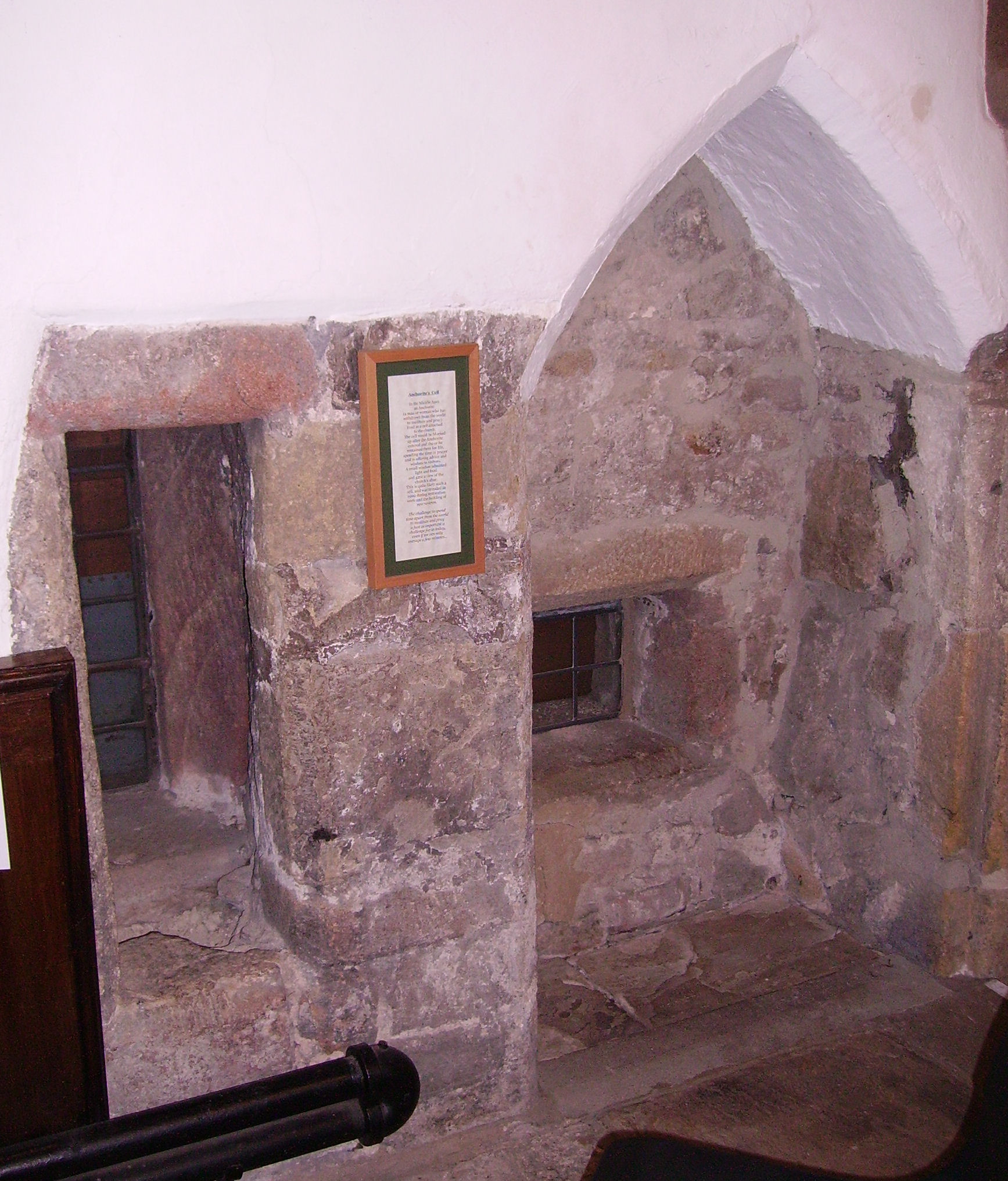
Anchorites' cell, Skipton

Anchorite’s cell, Holy Trinity Church, Skipton, UK (Courtesy: Immanuel Giel, Public domain, via Wikimedia Commons)

So, the plot. It tells the story of Sarah, a young 17-year-old girl who, after some traumatic experiences including the death of a loved sister in childbirth, asks to be enclosed as an anchoress. This means she agrees to spend the rest of her life in a small stone cell, essentially “dead to the world”, tended to by a maid through a window in the wall and visited by a priest who will provide guidance and take her confession. Her support is paid for by a patron, the local Lord. She is given a Rule book as her guide, and is expected to provide advice to village women. Sarah’s story is told first person but, interspersed with hers – in shorter third person chapters – is the story of young, inexperienced Father Ranaulf, her priest-advisor-confessor. And so the stage is set for – well, we don’t quite know what.

As the story progresses, all sorts of narrative possibilities present themselves. Will she stay (like Sister Agnes) or leave (like Sister Isabella)? How will her relationship with Father Ranaulf develop? And why did Sarah really decide on this rather extreme course for her life (because, of course, there is a reason)? These all have the potential for melodrama or cliche, but Cadwallader keeps it grounded. There is drama – a fire – but even it is downplayed in the service of Cadwallader’s bigger themes rather than generating page-turning excitement.

However, it’s not plot that draws me in my reading, but character, themes and language. And here the main characters are well-drawn. The story takes place over the period of a year or so. At the beginning Sarah is an idealistic young anchoress, keen to do it right. She takes seriously her decision with the uncompromising enthusiasm typical of a young person, and so is determined to be disciplined. She allows herself no pleasure, not even some tasty food donated by the villagers, despite advice that this level of self-denial is not expected, and moves into self-flagellation. Over the course of the novel she comes to a more realistic understanding of what being “holy” might mean, and of what she needs to survive her chosen role. Father Ranaulf is also young and inexperienced, which results, initially, in stiff, black-and-white responses to Sarah. Over time, he too comes to a more humane understanding of her and of his role as her advisor. I’m almost tempted to call it a mediaeval coming-of-age story as these two young people come to a maturer world view. Anyhow, it’s nicely and realistically done.

There are other characters of course – Sarah’s maids, villagers who visit Sarah, various priests, and Sarah’s patron and local Lord, the somewhat cliched Sir Thomas. These are less rounded but they enrich the picture Cadwallader paints of mediaeval life, and contribute to the story-line.

“Body without a body”

“True anchoresses”, Sarah reads in her Rule, “are like birds, for they leave the earth – that is, the love of all that is worldly – and … fly upwards towards heaven”. Birds are a recurring motif in the novel, starting with a symbolic bird, the jongleur whom Sarah calls Swallow. “An acrobat”, she says in the opening paragraph of the novel, “is not a bird, but it is the closest a person can come to being free in the air. The nearest to an angel’s gift of flying”. For Sarah, being enclosed was her way of emulating Swallow, of leaping into the air, of being a “body without a body”. She yearns to be free of her body, to leave the senses behind, but the more she tries to escape them, the more they make themselves known. Her challenge is to reconcile this dichotomy, this need to deny the senses while still very much having them, this being, theoretically, dead to the world, while very much alive.

Tied up with Sarah’s challenge is the wider story of mediaeval life and values. Cadwallader conveys life at the times, mostly through the people who visit Sarah. Life, we discover, if we didn’t already know it, is hard for women. We meet women who are abused and assaulted, and we realise that their rights are few in a society which sees women as “lustful and tempting”. Father Ranaulf tell Sarah that:

It is man who is mind and soul, woman who is body.

Wise Father Peter allows women some advance on this when he tells Father Ranaulf that holy women can develop manly souls and “almost become a man”! But it is Sarah who really confronts Renaulf, and forces him to a more empathetic understanding of her (and, by extension, of other women).

Life is also hard for the poor, as Cadwallader tells through the villagers’ lack of power in the face of the Lord’s control over the land they work. And life is a challenge too for church-men, who have to manage villagers and lords while earning money to survive. Father Ranaulf wants to make beautiful books but must “produce an income”, not to mention advise an intelligent young woman who won’t accept his platitudes and thoughtless “rules”!

So, The anchoress is an engaging story. It’s about a time long distant, thus satisfying our historical curiosity, and it’s about power in gender and class, that still resonates today. But, above all, it is about human beings, about how we read or misread each other, about how (or if) we rise to the hard challenges, and about whether or not we accept a duty of care to those who come into our lives. An enjoyable read.

awwchallenge2016Robyn Cadwallader
The anchoress
Sydney: Fourth Estate, 2015
314pp.
ISBN: 9780732299217

Monday musings on Australian literature: Science writing

If you’ve read my last post on the Griffyn Ensemble, you’ll know it is National Science Week here in Australia (13-21 August). Last year I wrote two Monday Musings for the week, one on novels featuring scientists, and the other on non-fiction science books. This year I thought I would write a little about science writing in general. Remember, though, this is not my area of expertise, so it will be a serendipitous post of bits and pieces.

Stephen Sarre, the scientist who inspired the Griffyn Ensemble’s concert, said about it

What I like about what Michael [Sollis] is doing is that he’s mixing science with art. He’s converting a scientific finding into a performance. It’s so important that scientists try to spread knowledge and merging science and art is wonderful.

Scientists in other words are keen to get their work known – and it is important. Not only does public interest, belief and support help them obtain funding, but we are of course the beneficiaries of their work. It’s useful for us to know, understand and be able to engage intelligently in what they are doing. Climate change, cancer cures, new light but strong building materials, and so on, all impact our lives.

Test Tubes

Test Tubes (Courtesy OCAL via clkr.com)

So, who is out there communicating science to us? Science journalists, for a start, but here in Australia we have a non-profit group called Australian Science Communicators (ASC). It was established in 1994 and its members include “scientists, teachers, journalists, writers, entertainers, students and other communicators who engage Australians (and people overseas) with science, technology and innovation”. A wide church in other words.

In this group, somewhere, are, yes, bloggers, and ASC’s website lists Australian science blogs. There are over 50 of them covering various interests such as “general science”, “climate science”, and “ecology”. I haven’t heard of ONE of them so I dipped in:

  • Espresso Science, written by Jenny Martin, a Lecturer in Science Communication at the University of Melbourne and a broadcaster at Melbourne’s 102.7 FM Triple R community radio. She hopes her “shots of science” will be as addictive as coffee. Her most recent post (10th August) is about memory, not about our usual concern with maintaining memory but about the way we make up memory or remember “what never happened”!
  • Paperbark Writer (love this name), described as Australian nature meeting science and art, and written by Paula Peters. She has a PhD in ecology and has worked in environmental agencies. On her about page she gives a passionate explanation for why she does what she does. The latest post (13th August) on her blog is about a program she did for Gympie National Gallery. Gympie is where I turned 5 – the first birthday I really remember.
  • Science Book a Day, “put together by George Aranda” who runs a science book club in Melbourne. Describing himself as a “science communicator” he says his aim is “to engage people in science via books”. Science, he argues, “isn’t about being told by scientists that ‘this is science’ but for people to build an understanding and engagement with science in their own way”. There are “10 great” posts, such as “10 great books about agriculture” and “10 great books on women in science”. And, of course, there are posts about individual books, the latest being (14 August) for the science fiction book, Peter Watts’ Blindsight.

Three’s enough to give you a flavour. You can click on the link above if you’d like to explore what looks like a pretty vibrant community. Some of the blogs are by “professional” scientists and some by enthusiasts, some aren’t recently active, but many are.

William Lawrence Bragg

(William) Lawrence Bragg, 1915, Public domain, courtesy Nobel foundation, via Wikimedia Commons

I also discovered in my research that there is a National Science Prize, named the Bragg UNSW Press Prize in honour of Australia’s first Nobel Laureates, physicists William Henry Bragg and his son, William Lawrence Bragg. The prize is for short pieces, up to 7000 words, of “non-fiction written for a non-specialist audience by a single author” and published in the previous year. Entries can include extracts from longer published works, including books but not from academic theses or conference papers. The winners are included in the university’s annual Best science writing anthology. The 2015 edition is my next reading group book so you’ll be hearing more on this one.

Previous winners of the prize include science journalist Christine Keneally, who won the 2015 Stella Prize with her book The invisible history of the human race; award-winning free-lance journalist Jo Chandler; and astronomer Fred Watson, about whom I have written before due to his involvement in Griffyn Ensemble concerts.

This isn’t the only science writing prize. There is also the Eureka Prize for Science Journalism which is sponsored by the Australian government and is “awarded to an Australian journalist or journalist team whose work is assessed as having most effectively communicated scientific or technological issues to the public”. It is part of a larger swag of science awards in different areas of science, and the list of winners and finalists names individuals or groups rather than specific journalistic works. For example, in 2014, the winner of the Australian Government Eureka Prize for Science Journalism was Sonya Pemberton of Genepool Productions, a television/documentarty production company. Their program Jabbed: Love, fear and vaccines apparently broke SBS records in 2013.

If you are interested in Australian science writing, Wikipedia has a category for Australian science writers. It’s not very extensive – Jo Chandler, for example, isn’t there, though she’s clearly a respected journalist – but is worth checking out.

In her introduction to Best Australian science writing 2015, Bianca Nogrady (whose The end I’ve reviewed here) wrote:

What a fabulous job it is to write about science. We get to gatecrash laboratories, hospitals, field sites, boardrooms, workshops, expeditions and zoos; peering over shoulders, pointing at complex bits of science and asking, ‘so, what does that do?’

She is active in the field of science writing and last year convened a panel which explored what she called “the knotty question of the intersection between science communication and science journalism”. Are they inclusive, or breeds apart? You can listen to the whole discussion at the link I’ve provided. As in other fields, social media is shaking up the field of science writing it seems. Nogrady’s view is that science communication (in its wider meaning) will continue but that the now-all-too-familiar challenge will be to sift the gold from the dross. I loved discovering another whole area of writing where passion is so evident.

I’ll conclude by returning to the University of New South Wales, home of the Bragg Prize and the annual science writing anthology. They say:

Good writing about science can be moving, funny, exhilarating or poetic, but it will always be honest and rigorous about the research that underlies it.

Have you read much science writing? If so, what have you read, and what has made it worthwhile (or not) for you?

Monday musings on Australian literature: Australian literature in China

GrenvilleSecretRiverChineseNow I admit, right up, that this post is very much a toe-in-the-water sort of post. I know very little about the topic, but what I’ve come across I’ve found interesting and decided to share it. The thing is, we Aussies – those of us born here of Anglo parentage anyhow – tend to be monolingual. We also live in a fairly insular place, being an island ‘n all. Consequently, few of us I think know much about how well or far our literature travels. Occasionally, an Aussie book will do very well – say, Anna Funder’s non-fiction book Stasiland (my review) or Kate Grenville’s novel The secret river – and we’ll hear that it’s been translated into multiple languages. But mostly we tend to be fairly oblivious of these off-shore happenings.

I was therefore intrigued when, a few weeks ago, I found an article in Trove titled “Chinese interest in our literature” from a 1994 edition of The Canberra Times. It was written by Robert Hefner who was, as I recollect, the paper’s literary editor of the day. Hefner commences with:

I first met Chinese author, teacher and translator Li Yao six years ago [ie around 1988] when he was visiting Canberra with author Rodney Hall. Li had just met Patrick White, whose novel The Tree of Man he had translated into Chinese.

Wow, I thought, Hall and White are serious writers – that is, they don’t produce page-turners or simple plot-driven stories. How fascinating – how wonderful too – that our northern neighbours are interested in our literature at that level. Hefner was writing the article because Li was back in Australia for the Melbourne Writers Festival. He’d discovered that since that last meeting, Li had translated 15 more books, 8 of them Australian. These included Brian Castro’s Birds of passage, Patrick White’s Flaws in the glass, Nicholas Jose’s Avenue of eternal peace [a big seller in China], a short story collection, and Geoffrey Bolton’s A history of Australia. Hefner quotes Li, then associate professor in the Department of English at the International Business Management Institute in Beijing:

Translations of Australian books in China are welcomed by students and general readers, especially Patrick White. I translated A fringe of leaves and it sold 10,000 copies in Beijing. That’s a best-seller, even compared with Chinese authors.

Wow, again. Patrick White a best-seller in China? Who’d have thought?

Li told Hefner things were changing in China, that “people, especially young people” were “looking for something new”, wanting to “know another world, especially a world so far away as Australia”. They were also interested, he said, in how “China is seen through foreign eyes”. Consequently, his most recent translation was Alex Miller’s Miles Franklin Award-winning novel The Ancestor Game, which is about early Chinese immigration to Australia. Li* hadn’t decided whom he’d translate next, but was “considering Tim Winton, David Malouf or Rodney Hall”.

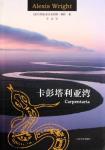
Alexis Wright Carpentaria in ChineseThat was 1994. Was it a flash in the pan I wondered? I did some very scientific research, that is, I “googled”. And I found all sorts of things, such as the China Australia Literary Forum. It met in 2011, and involved “ten prominent Chinese writers” visiting Sydney for “in-depth discussions with Australian authors, and those involved in the translation and reception of their works”. The Australian writers they met included Judith Beveridge, Kim Cheng Boey, Lisa Gorton, Ivor Indyk, Gail Jones, Nicholas Jose, Julia Leigh, Shane Maloney, John Mateer, Michael Wilding, Ouyang Yu and Alexis Wright. The forum resulted, the report goes on to say, in the translation of Alexis Wright’s Carpentaria (my review), which was launched in 2012 at the Australian Embassy in China. Nobel Prize winner Mo Yan wrote the introduction to the translation, and guess who did the translation? Yep, Li Yao.

A second China Australia Literary Forum took place in 2013, this time in Beijing. Eight Australian authors attended, including JM Coetzee. The eight Chinese involved included Mo Yan.

Apparently though, Australian literature had been read in China long before these last few decades. Back in the 1920s four Australian poets, including Mary Gilmore and Roderick Quinn were read. Ouyang Yu (whose Diary of a naked official I’ve reviewed here) is reported as having read a poem by Adam Lindsay Gordon in 1927. (All this came from a 2011 article in JSTOR which is not available freely on the web.) This article disproves the previously held view that translated Australian literature hadn’t been available in China before 1949. Indeed Ouyang Yu has written a paper about the reception of OzLit in China from 1906 to 2008. It’s an interesting survey article which looks at the history of Australian literature in China, including the interest in and value of different forms such as poetry, popular writing, literary fiction, and so on. He concludes by saying that Australian writers are now receiving Chinese awards. In 2009, for example, “Alex Miller became the first Australian writer to receive a Chinese literary award for his novel The landscape of farewell”.

I won’t go on, because I think I’ve made my point about Chinese interest in Australian literature. Quite coincidentally, I discovered a (now expired) call for entries from the Australian Association for Literary Translation for its AALITRA Translation Prize. This prize “aims to acknowledge the wealth of literary translation skills present in the Australian community” and awards prizes for translation of a selected prose text and of a selected poem. Each year a different language is chosen, and in 2016 the language is Chinese!

This is all wonderful for Australian literature, but what about the reverse? How much effort do Australians put into reading translated literature from other countries. If my record is anything to go by, not as much as I’d like – or should!

* I found a 2010 article in The Australian about Li Yao’s introduction to English-language literature. It was in the late 1960s, during the Cultural Revolution, and he read, “under the covers” at night, books like Jane Austen’s Pride and prejudice! This little comment reminds us too that availability of Australian (or any non-Chinese) literature in China hasn’t had the simple trajectory my post might imply!

Monday musings on Australian literature: Contemporary thoughts on Elizabeth Harrower

Contemporary is an odd word isn’t it? I like using it, but worry about ambiguity, given it can mean either “living or occurring at the same time” or “belonging to or occurring in the present”. So, when I say “contemporary thoughts on Elizabeth Harrower”, how do you know which meaning I intend? Well, to put your minds at rest, in this instance I’m intending the former.

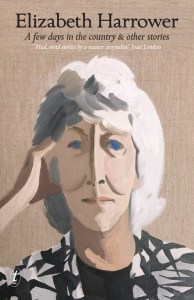
Elizabeth Harrower, A few days in the countryMany of you know who Harrower is, but for those who don’t, she’s an Australian writer who was active in the 1950s to 1970s, and then largely disappeared from view. She was born in 1928 and is still alive. Four of her five novels were published in the 1950s to 1960s. The fifth novel, In certain circles, was written in the late 1960s to early 1970s, but not published until 2014, because she withdrew it from publication at the time. Her short story collection, A few days in the country, and other stories, was published last year, but includes stories dating back to the 1960s. (I have reviewed three of her books.)

So, she was an unknown to many of us when her books started appearing in Text Publishing’s Classics series. What a find she’s been, but what, I wondered, was thought about her in her heyday, and where did she fit in that literary world. To Trove, therefore, I went – and found the snippets I’m sharing today.

The first comes from “Your bookshelf” by Joyce Halstead in The Australian Women’s Weekly in 1961. Halstead writes briefly about Harrower’s third novel, The catherine wheel, which was published in 1960. She describes the plot, and concludes with her assessment:

An intense, probing study of human relationships, intricately and interestingly resolved, and deserving of high literary praise.

That certainly accords with my experience of Harrower’s writing, though I haven’t read this one – yet.

Elizabeth Harrower The watch towerNext comes another article from The Australian Women’s Weekly, this time in 1966. (Why was this very literary writer mainly featuring in a women’s magazine?) The article is titled “Op art? … Commas caused full stop” and is about her fourth novel, The watch tower. It conveys a lovely sense of Harrower’s down-to-earthness:

We mentioned the publishers’ description of her as “one of Australia’s most sensitive and psychologically perceptive novelists.”

“You know, you shouldn’t blame writers for what other people say about them,” said Miss Harrower.

She says that she had never studied psychology, and that:

“Because I am interested in people, it doesn’t mean that I go around consciously analysing them … Sometimes it is years afterwards that you remember an occurrence which, when it happened, just flowed past you.”

She then describes “having words” with her publisher (for whom, in fact, she worked herself, because writers, she said, need to have a job unless they are “a Morris West or have a private income”):

“When the publishers sent me the proofs I found they had altered all my ‘whichs’ to ‘thats’ and had taken out a lot of commas. I didn’t like it — so I changed them all back.”

I love this. I much prefer “whichs” to “thats”, regardless of what grammarians say about nonrestrictive and restrictive clauses, and I’m inclined to use more commas than less, despite modern style!

My city’s newspaper, The Canberra Times, also wrote about The watch tower, in early 1967. The reviewer, John Laird, admires Harrower’s writing, saying she:

employs a style distinguished by its sensitivity and subtlety, and displays considerable ability in capturing the flow of thoughts, emotions, and sense-impressions in the minds of her two main women characters.

But, he concludes that

What is not so convincing is the portrait of Laura’s misogynic husband. To me he seems a specially concocted figure, largely an embodiment of the malevolent and destructive forces that constantly menace the women characters in Elizabeth Harrower’s novel world.

I wonder how many women would find him “not so convincing”? Seems like Mr Laird wants to underplay the gender aspect of the “malevolent and destructive forces” menacing the women?

The next two articles* also come from The Canberra Times. One, in 1967, announces that Harrower (along with George Johnston and Thomas Keneally) had won a 12-month Commonwealth Literary Fund Fellowship, which is, I expect, the Fellowship that led to In certain circles, the one she withdrew from publication.

Second time around …

The other article comes from 1979, and we are now getting into re-issues of her work. The article, written by Lyn Frost, is titled “Fine Australian writing new and rediscovered”. It announces a new imprint, Sirius Quality Paperbacks, by Angus and Robertson. “The first six books”, Frost writes, “are by women and some have been out of print for far too long. Teachers of Australian literature must be grateful for their appearance.” I sure hope they were! The authors include Henry Handel Richardson, Eleanor Dark, Christina Stead and, of course, Elizabeth Harrower. In fact, the six books include two of Harrower’s, The Catherine wheel and The long prospect (which Stead called Harrower’s “masterpiece”). Frost is impressed by Harrower’s writing, saying:

I can’t think how I’ve missed reading Harrower’s perceptive work before this.

How embarrassing is it that this was exactly the response many of us had over 30 years later when Text started republishing her!

Then, along similar lines, comes critic Peter Pierce in 1988 reviewing Murray Bail’s The Faber book of contemporary Australian short stories in The Canberra Times (again). It’s a “real” review which discusses the anthology at some depth, including reference, naturally, to some of the works included. One is Elizabeth Harrower’s “The cost of things” (which also appears in A few days in the country, and other stories). Pierce describes Harrower as “Too little celebrated and too long silent in Australian literature”. (I had to laugh at Pierce’s comment that the anthology is “misleadingly titled” but that “Bail is unapologetic about including stories written nearly half a century ago”. “Contemporary” by any other name!)

There are other brief references to Harrower – including to her being a National Book Council Award judge in 1981 – but I’ll conclude with another article from The Canberra Times. It’s one of those weekly new-paperback-releases columns, and this particular week’s bunch, in 1995, included Harrower’s The long prospect (ETT Imprint). Columnist (and local English teacher) Veronica Sen calls it a “determinedly unsentimental novel”, and says that it treats “suburban small-mindedness and the pain of growing up … with panache”.

If you haven’t read Harrower yet, I hope my post has pushed you a little further in her direction.

* The Canberra Times has been digitised, to date, by the NLA, up to 1995, whereas the Sydney Morning Herald, for example, has been digitised to 1954. Disparities like this are primarily due to what permissions are granted by the respective rights holders.

Monday musings on Australian literature: Looking back, looking forward

As some of you know, I have been involved recently in looking after my aunt’s estate. This weekend, my cousin and I checked out, again, the bookcase that contained old books, books that had belonged to my grandparents. One of the books that came to my attention was The golden treasury of Australian verse (e-version). It was given to my grandmother in 1914 before she was married, but it was, in fact, the 1912 revised edition of the 1909 edition, which came from An anthology of Australian verse first published in 1906. Got that?

I’m not, in this post, going to review the poetry, interesting though that is. Rather, I want to share ideas from the introduction written by Bertram Stevens. He was born in outback Australia, in Inverell, New South Wales, in 1872. His mum came from Queanbeyan, which is the city adjoining my own. The Australian dictionary of biography, to which I’ve linked his name, says:

A proficient, lucid critic, Stevens was pre-eminently a cultural catalyst and pioneer who perceived needs and lacunae. His An Anthology of Australian Verse (1906), although uneven, was the first seriously edited collection of its kind; improved as The Golden Treasury of Australian Verse (1909), it became a standard text.

It’s his perceptions on Australian literature that I want to share here, but first, a disclaimer. Like most people of his time, he saw Australia – and therefore Australian culture – as starting with white settlement. That’s just how it was then, so please read his comments in that context.

He starts by describing Australia because, he says, “the literature of a country is, in certain respects, a reflex of its character”. I found his framing of Australia’s development and how it played out in our literature fascinating. He said (and I’m going dot point them for ease) that Australia:

  • encompasses “all climates, from tropical to frigid” but that it is more liable to long droughts. He suggests that “the absence of those broad, outward signs of the changing seasons which mark the pageant of the year in the old world is probably a greater disadvantage than we are apt to suspect”
  • has few of “the conditions” that are found “in older communities where great literature arose”. Our early history, he says, has “no glamour of old Romance … no shading off from the actual into a dim region of myth and fable”. Instead, Australia’s “beginnings are clearly defined and of an eminently prosaic character”. By this he means that the early settlers were engaged in the struggle to survive, to establish industries, after which came “the gold period” with further expansion of industries. The implications of all this, he argues, is that “business and politics have afforded ready roads to success, and have absorbed the energies of the best intellects”. Moreover, “there has been no leisured class of cultured people to provide the atmosphere in which literature is best developed as an art”. Australians had consequently been happy “to look to the mother country” for its “artistic standards”.
  • has had “no great crisis … to fuse our common sympathies and create a national sentiment”

These are all interesting points, though he doesn’t expand on them with significant evidence. A little further on he suggests that the “large stream of immigration” during the gold period (1860s-1880s) had a major impact on the development of the colonies, not just in terms of industry/economics but wider culture as well. I was pleased to see a recognition of the importance of immigration to the development of culture!

He gives a brief history of writing and publishing in Australia, discussing the early poets, from the late 1700s to the early 1800s, but argues that Australia’s first genuine, albeit, crude poetry appeared in 1845 “in the form of a small volume of sonnets by Charles Harper”. Harpur was followed by poets like Henry Kendall (about whom I’ve written, briefly, before, and who attracted praise from English critics) and the problematical Adam Lindsay Gordon, about whom he writes:

his work cannot be considered as peculiarly Australian in character; but much of it is concerned with the horse, and all of it is a-throb with the manly, reckless personality of the writer. Horses and horse-racing are especially interesting to Australians, the Swinburnian rush of Gordon’s ballads charms their ear, and in many respects he embodies their ideal of a man. There are few Australians who do not know some of his poems, even if they know no others, and his influence upon subsequent writers has been very great.

You may remember a previous Monday Musings in which Gordon’s influence was discussed, again in not very flattering light. (I must admit, however, that I am one of those Australians who knows some of his poems!). Kendall died in 1882, having achieved some success, but, writes Stevens,

He lived at a time when Australians had not learned to think it possible that any good thing in art could come out of Australia, and were too fully occupied with things of the market-place to concern themselves much about literature.

Stevens also discusses the role of early – mid-nineteenth century – magazines and newspapers in promoting Australian literature, like Victoria’s The Argus and The Australasian, but argues (and few would disagree with him) that it was The Bulletin, established in 1880, which had the biggest influence on the development of Australian literature:

Its racy, irreverent tone and its humour are characteristically Australian, and through its columns the first realistic Australian verse of any importance, the writings of Henry Lawson and A. B. Paterson, became widely known.

Their work started to make an impression on the reading public by the mid 1890s, and Stevens concludes his introduction with

Australia has now come of age, and is becoming conscious of its strength and its possibilities. Its writers to-day are, as a rule, self-reliant and hopeful. They have faith in their own country; they write of it as they see it, and of their work and their joys and fears, in simple, direct language. It may be that none of it is poetry in the grand manner, and that some of it is lacking in technical finish; but it is a vivid and faithful portrayal of Australia, and its ruggedness is in character.

There’s still some cultural cringe here but, nonetheless, I enjoyed reading his assessment of the first century or so of Australian literature – and may come back to it and his anthology in another week when I’m less tired!

Helen Garner on writers and writing (in Everywhere I look)

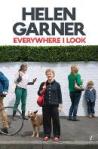
Helen Garner, Everywhere I look

As I promised in my main review of Helen Garner’s engaging book of essays and jottings, Everywhere I look, I am here doing a little follow-up post on her discussions of other writers. I enjoyed reading her thoughts about specific writers, but even more I liked that in talking about these writers she gave away her own writing preferences.

So, what did I know about Garner’s writing before this? One is that she tends to write from her own life and experience. This is why, I’m sure, she moves so comfortably between fiction and non-fiction, but it’s also something that has got her into trouble at times. Some critics argued that her first, generally applauded novel, Monkey grip, was just her diary; others suggested that The spare room is not really a novel either. Garner has retorted – and I take her point – that when she writes novels drawing from her life, she selects, orders and constructs a narrative and that that is art.

The other main thing I’ve noted is that her writing is on the sparer side of the spectrum. She can be highly evocative but she doesn’t go much for metaphorical flourishes. I’ve quoted her before as saying that Thea Astley’s writing “is like a very handsome, strong and fit woman with too much makeup on … This kind of writing drives me berserk”. I was reminded of this when I read her piece in this collection on Tim Winton. She says about first meeting him at a writers’ weekend in 1982. She had not long before written a review of his first novel:

Stabbed with panic, I scoured my memory for what I’d said in my review. I liked the novel and had said so; but from the lofty eminence of a minimalist who’d published  fully two books, I’d drawn attention to what I saw as his overworked metaphors …

Fascinating, because as much as I love Winton, I clearly remember thinking something similar about his second novel, Shallows.

But now, with that introduction, I’ll get to what I really want to share. Her discussions about writers come mainly from two (“Notes from a brief friendship” and “The journey of the stamp animals”) of the book’s six sections. The writers she talks about include Australians Tim Winton (“Eight views of Tim Winton”), Elizabeth Jolley (“My dear lift-rat”), and Barbara Baynton (“Gall and bare-faced daring”), the American journalist Janet Malcolm (“The rapture of first-hand encounters”), and the English novelist who needs no introduction here Jane Austen (“How to marry your daughters”). Each of these gave me little insights into Garner, and I’m just going to tease you with a smattering because – well, you know why, because you should read the book yourself.

Although I’ve already mentioned Winton, I’ll share one more thing. It relates to Garner’s interest in (and reputation for) sentences, and is an exchange from their ongoing correspondence:

I sent him a jubilant letter: ‘Hey! I’ve just written a 200-word sentence which is syntactically perfect!’ ‘I couldn’t care less,’ he replied, ‘about that sort of shit.’

For all this, though, she likes Winton!

Garner loves Elizabeth Jolley for her ability “to strike a note of mortification and inject it with the tincture of the ridiculous that makes it bearable.” That’s Jolley alright, and I can see that both she and Garner, while very different writers, do both look at the world, at people’s relationships in particular, with a sort of self-deprecating sense of absurdity that can lighten darkness. Does that make the sense I think it does?

I was surprised by her piece on Barbara Bayntonabout whom I have written frequently here – not because I was surprised to find she admires Baynton but because I didn’t know she did! Her piece starts:

I was well into my forties when I came upon Barbara Baynton’s story “The chosen vessel”, and I have never got over it.

Yep, I know what she means. I was late to Baynton too, and equally stunned. Garner is impressed, of course, with the power of Baynton’s stories, with their lack of romanticism, particularly about women’s lives. But what I want to share here is her comment on Baynton’s writing.  She recognises that some of Baynton’s sentences can seem “clogged and heavyhanded” to modern ears, but, Garner writes

… my God, when she hits her straps, she can lay down a muscular story […]

At their height, her dry, sinewy sentences stride forward, powered by simple verbs.

You are probably getting a picture of the sort of writing Garner likes – direct, clear, fearless, like Jolley, like Baynton.

And then there’s the American journalist Janet Malcolm, of whom I’ve heard but not read (to the best of my knowledge). Malcolm, she says, has been her greatest teacher. I’ll just share a comment from her opening paragraph:

I have never met her, or heard her speak, but I would know her voice everywhere. It is a literary voice, composed and dry, articulate and free-striding, drawing on deep-learning, yet plain in its address, and above all fearless …

Need I say more?

And finally, Austen. She surprised me when, describing herself sitting down to read Pride and prejudice in 2013, she said that she wasn’t sure when, or even whether, she’d read it before! What? However, she writes,

I sharpened a pencil and sat down at the kitchen table.

Just how I like to read, with a pencil in hand. Garner goes on to describe her experience of reading Austen – providing wonderful writer’s commentary on the style, the narrative arc, the characters – and how she became hooked:

I lowered the blinds against the heat, unplugged the phone and moved operations to my sopha, where, dispos’d among charmingly group’d cushions, I settled in for the duration.

… as did I, to read more of her (first?) impressions! She continued, still with her writer’s eye:

In order to keep my eye on how Austen was actually doing things, I was having to work hard against the seduction of her endlessly modulating, psychologically piercing narrative voice, her striding mastery of the free indirect mode.

She describes how Austen “gives us five enthralling pages of Elizabeth thinking“, she provides commentary on how the story proceeds, but best is her perspective on that “piece of trash” Lydia and her role in ensuring that the loose ends aren’t quite so perfectly wrapped up as Garner feared they would be. It’s a delicious piece of writing – Garner’s I mean – about a delicious piece of writing. I laughed.

And now, I must get Garner’s previous collection of essays, The feel of steel …