As some of you may know, last Tuesday, 12 March, was International Nurses Day, the date chosen because it was Florence Nightingale’s birthday. The day’s aim is, in Wikipedia’s words, “to mark the contributions that nurses make to society”. Each year, apparently, has a theme. This year’s – presumably chosen long before COVID-19 – seems quite prescient: “Nurses: A Voice to Lead – Nursing the World to Health”. One of the ways the day is marked in Australia is to recognise nurses through a raft of awards, including naming a Nurse of the year. This year’s winner was Monash Health nurse Tania Green, who was chosen for her “championing of patients with cleft and craniofacial conditions”.
Oh, and to put a bit of icing on the cake, 2020 happens to also be the World Health Organisation’s International Year of the Nurse & Midwife!
Now, you may have noticed that my reading and blogging are currently slow and sporadic – something that will continue for some time yet, I expect. The reason is some significant family care needs which have, coincidentally, resulted in my getting to know many wonderful carers and nurses.
Why not then, I thought, check out some novels which feature nurses. I should warn you, though, that while my experience of nurses and carers over the last little while has been very positive, writers explore the dramatic possibilities of nurses in ways that are not always the most laudatory. Remember Nurse Rached?
(Very) select list of nurses in Australian fiction
What follows here is a highly serendipitous list plucked pretty much out of the air (and my blog). I’m sure there are many romance novels featuring nurses, but as I don’t read romance, you won’t find those here. There are crime novels featuring nurses, but as I don’t – well, you get the drift. Instead, what you’ll find here is an arbitrary list of books, mostly at the more literary end of the spectrum, in which nurses are either the protagonist or, at least, a significant, character. I’m listing them in chronological order.
Mollie Skinner’s “The hand” (1924) (my review): a short story with a hint of the occult, about a young nurse’s enlightenment.
 Elizabeth Jolley’s My father’s moon (1989) (my review): a semi-autobiographical novel about a young, lonely and alienated woman, Vera, who also happens to be a nurse. She’s not the most sympathetic character, shocking us at times, but Jolley gets to the heart of being an outsider.
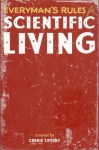
Carrie Tiffany’s Everyman’s rules of scientific living (2005): historical fiction inspired by Victoria’s Better Farming Train which travelled through rural Victoria educating communities about domestic skills and agricultural practices. One of the characters is a nurse, Sister Crook, though the main characters are sewing teacher Jean and agricultural scientist Robert. (I loved this book when I read it, a few years before blogging.)
Thomas Keneally’s The daughters of Mars (2012) (Lisa’s review): historical fiction about two sisters and their experiences working as nurses during World War 1, in the Dardanelles and France.
Fiona McFarlane’s The night guest (2013) (my review): I’m throwing McFarlane’s book in here because, while one of the main characters is not a nurse, she appears as a government care worker to live with the main character, an ageing woman who may be starting to lose her mind, or is she? Who is Frida, the care worker, and what about that tiger who prowls around the house? A clever, disturbing book about the vulnerability that accompanies growing old.
 Eleanor Limprecht’s Long Bay (2015) (my review): historical fiction based on the true story of young woman jailed for manslaughter in 1909 due to a botched abortion she performed, having learnt the trade from her mother-in-law Nurse Sinclair. This is a deeply humane book about poverty, women and their choices.
Charlotte Wood’s The natural way of things (2015) (my review): the rather grotesque “nurse” Nancy is not one of the main women characters in Charlotte Wood’s novel, but she becomes a significant character, offering another perspective on women’s agency, or lack thereof.
So, folks, this is my off-the-top-of-the-head tribute to nurses and carers. A weird tribute, I agree, given many of the nurses identified do not meet your traditional stereotype, but every character here has an interesting story and contributes to our understanding, in one way or another, of the caring professions.
Do you have any favourite fictional nurses, or novels featuring nurses?
 It is not the richest award – though $8000 this year for the winner and $1000 for each runner-up is not bad either – but it carries a good deal of kudos. It has also done well over its 24 years in
  If you look at the Wikipedia link in the paragraph above, you’ll see that the number of awards made each year varies. In 1997, ten awards were made, but most commonly it seems that around three to four are announced.
  While SMH’s Best Young Australian Novelists is one of the best known emerging writers awards, there are others. Many, like this one, are age-related, such as The Australian Vogel Literary Award which was won this year by Katherine Kruimink, A treacherous country. But not all are. The
  So, back in 1927 the Advocate took on this issue of supporting local writers. The article refers to the plebiscite, and says of the winning prose writer, Marcus Clarke:
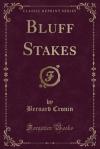 The Advocate also suggests Bernard Cronin, describing him as “amongst the leaders of Australian fiction”, and naming two of his popular works, Red Dawson and Salvage. I have devoted
  The
The  Underneath this is the current Book of the Month, with a link to more information suited to reading groups, complete with discussion questions and “if you like this book…” suggestions. Check out
  Bill King, King of the Outback: Tales from an off-road adventurer (2012): stories from the founder of AAT Kings tour company.
 These books range from the popular to the serious. I’ve only heard of a few of them, and only have a couple in my TBR pile, Paul Daley’s Canberra and Marcia Langton’s Welcome to country.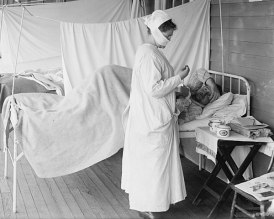
 Debut crime author Karina Kilmore
  Books have been written over the years about epidemics/pandemics/contagions, including our own Geraldine Brooks’ Year of wonders. This is historical fiction inspired by the Derbyshire village of Eyam which, when struck by the plague in 1666, quarantined itself to prevent the spread of disease. An interesting read in the light of what’s happening now. But, my favourite of them all is Albert Camus’ The plague (which I’ve read a few times, including since blogging, so here’s
 Andrew Croome’s
  Carmel Bird’s
  Bernadette Brennan’s
 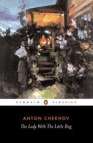 Anton Chekhov’s
 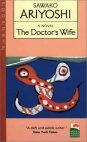 As with translation above, I have aimed here to traverse the globe.
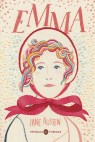 Jane Austen’s Emma (my posts,
 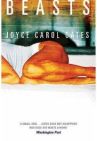 Joyce Carol Oates’
  I think I can interpreted this to mean anything not my contemporary Australia, so I’ve chosen a wide variety of worlds, from the mythical past to dystopian futures.
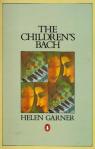 So yes, now really, the Awards! They were established by the South Australian government in 1986, and, like some other state literary awards, include both national and state-based prizes, as well as some fellowships for South Australian writers. Over the years, categories have come and gone. The original four categories were Fiction, Children’s Literature, Poetry and Non-fiction, with the original 1986 winners of these being, respectively, Helen Garner’s The children’s Bach (my review), Ivan Southall’s The long night watch, Robert Gray’s Selected poems: 1963-1983, and RM Gibbs A history of Prince Alfred College.
 2020 Winners (National)
 Whispering Gums