Monday musings on Australian literature: Summer picks 2020

For a few years now, I’ve shared ABC book journalists’ top Aussie reads of the year, but this year I’m doing something a little different. I’m sharing picks from three different sources. Most of these include non-Australian books, but I like to share them in a Monday Musings post and focus on the Aussie books among them. So, here goes.

Readings bookshop
Book cover

Readings staff actually shared their favourite Australian books of the year, which is really great of them so they get first billing here. Their list is called “the best Aussie fiction books of 2020” but in fact the text describes the list as their “favourite” books, which puts a different, and better, slant on it I think.

Here’s their list, reorganised into alphabetical order. I don’t know whether their order was by popularity vote, but alphabetical is easier for people to look for their favourites…

  • Steven Conte’s The Tolstoy Estate
  • Kate Grenville’s A room made of leaves
  • Victoria Hannan’s Kokomo
  • Laura Jean McKay’s The animals in that country
  • Kate Mildenhall’s The mother fault
  • Sean O’Beirne’s A couple of things before the end
  • Andrew Pippos’ Lucky’s
  • Nardi Simpson’s Song of the crocodile
  • Elizabeth Tan’s Smart ovens for lonely people
  • Jessie Tu A lonely girl is a dangerous thing
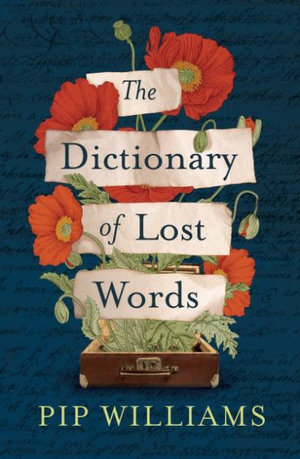
  • Pip Williams’ The dictionary of lost words

I like this selection because, although I’ve not yet read one of them, I have given some as gifts during the year, and I have a couple on my current TBR. Whether I’ll get to them in summer is another thing, but I will get to some …

ABC RN’s Bookshow and The Book Shelf presenters

Book cover

Claire Nichols, Sarah L’Estrange, Kate Evans and Cassie McCullagh put together a list they call “The best books of 2020 for your summer reading list”. It includes books from around the world, but, as I explained above, I’m just going to share their Aussie picks, which are but few!

  • Erin Hortle’s The octopus and I
  • Laura Jean McKay’s The animals in that country, which Kate Evans describes as “Surprising and surprisingly-convincing characters, and a well-realised, inventive premise”.
  • Jessica Tu’s A lonely girl is a dangerous thing, of which Claire Nichols says “the passion and the obsession drips off the page”
  • Pip Williams’ The dictionary of lost words, of which Sarah L’Estrange says, “For lovers of language and the power of words, this story has everything you want”.

Interesting that three of the four here also featured in Readings’ list. Are these the books we are likely to see on awards long and shortlists next year? Interesting too that all are women writers (as were the selectors. I can live with that!)

ANU English Department picks
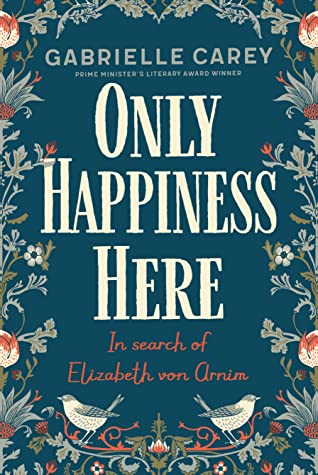
Book cover

Now this list – on the ANU website, but shared with me by retired University Librarian Colin Steele (thankyou Colin) – is an unusual one, partly because it has very few contemporary (or any other) Australian books. The Aussies are:

  • Gabrielle Carey’s Only happiness here, her biography of Elizabeth von Arnim, though, weirdly, the description doesn’t mention that at all. It just says “a literary sensation of the early twentieth century weaves a wonderful tale of love, pleasure, gratitude and survival that is written beautifully, perfect for the history buffs and women’s literature lovers among us”. Why not mention the name of the “literary sensation” or that it’s a “biography”? It could sound like a novel?
  • Sarah Hopkins’ The subjects, which is on the Small Press Network’s Book of the Year shortlist, is described as “a gripping read, which follows a gifted teenage delinquent down an uncertain path”
  • Michelle de Kretser’s The life to come, which came out a couple of years ago now, is described as “a wickely [sic] funny novel about the stories we tell and don’t tell ourselves as individuals, as societies and as nations”.

On lists …

When is a list not a list? Regular readers here know that I don’t tend to produce my own annual “best of” or “top reads” lists. I prefer to write a Reading Highlights post (which I will do again in early January for 2020). In this post, I don’t rank books or even talk about best books. Instead, I talk about the books and events that made my reading year worthwhile – and, already, I know I will have some interesting trends to comment on for this year. It is, though, still a list, I suppose! Just a very loose, porous one.

For a thoughtful piece on lists, you might like to check out an article written by one of my 2019 New Territorians, Rosalind Moran. Titled “Against best-of lists” it’s available at Overland Literary Journal. While much of it covers thoughts I’ve had myself, it’s beautifully and clearly expressed – and it did give me some additional points to ponder! (Thanks for Lisa for the heads-up).

What do you think about lists? Are some useful, despite their failings? Or, would you prefer to eschew them altogether?

Monday musings on Australian literature: New England Writers’ Centre

I thought I had finished my round-up of Australia’s writers’ centres with my post on the Australian Writers Centre, but then I came across a rather interesting – and active – regional one, and would like to share it with you (as well as document it here). It is the Armidale-based New England Writers Centre (NEWC).

Like most writers’ centres, the NEWC is a membership service, and has been running for over 20 years. It describes its activities very simply, as

delivering writing and illustrating workshops, professional opportunities, fabulous  literary events, showcasing of local talent, and more, to its members. (About Page)

Like the other membership-based centres it:

  • runs a variety of writing and outreach programs, in Armidale and throughout New England, as well as via online technologies
  • offers and/or supports various writing (and associated) awards and fellowships
  • communicates with members via newsletters, emails and social media.
  • provides resources (primarily prepared by Sophie Masson) to all sorts of sites of relevance to writers and illustrators. Check the link to see what I mean.
Arielle Van Luyn, Treading air

The Centre’s current Board includes, among others, published writers, Sophie Masson (who has more than 50 books to her name) and Ariella van Luyn (whose Treading air I’ve reviewed), professional editor Linda Nix, and local publisher (and, love this, “Rolls Royce trained, professionally qualified mechanical engineer”) Peter Creamer.

You may wonder how I came across this regional centre? Interestingly, it was via the new ARA Historical Fiction Prize which I wrote about recently. The prize was established by the ARA Group and HNSA (The Historical Novel Society Australasia), but this Centre was actively involved, by being part of the Prize sub-committee and administering the submissions.

Anyhow, as I’ve done with most of the other centres, I’ll share some of their main programs … but I must say that, as with most organisations this year, it looks like there’s been a bit of rejigging of programs and activities, and a willingness to turn to new forms of communicating and reaching out.

New England Thunderbolt Prize for Crime Writing

This prize seems to be one of their most significant ongoing programs. It has been running for eight years, and is a multi-prize award with the following categories: Fiction, Non-Fiction, Poetry, Youth Award, Emerging Author and the New England Award. The prizes are relatively small – $250 to $500 – but, a prize is a prize, and must help the cv.

Aussies will know of course, but for others, this prize was named for the infamous bushranger, Captain Thunderbolt.

They also offer an Illustration Prize, which is interesting, as I haven’t seen this aspect of writing/publishing supported quite so obviously in the other centres is it seems to be in this one.

Varuna/New England Writers Centre Fellowship

Regular readers here will have heard of Varuna Writers Retreat before, but in 2019 the NEWC established, in partnership with Varuna, a new annual fellowship. The prize is

a week’s inspirational writing residency in the beautiful surroundings of Varuna, in the Blue Mountains, and include full board and accommodation at Varuna, funds towards travel, a one-on-one consultation with a Varuna expert and more. 

Shortlistees receive two free workshops of their choice from NEWC’s program. 

By the Book video series

This is a new program, just launched this month, comprising YouTube videos featuring “local professional writers, illustrators, editors and publishers offering tips and advice on all kinds of aspects relating to book creation and production”. They range from a couple of minutes to six or so minutes. Here is Sophie Masson introducing the series:

Finally …

For a (not so little) region, the NEWC sounds like an impressively active writers’ centre, which supports a wide range of writing activities in the New England area. It’s exciting seeing such energy coming from regional towns and cities, particularly now when regions seem to be coming into their own, with city-dwellers, post-COVID, starting to see the very real benefits of regional living.

Writers Centres posts: ACT, Australian Writers Centre, New South Wales, the Northern Territory, Queensland, South Australia, Tasmania, Victoria, and Western Australia.

Monday musings on Australian literature: Nonfiction November

Every November for a few years now, a group of bloggers have coordinated a focus on nonfiction for bloggers in November. They set up a plan of topics, one per week, with a different blogger being responsible for each week, as follows: Leann (Week 1) (Shelf Aware), Julie (Week 2) (Julz Reads),  Rennie (Week 3) (What’s Nonfiction), and Katie (week 4) (Doing Dewey).

This year’s schedule was:

  • Week 1: Your Year in nonfiction, involves looking at our nonfiction reading this year, thinking about our favourites or topics that have particularly interest us or books we’ve most recommended.
  • Week 2: Book pairing, involves pairing a nonfiction book with a fiction title (on whatever criteria you like).
  • Week 3: Be the expert/Ask the expert/Become the expert, involves, as it sounds, reflecting our own expertise, asking others to help with books about something we’d like to know, or choosing our own reading plan for something we’d like to learn.
  • Week 4: New to my TBR, involves – well, it’s obvious isn’t it, except the idea is that they’re books that participating bloggers have posted about.

Now, I have taken part in this week – in a sporadic sort of way – before, writing two combination posts in the Novembers of the last three years. I planned to do the same this year, but haven’t! So, instead, I’ve decided to do one post for my last Monday Musings of the month, which means of course that I’ve added an extra criterion: all the nonfiction I talk about has to be Australian. Here goes.

Your year in nonfiction

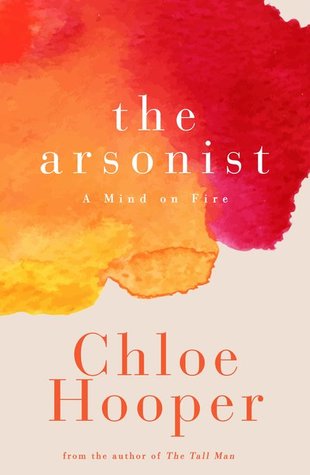
Chloe Hooper, The Arsonist

I haven’t read a lot of nonfiction this year – I haven’t read a lot this year, full stop – but most of the nonfiction I’ve read has been by Australian writers. For Week 1, I’m going to choose three books, that I have already or would thoroughly recommend to others.

  • Chloe Hooper’s The arsonist (my review): another excellent sociopolitical true-crime exploration by Hooper, this time of an arsonist behind Victoira’s catastrophic Black Saturday fires in 2009.
  • Rick Morton’s One hundred years of dirt (my review): I have since taken more interest in his journalistic writings in The Saturday Paper.
  • Helen Garner’s Yellow notebooks: Diaries, Volume 1, 1978-1987 (my review): the first volume of Garner’s edited diaries that will be published over the coming years. I loved the insights it provides into her writing practice, her way of seeing the world, and her thoughts about all manner of subjects (including herself!)

Book pairing

Book cover

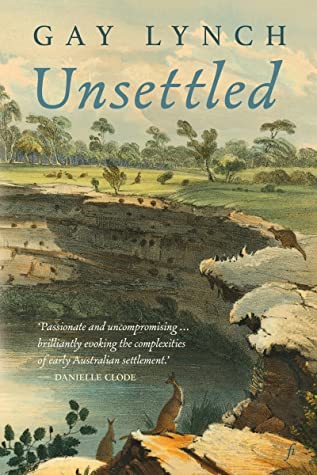
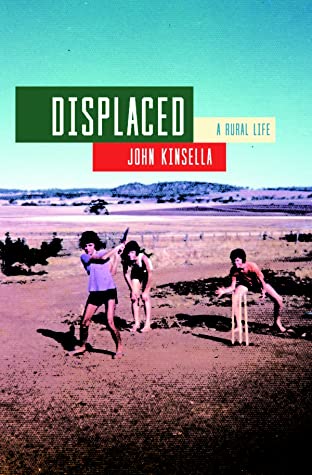
This one was easy because I paired them in my review of the novel I’m pairing here. I paired Gay Lynch’s historical novel, Unsettled (my review), with poet John Kinsella’s memoir Displaced (my review).

This pairing is both superficial and complex. It’s superficial because both have single-word titles which encompass multiple meanings that are both literal and metaphorical. However, it is complex because these are very different books – in form and subject matter. But, fundamentally, both deal with colonialism, with the settlement of Australia by Britain, and with the ramifications of that for both the colonisers and the colonised.

Be/Ask/Become the expert

Regular readers here will know something of my year and will not be surprised that ageing is the topic of most interest to me this year. It’s one that I’ve been interested in for a while but that has become a matter of rather more immediate relevance this year, with the death of my lovely nonagenarian mother and the move of my centenarian father into aged care. So, for this section I feel I’m a bit of an expert, but would like to become more of an expert too!

Book cover

Consequently, I was one of those who supported adding Griffith Review’s issue on ageing, Getting on (issue no. 68) (my review) to my reading group’s schedule this year. The book, as I’ve come to expect from Griffith Reviews, did not disappoint with its excellent collection of thoughtful and informative reportage, alongside memoirs and fictional responses to the subject.

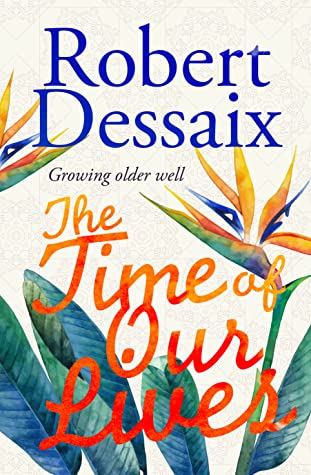
I do of course want to increase my knowledge of this subject, which is also becoming closer to me personally! Consequently, I would like to read Robert Dessaix’s latest book, The time of our lives, about which I posted recently after zoom-attending a Yarra Valley Writers Festival event on this book.

I would love to hear of any other nonfiction books you’ve read on the subject that you would recommend.

New to my TBR

I don’t read a lot of biographies, though every year I read a few, including, this year, Desley Deacon’s thoroughly researched and beautifully produced book on Judith Anderson (my review). My main biographical interest, however, are literary biographies, and a few have been published this year that interest me. They have been posted on by bloggers but I didn’t notice them in Nonfiction November posts:

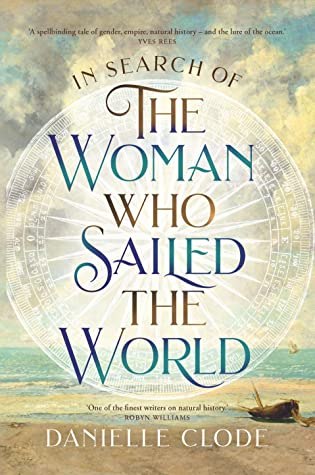
And, Lisa (ANZLitLovers), in her My Year in Nonfiction post, mentioned a couple of books that interest me: Danielle Clode’s The woman who sailed the world, and Debra Adelaide’s Innocent reader (which is already on my TBR).

And that, in the nick of time, is my contribution to Nonfiction November 2020.

I’d love to hear about your nonfiction interests and highlights this year.

Monday musings on Australian literature: “Returning novels”

Book cover

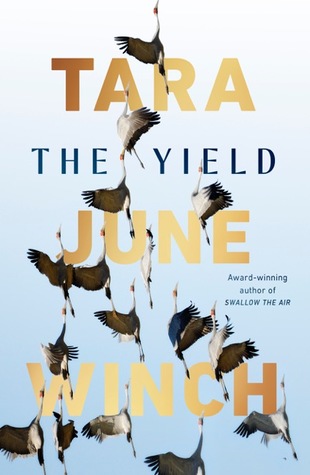
In his review of Tara June Winch’s The yield (my review), Jonathan Shaw (Me fail? I fly!) writes that “Ellen van Neerven, in a review in the Australian Book Review, describes The Yield as a ‘returning novel’”. I loved this way of framing the novel, so I checked the review.

Van Neerven, who has featured several times on this blog, goes on to say that:

In contemporary Aboriginal fiction, a common theme is ‘returning’ – returning to Country, family, language, and culture, all of them intertwined.

Melissa Lucashenko, Too Much Lip

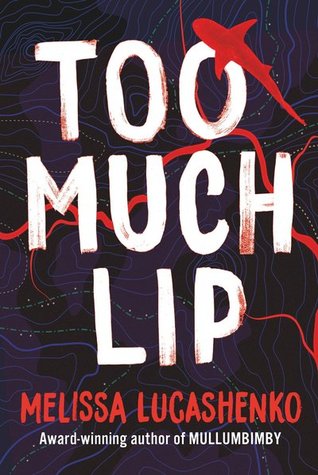
She’s right, I think. Melissa Lucashenko’s Too much lip (my review) is another example, with Kerry returning to her family, like Winch’s August, due to the death of her grandfather. In both novels, the returning protagonist finds herself embroiled in the family’s challenges and starts to reconnect in a meaningful way with the family she’d intentionally escaped. This sort of “returning” also happens in Indigenous Australian non-fiction, like Marie Munkara’s memoir Of ashes and rivers that run to the sea (my review) in which Munkara, who had been fostered by a white family, returns to the Tiwi Islands to understand her Indigenous family and roots.

However, and I hope this is not inappropriately appropriating van Neerven’s idea, “returning novels” are not limited to Indigenous Australian literature. After all, returning stories – think Homer’s Odyssey or the Bible’s prodigal son – are not new. Van Neerven’s point, though, is that “returning” in Indigenous culture has very specific drivers, impacts and outcomes.

Anyhow, now inspired by this idea, I thought I’d take the opportunity to look at some other Australian returning novels. What are returning stories about? The Odyssey was as much about the journey as about the return, while of course the prodigal son story is all about the return.

The novels I’m thinking about tend to be more about the return than the journey, though not exclusively so. They include returns from war, returns home after long times away, and returns after (or for) a major situation or event (like a death). Like Indigenous Australian stories, these can have their different trajectories.

Post-war

Post-war returning novels are a very specific subset. In these novels, the return is usually attended by the issue of resettling – physically and emotionally – and, in many cases, by the returnee suffering from some level of war trauma. War trauma is often the driver for these novels.

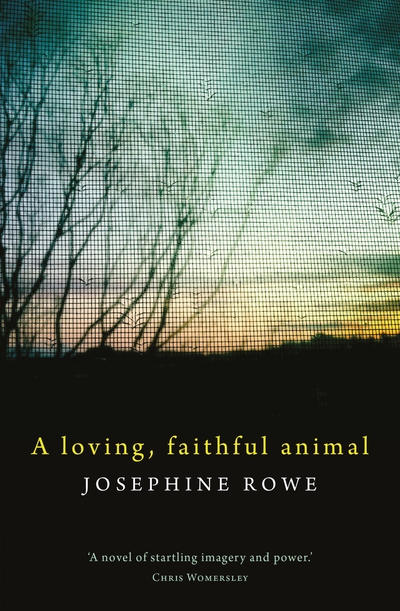
Josephine Rowe’s A loving faithful animal (my review) and Rodney Hall’s A stolen season (my review) are recent war-return stories.

Josephine Rowe, A loving faithful animal

Rowe’s novel explores the devastating impact on a family of the husband/father’s ongoing trauma (PTSD) following his Vietnam War experience. In Hall’s novel, on the other hand, the husband has returned from the war in Iraq so severely physically damaged that he can only live by means of a “Contraption” that is activated and controlled by his brain.

Slightly different examples are Angela Thirkell’s Trooper to the Southern Cross (my review) which chronicles the trip home of an Australian soldier with his English wife, after World War 1, and Geoff Page’s verse novel, The scarring (my review), telling the story of a couple from the 1910s to the 1980s, from their youth and courtship through to old age. Thirkell’s novel is mostly about the journey, but there is much here about the cultural issues that the Australian husband and English bride will face in returning to the husband’s home. Page’s novel may look like a family saga, but it’s what happens after the husband’s return from World War 2 that drives the novel.

After a long time away

Novels about older people returning after a long time away are, of course, different. They tend to be contemplative, and are often (though not always) about the returning person resolving the issues that they were escaping in the first place.

In Jessica Anderson’s Tirra lirra by the river, which I read long before blogging, Nora, who, as a young woman, had escaped the narrow confines of her life in Brisbane, returns at the age of 70, to rediscover and reassess the life she had left.

Glenda Guest, A week in the life of Cassandra Aberline

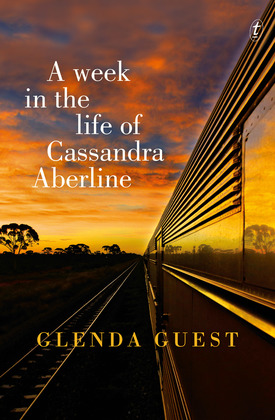
Glenda Guest’s A week in the life of Cassandra Aberline (my review) is about a woman who left home somewhat suddenly, 45 years before the novel opens, for a reason that’s not clear but is clearly unresolved. Now, 60 and with an early Alzheimer’s diagnosis, she wants to be sure she was right to leave, and if not, she wants to “make amends”.

A different sort of return occurs in Eleanor Limprecht’s The passengers (my review). Here, Australian war-bride Sarah is returning to Australia (with grand-daughter Hannah) from the USA where she’d gone with American soldier husband. This “returning” trip provides the opportunity for her to contemplate her choices and decisions.

Other returns

There are all sorts of “returns” though, besides the big two described above!

John Clanchy, Sisters

In John Clanchy’s Sisters (my review), sister Sarah calls her other two sisters, all of them in their 60s, to spend a month together at the family home, for an undisclosed reason. Not surprisingly, it is about resolving something that happened in the past, a common driver for “returning novels”.

David Malouf’s Remembering Babylon, another that I read long before blogging. It’s about a white man in 1840s Australia who returns to “white” culture, having spent 16 years with the Aboriginal people who took him in after he survived a shipwreck. He, and the people he “returns” to, are challenged by his readjustment. Bill has reviewed it, and touches on the issue about white writers writing about Indigenous people.

“Returning novels” then are highly varied. Most deal with the past in some way, but for Indigenous people the overriding issues are cultural and political (as well as personal), while in non-Indigenous Australian stories, the driving issues tend to be personal. This is, though, a broad generalisation.

Anyhow, these are just a few examples of the “returning novels” I’ve read. There are many more … I’d love to hear about some you’ve read.

Monday musings on Australian literature: Political biography

With the US election going, going … but not quite gone it seems … and with a new biography of President-elect Joe Biden, Joe Biden: The life, the run, and what matters now by Evan Osnos, hitting the bookstands, I thought it might be apposite to consider the political biography in Australia. By “political biography”, I mean, not those multitudinous memoirs that seem to come out with mind-numbing regularity soon after a major leader leaves the stage, nor the more formal autobiographies, but those extensively researched, analytical, and hopefully objective presentations of politicians’ lives written not by themselves.

Researching this topic, I found a 2006 monograph documenting a workshop on political biography and administrative histories held at the ANU in May 2005. (This workshop, incidentally, included autobiographies and memoirs.) In the final chapter, it says of an informally generated list of “favourite” political biographies that:

all of them tell us about how we are governed, explain the thinking of past leaders, and contribute to political science by illustrating how personalities affect our political structures and policy. … all have contributed to a greater understanding of how politics works.

However, in the monograph’s preface, the writers recognise that political biography is a tricky beast, often being written by those who have sympathy for their chosen subject and who, therefore, tend to write favourable books. But, they argue,

biographies (and autobiographies) have much to offer the student of politics. Political biography is an alternative narrative of events — a personalised view stressing the familiar and the specific. It contributes the views of political actors — sometimes in a contemporary context, sometimes with the benefit of hindsight. It can reinforce existing accounts of events or produce new accounts. It can add new perspectives and insights to existing accounts. It provides a medium through which the personal ‘take’ on politics is able to be ‘written in’ to conventional accounts. Crucially, political biographies are often the most accessible and widely read form of political writing, attracting readerships beyond the purely scholarly interest or the political junkie market.

One of the most famous and authoritative political biographies of recent times is American Robert Caro’s five-volume The years of Lyndon Johnson, of which four have so far been published. Caro is now 85, which begs the obvious question, but you can read about his progress at the Wikipedia link I’ve provided.

Selected Australian political biographies

Book cover

Below is a very select, and somewhat randomly chosen, list of recent-ish Australian political biographies. They are listed chronologically by date of publication, although to follow tradition I should perhaps have listed them alphabetically by biographical subject, or, even more interestingly, chronologically by birthdate of subject! Not surprisingly, these are all about prime ministers.

  • Blanche d’Alpuget’s Robert J Hawke: A biography (1982). One of the rare political biographies I’ve read (because my biographical interest tends towards literary subjects), this biography was published the year before Hawke became Prime Minister. It won the NSW Premier’s Douglas Stewart Prize for Non-fiction in 1983. D’Alpuget, who married Hawke in 1995, wrote a “complete biography” of Hawke, which was published in 2019, the year he died.
  • Allan Martin’s 2-volume Robert Menzies: A life (1993, 1999). I had to include this one, given Menzies was, in his time, and still remains, Australia’s longest-serving prime-minister.
  • Jenny Hocking’s 2-volume Gough Whitlam: The biography (2008, 2012). These volumes are just two of many biographies written about Whitlam, and just two of the several books written about him by Hocking. Hocking came to public notice recently for her successful court case to have the embargo lifted on secret correspondence [now dubbed the “palace letters”] between the then Governor-general, Sir John Kerr, and the Queen concerning the controversial dismissal of  Whitlam’s government.
  • Judith Brett’s The enigmatic Mr Deakin (2018). Deakin was Australia’s second prime minister, so Brett’s biography is certainly one of those able to “benefit from hindsight”. This book won the National Biography Award in 2018, with the judges calling it among “the very best political biographies written in Australia”.
  • Patrick Mullins’ Tiberius with a telephone: The life and stories of William McMahon (2019). Having studied political biographies, Mullins wanted to write one, and McMahon – funnily enough – was there for the taking. So Mullins told the audience at last year’s Canberra Writers Festival. Good decision, because Mullins won two big awards with this – the National Biography Award and the NSW Premier’s Douglas Stewart Prize for Non-fiction. The NSW Premier’s Award judges commented that this was “an impressive work of political biography, an achievement all the greater for its unpromising, though fascinatingly complex, subject”. Poor Billy! 
Book cover er

And here I’m going to sneak in one I have reviewed here. The subjects are not Australian, but the biographer is. The book is Hazel Rowley’s Franklin and Eleanor: An extraordinary marriage (2011) (my review).

A matter of definition

But here’s the interesting thing. While Franklin and Eleanor is about two consummate politicians, Rowley’s focus was their marriage. This made me think about who writes political biographies – in Australia anyhow. They tend not to be our “professional” biographers – people like Rowley, Brenda Niall and now, I’d say, Gabrielle Carey – but historians, like Judith Brett, Jenny Hocking and Allan Martin. Is the driver for writing political biographies a little different?

Journalists – like Blanche d’Alpuget, David Marr, Chris Masters – also tend to write biographies with a political bent, though sometimes their subjects are not politicians. Would we call Masters’ biography Jonestown: The power and myth of Alan Jones a political biography? Would we call David Marr’s books, Barwick on Australia’s longest-serving Chief Justice of Australia’s High Court, and The Prince about Cardinal George Pell, political biographies? Not technically, perhaps, but politics surely inspired and drove these books. Your thoughts?

And now the obvious question: Do you read political biographies? And, if so, would you care to share some favourites (or, even, not-so-favourites)?

Monday musings on Australian literature: “You don’t walk away until the work is done”

Book cover

This is a different type of Monday Musings, but its relevance will become apparent, I promise you! It’s inspired by Julia Baird’s Phosphorescence which I read a couple of weeks ago. In my review, I mentioned that one of the book’s four main sections is devoted to failure and imperfection, but I didn’t share much about this section, which is titled “We are all wiggly”.

Its opening chapter, after her usual intro, is called “The activist’s attic”. In it she tells of 9 boxes of papers she’s carried around with her for decades. They relate to her “spectacularly unsuccessful endeavour”, when a young woman, to win ordination for women in Sydney’s Anglican church. It’s a failure that has hung heavily on her, and that brought her to ask, in this book, “how to think of these years of effort?”

She shares the stories of other activists, like William Wilberforce who fought against the slave trade for forty-six years, and Nelson Mandela “who spent much of his life, including twenty-seven years in prison, fighting apartheid … “

And then she talks about climate change:

… think of all the scientists who have been warning of the dangers of extreme climate change since the 1960s, and of all the criticism of their work and the dismissal of anything resembling agitation and or activism as the lunatic alarmism of the left. The public burying – or attempts to discredit – the crucial findings of thousands of our finest climate scholars will prove to be one of the greatest (if not the greatest) acts of political and intellectual corruptions of our age.

But then comes the paragraph that is the focus of this post, because this week is NAIDOC Week, and in her book – in this Activist chapter – Baird also writes about Indigenous Australians’ long fight for recognition:

And what of the Indigenous people of Australia seeking constitutional recognition, truth-telling and a voice to parliament, those people who have been mistreated, stymied, rejected, ignored and discriminated against and who continue to ask non-indigenous Australians to walk with them in a makarrata, a Yolngu word meaning peace-making, a coming together after a struggle? The grace of this approach after more than two hundred years of suffering racism, along with their patience, strength and resilience, is astonishing.

The lesson is: you don’t walk away until the work is done.

I should explain here that NAIDOC Week is usually held in July, but it was deferred this year to protect, wrote the Committee, “our elders and those in our communities with chronic health issues from the disastrous impacts of COVID19. I post most years for this Week, and did write two posts back in July, anyhow, to align with Lisa’s ANZLitLovers’ Indigenous Literature Week. But, I wanted to also honour this year’s actual week, so decided to let Baird be my inspiration.

Finally, this year’s theme is “Always was, always will be”, which recognises that “First Nations people have occupied and cared for this continent for over 65,000 years”. It also asks

all Australians to celebrate that we have the oldest continuing cultures on the planet and to recognise that our sovereignty was never ceded. 

C’mon, Aussies … let’s get this thing done!

Monday musings on Australian literature: Astrid Lindgren Memorial Award

Yes, you read right. This week’s Monday Musings on Australian Literature focuses on an award established by the Swedish government, but it is an international award. Established in 2002 to honour the Swedish children’s author Astrid Lindgren (as you’ll have guessed), the prize is five million SEK, making it, says Wikipedia, the richest award in children’s literature and one of the richest literary prizes in the world.

The award, continues Wikipedia, “annually recognises one or more living people and extant institutions” for “their career contributions”, in the case of people, and for their long-term sustainable work, in the case of institutions. The winners should be “authors, illustrators, oral storytellers and promoters of reading” and their work should be “of the highest quality, and in the spirit of Astrid Lindgren.” The award’s aim “is to increase interest in children’s and young people’s literature, and to promote children’s rights to culture on a global level”.

Alert readers here will have seen it mentioned here before, most recently in my post on Alison Lester, because she has been nominated for the award. However, she’s not the only Australian to have been so listed, and in fact, Australians have won it.

Aussie winners

The first winner, in 2003, was Maurice Sendak, but in its short history, Australians have won twice: Sonya Hartnett in 2008 (whose adult novel Golden boys I’ve reviewed) and Shaun Tan in 2011 (whose little book Eric, from Tales of outer suburbia, I’ve reviewed.)

The Chinese paper, People’s Daily Online, reported Hartnett’s win, quoting the award jury as saying:

Sonya Hartnett is one of the major forces for renewal in modern young adult fiction …

and

With psychological depth and a concealed yet palpable anger, she depicts the circumstances of young people without avoiding the darker sides of life. She does so with linguistic virtuosity and a brilliant narrative technique; her works are a source of strength. 

Shaun Tan, Eric cover

Reporting Tan’s win, Claire Armitstead of The Guardian wrote that

Larry Lempert, the chair of the jury, described Tan as “a masterly visual storyteller” whose minutely detailed pictorial narratives touched everyone, regardless of age. “His pictorial worlds constitute a separate universe where nothing is self-evident and anything is possible,” the citation says.

The Guardian article describes the prize as focusing on work with “a profound respect for democratic values and human rights”. That certainly describes Shaun Tan’s work, and ethos, as I know them.

Announcing the British contingent for the 2020 award, The Guardian quoted the jury’s citation for British past-winner Philip Pullman (whose His Dark Materials series Daughter Gums loved) for writing that

stands firmly on the side of young people, ruthlessly questioning authority and proclaiming humanism and the power of love whilst maintaining an optimistic belief in the child even in the darkest of situations

I rest my case – I think!

Some Aussie candidates

As far as I understand it, candidates are nominated by organisations around the world, but the winners are chosen by, quotes Wikipedia, “a jury with broad expertise in international children’s and young adult literature, reading promotion and children’s rights. The 12 members include authors, literary critics and scholars, illustrators and librarians. One member represents Astrid Lindgren’s family.”

Book cover

I’ve already said that Alison Lester has been shortlisted (or, announced as a “candidate” as they call it), but given our strong children’s literature culture here, many Australians have been shortlisted over the years, too many, in fact for me to discuss in detail.

Children’s/young adult author John Marsden was nominated in 2008. I enjoyed reading his books when my children were young, and was impressed by the fearlessness with which he tackled some difficult issues, including domestic violence in his 1987 novel, So much to tell you.

Some authors have been listed multiple times. For example, Jeannie Baker, Ursula Dubosarsky, Susanne Gervay and Margo Lanagan were candidates for the 2020 Award, and are again for 2021. The specialty Indigenous Australian publisher Magabala Books and the Indigenous Literacy Foundation are also in this 2020 and 2021 group.

I know and have read works from some of these writers and organisations, but not all. However, it’s clear how and why Magabala Books and the Indigenous Literacy Foundation would meet the prize’s interest in “democratic values and human rights”.

I could go on finding more Aussies to tell you about, but I think you get the gist. This is an impressive, and significant award in both value and what it is trying to achieve (or so it seems to me).

Are you familiar with it?

Monday musings on Australian literature: Supporting genres, 2: Short stories

When I started this little sub-series, I wondered how to describe it – genres or forms or genres and forms? In the end, I chose “genres” on the assumption that we could define it very loosely to include forms. I hope this works. After all, the content is more important than the name!

I decided to make my second topic Short Stories because it’s around now that the relatively new Australian Short Story Festival has been held. You will see from this post, that the way the forms/genres I discuss in this sub-series are supported vary greatly. Short stories, for example, don’t seem to have a focused organisation supporting them the way genres like historical fiction and crime do. However, they are supported in their own ways.

Short story publishers

Although the scuttlebutt is that publishers do not like short stories, there are some who commit to them in an ongoing way, and these are the ones I’m going to share here. Many publishers, though, do, in fact, publish collections, such as, recently, Laura Elvery’s Ordinary matters (by University of Queensland Press) or Carol Lefevre’s Murmurations (by Spinifex Press, my review).

Black Inc’s Best Australian stories series has been published annually for at least two decades, with each edition edited by significant Australian short story writers like Charlotte Wood (2016) and Maxine Beneba Clarke (2017).

Book cover

Margaret River Press published their short story prize anthologies, annually, from 2012 to 2017. I have reviewed a couple of these anthologies, which included competition winners and commended stories. They announced in 2019 that they were “taking a break”. They may be taking a break from this competition, but they are continuing to publish short story collections. I reviewed one only recently, Emily Paull’s Well-behaved women.

Carmel Bird, Dead aviatrix

The wonderfully named Spineless Wonders describe themselves as “a multi-platform publishing company devoted to short, quality fiction produced by Australian writers”. They support “brief fiction in all its forms – from short short stories to novella” including ‘microlit’ which combines microfiction and prose poetry. Most of their publishing is digital, I believe, and I have reviewed Carmel Bird’s foray into digital publishing, The dead aviatrix: Eight short stories.

Other publishers which support short stories in a significant way include MidnightSun Publishing and Kill Your Darlings, which has now published two annual editions (2019 and 2020) of New Australian fiction.

Short story prizes

Back in 2015, I wrote a Monday Musings on short story awards, so I won’t repeat that here. Please check it out for awards like the ABR Elizabeth Jolley Short Story Prize and the Margaret River Short Story Competition. But, there are some new ones established since then, and genre ones I didn’t mention, that I’d like to share here.

  • Carmel Bird Digital Literary Award: Established in 2018 –  named for Carmel Bird (who has appeared on my blog several times), hosted by Spineless Wonders and supported by the Copyright Agency – this award is for short story collections up to 30,000 words in length. The stories can be in any fiction genre, with all prose forms being acceptable, including non-fiction prose. The award includes cash prizes and world-wide digital publication of the three winning entries. Lisa (ANZLitLovers) has posted on this award.
  • Scarlet Stiletto Awards: Established in 1994 by Sisters in Crime (who will appear again when I focus on crime), this national award is for “short stories, written by Australian women and featuring a strong female protagonist”. Its purpose was “to support and unearth new talent”. Past winners have included writers who have appeared here – Cate Kennedy, Angela Savage – and a young woman who went to school with Daughter Gums, Anna Snoekstra. This award is actually a suite of awards comprising several awards – such as “Best New Writer”, “Best ‘Body in the Library'”, “Best Foreign Linguistics Story”, “Best Story with a Disabled Protagonist”, to name a few.

There is a comprehensive list of short story competitions available in 2020 on the Australian Writers Centre site, which underscores how much support there really is for this oft-maligned form!

Australian Short Story Festival

As I said at the beginning, the reason I chose Short Stories as my second topic for this sub-series is this festival. Founded by Anna Solding (MidnightSun Publishing) and Caroline Wood (Margaret River Press) in 2016, it’s an annual festival celebrating short stories in written and spoken forms. It aims to connect Australian and international short story writers, storytellers, publishers, literary magazine editors, and readers. It’s apparently the first national event to focus exclusively on the short story.

The first festivals were held in Perth – I watched the social media campaigns with great envy! In 2019 it was held in Melbourne. Unfortunately, due to COVID-19, the 2020 festival, scheduled for Adelaide, was cancelled because they felt that “online festival experiences can never quite replicate the immediacy of the face-to-face festival”. This is a festival I plan to attend one day.

Book cover

For those of you interested in short story recommendations, check out my reviews of short stories or look at Readings blog post on Short Stories (written to align with the 2019 Australian Short Story Festival). One of the books recommended is Chris Womersley’s A lovely and terrible thing, which I’ve reviewed here, so I’ll conclude this little post with it!

Do you like short stories? Why or why not?

Monday musings on Australian literature: Modern sensibilities and Historical fiction

Book cover

Following last week’s Monday Musings, and my recent review of Gay Lynch’s historical novel, Unsettled, I thought it might be worth teasing out the fraught issue of “modern sensibilities” in this genre.

By teasing out, I mean that this will not be a thorough analysis of the topic so much as my sharing a few ideas and thoughts for you to respond to with your own.

I was inspired, of course, by Bill (The Australian Legend) – who wouldn’t be! – when he commented on my review of Unsettled that “I’m glad that she included the Boandik people and that they had some input. I suspect though that Rosanna has modern sensibilities when it comes to Indigenous relations.”

I could research the journals and letters of women at the time to see what discernment there might have been among those women, but most likely women from oppressed groups like Rosanna’s are not well represented in the papers held in libraries and archives. For a start, many may not have been able to read, though Rosanna could. Those who could read would have, like Rosanna, struggled to afford paper. Writing journals and letters was probably rare for them.

Consequently, I’ve decided to tackle the wider issue, rather than try to prove this particular one.

Why do people write historical fiction? I quoted HNSA in last week’s post as saying that historical fiction presents “an authentic world which can enrich a reader’s understanding of real historical personages, eras and events”.

Lynch made it clear in her Acknowledgements, as I wrote in my post, that she wanted to “to materialise Lynch girls” who were absent in all meaningful ways from the record. She noted that their “lack of documentation and therefore their invisibility reflect their early settlement status on the frontier.” So, how to do this without documentation? And how are we to assess this?

Let’s start with what we want from historical fiction? What I want is light to be thrown on issues relevant to now. Sure, stories can be fun for their own sake, but I like my stories to have something more. I want to be challenged to think about how things were, and how they affect or reflect how things are. In other words, I want to get at the “truth” of history. The thing of course is that the “truth” of history does change with the times, whether we like it or not.

Right now, in Australia, historical “truth” includes issues like the invisibility and powerlessness of women, and the dispossession of Indigenous people. It hasn’t always been so. There was a time when historical “truth” focused on what many of us now view as the ANZAC myth. There was a time when the story of early settlement was only about the hardship faced by and the achievements of the white settlers. And, so on … history may be based on facts but how those facts are interpreted, which facts are interpreted, who is interpreting them and why, makes all the difference.

In a past post, I included the following from novelist Jose Saramago’s The Elephant’s Journey (2008):

It must be said that history is always selective, and discriminatory too, selecting from life only what society deems to be historical and scorning the rest, which is precisely where we might find the true explanation of facts, of things, of wretched reality itself. In truth, I say to you, it is better to be a novelist, a fiction writer, a liar.

The novelist, then, can explore “truths” that society may scorn (reject) as not being “historical” or, I would add, that is not readily available on the historical record. However, how do you convey historical “truths” in situations where they come with a lack of record, with minimal evidence or facts. If you are powerless and dispossessed you are unlikely to leave a verifiable mark. How, in this circumstance, do you convince your readers that your characters and/or story are authentic as well as true?

Authors, I’d argue, have to start by presenting the times and characters in ways that feel authentic; they have to get enough of the “facts” right that we are happy to go along with what might be less easy to verify. Then, they have to present an interpretation of the facts that makes sense according to what we believe or know to be true.

I have been interested in this issue for some time, and have shared on this blog the thoughts of various novelists expressed at events I’ve attended. I thought I’d reiterate some here.

Robyn Cadwallader, The anchoress

Robyn Cadwallader, who has written two mediaeval historical novels, The anchoress (my review) and Book of colours (my review), spoke of her interest in ordinary women and how they “managed to find value in their lives within the constraints” of their times. She spoke of the challenges of making these women’s gains and achievement believable for those times, of not wanting to “damage” them “by presenting them differently from what they are”.

Rachel Seiffert, who has written historical fiction about the Third Reich, spoke about how her character in A boy in winter doesn’t know the Holocaust is proceeding. Her challenge was to show that he had to make choices not knowing the full story, which the readers do know.

(Seiffert’s point here is relevant to the idea that we should only read fiction written at the time it is about. As she says, people at the time do not “know” their whole time. They cannot therefore provide the perspective we gain in retrospect, and which historians and historical novelists offer us.)

Roslyn Russell, Maria Returns Barbados to Mansfield Park

Historian and historical fiction novelist (Maria returns: Barbados to Mansfield Park), Ros Russell, spoke about ethical responsibilities, saying that historians must not distort what they find. They must be true to their sources, but she always looks out for things that might say something different to the prevailing narrative.

In the end, the issue of “modern sensibility”, particularly where the author has rendered the period authentically, comes down to the reader. We have to decide whether that authenticity includes the novel’s characters sounding just like prevailing views of their era, or whether we accept that there were always people who “bucked” that prevailing view.

As you probably know, I’m with the latter group. So, if I’m happy with the overall authenticity, I’m prepared to give novelists the benefit of the doubt if their characters express views that seem to be “modern”. So-called “modern” ideas don’t pop out of nowhere, after all …

Now, over to you … where do you stand on this issue?

Monday musings on Australian literature: Supporting genres, 1: Historical fiction

While my prime focus here is literary and classic fiction, I do also delve into other forms (like biography, autobiography/memoirs, poetry, history), and other genres (like crime, dystopian fiction, and historical fiction). So, I’ve decided to start a little MM subseries on other genres and forms, starting with historical fiction. My aim is less to analyse the genre itself, than to share some of the ways in which it is supported in Australia.

I’m starting with historical fiction because of the recently announced longlist for the inaugural ARA Historical Novel Prize, which Lisa (ANZLitLovers) posted on recently. Let’s start with the prize’s home, the …

Historical Novel Society of Australasia (HNSA)

HNRA describes itself as

the third arm of the international Historical Novel Society, and is recognised as the home of the historical fiction genre in Australasia. The Society promotes the writing, reading and publication of historical fiction … Our events showcase the best literary talent and enable readers, writers and publishing professionals to celebrate the genre.

They consider historical fiction

to be important to both the entertainment and education of readers as it contributes to the knowledge of the reader and provides a valid perspective beyond the viewpoint of the historian. Both the imagination and dedication of historical novelists present an authentic world which can enrich a reader’s understanding of real historical personages, eras and events.

The secret River cover

While I agree that there is an educative aspect, we readers need to appreciate what sort of education we’re getting. We can’t expect certifiable facts but can expect insight into how things were or might have been. My favourite historical fiction, though, does more; it explores the past in a way that throws light on the present. I find the statement that historical fiction provides “a valid perspective beyond the viewpoint of the historian” interesting in light of The secret river controversy. Beyond? I think alongside might be better?

Anyhow, on the ARA Historical Fiction Prize page, they define historical fiction. It:

  • means novels written at least 50 years after the events described, or written by someone who was not alive at the time of the events and who therefore approaches them only by research.
  • can include historical mystery, historical romance, historical fantasy, and historical fiction written for children and young adults; and also alternate history, pseudo histories, time-slip novels, multiple-time novels, and parallel narrative novels with flexibility to crossover between eras stretching from 50 years or more in the past until contemporary times.

HNSA has now held three biennial conferences – in 2015, 2017 and 2019. They also offer a suite of prizes/awards of which the new ARA Historical Novel Prize is “the crown jewel”. The others are the ARA HNSA Short Story Contest and the TCW HNSA First Pages Pitch Contest. They also offered a Colleen McCullough Residency on Norfolk Island in 2019, and this year instituted the Elizabeth Jane Corbett Mentorship for Young Adult historical novelists (that is, for previously unpublished writers of young adult fiction, not for writers who are young adults1)

ARA Historical Novel Prize

Nigel Featherstone, Bodies of men

This prize, which is supported (fascinatingly) by a building and facilities company, the ARA Group, is worth $60,000, with $50,000 going to the winner, and $5,000 each to two short-listed writers. It is open to Australian and New Zealand writers. The longlist was announced on 6 October, with the shortlist of 3 books to be announced 28 October, and the winner on 10 November.

The inaugural 2020 longlist is:

  • Sienna Brown’s Master of my fate 
  • Nigel Featherstone’s Bodies of men (my review)
  • Catherine Jinks’ Shepherd
  • Mirandi Riwoe’s Stone Sky Gold Mountain (want to read, Theresa’s review)
  • Dominic Smith’s The Electric Hotel (my review)
  • Christos Tsiolkas’ Damascus (my review)
  • Pip Williams’ The Dictionary of lost words (on my TBR, Lisa’s review)
  • Tara June Winch’s The yield (my review)

Surprisingly for me, I have read half of them!

HNSA Conferences

In 2019, the conference included a full-day academic stream, focusing on the overall conference theme of History repeats. There were three panels through the day: Genre and gender; Genre and the discourse of history; and War and conflict. Abstracts of the papers can be found at the link above.

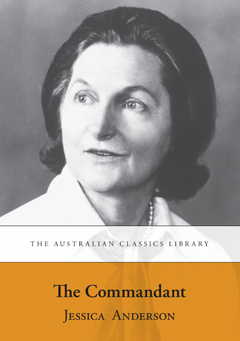
Jessica Anderson, The commandant Book cover

One of the papers was “‘the truth of the book’: Jessica Anderson’s The Commandant as a work of biofiction, Merran Williams“. I have reviewed this book, which is Anderson’s only historical fiction work. In her abstract, Williams says that “Historical novels have the ability to provide unique insights into untold histories” and that

Anderson subverted the traditional biofiction of a man of importance by feminising the masculine history of Patrick Logan and the Moreton Bay convict settlement and telling much of his story from the point-of-view of the soldiers’ female family members. I focus on her fiercely forensic approach to historical research and how she applied this to her writing practice to produce a work of historical biofiction that shines a light on a foundational period of Australian history.

This is a stream of the conference I’d love to attend if it ever came my way.

AWW Challenge

Challenge logo

Many of you know that I have been involved in the Australian Women Writers Challenge pretty much from its inception. It collects on-line reviews by contributors of any books – all forms and genres – written by Australian women. At regular intervals, mostly monthly or bimonthly, volunteers post round-ups of reviews contributed in the previous period for specific genres/forms. Our current Historical Fiction volunteer is Theresa Smith (Theresa Smith Writes.)

You can find her Historical Fiction round-ups at the AWW site. The Books Reviewed search page will find all contributors’ reviews posted to the challenge. The site comprises an excellent resource for reviews on books published recently and in the past, because our reviewers read widely.

Other

The Nib Literary Award could be seen to support this genre in a broad way, because, although its winners tend to be non-fiction, its aims are to celebrate excellence in research, including in fiction.

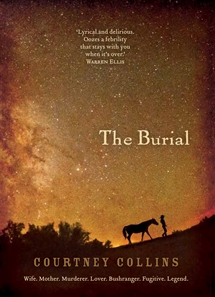
Courtney Collins, The burial

There is also an interesting international site called historicalnovels.info which devotes a page to Australasia. It’s uncomfortably simplistic in its understanding, offering this about Indigenous Australians regarding historical fiction: “Native Australians, dubbed Aborigines by European settlers, did not fare well as colonization spread, but modern novelists recognize the positive aspects of their culture”. However, for readers looking for a list of Aussie historical fiction books, there’s something here. The list includes classic and contemporary novels – including writers like Eleanor Dark and Brian Castro! I learnt a few things, including that Courtney Collins’ The burial (my review) was published in the USA as The untold.

I’d love to hear what you think about historical fiction – even you Bill! – particularly regarding whether you like and why or why not?