Tomorrow, July 5, is the start of this year’s NAIDOC Week in Australia. This year’s theme is 50 Years of Deadly, commemorating 50 years of NAIDOC, but I’ll do more on that in my traditional NAIDOC Week Monday Musings. Meanwhile, I have decided to dedicate this month’s #SixDegrees to First Nations writing. If you don’t know what #SixDegrees is and how it works, please check Kate’s blog – booksaremyfavouriteandbest.
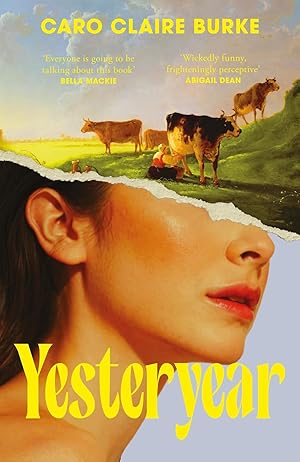
The first rule is that Kate sets our starting book. This month, she nominated a book that is apparently all the rage at the moment, but I hadn’t heard of it until she told me about it, Caro Claire Burke’s Yesteryear. This is, I understand, a dual timeline, time-slip story in which a “tradwife” influencer suddenly finds herself in the real 1855.
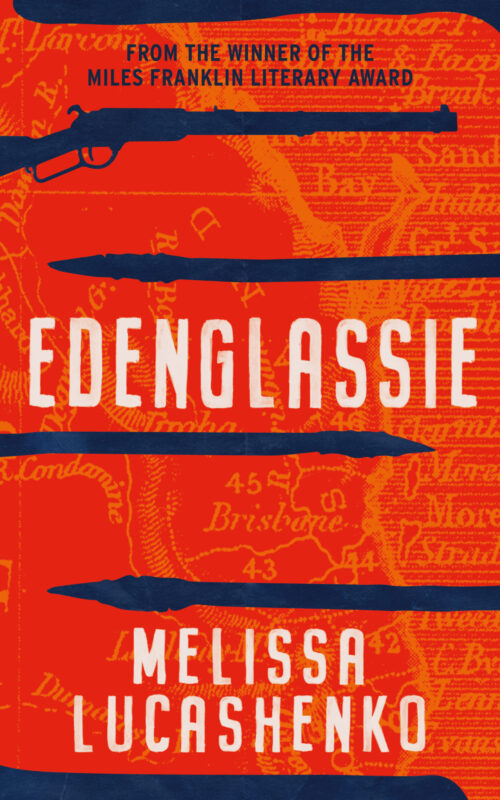
My first link is another dual timeline (but not time-slip) story, in which one of the timelines is set primarily in the 1850s. The book is Melissa Lucashenko’s Edenglassie (my review), set in southeast Queensland around Magandjin (Moreton Bay). It is a strong story which interrogates the early years of colonisation, asking whether, given the settlers were here, it could have been made to work.
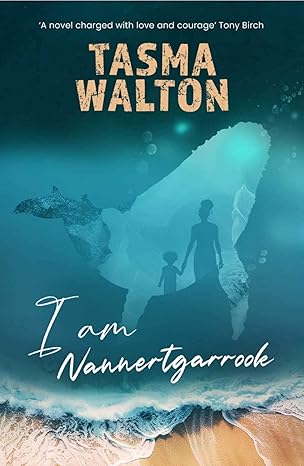
Next, we are staying with the early colonisation of Australia, but moving south to Nerrm (Port Phillip), and Tasma Walton’s I am Nannertgarrook (my review). I am claiming a double link here, because both novels won the ARA Historical Fiction Prize in their respective years. Walton’s starts in 1833, and follows a young woman snatched from the beach and sold to a sealer with whom she is forced to live as he moves increasingly further away from her country. It tells of her struggles to retain her culture and her dignity, though years of brutality.
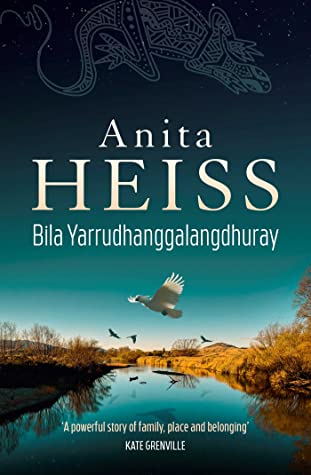
My third book is also set in the 19th century, in the second half, and is about another young woman taken from her country, this one being when her farmer employer decides to move to a new place and refuses to let her stay with her people. The book is Anita Heiss’s Bila Yarrudhanggalangdhuray (my review) and her young protagonist is bound, she is told, by the Master and Servants Act of 1840. She has no agency in this world.
From Walton’s and Heiss’s young women who have little or no agency in their lives, I am moving to another novel by Anita Heiss. This is one of her “choc-lit” books in which she presents contemporary young professional First Nations women who do have a say in their lives and the directions they take. The book is her Paris dreaming (my review).
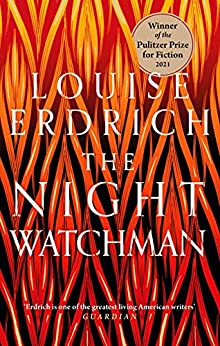
Agency is something many of us take for granted, but for First Nations people, it is not a given. For my next book, I am choosing a book about American First Nations people (or Native Americans), Louise Erdrich’s The night watchman (my review). This novel is about the Turtle Mountain Band of Chippewa people’s fight in the 1950s against a legislation that would end their tribal sovereignty. Its two main characters – the older Thomas, the titular night watchman, and Patrice, a young woman factory worker – are determined to retain agency over their lives and that of their community.
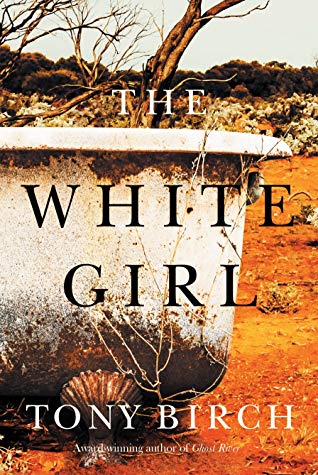
For my final link, I am returning to Australia, because we are talking NAIDOC Week. The book is Tony Birch’s The white girl (my review) which is set in a fictional rural town in the 1960s. It tells the story of Odette who is determined to save her granddaughter from being removed, against the backdrop of the egregious restrictions of the Aboriginal Protection Act. In this case, Odette does not fight a proposed law, but takes agency and finds ways of working around it to achieve her goal.
So, a different chain this month, because I have purposefully kept it to Australia, making one little foray to the USA as a symbolic recognition of First Nations peoples elsewhere. All my authors are Australian, but one, and all are women, but one (a different one!) Except for Heiss’s Paris dreaming, all are works of historical fiction.
And now, especially for NAIDOC, I have created a second chain, a little #Six Degrees title poem. (Links on titles are to my reviews).
Yesteryear
From Edenglassie to Carpentaria,
From Bila Yarrudhanggalangdhuray to Ghost River,
I saw, we saw, and we say:
We come with this place.
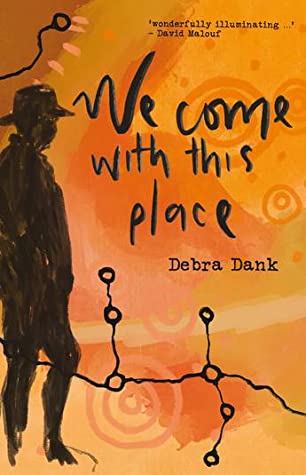
Have you read Yesteryear? And, whether or not you have, what would you link to?


A terrific start to NAIDOC week, and as for the poem, well done!
Thanks Rose! I went down various paths, and then decided this was the thing to do!
I really need to be more in tune with what’s happening ahead of time to set books for #6degrees – had I though about NAIDOC Week I would have chosen something fitting.
Thanks Kate, but I understand. It really is hard to keep up, in fact, just to know which week we are in! I find things creeping up on me all the time.
Hi Sue, I have not read Yesteryear and I do like your connections. My links are The Time Traveler’s Wife by Audrey Niffenegger; The Perfect Wife by J P Delaney; Departures by Julian Barnes: Ladder of Years by Anne Tyler; My Year of Rest and Relaxation by Ottessa Moshfegh; and The Awakening by Kate Chopin
Haha thanks Meg, my first thought was The time-travellers wife, except I read it before blogging. Then I realised the NAIDOC week timing to went that way.
Interestingly another chain I’ve seen included The ladder of years! Anyhow, I enjoyed your links, of which I’ve read 3.
This is a great chain and a great way to mark NAIDOC week.
Here’s mine for this month: https://portobellobookblog.com/2026/07/04/6degrees-of-separation-for-july-2026-from-yesteryear-to-the-time-travelers-wife-booksky-%f0%9f%92%99%f0%9f%93%9a/
Thanks Joanne.
Nice… taking the starter book and using your own theme.
Thanks Davida … it came after a couple of false starts.
Well done for your NAIDOC themed links and the poem!
Thanks Brona … sometimes you just need a hook don’t you.
Nicely done!
Thanks Cathy.
Good chain. The White Girl was good–you introduced me to that book.
Oh did I Lisa … I love that. Thanks for telling me. It’s lovely hearing that an Aussie book like that made an impression on the other side of the world.
The only time-slip fiction I can think of amounts to Not Now But Now by M.F.K. Fisher and V by Thomas Pynchon. “Years” offers some more purchase, but not enough. So the theme will be emigration and settlement:
Degree one will be A True Picture of Emigration by Rebecca and Edward Burlend, a memoir of emigration from Yorkshire to Illinois in 1831. I have not read it, but once bought a copy for a relative.
Degree two will be Dancing at the Rascal Fair by Ivan Doig, a fictional picture of emigration, in which most of the older generation of prominent characters are from Scotland, and have settled in western Montana around 1890.
Degree three is The Oregon Trail by Francis Parkman. Parkman was primarily a historian; this is a book of travel, and tells more about buffalo hunting than about the emigrants who followed the Oregon Trail. It does tell one something about the tribes then being pushed aside.
Degree four will be The Year of Decision: 1846 by Bernard DeVoto. This tells one a great deal more about those emigrants, the tribes they were displacing, those they weren’t, etc.
Degree five is The Sons of the Profits by Bill Speidel, a snarky account of the founding and building of Seattle. I think that I may have used it as a source for a high school history paper; if so, I’m surprised that I wasn’t challenged on it.
Degree six will be the Invasion by Janet Lewis, a mixed family maintaining itself in the face of settlement and Americanization along Lake Superior, mostly around the Sault-Ste. Marie.
Thanks George. The Ivan Doig interests me in particular, partly because it’s fictional but also because Scotland to Montana in the 1890s sounds interesting.
And, I need to ask what is snarky about Speidel?
Finally, have you read W G Sebald’s The emigrants. I read it way before blogging but it is memorable for its exploration of displacement.
I have not read The Emigrants.
Doig’s paternal grandparents emigrated from Scotland. His very readable memoir In This House of Sky: Landscapes of a Western Mind goes into that, and generally the world of Montana ranching–mostly sheep-raising.
Speidel I have not read in fifty years and more. My recollection is that it presented the founders of Seattle not as the solemn statues one might find on a civic monument but as sharp businessmen, real-estate promoters, etc.
Thanks George … I will keep Doig in mind.
And love that about Speidel … sounds like an injection of reality but of course it does friend on tone.
Great list Sue and wonderful idea to link it with Naidoc week!
Thanks Rach … I do like to give NAIDOC week as much air as I can so I was pleased to realise I could do it with this meme. I’m glad you like the list.
I was not familiar with NAIDOC Week but think it was brilliant to incorporate it as you did. You are right that those of us who have agency take it for granted. And those who can withhold it can be very cruel and wreck lives. Yesterday’s very upsetting news is that a local priest from Nigeria committed suicide because he was so afraid of returning there.
The books you have selected sound both intense and brutal – my book group has read Louise Erdrich but I don’t know the others; will see what my library owns.
Oh that’s a terrible story Staircase.
The books I’ve listed are mostly intense. Paris dreaming is lighter – intentionally so – but all are good stories. I hope you find some.
Great links and nicely done with the poem!
Thanks Stefanie
I have Tony Birch’s The white girl on the TBR.
Caro Claire Burke’s Yesteryear I don’t know. But based on the term “hyped” that I have read about it, I thought I might go down that path.
Let’s start with my most recently read. Wild Dark Shore by Charlotte McConaghy. A yarn about lack of communication that causes unrealistic mayhem in a plot that has a few large holes that one can wander through.
And that leads to One Flew Over the Cuckoos Nest by Ken Kesey. Hyped as a counter culture comment for the ages but in truth 300 pages of misogynist racist poppycock using mental illness as a trope and written for old rich white guys who think they have it tough.
The Wall by Marlen Haushofer was released as a lost classic and hyped as such. But one can only take so much of feeding the dog, the cats and the cattle while reading this dull plod. Tedious and repetitious beyond what I believed I could endure. I needed some form of writing that at least excited the imagination, but this was more endurance over art.
Heart the Lover by Lily King. Hyped immensely but to me just upmarket Mills and Boons. The less said the better.
Herman Hesse’s classic Siddhartha. No! I hear someone think, but this is really just youthful hippy claptrap. It was all complete and utter nonsense.
Naked Lunch by William S. Burroughs rates as the biggest load of rubbish I have ever read. He admitted that he wrote a lot of this under the influence of drugs, had no idea what he had written and threw what he had written on the floor in a haphazard manner and had it published to much acclaim. I did not find it interesting or well written or witty. It did not offend me or delight me. It just seemed like a bunch of loony rantings of a drug addict as it was meant to be. On reading many years back it took all of my willpower to finish it.
Loved your theme John … and I wonder if you’ll be interested to hear that I’ve read none of these. I never have gone much for hype, even in my youth I now realise. I’m not sure that that was a conscious decision or just an inner lack of interest. I have however heard of all of these except the Haushofer. The one that, notwithstanding your utter displeasure, I’d still be keen to read would be the Hesse. I’ve been warned, though, I know. As for McConaghy, I think I’ll aim for her Migrations if I ever get t to read her.
I have tried a collection of Hesse short stories as well. I gave up. Maybe I was just not in the mood. But don’t let me put you off.
I won’t! I have read Steppenwolf, a long time ago, I admit, but I remember enjoying it enough to think I could read me!
What a great idea to link to NAIDOC Week. I forgot that Edenglassie had the dual timeframe, so its also a perfect first link. I love Melissa Lucashenko’s work. I’m keen to read I am Nannertgarrook now too.
I haven’t compiled my list yet but hopefully won’t be as late as I was with the last challenge, not squeezing it in until the very last day.
Thanks mammej, I like to feature NAIDOC Week so it was great to be able to do this. I like Melissa Lucashenko too.
I have heard of a few of those books but not read any. Great chain.
Here is mine. I chose books with the word YEAR in the title.
Thanks Marianne. I’ll have a look at yours.
Oh, I just went to your blog and it seems to insist I comment with my Google account. I’m sorry but I don’t do that. You should be able to offer a Name/URL commenter option. I once had a blogger blog and could do that.
What part of Germany do you live in?
Oh, I see. I disabled that ages ago because I got so much spam. Unfortunately, I am only allowed to enable it for URL or anonymous. I have enabled it and then see whether this will be better for some people. If it causes too much trouble, I’ll have to stop it again.
Will you try commenting again?
I live in Lower Saxony, north of Osnabrück. Do you know that part of Germany? Or any other parts?
I sure will… URL is fine. Thanks for giving it a go. I don’t know about Blogger but WordPress is doing much better at identifying spam these days so I hope it works.
Oh and no, I don’t know that part of Germany. My husband lived in southern Germany for a year before I met him in the 70s and we have travelled across many parts of the south. On our last trip we also went to eastern Germany then made our way across from Berlin to Mainz and Bonn before flying out of Düsseldorf. I haven’t been further north. This year we are returning to the south and including a bit of Austria and northern Italy into France.
And sorry, I just tried to comment and the comment block still says “To leave a comment, click the button below to sign in with Google.” With no other option. Maybe you need to do another step to activate your change?
First of all, I just checked again and found that it had been set back to only Google users but I said “Anyone (including anonymous)”, I hope this will stay. Grrr.
As to Germany. If you have only been to the south, you only know a little part of Germany. You really should try coming further north. Should you come again, please, plan that. I just had an American visitor who, like you, only knew the south and had been to Denmark and hence to the northern part of our country. She said she had to think about me all the time because I always said to my friends they shouldn’t just go to the south, the north was just as beautiful and very different. I’d be happy to send you some recommendations. And maybe we could meet?
I will check again. It would be lovely to meet one day. As my husband is a fluent German speaker (Aussie born) we could very well be back. He did work in Diepholz for a few weeks but the south was his base for a year. I really should go to Denmark one day as I have ancestors from there. So who knows!
Diepholz is the district to the east of ours. When an American blogger friend passed through Germany, I met her there on the station, she didn’t have much time but it was lovely to meet. By car, the A1 is very close to our house, so lots of possibilities.
We will have to exchange e-mail addresses in order to exchange more details.
In the meantime, enjoy your time in Germany.
Butting in, though not asked: two great-grandparents emigrated from Esterwegen in Lower Saxony. We visited once, in 1999. My wife, of Pennsylvania Dutch heritage (a much earlier emigration) noticed that everything on the dinner table would have been familiar in York County, Pennsylvania.
That’s really interesting George because one thing I observed, particularly during our last trip to Germany, was how less familiar German food is to most of us than French, Italian, Greek, Spanish. It just hasn’t generally travelled as well as those cuisines. But of course, Pennsylvania’s Amish and Mennonite country is an exception.
I’m not sure how to characterize German food. My wife says that the pillars of Pennsylvania Dutch cuisine are white sugar, vinegar, and bacon fat, but does that apply to those descended from later emigrations? Germans are the largest ethnic group in the US, or were last I heard, so there may be some invisibility through familiarity.
That’s interesting George. I hadn’t really thought about that basic level but when I think about it there is certainly a strong sense vinegar. I guess pork and bacon are strong, and cakes (white sugar and flour). This is a good way of defining a cuisine. I was focusing more in terms of style – meaty, hearty, dumplings.
No problem with butting in, George, that is the beauty of blogging. How do you think I met most of my blogger friends?
Anyway, I had to google Esterwegen, it’s not that large. ~5,000 inhabitants. But it’s not THAT far from here, further northwest. About 80 km.
Not many people visit our part on their holidays but I think it is definitely worth it.
I like the explanation of your wife re. German cuisine. I read it to my hubby and we both agree, sounds quite precise.
And I think the reason why German food is not as well known abroad as the Mediterranean cuisines is that it is commonly described as quite bland. We do have some typical dishes but usually, we are best known for our Schnitzel which really is Austrian.
Any further questions, I’m happy to answer.
Haha Marianne. Loved this about schnitzel. I nearly mentioned schnitzel in my post but then pulled myself up because I remembered it was Austrian. And thanks for confirming that description of German cuisine. Foods I can name include Spätzle (which I think is Swabian), Sauerbraten, Sauerkraut, some wursts, Schwarzwälder Kirschtorte (which my husband makes).
That bland point is interesting, and makes some sense to me. Germany does make great cakes though I think. Certainly my husband thinks so!
A lot of people don’t know that Schnitzel is Austrian, even Germans, though we call it Wiener Schnitzel. LOL
I think the reason our food is not as heavily spiced, because—at least in the past—it wasn’t that hot where we live.
A Polish friend of mine once mentioned that their cuisine is similar to the German but her compatriots always insist certain foods are only Polish (which is true for a lot of their food but not, for instance, for Kohlrouladen – cabbage rolls, typical for both German and Polish foods).
Spätzle is a Southern German dish which I only learned when meeting my husband. One of my favourite foods. Sauerbraten and Sauerkraut are both delicious. And Schwarzwälder Kirschtorte is also a favourite. Though I prefer Sachertorte which is, of course, Austrian again. Maybe I was Austrian in a former life.
As to cakes. I once was a member of an international women’s group and we had a huge party every year where everyone contributed food from their countries. They always asked the Germans to make the cakes. So, I think your husband might be on to something!
I guess I know some of the German v Austrian food distinctions because of my husband, and because we are somewhat foodies! He bought a spätzle press (like a huge garlic press) soon after I met him.
That makes sense re spice!
Oh yes, I know a Spätzle press. We’ve had one for over 40 years. Great gadget.
I loved reading your links for this important week, WG, and then got so completely sidetracked by my whirlwind tour of Germany that I forgot everything I’d been going to say, but I’m so glad that I could be met at the station to keep with my itinerary. hee hee Anyway, your choices were fab for six degrees, I hope you enjoy your trip to the north, and for the struggle to keep commenting open, it’s quite possible that changes made on their backend for their product will continue to set to the default so one would have to check periodically to keep that channel open. (Because they actually don’t want ANYONE to be able to comment, they want you to use their preferred route to scoop the data along the way, so it’s an option they’d offer grudgingly and try to pull back at every opportunity. From their perspective, this is sensible; from users’ perspective, it’s heartfully annoying.)