
NAIDOC Week 2026 started yesterday, and as has become my tradition, I am devoting my NAIDOC Week Monday Musings to celebrating First Nations writers in some way.
Each year has a theme, and for 2026 it is “50 Years Deadly”, celebrating five decades in which NAIDOC Week has celebrated the voices of First Nations communities. The theme, they say on their website,
marks a milestone. It’s a tribute to the people who built this movement. the Elders who stood firm, the organisers who made space, the artists who turned resistance into expression, and the communities who keep showing up, year after year.
It’s about looking back at “the stories, the marches, the languages, the art, the leadership”, but it’s also about “the here and now” and the future. It celebrates First Nations people “leading change across every field, from health and education to media, business, and the arts” and telling their own stories their own way on their own terms.
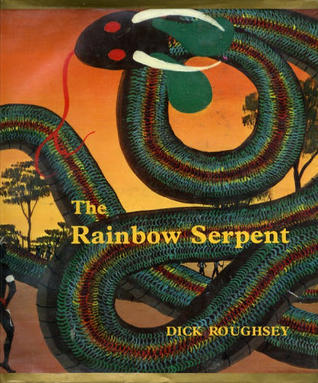
And this is where today’s post comes in, because where best to start telling stories but to children, both First Nations and other. My first experience of First Nations picture books goes back about 50 years to Dick Roughsey’s (Goobalathaldin’s) The giant devil-dingo (1973) and The rainbow serpent (1975), both of which I bought in the 1970s. They share the culture of the Lardil people in the Gulf of Carpentaria. Most of his succeeding books were written/illustrated with Percy Tresize, in a successful collaboration that would have been a great example for last year’s post on collaborations!
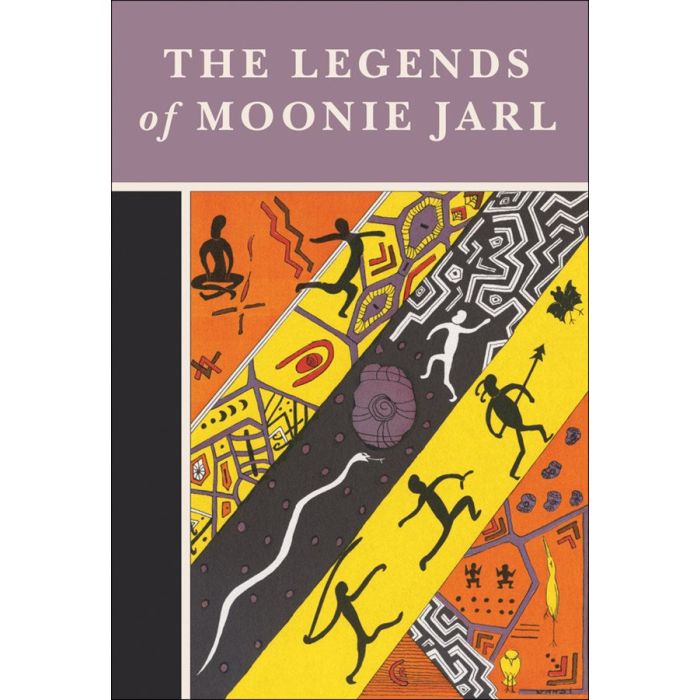
However, it seems that the first children’s picture book written by a First Nations Australian was published in 1964, The Legends of Moonie Jarl, by Butchulla siblings Moonie Jarl (Wilf Reeves) and Wandi (Olga Miller). This was identified around 2004 when Juliet O’Connor, a librarian at the State Library of Victoria, was researching historical Australian children’s literature. According to Dymocks Children’s Charities, the book “tells the traditional stories of the Butchulla people, the Indigenous people of Fraser Island and the Fraser Coast, Queensland … and gives a deeper understanding and appreciation of Butchulla culture among the broader community”.
Before this, Oodgeroo Noonuccal’s Stradbroke Dreamtime (1972) was believed to be the first First Nations Australian children’s book. I guess the point is that it was around the mid-60s to mid-70s that things started to change in terms of First Nations people being able to publish their own stories – for children (and of course adults). Many of these early books focused on sharing the traditional stories, including creation stories, of their the authors’ people. Noonuccal’s book, however, contains both traditional and contemporary stories about her growing up on Minjerribah (Stradbroke Island).
In the 1980s, another jump occurred with the establishment of First Nations publishers, like Magabala Books in Broome in 1987, and more pro-active publishing by mainstream publishers, like Fremantle Press and UQP. Magabala Books, in particular, has made a point of including children’s literature in its publishing program.
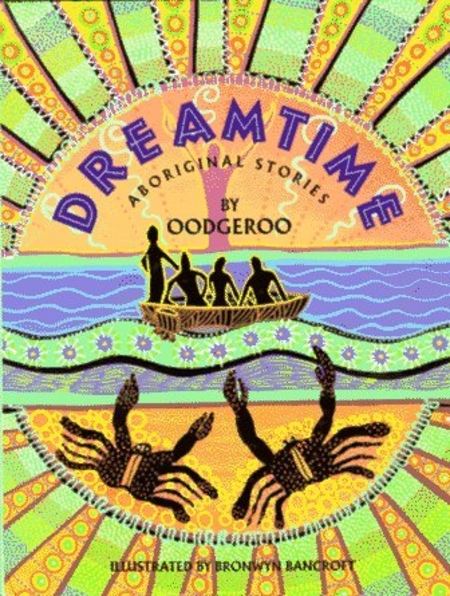
Around this time, and into the 1990s, another name appeared on the scene, Bandjalung woman, Bronwyn Bancroft, who illustrated many children’s books, including new editions of classics, like Stradbroke Dreamtime.
By the 21st century, picture books were increasingly taking on contemporary stories, in addition to sharing traditional ones. Examples include the Welcome to our country series by Adam Goodes, Ellie Liang and David Hardy, and Come together: Things every Aussie kid should know about the First Peoples (2022) by Yorta Yorta and Gunditjmara man Isaiah Firebrace, Mununjali and Fijian artist Jaelyn Biumaiwai, and Keisha Leon, which aim to introduce First Nations history and culture to children.
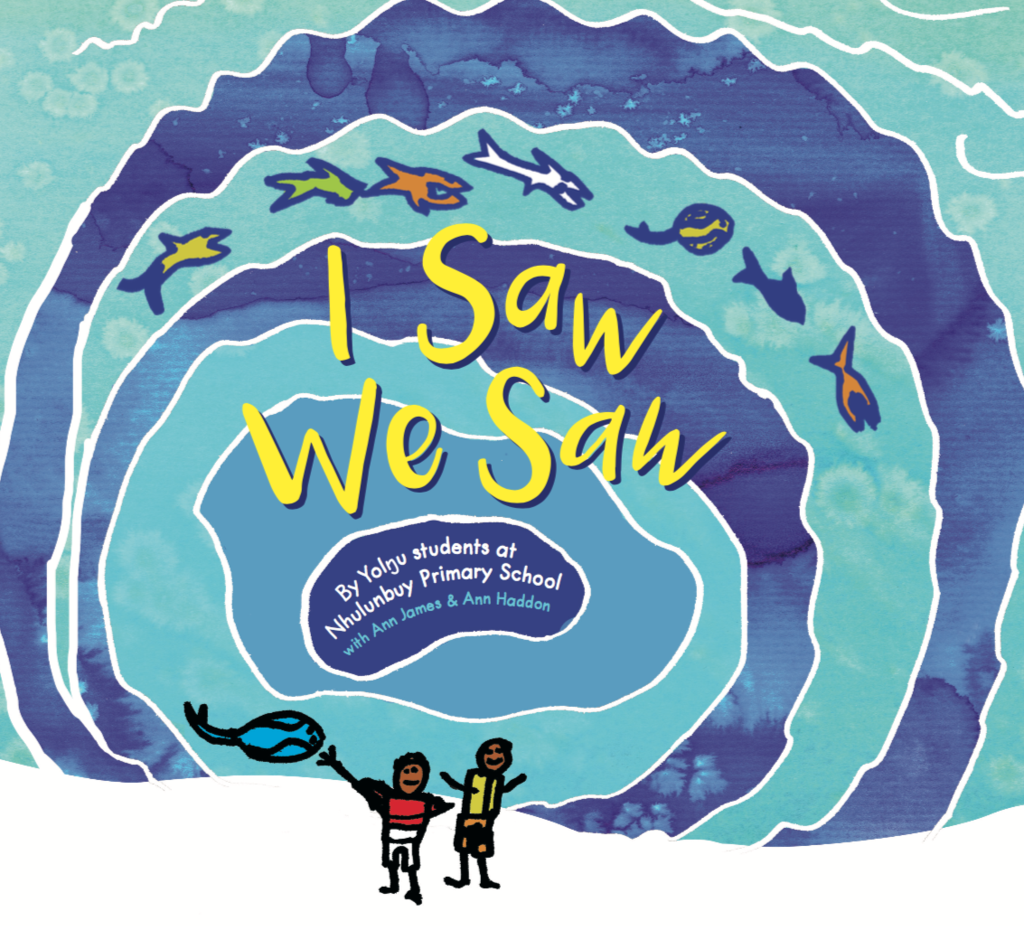
There is also, as there is in adult fiction, an increasing inclusion of language in children’s picture book as part of an overall project to revive language. Ceremony in the Welcome to our country series integrates traditional language into its rhyming story. Another example is I saw, we saw (2019) (my review), created by the Nhulunbuy Primary School, and sharing Yolngu language and culture. This book is also part of a specific project offered by the Indigenous Literacy Foundation through its Community Publishing Program.
The Aboriginal Studies Press (from AIATSIS) is Australia’s oldest First Nations publishing house, having been established in 1964, but it was initially a scholarly publisher. By the turn of the century, however, it was diversifying into other areas including children’s picture books, many of them in language.
Collaborations, which were there 50 years ago, continue today. While it wasn’t framed that way then, today’s collaborators see these partnerships as actively contributing to reconciliation, truth-telling and knowledge-sharing. The aforementioned Welcome to our country series sees a three-way collaboration, between the Adnyamathanha and Narungga man Adam Goodes, non-Indigenous journalist Ellie Laing, and Barkindji artist David Hardy.
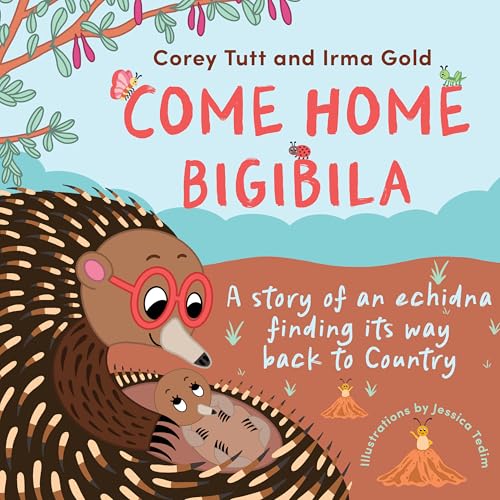
One that I plan to post on soon is Kamilaroi man Corey Tutt and Irma Gold’s Come home, Bigibila. This book introduces concepts like country and place in a way that’s accessible to young children. (I read this recently to Granddaughter Gums, who then, on my next visit, asked for it again. Finally, we move on from Little mouse, the red ripe strawberry and the big hungry bear, delightful as it is!)
Of course, there have been controversies along the way, with appropriation being a major issue. The most recent once, however, saw a First Nations book caught up in a different issue altogether. Wiradjuri poet Jazz Money’s poem Bila, A river cycle had had been turned into a picture book through a collaboration with illustrator, Matt Chun, but in April UQP announced that they would destroy the entire print run after accusations that a completely unrelated essay by Chun was antisemitic, resulting in a multiple-author boycott and staff resignations. As of today, as far as I can tell, the book remains cancelled, and this publisher, much admired for its support of diversity, is in crisis.
Overall, however, the picture for First Nations children’s picture books is positive. Story is a powerful tool for working through ideas with children – as well as for entertainment. Australia has long had a strong children’s publishing culture, and it is encouraging to see First Nations storytellers being an increasingly big and visible part of this.
Sources
Dennis Altman, “UQP has cancelled a children’s book illustrated by Matt Chun, citing antisemitism“, The Conversation, 23 April, 2026
Juliet O’Connor, Postcolonial Transformation and Traditional Australian Indigenous Story, 2006
Juliet O’Connor (I think), Celebrating Indigenous children’s books, State Library of Victoria Blog, 2016
Click here for my previous NAIDOC Week-related posts.
Have you read any First Nations picture books? And if so, I’d love to hear your favourites.


The covers of these book have the most beautiful art work. I bought three NAIDOC week t shirts as I like the art so much and love to support the indigenous people.
I agree Pam. A lot of First Nations children’s books do have great art – and they are memorable. The two Dick Roughsey ones I bought way back when are imprinted on my brain. But the new ones are generally great too.
I own a few autobiographies by First Nations women published by Magabala Books. They are all women from the Stolen Generations and are worthwhile reading to understand the trauma of forced disconnection from family and Country. In the current political climate in Australia, they are a reminder that most of us are migrants or descendents of migrants and before the Europeans, our land was not “monocultural”. I am very much looking forward to the NAIDOC programming on SBS and NITV this year.
Thanks Jenny. Magabala is a great publisher and, from the outside, seems to be surviving. I hope their books are making it into the main booksellers. I mainly visit my local independent so I don’t know what is happening around the traps.
I love that Granddaughter Gums requested a re-read! This is the best compliment a kid can give. And thanks a million for featuring Come Home, Bigibila 🙂
I did too, Irma. You never know. Glad to give Come home, Bigibila, a little heads up.
I try and buy Magabala books for my younger grandchildren, from Paperbird books in Fremantle if I can get down there. I have memories of white writers telling ‘Dreamtime’ stories in the 1980s when my kids were young. Did I buy any? I hope not. (And then there’s Patricia Wrightson who Michelle Scott Tucker wrote about for us at the Australian Women Writers site. I had, and probably still have The Crooked Snake (1955)).
Thanks Bill. Do they like the stories? Re Wrightson, I decided to just reference the appropriation issue rather than delve into it because it’s complex and worthy of its own post. I could have linked to Michelle’s post if I’d remembered!
I’m kind of amazed at how diverse children’s books in the US are at this point. They talk about topics like having two parents of the same gender or bullying or having ADHD or gender identity, etc. I haven’t read a children’s book in quite some time, but I wonder if those books are informative and help children be open to different ideas, or if they’re pushing an agenda a bit too hard. I think it’s important that a story not be too moralistic, whether that book is contemporary or from 200 years ago.
Good question Melanie. I think that as before, there’s the whole range from the clearly didactic/moralistic to the highly subtle. I’ve seen contemporary books across the spectrum. The former stand out and usually put me off. My guess is that there are fewer of the former now because we are more attuned to the idea that overt didacticism doesn’t work.
Come home, Bigibila, is a good example of what I see as an effective approach. Its underlying idea is to “teach” the importance of country (or place) in First Nations culture BUT it is subtle because it is told through a baby echidna, and the story surrounds a traditional trope of a mum thinking her child is old enough to stay put while she goes looking for food but of course as soon as the mum disappears the child decides to venture out. Completely relatable and the message is a subtle one that could be brought out more directly in a classroom, and which can include talking about the different ways in which place is important in all our lives.
There are so many First Nations picture books now, it’s wonderful to have so much choice. When I first started bookselling we had one small section on the end of the shelf devoted to FN picture books, now we have two whole shelves for them.
That is great to hear … and is sort what I thought was happening.
I have such wonderful memories of the Rainbow Serpent. I would have been about 7-8 years old (mid 1980s) and my dad would take us to the Library in Parramatta, and on this one particular occasion they were doing a reading of this book, and so with all the other kids I sat and listened as the librarian read it, showing us the pictures as she went. I can remember thinking, wow, this is the most beautiful story I have ever heard, I loved the magic of it and the Australian-ness of it. I then went through my entire school life wondering why we had no exposure to aboriginal history at all, only of white colonisation!
Thank you for reminding me of this beautiful book!
What a lovely story Rach … I love that this book meant so much to you and also made you realise so much too!
Returning to the library after-the-melt, I checked to see what new books by Indigenous writers had been added to the collection and was both happy and disappointed that so many of them were children’s books: happy because I want children to read them and especially for the dual-language which is increasingly common here, too, but disappointed because they are large and hard to fit into my bike bags (but I’m sure most borrowers are just carrying them as far as a vehicle) and I am a not the best rider to begin with. heheh A Northern Cree writer who’s published several for children here is Tomson Highway (also known for drama, a novel and a memoir), which retell stories of his life growing up with his brother that have a gentle humour and intense compassion with simple, resonant illustrations.