Special Book and Event Giveaway for Jessica White’s Hearing Maud

Book cover

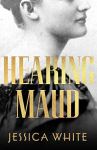
Regular readers here will know that I very rarely do give-aways. However, when Jessica White, who is on the Australian Women Writers Challenge team with me and whose novel Entitlement I’ve reviewed, asked whether I’d be happy to do a giveaway for her latest book, Hearing Maud, and her conversation with Inga Simpson at Muse, how could I refuse? Of course, I couldn’t, and didn’t want to.

So, here’s the deal:

On Saturday 2nd November, from 4.30 – 5.30pm at the wonderful Muse Books and Cafe, Jessica will be in conversation with writer Inga Simpson about her hybrid memoir on deafness, Hearing Maud, which details Jessica’s experiences of deafness after losing most of her hearing at age four. It charts how, as she grew up, she was estranged from people and turned to reading and writing for solace, eventually establishing a career as a writer. Central to her narrative is the story of Maud Praed, the deaf daughter of 19th century Queensland expatriate novelist Rosa Praed. In researching Maud’s story, Jessica reached back into the history of the deaf and realised how, although her and Maud’s stories are a century apart, they both still struggled with the expectations that they be like hearing people.

Jessica is offering not one but TWO giveaways:

  • a copy of the book and a free ticket to this event; or,
  • a copy of the book

Please leave your name in the comments, noting which of these two draws you wish to go into, by midnight AEDST Tuesday 29th October.

The draw, using a random number generator, will be made on Wednesday 30th October:

  • The winner of the book and event will just need to turn up at the event as his/her name will be recorded at the door.
  • The winner of the book will need to email his/her address as requested in the announcement email.

Jessica and I look forward to hearing from you!

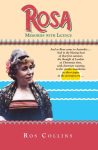
Ros Collins, Rosa: Memories with licence (#BookReview)

Book coverMemoirs are tricky things. There are readers who love them, readers who hate them, and readers like wishy-washy me who sit in the middle. I sit in the middle because, for a start, I don’t like to say “never” when it comes to reading. I sit in the middle because I couldn’t cope with a steady diet of memoirs, particularly those how-I-got-over-my-[whatever trauma or challenge it was], which is certainly not to say that I don’t admire those memoirists or don’t enjoy some of their fare. And, I sit in the middle because I don’t like formula, because I like books that try to tackle their subject or their form a little differently. So, the memoirs I mostly read are those which play with form or whose subject matter offers something different. Ros Collins’ memoir, Rosa: Memories with licence, does both of these.

First, the subject-matter. Rosa deals with, as the book description says, “Anglo-Australian Jews [who are] often overlooked in fiction and memoir.” Having known many Anglo-Australian Jews through my life, I was interested to read Collins’ discussion of her family’s life, as a contrast to those more directly Holocaust-influenced lives of European Jews we’ve all read about. It’s not easy being Jewish, I believe, regardless of personal or family history, so I was interested to read this story.

Then there’s the form. The subtitle, “memories with licence”, suggests that this is not going to be your usual memoir. For a start, it is told third person about a person called Rosa, which is the name given to the author Ros by “two elderly men from Southern Europe” whom she met on a recent Anzac Day Eve. She goes on to say, in her Introduction, that it is this “Rosa who wanders through the following stories, sometimes fictionally, sometimes autobiographically”, though I hazard to guess it is mostly autobiographical – just told one voice removed! Near the end of the introduction, she says that:

Rosa is much more personal [than her previous family history book, Solly’s girl] – and freely written – and I have taken liberties with the truth. Memoir with a little fiction, or fiction with a little history? It’s hard to say. Memories with licence.

The book has been classified on its back cover as Memoir. And that is how I have read it, as it reads true.

So, why tell it this way? Collins says she wishes “to entertain”. Her aim is not to delve into world history, cataclysmic events, or, even, dystopian futures. She wants, instead to shine a light on lives that may not be well known to many Australians, on Anglo-Australian Jewish lives. Taking a third person voice enables her to tell her story a little more objectively, to comment on what people, in particular Rosa, were, or may have been, thinking and feeling. Third person also enables her to get out of the main subject’s voice and head. It enables her to suggest what others might be thinking, such as Rabbi Szymanowicz:

Rabbi Szymanowicz stopped surreptitiously searching the room for younger people with whom he might more profitably connect, and looked at her. Seldom, if ever, had he met an elderly congregant quite like her; for an eighty-something-year-old Rosa did not come across as a sweetly gentle Miss Marple – more likely to be opinionated and argumentative.

This sort of statement could not be made in the same way in a traditional memoir. A traditional memoirist can not so directly get into the head of another character. A traditional memoirist can only suppose what another character might think (unless they are quoting documented facts from, say, letters). Taking this third person approach gives Collins more licence. She can, for example, “guess” about the relationship between her two grandmothers, two women who were not happy because they lost significant supports, when Rosa’s parents married.

All this could be disconcerting to some readers, but Collins has been honest from the start about what she is doing. Ultimately, the important thing is whether the book rings true and I believe it does. Rosa’s character – her humanity, her sense of her own flaws, her uncertainties, as well as her pride in her achievements – shines through.

Another way in which the book departs from traditional memoir is in its lack of linearity. While there is an overall movement from past to present, Rosa is not told chronologically. Instead, each chapter or “story” takes up a theme through which the story of English-born Rosa (Ros) and Australian-born Al (Ros’s husband Alan) is told. Chapter 4, “Jellied eels”, for example, explores food, Jewish culture, and Rosa’s navigation of it all. Collins explains how, as a child, Rosa had been told what she could and couldn’t eat, but not told why. Her mother expected her to “just accept the traditions” but of course this is not the way to hand down traditions, not, certainly, “to a difficult daughter – full of unnecessary questions”!

Collins also tackles, gently and without polemics, what Israel means (or, might mean) for Anglo-Australian Jews. For those of us who find Israel and the politics of the region highly problematic, it’s useful – though not necessarily convincing – to be reminded that in Israel, as Rosa quotes Golda Meir saying, “nobody has to get up in the morning and worry about what his neighbours think of him. Being a Jew is no problem here.”

Rosa, then, is a warm-hearted, open-minded “memoir” written by an Anglo-Australian Jewish woman for whom being Jewish, as for many I believe, is as much, if not more, about history and heritage as god and religion. In this book, Collins interrogates her family’s past, and her late husband’s story, in order to come to a better understanding of herself, and of what she would like to pass on to the next generation. This book is testament to that soul-searching, and makes good reading for anyone interested in the life-long business of forming identity, Jewish or otherwise.
AWW Challenge 2019 BadgeRos Collins
Rosa: Memories with licence
Ormond: Hybrid Publishers, 2019
ISBN: 9781925736113
186pp.
Monday musings on Australian literature: Writers Victoria

When I wrote my last post in this Monday Musings series on Australia’s writers centres, author Angela Savage, who is also the current Director of Writers Victoria, commented that the centre was celebrating its 30th anniversary this year. She was hinting, in the nicest way of course, that I should “do” Writers Victoria this year – so, here I am.

Like Writing NSW and Writers SA, Writers Victoria changed its name (in 2011) from its original name, the Victorian Writers’ Centre. A not-for-profit membership organisation, it was created in 1989 by a group of writers who believed Victoria’s writing community needed a professional organisation. I love the clarity and comprehensiveness of their overall goal:

Writers Victoria supports and connects all types of writers at all stages of their writing careers.

This is supported by more specific purposes as listed on their About Us page. It’s not surprising that what they do is similar to other centres, but, like the others, they have their own flavour. They also operate within a very specific environment, given Melbourne’s status as a UNESCO City of Literature and the presence of The Wheeler Centre (for Books, Writing, Ideas). The then Victorian Writers Centre played an instrumental role in achieving both of these. Writers Victoria is, apparently, “the largest writers’ organisation in the country” and “the country’s leading employer of writers” through their programs.

You will have read enough of these writers centre posts now to know what they offer – courses and workshops, mentorships, manuscript assessments, fellowships, writing spaces or studios, to name the main activities. Writers Victoria also specifically supports regional writers, young writers, diverse writers, and writers with a disability. They also advocate for writers and the literary culture.

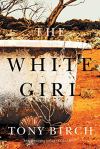
Book coverTheir diverse writers program, for example, supports “writers who face barriers in the development of their writing careers”. The programs are, well, diverse, catering for women of colour, Asian Australian writers, Aboriginal and Torres Strait Islander people, refugee writers, and so on. The program recognises that money can be an issue for these writers, so among the support it offers are bursaries, and paid commissions. The indigenous writing program has used writers you’ve met here – Tony Birch, Anita Heiss and Bruce Pascoe.

For writers with a disability they have a program called Write-ability. Its aim is “to remove some of the barriers that have traditionally prevented people with disability from connecting with writing and publishing”. This support includes regional and online programs, and fellowships.

30 Years

However, because this year is their 30th anniversary, I thought I’d focus mainly on how they are celebrating this milestone – particularly since October was their establishment month.

Here are some of the ways they are celebrating their anniversary:

Flash fiction challenge

In April – the first month of the year with 30 days – they held a Flash Fiction Challenge, which they promoted as “30 days. 30 prompts. 30 Words.” For each day they offered a word prompt, and writers had to submit their 30-word works of flash fiction inspired by that word by midnight of that day. The 30 winners are shared at the link I’ve given, with the first winner, for the word Grit, being blogger Tony Messenger. As a wordlover, I enjoyed the variety of the prompt words, which included Baroque, Gloss, Remember, Nacreous, and Perfectionism.

For a clever, pointed piece, check out Sumitra Shankar’s Beginning, on April 21. It’s a perfect example of the power of flash fiction.

Writers on Writers Vic

Book cover for Toni Jordan's AdditionFor each month – they are up to September – a Victorian writer comments on what Writers Victoria means to them. The writers to date are:

  • Lee Kofman (who co-edited Rebellious daughters which I’ve reviewed)
  • Mark Brandi
  • Toni Jordan (whose Addition, Fall girl and Nine days, I’ve reviewed)
  • Melanie Cheng (whose Australia Day I really must read)
  • Shivaun Plozza
  • Fiona Wood
  • Andy Griffiths (with whom I’m sure to soon have a close acquaintance through my grandson!)
  • Anna Spargo-Ryan (whose The paper house I’ve reviewed)
  • Else Fitzgerald

You can check them all out by going to the site’s page, but to whet your appetite, here are some of the things they say:

… the main antidote to that famous writer’s malady – loneliness, isolation – is in hanging around with peers. Today writers’ centres seem to serve a similar function to that of literary salons from the previous centuries. (Lee Kofman)

I always tell aspiring and emerging writers about Writers Victoria. Many, like me, are just bumbling along, feeling lost and isolated. Writers’ centres like Writers Victoria are invaluable in making writers feel less alone. (Melanie Cheng)

First, I would wholeheartedly recommend it [joining Writrs Victoria]. But second, know what you want to get out of it. A centre like Writers Victoria has something to offer writers at all stages. (Anna Spargo-Ryan)

And so, a very big Happy Birthday to another active writers centre. Australians should be proud of the energy and commitment centres like this one are putting into both supporting all writers and keeping our literary culture alive. Oh, and thanks to Angela Savage for the birthday heads up!

Writers Centres covered to date: the ACT, New South Wales, the Northern Territory, Queensland, South Australia and Tasmania.

Monday musings on Australian literature: Growing up [name the aspect] in Australia

With my Japanese trip almost over, I’m posting just a quick – but nonetheless interesting, I hope – Monday Musings this week.

Anita Heiss, Growing up Aboriginal in Australia

Some of you will have guessed what this title refers to; it’s to the little recent flurry of anthologies being published in Australia in which contributors write about growing up Asian, or Aboriginal, or name-a-specific-situation in, yes, Australia. I have read one of them, myself, Anita Heiss’s Growing up Aboriginal in Australia.

Here is a list of the books (as I’ve found), in publication date order:

Book Cover

It doesn’t take a genius to see that publisher Black Inc has got a stranglehold on the theme. You could be forgiven for being a bit cynical about bandwagons and such, except that Black Inc is a thoughtful, quality publisher, and the editors of these books are established people in their fields who have walked the talk. They have significant reputations which establish their credentials and which, I presume, they’d want to maintain. (I don’t think I’m being naive here.)

Also, in one case at least, the Disabled one, it was the editor who approached the publisher to do the book (presumably, of course, on the back of the series to date). Black Inc’s publisher Kirstie Innes-Will was apparently delighted that Findlay approached them. Innes-Will says:

Part of the strength of the Growing Up series is the way it has evolved organically, championed by editors from different communities. The way these books have been embraced by readers shows how much representation matters. Growing Up Disabled will be an invaluable contribution to that tradition.

Book cover

If you believe, as I do, that reading can open your mind to the lives and experiences of others and therefore help you understand people better, then these books (if as good as the one I have read) are worth publishing. And, if you believe, as I do, that reading about your own experience can help you understand your own life, can help you manage your own life, can perhaps even help you survive your own life, then these books (with the same proviso) are worth publishing.

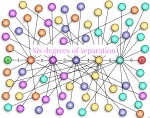
Six degrees of separation, FROM Three women TO …

It is the first Saturday of the month again, which means it’s time to do the Six Degrees of Separation meme. If you are new to blogging and don’t know what that is, please check our host Kate’s blog – booksaremyfavouriteandbest

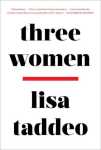
Book coverIt all starts, of course with Kate setting our starting book, and this month’s is – well, back to usual after a record run – that is, back to a book I’ve not read. Kate described it as a book everyone is taking about, Lisa Taddao’s Three women. I initially commented that maybe everyone is, but I’m not one of them. However, on reading a bit about it at GoodReads, I realise that I have heard the author interviewed. Her name and title just hadn’t clicked.
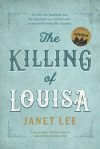
Book coverSo, Lisa Taddao’s Three women, for those of you who don’t know, is a non-fiction book in which the author spent nearly ten years researching the sex lives of three American women. It is, says the GoodReads blurb, “the deepest nonfiction portrait of desire ever written.” This year I read an historical fiction work in which a woman’s desire – or, at least society’s attitudes to/assumptions regarding her desire – resulted in her execution. The book is Janet Lee’s The killing of Louisa (my review).
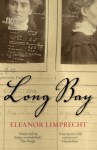
Another historical fiction work inspired by the story of a real Australian woman who was sent to gaol, this time for performing abortions, is Eleanor Limprecht’s Long Bay (my review). We do know that her character did the crime she did time for, but of course, her story was not as straightforward as those who imprisoned her would believe, and many of us would argue that she and her mother-in-law were performing a needed service, not a crime, albeit was also lucrative.
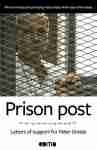
Since we are talking questionable or unjust imprisonments, I’m moving next to a highly questionable and unjust one, that of Australian journalist Peter Greste who was arrested in Egypt in 2013 for “spreading false news, belonging to a terrorist organisation and operating without a permit”. He spent over a year in prison there before his release was effected. While he was in gaol, a letter-writing campaign was organised to keep his spirits up (to which Ma Gums contributed). The book Prison post: Letters of support for Peter Greste contains a selection of those letters.
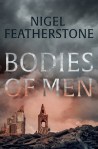
Nigel Featherstone, Bodies of menI think that’s enough of prisons for a while – though in my next book one of the characters was, in fact, close to being sent to military prison so perhaps this is a double link1 The book is Nigel Featherstone’s Bodies of men (my review). Much of it is set in Egypt during World War 2.
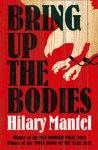
Hilary Mantel, Bring up the bodiesAnd now, just because I can, I’m going to take the easy path and link on title, so my next book is Hilary Mantel’s Bring up the bodies (my review), the second in her (expected) Cromwell trilogy. It was published in 2012, just three years after the first in the series, Wolf Hall (2009). When, oh when, we have all been asking, is the third one coming? Well, it has finally been announced I believe, and we should see The mirror and the light in 2020.
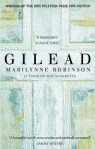
Marilynne Robinson, GileadAnother trilogy that was published over almost as long a time-frame is Marilynne Robinson’s Gilead trilogy, which started with Gilead (my review) in 2004, and ended with Lila in 2014. I know, it’s not quite the same sort of trilogy as Mantel’s. In fact some call them a “suite” of novels, and others call them “companion novels”, but there are three of them and they are generally described as a trilogy so, you know, all’s fair in love, war and six degrees.
I think I’ve done it! I’ve taken a book everyone is talking about, and created a chain that is probably a bit odd, but it makes sense to me. It includes a more than usual number of historical fiction novels, so most of our travels have been to past centuries. However, we have again travelled the world from the starting book’s America to Australia to Egypt to England and back to America. I’m not sure what John Ames would think about women’s desire, but he was a thoughtful, humane man and would, I think, wish them well!

And now, my usual questions: Have you read Three women? And, regardless, what would you link to? 

Four books that changed me

A couple of weeks ago author and blogger Angela Savage posted the contribution she’s made to a column in The Age newspaper in which the columnist is asked to identify Four books that changed me.

Savage, being a writer – her works include The dying beach (my review) and her latest novel Mother of Pearl (on my TBR) – chose books which changed or affected or inspired her life as a writer. Lucky her to have such theme by which to narrow her selection. No such luck for me. Even so, she said she had to whittle her selection down from about 400 to 4! It’s hard, of course, but I’ve decided to choose books that have taught me something about life. I’m going to list them in the order than I first read them because, in fact, three of them I’ve read more than once. The other I would happily read again.

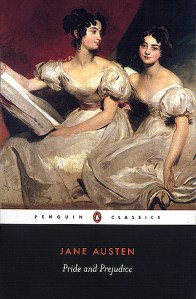
Book coverFirst up is Jane Austen’s Pride and prejudice, of course. You knew there had to be a Jane Austen in my list didn’t you. It was hard to choose which one, in a way, because all of Austen’s books teach me about people, and they keep teaching me every time I read them, because every time I read them I’m at a different point in my life. The richness of her observation and understanding is timeless and unsurpassed. I chose Pride and prejudice because it was the first one I read, in my early teens, and is the one that hooked me on her. teaches me so much about life, about people’s  – a book that I can read again and again
Albert Camus, The plagueNext is Albert Camus’ The plague/La peste (my review) which I first read in my very late teens. I love Camus’ exploration of how different people react when presented with a difficult life-threatening situation – like a plague or, say, the Holocaust. I know which character I’d like to be, but would I? This book, I hope, keeps me honest.
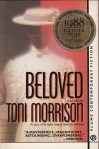
Book coverAnd then there’s that terrifying book, Toni Morrison’s Beloved, which I first read with my American reading group in 1992, when I was living there, and then again with my Australian reading group a few years later. If you want to read a book about the devastating impact of slavery – of its horror, of the way it destroys all sense of self, of agency, of hope – then this is the book to read.
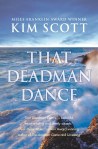
Kim Scott That Deadman DanceAnd finally, I wanted to choose a book that has moved along my understanding of Australian history. There are many I could have chosen – so many great books by indigenous writers – but I think Kim Scott’s That deadman dance (my review) is a foundational book, because it reminded me of/showed me the generosity of indigenous people in the early days of settlement and how it was thrown back in their faces by people who didn’t respect them as human beings (let alone as owners of the land they were “taking up”.) Oh, and I read it in 2011, the year after it came out. Was it that long ago?
If you asked me to do this next year, would I choose the same books? I don’t know, but I think I probably would, because each of these books remains vividly in my mind years after reading it.

And now I’m going to ask you what Angela asked her blog readers, what four books would you choose?

Monday musings on Australian literature: Australian novels in Japan

Here is my second Monday Musings inspired by my current Japanese travels. It is, loosely, a companion piece to one I wrote three years ago on Australian literature in China. That was inspired by an article I found in Trove. This one, however, was been inspired by a program I discovered via Google, called The Masterpieces of Australian Contemporary Literature.

The website describes the series as follows:

The Masterpieces of Australian Contemporary Literature Series was established by Gendai Kikakushitsu Publishing in 2012. With the support of the Australia-Japan Foundation, the program aims to increase the recognition of contemporary Australian literature by translating and publishing Australian novels in Japan. Not only showcasing the excellence of Australian literature, the series looks to reveal ‘Contemporary Australia’ and share with the Japanese audience the diversity of its culture and society.

ABC RN Books and Arts Daily discussed the project after the launch of the first book. The Australian ambassador to Japan at the time, Bruce Miller, comments that Japanese interest in Australian Aboriginal culture comes from their interest in ancient cultures, and because it’s unique. He also talks about the Department of Foreign Affairs and Trade, which is supporting the project, being comfortable with sharing the positive and negative aspects of our culture. Professor Kate Darian-Smith from the University of Melbourne says that part of the project is to support and foster the teaching and discussion of Australian literature in universities and by the public.

So far, apparently, six books have been so translated and published – and here they are in the order they were done (with the date they were launched, and links to my post on that book, if any!)

  • David Malouf’s Remembering Babylon, trans. by Rumi Musha (2012)
  • Tim Winton’s Breath, trans. by Keiji Sawada (2013, my review): the launch included a discussion between Japanese writer Natsuki Ikezawa and Kate Darian-Smith.
  • Christos Tsiolkas’ The slap, trans. by Keiji Minato (2014, my review): Tsiolkas attended the launch and took part in a symposium.
  • Kate Grenville’s The secret river, trans. by Tomoko Ichitani (2015): Grenville attended the launch, along with “Ms Yukiko Konosu, a well-known translator of foreign literature”.
  • Kim Scott’s That deadman dance, trans. by Masaya Shimokusu (2017, my review): Scott attended the launch, along with two prominent Japanese writers, Ms Akiko Shimoju and Mr Masaaki Nishiki, to talk about “Australian culture and literature, and the role literature plays in multicultural societies”.
  • Helen Garner’s This house of grief: The story of a murder trial, trans. by Megumi Kato (2018, my review): Garner attended the launch, and took part in a panel discussion with Japanese author Kyoko Nakajima discussion Australian and Japanese perspectives on “the non-fiction novel”. You can read a report of the launch event here.

I’m thrilled that I have read, and liked (in different ways and for different reasons) every one of these six books, some, of course, before blogging. I wonder what the next book will be?

Kim Scott That Deadman DanceAll these books have won major awards and/or been bestsellers (by Australian terms, anyhow). None are simple or easy books, and none present Australia at its best. In this sense they represent “true” literature that grapples with real issues, and clearly meet the goal of revealing ‘Contemporary Australia’ (in all its messiness.) Clearly, they appreciate that historical novels also say something about “contemporary” Australia. It’s encouraging that the program is still going, and is supported, it seems, by quality launch events. So many visionary programs like this seem to flounder.

Oh, and by-the-by, I discovered that in July this year, Monash University held a Translation in transition: Australian literature in Japan. It was to focus in particular on this Masterpieces program, which they describe as a 10-year project. The seminar was being given by Tomoko Ichitani who translated Grenville’s book for the project. She is apparently working on a “collaborative translation of Alexis Wright’s Carpentaria“. I wonder if that’s for this program?

Anyhow, what book would you choose next? (I have a few ideas.) And do you have any comments on those chosen to date?

ABR’s Top Twenty Aussie novels of the 21st Century

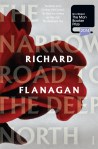
Ten years after publishing its first ABR readers fan poll, the Australian Book Review asked its readers again to nominate their best Australian novels, but to keep it to those published this century. In its intro to the resultant list, ABR says that Richard Flanagan’s novel The narrow road to the deep north emerged as the clear winner. It also noted that Tim Winton’s Breath came fourth as it did in the original FAN Poll for the best Australian novel of all time. (That poll was won by Tim Winton’s Cloudstreet). Two other books appeared in the top ten (I think they mean) of the two lists: Alexis Wright’s Carpentaria and Christos Tsiolkas’ The Slap.

In my report of that first poll, I wondered whether Breath’s high ranking was “largely due to its still being fresh in people’s minds”. Clearly it’s more than that, which is fine with me because it’s a book that has remained vivid for me.

You can see the whole list, plus reviews and interviews for the Top Ten, on ABR’s page.

The top twenty

  1. Richard Flanagan’s The narrow road to the deep north (2013) (my review)
  2. Trent Dalton’s Boy swallows universe (2108) (my review)
  3. Alexis Wright’s Carpentaria (2006) (my review)
  4. Tim Winton’s Breath (2008) (my review of sorts)
  5. Markus Zusak’s The book thief (2005) (my review)
  6. Peter Carey’s True history of the Kelly Gang (2000) (read before blogging)
  7. Heather Rose’s The museum of modern love (2016) (my review)
  8. Charlotte Woods’ The natural way of things (my review)
  9. Christos Tsiolkas’ The slap (2008) (my review)
  10. Hannah Kent’s  Burial rites (2013) (my review)
  11. Craig Silvey’s Jasper Jones (2009) (my review)
  12. Michelle de Kretser’s Questions of travel (2012) (my review)
  13. Jane Harper’s The dry (2016)
  14. Kate Grenville’s The secret river (2005) (read before blogging)
  15. David Malouf’s Ransom (2009) (my review)
  16. Peter Temple’s Truth (2008) (my review)
  17. Steve Toltz’s A fraction of the whole (2008) (my review)
  18. Gillian Mears’ Foal’s bread (2011) (my review)
  19. Kim Scott’s That deadman dance (2010) (my review)
  20. Shirley Hazzard’s The great fire (2003) (read before blogging)

Comments? Not many. After all I’m on the road in Japan and my time is short. I am astonished though, to discover that I’ve read nineteen of the top twenty, and most of those I’d regard as worthy of faring well in such a list. Some of course are very recent, and may not appear in ten years time, given the century is so young. Nine of the twenty are by women, which is a fair representation, and two are by indigenous writers. There’s also some immigrant literature here, that is, fiction dealing with issues relating to our multicultural society. There are coming of age stories, some crime, a dystopian novel, and quite a bit of historical fiction. There are books grappling with our uncomfortable history, and there are quieter more contemplative books. In other words, a broad range.

Although there are notable omissions – Murnane springs to mind, for example, but there are many many others – I’m not going to get into what I think should or shouldn’t be here. Sorry!

Thanks to Colin Steele who organises ANU/The Canberra Times Meet the Author events that I try to attend.

And now, over to you. I have a train to catch.

Favourite quotes: from Scottish novelist Sir Walter Scott’s Waverley

Finally, the third in my funny little Favourite Quotes series which I resurrected earlier this year.

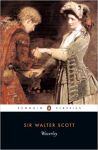
Waverley book coverIn August I posted a review (of sorts) of the first volume of Sir Walter Scott’s first novel, Waverley, and I included a quote describing his hero’s unstructured, undisciplined reading encouraged by a theory of education that sounds a bit like Mary Poppins’ “spoonful of sugar”. The longer quote is as follows:

With a desire of amusement therefore, which better discipline might soon have converted into a thirst for knowledge, young Waverley drove through the sea of books, like a vessel without a pilot or a rudder. Nothing perhaps increases by indulgence more than a desultory habit of reading, especially under such opportunities of gratifying it. I believe one reason why such numerous instances of erudition occur among the lower ranks is, that, with the same powers of mind, the poor student is limited to a narrow circle for indulging his passion for books, and must necessarily make himself master of the few he possesses ere he can acquire more. Edward, on the contrary, like the epicure who only deigned to take a single morsel from the sunny side of a peach, read no volume a moment after it ceased to excite his curiosity or interest; and it necessarily happened, that the habit of seeking only this sort of gratification rendered it daily more difficult of attainment, till the passion for reading, like other strong appetites, produced by indulgence a sort of satiety.

I like Scott’s reference to the fact that poorer people have no option but to read deeply (and are therefore more erudite!) because they have such little access to books. How many memoirs have we read about poor children reading and rereading the few books available to them – and how much luckier many of us are today to have access to free public libraries?! Let’s hope those libraries last.

As I said in my last Favourite Quotes post, my aim is to share some interesting ideas, rather than become too bogged down in explication. But, I’d love some explication from you should you be so inspired!

Monday musings on Australian literature: Australian writers in Japan

Given I’m currently travelling in Japan, I thought I’d write a couple of Japanese-oriented posts. My first one – introductory, rather than in-depth – is about Australian writers who live or have lived (loosely defined) in Japan.

An early Australian writer who went to Japan was Rosa Praed who visited Japan around 1894–95 on her return to Australia from England. Resulting from this visit was her novel Madame Izàn: A tourist story (1899) in which, writes Clarke (see below), she “raised the then daring subject of an interracial marriage between a Japanese man and an Irish woman”. This novel is available online, but I’ll just share this little description of the characters’ arrival in Japan:

And now they were in the harbour, where among the native craft and merchantmen were French and English and American men-of-war and a fierce Russian battleship, which looked as though it could, with its big guns, gobble up, as easily at the wolf gobbled up Red Riding Hood, pretty, harmless Nagasaki, lying so peacefully at the foot of her green hills.

Praed visited at an interesting time!

Ogai Mori, The Wild GooseA different sort of Australian writer who lived in Japan, in Kyoto, for twenty years, is Meredith McKinney (who also happens to be poet Judith Wright’s daughter). She is best known as a translator of Japanese literature. Back in Australia, since 1988, and living near Canberra, she’s an associate professor at the Australian National University’s Japan Centre, and writes on Japanese related topics. An example is her analysis in Griffith Review of atomic power and Japan after the Fukushima meltdown, “Continuing fallout”. She continues to translate, her books including Penguin Classics editions of Sei Shonagon’s The pillow book and Natsume Sōseki’s Kokoro, and Finlay Lloyd’s edition of Ogai Mori’s The wild goose (on my TBR).
American-born Australian writer Roger Pulvers has also lived in Japan, mainly Kyoto and Tokyo, for many years. (He is also now based in Canberra I believe.) He’s a playwright, novelist, scriptwriter and, like McKinney, a translator and a writer on Japanese topics. This year he was awarded the Order of Australia for his service to Japanese literature and culture. There’s an extensive article on him in Wikipedia. Broinowski says of his writing:

Always evenhandedly satirical of Australians and Japanese, Roger Pulvers has returned repeatedly in his fiction, drama, and filmscripts to the Pacific war, its consequences, and the moral dilemmas it raised.

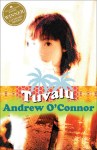
Book coverAn Australian writer who seems to have disappeared from view is Andrew O’Connor, who lived in Tokyo and Nagano for a few years in the early 2000s. His novel Tuvalu won the The Australian/Vogel Literary Award for unpublished manuscript in 2005. I read it back then, before blogging. You might think from the title that the novel is about Tuvalu, but you’d be wrong. It is set primarily in Tokyo, with Tuvalu representing an escape-fantasy. (Hmm, not now!) O’Connor captured well the life of young expats in Japan, and that strange, black, other-worldly tone you find in some modern Japanese literature.
Around the same time, some may remember, Peter Carey published a travel book, Wrong about Japan, which chronicled a trip he made to Japan with his son. It was pretty controversial at the time, because of the approach Carey took. However, Wikipedia quotes Stephen Mansfield of The Japan Times who wrote in 2018 that Wrong About Japan was “not universally appreciated when it was first published in 2005, but time has proven it to be a small, highly original contribution to books on this country.”

It seems that in this book Carey begins by appearing to be a naive tourist in Japan, but Broinkowski writes that:

Gradually however, he allows it to emerge that he has been in Japan more than once before, has done considerable research, and has excellent contacts. When in Japan, Carey doesn’t do as the Japanese do, but he respects the ascendancy of Japanese civilization, and unusually among male writers, doesn’t make a contest out of it.

Book coverAll these writers I knew about when I conceived this post, but one I didn’t know who had spent significant time in Japan is novelist and short story writer, Paddy O’Reilly. According to her website, not only has she been an Asialink writer-in-residence in Japan, but she spent “several years working as a copywriter and translator” there. The knowledge she gleaned as a result has informed several of her stories (including two in The end of the world, 2007) and a novel, The factory (2005).

And then there’s Tara June Winch who popped up serendipitously in this month’s Qantas magazine with an article titled “The journey” in the QSpirit section. She talks about having an idea for a novel set in Japan, inspired by the Japanese word hakanai, which she understands to mean “something that is beautiful or precious” because it doesn’t last long. She envisaged her character approaching Mt Fuji, but then became stuck. She writes:

I was adamant that if I could only walk up the side of the mountain myself, the story would be waiting for me in the still quiet, in the pine forests.

So what do you do? You find an artist residency, that’s what! She went to Japan with her daughter. They slept on futons on tatami mats, gradually made friends, and joined in the culture. She never did write the novel, but, she says, hakanai was “the essence of the the entire trip. Hakanai was my daughter’s childhood – beautiful and precious, just because”. We know what she means.

There’s actually quite a lot of academic writing out there on the topic, analysing interpretations, but I hope this has provided a little intro to some Aussie literary connections with Japan. I’d love to hear what you know or have read.

Sources:

Alison E. Broinowski (2101). The honbako is bare: what’s become of Japan/ Australia fiction? (University of Wollongong Research Online)

Clarke, Patricia (2003). “Two colonials in London’s Bohemia” in National Library of Australia News, XIII(12): 14–17, September 2003 (A source I used to add information about Praed to Wikipedia, a decade ago!)