Today’s post continues the discussion started in last Monday’s “gumleaf and goanna” post. It looks particularly at what reviewers were saying about setting/scene and character, through five Australian books that were reviewed in papers during the decade. There was clearly a lot of engagement in the community about the development of Australian literature, and you can expect more posts on the decade!
This post was inspired, though I’m not going to labour the point, by Eric Norton, who wrote in The Courier Mail in 1934. He comments on the over-focus in Australian literature on “some half dozen ‘peculiar’ environments — the farm, the selection, the station, the mining camp, and a few others, which, if not familiar to us in actuality, have become so through the magazines or by repute”. The stories relying on these, he says, “develop inevitably a certain sameness”. For him, “the imperishable in fiction is that which deals primarily with the shallows or the deeps of the human heart” and he concludes with:
In the creation of fiction, as in life, it is character, not setting, that counts; and it is to the Australian rather than to Australia that the local novelist must look for his inspiration.
 Brent of Bin Bin: We now know this pseudonym was Miles Franklin, but it was a pretty well-kept secret at the time. Certainly, the reviewer in Melbourne’s The Age had no idea. S/he reviews Ten creeks run (1930) (see Bill’s review), which was the second Brent of Bin Bin novel. The reviewer has mixed feelings, saying that “the same defects and the same merits” are apparent in it, but then says that “the effect of repetition is to bring out the merits more emphatically and to place the defects in the background”. This reviewer discusses both setting and character:
The canvas is crowded with minor characters, and the author has not sufficient skill to make these minor characters stand out individually; but the mass effect is good as a background to this story of station life on the Murrumbidgee more than a generation ago. Station life has never been more faithfully depicted in Australian fiction, or with so little conscious effort. Most of the more important characters are true to life, and though the story does not reveal much imaginative force on the part of the author in creating dramatic situations, he [ha!] has skill enough to keep the reader’s interest alive.
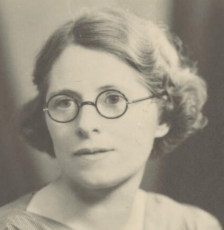
Birkett, 1939, Unknown, National Library of Australia, Public Domain, Via Wikimedia Commons.
Winifred Birkett, who won the prestigious ALS Gold Medal, for her 1934 novel, Earth’s quality. The reviewer in Melbourne’s Leader, says this book represents a “great advance on her previous book, Three goats on a bender”. S/he goes on to say that Earth’s quality,
like so many other Australian novels, has a sheep station for its setting, but unlike most of its class it is not a description of station life, but a study in characterisation. And most of the characters are portrayed with the skill of a practised hand.
S/he then describes some of the main and minor characters, noting that one of the minor characters, Anthony, a Cockney man-of-all-work, “stands out with the vividness of reality”. Fascinatingly, however, “Miss Birkett is not very successful in portraying woman characters”. The story is “somewhat bare of incident, but the literary quality of her book lifts it much above the level of most Australian novels”.
John K Ewers: A Western Australian novelist, poet and schoolteacher who was President of the WA branch of the Fellowship of Australian Writers. His second novel, Fire on the wind (1935), was reviewed in Melbourne’s Leader. It’s a story about disastrous bushfires in Gippsland in the late nineteenth century. The reviewer notes that Ewers hadn’t lived in Gippsland, but did have “relatives who spent part of their lives there, and lived through the terrible experiences of Black Thursday.” S/he then outlines the plot – a farm saga – including describing the characters, and concludes that “Although the author is not a Gippslander he knows the bush and the settlers, and on that account the background of his story has the note of realism. His best portrait is that of the aged Colliver, who, despite his narrowmindedness and his bigotry, is an engaging old man”. (ADB)
William Hatfield (pen-name of English-born writer Ernest Chapman): This author I hadn’t heard of. He was best known for his novel Sheepmates (1931), but the review I’m focusing on is for his 1933 novel, Desert saga. It buys right into our modern discussions about who can write what story, because it is, says the The Age’s reviewer, “about a tribe of aborigines in Central Australia, who, when the story opens, had never even seen a white man.” Our reviewer says the author provides “an interesting account of tribal customs and ceremonies, but the primitive conditions of life of an aboriginal tribe do not provide the variety in scene, incident and character, which are the main essentials of a good novel”. Of course, there would have been be good character to explore here, but Hatfield wouldn’t have been the man to do it. Hatfield is on firmer ground when he introduces white men, and explores their relationship with Indigenous people. The reviewer concludes that it’s obvious that Hatfield “has studied the Australian aborigines, and that in presenting their customs, habits and mentality, in the form of a story, he has adhered to truth”. Hmm … how does the reviewer know – and yet, it’s interesting to see that Indigenous people appeared in fiction more often, perhaps, than we might have thought. (ADB)
Kay Glasson Taylor (who, Bill identified last week, used the pseudonym of Daniel Hamline, and was second place-getter in the 1929 Bulletin Prize): The reviewer of her novel, Pick and the duffers (1930), commences by noting that the Australian story “must stand on its own merit, and not by implication or suggestion strive to emulate something of quite different atmosphere.” S/he was commenting on the claim on the jacket of “Pick …” that “Pick is an Australian re-incarnation of the immortal Tom Sawyer.” Our reviewer finds such comparisons dangerous. S/he writes that like several recent Australian stories, “the setting of Pick and the duffers is Queensland, and it deals with some lively incidents connected with cattle duffing on “Coomera” and adjoining stations … It is quite a good yarn, with plenty of action and incident”. It also, interestingly, has an Aboriginal character, Gordon, who is a friend of 11-year-old protagonist Pick. But, for our reviewer, it’s a “a good story for boys, but to adults, Pick becomes tedious with his posturing and posing and precocities”. Not much character development here!
I have more, but will save them for another post another time. I’m enjoying exploring the period, particularly seeing the reviewing style, and what reviewers looked for in and thought about Australian literature.
Any comments?
 OK, I’m going to show my hand here. I love animals – and hate animal cruelty – but I am not vegan. More to the point though, I am cautious about animal rights activists because they can sometimes act out the very violence and cruelty on humans that they condemn for non-human animals. I was, therefore, a little wary when I was offered for review David Brooks’ book, The grass library. However, Brooks, a poet/novelist/essayist/academic/one-time co-editor of Southerly, has
  Lafcadio Hearn
 White talked about Henry Handel Richardson’s The fortunes of Richard Mahony (1930), starting by contesting some of the criticisms from Australian critics. He described the trilogy as having “a structural harmony found only in very great novels” and he dispensed with “the question of whether the author had produced a typicallv Australian book or not” by saying it was “a universal work, and that should be enough”. (So there!) White, like Binns, then went on to talk about the work in detail – plot, characterisation, style, and so on, concluding, our reporter says, that
 Another writer praised during the decade is Dymphna Cusack. In
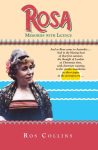 Memoirs are tricky things. There are readers who love them, readers who hate them, and readers like wishy-washy me who sit in the middle. I sit in the middle because, for a start, I don’t like to say “never” when it comes to reading. I sit in the middle because I couldn’t cope with a steady diet of memoirs, particularly those how-I-got-over-my-[whatever trauma or challenge it was], which is certainly not to say that I don’t admire those memoirists or don’t enjoy some of their fare. And, I sit in the middle because I don’t like formula, because I like books that try to tackle their subject or their form a little differently. So, the memoirs I mostly read are those which play with form or whose subject matter offers something different. Ros Collins’ memoir, Rosa: Memories with licence, does both of these.
 Ros Collins
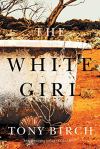 Their diverse writers program, for example, supports “writers who face barriers in the development of their writing careers”. The programs are, well, diverse, catering for women of colour, Asian Australian writers, Aboriginal and Torres Strait Islander people, refugee writers, and so on. The program recognises that money can be an issue for these writers, so among the support it offers are bursaries, and paid commissions. The indigenous writing program has used writers you’ve met here – Tony Birch, Anita Heiss and Bruce Pascoe.
 For each month – they are up to September – a Victorian writer comments on what Writers Victoria means to them. The writers to date are:


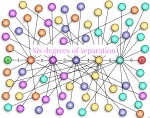
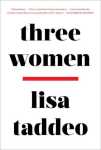 It all starts, of course with Kate setting our starting book, and this month’s is – well, back to usual after a record run – that is, back to a book I’ve not read. Kate described it as a book everyone is taking about, Lisa Taddao’s Three women. I initially commented that maybe everyone is, but I’m not one of them. However, on reading a bit about it at GoodReads, I realise that I have heard the author interviewed. Her name and title just hadn’t clicked.
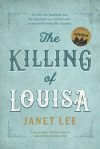 So, Lisa Taddao’s Three women, for those of you who don’t know, is a non-fiction book in which the author spent nearly ten years researching the sex lives of three American women. It is, says the GoodReads blurb, “the deepest nonfiction portrait of desire ever written.” This year I read an historical fiction work in which a woman’s desire – or, at least society’s attitudes to/assumptions regarding her desire – resulted in her execution. The book is Janet Lee’s The killing of Louisa (
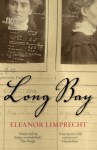 Another historical fiction work inspired by the story of a real Australian woman who was sent to gaol, this time for performing abortions, is Eleanor Limprecht’s Long Bay (
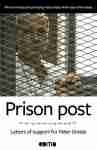 Since we are talking questionable or unjust imprisonments, I’m moving next to a highly questionable and unjust one, that of Australian journalist Peter Greste who was arrested in Egypt in 2013 for “spreading false news, belonging to a terrorist organisation and operating without a permit”. He spent over a year in prison there before his release was effected. While he was in gaol, a letter-writing campaign was organised to keep his spirits up (to which Ma Gums contributed). The book Prison post: Letters of support for Peter Greste contains a selection of those letters.
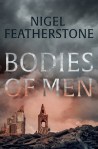 I think that’s enough of prisons for a while – though in my next book one of the characters was, in fact, close to being sent to military prison so perhaps this is a double link1 The book is Nigel Featherstone’s Bodies of men (
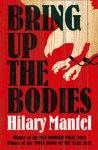 And now, just because I can, I’m going to take the easy path and link on title, so my next book is Hilary Mantel’s Bring up the bodies (
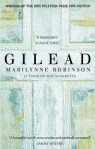 Another trilogy that was published over almost as long a time-frame is Marilynne Robinson’s Gilead trilogy, which started with Gilead (
 Whispering Gums