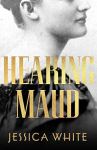
 Hybrid memoir-biographies take many forms. For a start, some are weighted more to biography while others more to memoir. As I wrote in my post on Jessica White’s conversation with Inga Simpson, most of those I’ve read “have been mother-daughter stories, the biography being about the mother and the memoir, the daughter. White’s book is different. The biographical subject is Maud, the deaf daughter of the late nineteenth-early twentieth century writer Rosa Praed (1851-1935)”. However, Bill (The Australian Legend) responded in the comments that “I’m pretty sure Hearing Maud is another mother/ daughter memoir. On two levels”. In a sense he’s right.
I say “in a sense” because Maud is not White’s mother. However, two mother-daughter threads do run through the book, Maud and her author mother Rosa, and Jessica and her mother. But, unlike those more direct mother-daughter memoirs in which the daughter focuses on the mother’s story while also throwing some light on her own life, in White’s book the two mother-daughter stories work in some way as foils for each other, but, more significantly, the focus is on the two daughters’ lives. As with most memoirs – hybrid or otherwise – there is a larger intent behind Hearing Maud than simply telling the story of a life or lives. It involves exploring deafness.
As I reported in the conversation post, White talked about “coming out” as a deaf person. I wrote how “living in the country amongst a large extended family, she’d been, essentially, sheltered from fully experiencing her deafness”. This resulted in her growing up as “a hearing person” albeit a “bad” one! It wasn’t until she was in her 30s that she started to think about herself as deaf, and to understand its impact on her life, particularly in her longstanding sense of loneliness and isolation.
Before, however, you start suspecting that this is going to be another misery memoir, let me get to the book. It starts with a Prologue, in which White tells us how she lost most of her hearing around the age of four, due to meningitis (or, more accurately, the treatment for it.) She then says, and it is this idea that underpins her story:
My life came to be defined by what the ancient Greeks termed a pharmakon, that which is a poison and a cure.
She goes on to say that the way the pendulum swings, between these two, depends on the time and culture in which the deaf person lives. For Maud, deafness was “a bane”. It led to her being committed to an asylum at the age of 28 and being left there until she died 39 years later. For White, on the other hand, it led to her becoming a reader and then a writer, because these “assuaged my persistent loneliness and gave me a sense of purpose”. What White goes on to do in her book is provide a mini-history of attitudes to deafness and deaf people over the last century and a half, exploring the ways in which both personal (including family) circumstances and social attitudes and policies can deeply affect the course of a deaf person’s life. Of course, life is a lottery for all of us – we are all affected by time and place, family and culture – but for those with a disability, there are additional layers that further reduce their control over their outcomes. (Interestingly, probably because of when she was born, White doesn’t discuss the whole nomenclature issue. In the early 1980s, for example, it was not acceptable to call people “deaf”, they were “hearing impaired”.)
Now though, I want to talk a bit about the writing. Hearing Maud is White’s third book (I’ve reviewed her second, Entitlement), and it shows. It shows in the novelistic language that brings life to the story. It’s never overdone, but there are scattered images that beautifully convey her feelings, such as this comment after her first real conversation with another deaf person, when she was 32:
Once again I have the sense of something settling into place, like a bird alighting in a tree, its wings relaxing. When I say goodbye and walk back past the sandstone buildings to the bus stop by the lakes, my step is buoyant.
You can feel the emotional release, can’t you.
It also shows in the confident handling of the multiple storylines – hers, and Maud and her mother Rosa’s stories. The stories are told generally chronologically but are interwoven with each other, so we start with White’s childhood ending a little before this book is completed, and similarly we move through Maud’s life. However, there are some backwards movements when something in the life of one raises an issue in the life of another. It does require some concentration from the reader, but the segues are natural and clear. Describing her childhood, for example, White tells of the times she spent in the bush, and how “the solitude was a balm”, enabling her to daydream about the boy on whom she had a crush. This leads her directly to Rosa Praed – “Whenever I read Rosa’s novels, I reconnect with this heady mix of romance and the bush” – and a discussion of Rosa’s focus on the bush in many of her novels. Similarly, a discussion of the importance of letter-writing to her – being an “unthreatening way … to make connections” – leads to an extended discussion of Maud’s letters, and from that to Maud’s education and the history of deaf education in Europe in the late nineteenth century. There’s a lot of information here, but it’s so well integrated into the narrative that you learn almost despite yourself!
Finally, White’s skill shows in her control of tone. This is not a dry non-fiction work, despite the amount of information it contains, but a story about real people. White’s tone balances the formal (grammatical sentences, endnotes, and so on) with the informal (first person voice, and expressions like “I imagine Maud walking to the museum”). She also conveys her passion for her subject, and sometimes her frustration and anger, but doesn’t let it flow over into diatribe. However, she’s very clear about her intention for the book, as she tells her sister:
‘I’m tired of being taken for granted. I want people to know how hard I’ve worked – and how hard most people with disabilities have to work – to get where I am. I want them to hear Maud’s voice [hearing Maud!] and to know that, although things are much better, deaf people are still expected to act like hearing people. I want them to see how difficult it still is, when it shouldn’t be…’
I hear you Jess, loud and clear!
Lisa (ANZ LitLovers) and Bill (The Australian Legend) have also reviewed this book.
 Jessica White
Hearing Maud
Crawley: UWAP, 2019
271pp.
ISBN: 9781760800383
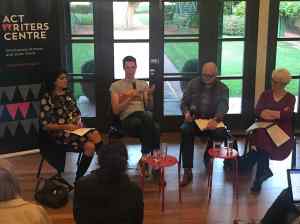 For some reason that I can’t quite explain – a sudden rush to the head methinks – I agreed to be part of a panel being organised by the ACT Writers Centre for this year’s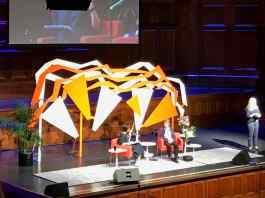
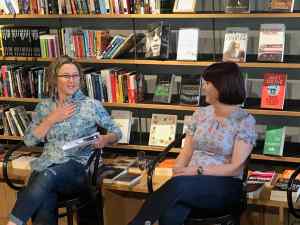
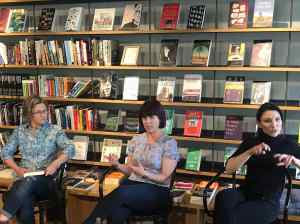
 The conversation centred around the recent release of Garner’s Yellow notebook: Diaries, Volume 1, 1978-1987, so the conversation began by discussing both diary writing and the process of preparing them for publication. Krasnostein, who asked rather long but always thoughtful questions, talked about the role and function of diaries, suggesting they exist for their own sake but are also works in themselves. Garner’s diaries, she said, contain harvested and preserved details from the world, but also show Garner’s “fearless self-scrutiny”, plus “the things one can think but not say”. Garner said that she has always loved notebooks and pens, and how as a child she loved the peace and solitude she got from writing her diaries.
 Indeed, Pegasus says that the Christian Science Monitor writer talks about the enthusiasm of the American reviewers “which is more than I can remember occurring in this country”. The book, they are particularly enthusiastic about is Henry Handel Richarson’s The fortunes of Richard Mahony. Pegasus notes that “there are many in Australia who would agree with the American critic who described this novel as ‘the most important single piece of literature ever to come out of Australia,’ [but] it has never become popular in Australia, either amongst critics or readers”!
 I’m a relative latecomer to Non-fiction November, but I like to take part in some way because I do like and read non-fiction. However, I don’t have the time to fully take part, so as in previous years, I plan to do a couple of concatenated posts.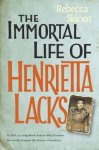
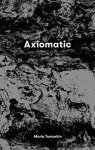
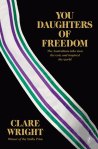


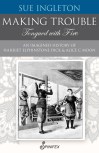
 I love this week of the Challenge, because for as long as I can remember I’ve enjoyed seeing connections between my reading. However, because I’m doing three weeks in one, I’m going to do just one pairing, and it pairs two books I’ve read this year, Clare Wright’s You daughters of freedom (
 Both these books focus on the late nineteenth and early twentieth century, though Ingleton’s ends right at the beginning of the twentieth century. Ingleton’s Dick and Moon weren’t actively involved in the suffrage movement, but they were passionate advocates of the rights of women and of women’s ability to live independent lives, and they, particularly Moon, met and associated with early Sydney leaders of the suffrage movement, like Rose Scott and Louisa Lawson, who feature in Wright’s book.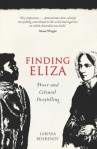

 In
In  Sue Ingleton
 Saturday, as you would expect, provided more detail, including about the authors chosen to represent the three countries. Saturday reports that McKinnon admitted that “we have in Australia, in its history, and in its great cities excellent material and splendid background” but were not producing literature equal to Canada and South Africa. Saturday writes, presumably reporting McKinnon, that: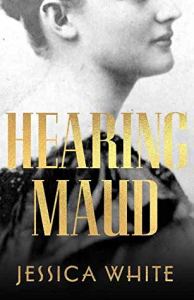
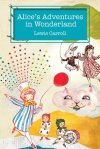 This month’s is a classic – the sort of book in fact which defines classic given its timelessness as a much loved book. It is, of course, given the post title, Lewis Carroll’s Alice’s adventures in Wonderland. And of course I have read it, though so so long ago that I really don’t recollect the actual time I read it because it’s one of those books that enters one’s consciousness isn’t it?
 For my first link, I’m going to do something that might shock those of you who know the book, because I’m linking to Charlotte Wood’s dystopian novel, The natural way of things (
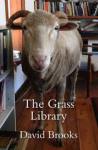 Now, not everyone approves of eating rabbits (or any animals for that matter). For Wood’s characters it was a matter of them or the rabbits, and they chose themselves. However, to be balanced about this, because, you know, we are supposed to be balanced here in Australia, my next link is to David Brooks’ animal rights reflection-cum-memoir, The grass library (
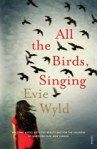 The main animals in Brooks’ book are rescue sheep – two at first, then another, and finally a fourth. Sheep that desperately needed rescuing, because they are being mysteriously attacked, appear in Evie Wyld’s Miles Franklin award winning book, All the birds, singing (
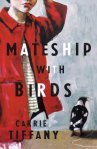 Birds of all sorts feature in All the birds, singing, as they also do in Carrie Tiffany’s Stella prize winning novel, Mateship with birds (
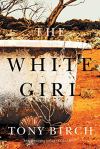 For Indigenous Australians, birds have many meanings and values, one of which is as messengers. We were introduced to this, practically, during our Arnhem Land trip last year, but birds-as-messengers feature in Tony Birch’s latest novel, The white girl (
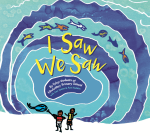 And now, because all my links to this point have involved animals, I am going to stick with animals. However, for this last link, I’m going for a double shot and am linking on indigenous author too. The book is I saw we saw written and illustrated by the Yolngu students of Nhulunbuy Primary School (
 Whispering Gums