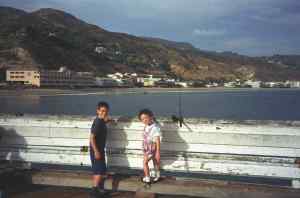
Malibu from Malibu Pier, August 1993
As for many people I expect, Joan Didion’s now classic The year of magical thinking made a lasting impression on me, so I was keen to read her essay “Quiet days in Malibu” when it popped up as a Library of America (LOA) Story of the Week back in November. I was also interested in the subject matter. Having lived in Southern California in the 1990s, I wanted to see what Didion had to say about Malibu, a place that has always conveyed the romance of Californian beaches to me, largely through Gidget! There, I’ve admitted my teen-girl secret.
What Didion had to say was not what I expected. She starts with:
In a way it seems the most idiosyncratic of beach communities, twenty-seven miles of coastline with no hotel, no passable restaurant, nothing to attract the traveler’s dollar. It is not a resort. No one “vacations” or “holidays,” as those words are conventionally understood, at Malibu. Its principal residential street, the Pacific Coast Highway, is quite literally a highway, California 1, which runs from the Mexican border to the Oregon line and brings Greyhound buses and refrigerated produce trucks and sixteen-wheel gasoline tankers hurtling past the front windows of houses frequently bought and sold for over a million dollars. The water off Malibu is neither as clear nor as tropically colored as the water off La Jolla. The beaches at Malibu are neither as white nor as wide as the beach at Carmel. The hills are scrubby and barren, infested with bikers and rattlesnakes, scarred with cuts and old burns and new R.V. parks. For these and other reasons Malibu tends to astonish and disappoint those who have never before seen it, and yet its very name remains, in the imagination of people all over the world, a kind of shorthand for the easy life [my emph]. I had not before 1971 and will probably not again live in a place with a Chevrolet named after it.
Things have, naturally, changed since Didion lived there for seven years through the 1970s, but only a little I think. Pacific Highway 1 still runs through it, alongside the beach, though the more inland 101 Freeway is the main north-south route. It is still home to many celebrities and other well-to-do living in expensive mansions. This opening paragraph, however, also introduces us Didion’s style – including her use of repetition (“The water off … The beaches at … The hills are …”) and quietly pointed commentary (as in “I had not before 1971 and will probably not again live in a place with a Chevrolet named after it.”)
This essay, published in a 1979 collection titled The white album, was in fact a reworking of two pieces published in Esquire in 1976. LOA’s notes say that those pieces “showcase the beach community” not through its celebrities but through “the lifeguards on the beach and the manager of a local orchid farm.” To these pieces, which form the bulk of the essay, Didion added the above-quoted introductory paragraph and a concluding section, about which more later.
The white album, LOA’s notes also tell us, opens with her famous line, “we tell ourselves stories in order to live”. The stories she tells in this essay are about “ordinary” people, as much as anyone, really, is ordinary. First up is lifeguard Dick Haddock. She introduces him thus – with that same use of repetition:
Dick Haddock, a family man, a man twenty-six years in the same line of work, a man who has on the telephone and in his office the crisp and easy manner of technological middle management, is in many respects the prototypical Southern California solid citizen.
She describes visiting his “office”, the lookout on Malibu’s Zuma Beach, on Thanksgiving morning in 1975, when
A Santa Ana wind was just dying after blowing in off the Mojave for three weeks and setting 69,000 acres of Los Angeles County on fire. Squadrons of planes had been dropping chemicals on the fires to no effect. Querulous interviews with burned-out householders had become a fixed element of the six o’clock news. Smoke from the fires had that week stretched a hundred miles out over the Pacific and darkened the days and lit the nights and by Thanksgiving morning there was the sense all over Southern California of living in some grave solar dislocation. It was one of those weeks when Los Angeles seemed most perilously and breathtakingly itself, a cartoon of natural disaster …
Oh no! As I post this story, we are suffering similarly from bushfires. We certainly feel that we are living in “some grave … dislocation”. Note too another of those pointed comments – on LA seeming “most perilously and breathtakingly itself, a cartoon of natural disaster”. Anyhow, Didion’s description of Haddock, his colleagues and their work, is respectful and evocative, recognising both the drama and the tedium of what they do.
The second piece is about another prototypical Southern Californian, “a Mexican from Mexico”, or “resident alien” (just as I, a wife, was a “derivative alien” to my husband’s “primary alien”!) Amado Vazquez is anything but ordinary, though, as he’s an expert orchid breeder for Arthur Freed Orchids. Didion shares with us her love of greenhouses:
all my life I had been trying to spend time in one greenhouse or another, and all my life the person in charge of one greenhouse or an- other had been trying to hustle me out.
And here, finally, was her opportunity to spend time in one! Again, in her chatty style, she explains the work of an orchid breeder – of stud plants, of orchid fertility, of the naming of plants, of the business of orchid breeding. She references that racist name-changing behaviour that white people often do, whereby the orchid named for Vazquez’s wife “mysteriously” becomes “Vasquez”.
But, I want to close on the short concluding section in which, after significantly mentioning the drowning death, “a casualty of Quaaludes”, of one of her 12-year-old daughter’s friends, she describes another horrendous fire:
Within two hours a Santa Ana wind had pushed this fire across 25,000 acres and thirteen miles to the coast, where it jumped the Pacific Coast Highway as a half-mile fire storm generating winds of 100 miles per hour and temperatures up to 2500 degrees Fahrenheit. Refugees huddled on Zuma Beach. Horses caught fire and were shot on the beach, birds exploded in the air. Houses did not explode but imploded, as in a nuclear strike. By the time this fire storm had passed 197 houses had vanished into ash …
This fire also destroyed three years of the orchid breeder’s work … Malibu, you see, with its peculiar geography, has is rife for natural disasters.
It was at this point that I realised the irony of the title. Through restrained, respectful reportage about the ordinary people of Malibu, Didion conveys that, in fact, Malibu is rarely quiet, and that few of its inhabitants enjoy an “easy life”.
Joan Didion
“Quiet days in Malibu”
First published: The white album, 1979 (sections published in Esquire in April and June 1976)
Available: Online at the Library of America
 It may not have been the most sensible decision to read Chloe Hooper’s book, The arsonist, during Australia’s worst-ever bushfire week, but in fact I picked it up a few days before the crisis became evident, and once I started I couldn’t put it down. The arsonist tells the story of the man arrested and tried for one of the major fires in the
 Chloe Hooper
 I haven’t read many books by Singaporean authors. Nevertheless, I am always keen to read
  Kirsten Krauth
 And some “new” short story voices:
 Subhash Jaireth’s Spinoza’s overcoat: Travels with writers and poets (February, Transit): on writers and writing
 I’m starting this year the same as I did last year, that is, with Kate choosing a book I haven’t read. Indeed I haven’t even heard of Taylor Jenkin’s Reid book, Daisy Jones and the Six, which is a novel about the rise and fall of a fictional 1970s rock band.
 For my first link, I’m sticking with the theme of rock music, and choosing Nigel Featherstone’s novella, The beach volcano (
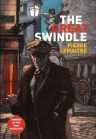 Featherstone’s Canning returns home because he wants to improve his relationship with his family, and father. Not so for Édouard Péricourt in Pierre Lemaître’s The great swindle (
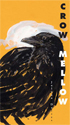 And here, sticking, unusually for me, with content, I’m going to link on something a bit tenuous. Édouard Péricourt was so disfigured in the war that he wears increasingly bizarre but often beautiful masks rather than let people see his face. Masks feature in Julian Davies’ novel Crow mellow (
 Crow mellow belongs, then, to a sub-genre known as country house novels. While you couldn’t call my next link a country house, exactly, but the characters in Charlotte Wood’s The natural way of things (
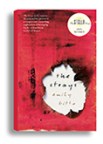 The natural way of things won the Stella Prize in 2016. The 2015 winner was a sort of country house novel too, Emily Bitto’s The strays (
 So, where to from here? How about another book which was inspired by artists, albeit of a different type? Dominic Smith’s The electric hotel (
 Here’s my 2019 Top Ten, by number of hits:
 I also like to note how well the posts actually written in the year ranked. Last year the first one came in at 23. This year, the winner, my Boy swallows universe post, romped in at number 1, with more than double the hits of the second ranked post. My next most popular 2019-written posts ranked 15th (
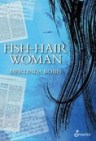 Australia, the USA, and Britain, in that order, were the top three countries visiting my blog, as in 2018. In 2017, India was fourth and Canada fifth, while in 2018, the order was reversed. This year, India regained its upper hand over Canada! The Philippines remains 6th for at least the third year, largely, I think, because of interest in Merlinda Bobis’


 For some years now, I have devoted my last Monday Musings of the year to the Australian Women Writers Challenge* – and this year I am continuing that tradition! Sorry, if you hoped for something else. With the New Year – I love the sound of 2020 – just two days away, I wish all you wonderful Whispering Gums followers a wonderful year to come in whatever form you would like that to take.Thank you, too, for supporting my blog with your visits and comments.
 FICTION
 SHORT STORIES
 CHILDREN’S PICTURE BOOKS
 This year, fiction (including short stories) represented around 57% of my AWW challenge reading, which is similar to last year. I read no poetry or verse novels again this year, and I read fewer Classics than last. However, I did read three classic short stories by Capel Boake for
 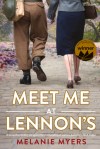 I was keen to read Melanie Myers’ debut novel, Meet me at Lennon’s, because it is set during the Brisbane of my mother’s early teens, that is, wartime Brisbane when her school,
  always save the receipt, the reason being that if you have chosen a book you’ve thought to be the perfect present for someone, so probably have others. Fortunately, my mother had saved the receipt for the book she gave me this Christmas, Helen Garner’s Yellow notebook, because I already have it (albeit as a review copy, not a gift.)
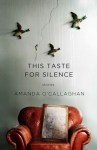
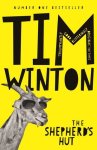 choose for the recipient rather than what you think they should read! Now this, to me, is a no-brainer. Surely the aim is to give your recipient something they’ll enjoy and remember you fondly for! I’m really hoping my toddler grandson likes Pamela Allen’s Mr McGee. And I was very confident that my lexicographer-grammarian mother would like John Sutherland’s How good is your grammar. The article notes that giving books can signal your own taste, and touches on the pros and cons of this and of giving books you love. It suggests if you can’t overcome the influence of your ego when choosing books, ask the advice of a knowledgeable (often independent) bookseller! Good suggestion. This year, as in most years, I gave some books that I’ve loved – like Tim Winton’s The shepherd’s hut to Son Gums and Amanda O’Callaghan’s This taste for silence to Brother Gums’ partner – because I think the recipients will like them. But, I have also given books I haven’t read, for the same reason. Horses for courses, as they say.
 The
The  Whispering Gums