Monday musings on Australian literature: Author blogs on the publishing journey

Most readers, not to mention aspiring authors, love hearing about the writing and publishing process authors go through. What inspired their book? How did they go about writing it and were there any hiccoughs along the way? How hard was it to get an agent and/or publisher? What role did the publisher/editor have in shaping the final product? And, once the book is out, how did the marketing/promotion journey go? How did they feel about reviews, positive and negative? These sorts of issues are often covered in book launches, and on panels and “in conversation” events at writers’ festivals, but some writers go a step further and share them via their personal blogs.

So, today, I’ve decided to share a select few of these, given I can’t possibly capture them all (even if I knew them all, or could remember all those I’ve come across!) All these authors have had books published, and all have written more posts on writing than the posts I’m featuring here. In other words, I’m brazenly inviting you to explore their blogs beyond the posts I’m highlighting below.

Book coverLouise Allan

Louise, whose debut novel The sisters’ song was published in 2018, has a series on her blog called Writers in the Attic. Here she publishes guest posts from Australian authors on what it’s like to be an author. Her guests include authors well-known to me like Heather Rose (A few thoughts about writing), Favel Parrett (When fiction becomes truth), and Robyn Cadwallader (The angel among the chaos). Introducing Robyn’s post, Louise writes:

I’m always deeply grateful to the writers who contribute to Writers in the Attic. Their words never fail to give me something to think about, or bestow a nugget of wisdom or just make me feel less lonely on this torturous journey to a novel.
Book coverAmanda Curtin

Amanda, like Louise (above) and Annabel (below), is a Western Australian writer, and has published a few books, including novels Elemental and The sinkings. She has a couple of special series of posts about writing on her blog, looking up/looking down. One is called Writers ask writers (with topics like early inspirations and tools of the trade), and the other is 2, 2 and 2 (writers + new books) in which writers discuss two things about each of three aspects or ideas relevant to their new book. Two of these aspects are set – things that inspired their book and places connected with it – while the third is chosen by the author. So, for example, Brooke Davis, writing about her novel Lost and found (my review) chose 2 of her favourite secondary characters in her book, while Jenny Ackland talking about The secret son (my review) chose 2 favourite things connect with her book.
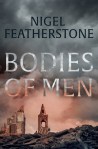
Nigel Featherstone, Bodies of menNigel Featherstone

Local author Nigel has been documenting his writing life on and off since 2009 in his creatively named blog, Under the Counter or a Flutter in the Dovecote. However, he has written a special series documenting the course of his latest novel, Bodies of men (my review). The series, called Diary of bodies, takes us from its original inspiration to his feelings about reviews and, woo hoo, being shortlisted for an award. Nigel, like many of the authors in this post, shares not only the practical, factual things about writing and publishing his book, but also his emotional journey. Nigel, a local author, has appeared several times on my blog.
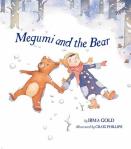
Irma Gold Craig Phillips Megumi and the bear book coverIrma Gold

Irma is also local author who has appeared several times on my blog. She is a professional freelance editor who also teaches editing. She has edited an anthology, and has had a collection of short stories and children’s picture books published. She discusses all this, and many other topics related to the writer’s life on her blog. Like some of the other writers listed here, she has included in some of these posts input from other writers, such as this post on rejections, in which Anna Spargo-Ryan, Sheryl Gwyther and Ben Hobson discuss their feelings about rejections. Hobson, author of To become a whale, writes:

It sucks. But I’m saying to you: you can persevere. You’re a writer, damn it. Get off the floor and clench your fists and edit and send it out once more. You can endure. You are being refined. Collect rejections like UFC fighters collect scars; each one of those things is a mark that has created this warrior you’re becoming. Be proud. And send it out again.

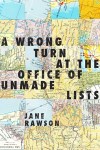
Annabel Smith and Jane Rawson

Annabel Smith (from Perth) and Jane Rawson (from Melbourne) have both appeared on this blog before (see Annabel and Jane). Together, they created in 2017 a series of posts they titled What to expect, which they ran on both their blogs, Annabel and Jane. Their aim was to “dish the dirt on what happens just before, during and after your book is released”. In these posts, Annabel and Jane give their opinion – on, say, prizes or book launches – and then, mostly, also invite another author or two to contribute.
Annabel is a member of the Writers Ask Writers series of posts that Amanda also posts. She also has an Author Q&A series in which she asks writers “to answer some questions about writing and publication” and a series on How Writers Earn Money.

Book coverMichelle Scott Tucker

Michelle, like Nigel, has maintained a general litblog for many years. However, also like Nigel, she has a specific series of posts focused on her biography, Elizabeth Macarthur: A life at the edge of the world (my review). In this series, she shares both her writing and publishing journey and her post-publication experiences and events, including being shortlisted for awards.

How generous and open-hearted are these writers to share their knowledge, and to go to so much trouble to do so. I dips me lid to them. But, they are just a start. Many other authors have blogs too, offering us all sorts of delights. I plan to share more of them during 2020.

Have you read any of the blogs, or blogs like them? If so, do you enjoy them and why?

My reading group’s top picks for 2019

In what is becoming a tradition, my reading group once again voted for our top picks from our 2019 schedule. Given many of us like hearing about what other reading groups do, I’m sharing the results as I did last year.

First, though, here is what we read in the order we read them (with links to my reviews):

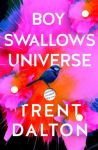
  • Trent Dalton, Boy swallows universe (my review): debut novel, Australian author
  • Anita Heiss, Growing up Aboriginal in Australia (my review): memoir anthology, Indigenous Australian editor
  • Marilynne Robinson, Gilead (my review): novel, American author
  • Amor Towles, A gentleman in Moscow (my review): novel, American author
  • Sayaka Murata, Convenience store woman (my review): translated novel, Japanese author
  • Mary McCarthy, The group (my review): novel, American author
  • Anton Chekhov, The lady and the dog (my review): translated short story, Russian author
  • Enza Gandolfo, The bridge (my review); novel, Australian author
  • Les Murray night: read any book by or about him (I was in Japan, so did not contribute): Australian poet
  • Karen Viggers, The orchardist’s daughter (my review): novel, Australian author
  • Tim Winton, The shepherd’s hut (my review): novel, Australian author

So, five men and six women; six Australian writers and five non-Australian; two translated works; three works written before 2000 (plus much of Les Murray’s work); an anthology of Indigenous Australian writing; nine fiction works plus a poet and a collection of memoirs. A decent mix, I think, given our focus always has been women and Australian writing but not exclusively so.

The winners …

Twelve of our thirteen currently active members voted. We had to name our top three picks, which resulted in 34 votes being cast (one member casting just one vote). The results were:

1. Boy swallows universe, by Trent Dalton (8 votes)
2. A gentleman in Moscow, by Amor Towles, and The shepherd’s hut, by Tim Winton (7 votes, each)
3. Convenience store woman, by Sayaka Murata (6 votes)

So, four of our eleven books received 28 of the 34 votes cast, that is, 80%, which is an interesting concentration, given that none of our reads this year were actively disliked. Despite the overall variety in our reading this year, our top books were not as varied as last year: the top three were books were all by men, with just the fourth being by a woman, and all four are novels.

Highly commended was The bridge, by Enza Gandolfo, but, various members also made special mentions of Marilynne Robinson’s Gilead, Mary McCarthy’s The group, and Karen Viggers’ The orchardist’s daughter.

Of course, this is not a scientific survey. Votes were all given equal weight, even where people indicated an order of preference, and not everyone read every book, so different people voted from different “pools”.

Selected comments (accompanying the votes)

  • Boy swallows universe: Commenters used words like “brave”, “raw”, “edgy”, “energetic”, “unusual”, with one noting its “generosity for its flawed characters.”
  • A gentleman in Moscow: Two commenters captured the gist of our responses with “Beautifully written, fascinating premise, and thoroughly engaging, while hinting at the dramas around” and “A classy read. Sometimes hilarious whilst also full of dignity and the unexpected.”
  • The shepherd’s hut: Commenters on this in-your-face book used rather different words, like “strong”, “despite the language” and “uncompromisingly”, but the book clearly made an impact on us to share equal second favourite for the year. As one of us said, “what a tale”!
  • Convenience store woman: Our commenters emphasised its quirkiness and its very different voice – though, in fact, most of our top books had rather different voices. However, one commenter nailed what was particular about this one, with “Gives a voice to someone who is normally excluded. Love the relentless logic of the narrator.”

And a bonus!

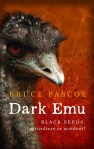
Bruce Pasco, Dark emuAs last year, a good friend (from my library school days 45 years ago) has agreed for me to share her reading group’s schedule from this year:
  • Circe, by Madeleine Miller (novel, American author)
  • Bridge of clay, by Markus Zusak (novel, Australian author)
  • Dark emu, by Bruce Pascoe (non-fiction, indigenous Australian author)
  • The lover, by Marguerite Duras (novel, French author)
  • Little fires everywhere, by Celeste Ng (novel, American author of Chinese descent)
  • On the Java Ridge, by Jock Serong (novel, Australian author)
  • Anything is possible, by Elizabeth Strout (novel, American author)
  • The Romanov sisters, by Helen Rappaport (novel, British author)
  • The buried giant, by Kazuo Ishiguro (novel, Japanese-English author)
  • Dear Mrs Bird, by AJ Pearce (novel, English author)

My group has read one of the above books – Dark emu – but a few years ago. This wasn’t the case with their list last year, where we had read none.

I don’t think this group did a formal top pick list this year, but my friend’s favourite was Circe, which she described as such “a rewarding read”. Her second choice, she said, would “perhaps” be On the Java Ridge. She said that “although the writing was uneven, we in the group thought the content was significant”. Her least favourite, by far, was Dear Mrs Bird. Many of you, I know will have read and agree with her about Circe. I would like to read it, but I am particularly interested in Jock Serong, because his books keep popping up in Australian readers’ lists.

But wait, there’s more!

This year, some members of my group named other (ie non bookgroup) favourite reads of the year, and I share them with you (with links to my reviews if I have read them, regardless of whether I nominated them for this list!):

  • Maxine Beneba Clarke’s The hate race (my review)
  • Louise Erdrich’s The bingo palace (my review)
  • Robert Galbraith’s (aka J K Rowling) Lethal white
  • Gail Honeyman’s Eleanor Oliphant is completely fine
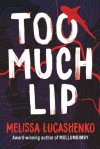
  • Melissa Lucashenko’s Too much lip (my review)
  • Ian McEwan’s Machines like me
  • Liane Moriarty’s The husband’s secret
  • Liane Moriarty’s Truly madly guilty
  • Liane Moriarty’s Big little lies
  • Michelle Obama’s Becoming 
  • Henry Handel Richardson’s The getting of wisdom
  • Jock Serong’s On the Java Ridge
  • Jock Serong’s Preservation
  • Jock Serong’s Quota
  • Tara Westover’s Educated

If you are in a reading group – face-to-face or online – would you care to share your 2019 highlights?

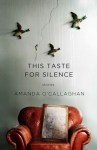
Amanda O’Callaghan, This taste for silence (#BookReview)

Book coverShort story collections are rarely recognised in literary fiction awards, but Amanda O’Callaghan’s debut collection, This taste for silence, was shortlisted for this year’s Readings Prize for New Australian Fiction. The judges described it as “inventive in its themes and by an author unafraid to enfold her readers into unsettling reading experiences”. I would agree. This taste for silence is full of unusual turns that force us to see an issue or event from a different – and often unsettling – angle.
In an interview conducted by Readings, O’Callaghan says:

I certainly did not write these stories with any theme in mind, although once I saw the whole manuscript it was clear that themes were emerging all on their own. It soon became apparent that I liked writing about people with secrets. Your description of “unspoken histories” is perhaps closer to the mark; I do like thinking and writing about characters who, for a variety of reasons, cannot articulate how they feel, or what’s happened to them. Or what they’ve done.

As a result, this collection has been given an over-riding title – which I rather like – rather than being  titled for one of the stories contained within. Like O’Callaghan’s interviewer above, I too would have said that the book is more about unsaid things than about secrets, though of course, the former often implies or results in the latter. Some of these unsaid things may be deliberately so – or deliberately withheld for a time – while others are things, as O’Callaghan says above, that people can’t easily articulate.

So, to describe the book. It contains twenty-one stories, ranging  from flash or micro fiction pieces to the last and longest story, “The painting”, which runs for 40 pages. Fifteen of the stories have been published before, many through flash fiction competitions. Two of the longer stories were published in the (sadly) now-defunct Review of Australian Fiction. One of these is the opening story, “A widow’s snow”. It provides a perfect introduction to the collection because not only does it introduce the reader to the main ideas O’Callaghan explores in the collection, but it also exemplifies her skilled command over narrative. By this I mean the way she can string the reader along with little hints about what is really happening without ever letting our focus drift away from character to plot. Plot is not the important thing for O’Callaghan. Rather, it’s how, as Eddie ponders in “The painting”, characters cope with the “endings of things”.

Endings, then, are a thread in this collection, and, let’s not be coy about it, by “endings” I mean death, because most of the stories deal with death in some way. Murder, suicide, euthanasia, drowning, miscarriage, war deaths – along with the more usual deaths from illness – occur. Most of these deaths, though, don’t occur in the actual story. Two deaths, for example, are referred to in “A widow’s snow”, but both have happened before the story commences. The story starts lightly enough:

Roger, Maureen decided, is the kind of man who would appreciate an old-fashioned pudding. She flicked through the best of her recipe books, toyed with ideas like apple tart with a rich pastry crust – Gerald’s favourite, so not really an option – and all manner of sponges, even soufflés. She braved the mole-eyed newsagent (twice divorced, blinking at the door for a new, early-rising wife) and bought a couple of cookery magazines.

What an assured start to a story – and to a collection. There’s the humour, the hints about Roger’s character and Maureen’s hopes, and the straight but evocative language. The domestic details in the unfolding of this surprisingly shocking story are on point, skewering character and nailing the tone perfectly. In this story, it’s Roger who has the secret and Maureen who must decide how she’s going to cope with it. After this story, we know to be prepared for anything, and yet, I was still surprised, more than once, as I read on.

“A widow’s story”, told third person, is one of the longer pieces. It’s followed by a flash fiction piece, “Un uncommon occurrence”, which won the Allingham Flash Fiction Competition in 2015. (You can read it on their site.) This story is told second person and is, ironically, about what women are so often told is a “common” happening. You can probably guess what this is. The third story, “The turn”, is also told second person. It won the Carmel Bird Award for New Crime Writing, also in 2015. This is quite a macabre story, one that unsettles the reader by encouraging us to engage with the narrator until we get to the point where have to accept that we’ve been taken in … and yet, even then, we are forced to think around all the corners.

And so the stories continue, introducing us to a wide cast of people, young and old, male and female, some of them confronted with the ordinary, and others with the extraordinary. One of the impressive things about this collection, in fact, is the variety of characters and situations O’Callaghan presents to explore these gaps and silences. One of the stories I loved – which I won’t name so it won’t be spoiled if you read it – is told in the voice of a hoarder. As in most of the stories, its narrator’s true situation is only slowly revealed, in this case because she knows her behaviour is not socially acceptable. Once again, we are encouraged to see her from multiple angles rather than from the more usual, and simplistic, judgemental one.

The interesting question hanging over most of the collection’s characters is when or whether to speak the unspoken. Roger, in the first story, seems to decide that if there’s going to be a future in his burgeoning relationship with the titular widow, he needs to come clean. Other narrators, most of them first person, can’t help but let their story out, sometimes in a confessional tone, sometimes to relieve or share their pain. The practical, can-do Justin in “Legacy”, for example, is permanently scarred by his good deed, pondering “who would have thought practicality could be such a deadly characteristic?” The underlying point to the collection, then, is that unsaid things are tricky – left unsaid they can burn you up or lock you out from others, but, sometimes, saying them can have the same result.

So This taste for silence is a compelling but provocative book that forces us to confront the silences in our lives, to consider them from multiple perspectives and ask whether they work for ill or good. Our hoarder, for example, thinks the latter. Her story ends with her returning to her silent ways: “The house feels glad again, released. It hums with the joy of things ending”. Is it reasonable for us to disagree, much as we might like to? I suggest you read the book to see what you think.

AWW Challenge 2019 BadgeAmanda O’Callaghan
This taste for silence
St Lucia: UQP, 2019
197pp.
ISBN: 9780702260377

(Review copy courtesy UQP)

Monday musings on Australian literature: ABC Bookshelf’s top Aussie reads 2019

The usual end of year listmania has begun, and I also like to join in, but with a focus on Aussie book lists. This year, I’m starting with the Aussie books subset of the books recommended on ABC’s Bookshelf program. Recommenders, in addition to the show’s presenters, Kate Evans and Cassie McCullough, were Stephen Romei, Literary Editor of The Australian; David Gaunt, independent bookseller of Sydney’s Gleebooks; and Michaela Kalowski, interviewer and moderator for writers and ideas festivals and local libraries. To see the full list of books they recommended, check out their page or, even better, listen to the program (accessible on that page). Do listen to the program if you have time, as they discuss issues like books that are hard to sell (and why) and liking (or not) books that are grim or too close to the bone.

Books from around the world were mentioned, but of course there was an emphasis on Aussie books, and that’s what I’m focusing on here. I like that this list roams across genre (including historical fiction, crime and sci-fi/fantasy) and to some degree across time (including books not out until next year. That’s prescient of them!)

Here are the Aussie books mentioned, separated into fiction and nonfiction, and ordered alphabetically by author.

Fiction (and poetry)

  • J.M. Coetzee, The death of Jesus: novel, coming in May 2020
  • Trent Dalton, Boy swallows universe: novel, my review (Also recommended was Dalton’s second novel, All our shimmering skies, coming in June 2020.)
  • Garry Disher, Peace: crime fiction
  • Lexi Freiman, Inappropriation: novel
  • Chris Hammer, The Martin Scarsden seriescrime fiction series
  • Kathryn Hind, Hitch: novel
  • Toni Jordan, The fragments: historical fiction, Lisa’s review
  • Leah Kaminsky, The hollow bones: novel, Theresa’s review
  • Paul Kane, A passing bell: Ghazals for Tina: poetry (by an American poet who spends half his time in Australia)
  • Amie Kaufman and Jay Kristoff, Aurora rising: YA sci-fi/fantasy novel
  • Melissa Lucashenko, Too much lip: novel, 2019 Miles Franklin Award winner, my review
  • Roslyn McFarland, All the lives we’ve lived: novel
  • Adrian McKinty, The chain, of The Sean Duffy series (Irish really, but lives – or has lived – in Australia, and has won the Ned Kelly Award more than once): crime fiction
  • David Malouf, Ransom: novel, my review
  • Heather Rose, Bruny: novel, on my TBR, Lisa’s and Bill’s reviews
  • Dominic Smith, The electric hotel: novel, Australian-born but now US-based, my review
  • Ilka Tampke, Songwoman: novel, 2019 MUBA winner, Lisa’s review
  • Peter Temple, works: crime fiction, my review of Truth, his 2010 Miles Franklin Award winner
  • Lucy Treloar, Wolfe Island: novel, Lisa’s review
  • Christos Tsiolkas, Damascus: historical fiction, on my TBR
  • Rohan Wilson, Daughter of bad times: speculative fiction, Lisa’s review
  • Rohan Wilson, The roving party: historical fiction, winner of NSW Premier’s Literary prize, Lisa’s review
  • Tara June Winch, The Yield: novel, on my TBR, Lisa’s review
  • Charlotte Wood, The natural way of things: novel, 2016 Stella Prize winner, my review
  • Charlotte Wood, The weekend : novel, on my TBR, Lisa’s review

Nonfiction

  • Meera Atkinson, Traumata: creative nonfiction/part memoir
  • Trent Dalton, By sea and stars: nonfiction
  • Helen Garner, Yellow notebook: Diaries Volume I 1978–1987: non-fiction, on my TBR
  • Katharine Murphy, On disruption: essay
  • Cathy Perkins, The shelf life of Zora Cross: biography, on my TBR

This is a lot of books, and there was a good number of non-Australian books mentioned too, many of which I’d love to read, so the program covered a lot of reading in an hour!

By the way, if you really, really, really love end-of-year book lists, you need go no further than Kate’s (booksaremyfavouriteandbest) blog post, Best Books of 2019 – A List of Lists. She will keep adding to it as more lists appear!

Do you use these lists to direct your own reading or – as I suspect many listmakers hope – to help with your gift-shopping?

Kim Scott, Katherine’s tropical housing precinct 1946-1956 (#BookReview)

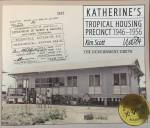
Book CoverDo you have a favourite house that you lived in? I do. It’s the lovely old Queenslander my family lived in for most of my primary school years. It was in Sandgate, Brisbane, and I still have vivid memories of those days, and that house and garden. Kim Scott, the author of Katherine’s tropical housing precinct 1946-1956, also has such a house, the one her family moved into in Katherine when she was three years old. It was a 1956-built Type D1 N.T.A. (Northern Territory Administration) house and she loved it so much that many years later, she bought herself a similar house, a Type L “New Series” house.

The thing about these houses – like my Queenslander – is that they were built for the tropical climate. For a start, they were elevated, and had louvres, both of which facilitate the management of airflow so essential to cooling. The effect of this is that they are comfortable to live in – and are energy efficient – but what Scott most loves is “the feeling of the outside coming in” that comes with this design. It’s none too soon, I’d say, to produce a book about building environmentally-suited houses, particularly when, even in Katherine apparently, the ubiquitous brick house has been taking over. Scott is very aware of this as she writes in her introduction:

My hope is that the historical significance of these first, high quality, permanent houses, which are a key part of Katherine’s housing career will be recognised. Additionally, I hope they might spark some interest in the construction of houses that are more suitable for living in the tropics and for the remote living conditions of outlying communities. Houses that use easily available, sustainable materials and are designed with a smaller footprint, specifically to make the most of the environment, as an alternative to the brick and concrete housing built today.

Now, a book like this risks being very dry but, while a lot of information is imparted in this just-over-100-page book, Scott’s personal engagement with the subject enables her to inject the book with some local flavour, with a sense of who lived in (including her own family) and built these houses. The book is logically structured, and liberally illustrated as you really want in a book like this. There are copies of original plans, old and contemporary photographs, and artist’s illustrations by Scott herself. The book starts with a brief history of tropical architecture in Australia, including the work of Beni Burnett in Darwin in the 1930s. (We loved seeing his houses there, in Myilly Point.) She then writes about land ownership in Katherine and the Commonwealth government’s housing program for Katherine, before getting onto more practical matters:

  • the house designs and plans;
  • the building contractors;
  • the building materials; and
  • the provision of essential services (like water, electricity, sewerage and rubbish collection).

In her final chapter, “Living in Commonwealth houses”, she shares her family’s experience of living in these houses, using both her own memories and documentary and verbal evidence from her family.

Scott also refers, at times, to the “local Aboriginal people”, noting, for example, some ongoing hurts “from Aboriginal families who owned titled property in Katherine but could not produce the title after the war, so lost their land”. Early in the book she notes that there is no heritage protection for the government tropical houses still remaining in Katherine. Maybe this book will provide an argument for rectifying this oversight!

It’s clear that this book was a real labour of love, one that Scott worked on for a long time. One of the things I greatly enjoyed about reading it was her sharing of her research process, not only because it was interesting but because it also assures the reader that the work is as authoritative as she could make it. There were many reasons why the book took a long time to write, one of which was being told, falsely as it turned out, that the original houseplans for these government designed and built houses had been lost during Cyclone Tracy. She engaged family members in the on-the-ground information gathering process in Katherine; she scoured archives and libraries in Adelaide, Melbourne, Brisbane, Canberra and Perth, as well as Darwin; and she read books on the subject, such as David Bridgman’s on Beni Burnett (BCG Burnett, architect). I loved her comment, after describing yet another serendipitous discovery, that she “was beginning to feel the whole process was dependent on the serendipity phenomenon”. I suspect that research is often like this, particularly in the early stages of projects that don’t have obvious (or easily available) paths to follow.

In her Conclusion, Scott returns to the points I quoted from her Introduction, but this time with a more personal spin. She writes:

If we had continued to build tropical housing that was specifically designed for Katherine’s climate, we would today have a town with a unique architectural style. One that perhaps may have drawn more people to our town and projected a more open, inclusive image of Katherine. I have seen the town develop from elevated, open homes with little privacy and security, with windows and doors flung open, to solid brick houses with their thick walls and windows tightly shut and barred. I know what image I would rather see.

Katherine’s tropical housing precinct 1946-1956 is a self-published book, but Scott has done the sensible thing and used a graphic designer and an editor. The result is a book that is nicely produced and that makes an excellent contribution to both the history of Northern Territory architecture and the local history of Katherine. Scott’s labour of love has, I’d say, borne worthwhile fruit of which she can be proud.

AWW Challenge 2019 BadgeKim Scott
Katherine’s tropical housing precinct 1946-1956
Katherine: Kim Scott, 2019
103pp.
ISBN: 9781642045420

Monday musings on Australian literature: Random thoughts from the mid-1930s

I’ve written a few posts in recent months about Australian literary culture in the 1930s – on moving beyond “gumleaf and goanna”, on setting vs character, and two (here and here) on where Australian literature was heading. This week, I’m returning to the topic to share a random selection of comments made about Australian fiction in the newspapers around the middle of the decade, a time when life was still pretty tough due to the Great Depression.

Writing from real life

Book coverC.H. Wales (whoever s/he is) was inspired by the death of John McCarthy, who inspired ‘Irish Mac’ in Mrs. Aeneas Gunn’s 1907 novel, We of the Never-Never, to write about the frequent use made by Australian authors of people from real life in their novels. Writing in Adelaide’s Chronicle in June 1934, Wales comments that “the ways of life in the outback are accepted as a commonplace by people in the Commonwealth, but are learned of with amazement by people overseas” and suggests that it is therefore “no wonder, then, that our authors weave the romance of this life into their novels”. A life, he says, that includes cattle stations as big as Surrey and more, that involves using a flying medical service, and in which children who are five years old have “never seen a shower of rain”.
Wales names some contemporary writers continuing this tradition – William Hatfield’s Sheepmates (1931), which is dedicated to “the real life characters in the book”; Myrtle White’s evocatively titled No roads go by (1932); and, more famously, Ion Idriess’ Lasseter’s last ride (1931), which “adds another illuminating but tragic page to the annals of Australian exploration, which in years to come will supply a useful link with literature dealing with the history of the foundation and development of our Commonwealth and Empire”.

Interestingly, the two male writers here have Wikipedia articles, but not Myrtle White. However, like them, she does have an ADB entry (linked on her name), which includes this:

When her three children were older and she had some leisure, White began writing. At Wonnaminta, despite endless interruptions, she worked meticulously on her drafts which she typed with one finger. The result was No roads go by (Sydney, 1932), an account of life at Lake Elder, rather in the tradition of Mrs Gunn’s We of the NeverNever. With humour and resilience, White described the remote station surrounded by sand ‘insidiously creeping up the six-foot iron fence, which was our frail barrier against all that moving country’. Drought, flood and near death were presented in intense but restrained prose.

Stories about the past

Historical fiction, it seems, was as popular then as it is now. My random reading of “new fiction” columns revealed a goodly number of novels about Australia’s past, including:

  •  John K. Ewers’ Fire on the wind (1935) is, says the reviewer in Melbourne’s Leader, “a story of Gippsland nearly forty years ago, culminating in the disastrous bush fires of February, 1898”. Ewers, says the reviewer, was a school teacher in Perth who “has not lived in Gippsland, but he has derived his local color from relatives who spent part of their lives there, and lived through the terrible experiences of Black Thursday […] although the author is not a Gippslander he knows the bush and the settlers, and on that account the background of his story has the note of realism”.
  • Alice Meagher’s The moving finger (1934) was published to coincide with Victoria’s centenary. The South Coast Times and Wollongong Argus reviewer writes that “while not a history, the story gives an interesting outline the early days. There is a brief mention of the Eureka stockade, and a realistic description of the heart-breaking work in the mallee country. The graphic story of a bushfire helps to make one realise what the pioneers of this country had to go through.” The West Australian reviewer (below) says that it shows “the growth of the State in a comparatively brief period of time”.
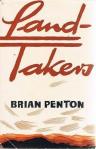
  • Book coverBrian Penton’s Landtakers (1934) is described as being among “other readable novels published in Australia”! Damned with faint praise? This West Australian reviewer describes it as “the usual type of tale that deals with Penal Settlement days, whereof Marcus Clarke’s For the term of his natural life is the great and abiding examplar”. Penton, who has a Wikipedia page like Ewers above, was an Australian journalist and novelist. Landtakers, his first novel, apparently sold well.
It’s interesting to see the specific mention of Ewers’ lack of personal experience about Gippsland and how he overcame that. I also liked the inference that fiction can tell us about who we are.

Other stories

Book coverTrove revealed many other books of different genres and styles, so I’ll share just a few, the first group coming from the West Australian (linked above):

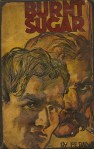
  • F.E. Baume’s Burnt sugar (1934), described as “a powerfully-written romance of North Queensland, and of Italian settlers, slightly at variance over their racial divergencies”. Baume was a journalist, author, and radio and television broadcaster, well-known to some boomers!
  • Winifred Birkett’s Three goats on a bender (1934), described as “a highly farcical story, which has, however, its amusing moments”. I’ve mentioned Birkett here before, as she won the ALS Gold Medal in 1935 for another novel, Earth’s quality.
  • J. J. Mulligan’s A gentleman never tells (1934), described as “the surprising adventures of the versatile Lord Gerrard Fitzgerald in London, Paris, on the Riviera, in Egypt and elsewhere”. The reviewer calls it “a modern picturesque story” and “remarkably entertaining”. S/he also says that it’s “none the worse for getting away from the conventional and often tedious setting of the ordinary Australian novel”. But, Mulligan doesn’t appear in Wikipedia or the ADB.
  • Robert Waldron’s The flying doctor (1934), described as “the first romance — so far as we are aware — in which the leading motive is that admirable movement for supplying medical aid to persons in isolated districts of Australia by means of flying machines”. As with Mulligan, I can’t find him in Wikipedia or the ADB.

From the above-linked Leader article comes the comment that “there are few Australian novels ‘with a purpose’ in these distressful days” but that Ambrose Pratt “has attempted one in his new book, Lift up your eyes.” (1935). The reviewer wonders, however, whether the book

will add to his reputation as a writer or really further the causes of the ideal life and social and moral reconstruction which, it is to be presumed, are part of its justification. It is a Melbourne story, and some of its pleasantest passages describe hill-scenery and touch on life in and around the Victorian metropolis. But the strain upon the credulity of the reader is excessive and there appears to be an almost complete disregard of the “unities.”

S/he finds it hard to reconcile “the idealism and the religious intensity of feeling attributed to the leading male character” with his “Machiavellian conduct of a gigantic gamble in wheat”, but suggests the book “will excite curiosity and discussion”. Pratt was a prolific novelist who appears in both Wikipedia and the ADB. ADB says that in 1933 he founded “a League of Youth dedicated to the ‘protection and preservation of the flora and fauna of Australia’ and ‘the development of ideals of citizenship in the minds of young Australians'” and that the latter aspiration was reflected in Lift up your eyes.

Book CoverThose versed in the period will know that I’ve not included some of the better known writers. This is partly because some have been mentioned in previous posts, but more because they didn’t pop up in my random search of this mid-30s period. One did, however, appear – Christina Stead’s The Salzburg tales. However, I have decided to hold it over for a future post as she’s worth a special focus.

Notwithstanding the above, the most notable observation to make, of course, is how few of these books and authors we know now. That may not be a bad thing, given the reviewers’ comments, but I love that Trove enables us to obtain a picture of what was being written and read at the time, and what the commentators thought. It all contributes to our knowledge of Australia’s culture and literary history.

Six degrees of separation, FROM Sanditon TO …

And so we come to the last Six Degrees of Separation meme of the year, and Kate has chosen a special book (for me anyhow) as our starting book. However, first, I need to tell you that if you are new to blogging, and don’t know what this meme is about, please check host Kate’s blog – booksaremyfavouriteandbest.

Jane Austen, Lady Susan, The Watsons, SanditonLast month’s starting book, Lewis Carroll’s Alice’s adventures in Wonderland, is of course a classic. This month’s would have been a classic I’m sure, if only the author had managed to finish it. The book is Sanditon (my review) and it was written – well, 11 chapters anyhow – by Jane Austen. Kate chose it, as you probably know, because Andrew Davies’ television adaptation (of his version of the completed story) is currently being broadcast. Of course I have read it, more than once …. making five the number of starting books I’ve read this year.
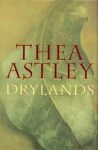
Thea Astley, DrylandsFor my first link, I’m choosing Thea Astley’s Drylands (my review) which might sound surprising, though, like Austen’s book it is set in a small (non-urban) community. However, the reason I’m linking to it is not that, but because Drylands was Astley’s last novel (albeit she managed to finish hers before she died.)

Tara June Winch, Swallow the airNow, Drylands has an unusual form. It is a novel, really, but it can read like a collection of short stories, which are written by someone called Janet. Another novel that can also be described as a collection of short stories, though not quite as tricksy in form as Astley’s, is Tara June Winch’s Swallow the air (my review). Coincidentally, it is a debut novel (as opposed to Astley’s swan song one!)
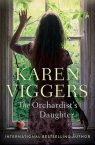
Karen Viggers, The orchardist's daughterAnd here I’m going to change tack and move from Australia to France. Tara June Winch now lives in France, and has for some years. An Australian author who sells very well in France is, in fact, local Canberra writer, Karen Viggers. Her novel, The orchardist’s daughter (my review), has, like her previous novels, been translated into French. Its title is Le Bruissement des feuilles, which is, in English, The rustle of leaves. Hmm… I could link to another book published with a different title overseas, but we’re going to (sort of) stay in France …

John Clanchy, Sisters… and link to a book by an Australian writer (another Canberran in fact) that was drafted at a writer’s retreat in France and published by the people, La Muse, who are behind that retreat. The author is John Clanchy and his book, Sisters (my review).
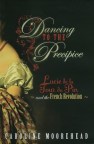
So far I’ve been a bit nationalistic in my French links, so next I’m linking to a book by – an English writer! Did I trick you there? However, it is about French people, Caroline Moorhead’s biography Dancing to the precipice: The life of Lucie De La Tour Du Pin, Eyewitness to an era (my review)which is set before, during and after the French Revolution.
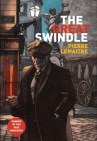
Pierre Lemaitre, The great swindleAnd finally, because of course I had to do it, a book actually written in France by a French writer. I’ve read a handful of French writers since I started blogging, so the choice was a bit of a challenge. However, given the flamboyance of some of the French aristocracy covered by Moorehead in her book, I thought perhaps Pierre LeMaitre’s novel,The great swindle (my review), with its damaged but flamboyant character, Édouard Péricourt, would be the best match. (These last two books could also be linked by the fact that I probably wouldn’t have read them had they not been chosen by my reading group!)
So, we started in England with Austen, before moving to Australia. We then dallied a little longer in Australia, but with French connections, before finally landing in France. We have covered over two centuries in our travels, and have, as often seems to be the case with my Six Degrees, met four women and two men authors.

And now, my usual questions: Have you read Sanditon? And, regardless, what would you link to? 

Monday musings on Australian literature: Neilma Sidney Literary Travel Fund

We all know that a writer’s life is not a well-paid one. One way that writers keep going, that is, that enables them to continue writing, is through winning awards and grants. I report often on awards, and they also regularly appear in the media, but how much do we know about grants? And what exactly is a grant?

I’m not sure what the official definition of an artist’s grant is, but I’d define it broadly to encompass any monies or, other in-kind products or services (like residencies), intended to support creators doing their work. Grants tend to be offered by government bodies, foundations, trusts and non-profit organisations, with the best-known ones in Australia being, probably, those offered by the Australia Council for the Arts and the Copyright Agency. However, there are many other grants – big and small, general and specific – that writers can apply for. Darned if I know how they find out about them all, but their state writers centres, most of which I’ve now covered in this blog, are probably a good start.

I don’t want to get into the politics of funding artists. There’s the politics involved in grant-making (as anyone who has followed the Australia Council over the years knows only too well) but there’s also the bigger issue of how (or if, some would say) we should, as a society, support artists in the first place. Instead, today, I just want to share one specific grant, as an example of the sort of support artists (in this case writers) need and can get.

Neilma Sidney Literary Travel Fund

The Neilma Sidney Literary Travel Fund was established in 2017 by Writers Victoria, with funding from the Myer Foundation, in the name of poet, novelist and short story writer Neilma Gantner (1922-2015). Gantner was the daughter of businessman and philanthropist Sidney Myer. The Fund recognises, says the Writers Victoria webpage, “the unique value of travel in the development of new writing and literary careers”.

The grants, which range between $2000 and $10,000, are “intended to support emerging, midcareer and established Australian writers and literary sector workers. This includes writers, editors, agents, publishers, librarians, booksellers, employees and associates of literary organisations and journals, and other literary professionals currently living in Australia”.

Last week, Books + Publishing advised that Writers Victoria had announced the fifth round of recipients for the Fund. This round was the second offered in 2019. The judges change for each round, with those for Round 5 being writer Eugen Bacon, podcaster Astrid Edwards, and Black Inc. publisher Kirstie Innes-Will.

Here are the recipients (in grant amount order), showing the sorts of activities the fund supports:

  • Evelyn Araluen and Jonathan Dunk ($9656): to research Aboriginal and settler–colonial literary and cultural relations in England and the Czech Republic. Araluen is an Indigenous Australian poet, educator and researcher, while Dunk is a poet, critic, fiction-writer and academic.
  • Cate Kennedy ($7000): to attend writers’ festivals in Ireland and Jamaica, and residencies and reading events in the US. I’ve read some of Kennedy’s short stories, and have reviewed the excellent anthology Australian love stories which she edited.
  • Ruhi Lee ($6850): to research her memoir in India. Lee is a Melbourne-based writer, and was, in fact,  part of this year’s HARDCOPY program, run by the ACT Writers Centre (about which I wrote in 2015).
  • Mirandi Riwoe ($6062): for a residency at the Tyrone Guthrie Centre in Ireland. I’ve reviewed her powerful novella, The fish girl.
  • Book cover for Madelaine Dickie's TroppoMadelaine Dickie ($4374): to research a proposed biography of Wayne Bergmann in Broome. I’ve reviewed Dickie’s debut novel, Troppo, and will be attending the launch of her second book, the intriguingly titled Red can origami, this month. Dickie won the T.A.G Hungerford Award for Troppo, and it was also shortlisted for the Dobbie Literary Award and the Barbara Jefferis Award.
  • Fiona Hardy ($3920): to research and begin her middle-grade fiction book on Christmas Island. Hardy is a children’s book writer, reviewer and bookseller.
  • Robert Lukins ($3473): to research a novel in Carter Lake, Iowa–Nebraska, US. Lukins’ debut novel, The everlasting Sunday, was short or longlisted for some major literary awards this year.
  • Maria Takolander ($3177): to attend the Arteles artist-in-residency in Finland. I have Takolander’s short story collection, The double, on my TBR, but keep not getting to it! My bad.
  • Sara Saleh ($3100): to take part in the inaugural Arab–Palestinian literature festival in New York. Saleh is an Arab-Australian poet, creative artist and activist.
  • Tamara Lazaroff ($2723): to research her memoir on De Witt Island, Tasmania. Lazaroff is a Queensland-based writer of fiction and nonfiction, who took part in last year’s HARDCOPY program.

Books + Publishing referred to “eleven successful writers, booksellers and publishers” but in fact all these grants have been given to writers and/or for writing projects. This is not surprising really, given their generally insecure funding base, but it would be interesting to know how often other literary professionals have been given grants.

It’s darned hard work applying for grants, I know. The above 11 (for ten projects) were selected from 99 applicants, which is probably not a bad ratio. Still, writers must have to juggle the time spent on writing grant applications against writing their books. I congratulate the above 11 on their success, and hope they find spending their money both fruitful and enjoyable!

Elizabeth Kuiper, Little stones (#BookReview)

Book coverAnnouncing their 2019 longlist back in February (see my post), the Stella Prize judges said that they “wished for more representations of otherness and diversity from publishers: narratives from outside Australia, from and featuring women of colour, LGBTQIA stories, Indigenous stories, more subversion, more difference”. Elizabeth Kuiper’s debut novel, Little stones, may not exactly fulfil this wish for subversion and difference, but it is set in Zimbabwe, and that’s certainly a start.
The main story concerns 11-year-old Hannah’s life as the daughter of divorced parents – and what ensues when her mother decides to leave Zimbabwe, wanting to take her daughter with her. Her father’s up till then somewhat controlled anger against her mother intensifies, and he does all he can to prevent this happening, despite the fact that he has shown little commitment to the real business of loving and rearing a child.

It’s not a particularly new story, but this one has an added layer; it’s the early 2000s and Hannah and her parents are middle-class white Zimbabweans living under Robert Mugabe’s increasingly violent regime. Life is not easy for her family, which includes her tobacco-farmer grandparents, with African nationalism ramping up against what Hannah comes to recognise as “crushing colonisation”.

The story is told first person by Hannah, and this is both its strength and weakness. Strength because Hannah, though intelligent and observant for her age, is a naive narrator. She can only see through an 11-year-old’s eyes, while we, of course, know or can guess what is really happening, whether this is the political violence and corruption happening in the background (and sometimes even closer) or the more personal conflict happening between her parents. So, for example, early in the novel she hears her mother and grandparents talking, yet again, about the Warvets, whom she understands to be “a big family who wanted to steal farms from everyone in Zimbabwe”. Finally, she insists on being heard:

Mum,’ I insisted. ‘I don’t want us to give our farm away to another family.’
‘Another family?’ Mum sought clarification.
‘The Warvets.”
Mum looked around the room, first at Nana, then Grandpa, and let out a sigh. She explained to me that the War Vets were not an extended family. They are a large group of people called the ‘War Veterans’ who mobilised to take back what they saw as their land.

The naive narrator voice achieves a few things. It conveys how unsettling it is for children to be living under stresses that they don’t fully understand, but it can also keep the tension down a little because the full horrors are not made explicit to us (albeit we can guess them.) Hannah is a lovely character, whose special and sustaining relationships with her best friend Diana Chigumba and the family’s Shona housekeeper (not “maid” says her mother) Gogo, are delightfully conveyed. She can, being 11, be naughty, but she’s at heart a sensitive, loving, well-adjusted child.

However, this voice can be a weakness too. It’s difficult to sustain the voice of a child – and unfortunately, perhaps, I’ve just read Tim Winton’s The shepherd’s hut which does it extremely well. Here, I felt that at times Kuiper’s Hannah used language and concepts that an 11-year-old would not use. We are told she’s intelligent, and good with language, but still I wasn’t always convinced. Here, for example, she talks about the guardianship court case her mother is fighting:

In the past, I would have tried to offer whatever morsel of advice I could manage, but as the court case progressed I came to realise that most of the time she was talking about herself, and so I absorbed her rhetorical questions as a necessary and cathartic part of the process for her.

This, and examples like it, seem rather sophisticated to me in both expression and idea. The question is, are we supposed to believe that this is 11-year-old Hannah telling the story as it happened or older Hannah telling the story? I’m not sure it’s always completely clear, but I felt it was intended to be the former.

All this brings me to the question of whether Kuiper’s story would have been better told as a memoir, because I understand that the novel is, like most debut novels, autobiographical. Of course, I don’t know where the facts of her life end and the fiction begins, but it’s a question that I pondered as I read. And, also of course, memoir would bring its own challenges for Kuiper that she may not have wanted to confront. I don’t blame her for that.

Anyhow, this is a minor quibble if you are prepared to go with the flow, which I decided to do. Kuiper handles well the challenge of conveying the difficulty of the situation for Hannah’s family as white Zimbabweans in an increasingly tense and dangerous atmosphere. She shows that it’s not all about race, or simply about race. There’s the issue of different races – Shona versus Matabele – and there’s class. Hannah’s best friend Diana, for example, comes from a well-to-do black family. Kuiper also handles convincingly the parallel, and perhaps most significant for Hannah, issue of separated parents wrangling over their daughter. The descriptions of Hannah’s father’s increasing manipulation of the system to get his way are infuriating if not chilling – but oh so real. Hannah, in fact, has to grow up fast if she is to survive this dual personal and political unrest she finds herself in.

Little stones is, then, essentially, a coming-of-age story, which also works as a Young Adult-Adult crossover novel. It offers something special to readers in both these areas because its perspective is a rare one for us to read here; because it is told with a lovely vitality and attention to the details of a life lived under complex political and personal circumstances; and because it manages to tread that fine line that shows rather than judges. And that, I think, is impressive.

Lisa (ANZLitLovers) also enjoyed this book.

AWW Challenge 2019 BadgeElizabeth Kuiper
Little stones
St Lucia: UQP, 2019
264pp.
ISBN: 9780702262548

(Review copy courtesy UQP)

Tim Winton, The shepherd’s hut (#BookReview)

Book coverTim Winton and Christos Tsiolkas have to be Australia’s foremost contemporary writers about men and boys, Tsiolkas doing for urban/surburban males what Winton does for small town/rural ones. Winton’s latest novel, The shepherd’s hut, continues his exploration of males in extremis. It’s strong, gritty, page-turning, and yet reflective too, which is not easy to pull-off.

The shepherd’s hut is the story of a teenage boy who goes on the run after finding his violent father dead, crushed under the car in the garage. He thinks he’ll be blamed, and he’s not hanging around to find out. With the exception of Lee who lives in Magnet – she’s symbolically and literally his magnet – he’s friendless, so it’s to Magnet that he heads, on foot across the Western Australian desert. And thus the adventure begins, except that the novel starts at the end of that adventure – or the beginning of the next adventure – take your pick. Here are the last few sentences of the opening two pages:

For the first time in me life I know what I want and I have what it takes to get me there. If you never experienced that I feel sorry for you.

But it wasn’t always like this. I been through fire to get here. I seen things and done things and had shit done to me you couldn’t barely credit. So be happy for me. And for fucksake don’t get in my way.

What an impressive opening. The tone, and thus the character, is defiant. There’s the hint of trials that have been confronted. There’s the in-your-face vernacular language. And there’s the sense of something ending and something else beginning. Where is this book going to go, we wonder, so we turn the page – and we find ourselves in the past, at the beginning, we suspect, of whatever it is that he has just come through.

Soon enough, we learn that our boy is Jaxie Clackton, that his mother had died not too long ago from cancer, and that he is living with his violent father. Jaxie himself is, not surprisingly, prone to bullying and violence himself, but, really, all he wants is peace:

all a person wants is feeling safe. Peace, that’s all I’m after.

Can this angry boy, can anyone who has grown up surrounded by violence, really remake themselves? That is the question.

The shepherd’s hut is, essentially, a road story, albeit one done on foot. Jaxie heads out into the wheatbelt, steering clear of the highway. The exposed, pared-back landscape provides the perfect backdrop for Jaxie’s emotions as he struggles to survive in the wheatbelt-mining-desert country in which he finds himself. It’s not easy to hide out there where “you stick out like a rat on a birthday cake”, let alone find food and water, but Jaxie has to survive, physically, mentally and spiritually, if he is to achieve his goal. Winton’s descriptions of Jaxie’s journey – the landscape, what he needs to do to sustain himself – are graphic and visceral.

Eventually, Jaxie finds another human being out there, exiled Irish priest Fintan MacGillis. Jaxie is naturally suspicious – given all he’s heard about “pedos” and “kiddy-fiddlers” – but gradually a bond, sometimes uneasy but nonetheless strong and mutually beneficial, forms between these two outsiders. Jaxie’s energy and passion provide a foil for Fintan’s wiser more experienced understanding of the world. There is a sort of biblical feeling to all this – a forty-days-in-the-desert vibe – as these two serve out their “exiles”.

There is a lot we are not told. Exactly why Fintan is there is never fully explained (but it’s not for kiddy-fiddling), and whether anyone is really after Jaxie is never confirmed. This information is not important to the story being told, which is … well, what is it about?

“I know what I am now” (Jaxie)

On the surface, it is about violence – particularly about domestic violence and its impact on those so abused, like our Jaxie. But, this is Winton, and while his novels chronicle social conditions, exposing society’s failings, his main interest tends to something deeper – call it biblical, theological, or spiritual. So, to focus on Jaxie, our protagonist, I’d argue that his time in the desert – both alone and then with Fintan – do result in some spiritual  growth for him. One of the motifs running through the book concerns goats – why? Well, we could read Jaxie as a scapegoat. Literally, and perhaps even symbolically. We know he’s on the run because he believes he’ll be blamed for his father’s death, but is it going too far to also read him, damaged young man that he is, as a scapegoat for the violence enacted by society? We can certainly read the outcast, somewhat flawed priest Fintan, who, significantly, lives in the titular shepherd’s hut, as his spiritual guide. Indeed, Fintan describes the landscape in which they find themselves as “penitential”.

In the novel’s opening two pages, Jaxie, on his way out of the desert, describes himself as having “hoofed it like a dirty goat all these weeks and months”, but, he says, “I’m no kind of beast anymore”. It is both his time in the desert and the, dare I call it, ministrations of Fintan, which bring him to this new sense of self. Late in the novel, before the final drama that brings their time in the desert to its conclusion, Fintan says to Jaxie, “I suspect that God is what you do, not what or who you believe in”. When the crisis comes, Jaxie sees himself as an “instrument of God”, but my, it’s not a particularly pretty one!

In other words, none of this is as neat as we might like. Fintan is a complex shepherd, and Jaxie a problematic subject of his shepherding. There are no simple solutions, and there are no perfect beings, but there are people who are prepared to go through fire (or the desert, as the case may be) in order to come to a better understanding of themselves. “I know what I am now”, Jaxie says at the end, but whether he achieves the peace he believes is coming, whether he, with his “for fucksake don’t get in my way” attitude, is truly capable of achieving it, is the question we are left with. I’d like to think so.

Jaxie, then, is an original, compelling character whose edgy energy wins you over despite yourself. He challenges us to consider how violence plays out in contemporary society, and forces us to confront what this violence does to us. Through him, Winton asks whether redemption is possible and, more importantly, what that might look like. The shepherd’s hut is a book I could read many times and find something new to consider every time. That makes it a special read.

Tim Winton
The shepherd’s hut
Penguin Random House Australia, 2019 (orig. ed. 2018)
266pp.
ISBN: 9780143795490