Christine Balint, Water music (#BookReview)

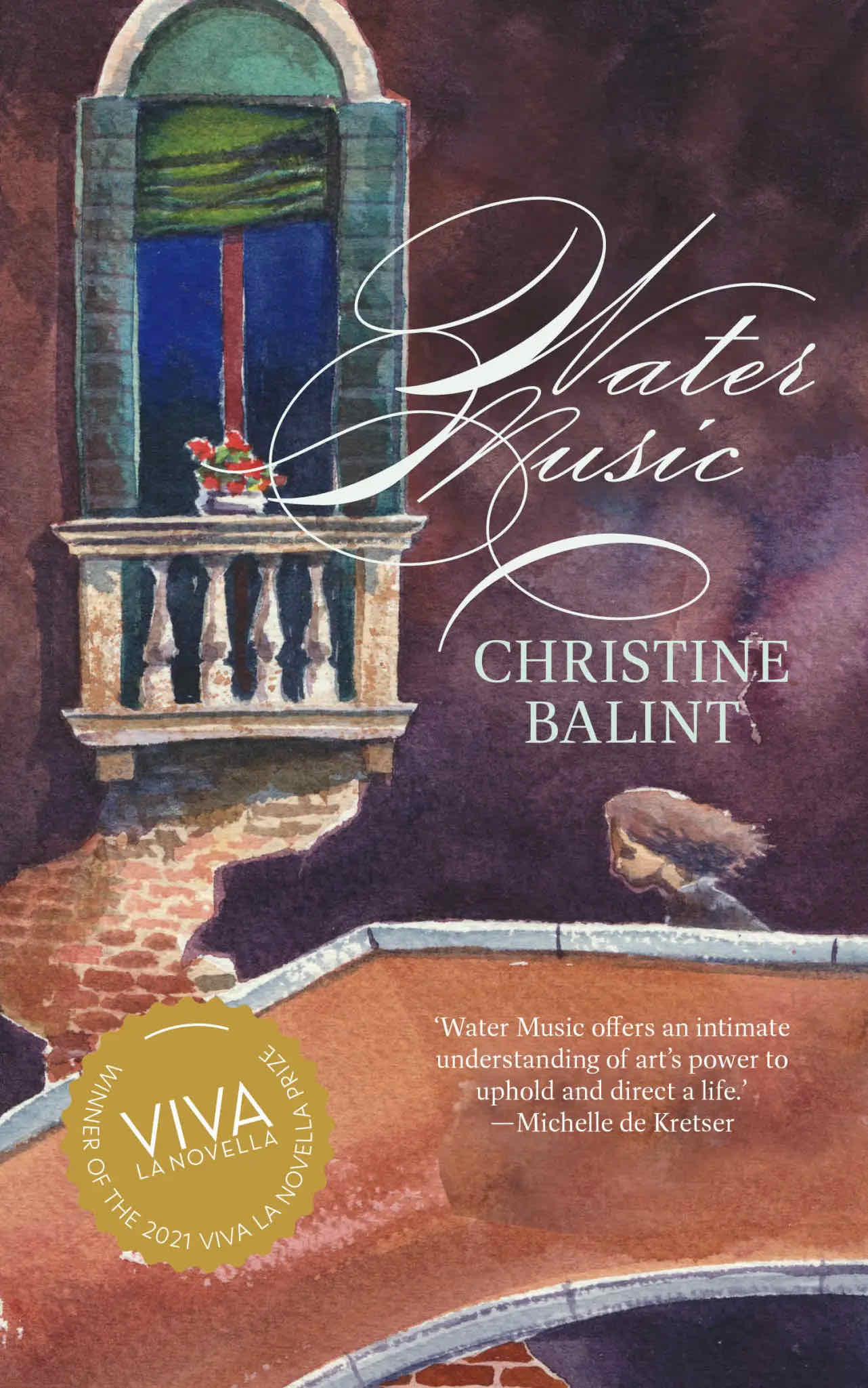
Christine Balint’s Water music was a joint winner of the 2021 Viva La Novella Prize with Helen Meany’s Every day is Gertie Day (my review), but they are very different books. Meany’s is contemporary, perhaps even near-future, and tackles some up-to-the-minute issues regarding fact, truth and authenticity, while Balint’s is historical fiction, a coming-of-age story, albeit a very specific one.

Set in 18th century Venice, Water music tells the story of a young orphan, Lucietta, who is raised by a fisherman’s family until she’s 16 years old when she leaves to live in Derelitti Convent, one of Venice’s many musical orphanages for girls. This interested me, because when my children were young we loved listening to an audiocassette telling the story of Vivaldi teaching in a Venetian orphanage for girls, but I’d never researched it further.

Balint explains her inspiration in the Acknowledgements and on her website. The book, she says, draws on “the unique history of the musical orphanages” in Venice, which existed from around 1400 to 1797, and were run by and for women. They took in girls of any class or background, if they passed an audition, and provided them with an opportunity to pursue a professional career when this “was rarely possible elsewhere in the world”. In particular, they gave impoverished girls an opportunity “to earn an income and establish a career or save for a dowry—enabling them to forge a fruitful life”.

The obvious question is, how could impoverished girls learn enough music to pass the audition? There must have been a way, but in our Lucietta’s case, she was born illegitimately and placed in a “foundling home”. From here she was given to a wet-nurse, the woman who became her mother, but her “real” father had left instructions and money for her musical education. This sets her on the course that leads her to auditioning for and being accepted at Derelitti.

From the beginning, it’s clear that Lucietta, who has learnt the violin, is musically talented and that her parents have been conscientious about fulfilling these instructions. Her mother, Lucietta tells us, “believed that if she followed these instructions, my musical and marital future would be assured”. Notwithstanding this, the question the novella poses is, what is her future to be? A few options are available to, or possible for, Lucietta, ranging from the future her mother doesn’t want for her, being a fisherman’s wife, to one dreamed of by the orphanage girls of being married to a nobleman from the “Golden Book“.

The story is told first person by Lucietta, so we see it all through her eyes. She’s a sensitive, intelligent young woman who has loved her fishing family, which includes a brother Lionello, so it’s not surprising that she is initially disconcerted when she leaves her family to live in the convent. However, this seems to be a kind place were the nuns and music teachers are supportive and the other girls are friendly. There’s not a lot of drama here, which is counter to your typical historical fiction. Instead, we travel along with Lucietta as she absorbs the influences, ideas and life around her, as she grows and changes, and as she meets, under the eyes of her mentors Maestra Francesca and the Convent’s priora, her suitor and potential husband, Don Leonardi.

Lucietta has decisions to make … and the good thing is that she is supported in those decisions without pressure. Well, there is a little pressure, including from one of her Convent friends, the sweet but one-armed and therefore in those times unmarriageable Regina. She had been sent to the Convent by her father who didn’t want to waste money on her. This is a world, after all, where “a girl is only as worthwhile as her marriage prospects”. Through Regina, Lucietta sees all the

Unwanted, unmarriageable girls through centuries. Here in this vast echoing building. Creating sublime music, their souls lost to time. Their music remaining.

There is a little political barb here regarding all those women who created and produced in the past – but anonymously. These convent girls may have had more opportunities than many, but they were not individually remembered. Some may see it as anachronistic when Lucietta sees value in “restoring the music, in finding the music, trying to recover their stories”, but then again, why wouldn’t someone back then have thought of doing this?

Balint’s writing is lovely. She brings the settings Lucietta experiences – her fishing home and then her convent one – to life, and creates in Lucietta an engaging, believable character.

Water music didn’t excite me quite so much as Helen Meany’s book did, perhaps because it’s a gentle book that explores a familiar story, albeit in a different and thoroughly interesting historical setting. However, because of that setting, because of its feminist underpinning, and because the writing is sure, I’d recommend it to anyone interested in a good – and not bleak – story.

Theresa also enjoyed this book.

Christine Balint
Water music
Lidcombe, NSW: Brio Books, 2021
119pp.
ISBN: 9781922267610

Monday musings on Australian literature: Thinking about historiography

Last week I wrote a post on Cindy Solonec’s hybrid biography-memoir, Debesa: The story of Frank and Katie Rodriguez. This book, as I explained in my post, is a rewriting of her 2016 PhD thesis which “explored a social history in the West Kimberley based on the way her parents and extended family lived during the mid-1900s.” Immediately, perhaps, you can see what inspired this post.

It has been accepted for some time now that social history, particularly that involving the stories of ordinary people, is a valid and important part of history, of the historical record. But, ordinary people’s lives aren’t well documented, history normally being, as we know, the province of the victors.

Solonec did have significant documentary sources to draw on, as the Kimberley has fascinated people for a long time. She also had her Spanish-born father’s diaries, which were not particularly detailed but they did provide the book’s “chronological framework”. Diaries are a common source for historians, so there’s nothing new about that. But, what about the First Nations side of her family? For that she had to rely on the stories her mother and extended family passed on through oral tradition. She writes that, fortunately,

Aboriginal peoples still uphold past events through oral histories … I was excited to find that their stories were not that hard to cross reference with the literature. Their memory vaults with stories that have been handed down served them well, confirming the reliability of Indigenous intelligence.

This comment reminded me of an essay “On listening to new national storytellers” in The Conversation. Written five years ago by academic Anna Clark, it considers Australian historiography and the historical record, and covers some issues that are discussed in longer tomes like Tom Griffiths’ The art of time travel. But her focus is specific.

Clark refers briefly to the “history wars” before moving on to say that

Debates over Australian history aren’t simply ideological, but also disciplinary, and reflect the historical challenges wrought by changing approaches to the past. 

She makes the point that history isn’t a simple matter of what happened and why, but is affected by “persuasions, politics and prejudices” of the historians writing it. So, a history of the “first settlement” written in, say, the 1930s, is very different to one written today, though the actual events are the same.

Clark goes on to say that Australia’s history has been viewed, at least until the 1960s, in terms of “progress” or advancement. It “privileged the written record” which is “located in archives, libraries and universities (themselves imperial institutions)”. Where did that leave the story of First Nations’ people? Clark writes that:

Dispossessed from their country, Indigenous people were in turn dispossessed from Australian historiography. It was, in the words of the anthropologist, W.E.H. Stanner, our “Great Australian Silence”, and his phrase has come to characterise the nation’s own historiographical “dark ages”.

Gradually, historians, inspired by the likes of Henry Reynolds, started to write histories that looked through lenses different to the “simple story of progress and advancement”. To do this, they used “Indigenous testimony and oral history sources”. This challenged traditional “historical research methods, which depended on written primary sources”.

Contributing to this shift have been Indigenous historians – such as Steve Kinnane, Noel Pearson and Larissa Behrendt – who have promoted “the inclusion of new historical lenses to read between the lines of colonial sources”.

Other storytellers?

That’s a good thing, but Clark has more questions, such as: while historians were “erasing the impact of settler-colonial society on Indigenous people in Australia”, were other “national storytellers” doing the same? And here is where it becomes interesting in terms of what we call “history”.

Take poetry, for example. Clark writes that

the sound of colonial violence and Aboriginal dispossession was ringing loud and clear in Judith Wright’s poem Nigger’s Leap, New England. Published in 1945, it’s based on the story of an Aboriginal massacre told to Wright by her father, and is a powerful antidote to Australian historiography of the time.

Or novels, like Eleanor Dark’s The timeless land (1941). In it “Dark tries to capture the cultural clash between the Eora people and the British colonisers in early Sydney”. This might be historical fiction, but Tom Griffiths, she says, argued in his book that “Dark deserves recognition as a historian for the work she did, and her impact on Australians’ historical consciousness”.

This doesn’t mean, she continues, that historians should ignore

the conventions of truth-seeking and critical inquiry. But as Griffiths intimates in his recent book, the relationship between history and fiction is surely more a dance than a clash, despite the heated debate over Kate Grenville’s historical novel, The Secret River. And historians who ignore the potential of fiction to imagine their way into some of those undocumented encounters diminish their own historical imaginations, he concludes.

Regular readers here will know that this accords with my – admittedly non-expert – views on the matter.

Anyhow, she goes on … mentions Mudrooroo’s Doctor Wooreddy’s Prescription for Enduring the Ending of the World, and other potential sources of history …

I think you get the gist. The point she is making is that there is increasing recognition of “the need to broaden our conception of historiography to reflect the many ways we make history, and consume it”. Aboriginal rock art is an obvious example, and other forms of “material culture”. Clark argues, and here we loop back to Cindy Solonec, that there is a need:

in Australia to expand and reconceptualise our understanding of historiography in order to recognise that history is frequently captured and made outside the academy ­– in fiction, poetry, art and even beyond the public domain altogether, such as local and family histories.

Clark has more to say, but concludes that she’s interested in how less traditional records or stories, these “vernacular epistemologies”, “can add both to our understanding of the past and the discipline itself”. I’ve been fascinated by historiography since I read EH Carr’s What is history at university, and so I loved this article.

Any thoughts?

Cindy Solonec, Debesa: The story of Frank and Katie Rodriguez (#BookReview)

Cindy Solonec’s Debesa is one of those curious hybrid biography-memoirs that are appearing on the scene. Its subtitle describes it as The story of Frank and Katie Rodriguez, implying biography, but in fact, Frank and Katie are Solonec’s parents and so the book also incorporates some of her own story as part of the family. I’ll return to this later, but will start with the main content, the biography.

Debesa spans four generations of the family, starting in the 1880s with Solonec’s maternal great-grandparents, but it centres, as the Media Release says, “on the unlikely partnership of Cindy’s parents: Frank Rodriguez, once a Benedictine novice monk from Spain, and Katie Fraser, who had been a novitiate in a very different sort of abbey – a convent for ‘black’ women at Beagle Bay Mission” north of Broome. The Release also explains that Debesa is a rewriting of Solonec’s 2016 PhD thesis which “explored a social history in the West Kimberley based on the way her parents and extended family lived during the mid-1900s”. What Solonec does in the book, then, is to turn her thesis into a readable history and a family memoir, a combination that is becoming an increasingly acceptable approach to historical writing.

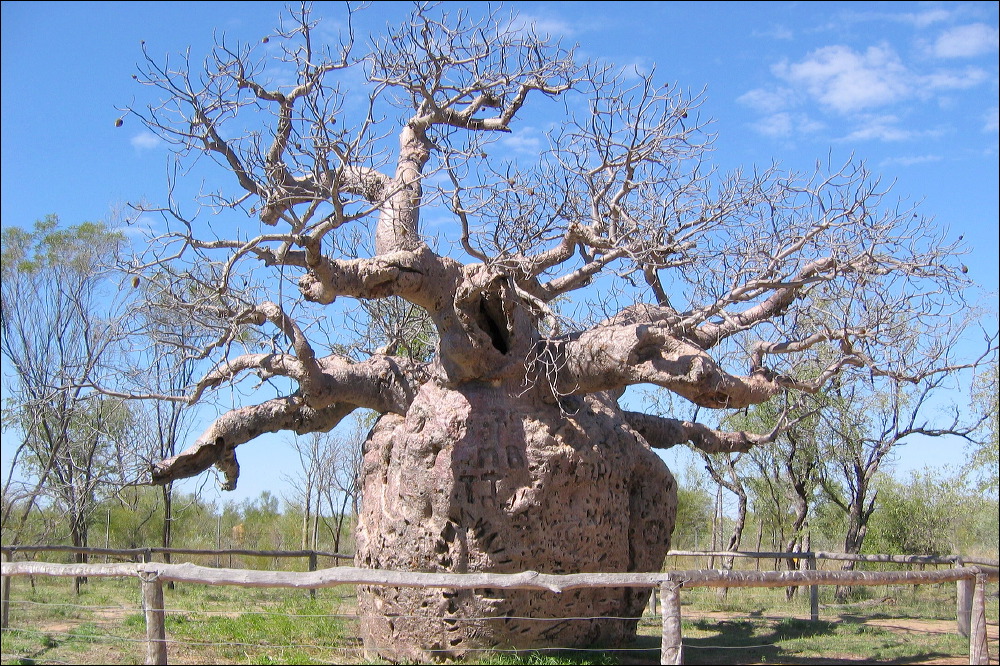
There is some contention about this tree’s prison use, but not about its cultural significance.

I was keen to read Debesa for a few reasons, not least being that I’ve been to the Kimberleys (east and west) and am intrigued by this beautiful region and its complicated history. I grew up being aware of its pastoral history, particularly regarding the Durack family and the Ord River Irrigation Scheme, and I came to understand some of its colonial past when I saw such “sights” as the Boab Prison tree in Derby during my visits there. As Solonec’s family story is contemporaneous with the mid-twentieth century Duracks and the Ord River scheme, it was enlightening to see this world from a smaller and more marginalised perspective. I say “smaller” because Frank and Katie’s property, the titular Debesa, was a small pastoral holding, and “marginalised” because Katie’s “mixed descent” Indigenous (Nigena) background meant the family was always on the outer.

Solonec sets the scene in her Introduction by providing a brief history of the Kimberley’s colonial history, one founded on “the ideology that everyone must live like white people. Speak their language. Adapt to the ways. And marry lighter skinned people …”. It’s the same story that we’ve read before – people dispossessed, country spoiled, and children stolen. In her early chapters, Solonec documents the family’s story from the time of her maternal great-grandparents, Indian immigrant Jimmy Casim/Nygumi and his Nigena wife, Muninga. Their daughter, Solonec’s grandmother Jira, was born in 1900 and stolen with her cousin in 1909. Designated as orphans and renamed Phillipena and Francesca, they were taken to Beagle Bay Mission, leaving their mothers distraught.

Alongside the stealing of children was the stealing of the land:

On stations along Mardoowarra [lower Fitzroy River], land was fundamental to Nigena existence. They knew every part of that country intimately. Their neighbours and the broader Australian post people’s concept of ‘country’, their religious attachment, their awareness of food sources, was inherent to their way of life. They knew the call, cry, track of every living creature. Everything that breathed, every hill, every creek, crevice and outcrop and night sky with its myriad of galaxies, they knew by name. The seasons dictated their movements and their care for country within pliable boundaries. No-one ever got lost.

But, the Nigena had to watch, Solonec writes, as their land was taken for pastoralism and their sacred sites destroyed and/or renamed. Her extended family, “like refugees in their own country, lived in bush camps near the homesteads” and the women were preyed upon by “lecherous, irresponsible guide menfolk”. There is nothing new here, but Solonec puts flesh on the bone by telling it through the prism of her own family.

In chapter 3, we meet Solonec’s parents, Frank, who migrated from Galicia, Spain, in 1937, and Katie, whose parents were the stolen Phillipena and Fulgentious, a Nigena man with a white stockman father. Together they forge a life, drawing on their deep and shared commitment to Catholicism. They take work where and when they can, Frank as a trusted builder and Katie a respected cook and station-worker. They raise and educate their four children, acquire their own land, and slowly build a home and establish a small pastoral business, Debesa. Theirs was a partnership in every sense of the word. Solonec makes the interesting observation that Aboriginal cultures and European peasant cultures, from which Frank had come, have much in common, including a “strong sense of kin”. And, of course, Frank as a non-English migrant, had his own experience of bigotry and prejudice.

Biography? Memoir?

There’s excellent historical research here about life in the Kimberley, with illuminating “short histories” of subjects like mustering and wage disparity, and discussion of issues like the divisive and destructive “exemptions” from the Native Administration Act. (Tony Birch addresses similar exemptions in his novel, The white girl.)

To write this book, academic Solonec drew, rightly, on a large body of secondary sources and other life-writing about the region – all of which is documented in the thorough bibliography at the end – but she also had her father’s diaries, which provided the book’s “chronological framework”, and the stories of her mother and extended family passed on through oral tradition. She writes that, fortunately:

Aboriginal peoples still uphold past events through oral histories … I was excited to find that their stories were not that hard to cross reference with the literature. Their memory vaults with stories that have been handed down served them well, confirming the reliability of Indigenous intelligence.

(I suspect she means “intelligence” in both meanings here.)

As I opened this post, though, the book is a curious mix. The first half reads like a traditional biography while the second half slips more into memoir. This is heralded in the Introduction where Solonec describes her aim as

wanting to leave a documented account for posterity about the way marginalised peoples lived in the Mardoowarra (Fitzroy River) region during the middle of the twentieth century. A social history as experienced by my families. I wanted to leave an account of ordinary people’s everyday lives that would not otherwise be recorded. An account based on my parents’ joint biography.

This is perfectly valid, and she achieves what she set out to do. Her approach does, however, raise some questions, particularly towards the end, where there’s a risk of the subjective blurring the objective, making the truth potentially hard to discern. Solonec is justly proud of her parents’ achievements, and certainly they had much to contend with, but there’s a sense that all the problems they had were external, which seems unrealistic. I don’t believe, however, that this invalidates the critical historical truths contained here. In fact, the warmth of the story makes Debesa an approachable history which, given the significance of its subject, is a good thing.

Lisa also reviewed this book, engendering some good discussion.

Cindy Solonec
Debesa: The story of Frank and Katie Rodriguez
Broome: Magabala Books, 2021
264pp.
ISBN: 9781925936001

(Review copy courtesy Magabala Books)

Monday musings on Australian literature: Some New Releases in 2022

For several years now, my first Monday Musings of the year has focused on “new releases”. As before, it is mostly drawn from the Sydney Morning Herald. Their writers do a wonderful job of surveying publishers large and small, but I have found a few more on my own! Also, remember, this is Monday musings on Australian literature post, so focuses on Australian authors. Do click on the SMH link to see the full list, which includes non-Aussies, Aussies I haven’t selected, and some additional book info.

Links on the authors’ names are to my posts on those authors.

Fiction

Last year, I listed over 30 fiction works, including short story collections, and read very few – though have some on my TBR. Here’s this year’s selection:

  • Robbie Arnott, Limberlost (October, Text)
  • Jessica Au, Cold enough for snow (February, Giramondo): Brona’s advanced review
  • Mandy Beaumont, The furies (February, Hachette)
  • Geraldine BrooksHorse (June, Hachette)
  • Michelle Cahill, Daisy and Woolf (April, Hachette)
  • Jay Carmichael, Marlo, 1953 (August, Scribe)
  • Steven Carroll, Goodnight, Vivienne, Goodnight (March, 4th Estate): final in the Eliot Quartet
  • Shankari Chandran, Chai time at Cinnamon Gardens (January, Ultimo Press)
  • Claire G. ColemanEnclave (July, Hachette) 
  • Gregory Day, The bell in the world (December, Transit Lounge)
  • Ceridwen Dovey and Eliza Bell, Mothertongues (April, PRH): “experimental book of bio-autofiction about early motherhood”, a genre-bender?
  • Robert Drewe, Nimblefoot (June, PRH)
  • Nigel Featherstone, My heart is a little wild thing (no date, Ultimo Press)
  • Victoria Hannan, Marshmallow (September, Hachette)
  • Hilde Hinton, The loudness of unsaid things (April, Hachette)
  • Gail Jones, no title yet (November, Text)
  • Yumna Kassab, Australiana (March, Ultimo)
  • Tom Keneally, Dancing the Liberty Dance (August, PRH)
  • Tom Lee, Object coach (November, Upswell)
  • Robert Lukins, Loveland (Allen & Unwin, March)  
  • Fiona McGregor, Iris (October, Picador)
  • Holly Ringland, The seven skins of Esther Wilding (June, 4th Estate) 
  • Philip Salom, Sweeney and the bicycles (November, Transit Lounge)
  • Wendy Scarfe, One bright morning (March, Wakefield)
  • Jock Serong, The settlement (September, Text)
  • Craig Sherborne, The Grass Hotel (February, Text)
  • Inga Simpson, Willowman (November, Hachette)
  • Steve Toltz, Here goes nothing (May, PRH)
  • Pip Williams, The bookbinder of Jericho (November, Affirm). 
  • Dominique Wilson, Orphan Rock (March, Transit Lounge)
  • Alexis WrightPraiseworthy (October, Giramondo)

SMH lists many books under Thrills and Chills, but this is not my area of expertise. So, I’m going to leave you to check SMH’s link if you are interested, and just bring a couple to your attention:

SMH also lists Debut Australian fiction. Most of these names are, by definition, unknown, so I’m sharing them by publisher:

  • Affirm: Omar Sakr, Son of Sin (February: poet moving into fiction)
  • Allen & Unwin (A&U): Isobel Beech, Sunbathing (May); Emily Brugman, The Islands (February)
  • Finlay Lloyd: Sandy Gordon, Leaving Owl Creek (February: on my TBR)
  • Fremantle Press: Brooke Dunnell, The glass house (November: Fogarty Literary Award winner)
  • Hachette: Megan Albany, The very last list of Vivian Walker (February: First Nations); Rhett Davis, Hovering (February: won the 2020 Victorian Premier’s Award for an Unpublished Manuscript)
  • Harper/Collins: Kimberley Allsopp, Love and other puzzles (February)
  • Picador: Jessica Stanley, A Great Hope (February)
  • Penguin Random House (PRH): Clare Fletcher, Five bush weddings (September); Ashley Goldberg, Abomination (May); Lizzie Pook, Moonlight and the Pearler’s Daughter (February); Justin Smith, Cooper not out (January)
  • S&S: James Weir, The Hemsworth effect (June)
  • Scribe: Sam Wallman, Our members be unlimited (May: graphic novel)
  • Transit Lounge: Brendan Colley, The signal line (May); Alan Fyfe (T, September); Adriane Howell, Hydra (August)
  • Ultimo: Pirooz Jafari, Forty nights (July)
  • UQP: Al Campbell, The keepers (February); George Haddad, Losing face (May)

Short stories

  • Ennis Cehic, Sadvertising (March, PRH)
  • lse Fitzgerald, Everything feels like the end of the world (April, A&U)
  • Chris Flynn, Here be Leviathans (second half, UQP)
  • Kat Gibson, Women I know (May, Scribner)
  • Mirandi Riwoe,The burnished sun (April, UQP)
  • Andrew Roff, The teeth of a slow machine (March, Wakefield Press) 
  • Maria Samuela, Beats of the Pa’u (March, Victoria University Press)

Non-fiction

SMH provides a long, long list of new non-fiction books covering a huge range of topics, so my lists here are highly selective.

Life-writing (loosely defined, and focused mainly on the arts and activism)

  • Carmel BirdTelltale: Reading, writing, remembering (July, Transit Lounge): need I say more?
  • Nick Cave, Faith, hope and carnage (October, Text): reflection on son Arthur’s death
  • Jessie Cole, Desire (August, Text): memoir
  • Jim Davidson, Emperors in Liliput: Clem Christesen of Meanjin and Stephen Murray-Smith of Overland (October, MUP): on these two literary journals and their editors
  • Aaron Fa’Aoso, So far, so good, (September, Pantera Press): memoir of Black Comedy star
  • Anna Funder, Wifedom (September, PRH): on George Orwell’s first wife; billed as a “blazing feminist masterpiece”
  • Hannah Gadsby, Ten steps to Nanette (April, A&U): memoir
  • Kate GrenvilleA room made of leaves: Elizabeth Macarthur’s letters (April, Text): non-fiction accompaniment to the novel 
  • Brittany Higgins, no title (October, PRH): memoir of activist
  • Nathan Hobby, The red witch (May, MUP): biography of Katharine Susannah Prichard (been waiting for this) 
  • Anita Jacoby, Secrets beyond the screen, May, Ventura): television producer’s memoir
  • Lee Kofman, The writer laid bare (March, Ventura)
  • Wendy McCarthy, Don’t be too polite, girls (March, A&U): activist/feminist’s memoir
  • Paddy Manning, Sly fox (November, Black Inc): unauthorised biography of Lachlan Murdoch
  • Patti Miller,True Friends (April, UQP): memoir
  • Brenda NiallMy accidental career (March, Text): biographer’s memoir 
  • Rick Morton (ed), Growing up in country Australia (April, Black Inc)
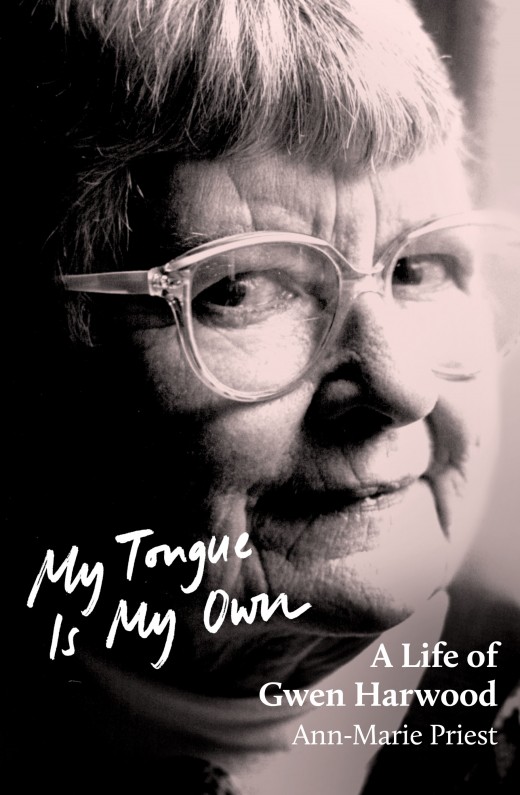
  • Ann-Marie Priest, My tongue is my own (May, La Trobe University Press): biography of poet Gwen Harwood
  • Magda Szubanski, no title (second half, Text): memoir
  • Simon Tedeschi, Fugitive (May, Upswell): pianist, “straddles the borders of poetry and prose, fiction and fact, trauma and testimony”
  • Tom Tilley, Speaking in tongues (September, ABC Books): broadcaster’s memoir

SMH also lists several biographies and memoirs on/by politicians, past and present, but, as last year, I’m taking a break from parliamentary politics. (Do check SMH’s link, if you are interested.)

Essay collections

  • Eda Gunaydin, Root and branch (May, NewSouth): race, genre and migration
  • Eliza Hull (ed), We’ve got this (March, Black Inc): by parents who identify as deaf, disabled or chronically ill
  • Kim Mahood, Wandering with Intent (October, Scribe)
  • Pantera Press anthology of Liminal and Pantera Press Nonfiction Prize longlist (August)

History and other non-fiction

  • Anna Clark, Making Australian history (February, PRH)
  • David Duffy, Nabbing Ned Kelly (March, A&U)
  • Meg Foster, Boundary crossers (November, NewSouth): Aboriginal, African-American, Chinese and female bushrangers
  • Duane Hamacher, The first astronomers (March, A&U): First Peoples’ knowledge of the stars; Hamacher is not First Nations, but did I believe work closely with Indigenous elders
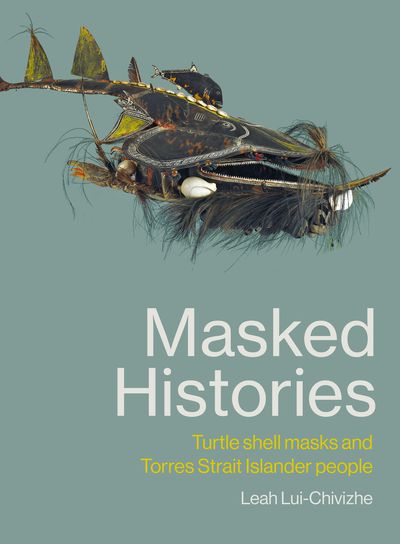
  • Leah Lui-Chivizhe, Masked histories: Turtle shell masks and Torres Straight Islander People (July, MUP): First Nations author
  • David Marr, A family business (November, Black Inc): our colonial past
  • Elizabeth Tynan, The secret of Emu Field (May, NewSouth): the first British atomic test site, South Australia
  • Don Watson, The passion of Private White (October, Scribner): the 50-year-old relationship between anthropologist and veteran Neville White and Aboriginal clans of remote northern Australia

Some current-interest topics being written about, include:

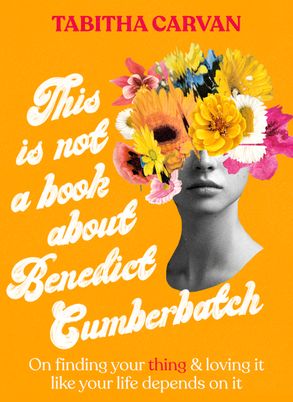
  • Women and the “home-front”: Tabitha Carvan, This is not a book about Benedict Cumberbatch (March, HarperCollins: joy in women’s lives); Eloise Grills, Big beautiful female theory (July, Affirm); Sonia Orchard, The female of the species (September, Affirm: the “science of womanhood”); Sian Prior, Childless (April, Text: living without children); Gina Rushton, The most important job in the world (April, Pan Macmillan: choosing motherhood).
  • Politics and current affairs: Allan Behm, No enemies, no friends (March, Upswell: on Australia’s diplomatic relationships); Ed Coper, Facts and other lies (February, A&U: on disinformation); Jo Dyer, Burning down the house (February, Monash University Press: rethinking our political system); Osman Faruqi, The racist country (August, PRH); Samantha Maiden, Open secrets (no date, HarperCollins: on the Canberra bubble); Andrew Quilty, Fall of Kabul (August, MUP); Matthew Ricketson and Patrick Mullins, Who needs the ABC? (April, Scribe).

Interestingly, I see little this year on COVID-19 and climate change, compared with last year. Nor much about our big women’s issue of 2021, except for Brittany Higgins’ memoir coming out. Why?

Poetry

Finally, if you love poetry, do check the link, but these might whet your appetite:

  • Lisa Gorton, Mirabilia (August, Giramondo)
  • Sarah Holland-Batt, The Jaguar (May, UQP)
  • John Kinsella and Charmaine Papertalk Green, Art (June, Magabala Books)
  • Les Murray, Continous creation (March, Black Inc): final posthumous collection
  • Tracy Ryan, Rose interior (April, Giramondo)

New publisher Upswell and the established Fremantle Press also have poetry collections coming …

Anything here grab your attention?

Blogging highlights for 2021

Finally, the last of my traditional, self-indulgent year-end trifecta (which includes my Australian Women Writers’ Challenge wrap-up and Reading highlights posts).

But, like last year, before I launch into my usual analysis, I must send another big shout-out to Bill (The Australian Legend) who continued to curated his Bill curates series of reblogged posts from my blog’s early days to help me over the doldrums in the months after my father’s death. I know I didn’t have to keep posting during that time, but I so appreciated being able to keep up the continuity. Thanks a bunch Bill.

Top posts for 2021

Gradually over the last few years my top posts have shifted to include more posts on recent Australian books. However, a few “usual suspects” posts keep hanging around, and it’s still true that most of the posts are over 5 years old. Regardless of whatever the top posts are, though, they raise the question, why them? They are such a motley lot.

Here is my 2021 Top Ten, in popularity order:

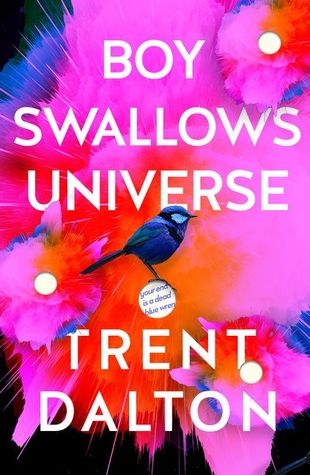
Trent Dalton, Boy swallows universe

None of these, as usual, were actually published in the reporting year (2021). Other observations:

Book cover
  • Mark Twain’s “A presidential candidate” joined the Top Ten in 2018 and reached 2nd spot in 2020. This year it gained the Top Spot! Curious.
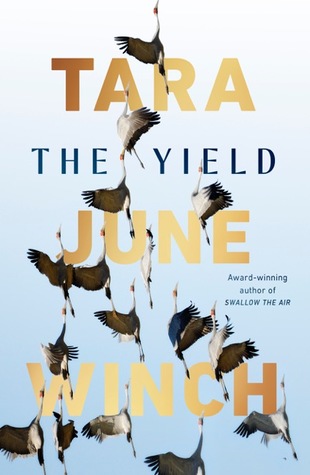
  • Three works made their Top Ten debut, and they are all Australian: Fergus W. Hume’s The mystery of a hansom cab, Tara June Winch’s The yield, and Julia Baird’s Phosphorescence.
  • Five of the Top Ten are for Australian works, one less than 2019’s record of 6.
  • Wallace Stegner’s Crossing to safety, a post from 2014, suddenly appeared in 2020’s Top Ten, and remained there? Why now?
  • Barbara Baynton, who has been in the Top Ten for as long as I have been doing this, has slipped out, with “The chosen vessel” slipping from 2020’s no. 5 to no. 15.
  • Red Dog (posted in 2011) was a Top Ten regular until last year when it moved to the Top Twenty, where it remained this year.
  • Seven of the top ten posts were published over 5 years ago.
  • Short stories and essays still feature strongly, but are decreasing – to just three this year.
  • My little post on English language usage in restaurant ordering keeps getting hits!

Five Australian posts appear in the next ten, one more than in 2019 and 2020, and are similar to last year’s: ABR’s Top Twenty Aussie Novels of the Twentieth Century (11) which was a Top Ten last year; Delicious descriptions: Clare Wright’s sources on the Australian landscape (12); Barbara Baynton’s “The chosen vessel” (15); Shaun Tan’s Eric (19); and Red dog (20).

As for posts actually written in 2021? Where did they fit? Well, as usually happens, they appear quite low in the list, with the first one ranking 32. Here are the Top Ten 2021-published review posts (excluding Monday Musings and meme posts):

Two from last year’s published-in-the-year Top Ten – Tara June Winch and Julia Baird – made it into the “real” Top Ten this year. Will any of these achieve the same in 2022?

My most popular Monday Musings posts were:

None of these were in the Top Three last year, except that the 2020 new releases post was. My Australian Gothic (19th century) post, which had been in the Top Three for a few years, wasn’t even in the Top Five this year. Maybe life has been too Gothic recently for people to want to read about it?

Random blogging stats

The searches

Help Books Clker.com
(Courtesy OCAL, via clker.com)

I love sharing some of the search terms used to reach my blog, even though changes to Google a few years ago dramatically reduced search term visibility. However, some still get through, and some find me despite some aberrant spelling at times.

  • there are always some searches that truly make me laugh, or mystify me: jane austen corner laughing; new panjabi sexy stories; chinese gym “guest post”
  • as last year, several searches seemed to be for a school or college assignment about Sherwood Anderson’s short story “Adventure”. Some hopefuls type in the whole question: explain the significance of the title ‘adventure’ by anderson; adventure by sherwood anderson 4. who should be blame for alice’s tragedy [I wonder what the previous three questions were?]
  • I have mentioned Austen scholar Gillian Russell, but my post wouldn’t have helped this searcher: “gillian russell” husband canberra
  • some searches are so general, I’m amazed they found my blog. I have no idea if they find what they want. Try this one: winner announced OR erotic story

Other stats

I wrote 154 posts, one more than in 2020, and just under my long term average of 158. This represents an average of nearly 13 posts per month..

Merlinda Bobis Fish-hair woman

Australia, the USA, Britain, in that order, continue to be the top three countries visiting my blog. The next three slots mirrored last year’s: India, the Philippines and Canada. The Philippines seems to be here primarily because of continued interest in my post on Philippine-born Merlinda Bobis’ Fish-hair woman. I think she’d be pleased. Anyhow, Germany, France, Mexico and China, in that order, round out the Top Ten.

Challenges, memes and other things

I only do one challenge, the AWW Challenge, which I wrapped up last week, and one regular meme, #sixdegreesofseparation run by Kate (booksaremyfavouriteandbest). I occasionally do others, which you can find on my “memes” category link.

I also took part in Lisa’s (ANZLitLovers) Indigenous Literature week, Bill’s (The Australian Legend) AWW Gen 3 Week Part 2, and Nonfiction November. More casually, I toyed with Novellas in November (Cathy of 746 books and Rebecca of Bookish Beck), the #YEAR Club (Karen of Kaggsy’s Bookish Rambling and Simon of Stuck in a Book), and Brona’s Aus Reading Month.

All of these align with my reading practice, and frequently give me a welcome opportunity to delve into the TBR.

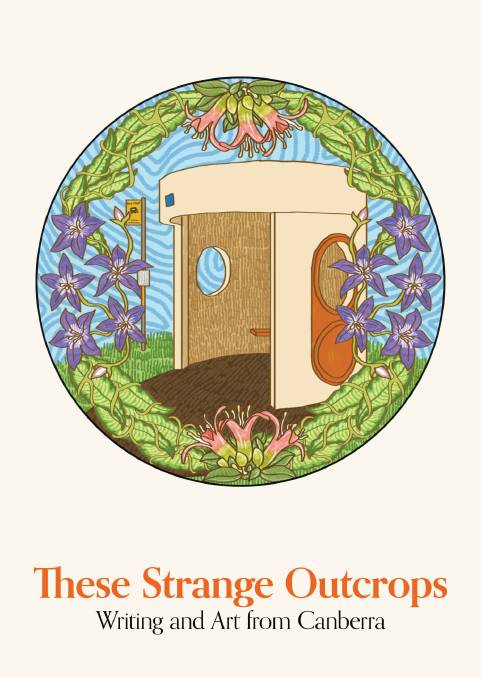
Being blogging mentor for the New Territory program (2017-2019) was a highlight, until the pandemic struck. Now, online communications have moved on, and thus, I’d argue, also the original impetus for this program. However, I want to report on the activities of its “alumni”. Angharad continues to actively blog at Tinted Edges and has had some wins in short fiction competitions, while continuing to work on her novel. Emma Gibson is now based in Melbourne, and following her dual interests of playwriting and writing about place. Amy Walters is building her excellent criticism cv. You can find a list on her blog, including several published in 2021. This year I reviewed These strange outcrops, a special edition of Rosalind Moran’s Cicerone journal. Rosalind continues to write poetry and reviews from her current homebase in Cambridge, UK. Shelley Burr, as I reported last year, won a Debut Dagger for her Aussie noir unpublished manuscript, Wake. It is now set for publication this year with Hachette. I will be reading it. Watch this space.

And so, 2022 …

As I say every year, a big thanks to all of you who commented on my blog this year – the regulars who have hung in with me year in year out, and the newbies who have taken the time to visit and comment. I do hope you stay, because, for me, the conversations are one of blogging’s biggest delights. They help us, I think, grow as readers. Also, as I wrote last year, the friendly but fearless sharing of sometimes opposing ideas demonstrates that social media can be positive and respectful, that communications technology can be used for good. I love being part of proving that.

Beyond the commenters, though, I also want to thank all you wonderful bloggers out there. I apologise for not always managing to visit everyone as much as I’d like. I wish you all good reading and great book talk in 2022.

Finally, huge thanks to the authors, publishers and booksellers who make it all possible (and who have put up with my extreme tardiness this year, but I am catching up). Roll on 2022 …

Six degrees of separation, FROM Rules of civility … TO …

I started last January’s Six Degrees with “Woo hoo! A New Year at last after what has really been a doozy for us all, in one way or another. So glad to see the back of it”. Little did we know – still, there was no harm in hoping for better. Regardless of what the year brought us, I hope you all had an excellent Christmas wherever you were and however you were able to spend it. And, given this year’s first Six Degrees of Separation meme actually happens on New Year’s Day, now’s the time to also wish you every good thing for 2022. Now, on with the show. If you don’t know this meme and how it works, please check meme host Kate’s blog – booksaremyfavouriteandbest.

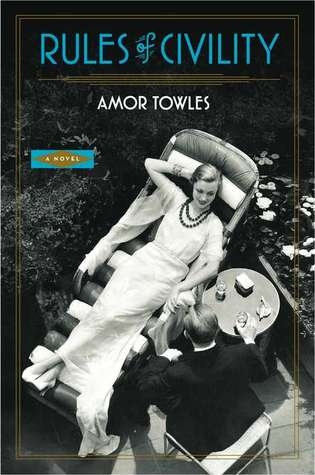
The first rule is that Kate sets our starting book. This month, she’s chosen a book that’s on my TBR (given to me by my wonderful Californian friend, in fact) and that I want to read, Amor Towles’ Rules of civility. One day!

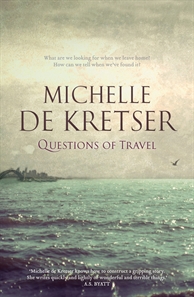
I’m going to start the year’s links by being a bit silly, and so my link is on a three-word title with “of” in the middle. I was surprised to find I had quite a bit of choice – including Book of colours and Field of poppies – but the title that felt closest in flavour to Towles’ is Michelle de Kretser’s Questions of travel (my review). This novel inspired and challenged me in so many ways.

Graham Greene, Travels with my aunt

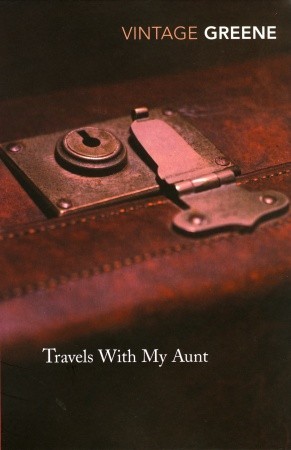
Staying with the idea of travel, I’m linking to a novel whose title starts with “travel”, Graham Greene’s Travels with my aunt (my review). I loved reading Greene again after a long hiatus. It was because my reading group selected it as our “classic” pick for 2017.

William Makepeace Thackeray, Barry Lyndon

So, my next link is my reading group’s 2016 “classic” pick … a book that I didn’t enjoy so much, though it had its moments, William Makepeace Thackeray’s The luck of Barry Lyndon (my review). (For those of you who think I LOVE every book I read – think again!)

Book cover

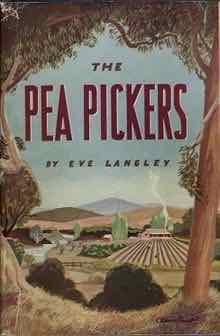
The luck of Barry Lyndon is a good example of a traditional – classic – picaresque novel. When I wrote my post on Eve Langley’s 20th century novel, The pea pickers (my review), I observed that it had elements of the picaresque, and so it is on that idea that I chose it for my next link.

Frank Moorhouse, Cold Light

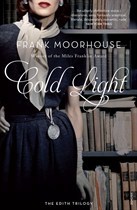
The two sisters in The pea pickers take to the road, finding work as they can, while exploring the country. In order to find work in those times – the 1920s – when women rarely went on such adventures, and for safety reasons, they dressed in men’s clothes and adopted male names. Ambrose in Frank Moorhouse’s Cold light (my review), however, cross-dresses (in the mid 20th century) because he likes to do so, and fortunatelyfor him the wonderful Edith doesn’t mind.

Marilynne Robinson, Gilead

Aussie readers will know that Cold light is the third book in what is known as the “Edith trilogy”, so I decided to take the trilogy idea for my last link. I initially thought to choose the third in a trilogy – for a strong link (if some links can be stronger than others) – but, despite having a candidate or two, I decided for various reasons (including a change of continent) to go with Marilynne Robinson’s trilogy, which starts with Gilead (my review).

Coincidentally, we’ve ended up in the country where we started – the USA – but instead of 1930s New York, we’ve moved to 1950s Iowa (in the midwest). Between these books, we’ve travelled more than usual – after all, two of the links are books about travel – and we’ve gone back to 1844. We’ve also visited various 20th century decades, and dipped our toes in the current century. We’ve met ne’er-do-wells and ministers, earnest young woman and cross-dressing diplomats, as well as travellers and migrants. We’ve seen it all – or, at least, a lot.

I like, too, that I’ve started the year with half of my books by men and half by women. How very even of me!

Now, the usual: Have you read Rules of civility? And, regardless, what would you link to?

Reading highlights for 2021

Regulars know that my annual Reading Highlights post is my version of a Top Reads post. It’s my way of sharing highlights from my reading year without actually ranking books or nominating a “best” which I just can’t do.

I don’t, as I say each year, set reading goals, but my “rules of thumb” include trying to reduce the TBR pile, increasing my reading of Indigenous authors, and reading some non-anglo literature. This year was another difficult one – of which COVID-19 was only a part. Consequently, once again, I didn’t make great inroads into these … but there were highlights.

Literary highlights

My literary highlights, aka literary events, were, for the same obvious reasons as last year, mostly online – except that I seemed to attend fewer than last year. I don’t think it was that I was Zoomed-out so much as that times just didn’t seem to suit. However, those I attended were excellent:

  • Sydney Writers Festival: Live and Local: Many online festivals – some solely online, and some hybrid – were offered over the year, but I only attended a couple of sessions from the now well-established Sydney Writers Festival streamed series: one featuring Sarah Krasnostein in conversation with Maria Tumarkin, and the other Richard Flanagan with Laura Tingle.
  • F*ck Covid: An online literary affair: This event, organised by the ACT Writers Centre, was a mini-festival. It comprised two sessions, both convened by Nigel Featherstone: one featured established authors (Irma Gold and Mark Brandi) and the other, emerging authors (Shu-Ling Chua and Sneha Lees). It was a most enjoyable and enlightening afternoon.
  • Stella: The Stella Prize is coming up for its 10th year – can you believe it – so they put on a little online celebratory event, Stella … 10 Years. It featured three previous winning or short-listed authors – Carrie Tiffany, Emily Bitto and Claire G. Coleman. It was brief, but I liked that the questions were a little different to the usual ones you get at a book launch.
  • Author interviews/book launches: With COVID-19 abounding, there weren’t many in-person book launches, but we did get to a couple: Irma Gold’s debut novel The breaking, and Omar Musa’s gorgeous book, Killernova.

Reading highlights

What follows here are highlights based on what I love about – or in my – reading.

So, I love …

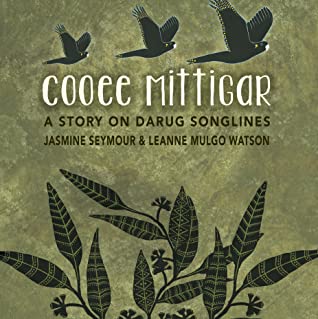
  • reading First Nations Australian authors: Each year I try to ensure my reading diet includes First Nations authors, and this year I read quite a variety: Jasmine Seymour and Leanne Mulgo Watson’s Cooee mittigar (picture book), Carl Merrison and Hakea Hustler’s Black cockatoo (children’s/YA novel), Nardi Simpson’s Song of the crocodile (novel), Adam Thompson’s Born into this (short story collection), Alf Taylor’s God, the devil and me and Cindy Solonec’s Debesa (memoirs).
  • it when my reading connects in some way: This year, for example, Sarah Krasnostein’s The believer and Alison Croggon’s Monsters, both referenced the idea of living with uncertainty in a way that made me stop and think, but more interesting was the link between Krasnostein’s nonfiction book on believers and Helen Meany’s novelistic exploration of belief, truth and authenticity in Every day is Gertie Day.
  • reading essays: I read many this year, including three by George Orwell, as well as essay collections, like The best Australian science writing 2020, which is always a stimulating read.
  • Australian novels that address contemporary life and issues: Favourites this year include Irma Gold’s The breaking, Malcolm Knox’s satirical Bluebird, Helen Meany’s above named novel. Interestingly, there were not so many climate change dystopias in my reading this year.
  • reading short stories: I read some engaging collections this year, including one from Mumbai authorJayant Kaikini (No presents please) and some debut Australian collections, Marian Matta’s Life, bound, Margaret Hickey’s Rural dreams and First Nation’s Adam Thompson’s collection.
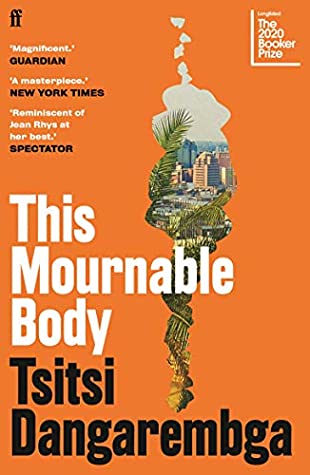
  • coming across writing that stray from the mould: I didn’t have any talking foetuses, skeletons or fossils, this year, but I did read a second-person book, Tsitisi Dangarembga’s This mournable body, which movingly captured its protagonist’s uncertainty. I also read Bernadine Evaristo’s syntactically different Girl, woman, other which looked off-putting with its almost completely absent punctuation but which, in fact, flowed beautifully. Loved it.
  • reading writers on other writers: I read some excellent commentary by writers on other writers this year: two books from the Writers on Writers series (Jensen’s warm but informative tribute to Kate Jennings and Stan Grant’s honest discussion of Thomas Keneally), and three essays from Belinda Castles’ Reading like an Australian writer.
  • reducing the “dreaded” TBR (which I define as books waiting for more than 12 months): I started off the year with a bang, reading four worth-waiting-for books in the first four months – Angela Savage’s Mother of Pearl, Elizabeth Harrower’s The long prospect, Garry Disher’s Bitter Wash Road, and Trevor Shearston’s Hare’s fur – but I then fell in a heap. The result is that my TBR grew significantly over the year. Wah!
  • rereading loved books: I rarely find the opportunity to reread, but this year, I actually managed a few. There were classics by Jane Austen and Anthony Trollope, but the one I want to highlight is Sara Dowse’s West Block. I’d been wanting to re-read it for some time, and was not disappointed as I loved reacquainting myself with its original approach and still-relevant content.

And then there were the little misses!

  • The one that got away: I was astonished to discover, when writing my Reading Group favourites post, that I had missed reviewing our first book of the year, Anthony Trollope’s Barchester Towers. I realised why – the meeting was a week after my Dad died – but I can’t believe that I wasn’t even aware that I hadn’t reviewed it. Such is the discombobulation wrought by grief.
  • The one I started but have not (yet) finished: I started reading Jess Hill’s 2020 Stella winner, See what you made me do, on my Kindle, very early in the year. It’s a good read, but I only read it when I’m out and about about, and there’s been less out-and-abouting this year, meaning that at the end of the year, it remains unfinished.

These are just some of 2021’s highlights. I wish I could name them all.

Some stats …

As for actual stats, I don’t read to achieve specific stats, but I do have some reading preferences and like to keep an eye on what I’m doing to keep me honest to myself! So, how did I go?

I like …

  • to read fiction most: 62% of my reading was fiction (short stories and novels) which is less than recent years, albeit only just less than last year’s 63%. Around 75% is my rule of thumb, plucked out of thin air I admit, but, the fact is, there’s some great non-fiction around so, well, I read a bit more of it this year!
  • to give precedence to women: 65% of the works I read this year were by women which is better than last year’s aberrant 80%, and more like what I think is a fair thing! This includes collaborations with male writers and editors.
  • to read non-Australian as well as Australian writers: 27% of this year’s reading was NOT by Australian writers, which is close enough to my goal of around one-third non-Australian, two-thirds Australian.
  • to read older books: 25% of the works I read were published before 2000, which is more than last year, and closer to the longer-term average of around 30%. I will try to lift this a bit more.
  • to support new releases: 25% of this year’s reads were published in 2021, which is similar to last year. I think this is fair!

Overall, it was a great reading year in terms of quality reads, but not so great in terms of quantity. As in 2020, my personal circumstances, in addition to the disruptions caused by COVID-19, meant I did less self-directed reading than I would have liked and that was a bit frustrating. Here’s hoping for a better 2022, for all of us.

Meanwhile, a huge thanks to all of you who read my posts, engage in discussion, recommend more books and, generally, be both thoughtful and fun people. Our little community is special, to me!

I wish you all an excellent 2022, and thank you once again for hanging in this year.

What were your 2021 reading or literary highlights?

Monday musings on Australian literature: Australian Women Writers Challenge 2021

Challenge logo

For the last time, I am devoting my last Monday Musings of the year to the Australian Women Writers Challenge ( in its current form at least, see below). What a couple of years we’ve had. It’s hard to know whether it has affected the challenge or not but, anecdotally, our numbers did not increase over a period when more people were stuck at home. Were we too discombobulated to focus on reading or were many of our participants too tired from the challenges of working from home and home-schooling to read and review as well? I look forward in the future to seeing what sociologists and other researchers make of these years and how we behaved.

Anyhow, the challenge … it has continued to go very well. The full database now contains reviews for nearly 7,700 different books across all forms and genres, from all periods, of Australian women’s writing. This means that the number of books reviewed on our database increased in 2021 by nearly 700 books, less than the number added last year, but still a healthy 10% increase to the database.

My personal round-up for the year

These last two years have not been stellar ones for me, so my posting to the challenge was down (mirroring the overall trajectory for the challenge!) I posted only 23 reviews to the Challenge over the year, a few less than last year, but I did also read three essays I didn’t post to the challenge. I will include them here as they were by women and appeared in a book edited by a woman, Belinda Castles’ Reading like an Australian writer. I’m disappointed in my reading achievements this year, but it is what it is! Here they are, with links to my reviews:

Fiction

Non-fiction

Anthologies/Essays

This year, fiction (including short stories) represented around 53% of my AWW challenge reading, which is a little less than last year’s 61%, and only two were classics by my loose definitions. One, Elizabeth Harrower’s, was read for Bill’s (The Australian Legend) Gen 4 week (Part 1). As always, I appreciate the impetus to read books from the past, because they do not deserve to be forgotten! In terms of that problematic word “diversity”, I read four books by First Nations Australia women.

My non-fiction reading was even more heavily slanted towards memoir/life-writing than usual, though the essays shift the balance a little, with a focus there on writing about writing.

Finally, as always, a big thanks to Theresa, Elizabeth and the rest of the team. I have loved being part of this challenge, partly of course because it equates with my reading goals so has never really been a challenge, but also because it’s been a generous and supportive team working on an important goal.

And so, 2022

Challenge logo

Most of you will know that this challenge was instigated by Elizabeth Lhuede in 2012 in response to concerns in Australian literary circles about the lack of recognition for women writers. I have been involved as a volunteer since 2013. In many ways, we feel that ten years on, the goal has been achieved, as women writers seem to be well-established on Australia’s literary scene, at least by observable measures.

Partly for this reason, the challenge will change tack in 2022 and focus on past and often under-recognised or overlooked women writers, from the 19th- and 20th-centuries. The new team overseeing this new phase comprises Elizabeth, Bill (The Australian Legend) and me. We plan to offer articles and reviews about earlier writers, and publish their actual writings – in full or excerpt form, as appropriate. We three feel that Australia’s rich heritage of Australian women’s writing hasn’t been fully explored and we’re keen to nudge it a bit more into the limelight.

This does not mean that the always popular contemporary aspect of the challenge will cease, but it will now be carried through our Facebook groups, Love Reading Books by Aussie Women and Australian Women Writers News and Events. Please join those groups if you are interested and haven’t already joined them.

Meanwhile, you will hear more about AWW 2022, when we get going in February.

My year in books 2021

I did this meme last year but wasn’t really thinking of doing it this year. However, here I am on Christmas morning with, for the first time in decades, nothing much to do until we head out to lunch, so why not? The thing about these memes is that they remind us of some of the great reads we’ve had over the year, and that’s a good thing.

Lisa says she thinks it was Annabel at Annabookbel who led the way in 2020 with this annual Christmas meme… Karen at Booker Talk reminded her and would have reminded me too, except I saw Lisa’s first, and I like that she seems to have added in a “lockdown” question.

Here are the rules: Using only books you have read this year (2021), answer these questions. Try not to repeat a book title. Links in the titles will take you to my reviews.

In high school I was  This mournable body (Tsitsi Dangarembga) … because, you know, puberty and bodies aren’t a happy match.

People might be surprised by A mouthful of petals (Wendy and Allan Scarfe) … because, well, wouldn’t you?

I will never be The believer (Sarah Krasnostein) … at least, not of most of the kinds in this book.

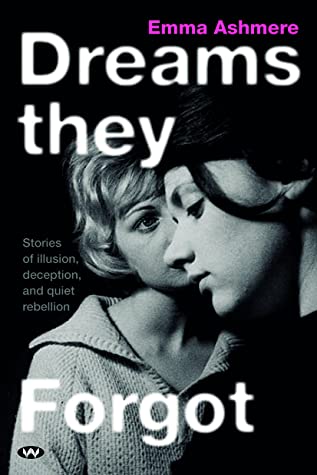
My life in lockdown was like Dreams they forgot (Emma Ashmere) … self-explanatory!

My fantasy job is (in) West Block (Sara Dowse) … because it’s a gracious old building and I love working in gracious buildings.

At the end of a long day I need (a) Bluebird (Malcolm Knox) rather than (a) Black cockatoo (Carl Merrison and Hakea Hustler) … the happiness of the bluebird without the raucousness of the cockatoo.

I hate (being) The long prospect (Elizabeth Harrower) … because I’d rather be on the shortlist!

I wish I had A different kind of seeing (Marie Younan and Jill Sanguinetti) … because who couldn’t do with a new way of seeing in their lives?

My family reunions are Where the heart is (Irma Gold and Susannah Crispe) … because family just is.

At a party you’d find me with Girl, woman, other (Bernadine Evaristo) … because, sorry men, but woman do make safe company when there’s drink around.

I’ve never been to Bitter Wash Road (Garry Disher) … and am not sure I want to, either.

A happy day includesRural dreams (Margaret Hickey) … because, although I’m a small city-big town sort of girl, I do love to dream of the country.

Motto I live by None of us alone (Jonathan Shaw) … no man (or woman) is an island, and I like it that way.

On my bucket list is (exploring) Where the crawdads sing (Delia Owens) … when we can travel again (and if that happens in my lifetime).

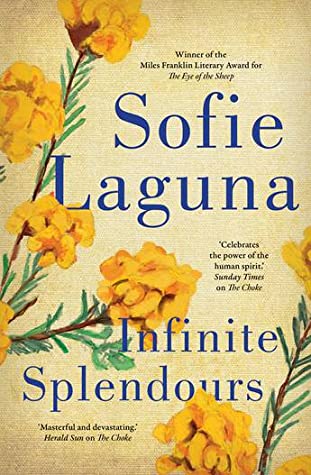
In my next life I want to have Infinite splendours (Sofie Laguna) … wouldn’t you?

Sorry, but you only get two images, after two attempts to get a slideshow in. Methinks there might be a limit to the number of images in a slideshow and I exceeded it. Whatever, it wasn’t happening.

Anyhow, it’s time to get ready for my Christmas day’s activities, so I hope you all enjoy this little response to the meme, and, even more, that you have a peaceful, healthy, and happy holiday season wherever you are.

Alison Croggon, Monsters (#BookReview)

Alison Croggon’s Monsters: A reckoning is a demanding but exhilarating read, demanding because it expresses some tough feelings, and exhilarating because of the mind behind it, the connections it makes and the questions it asks. Coincidentally, it has some synchronicities with my recent read, Sarah Krasnostein’s The believer. Both talk about “uncertainty”, and both conclude by talking about “love”, but beyond these two ideas are very different books.

Monsters is categorised on its back-cover as narrative nonfiction/memoir. However, it could also be described as an essay collection, albeit a linked-essay collection, because each individually-titled chapter seems to take up an issue – or return to an earlier issue – and riff on it, though riff is too frivolous a word for what Croggon does.

The book has an interesting trigger and an even more interesting trajectory. The trigger is the final breakdown in what had been a very difficult relationship with her sister. The trajectory is to explore this through the lens of colonialism, the “colonial project”. It’s audacious, really, and yet it makes a lot of sense. It certainly adopts the idea that the personal is the political with a vice-grip that doesn’t let go.

I’ll start with the memoir part. Threading through the essays are references to her white middle-class family. She starts, in the first two chapters – “The curse” and “Ancestors” – with a quick expose of the family tree. It goes back to the 1100s, but she focuses mostly on the 19th century’s Great Uncle Bee who was heavily implicated in “the colonial project”. Her thesis is that “colonisation is, necessarily, a process of traumatisation for everyone who is born in the system”. Croggon does not wish to diminish its greatest impact on the colonised but her point is that the “system” damages everyone. She argues, albeit using “a small, wonky, uncertain line”, that the attitudes and values inherent in the system can (even, perhaps, must) poison personal relationships. She writes, two-thirds through the book:

I was born as part of a monstrous structure – the grotesque, hideous, ugly, ghastly, gruesome, horrible – relations of power that constituted colonial Britain. A structure that shaped me, that shapes the very language that I speak and use and love. I am the daughter of an empire declared itself the natural order of the world.

The memoir part, the family part, particularly regarding her sister, is tough and hard – and I admit that I would not want to be her sister reading this book. However, although Croggon has the pen in her hand, so of course we feel her pain at “the fracture”, she does not absolve herself of her role. Indeed, at the end – and she means personally and politically, I believe – she talks of “attempting to understand my own complicities”.

“Are we irrevocably broken by our histories?”

Here is where the essay aspect of this intriguing work illuminates, because, in different but sometimes overlapping essays/chapters, she explores issues like patriarchy, whiteness, feminism, primarily as they play out through “the colonial project”. Take, for example, her analysis of patriarchy and its impact on the relationship between women: “how it distorts and destroys relationships between women: how it creates this deadly competition…” Competiton being, of course, fundamental to colonialism.

Now, I wanted to reject this because I do not feel in competition with women – I have always loved the sisterhood – but, I can’t ignore the overarching point she is making, one that’s bigger than my little world. She continues:

For centuries, our foundational cultural texts have said, over and over again, that women are without worth.

I could easily (but naively) dispute this by pointing to my life, but I have to admit to my privilege and, whether conscious or not, to the entitlement under which I live. I am therefore willing to accept Croggon’s thesis regarding colonialism – and its impact on the personal as well as the political:

We are both [she and her sister] the product of a machine that has spent centuries concealing its violence, that pours countless resources into disguising its greed for resources and power as an exercise in human progress.

This machine is fed, as Croggon sees it, by a faith in binaries: “good/bad, men/women, white/black, right/wrong, guilty/innocent”. These binaries “profoundly infected” her relationship with her sister but, as she explores through her essays, they also underpin the colonial view of the world that permeates so much of our thinking and behaviour still today. We have not, as we know, shaken off the bonds of our colonial past, and if there’s one thing Croggon rams home, with erudition and sophistication, it’s how deeply ingrained colonial thinking is in everything we do. To put it simply, colonialist cultures are racist, sexist, hierarchical, and rely on “conquest, erasure, entitlement” to survive.

One of my favourite, one of the most clarifying essays/chapters, is “The whiteness”. In one chapter she pulls apart denotation, connotation, implication, and more. She says that “whiteness isn’t really about skin colour. Like blackness, it’s a category”. She writes that “the savagery of whiteness, its pettiness, its hypocrisy, its dishonesty, its murderousness: these are hard things to understand about oneself.” She writes of the whiteness that is able to argue its own victimhood. And, she admits to discomfort with prodding the traumas of her white family in the face of Black anguish.

It is uncomfortable being white today, with all our privileges – and it is even more uncomfortable that such a weak word as “uncomfortable” probably adequately describes our feelings and uncertainties.

You can probably see by now that this is not a simple read. It’s certainly not one you can dip into and read an “essay” at random, because the argument is entwined through memoir. It’s fragmented, and draws on a seemingly random group of thinkers and writers against which she bounces her own ideas. It requires concentration to follow the links and connections, the slipping back-and-forth between the personal and the political, but, as I flip through the book to write this post, what I see are a lot of “Yes” marks in the margin.

Some of these “yeses” relate to sharing some experiences, such as a childhood love of reading, or to seeing the world similarly, but others relate to the questions she leaves us with, because there are no answers here.

Towards the end comes the admission that “I can’t see what I can’t see”. Of course! But this is also the cry of someone who wants to see more. Also near the end, she returns to her relationship with her sister, and the role of patriarchal norms and colonialism’s assumptions in its collapse. She says “I can’t see how it can be undone”. This is the biggest – and, to be honest, most confronting – question Croggon leaves us with. Can it be done? Can we unlearn colonialism’s cruel premises and heritage, so that we can undo what we have done?

Challenge logo

Alison Croggon
Monsters: A reckoning
Melbourne: Scribe, 2021
275pp.
ISBN: 9781925713398

(Review copy courtesy Scribe)