Monday musings on Australian literature: Writers Victoria

When I wrote my last post in this Monday Musings series on Australia’s writers centres, author Angela Savage, who is also the current Director of Writers Victoria, commented that the centre was celebrating its 30th anniversary this year. She was hinting, in the nicest way of course, that I should “do” Writers Victoria this year – so, here I am.

Like Writing NSW and Writers SA, Writers Victoria changed its name (in 2011) from its original name, the Victorian Writers’ Centre. A not-for-profit membership organisation, it was created in 1989 by a group of writers who believed Victoria’s writing community needed a professional organisation. I love the clarity and comprehensiveness of their overall goal:

Writers Victoria supports and connects all types of writers at all stages of their writing careers.

This is supported by more specific purposes as listed on their About Us page. It’s not surprising that what they do is similar to other centres, but, like the others, they have their own flavour. They also operate within a very specific environment, given Melbourne’s status as a UNESCO City of Literature and the presence of The Wheeler Centre (for Books, Writing, Ideas). The then Victorian Writers Centre played an instrumental role in achieving both of these. Writers Victoria is, apparently, “the largest writers’ organisation in the country” and “the country’s leading employer of writers” through their programs.

You will have read enough of these writers centre posts now to know what they offer – courses and workshops, mentorships, manuscript assessments, fellowships, writing spaces or studios, to name the main activities. Writers Victoria also specifically supports regional writers, young writers, diverse writers, and writers with a disability. They also advocate for writers and the literary culture.
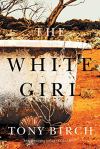
Book coverTheir diverse writers program, for example, supports “writers who face barriers in the development of their writing careers”. The programs are, well, diverse, catering for women of colour, Asian Australian writers, Aboriginal and Torres Strait Islander people, refugee writers, and so on. The program recognises that money can be an issue for these writers, so among the support it offers are bursaries, and paid commissions. The indigenous writing program has used writers you’ve met here – Tony Birch, Anita Heiss and Bruce Pascoe.

For writers with a disability they have a program called Write-ability. Its aim is “to remove some of the barriers that have traditionally prevented people with disability from connecting with writing and publishing”. This support includes regional and online programs, and fellowships.

30 Years

However, because this year is their 30th anniversary, I thought I’d focus mainly on how they are celebrating this milestone – particularly since October was their establishment month.

Here are some of the ways they are celebrating their anniversary:

Flash fiction challenge

In April – the first month of the year with 30 days – they held a Flash Fiction Challenge, which they promoted as “30 days. 30 prompts. 30 Words.” For each day they offered a word prompt, and writers had to submit their 30-word works of flash fiction inspired by that word by midnight of that day. The 30 winners are shared at the link I’ve given, with the first winner, for the word Grit, being blogger Tony Messenger. As a wordlover, I enjoyed the variety of the prompt words, which included Baroque, Gloss, Remember, Nacreous, and Perfectionism.

For a clever, pointed piece, check out Sumitra Shankar’s Beginning, on April 21. It’s a perfect example of the power of flash fiction.

Writers on Writers Vic

Book cover for Toni Jordan's AdditionFor each month – they are up to September – a Victorian writer comments on what Writers Victoria means to them. The writers to date are:

  • Lee Kofman (who co-edited Rebellious daughters which I’ve reviewed)
  • Mark Brandi
  • Toni Jordan (whose Addition, Fall girl and Nine days, I’ve reviewed)
  • Melanie Cheng (whose Australia Day I really must read)
  • Shivaun Plozza
  • Fiona Wood
  • Andy Griffiths (with whom I’m sure to soon have a close acquaintance through my grandson!)
  • Anna Spargo-Ryan (whose The paper house I’ve reviewed)
  • Else Fitzgerald

You can check them all out by going to the site’s page, but to whet your appetite, here are some of the things they say:

… the main antidote to that famous writer’s malady – loneliness, isolation – is in hanging around with peers. Today writers’ centres seem to serve a similar function to that of literary salons from the previous centuries. (Lee Kofman)

I always tell aspiring and emerging writers about Writers Victoria. Many, like me, are just bumbling along, feeling lost and isolated. Writers’ centres like Writers Victoria are invaluable in making writers feel less alone. (Melanie Cheng)

First, I would wholeheartedly recommend it [joining Writrs Victoria]. But second, know what you want to get out of it. A centre like Writers Victoria has something to offer writers at all stages. (Anna Spargo-Ryan)

And so, a very big Happy Birthday to another active writers centre. Australians should be proud of the energy and commitment centres like this one are putting into both supporting all writers and keeping our literary culture alive. Oh, and thanks to Angela Savage for the birthday heads up!

Writers Centres covered to date: the ACT, New South Wales, the Northern Territory, Queensland, South Australia and Tasmania.

Monday musings on Australian literature: Growing up [name the aspect] in Australia

With my Japanese trip almost over, I’m posting just a quick – but nonetheless interesting, I hope – Monday Musings this week.

Anita Heiss, Growing up Aboriginal in Australia

Some of you will have guessed what this title refers to; it’s to the little recent flurry of anthologies being published in Australia in which contributors write about growing up Asian, or Aboriginal, or name-a-specific-situation in, yes, Australia. I have read one of them, myself, Anita Heiss’s Growing up Aboriginal in Australia.

Here is a list of the books (as I’ve found), in publication date order:

Book Cover

It doesn’t take a genius to see that publisher Black Inc has got a stranglehold on the theme. You could be forgiven for being a bit cynical about bandwagons and such, except that Black Inc is a thoughtful, quality publisher, and the editors of these books are established people in their fields who have walked the talk. They have significant reputations which establish their credentials and which, I presume, they’d want to maintain. (I don’t think I’m being naive here.)

Also, in one case at least, the Disabled one, it was the editor who approached the publisher to do the book (presumably, of course, on the back of the series to date). Black Inc’s publisher Kirstie Innes-Will was apparently delighted that Findlay approached them. Innes-Will says:

Part of the strength of the Growing Up series is the way it has evolved organically, championed by editors from different communities. The way these books have been embraced by readers shows how much representation matters. Growing Up Disabled will be an invaluable contribution to that tradition.

Book cover

If you believe, as I do, that reading can open your mind to the lives and experiences of others and therefore help you understand people better, then these books (if as good as the one I have read) are worth publishing. And, if you believe, as I do, that reading about your own experience can help you understand your own life, can help you manage your own life, can perhaps even help you survive your own life, then these books (with the same proviso) are worth publishing.

Monday musings on Australian literature: Australian novels in Japan

Here is my second Monday Musings inspired by my current Japanese travels. It is, loosely, a companion piece to one I wrote three years ago on Australian literature in China. That was inspired by an article I found in Trove. This one, however, was been inspired by a program I discovered via Google, called The Masterpieces of Australian Contemporary Literature.

The website describes the series as follows:

The Masterpieces of Australian Contemporary Literature Series was established by Gendai Kikakushitsu Publishing in 2012. With the support of the Australia-Japan Foundation, the program aims to increase the recognition of contemporary Australian literature by translating and publishing Australian novels in Japan. Not only showcasing the excellence of Australian literature, the series looks to reveal ‘Contemporary Australia’ and share with the Japanese audience the diversity of its culture and society.

ABC RN Books and Arts Daily discussed the project after the launch of the first book. The Australian ambassador to Japan at the time, Bruce Miller, comments that Japanese interest in Australian Aboriginal culture comes from their interest in ancient cultures, and because it’s unique. He also talks about the Department of Foreign Affairs and Trade, which is supporting the project, being comfortable with sharing the positive and negative aspects of our culture. Professor Kate Darian-Smith from the University of Melbourne says that part of the project is to support and foster the teaching and discussion of Australian literature in universities and by the public.

So far, apparently, six books have been so translated and published – and here they are in the order they were done (with the date they were launched, and links to my post on that book, if any!)

  • David Malouf’s Remembering Babylon, trans. by Rumi Musha (2012)
  • Tim Winton’s Breath, trans. by Keiji Sawada (2013, my review): the launch included a discussion between Japanese writer Natsuki Ikezawa and Kate Darian-Smith.
  • Christos Tsiolkas’ The slap, trans. by Keiji Minato (2014, my review): Tsiolkas attended the launch and took part in a symposium.
  • Kate Grenville’s The secret river, trans. by Tomoko Ichitani (2015): Grenville attended the launch, along with “Ms Yukiko Konosu, a well-known translator of foreign literature”.
  • Kim Scott’s That deadman dance, trans. by Masaya Shimokusu (2017, my review): Scott attended the launch, along with two prominent Japanese writers, Ms Akiko Shimoju and Mr Masaaki Nishiki, to talk about “Australian culture and literature, and the role literature plays in multicultural societies”.
  • Helen Garner’s This house of grief: The story of a murder trial, trans. by Megumi Kato (2018, my review): Garner attended the launch, and took part in a panel discussion with Japanese author Kyoko Nakajima discussion Australian and Japanese perspectives on “the non-fiction novel”. You can read a report of the launch event here.

I’m thrilled that I have read, and liked (in different ways and for different reasons) every one of these six books, some, of course, before blogging. I wonder what the next book will be?

Kim Scott That Deadman DanceAll these books have won major awards and/or been bestsellers (by Australian terms, anyhow). None are simple or easy books, and none present Australia at its best. In this sense they represent “true” literature that grapples with real issues, and clearly meet the goal of revealing ‘Contemporary Australia’ (in all its messiness.) Clearly, they appreciate that historical novels also say something about “contemporary” Australia. It’s encouraging that the program is still going, and is supported, it seems, by quality launch events. So many visionary programs like this seem to flounder.
Oh, and by-the-by, I discovered that in July this year, Monash University held a Translation in transition: Australian literature in Japan. It was to focus in particular on this Masterpieces program, which they describe as a 10-year project. The seminar was being given by Tomoko Ichitani who translated Grenville’s book for the project. She is apparently working on a “collaborative translation of Alexis Wright’s Carpentaria“. I wonder if that’s for this program?

Anyhow, what book would you choose next? (I have a few ideas.) And do you have any comments on those chosen to date?

Monday musings on Australian literature: Australian writers in Japan

Given I’m currently travelling in Japan, I thought I’d write a couple of Japanese-oriented posts. My first one – introductory, rather than in-depth – is about Australian writers who live or have lived (loosely defined) in Japan.

An early Australian writer who went to Japan was Rosa Praed who visited Japan around 1894–95 on her return to Australia from England. Resulting from this visit was her novel Madame Izàn: A tourist story (1899) in which, writes Clarke (see below), she “raised the then daring subject of an interracial marriage between a Japanese man and an Irish woman”. This novel is available online, but I’ll just share this little description of the characters’ arrival in Japan:

And now they were in the harbour, where among the native craft and merchantmen were French and English and American men-of-war and a fierce Russian battleship, which looked as though it could, with its big guns, gobble up, as easily at the wolf gobbled up Red Riding Hood, pretty, harmless Nagasaki, lying so peacefully at the foot of her green hills.

Praed visited at an interesting time!

Ogai Mori, The Wild GooseA different sort of Australian writer who lived in Japan, in Kyoto, for twenty years, is Meredith McKinney (who also happens to be poet Judith Wright’s daughter). She is best known as a translator of Japanese literature. Back in Australia, since 1988, and living near Canberra, she’s an associate professor at the Australian National University’s Japan Centre, and writes on Japanese related topics. An example is her analysis in Griffith Review of atomic power and Japan after the Fukushima meltdown, “Continuing fallout”. She continues to translate, her books including Penguin Classics editions of Sei Shonagon’s The pillow book and Natsume Sōseki’s Kokoro, and Finlay Lloyd’s edition of Ogai Mori’s The wild goose (on my TBR).
American-born Australian writer Roger Pulvers has also lived in Japan, mainly Kyoto and Tokyo, for many years. (He is also now based in Canberra I believe.) He’s a playwright, novelist, scriptwriter and, like McKinney, a translator and a writer on Japanese topics. This year he was awarded the Order of Australia for his service to Japanese literature and culture. There’s an extensive article on him in Wikipedia. Broinowski says of his writing:

Always evenhandedly satirical of Australians and Japanese, Roger Pulvers has returned repeatedly in his fiction, drama, and filmscripts to the Pacific war, its consequences, and the moral dilemmas it raised.

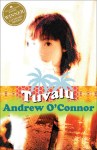
Book coverAn Australian writer who seems to have disappeared from view is Andrew O’Connor, who lived in Tokyo and Nagano for a few years in the early 2000s. His novel Tuvalu won the The Australian/Vogel Literary Award for unpublished manuscript in 2005. I read it back then, before blogging. You might think from the title that the novel is about Tuvalu, but you’d be wrong. It is set primarily in Tokyo, with Tuvalu representing an escape-fantasy. (Hmm, not now!) O’Connor captured well the life of young expats in Japan, and that strange, black, other-worldly tone you find in some modern Japanese literature.
Around the same time, some may remember, Peter Carey published a travel book, Wrong about Japan, which chronicled a trip he made to Japan with his son. It was pretty controversial at the time, because of the approach Carey took. However, Wikipedia quotes Stephen Mansfield of The Japan Times who wrote in 2018 that Wrong About Japan was “not universally appreciated when it was first published in 2005, but time has proven it to be a small, highly original contribution to books on this country.”

It seems that in this book Carey begins by appearing to be a naive tourist in Japan, but Broinkowski writes that:

Gradually however, he allows it to emerge that he has been in Japan more than once before, has done considerable research, and has excellent contacts. When in Japan, Carey doesn’t do as the Japanese do, but he respects the ascendancy of Japanese civilization, and unusually among male writers, doesn’t make a contest out of it.

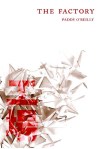
Book coverAll these writers I knew about when I conceived this post, but one I didn’t know who had spent significant time in Japan is novelist and short story writer, Paddy O’Reilly. According to her website, not only has she been an Asialink writer-in-residence in Japan, but she spent “several years working as a copywriter and translator” there. The knowledge she gleaned as a result has informed several of her stories (including two in The end of the world, 2007) and a novel, The factory (2005).
And then there’s Tara June Winch who popped up serendipitously in this month’s Qantas magazine with an article titled “The journey” in the QSpirit section. She talks about having an idea for a novel set in Japan, inspired by the Japanese word hakanai, which she understands to mean “something that is beautiful or precious” because it doesn’t last long. She envisaged her character approaching Mt Fuji, but then became stuck. She writes:

I was adamant that if I could only walk up the side of the mountain myself, the story would be waiting for me in the still quiet, in the pine forests.

So what do you do? You find an artist residency, that’s what! She went to Japan with her daughter. They slept on futons on tatami mats, gradually made friends, and joined in the culture. She never did write the novel, but, she says, hakanai was “the essence of the the entire trip. Hakanai was my daughter’s childhood – beautiful and precious, just because”. We know what she means.

There’s actually quite a lot of academic writing out there on the topic, analysing interpretations, but I hope this has provided a little intro to some Aussie literary connections with Japan. I’d love to hear what you know or have read.

Sources:

Alison E. Broinowski (2101). The honbako is bare: what’s become of Japan/ Australia fiction? (University of Wollongong Research Online)

Clarke, Patricia (2003). “Two colonials in London’s Bohemia” in National Library of Australia News, XIII(12): 14–17, September 2003 (A source I used to add information about Praed to Wikipedia, a decade ago!)


Monday musings on Australian literature: Teachers in Australian novels

What’s brought this on, you are probably wondering, but I can explain. Firstly, my Jane Austen group has, over the years, discussed Jane Austen from the point of view of roles and professions, so, for example, we’ve discussed professions like the clergy, and roles, like brothers, in Austen, and have enjoyed the research and the discussion. Secondly I’ve been in Melbourne this weekend visiting our family, and it just so happens that Son Gums is a teacher. Why not, then, I thought, look at how teachers are portrayed in Australian novels.

Hmmm, I can think of many films, though I admit that I’m talking internationally here, about inspirational teachers. They abound, in fact, but where are they in novels? Even where teachers are not negatively portrayed they seem more likely to be weak and/or ineffectual, than proactive and successful. It was hard to search the internet for my topic, however, because searches tended to retrieve hits about teaching fiction, or teachers’ resources for fiction, rather than hits about teachers as characters in fiction. I did, though, find a blog post from 2012 in which blogger and educator, Darcy Moore, asked “where is the inspirational teacher in Australian popular culture literature and film?  I wasn’t surprised to discover that he didn’t find much either. 
BookCover

So what is there? Some novels featuring teachers fall, loosely, into the mystery-crime-thriller genre. There’s Kenneth Cook’s debut 1961 novel Wake in fright which chronicles the nightmarish school holiday of a rookie teacher in outback Australia, Joan Lindsay’s famous 1967 novel Picnic at Hanging Rock in which teachers lose some students during a picnic, and Gabrielle Lord’s 1980 novel Fortress that was inspired by a real abduction of a teacher and students in Victoria in 1972. At least in that story the teacher does manage to escape with her students. It’s probably not surprising, given the dramatic nature of these novels, that all three have been made into movies. I have read two of these books, but before blogging.

Dymphna Cusack, Jungfrau

Some books feature teachers, but aren’t significantly about their work. Dymphna Cusack’s 1936 novel Jungfrau  (my review) is one such. Cusack, who had herself been a teacher, writes here about three women, obstetrician Eve, teacher Thea, and social worker Marc. They are modern young professional women, but the book’s focus is more their personal and social lives, particularly as affected by Thea’s affair with a married professor, than their working lives. Indeed, early on, Thea, defending her adulterous relationship as her right “to get something out of life”, says “my work doesn’t mean anything to me”. Hmm …

Book coverThen there’s Tom Dorahy in Thea Astley’s 1974 novel A kindness cup, my first Astley, which I read long before blogging. He’s an idealist, a humane person, who returns to his home town for a reunion, but what he really wants to do is right the wrongs of a massacre of Aboriginal people that occurred during his time there, twenty years previously in the 1860s, and for which the perpetrators were never properly punished. It’s interesting that Astley, inspired by a real massacre, was writing about this in 1974! She really was a special and fearless writer. However, again, the book, as I recollect, isn’t so much about his teaching.
Book coverElizabeth Jolley’s 1983 novel, Miss Peabody’s inheritance, also features a teacher, but perhaps not quite in the way most parents would be looking for. This is a novel-within-a-novel, in which an Australian novelist sends instalments of her novel-in-progress to a fan in England. Her novel is about three middle-aged single women, including headmistress Arabella Thorne, who holiday annually together in Europe. This particular year, Thorne brings along a sixteen-year-old student to give her “a little finishing”. The finishing she gets, as she becomes caught up in Miss Thorne’s emotional entanglements with her women friends, is not exactly the usual!
Book coverHmmm, so, are there any teachers actually being good role models in Australian novels? I’m sure there are, but the only one I can remember right now is Phil Day who appears in Julian Davies’ 2018 Call me (my review). Phil Day is not, admittedly, the novel’s protagonist, but his student Pip is – and Phil Day plays an important role in Pip’s coming-of-age trajectory, by listening to him and discussing life with him, rather than by telling him what to do.
Good, wise and/or supportive teachers do appear, I know, in other coming-of-age stories, but I can’t think of any that stand out particularly.

So I’m going to end this post, by returning to Darcy Moore, who concluded his post with:

In an era where teachers are often criticised by politicians and our standing in the Australian community is often talked down, certainly in comparison to Asian and Scandinavian countries, it is important that we work to build an improved attitude towards learning. … It would be wonderful to build a vision into something tangible, something that that allows us to have a society where such positive imagery about teaching and teachers enters our popular, cinematic and literary culture and is not viewed as pretentious, elitist or cringeworthy. Wouldn’t it?

Seven years after that post, things are still much the same I think in terms of how our teachers are perceived. Why is this? And would it help to have some positive depictions in literature – and the other arts? I’m not one to prescribe what writers should write about, but that doesn’t stop me wondering whether positive portrayals would help (if that makes sense.)

Meanwhile, do we have some great depictions in Australian literature that I’ve missed? I’m sure we do, so here is your chance to tell me.

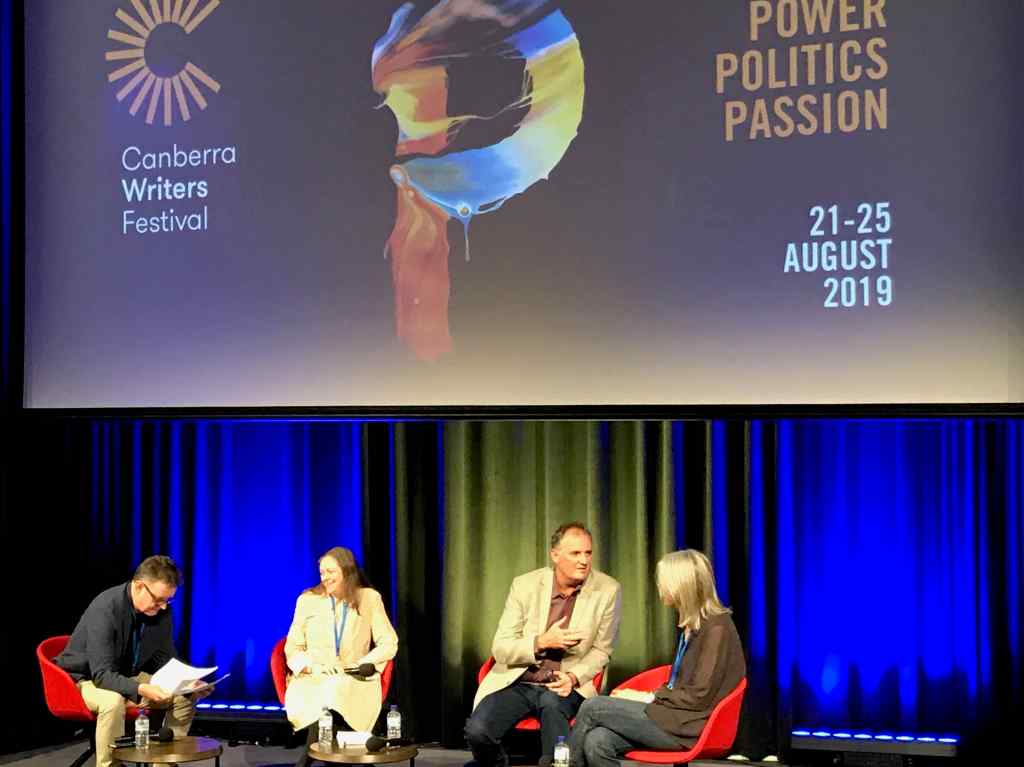
Monday Musings on Australian Literature: Canberra Writers Festival 2019 Recap

Just when you thought it was safe to return to my blog, I’m at it again, talking about this year’s Canberra Writers Festival. However, if you are like me you are intrigued about what other readers and festival goers like, so I thought I’d share what the Canberra Writers Festival sent us subscribers.

But, I’ll start with my 7 posts, and their popularity (by number of hits):

Interesting. The two which specifically featured local authors and/or local subject matter were the most popular, despite my international readership. Maybe some local authors shared the link and a lot of hits were local? Anyhow, these were followed by the two most literary sessions I attended – Tara June Winch and Brian Castro. This doesn’t surprise me, given my “brand” here. And then the last three, which had about two-thirds the hits of the top post, are a mixed bag of, generally, more popular subjects.

Before moving to the Canberra Writers Festival’s report, I’d like to point you to a post written by one of this year’s New Territory bloggers, Shelley Burr. She wrote on the Wonder Women panel (which featured Australian historical fiction novelists.) You’ll have to read her post to find out who they were!

Now, were my most popular posts reflected in the most popular sessions attended? Sort of. The Canberra Writers Festival wrote that the “Top Ten” sessions “include”:

  • Simon Winchester in conversation with Richard Fidler
  • Capital Culture
  • Never Never
  • Defining Moments – True Crime Panel
  • For Whom the Pell Tolls
  • You Daughters of Freedom
  • Best of the Best: Book Club Favourites
  • Women, Men and the Whole Damn Thing
  • Is Hate Our New Normal?
  • David & Margaret

I’m not sure how to interpret this, because they say “the top ten include“, but there are ten here, so I’m presuming these are the top ten? Let’s presume they are, and that they are in order (though I’m surprised that the session featuring Behrouz Boochani from Manus Island is not in the list.)

Anyhow, certainly Simon Winchester was in a 300-seat theatre and was sold out. Capital Culture was sold out too, but in a smaller space. I’m intrigued that three of the sessions I chose were in the top four of the Top Ten, though what that says, I’ll leave to you. It’s interesting, though, that the most popular session, by this list, was not my most popular post. A couple of other sessions listed here – such as Never Never, about “the role that the bush plays in our collective imagination” – were ones I had to miss because of clashes. I didn’t mind missing You daughters of freedom because I had heard Clare Wright speak about her book last year.

It’s clear that the Festival’s “political” slant works well for the organising committee, with sessions on George Pell (including David Marr), Gender (including Gillian Triggs), and Hate (also including Gillian Triggs) all being popular.

The Canberra Writers Festival email also told us the best-selling books at the festival:

  • Capital culture (ed. by Suzanne Kiraly) (I bought this)
  • On disruption (Katharine Murphy) (I have given this as a gift)
  • Cardinal: The rise and fall of George Pell (Louise Milligan)
  • On patriotism (Paul Daley)
  • Brain changer (Felice Jacka)
  • Unbreakable threads (Emma Adams)
  • Just add love (Irris Makler)
  • On indignation (Don Watson)
  • Plots and prayers (Niki Savva)
  • Leading lines (Lucinda Holdforth)
  • You daughters of freedom (Clare Wright) (I have reviewed)

Hmmm … I haven’t heard of some of these, but it’s interesting, given the signing line I saw, that Exactly isn’t listed here. Given there were different booksellers at different sites – including, the NLA bookshop, Harry Hartog and Dymocks – it’s possible that this list does not concatenate across all the booksellers? Anyhow, it’s also interesting that the little “On…” books published by Melbourne University Press are doing well. I recently posted on Stan Grant’s On identity, from the same series.

As for my purchases, I am way out of step. Besides Capital culture, I bought Brian Castro’s Blindness and rage and Simon Winchester’s Exactly (for Mr Gums). I also bought Brian Castro’s After China during the Festival, but at Muse. And, I already had some of the books I heard discussed, including Nigel Featherstone’s Bodies of men, Karen Viggers’ The orchardist’s daughter, and Tara June Winch’s The yield.

All this is fascinating, but the best thing is that the Festival, now in its fourth year, appears to have done well with good pre-sales and, they say, “significant impromptu attendance”. This augurs well for its continuation. And that, of course, is what we want.

Monday musings on Australian literature: National Biography Award, 2019

It’s been five years since I posted on the National Biography Award. Given that, and the fact that some changes have been made since last year, I figured it was worth reminding you (and me) of it.

First, a recap: The National Biography Award was endowed in 1996 by Geoffrey Cains, and supported for many years by Michael Crouch. Its aims were “to encourage the highest standards of writing in the fields of biography and autobiography, and to promote public interest in these genres”. From 2013 to 2018, the prize was $25,000 for the winner, and $1,000 for the shortlisted authors.

However, Michael Crouch died in 2018, bringing about some changes, as the website explains. It is now being supported by the Nelson Meers Foundation whose key objective is, they say, “to foster innovative artistic and cultural expression, and to encourage greater engagement with the diversity, complexity and richness of our cultural sector”. Hence their taking on this Award. This change has resulted in an increase in prize money for the shortlisted authors, and a new prize to commemorate Michael Crouch. The new arrangement, starting in 2019, is:

  • $25,000 for the winner
  • $2,000 for each of six shortlisted authors
  • $5,000 Michael Crouch Award for a first published biography by an Australian writer

The shortlist for 2019 was:

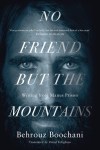
  • Behrouz Boochani’s No friend by the mountains: Writings from Manus Prison (Memoir) (Bill’s The Australian Legend’s review): If you are Australian and haven’t heard of this book yet, you have probably been RipVanWinkling it, but for non-Australians, Boochani is a Kurdish asylum-seeker who has been detained on Manus Island for over six years. This is his story, and one I have written about before.
  • Danielle Clode’s The wasp and the orchid: The remarkable life of Australian naturalist Edith Coleman (Biography) (Theresa Smith’s review): Reclaiming the story of a once well-known but then forgotten early twentieth century Australian naturalist, this book seems to be one of those hybrid biography-memoirs as the author herself, a scientist, is also present in the book.
  • Sarah Krasnostein, The trauma cleanerSarah Krasnostein’s The trauma cleaner: One woman’s extraordinary life in death, decay & disaster (Biography) (my review): This book is about as well known in Australia as Boochani’s is; it’s a beautifully structured, moving story, about transgender woman Sandra Pankhurst’s life and her current occupation as a trauma cleaner.
  • Rozanna Lilley’s Do oysters get bored? A curious life (Memoir) (Amy Walters’ post on Capital Letters, and my post on a festival conversation with Lilley): A complex memoir exploring Lilley’s life with her autistic son, her caring for her father with dementia, and her own experience of the trauma of sexual abuse while living with her bohemian parents, Dorothy Hewett and Merv Lilley.
  • Rick Morton’s One hundred years of dirt (Memoir): A memoir about multigenerational trauma, about which the judges wrote “Not since George Orwell has the grinding, humiliating, life-sapping horror of working-class deprivation and inequality been better portrayed”.
  • Sofija Stefanovic’s Miss Ex-Yugoslavia: a coming of age memoir (Memoir) (Lisa’s ANZLitLovers’ review): The story of a complex migration, which saw Sofija moving from a comfortable childhood in Belgrade to an unsettled life in Melbourne after the collapse of socialist Yugoslavia, but then returning to Serbia, only to come back to Australia when war hit the region.

So, only two biographies and four memoirs, which is a bit of a shame I think, albeit I enjoy good memoirs. However, from my research and from what I’ve read myself, each book here offers something special in content and/or in the approach taken, which expands our understanding of the forms within which they are written, and which is what you’d expect from a shortlist.

The judges for 2019 were:

  • Dr Georgina Arnott: Research Associate at Monash University on Australian history projects; author of The unknown Judith Wright which was shortlisted for the National Biography Award in 2017; and a judge also in 2018.
  • Margy Burn: librarian who has been responsible for Australian special collections at the National Library of Australia, and other state and university libraries; served on working parties for the Australian Dictionary of Biography; and a foundation judge for the Kibble and Dobbie awards for life writing by a woman author.
  • Professor Iain McCalman: author of several books; former President of the Australian Academy of the Humanities; and currently co-director and co-founder of the Sydney Environment Institute at the University of Sydney.

2019 Winners

Behrouz Boochani, No friend but the mountainsThe overall winner, announced last Monday, 12 August, is Behrouz Boochani’s No friend but the mountains. The judges said that:
This is compelling storytelling in the samisdat tradition, written in Farsi as a series of text messages sent to his translator and collaborator Omid Tofighian. Collaboration has made this book, which demonstrates how innovative, experimental and creative the work of translation can be.

The winner of the inaugural Michael Crouch Award for a Debut Work was Sofija Stefanovic’s Miss Ex-Yugoslavia, which judges described as “finely observed and ambitious”, a “thoughtful and tender addition to the genre of migration stories”.

For the non-Australians, in particular, I’d love to know about any specifically biography awards in your countries … but am of course happy to hear from anyone.

Monday musings on Australian literature: Introducing Charmian Clift

There’s no way I can do justice in a short post to such this complex woman about whom so much has been written, but I’d like to add Charmian Clift to Monday Musings posts featuring Aussie authors, not only because she and her husband, author George Johnston, were one of our significant literary couples, but also because, according to academics Tanya Dalziell and Paul Genoni writing The Conversation, she is enjoying somewhat of a renaissance.

This renaissance includes that:

  • in 2018 she and Johnston were inducted into the Australian Media Hall of Fame (see my post); and that
  • she is the subject of two recent/upcoming novels, Tamar Hodes’ The water and the wine (2018), English writer Polly Samson’s A theatre of dreamers (coming in 2020).

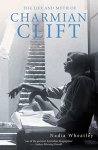
Nadia Wheatley, The life and myth of Charmian Clift, book coverIntriguing, because there was also flurry of interest in her back in the 1990s-2000s, with:
  • Suzanne Chick’s Searching for Charmian: The daughter Charmian Clift gave away discovers the mother she never knew (1994): autobiography/memoir
  • Susan Johnson’s The broken book (2004): novel
  • Nadia Wheatley’s The life and myth of Charmian Clift (2001): biography

There’s clearly something about Charmian! (I have read Chick and Johnson, but before blogging)

Potted bio

Clift was born in the gorgeous NSW south coast town of Kiama in 1923, and served in the Australian Women’s Army Service in World War II as an anti-aircraft gunner. After the war, she worked as a journalist on Melbourne’s Argus, and married journalist George Johnston in 1947. They had two children, before moving to London in 1950 for his job as European editor for Sydney’s Sun. In 1954, they went to Greece to live writers’ lives, where they lived, mostly on Hydra, for 9 years, before returning to Australia in 1963. Clift then worked, primarily, as a freelance journalist, until she died tragically, by suicide, in 1969.

Clift (see Wikipedia) wrote novels, three in collaboration with Johnston, two autobiographies/memoirs, short stories, and many essays/columns (collections of which were published after her death.) She was working on an autobiographical novel, The end of the morning, before her death.

The Charmian renaissance

Dalziell and Genoni (D&G) say that “the revival of interest in Clift is more than a collective nostalgia or feminist correction of the historical record, although both are relevant”. It’s also due, they say, to increasing interest in their Hydra years, where they met other writers and artists including Leonard Cohen, and where they were visited by people like Sidney Nolan and family. D&G refer to two events in Melbourne in 2015: an exhibition called Homage to Hydra, which included paintings of them, and a show, Hydra: Songs and tales of Bohemia, by musicians Chris Fatouros and Spiros Falieros in which they use Cohen’s songs to tell about Clift and Johnston’s time on Hydra.

Ah, and then it comes out! In 2018, D&G themselves published a book, Half the perfect world: Writers, dreams and drifters on Hydra, 1955-1964, in which they tell of the “fabled decade of Clift’s life as a bohemian expatriate”. But there’s more, they share: Sue Smith has written a play called Hydra, which casts “Clift in ways that resonate sympathetically with the concerns of contemporary audiences”. Smith describes Clift as “a woman ahead of her time”, in both her life choices and her writing. Queensland Theatre’s webpage on Hydra provides some useful background, including references to Johnson’s novel.

D&G, then, are particularly interested in Clift’s personality, and in how Johnston’s and her dream of “a cheap and sun-soaked creative island life slowly soured”. They reference Wheatley’s well-regarded biography. They suggest that Clift’s “first person narratives of a life lived with great passion and a sceptical eye to the consequences garnered a large readership” and that “these readers responded to an incisive intellect with a vision of a culturally enriched Australia” [my emph]. They see her as “one of the most important female voices” of her post-war time when a social revolution was on the horizon. Oh, and they argue that Clift was modern in her capacity for “self-creation”!

Searching for Charmian … in Trove

Of course, I had to check Trove to see what contemporary writings I could find, by or about her, but there’s not much, as I expected, because the post-1950s is still tied up in copyright. However, I did find a poem, “Kiama’s Blowhole”, written by her when she was 8 years old and published in The Kiama Independent, and Shoalhaven Advertiser (14 January 1933).

I also found a review by Sylvia Lawson in The Canberra Times (5 March 1966) of a collection of her newspaper columns/essays that was published in her lifetime, Images in aspic (1966). Lawson’s reaction is mixed. Indeed the review is headed “Popularity despite an irritating style”! She praises Clift’s style saying:

She does indeed write well (often better here, in fact, than in her two novels), but it’s what the style does that counts. The long, weaving, daydreaming sentences, the short brisk ones, and the way of letting reflections drift off in rows of dots combine to give readers the sense that her moods and responses have been fully handed over to them, transcribed as exactly and honestly as possible.

Lawson says this of the collection – and I love this – “Writing with humour and enquiry about mods, post-mods, squares and oldies, she does something (since they all read her) to make it one world after all”. However, she doesn’t like it all, saying that “Sometimes the nostalgia goes right over the edge into whimsy; sometimes it looks very like cashing-in on private experience”. This variety, this unevenness, though, is not surprising in this sort of collection I think.

I found an excerpt from Images in aspic in the Macquarie anthology of Australian literature. It’s about the parlous state of the Australian film industry. She writes that no-one has “exploited cinematically our stupendous beaches, or sought to portray the neo paganism of the surf-cult, which is utterly contemporary, utterly Australian …” Nor, she says, “has anybody touched upon the particularly contemporary problem of the integration of hundreds of thousands of Europeans into our communities. There is yeast enough there to ferment a dozen films without formula or cliché”. How much has changed? She writes:

Ever since I have been back here I have been conscious that Australians, caught in international cross-currents of ideas and manners and fashions, twisted about by reassessments of their own old myths, bewildered by elusive and changing standards, are desperate to be redefined.

This is interesting. Clift, the returned expat, seems to be somewhat positive about the state of Australia, and its capacity to grow, at a time when those famous intellectuals, Clive James (1962), Germaine Greer (1964) and Robert Hughes (1964), left for Europe, seeking something less stultifying!

I did find one article in Trove written by Clift, “Home from the Aegean” (Australian Women’s Weekly, 26 February 1964). It’s about the family’s decision to return to Australia, and concludes with:

“You must be out of your minds to leave this!” the latest batch of young Australians said with conviction.

But I don’t think so. In fact, I think that this last journey, which completes the circle of my journeyings, might turn out to be the most exciting one of all.

How sad that five years later she took her own life.

Monday musings on Australian literature: Writers SA

Time, I decided, for the next Monday Musings in my little series on Australia’s writers centres, this time South Australia’s. And it, like Writing NSW did, has recently changed its name, in this case from SA Writers Centre to Writers SA It is, says its About page, Australia’s first writers’ centre, and is located at the State Library of South Australia..

The Chair at the time of the change, Amy Matthews, said that it will ‘turn its attention in an even more dedicated way to helping South Australian writers achieve their creative dreams’, and that they are ‘going to do even more all over the city and the state, with more free events, more writing workshops and three targeted year-long programs for writers at all stages of their careers’. One can be cynical about name changes, but if they result in real improvements, then who cares. Let’s hope that’s happening here.

Like other writers centres, Writers SA is a membership organisation, but also obtains funding and support from others, particularly from federal and state governments.

Here are some of the things the centre does:

Courses/Workshops

Courses and workshops are, as I’ve said in previous posts, a major component of what writers centres do, and so it is with Writers SA, and it’s clear that this centre makes a particular effort to support and encourage young writers. Here is a small selection of Writing SA’s current offerings:

  • Teen Writers Club (with Jason Fischer, a science fiction writer who has won and been shortlisted for Ditmar and Aurealis Awards): geared to teens 15–17 years old, but this is a guide only, they say. That said, they also have a group for younger people aged 12–14 years old. It’s a weekly group that meets on Saturday mornings during school term time.
  • Manuscript Incubator (with Bronwyn Tilley): a 5-month program for “writers looking towards publication”. It’s far easier to quit than to finish! This program says it’s for a whole range of needs from turning a draft into a “final polished product”, to finding/approaching an agent or publisher.
  • Story to Screen (with Holly Lyons, who is been script-writer or script editor on many Australian television series, including, most recently, Home and away): a one-off workshop on how to transform “an original idea for a story that you’re happy to share with the group … into a story with impact suitable for film or TV.”
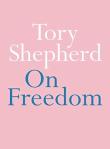
  • Book coverWriting for Change (with Tory Shepherd, journalist who has written On freedom, published by MUP): a one-off workshop on the challenge of crafting “a piece that will (hopefully!) withstand the scrutiny of subeditors, editors, and of course readers”. The promotion for this workshop says that “there’s more demand than ever before for opinion pieces, which means more opportunities for freelancers. It’s also a powerful way that advocates and lobbyists can make their case.”
These are just four of many courses and workshops they offer on topics that include, in addition to the above, creating comics and writing YA fiction, the future of fantasy, finding an agent, and even on how to keep your motivation up!

Events/Networking

  • Monthly meet-up: A monthly informal get-together led by staff from Writers SA and Adelaide City Library that is “usually genre specific or practice specific”. The promotion says “ask for advice, ask questions, tell stories or make up stories. You’ll come away motivated and ready to go home and put pen to paper.” The August meet-up is on Journalism.
  • Literary drinks: These are regular (or semi-regular, it’s not clear) evening which they describe as “relaxed networking opportunities for writers, readers and everyone in or interested in the writing industry. Meet your writing peers, connect with your community, and find out what’s happening in the world of words in SA.” The next one occurs in September and is called “Spring Mixer”.
  • Salisbury Writers Festival: This annual festival, now 15 years old, is organised by Writers SA and the City of Salisbury. The program for the 2019 festival to be held at the end of August is on their website.

In addition to the above, Writers SA also offers a wide range of professional resources and services, including manuscript assessment, something they call “first feedback”, and individual consultations. It has a blog, which seems to be published regularly, and which covers a wide range of topics, from professional to fun things like giveaways.

Book coverIn 2018, the centre created a Writers and Readers in Residence Project specifically designed to support regional communities. It involves South Australian and international writers undertaking “an artistic residency in regional communities to activate reading as well as writing in the town”. It seems to have funding (from the Australia Council of the Arts) to run from 2018 to 2020. You can read about it on their website.
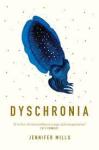
Writers who have been involved to date include Jennifer Mills (author of the Miles Franklin shortlisted Dyschronia) who was based in the Eyre Peninsula; New Zealand novelist and playwright Whiti Hereaka who is currently based at Roxby Downs Community Library; and writer Karen Wyld who took part in the ACT Writers Centre’s Hardcopy program and was based at Ceduna. The project involves writers working on their own projects and offering workshops or other activities in the communities in which they are based. Karen Wyld was hosted by the local public library while another participant, novelist and poet Bernice Chauly, worked with Ali Cobby Eckermann (who has appeared several times on my blog.) It sounds like an active, exciting program, one that recognises the needs of South Australia’s many remote communities, while offering development opportunities for the writers too. It also clearly puts diversity into practice in its selection of writers for the project. (Oh, and this sounds like just the sort of thing the newly-renamed organisation was aiming for!)

.. and here ends my post on another busy, active Writers Centre.

Writers Centres covered to date: the ACT, New South Wales, the Northern Territory, Queensland, and Tasmania.

Monday musings on Australian literature: No Vogel prize in 2019

For those of us who follow the major Australian literary awards, The Australian/Vogel is one we like to keep an eye out for, because it has launched a number of significant careers during its nearly 40-year history. For those who don’t know it, the award is for an unpublished manuscript, which can be “a work of fiction, Australian history or biography”, by a writer under 35 years old.

It currently offers a $20,000 cash prize and, most importantly, publication by Allen & Unwin. It is usually announced early-ish in the year, with the book’s publication occurring at the time. (The entries for the 2020 award closed on 31 May, which gives time for the judge’s decision and for the publication process to be set in train.)

Authors who have won and gone on to publish more books – and whom I’ve posted on here – include:

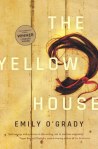
Emily O'Grady, The yellow house(Of the above, only Document Z is the actual Vogel winner.
Others who have established ongoing careers, and whom I’m still to review, include Brian Castro (1982), Mandy Sayer (1989), and Rohan Wilson (2011). Last year’s (2018) winner was Emily O’Grady, with The yellow house (my review). Some of the prize’s past winners have gone on to win, or be shortlisted for, the Miles Franklin and other major Australian awards.

However, Ben Walter, discussing the Vogel (and to some degree literary prizes in general), on the Overland website, argues that while the money is nice, these awards are not, as the Vogel itself shows, a guaranteed path – or necessary even – to establishing a literary career. He has a point, I’m sure. (He also refers to an article on the writing life, including a survey of Vogel winners in Meanjin by Frank Moorhouse, in 2017. This is well-worth reading, and possibly worthy of a separate post!)

Anyhow, back to 2019 …  Books + Publishing, which reported the news in May, quoted Allen & Unwin’s publisher, Annette Barlow, as saying:

This is an award that has literally launched the careers of over 100 authors. But this year, in 2019, there is no winner and—although we’re disappointed, of course—I feel the judges’ decision speaks to their respect for the award and their desire to maintain the excellent standards of previous winning manuscripts.

They also quote Stephen Romei, literary editor of the Australian and one of the Vogel judges. He said:

I will be on the judging panel again this year, for the 2020 Vogel, and am optimistic we will find manuscripts that stand up and be counted.

It’s always disappointing when an award is not granted. This is the third time that this prize has not been awarded, the others being 1985 and 2013. Were there really no good manuscripts out there?

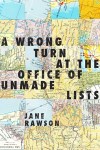
Jane Rawson, A wrong turn at the office of unmade listsAuthor of the innovative A wrong turn at the Office of Unmade Lists, Jane Rawson, wrote a post, “Just award the Vogel’s already”, on the Overland website, teasing out some of the pros and cons of this sort of award and of awards in general, not to mention the challenge of carving out a writer’s life. She says:

Not awarding the Vogel’s this year is downright cruel. Mediocre books get published all the time, and some of them even win multiple awards: who cares if you give the Vogel’s to a manuscript that isn’t a work of utter genius? The people who’ve submitted manuscripts have found a way to carve out time and space to write. They’ve dedicated themselves to a craft that has almost no financial or social reward. They’ve put their hopes on the line. Choose the best of the bunch and shortlist them: give one of them a prize. Maybe it will be the only money and recognition that writer ever gets, or maybe it will be the encouragement they need to go on to write better books. Either way, who cares: anything is better than the big plate of nothing most writers are served.

Her comments are both informative and provocative, but of course they are just another person’s opinion. If you are interested in the issue, do read her article and the comments on it. One interesting response came from someone called Adam Ford:

My first thought was that it wasn’t the prize committee, but the publishers themselves (more specifically the publishers’ marketing department) who decided they didn’t want to publish any of the manuscripts bc none of them fit with existing publishing success trends. Just another encroachment of commerce onto publishing. No idea if that’s true, of course. You’ve got to wonder what the conversation was like when they decided that THIS was the way to go.

I can see both sides of the argument but, in the end given the challenges of the writing life, I’m with Rawson. Why not reward the best of the bunch – and, if necessary, help that author create a “worthy” book? Then again, should we worry, or just accept Ben Walter’s argument (see above) that these awards are not the be-all and end-all – and get over it?