Monday musings on Australian literature: Some New Releases in 2020

It seems from my stats that people like my “new releases” post, so here is the 2020 version. As in previous years, my list is mostly drawn from the Sydney Morning Herald, and as it is a Monday musings on Australian literature post, it will be limited to Australian authors (listed alphabetically.) Do click on the link to their see coming releases from non-Aussies, or from those Aussies I’ve omitted because I’ve only listed those most relevant to me, or for some basic information about the books.

Last year, I listed 27 fiction works, and read only four of them – but I will be reading a few more of them in the next 2-3 months.

Links on the authors’ names are to my posts on them.

Fiction

  • Patrick Allington’s Rise and shine (Scribe, June)
  • Richard Anderson’s Small Mercies (Scribe)
  • Robbie Arnott’s The rain heron (TextJune)
  • Margaret Bearman’s We were never friends (Brio, March)
  • James Bradley’s Ghost species (Hamish Hamilton, April)
  • Steven Conte’s The Tolstoy estate (Fourth Estate, August)
  • Trent Dalton‘s Shimmering skies (Vintage, June)
  • Meaghan Delahunt’s The night-side of the country (UWAP, March)
  • Jon Doust’s Return Ticket (Fremantle Press, March)
  • Ceridwen Dovey’s Life after truth (Hamish Hamilton)
  • Chris Flynn’s Mammoth (UQP, May, UQP).
  • Dennis Glover’s Factory 19 (Black Inc., July)
  • Kate Grenville‘s A room made of leaves (Text, July) (Coincidentally, Michelle Scott Tucker recently blogged about this Elizabeth Macarthur inspired novel. Do check it out!)
  • Sophie Hardcastle’s Below deck (Allen & Unwin, March)
  • Tom Keneally’s The Dickens boy (Vintage, April)
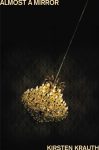
  • Book coverKirsten Krauth‘s Almost a mirror (TransitMarch)
  • Sofie Laguna‘s Big sky (working title) (Allen & Unwin, second half)
  • Bem Le Hunte’s Elephants with headlights (Transit, March)
  • S.L. Lim’s Revenge (Lounge, June)
  • Jamie Marina Lau‘s Gunk Baby (Brow BooksMay)
  • Donna Mazza’s Fauna (Allen & Unwin, February)
  • Kate Mildenhall’s The mother fault (Simon and Schuster, September)
  • Liam Pieper’s Sweetness and light (Hamish Hamilton, March)
  • Mirandi Riwoe‘s Stone sky gold mountain (UQP, April)
  • Craig Silvey‘s Honeybee (working title) (Allen & Unwin, second half)

I have been wondering what Grenville was working on, so am pleased to see another novel coming our from her. And, I’m very pleased to see Krauth and Riwoe producing new novels after their powerful debuts.

SMH also lists “new voices” (including new forms for old voices!):

  • Paul Dalgarno’s Poly (Ventura, August)
  • Anna Goldsworthy’s Melting moments (Black Inc, March) (old voice)
  • Erin Hortle’s The octopus and I (Allen & Unwin, April)
  • Tobias McCorkell’s Everything in its right place (Transit Lounge, July)
  • Laura Jean McKay’s The animals in that country (Scribe, April)
  • Andrew Pippos’ Lucky’s (Picador, second half)
  • Alice Pung‘s One hundred days (Black Inc., October) (old voice)
  • Ronnie Scott’s The adversary (Hamish Hamilton, April)
  • Pip Williams’ The dictionary of lost words (Affirm, April).

Short stories

Yes, I know these are fiction too, but they deserve a special section!

  • Emma Ashmere‘s Dreams they forgot (Wakefield Press, April)
  • Laura Elvery’s Ordinary matter (UQP, second half)
  • Mark O’Flynn’s Dental tourism (Puncher & Wattmann, February, );
  • Elizabeth Tan’s Smart ovens for lonely people (Brio, June, Brio)
Book coverAnd some “new” short story voices:

  • Melissa Manning’s Smokehouse (UQP, second half the year)
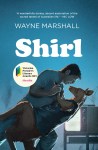
  • Wayne Marshall’s Shirl (February, Affirm)
  • Sean O’Beirne’s A couple of things before the end (Black Inc., February)
  • Stephen Pham’s Vietnamatta (Brow Books, October)
  • Barry Lee Thompson’s Broken rules and other stories (Transit Lounge, August)

Non-fiction

SMH provides a long list of new non-fiction books covering a huge range of topics, so my list is selective – but still, there’s a lot:

  • Randa Abdel-Fattah’s Growing up in the Age of Terror (NewSouth, July)
  • Elizabeth Becker’s Journaliste (Black Inc., September): on female journalists during the Vietnam War
  • Elise Bohan’s Future superhuman (NewSouth, October): on embracing the “transhuman”
  • Rutger Bregman’s Human kind (Oneworld, second half): on how altruism offers a new way to think
  • Bernard Collaery’s Oil under troubled water, March, MUP): the story of his being charged after exposing an Australian bugging operation in East Timor
  • Peter Cronau’s War on Terror (The Base, June): Australia’s role in the War on Terror
  • Robert Dessaix’s Time of our lives (Briosecond half): on ageing
  • Lindy Edwards’ Corporate power in Australia (Monash, February): on big business
  • Carly Findlay’s (ed) Growing up disabled in Australia (Black Inc, June): see my post on the Growing up series.
  • Fiona Foley’s Biting the clouds (UQP, September): 19th century Aboriginal “protection” and Indigenous opium addiction.
  • Rebecca Giggs’ Fathoms: the world in the whale: “the stories we tell about whales, what those stories signal about how we imagine our own species, and what whales reveal about the health of the planet” (from Scribe)
  • Julia Gillard and Ngozi Okonjo-Iweala’s Women and leadership (Vintage, July): gender bias
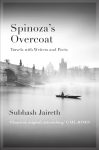
  • Book coverSubhash Jaireth’s Spinoza’s overcoat: Travels with writers and poets (February, Transit): on writers and writing
  • Ketan Joshi’s Road to resolution (NewSouth, August): climate change
  • Royce Kurmelovs’ Just Money (UQP, second half): on our debt
  • Garry Linnell’s Badlands (Michael Joseph, September): the fall of the Australian bushranger
  • Sophie McNeill’s We can’t say we didn’t know (HarperCollins, March): stories from war-ravaged areas by a former ABC Middle-East Correspondent
  • Paddy Manning’s Body count (S&S, May): climate change
  • Rory Medcalf’s Contest for the Indo-Pacifc (March, La Trobe): on “regional tensions”
  • Patrick Mullins’ The trials of Portnoy: how Penguin broke through Australia’s censorship system: “the first account of the audacious publishing decision that — with the help of booksellers and readers around the country — forced the end of literary censorship in Australia” (quoted from Scribe)
  • Jonica Newby’s Climate grief (NewSouth, September): climate change
  • Aaron Smith’s The rock (Transit, November): Australia as perceived from its northerly outpost, Thursday Island
  • Victor Steffensen’s Fire country (Hardie Grant, March): looks at how Indigenous fire practices might help our country (from an Indigenous fire practitioner)
  • Gabbie Stroud’s Dear Parents (Allen & Unwin, February, A&U): by the author of the well-regarded Teacher
  • Malcolm Turnbull’s A Bigger Picture (Hardie GrantApril): from our latest ex-Prime Minister
  • Marian Wilkinson’s Carbon Club (Allen & Unwin, June): climate change

I note that a book that was flagged for coming out last year – and which I noticed didn’t appear – is now flagged for this year: journalist Julia Baird’s Phosphorescence (Fourth Estate, April).

It’s interesting, encouraging and not surprising to see quite a few books on climate change in the above list.

Biography and memoir (loosely defined)

  • Darleen Bungey’s Daddy Cool (Allen & Unwin, May): “memoir” of crooner Laurie Brooks, father of biographer Bungey and writer Geraldine Brooks. Can you write a memoir of someone not yourself? Or, is this a hybrid memoir-biography?
  • Gabrielle Carey‘s Only happiness here (UQP, second half): on Australian-born novelist Elizabeth von Arnim (whose work I love and for whom I have another biography already on my TBR)
  • Melissa Davey’s A fair trial (Scribe, second half of the year): on George Pell
  • David Duffy (Radio Girl, May, A&U): on the first Australian woman electrical engineer, Florence Violet McKenzie
  • Clementine Ford’s How we love (Allen & Unwin, second half): on her experience of love
  • Evelyn Juers’ The dancer (Giramondo, September): on Philippa Cullen
  • Mary Li’s Ballet, Li, Sophie and me (Viking, September): memoir by Australian ballerina, and wife of Li Cunxin
  • Alex Miller: a memoir untitled? (Allen & Unwin, second half): on his friend and mentor, Max Blatt
  • Cassandra Pybus’ Truganini (Allen & Unwin, March): on the titular Indigenous Tasmanian woman
  • Miranda Tapsell’s Top End girl (Hachette, May): memoir
  • Robert Wainwright: untitled (July, Allen & Unwin): on the great granddaughter of the Lindeman wines founder, Enid Lindeman
  • Donna Ward’s She I dare not name (Allen & Unwin, March): on being a spinster

Does anything here interest you?

Six degrees of separation, FROM Daisy Jones and the Six TO …

I do love the sound of 2020. It has a lovely ring to it. It’s also the year that Father Gums will turn 100. However, that will be May. Right now, it’s time to kick off the first Six Degrees of Separation meme of the year. This meme for those of you who don’t know it is explained in detail on our meme host Kate’s blog – booksaremyfavouriteandbest.

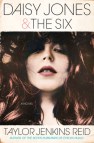
Book coverI’m starting this year the same as I did last year, that is, with Kate choosing a book I haven’t read. Indeed I haven’t even heard of Taylor Jenkin’s Reid book, Daisy Jones and the Six, which is a novel about the rise and fall of a fictional 1970s rock band.
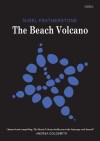
For my first link, I’m sticking with the theme of rock music, and choosing Nigel Featherstone’s novella, The beach volcano (my review). However, Featherstone’s novel, while featuring a successful rock musician – Canning aka Mick Dark – is not so much about Canning’s musical career as his return home after a long absence for his father’s 80th birthday, intent on getting answers to some longstanding family secrets and, thus, resolve underlying conflicts.
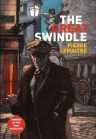
Pierre Lemaitre, The great swindleFeatherstone’s Canning returns home because he wants to improve his relationship with his family, and father. Not so for Édouard Péricourt in Pierre Lemaître’s The great swindle (my review). Severely wounded in World War 1, and the son of a dominating father, he flat refuses to return home to resolve those unresolved conflicts!
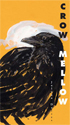
Julian Davies, Crow mellow Book coverAnd here, sticking, unusually for me, with content, I’m going to link on something a bit tenuous. Édouard Péricourt was so disfigured in the war that he wears increasingly bizarre but often beautiful masks rather than let people see his face. Masks feature in Julian Davies’ novel Crow mellow (my review), but via a masked ball that takes place in a country house/bush retreat where artists are staying with their patrons and admirers.

Charlotte Wood, The natural way of thingsCrow mellow belongs, then, to a sub-genre known as country house novels. While you couldn’t call my next link a country house, exactly, but the characters in Charlotte Wood’s The natural way of things (my review) are all stuck together in a sort of labour camp in the country somewhere. No masked-ball fun there!
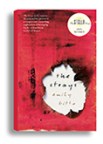
Emily BItto, The strays, book coverThe natural way of things won the Stella Prize in 2016. The 2015 winner was a sort of country house novel too, Emily Bitto’s The strays (my review) which is about an artist’s colony in Victoria, inspired by the Reeds and their Heide group. Yes, I know I’m stretching the country house friendship a bit, but why not?

Book coverSo, where to from here? How about another book which was inspired by artists, albeit of a different type? Dominic Smith’s The electric hotel (my review) was inspired by the silent film pioneers of the early twentieth century. Its protagonist, Claude Ballard, is fictional, like Bitto’s Trenthams, but it does directly reference real artists as well, such as the Lumière Brothers and Thomas Edison.

So, a different sort of chain for me because all the main links are content-related (with an additional link between Wood and Bitto on the Stella Prize.) Interestingly, I’ve realised that most of the books deal with artists of some sort – painters, musicians, filmmakers, and mask-makers. Four of my six authors are male, which is not common for me, and all of my linked authors, except Pierre Lemaître, are Australian (albeit Smith now lives in the USA). Oh, and all are set post 1900.

And now, my usual questions: Have you read Daisy Jones and the Six? And, regardless, what would you link to? 

Blogging highlights for 2019

Here is the last of my traditional year-end trifecta (the others being my Australian Women Writers’ Challenge wrap-up and Reading highlights posts). This is very self-indulgent, I know, but it interests me!

Top posts for 2019

There hasn’t been a huge change in my top posts – several posts have remained in the list for several years now, and seven of the ten were published over 5 years ago. However, this year has seen a bit of shift, as you’ll see in my comments below.

Trent Dalton, Boy swallows universeHere’s my 2019 Top Ten, by number of hits:

So, the shift. Mainly it’s that I have a new record with six Australian posts appearing in the Top Ten, four more than last year, and two more than the previous record of four. Barbara Baynton is an established regular, though which work/s change from year to year. Last year it was “Squeaker’s mate” while this year “The chosen vessel” returns to the Top Ten. Meanwhile, Red Dog, is here yet again, proving itself to be true blue! However, the BIG news is that for the first time an Australian book has actually topped the Top Ten, Trent Dalton’s Boy swallows universe. This is the same book that was my reading group’s top pick of the year.

Fascinatingly, Mark Twain’s “A presidential candidate”, which popped into the Top Ten last year, has remained there this year. As I said last year, does this have anything to do with you know who? Short stories and essays still feature strongly, but there are just four this year, versus seven last.

Four Australian posts appear in the next ten, and they are an eclectic lot. Two are for works, Barbara Baynton’s “Squeaker’s mate” and Vicki-Laveau-Harvie’s The erratics, and two are author-based posts, Vale Andrew McGahn (1966-2019) and Helen Garner on writers and writing.

Book coverI also like to note how well the posts actually written in the year ranked. Last year the first one came in at 23. This year, the winner, my Boy swallows universe post, romped in at number 1, with more than double the hits of the second ranked post. My next most popular 2019-written posts ranked 15th (Vale Andrew McGahan (1966-2019)) and 18th (Vicki Laveau-Harvie, The erratics). So, three from 2019 in the top 20. Unheard of!
For the Monday Musings fans amongst you, my most popular Monday Musings posts were:

Australian Gothic and Novels set in Sydney were second and first, respectively last year, with 2018’s new release post being third! Not a big change in substance, then. This suggests that our blogs are long-term resources, as well as places for current discussion.

Random blogging stats

The searches

Here’s a selection of 2019’s searches that found my blog:

  • many searches, not surprisingly, related to this year’s top post: the searches included (in order of frequency) boy swallows universe discussion questions, your end is a dead blue wrenboy swallows universe quotes, and boy swallows universe meaning. There were also various permutations of wording searching the meaning of red phone in the book! It’s interesting to see what people might be looking for besides straight reviews.
  • last year I noted that the word “summary” was popular in searches, more so than the previous year’s popular word “analysis“. This year, however, they were more neck and neck.
  • there are people out there clearly looking to prove Dark emu wrong, as some of the more popular searches had wording like dark emu debunked, critics of dark emu and, would you believe, critical reviews of black emu book. This last one suggests that people didn’t know exactly what they are searching for but had been told the work is no good. I don’t think my post would have satisfied them. Anyhow, I’m guessing it’s all these people who helped push this post into the Top Ten this year.
  • although my post on What to say when you order food at a restaurant is still among my Top Posts, there were fewer actual searches recorded for this one. A couple, however, are entertaining. One is: what to do if food is not the way you ordered. I’m not sure my post would have helped that person either. And another: why to say hi at restaurant. Why indeed!
  • I think I can guess what Australian poetry fraud was looking for, the Ern Malley affair.
  • and then, there are always the homework questions like: do you think that john muir made an effective argument for saving the redwoods? why or why not?

I should add the proviso here that many many search terms are not exposed to us bloggers, so the terms I’m sharing above are a small subset.

Other stats

I wrote four fewer posts in 2019 than in 2018, averaging just under 14 posts per month – and yet the traffic on my blog increased by more than 20% over last year. (Then again, last year’s traffic was somewhat lower than the previous year. It’s all a mystery to me!)

Merlinda Bobis Fish-hair womanAustralia, the USA, and Britain, in that order, were the top three countries visiting my blog, as in 2018. In 2017, India was fourth and Canada fifth, while in 2018, the order was reversed. This year, India regained its upper hand over Canada! The Philippines remains 6th for at least the third year, largely, I think, because of interest in Merlinda Bobis’ Fish-hair woman.
I’d like to thank all of you who commented on my blog this year. My comments count increased by around 7% in 2019, which is satisfying because the respectful conversations we have here are very special to me. I particularly want to thank Lisa (ANZLitLovers) and Bill (The Australian Legend) who tolerate, both on my blog and theirs, much contrariness from me. Their tolerance and forbearance (not to mention that of the rest of you who come back here again and again) is a true measure of how positive and respectful social media can be.

Challenges, memes and other things

I only do one challenge, the AWW Challenge, which I wrapped up this week. And I only do one regular Meme, #sixdegreesofseparation run by Kate (booksaremyfavouriteandbest), but I occasionally do others. You can see all the memes I’ve done on my “memes” category link.

I also took part in Lisa’s (ANZLitLovers) Indigenous Literature Week, Bill’s (The Australian Legend) AWW Gen 1 Week, and, more casually, in Nonfiction November run by a group of bloggers, because these all relate closely to my reading interests.

Each year I like to host some guest posts with this year’s coming from Amanda who mostly reviewed titles that were missing from the AWW challenge database, and my brother Ian, who wrote two posts on his attendance at the Hobart Writers’ Festival. To read them, click this link and look at those posted in 2019. A big thanks to Amanda and Ian for their contributions.

A major highlight of the year, though, was my continued involvement as blogging mentor for the New Territory  program sponsored by the ACT Writers Centre, the National Library of Australia, the Canberra Writers Festival and the Street Theatre. The program’s aim is primarily “to stoke cultural conversations in the ACT”. I enjoyed working with Shelley Burr and Rosalind Moran over the second half of the year.

And so, 2020 …

To conclude, a big thanks again to everyone who read, commented on and/or “liked” my blog last year – and to all the other wonderful bloggers out there, even though I don’t always manage to visit everyone as much as I’d like. I wish you all good reading in 2020, and look forward to discussing books with you here or there!

Finally, as I say every year, a very big thanks to the authors who write the books, and to the publishers and booksellers who get the books out there. I hope 2020 will be positive for us all.

Reading highlights for 2019

Regular readers will know that my Reading Highlights post is my answer to other bloggers’ Top Reads posts. It does not contain a ranked list of the books I considered my “best” of the year, because I prefer to talk about “highlights”, which I define as those books and events that made my reading year worthwhile.

I don’t set reading goals, but I do have certain “rules of thumb”, such as trying to reduce the TBR pile, increase my reading of indigenous authors, and read some non-anglo literature. How do you think I went?

Literary highlights

Literary highlights really means literary events, and there were some inspiring ones this year:

  • Festival Muse: for the third year running, Muse (cafe/bookshop/event venue beloved by Canberra’s booklovers) held, in March, their Festival. It’s a busy time of year and a long weekend, but I had booked to attend the opening, as I always do, and one other event. Unfortunately, a family member’s hospitalisation meant we had to miss the opening, but I did get to Alice Pung in conversation.
  • Sydney Writers Festival has been live streaming selected sessions to regional locations – like Canberra – for a few years now. I attended three in 2019: Boys to Men: The masculinity crisis; Andrew Sean Greer in conversation about Less; and “I do not want to see this in print”.
  • Canberra Writers Festival about which I wrote 7 posts: to find them click this link and select the 2019 festival posts.
  • Simpson and White

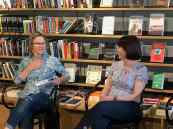
    Simpson (L) and White (R), Muse, 2 Nov 2019

    Author interviews/conversations: I only got to a few of the many, many offered: Jane Caro, Frank Bongiorno, Stan Grant, Jessica White and Helen Garner.

  • Book launches: Two of the book launches I attended this year were particularly special because it was perfectly obvious that the authors involved were surrounded by a large, warm and enthusiastic group of people who cared deeply about them and their work: Nigel Featherstone’s Bodies of men (my review) and Madelaine Dickie’s Red can origami (on my TBR).
  • The Constructive Critic panel: this was the year I relented and finally said yes to a request to take part in a festival panel. It was part of the Design Canberra Festival, and I did manage to write it up, here.

Reading highlights

As in previous years, I’m sharing some random observations about the year’s reading, without ranking them in any way. Just know that I’d be happy to recommend all those I mention here:

  • The locals: Canberra is said to punch above its weight in terms of, per capita, the number of authors we have here. I don’t know whether this is statistically substantiated, but we are certainly well endowed! This year I read the latest novels by two of our well-published authors, Nigel Featherstone and Karen Viggers. (I also met Kaaron Warren, who is a multi-award winning author in genres I don’t read, speculative fiction and horror.)
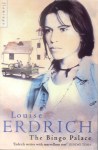
  • The “dreaded” TBR: I didn’t make impressive inroads into the TBR, but I did reduce it by four, including two highlights, Louise Erdrich’s above-named book, and Marilynne Robinson’s Gilead. Can I improve next year?
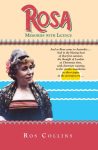
  • Memoirs with a difference: There is a tried-and-true formula for memoirs in which the writer relates a trauma and how they’ve risen above it, or, if they’re celebrities and sportspeople, write tell-alls about their successes and failures. These memoirs have value, but are not my chosen fare. I prefer those that do something a bit different, like, say, Jessica White’s hybrid biography-memoir, Hearing Maud, and Ros Collins’ Rosa: Memories with licence in which she teases us about whether the book is indeed memoir or fiction. Or, like those which share experiences in order to educate readers. These can be off-putting if not handled well. Fortunately, Neil H Atkinson in The last wild west and David Brooks in The grass library managed to do just this, about racism and animal rights, respectively.
  • The book I wasn’t planning to read: Still on the subject of memoirs, I hadn’t planned to read Vicki Laveau-Harvie’s The erratics, feeling it was going to be a bit too much of the rise-above-a-trauma style, but when it won the Stella Prize, I decided to give it a go – and was rewarded for my effort.
  • Some interesting voices: This year didn’t produce any unusual narrators like fetuses or skeletons, but Sayaka Murata’s mystified yet open Convenience store woman is an engaging narrator who encourages us to think about people who don’t meet societal expectations. Trent Dalton and Tim Winton sustained powerful young male voices in Boy swallows universe and The shepherd’s hut, while Amor Towles’ A gentleman in Moscow was one of the most charming narrators I’ve read for some time.
  • Forgotten Australians: Bill’s (The Australian Legend) annual AWW Gen weeks provide the perfect opportunity for me to feed my love of past Aussie women writers. This year Louise Mack and Capel Boake had their turn.
  • Older Americans: This year also saw me read some older, excellent American novels – the already-mentioned Marilynne Robinson’s Gilead and Mary McCarthy’s The group.
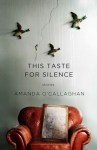
  • Death, be not proud: Amanda O’Callaghan, in her debut short story collection This taste for silence, writes about death in more ways that you could think possible, and yet leave you wanting more.
  • Out of left field came Kim Scott’s nicely researched local history, Katherine’s tropical housing precinct 1946-1956.
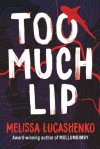
  • The book I’ve recommended the most: Melissa Lucashenko’s Too much lip is a perfect example of how to create engaging but flawed characters, and how to tackle deeply political issues with both humour and passion.
  • The one that got away: as always, there are the books that got away, which included, this year, Behrouz Boochani’s No friend but the mountains. It is still sitting in my TBR pile, accusingly.

These are just some of this year’s worthwhile reads.

Some stats …

I don’t read to achieve specific stats, but I like to keep an eye on what I’m doing to ensure some balance, all the while maintaining my particular interest in women and Australian writers:

  • 70% of my reading was fiction, short stories and novels (versus 80% in 2018): Around 75% is my rule of thumb, so I’m happy!
  • 64% were by women (making my average for the last five years, 2015-2019, 68%): As women writers are an important priority for me, without wanting to be exclusively so, this proportion seems reasonable.
  • 28% were NOT by Australian writers (versus 18% in 2018): Last year, I said I wanted to redress the balance to be something more like my previous one-third non-Australian, two-thirds Australian, and I got close.
  • 24% were published before 2000 (rather less than for the last two years which hovered around 30%): While this is ok, I’d really like to read more older books.
  • 34% were published in 2019 (similar to last year), which pleases me, because I don’t want all my reading to be current.

Overall, it was a good reading year in terms of what I read, but less so in terms of how much. Life got in the way moreso than usual! As always, I’m grateful for all of you who read my posts, engage in discussion, recommend more books and, generally, be all-round great people to talk with. Thank you for being here.

I wish you all an excellent 2020.

What were your reading or literary highlights for the year?

Monday musings on Australian literature: Australian Women Writers Challenge 2019

AWW Challenge 2019 BadgeFor some years now, I have devoted my last Monday Musings of the year to the Australian Women Writers Challenge* – and this year I am continuing that tradition! Sorry, if you hoped for something else. With the New Year – I love the sound of 2020 – just two days away, I wish all you wonderful Whispering Gums followers a wonderful year to come in whatever form you would like that to take.Thank you, too, for supporting my blog with your visits and comments.
Now, the challenge … it has continued to go very well. The full database now contains reviews for nearly 6,100 books across all forms and genres, from all periods, of Australian women’s writing. This means that the number of books reviewed on our database increased in 2019 by 900 books, or 17%, which is about the same increase as last year. In my area of Literary and Classics, we had roughly the same number of reviews posted as last year.

My personal round-up for the year

It was not, I have to say, my best Challenge year, as I posted only 25 reviews over the year, about 25% less than last year. I’m not sure how that happened, but c’est la vie. It was clearly a different sort of reading year. Anyhow, here they are, with links to my reviews:

Book coverFICTION

Book coverSHORT STORIES

ANTHOLOGIES

Book coverCHILDREN’S PICTURE BOOKS

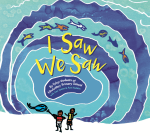
  • Nhulunbuy Primary School, with Ann James and Ann Haddon, I saw, we saw (picture book)

NON-FICTION

Book coverThis year, fiction (including short stories) represented around 57% of my AWW challenge reading, which is similar to last year. I read no poetry or verse novels again this year, and I read fewer Classics than last. However, I did read three classic short stories by Capel Boake for Bill’s (The Australian Legend) Gen 2 week as well as Louise Mack’s novel. On the plus side, I read more indigenous writing this year – two anthologies, a picture book, and Melissa Lucashenko’s Miles Franklin award-winning Too much lip (as well as some male authors who shall not be mentioned here!)
If you’d like to know more about the Challenge, check it out here. We are also on Facebook, Twitter (@auswomenwriters), and GoodReads. Do consider joining us. All readers are welcome.

Finally, a big thanks again to Theresa, Elizabeth and the rest of the team. I love being part of this challenge, not only because it equates with my reading goals but also because the people involved are such a pleasure to work with. See you in 2020.

And so, 2020

Challenge logoThe 2020 sign up form is ready, so this is also my Sign Up post for next year. As always, I’m nominating myself for the Franklin level, which is to read 10 books by Australian women and post reviews for at least 6 of those. I expect, of course, to exceed this.

Do you plan to sign up?

* This challenge was instigated by Elizabeth Lhuede in 2012 in response to concerns in Australian literary circles about the lack of recognition for women writers. I have been one of the challenge’s volunteers since 2013. Theresa Smith (of Theresa Smith writes) now oversees the day-to-day management of the blog, but Elizabeth is still an active presence.

Melanie Myers, Meet me at Lennon’s (#BookReview)

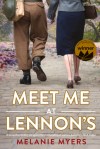
Book coverI was keen to read Melanie Myers’ debut novel, Meet me at Lennon’s, because it is set during the Brisbane of my mother’s early teens, that is, wartime Brisbane when her school, Somerville House, was commandeered in 1942 by the Australian Military Forces and served as a US Army Headquarters for the rest of the war. I grew up knowing this story, so was keen to see what Myers made of it, particularly since not many literary fiction novels, as far as I know, have tackled Brisbane during those times. Ariella van Luyn spends some time there in Treading air (my review) and David Malouf’s semi-autobiographical novel Johnno, which I read a long time ago, covers those years. However, being five years younger than my mum, Malouf was only 11 when the war ended, so his perspective is necessarily different.

Myers’ focus is the lives of women during those strange, heady days when women experienced new freedoms through filling the jobs left by men. Added to this was the excitement and glamour of the American GIs in town resulting in increased socialising at bars, like the titular Lennon’s Hotel, and dance venues, like the Trocadero.

It’s something isn’t it? It’s hard not to get caught up in the fever of having a common purpose. Uniforms everywhere and everyone feeling what they’re doing is important and useful. And the Americans, let’s not forget them. For all their braggadocio, they’ve certainly brought a touch of glamour to our little colonial outpost. (April 1943. p. 233/4)

But it was a dark time too. It was a time of austerity and rationing. There was tension between the Australian men and the Americans whose cashed-up glamour, with their gifts of “nylons” and fur coats, attracted the women. There was racism towards black American soldiers. And there was sexual violence against women. This is the complex world that Myers explores in her historical novel, Meet me at Lennon’s.

However, this novel is not straight historical fiction because Myers has taken the increasingly-common dual narrative approach, alternating between the 1940s and the present, when protagonist Olivia Wells is struggling, not only with her PhD on the life of a now-forgotten feminist author Gloria Graham, but also with her abusive (as it turns out) boyfriend, Sam, and the reappearance of her estranged father. Just like her 1940s counterparts, Olivia meets an American man. The stage is set in chapter 1 …

You might be getting a glimmer now of why Myers chose the dual narrative approach? It serves to compare the lives of women in the 1940s with those of women now, asking us to consider what, if anything, has changed? Myers undertook extensive research into wartime Brisbane, looking particularly at police and newspaper reports of crimes against women, as well as the infamous Battle of Brisbane. She uses this research to create stories of several young women in the 1940s, stories she winds around a plot based on an unsolved crime – the River Girl murder. Through these women we learn, for example, that crimes by Americans were mostly passed to their Military Police and quietly handled, with justice rarely being obtained for the victim. Such was the River Girl’s fate. Can Olivia and her friends solve it now? There is, then, also a mystery at the heart of this novel.

Myers does a lovely job of recreating the times. Her characters not only engaged me, but they felt authentic. There’s sturdy sensible Alice, who, having worked pre-war as a house-maid for rich people, sees the opportunity, now that she’s in a well-paid job, to buy a fur coat, just like her former employer had owned. To her horror, however, she soon realises that fur coats were “the gift of choice for women whom American servicemen ‘favoured'”. There’s Gwendolyn, engaged to the uninspiring Robert, but now having fun, as the much more exciting Dolly, with the “energetic” Corporal Charles Feely. There are several more, including those in the present time. One of the book’s challenges is keeping track of the characters and clocking the clues that might connect them.

Myers plays about a bit with her dual chronologies. Chapter 4, for example, is divided into three sections, September 1942, July 1942, then August 1942. The aim, I assume, is to reduce the focus on plot tensions, by preparing us for characters’ actions and feelings. In September 1942, Alice burns the above-mentioned fur coat she buys in July 1942. She also remembers a violent act by her brother when they are children, which prepares us for meeting him in August. And Chapter 12 is set in 1993, when we meet again, as an older woman, Alice’s friend Val from 1942. It works fine – and indeed meeting the lively Val again in 1993 provides some light relief, while also moving the more serious issues on.

The writing is generally sure and expressive. Myers writes some evocative descriptions, such as “a confident early sun fixed on warming the rest of the day ahead” and “the vaulted plaster ceiling of Reckitt’s blue was badly deteriorated and hadn’t felt the caress of a paintbrush in decades”. However, for me at least, she does overdo the similes. While, individually, most are fresh, they often felt irrelevant and distracting, such as “like a starlet’s eyelids, the brownout covers …”, “unfolding like a crumpled flamingo, Clio …”, and “the details landed like clumps of pelted sand.” Too much, I’m afraid.

Meet me at Lennon’s, which won the Queensland Literary Awards’ Glendower Award for an Emerging Writer in 2018, is a good and meaningful read about a significant and little covered period in Australia’s and Brisbane’s history. Early in the novel, Olivia’s American acquaintance Tobias refers to the racist segregation of black American soldiers during the war years, and sees a wider relevance:

“A place has got to come to terms with its ugly history, is what I think. Otherwise it metastasises like a cancer cell. And from what I understand, ugly history goes back a lot further here than just the war.” (p. 10)

In the end though, it’s the lives of women which are the central concern of this novel. The final chapter commences with a letter written by Rhia (Gloria Graham) in 1975. She admits that she had hoped to “undo” what had been done to Olive, the River Girl. However, she comes to realise that “there are some evils that no art form can make better, fix or even soothe”. Perhaps she’s right, but novels like this can keep the important issues front and centre – and there’s value in that.

Theresa Smith also appreciated this novel.

AWW Challenge 2019 BadgeMelanie Myers
Meet me at Lennon’s
St Lucia: UQP, 2019
265pp.
ISBN: 9780702262616

(Review copy courtesy UQP)

Books given and received for Christmas, in 2019 – sorta

Regular readers here will know that on my Boxing Day I usually publish a post on the books I gave and received for Christmas. However, this year I’m doing something different. I’ve just read a link that Paula (Book Jotter) posted in her latest Wind-up Post. It’s from The Guardian and is about the challenges of book gift giving. If you give books, as most of you are sure to, you will have confronted or considered the issues involved, so I thought I’d share them and, along the way, include some of the books I gave or received this year.

Elle Hunt, who wrote the article titled “I thought you’d like to read this”, writes that books as gifts are “thought to be less personal than jewellery, but far more telling of the giver (and what they think of the recipient) than anything that comes in a turquoise box from Tiffany. Not to mention infinitely more likely to be passed on.” She then offers a few rules:

  • always save the receipt, the reason being that if you have chosen a book you’ve thought to be the perfect present for someone, so probably have others. Fortunately, my mother had saved the receipt for the book she gave me this Christmas, Helen Garner’s Yellow notebook, because I already have it (albeit as a review copy, not a gift.)
  • never write an inscription in a book, unless you’ve written it yourself. Do you write inscriptions? I used to once, but gave it up long ago, because it does mean the book can’t be returned (or re-gifted), if the recipient has it. The article discusses the pros and cons of this issue, from different angles, but the suggestion is that it’s probably safer to write your sentiment in a card.
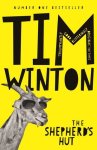
  • Book coverchoose for the recipient rather than what you think they should read! Now this, to me, is a no-brainer. Surely the aim is to give your recipient something they’ll enjoy and remember you fondly for! I’m really hoping my toddler grandson likes Pamela Allen’s Mr McGee. And I was very confident that my lexicographer-grammarian mother would like John Sutherland’s How good is your grammar. The article notes that giving books can signal your own taste, and touches on the pros and cons of this and of giving books you love. It suggests if you can’t overcome the influence of your ego when choosing books, ask the advice of a knowledgeable (often independent) bookseller! Good suggestion. This year, as in most years, I gave some books that I’ve loved – like Tim Winton’s The shepherd’s hut to Son Gums and Amanda O’Callaghan’s This taste for silence to Brother Gums’ partner – because I think the recipients will like them. But, I have also given books I haven’t read, for the same reason. Horses for courses, as they say.
Others have written on the subject too, like the Book Riot blog back in 2015. Their “10 Rules for Book Giving” post takes a slightly different tack, including offering a few suggestions on how to find out what books your recipient might like, particularly if that person is a non reader. Hmm … given their first rule is “don’t be an evangelist” for a book you’ve loved and give it to everyone “regardless of whether they’re interested in it or not”, I’m not sure we should be going there? Do you want to antagonise the non-reader, do you want to guilt them? I think there are better times to encourage non-readers than at gift-giving time, but maybe that’s just me! (Of course, I’m not talking about babies here: give them books, books, and more books I say, so they are readers from the beginning.)

Book coverThe Huffington Post also wrote on the topic in 2012, “How to pick just the right book gift”. The writer Roxanne Coady starts by commenting on the trend towards gift cards. “I get the ease and even the appeal,” she writes, but then suggests that “it results in missing an opportunity. The perfect gift to receive or give is one that reflects an understanding, an appreciation, or a quirk of someone. In the razzle dazzle of the pace of our lives, why miss the opportunity to show someone that you took the time to think of them — took the time to think of what might delight or surprise them?” Yes, there it is, the most important thing to me about gift-giving – showing someone that you took the time to think of them and to think about “what might delight or surprise them”. I’m sure this was behind Brother Gums’ gift to me, a book of poetry and paintings, The voice of water by Adrienne Eberhard and Sue Lovegrove. Brother Gums loves to promote Tasmanian culture – and this book is by Tasmanians – but he also knows that I love beautiful books that are a little different from those I usually read. You will hear more about this book in the coming weeks.

Like the writers of two previous articles, Coady also suggests asking booksellers for advice as an option, but she makes some other interesting observations, of which the most interesting to me was to take into account your relationship with the recipient. What an excellent point. Even if you think you know someone’s likes or tastes, you might want to think about the message you are sending about yourself and/or about what you think of them in the book you choose – see Elle Hunt above. This could be a minefield, if the relationship is not a close one.

So, what about you? Do you follow any rules or practices when choosing books as gifts? Or, do you think the gift card is a safer option?

Monday musings on Australian literature: Author blogs on the publishing journey

Most readers, not to mention aspiring authors, love hearing about the writing and publishing process authors go through. What inspired their book? How did they go about writing it and were there any hiccoughs along the way? How hard was it to get an agent and/or publisher? What role did the publisher/editor have in shaping the final product? And, once the book is out, how did the marketing/promotion journey go? How did they feel about reviews, positive and negative? These sorts of issues are often covered in book launches, and on panels and “in conversation” events at writers’ festivals, but some writers go a step further and share them via their personal blogs.

So, today, I’ve decided to share a select few of these, given I can’t possibly capture them all (even if I knew them all, or could remember all those I’ve come across!) All these authors have had books published, and all have written more posts on writing than the posts I’m featuring here. In other words, I’m brazenly inviting you to explore their blogs beyond the posts I’m highlighting below.

Book coverLouise Allan

Louise, whose debut novel The sisters’ song was published in 2018, has a series on her blog called Writers in the Attic. Here she publishes guest posts from Australian authors on what it’s like to be an author. Her guests include authors well-known to me like Heather Rose (A few thoughts about writing), Favel Parrett (When fiction becomes truth), and Robyn Cadwallader (The angel among the chaos). Introducing Robyn’s post, Louise writes:

I’m always deeply grateful to the writers who contribute to Writers in the Attic. Their words never fail to give me something to think about, or bestow a nugget of wisdom or just make me feel less lonely on this torturous journey to a novel.

Book coverAmanda Curtin

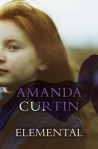
Amanda, like Louise (above) and Annabel (below), is a Western Australian writer, and has published a few books, including novels Elemental and The sinkings. She has a couple of special series of posts about writing on her blog, looking up/looking down. One is called Writers ask writers (with topics like early inspirations and tools of the trade), and the other is 2, 2 and 2 (writers + new books) in which writers discuss two things about each of three aspects or ideas relevant to their new book. Two of these aspects are set – things that inspired their book and places connected with it – while the third is chosen by the author. So, for example, Brooke Davis, writing about her novel Lost and found (my review) chose 2 of her favourite secondary characters in her book, while Jenny Ackland talking about The secret son (my review) chose 2 favourite things connect with her book.

Nigel Featherstone, Bodies of menNigel Featherstone

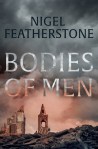
Local author Nigel has been documenting his writing life on and off since 2009 in his creatively named blog, Under the Counter or a Flutter in the Dovecote. However, he has written a special series documenting the course of his latest novel, Bodies of men (my review). The series, called Diary of bodies, takes us from its original inspiration to his feelings about reviews and, woo hoo, being shortlisted for an award. Nigel, like many of the authors in this post, shares not only the practical, factual things about writing and publishing his book, but also his emotional journey. Nigel, a local author, has appeared several times on my blog.

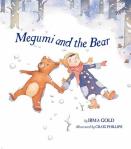
Irma Gold Craig Phillips Megumi and the bear book coverIrma Gold

Irma is also local author who has appeared several times on my blog. She is a professional freelance editor who also teaches editing. She has edited an anthology, and has had a collection of short stories and children’s picture books published. She discusses all this, and many other topics related to the writer’s life on her blog. Like some of the other writers listed here, she has included in some of these posts input from other writers, such as this post on rejections, in which Anna Spargo-Ryan, Sheryl Gwyther and Ben Hobson discuss their feelings about rejections. Hobson, author of To become a whale, writes:

It sucks. But I’m saying to you: you can persevere. You’re a writer, damn it. Get off the floor and clench your fists and edit and send it out once more. You can endure. You are being refined. Collect rejections like UFC fighters collect scars; each one of those things is a mark that has created this warrior you’re becoming. Be proud. And send it out again.

Annabel Smith and Jane Rawson

Annabel Smith (from Perth) and Jane Rawson (from Melbourne) have both appeared on this blog before (see Annabel and Jane). Together, they created in 2017 a series of posts they titled What to expect, which they ran on both their blogs, Annabel and Jane. Their aim was to “dish the dirt on what happens just before, during and after your book is released”. In these posts, Annabel and Jane give their opinion – on, say, prizes or book launches – and then, mostly, also invite another author or two to contribute.

Annabel is a member of the Writers Ask Writers series of posts that Amanda also posts. She also has an Author Q&A series in which she asks writers “to answer some questions about writing and publication” and a series on How Writers Earn Money.

Book coverMichelle Scott Tucker

Michelle, like Nigel, has maintained a general litblog for many years. However, also like Nigel, she has a specific series of posts focused on her biography, Elizabeth Macarthur: A life at the edge of the world (my review). In this series, she shares both her writing and publishing journey and her post-publication experiences and events, including being shortlisted for awards.

How generous and open-hearted are these writers to share their knowledge, and to go to so much trouble to do so. I dips me lid to them. But, they are just a start. Many other authors have blogs too, offering us all sorts of delights. I plan to share more of them during 2020.

Have you read any of the blogs, or blogs like them? If so, do you enjoy them and why?

My reading group’s top picks for 2019

In what is becoming a tradition, my reading group once again voted for our top picks from our 2019 schedule. Given many of us like hearing about what other reading groups do, I’m sharing the results as I did last year.

First, though, here is what we read in the order we read them (with links to my reviews):

  • Trent Dalton, Boy swallows universe (my review): debut novel, Australian author
  • Anita Heiss, Growing up Aboriginal in Australia (my review): memoir anthology, Indigenous Australian editor
  • Marilynne Robinson, Gilead (my review): novel, American author
  • Amor Towles, A gentleman in Moscow (my review): novel, American author
  • Sayaka Murata, Convenience store woman (my review): translated novel, Japanese author
  • Mary McCarthy, The group (my review): novel, American author
  • Anton Chekhov, The lady and the dog (my review): translated short story, Russian author
  • Enza Gandolfo, The bridge (my review); novel, Australian author
  • Les Murray night: read any book by or about him (I was in Japan, so did not contribute): Australian poet
  • Karen Viggers, The orchardist’s daughter (my review): novel, Australian author
  • Tim Winton, The shepherd’s hut (my review): novel, Australian author

So, five men and six women; six Australian writers and five non-Australian; two translated works; three works written before 2000 (plus much of Les Murray’s work); an anthology of Indigenous Australian writing; nine fiction works plus a poet and a collection of memoirs. A decent mix, I think, given our focus always has been women and Australian writing but not exclusively so.

The winners …

Twelve of our thirteen currently active members voted. We had to name our top three picks, which resulted in 34 votes being cast (one member casting just one vote). The results were:

1. Boy swallows universe, by Trent Dalton (8 votes)
2. A gentleman in Moscow, by Amor Towles, and The shepherd’s hut, by Tim Winton (7 votes, each)
3. Convenience store woman, by Sayaka Murata (6 votes)

So, four of our eleven books received 28 of the 34 votes cast, that is, 80%, which is an interesting concentration, given that none of our reads this year were actively disliked. Despite the overall variety in our reading this year, our top books were not as varied as last year: the top three were books were all by men, with just the fourth being by a woman, and all four are novels.

Highly commended was The bridge, by Enza Gandolfo, but, various members also made special mentions of Marilynne Robinson’s Gilead, Mary McCarthy’s The group, and Karen Viggers’ The orchardist’s daughter.

Of course, this is not a scientific survey. Votes were all given equal weight, even where people indicated an order of preference, and not everyone read every book, so different people voted from different “pools”.

Selected comments (accompanying the votes)

  • Boy swallows universe: Commenters used words like “brave”, “raw”, “edgy”, “energetic”, “unusual”, with one noting its “generosity for its flawed characters.”
  • A gentleman in Moscow: Two commenters captured the gist of our responses with “Beautifully written, fascinating premise, and thoroughly engaging, while hinting at the dramas around” and “A classy read. Sometimes hilarious whilst also full of dignity and the unexpected.”
  • The shepherd’s hut: Commenters on this in-your-face book used rather different words, like “strong”, “despite the language” and “uncompromisingly”, but the book clearly made an impact on us to share equal second favourite for the year. As one of us said, “what a tale”!
  • Convenience store woman: Our commenters emphasised its quirkiness and its very different voice – though, in fact, most of our top books had rather different voices. However, one commenter nailed what was particular about this one, with “Gives a voice to someone who is normally excluded. Love the relentless logic of the narrator.”

And a bonus!

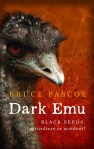
Bruce Pasco, Dark emuAs last year, a good friend (from my library school days 45 years ago) has agreed for me to share her reading group’s schedule from this year:

  • Circe, by Madeleine Miller (novel, American author)
  • Bridge of clay, by Markus Zusak (novel, Australian author)
  • Dark emu, by Bruce Pascoe (non-fiction, indigenous Australian author)
  • The lover, by Marguerite Duras (novel, French author)
  • Little fires everywhere, by Celeste Ng (novel, American author of Chinese descent)
  • On the Java Ridge, by Jock Serong (novel, Australian author)
  • Anything is possible, by Elizabeth Strout (novel, American author)
  • The Romanov sisters, by Helen Rappaport (novel, British author)
  • The buried giant, by Kazuo Ishiguro (novel, Japanese-English author)
  • Dear Mrs Bird, by AJ Pearce (novel, English author)

My group has read one of the above books – Dark emu – but a few years ago. This wasn’t the case with their list last year, where we had read none.

I don’t think this group did a formal top pick list this year, but my friend’s favourite was Circe, which she described as such “a rewarding read”. Her second choice, she said, would “perhaps” be On the Java Ridge. She said that “although the writing was uneven, we in the group thought the content was significant”. Her least favourite, by far, was Dear Mrs Bird. Many of you, I know will have read and agree with her about Circe. I would like to read it, but I am particularly interested in Jock Serong, because his books keep popping up in Australian readers’ lists.

But wait, there’s more!

This year, some members of my group named other (ie non bookgroup) favourite reads of the year, and I share them with you (with links to my reviews if I have read them, regardless of whether I nominated them for this list!):

  • Maxine Beneba Clarke’s The hate race (my review)
  • Louise Erdrich’s The bingo palace (my review)
  • Robert Galbraith’s (aka J K Rowling) Lethal white
  • Gail Honeyman’s Eleanor Oliphant is completely fine
  • Melissa Lucashenko’s Too much lip (my review)
  • Ian McEwan’s Machines like me
  • Liane Moriarty’s The husband’s secret
  • Liane Moriarty’s Truly madly guilty
  • Liane Moriarty’s Big little lies
  • Michelle Obama’s Becoming 
  • Henry Handel Richardson’s The getting of wisdom
  • Jock Serong’s On the Java Ridge
  • Jock Serong’s Preservation
  • Jock Serong’s Quota
  • Tara Westover’s Educated

If you are in a reading group – face-to-face or online – would you care to share your 2019 highlights?

Amanda O’Callaghan, This taste for silence (#BookReview)

Book coverShort story collections are rarely recognised in literary fiction awards, but Amanda O’Callaghan’s debut collection, This taste for silence, was shortlisted for this year’s Readings Prize for New Australian Fiction. The judges described it as “inventive in its themes and by an author unafraid to enfold her readers into unsettling reading experiences”. I would agree. This taste for silence is full of unusual turns that force us to see an issue or event from a different – and often unsettling – angle.

In an interview conducted by Readings, O’Callaghan says:

I certainly did not write these stories with any theme in mind, although once I saw the whole manuscript it was clear that themes were emerging all on their own. It soon became apparent that I liked writing about people with secrets. Your description of “unspoken histories” is perhaps closer to the mark; I do like thinking and writing about characters who, for a variety of reasons, cannot articulate how they feel, or what’s happened to them. Or what they’ve done.

As a result, this collection has been given an over-riding title – which I rather like – rather than being  titled for one of the stories contained within. Like O’Callaghan’s interviewer above, I too would have said that the book is more about unsaid things than about secrets, though of course, the former often implies or results in the latter. Some of these unsaid things may be deliberately so – or deliberately withheld for a time – while others are things, as O’Callaghan says above, that people can’t easily articulate.

So, to describe the book. It contains twenty-one stories, ranging  from flash or micro fiction pieces to the last and longest story, “The painting”, which runs for 40 pages. Fifteen of the stories have been published before, many through flash fiction competitions. Two of the longer stories were published in the (sadly) now-defunct Review of Australian Fiction. One of these is the opening story, “A widow’s snow”. It provides a perfect introduction to the collection because not only does it introduce the reader to the main ideas O’Callaghan explores in the collection, but it also exemplifies her skilled command over narrative. By this I mean the way she can string the reader along with little hints about what is really happening without ever letting our focus drift away from character to plot. Plot is not the important thing for O’Callaghan. Rather, it’s how, as Eddie ponders in “The painting”, characters cope with the “endings of things”.

Endings, then, are a thread in this collection, and, let’s not be coy about it, by “endings” I mean death, because most of the stories deal with death in some way. Murder, suicide, euthanasia, drowning, miscarriage, war deaths – along with the more usual deaths from illness – occur. Most of these deaths, though, don’t occur in the actual story. Two deaths, for example, are referred to in “A widow’s snow”, but both have happened before the story commences. The story starts lightly enough:

Roger, Maureen decided, is the kind of man who would appreciate an old-fashioned pudding. She flicked through the best of her recipe books, toyed with ideas like apple tart with a rich pastry crust – Gerald’s favourite, so not really an option – and all manner of sponges, even soufflés. She braved the mole-eyed newsagent (twice divorced, blinking at the door for a new, early-rising wife) and bought a couple of cookery magazines.

What an assured start to a story – and to a collection. There’s the humour, the hints about Roger’s character and Maureen’s hopes, and the straight but evocative language. The domestic details in the unfolding of this surprisingly shocking story are on point, skewering character and nailing the tone perfectly. In this story, it’s Roger who has the secret and Maureen who must decide how she’s going to cope with it. After this story, we know to be prepared for anything, and yet, I was still surprised, more than once, as I read on.

“A widow’s story”, told third person, is one of the longer pieces. It’s followed by a flash fiction piece, “Un uncommon occurrence”, which won the Allingham Flash Fiction Competition in 2015. (You can read it on their site.) This story is told second person and is, ironically, about what women are so often told is a “common” happening. You can probably guess what this is. The third story, “The turn”, is also told second person. It won the Carmel Bird Award for New Crime Writing, also in 2015. This is quite a macabre story, one that unsettles the reader by encouraging us to engage with the narrator until we get to the point where have to accept that we’ve been taken in … and yet, even then, we are forced to think around all the corners.

And so the stories continue, introducing us to a wide cast of people, young and old, male and female, some of them confronted with the ordinary, and others with the extraordinary. One of the impressive things about this collection, in fact, is the variety of characters and situations O’Callaghan presents to explore these gaps and silences. One of the stories I loved – which I won’t name so it won’t be spoiled if you read it – is told in the voice of a hoarder. As in most of the stories, its narrator’s true situation is only slowly revealed, in this case because she knows her behaviour is not socially acceptable. Once again, we are encouraged to see her from multiple angles rather than from the more usual, and simplistic, judgemental one.

The interesting question hanging over most of the collection’s characters is when or whether to speak the unspoken. Roger, in the first story, seems to decide that if there’s going to be a future in his burgeoning relationship with the titular widow, he needs to come clean. Other narrators, most of them first person, can’t help but let their story out, sometimes in a confessional tone, sometimes to relieve or share their pain. The practical, can-do Justin in “Legacy”, for example, is permanently scarred by his good deed, pondering “who would have thought practicality could be such a deadly characteristic?” The underlying point to the collection, then, is that unsaid things are tricky – left unsaid they can burn you up or lock you out from others, but, sometimes, saying them can have the same result.

So This taste for silence is a compelling but provocative book that forces us to confront the silences in our lives, to consider them from multiple perspectives and ask whether they work for ill or good. Our hoarder, for example, thinks the latter. Her story ends with her returning to her silent ways: “The house feels glad again, released. It hums with the joy of things ending”. Is it reasonable for us to disagree, much as we might like to? I suggest you read the book to see what you think.

AWW Challenge 2019 BadgeAmanda O’Callaghan
This taste for silence
St Lucia: UQP, 2019
197pp.
ISBN: 9780702260377

(Review copy courtesy UQP)