Over at The Resident Judge of Port Phillip, Janine is publishing a series of travel posts on My non-trip in the year of coronavirus. You see, as she writes in her first post, published on April 3, she would, that day, have been “folding up the laptop, packing my case and taking up my passport all ready for a trip to Peru” that evening. She was grumpy, as other people I know, about the missed trip, the lost payments, and so on – but she found a silver lining: she could armchair travel, so she is posting each day on what she might, or would, have been doing on those days.
We are all, of course, wondering about what our post-COVID-19 world is going to look like. Will we – the lucky we who can afford it that is – jump back into overseas travel as soon as countries open up again, or will we be a little more cautious. Will we stick to home for a while? It is regarding this latter, that I’m writing today’s post – with, of course, “home” for me being Australia. I have written several posts on travel writing. Not all are about Australian travel, and some are about historical travellers, but if you are interested, my travel writing tag will take you to them.
Two of the posts so tagged are Monday Musings: Some Australian travel writing, which includes Australians writing about places other than Australia, but also Robyn Davidson’s classic Tracks, and Travel writers on Australia, which includes non-Australians writing about Australia, like Bruce Chatwin’s Songlines and Bill Bryson’s Down Under aka In a sunburnt country.
And now, having scoured the Internet, leaving no Google search unturned, I bring you the following random and uncurated selection of travel-related books about Australia published this century. Please note that these are not tour guides (though Marcia Langton’s book probably comes close) but writing about places and travel.
- City Series published by NewSouth: Alice Springs by Eleanor Hogan; Adelaide by Kerryn Goldsworthy; Brisbane by Matthew Condon; Canberra by Paul Daley; Darwin by Tessa Lea; Hobart by Peter Timms; Melbourne by Sophie Cunningham; Perth by David Whish-Wilson; Sydney by Delia Falconer. Here is what Philippa McGuinness, from NewSouth Publishing, says:
I wanted to ask some of our best novelists and writers to write non-fiction about the cities they lived in – or have adopted – in a way that would evoke intense sense memories for people who are familiar with them and give those who aren’t a sense of what it’s like to live in Brisbane or Adelaide or wherever.
There are some other well-known series where famous writers have tackled Paris or Prague, but they’re usually not locals. They’re temporary visitors. I wanted writers who have a stake in a city to write about it, which is why we first billed them as ‘travel books where no one leaves home’.
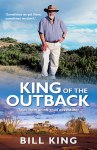 Bill King, King of the Outback: Tales from an off-road adventurer (2012): stories from the founder of AAT Kings tour company.
- Marcia Langton, Welcome to country (2018): “a curated guidebook to Indigenous Australia and the Torres Strait Islands. Author Professor Marcia Langton offers fascinating insights into Indigenous languages and customs, history, native title, art and dance, storytelling, and cultural awareness and etiquette for visitors.”
- Michael McGirr, Bypass: The story of a road (2004): the story of the Hume Highway, the main road thoroughfare from Sydney to Melbourne.
- Evan McHugh, Birdsville: My year in the Back of Beyond (2010): Penguin quotes a review from The Age:
McHugh is a clever mixture of curious outsider and eager participant… Written in a simple but elegant style where honesty and thoughtfulness build an accurate picture of the richness of life in one of Australia’s most famous outback towns.
- David Marks, Australian photographic gallery: Road trips (2015): a coffee table book containing “offbeat” images taken with a Polaroid and Diana camera.
- David Mason, Walk across Australia: The first solo crossing (2014): a memoir of Mason’s 4,000+km walk in 1998 from Australia’s eastern-most town, Byron Bay, to the western most point near Shark Bay, Western Australia.
- Graham Seal, Great Australian journeys (2018): a collection of some of Australia’s most dramatic journeys from the 19th and early 20th century collected by Seal who is Professor of Folklore at Curtin University.
- Nicholas Shakespeare, In Tasmania: Adventures at the end of the world (2005): The Guardian’s review describes this as “a mixture of history, genealogy, travelogue and journalism”. The book was apparently inspired by Shakespeare’s distant relation Anthony Fenn Kemp, whom the reviewer describes as “cruel, pompous and unpleasant bootlegger”! Hmm…
 These books range from the popular to the serious. I’ve only heard of a few of them, and only have a couple in my TBR pile, Paul Daley’s Canberra and Marcia Langton’s Welcome to country.
I note though that, with the exception of the City series and Marcia Langton’s Welcome to country, all these authors are male (white male, I presume). And this brings me to an article (or blog post) in Overland titled “A short history of the dangers of travel writing”. It’s worth a read for its discussion of what travel literature encompasses and the limited voices we are seeing.
Anyhow, you know what I’m going to ask. Do you have any favourite works of travel literature that you can recommend to the rest of us for some armchair travelling in this time of COVID-19?
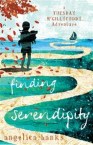 Dear parents of primary age children! Monday April 6th at 4pm Australian EST its time for Heather Rose Reads. We’ll begin with the first book in the acclaimed children’s series I co-author under the pen name Angelica Banks. Book 1 is Finding Serendipity for children aged 8 – 12 (grades 3 -6). If you have primary school children this is my way of helping you have a break for a little while on Mondays, Wednesdays and Fridays. I’ll also post the readings on YouTube if you’re in a different time zone. See you and your children here on Facebook Live 4pm this Monday April 6th … it’s going to be fun.
 Writing War: A Panel Discussion: Still upcoming – Monday 20 April – but I’m sharing it now in case any of you are interested in attending. It features Nigel Featherstone (whose
 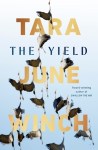 Tara June Winch’s novel, The yield, follows her impressive – and David Unaipon award-winning – debut novel Swallow the air
  Lisa (ANZLitLovers)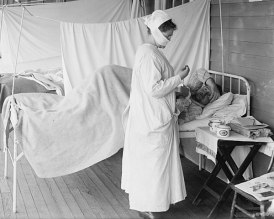

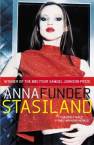 Now to April’s starting book, the critically acclaimed, multi-translated, award-winning nonfiction book by Australia’s Anna Funder – Stasiland (
 Stasiland tells the stories of Stasi officers and collaborators and of those who suffered at the hands of the Stasi in the then East Germany. Largely because of this book, Mr Gums and I made a point of going to Leipzig in 2013 and visiting the Stasi’s Runde Ecke headquarters there. Anyhow, in announcing this book, Kate described it as a “classic on tyranny and resistance”. There are so many books that can link from that, so I’ll be interested to see what my co-meme-players do. I’ve decided to choose a related aspect, surveillance, which was fundamental to the Stasi’s tyrannical practices, and link to Janette Turner Hospital’s Orpheus lost (
 From here it’s a very simple jump to another animal rights book, this one about the live export business, Bidda Jones and Julian Davies’ Backlash: Australia’s conflict of values over live exports (
 So, I’m going to stick now with Julian Davies, or, at least, with his publishing company Finlay Lloyd, and link to the latest book of theirs published, John Clanchy’s In whom we trust (
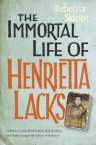 Trust, as Clanchy shows, is in short supply between powerful institutions and those who have no power and who, by rights, should be able to trust those who are not only able to but who morally should protect and support them. Rebecca Skloot had to work very hard to gain the trust of African-American Henrietta Lacks’ poverty-stricken family to write her scientific biography The immortal life of Henrietta Lacks (
 I am going to stay in America for last book, albeit the author is Australian, Elliot Perlman. The street sweeper (
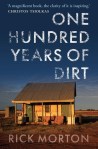 Way back in the early 1970s when I was an undergraduate university student, I did some sociology, and one of our set books was The myth of equality by Tom Roper. It, and the courses around it, have informed ever since my understanding of how our society operates. Morton’s book One hundred years of dirt would have been perfect recommended reading for these studies. At the end of his first chapter he says this:
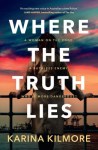 Debut crime author Karina Kilmore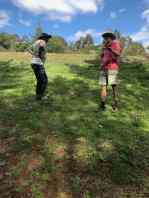
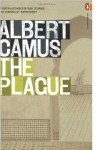 Books have been written over the years about epidemics/pandemics/contagions, including our own Geraldine Brooks’ Year of wonders. This is historical fiction inspired by the Derbyshire village of Eyam which, when struck by the plague in 1666, quarantined itself to prevent the spread of disease. An interesting read in the light of what’s happening now. But, my favourite of them all is Albert Camus’ The plague (which I’ve read a few times, including since blogging, so here’s
 Whispering Gums