Writers in Residence: An Online Festival

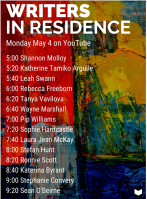
Program BannerWith information coming from every which way, I’m not sure how I heard about the Writers in Residence online festival. Organised by The Writers Bloc and inspired by Isol-Aid, its aim was to “ask some of Australia’s most exciting emerging writers to read from their new books” and share “what they’ve been reading in isolation”.

It ran from 5pm to 9.40pm on Monday, and involved 14 writers, each on for 20 minutes. All interviews were conducted by Geoff Orton, an English and Geography teacher and a founder of Writers Bloc. The format was that each writer provided some background to their book, did a 10-minute reading from the book, and shared some isolation reading.

I only managed to hear 6 properly, as 5-9.40pm is a pretty difficult time-frame, but I enjoyed what I heard. It looked like there were 50 to 75 people viewing throughout the evening. Here are the writers I watched …

5pm: Shannon Molloy
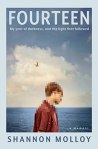
Book coverMolloy’s book, simply titled Fourteen, was published in March. It is an autobiographical coming-of-age memoir about being a gay teen. It is set in Yeppoon, in regional Queensland, in 2000. Molloy admitted that his story is harrowing, but believes it also has a strong message of hope. He wants kids “to know there is an end in sight”.

The excerpt he read described the annual coral spawn, which he sees as “the best metaphor for Yeppoon”. I understood this to mean that Yeppon is “pretty” but is also “a bit off”. (Apparently coral spawns give off a smell.)  He described how he “became a pastime for bored kids”. “I was there to taunt, to abuse, to bash”, he said.

To write his book, he drew on memories, talked with his mother and siblings, and listened to bad pop music from the era! Pop music, he said, was a way of accessing the outside world, of escaping.

5.20pm Katherine Tamiko Arguile
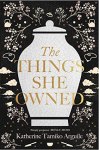
Book coverArguile’s debut novel, The things she owned, was published in late April. Describing herself as “from all over the place”, Arguile, was introduced by Orton as a Japanese-British-Australian artist and journalist. She explained the title of her book. The things are objects which the protagonist, Erika, inherited from her mother, Michiko. Erika is half-Japanese like Arguile, and the novel draws from her own experience. However, as she stressed, The things she owned is a novel, and Michiko is nothing like her own mother.

The novel is about Erika coming to terms with the death of her mother, which she gradually comes to accept by discovering the stories associated with the things her mother owned. Apparently, the book was the creative component of a thesis for a course at the University of Adelaide. Her research was about “grief and objects”, which is a topic other viewers, like myself, would love to have explored more.

Arguile noted that the things in the book are things she herself owns. These non-fictional objects anchored both her and the story, she said.

Orton commented on the role of the ocean in the book. Arguile replied that it hadn’t been something she’d planned but she’d realised later its strong presence. She referred to the Jungian understanding of water as “something unseen, something that lies underneath the conscious mind”. Makes perfect sense for a book about grief.

5.40pm Leah Swann
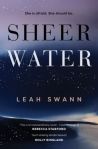
Book coverSwann’s novel Sheerwater, which was published in March, is garnering a lot of reviews for the Australian Women Writers Challenge. (I’ve reviewed her short story collection, Bearings). The novel starts with a mother driving with her two young sons. They witness a light plane accident, to which the mother goes to see if she can help. When she returns to her car, the boys are nowhere to be found.

Journalist and speechwriter Swann said the idea had come to her during a road trip some time ago, but that, as the mother of young children at the time, she wasn’t prepared “to go there”. Understandable! When she did decide to do it, she found it easy to write the first draft. She just kept writing, seeing where it would take her. The first draft was 130,000 words, with the final book, four or five drafts later, being around 70,000 words. Like Arguile, she doesn’t plan her books. What she loves about writing is discovering things.

I did note her lockdown reading: Meg Mundell’s We are here (Affirm Press), which she described as “beautiful essays by people who have experienced homelessness”; and Meg Mason’s Sorrow and bliss, whose publication has been delayed until September, because of COVID-19 I believe.

7pm Pip Williams

Book coverThe dictionary of lost words, published in late March, is Pip Williams’ debut novel, though she has written other books. She was one of the reasons I was keen to register for this event as I gave this book to my mother for Easter. She, a retired lexicographer, loved it.

If you’ve heard of the book (see Lisa’s review), you won’t be surprised to hear that she was inspired by Simon Winchester’s The surgeon of Crowthorne. Williams said that she saw that the OED (Oxford English dictionary) was a completely male endeavour, that the lexicographers, contributors, and workers were mostly men, and most of the literature they referred to was by men. It made her wonder whether “words mean different things to men and women, and if they do what does that mean for the OED?”

She talked a little about the OED, and her research (which included reading a lot of the OED). After her reading, Orton asked whether she’d found any “hilarious” words. She had, of course, but decided to share some interesting ones. For example, “teen” used to mean “vexed”, “irritate”, and “teenful” meant “causing trouble or sorrow”. Has this played a role in our word “teenager”, she wondered! She discussed the word “bondmaid”, which went missing from the dictionary, and she shared the word “anythingarian”which describes a person with no belief in anything. Perhaps I, a self-described wishy-washy person, is an “anythingarian”!

Her lockdown reading included another Affirm Press novel, Rachael Mead’s upcoming novel The application of pressure.

7.20pm Sophie Hardcastle
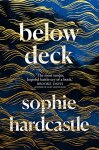
Book coverArtist and writer Hardcastle’s novel Below deck, was published in March and is her first novel for adults. It is divided into four parts, with the last being set in Antarctica. Hardcastle had had, she said, an artist’s residency in Antarctica. She wanted to write a work that explored “climate change and our relationship with the natural world.” She thought that a story of the body being violated could work as a metaphor for the environment being violated. The rest of the conversation, however, didn’t really discuss this aspect further.

Asked, whether the story changed as she was writing it, she said that the bones of the story stayed the same, but because it’s a book about trauma, about the way the body remembers trauma, this did come out more during the writing. She wanted, also, to explore, the myths around rape culture. Orton briefly mentioned synesthesia, which both Hardcastle and her protagonist have, but there was no time to discuss this.

Hardcastle’s lockdown reading included Maggie Nelson’s Bluets and Jenny Offill’s Weather (which reminded her of Max Porter, she said.)

7.40pm Laura Jean McKay
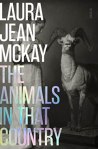
Book coverMcKay’s novel, Animals in that country, was published in late March. It’s another I had bought as an Easter gift, because, not only did it seem appropriate for the times, given it involves a flu pandemic, but it sounded innovative and feminist. Right up Daughter Gums alley! The novel does have talking animals, including a dingo called Sue! McKay had spent time in a Northern Territory wildlife park as part of a writer-in-residence program, and got to know some dingos here. Sue was apparently inspired by an actual dingo.

McKay read from the part of her book where the human protagonist first hears the animals talking, which happens just as a flu is whipping through the country. At the time she was writing it, she feared her idea was a bit too speculative, but as her publication date drew nearer, well, she realised not so much!

McKay’s lockdown reading included Ling Ma’s Severance (which is about a pandemic) and Ronnie Scott’s The adversary.

A well-conceived COVID-19 event. The writers I saw were thoroughly engaging, and Orton managed the technology with aplomb. Will these sorts of events continue post COVID-19?

Writers in Residence: An Online Festival
4 may 2020, 5:00 PM – 9:40 PM
ZOOM Online, organised by Writers Bloc


Monday musings on Australian literature: Best Young Australian Novelists (2)

The Sydney Morning Herald’s Best Young Australian Novelists award is announced annually to coincide with the opening of the Sydney Writers Festival. Of course, there is no live festival this year, but awards announcements can still go ahead can’t they? I have posted on these awards before, but that was 2013, so I figured I could feature them again, particularly since this year’s winners were all writers of short story collections – and, interestingly, all women.

The Best Young Australian Novelists awards were established in 1997 by Susan Wyndham, the newspaper’s literary editor at the time. Its aim is to recognise emerging writing talent, so is open to “writers aged 35 and younger at the time of publication of their nominated books”. It is called a “novelists” award, but the award is made on the basis of a specific book, which is why writers, like Sonia Hartnett below, can win more than once. I should note, too, that despite the award’s name, short stories have been allowed since 2009.

Ellen van Neerven, Heat and light, book coverIt is not the richest award – though $8000 this year for the winner and $1000 for each runner-up is not bad either – but it carries a good deal of kudos. It has also done well over its 24 years in identifying young writers who have gone on to become serious names in the Australian literary world. Past winners, with links to my posts, include:

Book coverIf you look at the Wikipedia link in the paragraph above, you’ll see that the number of awards made each year varies. In 1997, ten awards were made, but most commonly it seems that around three to four are announced. This year, it was three, as Jason Steger reported. They are:
  • Alice Bishop’s A constant hum (winner)
  • Joey Bui’s Lucky ticket
  • Josephine Rowe’s Here until August. (Rowe has won before for her collection A loving faithful animal, which I’ve reviewed.)

The judges were SMH’s Literary Editor Jason Steger, plus two previous winners, Maxine Beneba Clarke and Fiona McGregor. Steger reports that:

What distinguishes the collections are the strength of the voices and distinctiveness of their characters. The stories are firmly rooted with a solid sense of place and at their hearts a strong sense of compassion for the predicaments of the protagonists and what they are experiencing.

They are all collections I have on my radar, but not in my physical TBR, which is a shame given I like short stories. Anyhow, Steger says that they also made two honourable mentions, Kathryn Hind’s Hitch (about which I’ve written before) and Carly Cappielli’s Listurbia (which I don’t know).

Other emerging writers’ awards

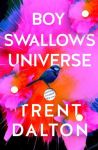
Trent Dalton, Boy swallows universeWhile SMH’s Best Young Australian Novelists is one of the best known emerging writers awards, there are others. Many, like this one, are age-related, such as The Australian Vogel Literary Award which was won this year by Katherine Kruimink, A treacherous country. But not all are. The UTS Glenda Adams Award for New Writing in the New South Wales Premier’s Literary Awards suite is for “a published book of fiction by an author who has not previously published a work of fiction that is booklength”. There is no age limit here. Last year’s winner was Trent Dalton with Boy swallows universe (my review), while this year’s was SL Lim with Real differences (Lisa’s review).

I have written about such awards before – about unpublished manuscript awards and emerging/debut fiction awards – so I won’t repeat the information here. However, in her May Six degrees of Separation post, Melinda Tognini mentioned a new award for young writers, the biennial Fogarty Literary Award, which was established last year. It is sponsored by the Fogarty Foundation and Fremantle Press. It is “awarded to an unpublished manuscript by a Western Australian author aged between 18 and 35 for a work of adult fiction, narrative non-fiction or young adult fiction”. The prize is $20,000 cash and a publishing contract with Fremantle Press. Not bad, eh? The inaugural winner was Rebecca Higgie for The History of Mischief, which will be published in September 2020. The next winner will be announced in May 2021.

Do you follow emerging writers’ awards and have you made any exciting discoveries as a result?

Six degrees of separation, FROM The Road TO …

We are now through one-third of the year. Can you believe it. It’s been quite a blur here in Australia with our worst bushfire season in decades being followed almost immediately by the pandemic. It’s hard to feel that the year has started, and yet, here we are in May already. Last month, I noted that the starting book was the first of the year’s Six Degrees of Separation starting books that I’ve read. Well, I’m thrilled to announce to all who are fascinated by such things that I’ve also read this month’s starting book, albeit before blogging. If you are new to blogging and don’t know this meme and how it works, please check out meme host Kate’s blog – booksaremyfavouriteandbest.

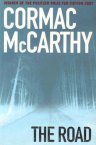
Book coverNow to May’s starting book, the 2007 Pulitzer Prize winning novel by America’s Cormac McCarthy The road. If you haven’t read it, let me tell you that it’s a mesmerising, post-apocalyptic dystopian novel. I loved it, partly because its writing is so spare (see my discussion of spare early in my blog.) It’s about a father and son who walk alone through a burned, destroyed America. They are heading to the coast, though to what they don’t know. Now, I’ve decided to do something a little different in this post: I plan to link every book back to this one. In other words, each book will be about something people do “on the road”, which means, of course, that each book will also link to each other!Raphael Jerusalmy, Evacuation

My first book is French writer Raphaël Jerusalmy’s Israel-set novel, Evacuation (my review). It is also a road trip novel, but it involves twenty-something Naor driving his mother from her kibbutz back to Tel Aviv. As they drive he tells her what happened in Tel Aviv, after he, his girlfriend, and his grandfather, had jumped off the bus that was to take them out of the city, as part of a mandatory evacuation process.

Eve Langley, the pea-pickersAnother, very different road trip underpins Australian writer Eve Langley’s The pea-pickers (my review). Here, two sisters dress as men and take men’s names, Steve and Blue, in order to work as agricultural labourers in Gippsland. The book chronicles their experiences, work, relationships and lessons learnt, over a few seasons, as they travel through Gippsland and greater Victoria.
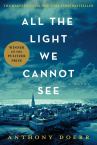
Anthony Doerr, All the light we cannot seeWhile road trips aren’t the backbone of my next book, American writer Anthony Doerr’s Pulitzer prize-winning novel All the light we cannot see (my review), they do feature quite strongly. Young Marie Laure is taken by her father from Paris to the Brittany coast’s Saint-Malo after the Germans invade Paris in 1940. Meanwhile, the orphan German boy, Werner, becomes a master at building and fixing radios, which results in his being taken on the road through Germany and into Russia to track Resistance workers through their radio transmissions.

Book coverStaying in war-time but moving to a different sort of road, I am taking us to the Thai-Burma railroad as told by Australian writer Richard Flanagan in his Booker Prize-winning novel, The narrow road to the deep north (my review). I don’t think I need to justify this one any more, except to add that there is a dramatic road trip through a bush-fire at the end, giving this book double-linking credit!
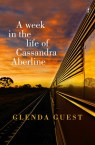
Glenda Guest, A week in the life of Cassandra AberlineHaving mentioned railroads, I’ll stay with them and link to Australian writer Glenda Guest’s A week in the life of Cassandra Aberline (my review). Having been recently diagnosed with Alzheimer’s, Guest’s Sydney-based protagonist Cassie decides to return to her childhood home in Perth in order to resolve the situation that had resulted in her fleeing many decades ago. She chooses the train as her method of travel, because that was the way she’d left, and it would also give her time to think through her situation. This is a true “journey” novel.

Book CoverChoosing my final book proved a challenge: I had many to choose from, many I wanted to highlight. In the end I decided to stay in Australia, and go a bit lighthearted. The book is English writer Louis de Berniere’s Western Australia-set Red dog (my review). My post on this book and film is among my all-time most popular posts. The story is about how a stray dog, the titular Red Dog, decides on John as his master and it then chronicles Red Dog’s various adventures in the mining communities of the Pilbara, much of it travelling in John’s truck. It also tracks Red Dog’s search for John through Australia and even into Japan, via road, train and ship. A road story with a difference!

So, a simple chain this month in terms of linking strategies, but I enjoyed looking at some of the ways “the road” has been used by novelists to chronicle journeys, whether they be actively chosen, or forced upon people.

Now the usual: Have you read The road? And, regardless, what would you link to? 

Living under COVID-19 (3)

It’s been nearly three weeks since my second COVID-19 post, because, after all, if there’s one thing you can say about living in these times, it’s that the days just roll one into the other with not a lot of differentiation. You have to work hard, sometimes, to remember just what day it is. At least, we Gums do. However, we haven’t been totally inactive, and I do have some things to share, so here goes …

First, a disappointing thing. As the lock-down continues, more and more events are being cancelled. We have now been notified that three concerts of our six-concert Musica Viva season have been cancelled, and two or is it three of our Canberra Theatre subscription package have also been cancelled. More of these may still be cancelled. Excitingly, however, one Canberra Theatre show, so far, has been able to be moved to later in the year. Woo hoo. Any win is cause for celebration!

I realise that if these cancellations are our biggest disappointments, we have nothing to complain about. I also realise that in being happy for our Chief Minister to be cautious about easing restrictions, I also have nothing to complain about. The lives of others are not so easy …

The lives of others

Like Tolstoy’s unhappy families, every family’s experience of COVID-19 is a bit different. My brother, for example, having been here helping with elder care for a month, had to go into two weeks’ quarantine upon his return to Hobart a fortnight ago. Holed up in a two-room suite – it could have been worse – in Wrest Point Motor Inn, he entertained the family with daily epistles. Those epistles will be donated to the local museum for future historians (remember that video conversation between Frank Bongiorno and Chris Wallace I shared in my last COVID-19 post?) Fortunately, Ian has many solitary interests and is not uncomfortable being alone, so he managed the quarantine as well as anyone. It was gratifying, however, to know that as well as friends and family checking in on him, the government and the Red Cross did too.

Another person experiencing COVID-19 a bit differently is my Californian friend, Carolyn, with whom I have been corresponding weekly since we left California in late 1993. Her personal situation, like ours, is not difficult, but she is a high school language teacher – and that has not been so easy. With the end of their school year in sight, there has been much uncertainty and confusion regarding teaching and assessment. What would the IB administrators do, for example? Should students be graded or just marked as pass or fail. How would that affect college enrolments? Minds changed as circumstances changed! The big problem is – and this might surprise you when I tell you she lives in Orange County – that her school does not serve a wealthy area. This means that a good proportion of her students do not have internet access at home. It also means that many students need to take on the care of younger siblings because their parents need to work. However, my friend, like many of us, has become a Zoom-pert, and is developing a range of teaching strategies to do the best for her students. For many teachers, this time has been one of intense work and emotions, as well as of demanding self-education. I admire them immensely.

These lives are nowhere near as tough as many are confronting, but they are just two different experiences I’ve been close to.

Literary and cultural stuff

First, some booklists. I know there are many, many out there but here are two that might interest:

  • Picture of a book stackPandemics: An essential reading list: I know some people don’t want to read gloom and doom books, but others of us are intrigued by what novelists have had to say. This list, sent to me by the above-named Carolyn, is an excellent one. Organised chronologically, it starts in England with Daniel Defoe’s A journal of the plague year (1722) and ends in Zambia with Namwali Sherpell’s The old drift (2019).
  • Comfort books: For those wanting some “gentle reads for difficult times”, this book pile pic posted by Brisbane’s Avid Reader bookshop will provide a start!

And then, there’s this little piece, sent to me by Carolyn again, about Ernest Hemingway experiencing isolation! You will see that they tried their own socially distanced drink parties!

Then, a couple of online events/activities:

  • Terror Australis Readers and Writers Festival – a festival based in the Huon area of Tasmania – has responded to the pandemic with a Facebook “event’ called Booklove Tuesdays. It occurs each Tuesday at 7pm on their Facebook page, and involves author chats (text and video), readings and giveaways. I popped into one a couple of weeks ago, in which Dorothy Johnston (see my reviews) took part. It was rather delightful.
  • National Portrait Gallery’s The amazing face: The National Portrait Gallery released this week their course/program on the art of portraiture. It comprises 14 lessons/sessions, each based around a different portrait. The program is describes as follows: “How is a portrait created? What makes one great? How exactly does this genre of art convey character and personality? Learn about some inspiring Australians and discover how portraiture works through text, video and audio, alongside activities to boost your creativity and resourcefulness.” I’ve looked at the first one, featuring Howard Arkley’s portrait of Nick Cave. It’s clearly positioned to serve a range of interests, including teachers and students, those who’d like to do portraiture, and those interested in the portrait as an art form. Well worth a look if, like me, you like portraits.

As for me, my reading has been very slow – even slower than in “normal times”. This is disappointing, but such is life. However, my reading group is continuing to meet, this month via Zoom, having tried the more low-key WhatsApp last month. Being a thorough lot, we had two practices with Skype and one with Zoom before deciding that Zoom – despite its 40-minute limit for free accounts – was the way to go. The practices were worth it. All 12 attended our actual Zoom meeting, and everyone managed to have their microphones and video cameras working. Go team! We discussed Melissa Lucashenko’s Too much lip (my review), which, although universally liked, still generated an in-depth discussion that lasted over an hour. The only thing missing was the wine and cake!

Finally, there’s nothing like colourful plants to raise the spirits.

Meanwhile, as I’ve asked before, how are you faring?

Monday musings on Australian literature: Supporting locals in 1927

Back in 2014 I wrote two Monday Musings posts on a plebiscite held in 1927. It involved readers of Melbourne’s The Argus newspaper naming those they deemed “the six leading poets and the six foremost writers of fiction of Australia and New Zealand”. You can see the results in my first post, and some post-plebiscite commentary in the second post.

“to change the slackness and indifference of the mass”

In this post, I’m returning to that plebiscite via one particular response from Tasmania’s Burnie-based Advocate newspaper. Published on 31 August 1927, the article has a plus ça change feel to it. Here is the article’s opening few sentences:

Singularly remiss are Australians in according patronage to Australian productions, which suggests that we are still a long way from achieving nationhood. It is not the making of a choice in favor of local works which animates the majority with what might be expected to be a bias towards the products of the country, “other things being equal,” but it is safe to say that the country of origin never enters into the calculations of the ordinary purchaser. Whether the goods are Australian matters not at all. This will have to be altered before our people can claim to be patriotic, and to change the slackness and indifference of the mass is the objective of various drives of late.

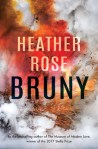
The “various drives of late” included an Australasian Authors Week to be held in the September. It was partly for this week that the plebiscite had been held. Now, ignoring the problematic issue of patriotism, I believe that we all should read, see, listen to the products of our own creators. As Heather Rose wrote in Bruny (my review), the arts are critical to maintaining a strong culture, and maintaining a strong culture is critical to a country’s independence and sovereignty. If we don’t know who we are, if we don’t know what we believe in and stand for, how can we defend ourselves against the incursions of other cultures? Moreover, how can we improve?

Book coverSo, back in 1927 the Advocate took on this issue of supporting local writers. The article refers to the plebiscite, and says of the winning prose writer, Marcus Clarke:
Marcus Clarke is placed first, probably on account of the attention which is being devoted at the moment to that powerful story which has been adapted for the screen. Many regard “His Natural Life” as a classic, and if that be disputed still it is a great book, containing many artistic faults as all books do, but preaching a powerful lesson to humanity and setting forth with a realism unsurpassed in the language what purports to be the brutal happenings of a brutal age.

I like the recognition that even if not everyone agrees that the book is a classic, it is still “a great book”.

Anyhow, the article then shares the top prose and poetry writers from the plebiscite, and follows up with this:

Some of these writers are not even known to many, no doubt, which indicates how unjustly obscure is the Australian man and woman of letters in their own country. No two discriminating readers will probably agree that the placements above indicate the true merits of the respective writers, it is largely a matter of fancy, as well as of judgment in what literature should express, but the list is of value, as stimulating thought and directing attention to some of the immortals of the pen which Australia has produced.

I’ve bolded the points of interest – to me, anyhow. I agree that such lists have value, even if (and perhaps, sometimes, because) you don’t agree with the choices.

“a plea for later writers”

The Advocate then moves on to argue for not just reading writers from the past, like Clarke and Boldrewood, but reading current writers “who are still in the flesh and endeavoring to woo the attention of their own countrymen and women”.

Being a Tasmanian paper, it mentions some Tasmanians. One is Roy Bridges, on whom, the Advocate says, “Tasmania has a claim”. (The University of Tasmania goes further describing him as “Tasmania’s most prolific novelist”.) He “is wonderfully prolific, and his Dead men’s gold and Vats of Tyre will repay perusal”. Also mentioned is woman writer Marie (Bjelke) Petersen, who was also well-known as a physical culture teacher. She, says the Advocate,

has done well with her novels on the other side of the world, like so many others who are criticised in their own land. It has been urged that her stories are lacking in sincerity as pictures of Tasmanian life, but they compensate for this in the fresh treatment of conventional subjects she is capable of and her unusually facile style.

Book coverThe Advocate also suggests Bernard Cronin, describing him as “amongst the leaders of Australian fiction”, and naming two of his popular works, Red Dawson and Salvage. I have devoted a Monday Musings to him. Although Cronin has disappeared from popular view it sounds like he was the real deal. He was, in fact, the seventh ranked author in the plebiscite. The other author recommended is A. G. Hales, “an industrious writer”, whose McGlusky series, the paper says, “have enjoyed a wide vogue”. He died in 1936, at the age of 66. A brief death notice in the Warwick Daily News says he was ‘popularly known as “Smiler” Hales’ and describes him as “the well-known Australian journalist, war correspondent, author and lecturer”. I feel another author-dedicated Monday Musings coming on!
Has anyone read any of these later writers?

Heather Rose, Bruny (#BookReview)

Book coverIf The yield (my review) was Tara June Winch’s passion project, I’d say Bruny is Heather Rose’s. It’s a very different book to her previous novel The museum of modern love (my review). Not only is it a strongly plot-driven novel, but it’s about something that is clearly dear to her heart, the future of Tasmania and, perhaps more generally, of liberal democracy.

Bruny could be described as a genre-bender. Part political thriller, part romance, verging even towards dystopian fiction, the novel tracks the fate of a bridge being built to join the main island of Tasmania with Bruny Island. In it, New York-based UN conflict resolution specialist, and twin sister of Tasmania’s premier, Astrid Coleman returns home at the behest of her twin brother to ensure that the bridge is completed on time after a bomb had nearly destroyed it. It’s not long, however, before she smells a rat. Just what that rat is, who’s behind it and why, is what keeps us turning the pages.

Now, as this is a plot-driven book – and one underpinned by political intrigue – I am fearful of giving too much away. However, fortunately, it’s not all plot, because the plot serves a purpose. The book reminds me in a way – though I’m not sure Rose will appreciate this – of Richard Flanagan’s The unknown terrorist (which I read long before blogging.) It too is a strongly plot-driven novel from a literary fiction author, and it too was inspired by a clearly passionate political concern. In Flanagan’s case it was how government and the media were handling the terrorism threat, engendering fear and consequently facilitating the scapegoating of people with little or no evidence.

Anyhow, back to Bruny. In the Bruny teaser on her website, Rose describes her book as a “political thriller”, “satire”, “love story”, and “family saga”, which, fundamentally, is questioning the “new world order”. Now, Rose has done something clever, I think, in setting her book just into the future. The American president isn’t named in the novel, but the description Rose provides leaves us in no doubt as to the timing of her novel, which would be around 2022. Astrid says:

‘Right now, America has an isolationist, neo-conservative president who doesn’t believe in American strength being used to stabilise the world. Quite the opposite. He considers it the chief weapon to exert dominance. And he’s in his second term. He’s turned his back on American’s allies because he doesn’t believe in that framework. Now we’re seeing the fallout of that approach and it’s crippling international relations, the global economy, the American economy.’

I say the dating is clever because, being just into the future, we can’t say “that didn’t happen”, but Rose can say “this is what might happen”. Readers, of course, have to decide for themselves whether they agree that what Rose proposes could happen, but I must say she was uncomfortably prescient about cruise ships!

It made the whole front page of the newspaper. BIO-SCANDAL! The whole fiasco of cruise ships and no policing, no ability to quarantine sick passengers and get medical help to them on board. The risk of an epidemic, if they were allowed into our hospitals.

So, what are Rose’s concerns? She is concerned that, with America withdrawing from the field, another power – in this case, China – can step in. She sets up a Macchiavellian plot based on this supposition, but this is as far as I’ll go about that. She is concerned more broadly about the increasing conservatism of governments, on their focus on money (“jobs and growth”) over people (“health and education”). She is worried that unimpeded progress – which is already a concern in Tasmania – will be detrimental to community, to society. She sees the destruction of the arts as weakening our culture and laying us open to outside influence. Government official Edward tells Astrid:

‘ … This government, at a state and a federal level, they’ve hammered the arts for years. They’ve eviscerated it … Every theatre company or film production company in this country – unless it’s making a Marvel movie – has been defunded. That’s our cultural expression, and if we don’t have that, it weakens everything. It’s a bit like leaching. We’re wilting with cultural anaemia…’

Ok, so now you might be thinking this is a preachy novel – as political novels can be – and it is to a degree. There are times when the explanations threaten to take over, but Rose manages not to bog it down too much. The story gradually builds up pace, with most of the messages carried through dialogue. Being told first person helps, too, because we don’t have an omniscient third person telling us like it is, but Astrid sharing her thoughts, concerns, and ponderings with us. Is there something, though, that she’s not telling us? How reliable is she? That little niggle also keeps us reading.

And then there are the characters. Astrid’s family is not exactly your typical one. Her endearing but stroke-affected father says little except to – rather perspicaciously – quote Shakespeare at his family; her prickly mother has terminal cancer; and her half-sister, Max, is the Labor leader of the opposition. Her brother, as I’ve already said, is the state premier, while his wife Stephanie has a warmth and intelligence that belies her supportive political wife demeanour. There is also a love interest for 54-year-old divorced Astrid down there on Bruny! The relationships between all these characters not only move the story and ideas on, but they also provide a little human respite from the machinations. Respite also comes from little touches of humour, much of it drawing from Rose’s deep understanding of Tasmania and Tasmanians. You have to laugh, for example, at the plethora of activist groups, like the Pythonesque Bruny Friends Group, Bruny in Action, and the Bruny Progress Society!

Concluding the above-mentioned Bruny teaser, Rose says “I hope you are entertained by this novel; I hope that you are intrigued by it; and I hope that it also makes you think?” She achieves all of this. The plot and the strongly delineated characters, as befits her satire, make it both intriguing and entertaining to read, while the politics certainly make you think. The Chinese government – together with neo-conservative governments – are the villains of the piece. This makes for uncomfortable reading, and not just because of the truth of the issue but because naming villains this way, as we know, can lead to wrong and dangerous assumptions. The Chinese government is not all Chinese people, just like a certain American president does not stand for all Americans. It behoves thinking readers to make that distinction.

And finally, there’s the ending. Without giving it away, I will say that there’s a certain question of the ends justifying the means, of those believing they are right taking matters into their own hands. It makes you think! Bruny, then, is more than an engaging political thriller. It is a book intended to challenge us to think about the world we are making for ourselves, and to consider what we can do about it.

Lisa (ANZLitLovers) enjoyed the novel; Bill (The Australian Legend) also enjoyed it, with some reservations.

Challenge logoHeather Rose
Bruny
Crows Nest: Allen & Unwin, 2019
ISBN: 9781760875169
408pp.

Writing War: A panel discussion about war and historical writing

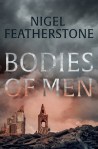
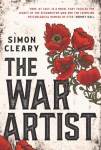
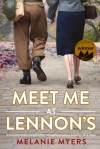
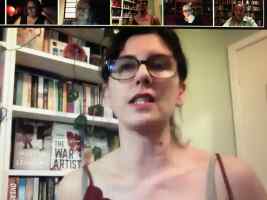
In its original guise, I would not have been able to attend Writing war: A panel discussion featuring Nigel Featherstone, Melanie Myers and Simon Cleary because it was going to be held in Brisbane’s Avid Readers bookstore. However, in one of those lucky COVID-19 silver linings, the discussion was transformed into an online ZOOM discussion and, hey presto, I could attend for the princely sum of $5. Having read Featherstone’s Bodies of men (my review) and Myers’ Meet me at Lennon’s (my review), and being interested in Cleary’s The war artist, it was an opportunity too good to miss.

Convenor, and author herself, Cass Moriarty, started by introducing the authors and asking them to talk about their novels, particularly in terms of their inspiration or intention:

  • Nigel Featherstone talked about wanting to explore different expressions of masculinity, particularly as expressed under extreme military pressure. He wanted to look beyond the ANZAC mantra that all men are brave, all do remarkable things, and so on. Can being a deserter, he wondered, be an act of bravery?
  • Simon Cleary described his Afghanistan War novel as a homecoming story, as being about soldiers finding a place in their home countries, as looking at the cost to the community of sending people to war.
  • Melanie Myers introduced a new genre (or sub-genre) to me, the “ensemble home-front novel”, which, she said, was coined by writer and educator, William Hatherell. It encompasses books like Come in spinner. Her novel is primarily about women’s experience of WW2.

On the challenge of writing about past wars with nuance

Featherstone immediately turned to the ANZAC idea, asking how do we talk about ANZAC without being kicked out of the country, and how is it that we have created a day that we can’t critique. He referred to Peter Stanley’s history Bad characters, which is about soldiers who were labelled as “bad”. Stanley’s book counterbalances the traditional ANZAC mantra, and taught him that bravery and cowardice can have many meanings.

Cleary liked the word coined by Featherstone for ANZAC, its “uncriticability”! He spoke of something he returned to a few times during the evening, the idea that sending people to war is political act. It means, he said, that writing about war is also a political act. Too many war novels focus on glory, resulting in the more human facets, including genuine human trauma, often being missing.

On that tricky question of the authority to write about war, when you haven’t personally experienced it

Myers talked about the challenge of being true to the times and values you are writing about, while being sensitive to those of your own era. Writing about African-Americans in Brisbane during World War 2, for example, she had to deal with the “N-word”.

Featherstone confronted the question more head on, asking “who gets to tell what story?” He did question his ability to write about war but, essentially, he believes “writers can do whatever they want”, with the proviso that they be prepared to talk about it. However, he also, a little anxiously but generously, shared his experience of inherited trauma (epigenetics), through his grandfather’s experience of World War 1.

Cleary noted that authority can come from various sources – personal experience, the novelist’s imagination and creative experience, and, returning to that idea of war being “a deeply political act”, he argued that “every citizen has a right to an opinion” about war.

Regular readers here will know that I agree, philosophically, with Featherstone, including that authors need to be prepared to discuss their choices. I also liked Cleary’s argument.

On the de rigueur question of research 

Myers explained some of her research process, saying that she starts with secondary sources, before looking at primary ones, and that in the case of this novel, she also walked the city imagining how it was, how it looked.

Cleary said that it was important to know the details – even those not actually needed in the work – to help avoid clangers. He also said – and I loved this – that writing novels is an excuse for learning stuff!

There was discussion about the impact of war on the social and economic opportunities for women, on values and prejudices, on the bonds forged during war, and on the burdens of war. Featherstone spoke of the physical and emotional scars of war. He pointed to a book titled We were there which reports on a survey of 3,700 World War 2 soldiers. A significant lesson from this book was that there can be multiple perspectives. He exemplified this by sharing a returned soldier’s view of his life versus the wife’s rather different view!

On should you write about war and love

Featherstone reiterated his position that there are no “shoulds” and that, anyhow, he wanted to write about love as a force of liberation. Love, he said, is what gets us through. Cleary noted that being in the proximity of death can make people feel vulnerable and therefore open to new things, and that these are the stuff of writing about war. However, he also said that war and gore can be depressing, and that art and love can provide useful “leavening”.

On whether war fiction is a genre

Myers answered that she specifically wrote in the “ensemble home-front genre” while Cleary didn’t see his book as being in the war novel tradition, but as simply being a story about humans dealing with an issue.

And on whether there are any parallels re society’s response to war and to the current pandemic, Cleary suggested that in war, as in the pandemic, humanity is fragmented, that borders are closed and self-interest reins, but, in both situations, he said, you can also “flip it around” to see a spirit of solidarity.

On the importance of documenting war

Featherstone responded that the work of artists is to ask difficult, dangerous, blasphemous questions, that we need artists to ask questions politicians won’t, that artists can “dream their way into answers”. Getting into trickier territory – though it wasn’t further explored – he also said that artists can explore different versions of history, the “what ifs”. (Kate Grenville would agree!)

Myers suggested that the volume of books still being written about World War 2 implies we still can’t make sense of it, that it is still unintelligible, while Cleary believed that it’s easy to forget the past, and that the role of fiction is to explore “the costs and consequences of the past”.

Ending the session

At this point the evening’s co-ordinator, Krissy Kneen, brought the event to a conclusion with some general questions:

  • Their advice to young writers: “if it feels dangerous, it’s worth doing”, “trust your instincts” and “be brave”.
  • War-related books they’d recommend: Dymphna Cusack and Florence James’ Come in spinner (Myers); Pat Barker’s Regeneration trilogy (Cleary) and The honest history book (Featherstone).
Melanie Myers

Melanie Myers (with the three novels faced out behind her)

Given the opportunity to plug their new work, only Myers was brave enough to name her project. I was thrilled to hear it as she’s research pioneering Australian filmmakers, the McDonagh Sisters. I look forward to that. Featherstone simply said he was not going near war for a long time, while Cleary said that he had a project but it was early days!

The hour whizzed by. Moriarty’s questions were focused and intelligent, the panelists’ responses were respectful and thoughtful, and the technology held up! It wasn’t the same as being in the room, but then, I wouldn’t have been, would I, so I’m grateful to have had the opportunity to hear these three writers speak.

Writing War: A panel discussion
20 April 2020, 6:30 PM – 7:30 PM
ZOOM Online, organised by Avid Reader (bookshop)

Monday musings on Australian literature: Writing WA

Time for a change from COVID-19 inspired Monday Musings, methinks, so I’m returning to something more straightforward like continuing my little trip around Australia’s writers centres. Today, we travel west to look at Writers WA.

Unfortunately, I cannot find anything on the Writing WA website about its history. I do find it disappointing when organisations don’t provide a basic history of themselves on their sites. I did, though, find under Some Highlights from 2019 a reference to a “new brand identity”. How much change did this involve? A name change like several other writers centres have done in the last few years?

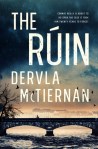
Dervla McTiernan, The ruin, book coverThe Writing WA About page is brief, starting very nicely with an Acknowledgement of Country, followed by a quote by the successful author Dearbhla (Dervla) McTiernan in support of the Centre. This is followed by a vision or mission statement, though it’s not labelled as such:

Writing WA is working between the lines and behind the scenes to build a state of opportunity in Western Australia for writers, publishers and other practitioners in the writing sector – not just for the benefit of practitioners themselves, but for the immense social value that great writing brings to individuals and communities.

It’s a lovely aspiration, but not exactly punchy. The About Page’s banner is punchier with its “We’re working to build a state of opportunity”. However, this could be pretty much any organisation?

Oh dear, I’m sounding a bit critical, and this is not the aim of my writers centre series at all, so let’s move on … because, despite what I’ve said, the site is clean, clear and easy to navigate.

2019 Highlights

I enjoyed reading about the centre’s highlights for last year, which included:

  • launching two writers festivals, both (sensibly) in partnership with other organisations: Confluence Festival (Mandurah), partnering with the producers of the Jaipur Literature Festival, and Quantum Words Perth, partnering with Writing NSW.
  • publication of an anthology of short stories from Singapore and Australia, In this desert, there were seeds. Conceived and funding by Writing WA, it’s the result of an international co-publication between Margaret River Press and Ethos Books.

For Readers and Writers

A lovely clear thing about the website is the way it distinguishes between services for Readers and for Writers. If you know which one you are you can find what you want pretty quickly!

For Readers

The banner at the top of this page is, appropriately, “We love to read local”. Their main service here is to support book clubs. They offer a free monthly Love to Read Local Book Club e-newsletter that people can subscribe to. Each issue contains “detailed information about our selected ‘Book of the Month’ with accompanying notes to prompt discussion in your group!”

Donna Mazza, Fauna, book coverUnderneath this is the current Book of the Month, with a link to more information suited to reading groups, complete with discussion questions and “if you like this book…” suggestions. Check out the info for the March book, Donna Mazza’s Fauna, if you are interested.
Following the book of the month are a number of “What we are reading” books, with links to brief reviews. Below these is a “more book reviews” link which brings up the first of many pages of books reviewed. There is a search box in the side-bar and a broad genre list (biography, children’s, crime, etc) that will help those with specific interests. I wonder how many readers use this resource?

For Writers

The resources for writers are divided into five areas:

  • Find your people: this helps writers find writing groups and workshops (though it doesn’t actually list workshops being offered)
  • About publishing: explains in simple, straightforward language, the main publishing options available to writers.
  • Resources for writers: the say, here, that “Great books are the product of successful collaborations at every stage of the process, requiring effort and expertise from the writer, the editor, the publisher, the book designer, the printer and, eventually, the bookseller and librarian.” This section contains commissioned articles helping writers understand these. Clicking on I want to know about competitions, awards and other professional opportunities will take writers to the Noticeboad, which is also visible on the Home page. Here is where you find the guts of the Centre’s programs – the workshops, masterclasses and other events (most of which, if you look now, are of course cancelled due to COVID-19 – but they look varied and interesing)
  • Other resources for writers: a list of links to all sorts of relevant organisations including other writers centres; organisations providing say, legal or copyright information; and organisations supporting Indigenous and CALD writers
  • Rates of pay: a general statement about advocacy on payment for writers.

COVID-19

Not surprisingly – but pleasingly given not all organisations are doing this – the site has a tab on the Home Page for COVID-19 information. Clicking here will take members (and others) to a wealth of information including government policy, ways to keep working and reaching readers, and ways to stay healthy. Really nice to see.

And that’s about it for Writing WA. It’s probably not the best time to highlight an organisation in terms of showing off what it does, but the link is now here for anyone to follow up whenever they like!

Writers Centres covered to date: the ACT, New South Wales, the Northern Territory, Queensland, South Australia, Tasmania and Victoria.

Julie Thorndyke, Mrs Rickaby’s lullaby (#BookReview)

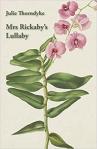
Book coverQuaint title, eh? I really didn’t know what to expect when I accepted this book for review, but accept I did because the publisher is a quality little press and because the author, Julie Thorndyke, although unknown to me, has a track record as a writer, particularly of tanka. Mrs Rickaby’s lullaby, however, is her first novel.
In addition, I was intrigued by the advance description of the protagonist as a “semi-retired botanical illustrator … with a penchant for Mozart”. Well, I love botanical illustrations and I’m a fan of Mozart. Who isn’t? And finally, there was the fact that the novel is set in a “peaceful retirement village”. Being of an age that is eligible for retirement village living, that was a bit of a drawcard too.

So far so good, but what sort of book is it? Well, the back cover blurb provides a hint when it says that Mrs Rickaby’s “tranquility is disturbed when close friend and neighbour brings home a twice-widowed younger man of dubious character, and introduces him as her future husband. Petty theft, vandalism and violence disrupt the peaceful retirement village. How can Mrs Rickaby protect her friend from this con-man lover?”

Now we are getting closer. I think the best way to describe this novel is “cosy crime”, which Wikipedia describes as “a subgenre of crime fiction in which sex and violence are downplayed or treated humorously, and the crime and detection take place in a small, socially intimate community.” This is not really my genre, any more than any crime is, but Mrs Rickaby’s lullaby turned out to be a light enjoyable read.

The story is told in Mrs Rickaby’s first person voice. She is in her early 70s and had moved to the retirement village after losing her much loved husband. She has two children who, at the start of the novel, are both living overseas, so her most important social contacts are her friends at the village, particularly her neighbour Irene, plus her cat Missy.

It’s a curious book, because it doesn’t, I’d say, perfectly conform to the “cosy crime” genre. Much of it reads like a story about contemporary life, and the challenges of ageing, of losing your partner and having to make a new life for yourself. All this Mrs Rickaby does. Her days are occupied by spending time with Missy, by her involvement in the local Orchid Society, by her free-lance botanical illustration commissions, and by socialising with her friends in the village. It’s only gradually that the crime aspect comes into view as her early suspicions about Irene’s new man, Ralph, start to seem valid. Gradually, the mystery aspect hots up as Mrs Rickaby and another friend from the village, Annette, start nosing around about Ralph in their effort to protect Irene from making a bad, and potentially dangerous, mistake.

I enjoyed reading about Mrs Rickaby’s relationships with family and friends, albeit they were generally easier relationships than those in Charlotte Wood’s The weekend (my review). This is not surprising, perhaps, as most of Mrs Rickaby’s friends are new, and thus free of the years of baggage carried by Wood’s friends who are, coincidentally, in the same early 70s age range. My only demur regarding the characters concerns Irene, “a skilled surgeon” who was still volunteering for Doctors Without Borders”. Could such a person be taken in by such a con man? My initial reaction was not, but perhaps I’m naive? Anyhow …

The narrative is framed by Mrs Rickaby’s love of music. The ten chapters all have musical titles, like Nocturne, Misterioso, Counterpoint, Agitato, and Danse macabre. You can see, by these, how the chapter titles might reflect their content. Threading through all this is one particular song, a favourite of Mrs Rickaby’s, the lullaby “Weigenleid”, which is also the title of the final chapter. Once ascribed to Mozart modern research now suggests otherwise. It is a piece of music that is at once calming and melancholic, making it suited, Mrs Rickaby suggests, to contemplating the end of one’s life …

As you would expect with the “cosy” style, the novel has a light humorous touch. It also has some reflections worth pondering, such as this on loneliness:

It is quite amazing to me how easily habits, both good ones and bad, are formed. The single glass of chardonnay in the evening can easily become a bottle, and then two; one spoon of tiramisu becomes a bowlful; an attentive man becomes a lover to a lonely woman, then her husband, whether or not she wanted or needed one, in her rational mind. But loneliness does odd things to one, and even the simplest of pleasures can become a habit, a need, a necessity.

And this on life from Annette who reassesses her realisation in her forties that “life is short” to:

“Well, now I realise that it’s actually too long … too long and too lonely. The evenings,” she whispers. “Just too many and too long.”

And, this important one:

Investments in friendship are the most vulnerable and irredeemable of assets.

Mrs Rickaby’s lullaby is probably not a book for everyone – then again, what is – but is perfectly suited to those looking for something gentle and reflective, but spiced-up with just a little page-turning twist as well.

Challenge logoJulie Thorndyke
Mrs Rickaby’s lullaby
Port Adelaide: Ginninderra Press, 2019
183pp.
ISBN: 9781760417093

(Review copy courtesy the author)

Stella Prize 2020 Winner announced

Well, a very different announcement “party” for the announcement of the 2020 Stella Prize winner but one that was exciting for those of us not in Melbourne, because we could attend!

It was a beautifully conceived and smoothly produced program, with words from each of the shortlisted writers and each of the judges, plus a powerful “keynote” address by Julia Gillard. Stella executive director Jaclyn Booton provided the necessary official overview and emcee/presenter Patricia Karvelas held it all together in her isolated studio!

I enjoyed seeing (and hearing) the passion for the role literature can play in our lives, with some speakers specifically referring to our current pandemic times. For example:

  • Caro Llewellyn spoke of how books can enable us “to dig deep and really explore what’s happened … show us the joy in the world”
  • Tara June Winch hoped people would pick up her book and “not be ashamed to look at our collective past”; she saw her book as one of hope, saying “in the horror there is ultimately the truth, and the truth is a beautiful thing”
  • Charlotte Wood talked, among other things, of turning “to writers to help us stay calm in terrible times”.
  • Ex-Prime Minister Julia Gillard said how these pandemic times “bolstered the power of literature”, including that literature can offer both ”escape” and “comfort”. But, and this relates to a question I asked in a recent post, she also said that we will rely on writers and artists in the future to distil the deeper truths of what we are experiencing now.

Julia Gillard spoke at length, and eloquently as you’d expect, about gender equity, about the need to accelerate the rate of change, but she also made clear that the issue is complex and multi-layered. She also spoke specifically about literature, saying that it is crucial to address gender bias in the literary world. She, herself, she said, had lived a different life than she may have because of books she’d read when young, like Margaret Atwood’s The handmaid’s tale and Anne Summers’ Damned whores and God’s police. These books shaped her, she said, rather like Germaine Greer’s The female eunuch, in particular, shaped me.

Finally, though, the point she made that particularly interested me concerned the fact that the Stella Count had shown improvement in many of the areas counted, such as the percentage of books written by women reviewed in significant papers and journals. What interested me was that her point was not so much about the improvement itself, but that the improvement shows that “targets work”, that “what we choose to count matters”. That’s an important message I think because it’s hard to change things if you don’t have the data.

Before I announce the winner, which most of you will have heard by now anyhow, here is a quick recap:

  • the longlist was announced on 6 February; and
  • the shortlist was announced on 6 March (not International Women’s Day as has been tradition for some years): Jess Hill’s See what you made me do (nonfiction); Caro Llewellyn’s Diving into glass (memoir); Favel Parrett’s There was still love (novel); Josephine Rowe’s Here until August (short stories); Tara June Winch’s The yield (novel); Charlotte Wood’s The weekend (novel).

Jess Hill See What You Made Me DoAnd the winner, from around 170 books submitted, is Jess Hill’s See what you made me do: Power, control and domestic abuse. It is the fourth non-fiction book to win the award in eight years, confirming yet again Stella’s aim to be broad in the forms it encompasses. The previous three were Vicki Laveau-Harvie’s The erratics (2019, my review), Alexis Wright’s collective biography, Tracker (2017), and Clare Wright’s history The forgotten rebels of Eureka (2014, my review).

Jess Hill making her Stella Prize Winner's speechJess Hill’s winner’s speech was articulate, convincing, engaging and oh so passionate about her subject and the book. Commissioned by Aviva Tuffield, it was some four years or so in the making, and was clearly (and not surprisingly) a very demanding book to write. Although I’m interested in its subject, I had not necessarily planned to read the book, but now I feel I must!

The winner receives $50,000, and each long and shortlisted author also receive monetary prizes.

If you have any comments on the winner, please share them with us.