 When historian Desley Deacon offered me her biography of Dame Judith Anderson for review, I was a little reticent because my review copies were getting out of hand. Little did I know then what was in store for me, and just how much more behind I would become. However, finally, its turn came, and here I am with my review.
First though, I must say something about the publication itself, particularly given our recent discussion here about Print on Demand books. Deacon’s Judith Anderson: Australian star, First Lady of the American stage is available as an e-Book or a PoD one. I read the PoD edition, and it is beautiful. The cover is gorgeous, and the book’s overall design is stylish, with an art deco look reflecting the style of Anderson’s early life and career. The book is big and heavy, but the binding is strong allowing the book to open well for reading. And, the icing on the cake is that it is gorgeously illustrated with quality reproductions of images from the full range of Deacon’s life. These illustrations are beautifully interspersed throughout the book, rather than concentrated, as is more common, into a couple of glossy photographic sections.
But, of course, the important thing is the content. There are, broadly, two main types of biography, those written in the narrative or creative fiction style, like, for example, Sarah Krasnostein’s The trauma cleaner (my review), and those traditional, scholarly, cradle-to-grave ones, like Philip Butterss’ An unsentimental bloke: The life and work of C. J. Dennis (my review). These latter tend to be closely referenced and well-indexed. Judith Anderson is one of these.
“she has a way with her” (critic)
So now, Judith Anderson. Like many of my generation, my first introduction to her was as the terrifying Mrs Danvers in Alfred Hitchcock’s classic 1939 (no I wasn’t alive then!) Rebecca. But, Judith Anderson had been around a long time before that. Born in Adelaide in 1897, she (as Francee Anderson) went to the USA in 1918, and this is where she both established her career and made her home for the rest of her life. It wasn’t easy – is an actor’s life ever? – but eventually Anderson began to get roles. Deacon chronicles the trajectory of her career meticulously, from these early days to her final performances when she was in her eighties. It was a long, and distinguished career which, while centred on the stage, also included film, television, radio and the college speaking circuit. Anderson, unlike some actors, was not averse to working in forms – like television, like, even, television soaps – scorned by others. Regarding this latter, Anderson is quoted as saying “there is no indignity in earning $5,000 per week”. No, indeed, particularly when you never knew where your next pay check was coming from, and when you were providing significant support to other family members.
Various themes run through this story of Anderson’s life. One is the frequency with which critics praised the brilliance of her acting but bemoaned the silliness or inappropriateness of the vehicle. Indeed, this issue was the main reason for the long time it took for her to have her breakthrough. However, Anderson, always a hardworker, kept at it, and eventually her vehicle came, the play Come of age, by Clemence Dane. It was 1934, and she’d been treading the boards in America for 16 years! English playwright Keith Winter saw the play and wrote:
There are in the English speaking world, three actors who have genius of a quite staggering order – Charles Laughton, Edith Evans, and Judith Anderson. Perhaps Laurence Olivier.
No small praise. In the end, though, besides the aforementioned Mrs Danvers, the two roles for which Anderson was most known, was as Euripides’ Medea and Shakespeare’s Lady Macbeth. Character and strong women roles did seem to be her forte.
“same old muddling” (Anderson)
While the biography’s focus is Anderson’s work life, largely because that was her life, Deacon also includes something of her personal life, including, in particular, her two short disastrous marriages. It was a sadness for Anderson that she never managed to have her own family and children. This brings me to another theme that runs through the biography: she had, as Deacon describes it, a “hectic personality” or, as Anderson herself said, “I have not myself a very serene temperament”.
Australian arts administrator, Robert Quentin, said during her 1955 tour in Australia, that she was “more than living up to her reputation as being the most troublesome actress in the world.” Deacon is not one of those biographers who psychoanalyses her subject. Her approach is more straight – that is, she presents what is on record, using the occasional “may” or “could” when some fact or other is not known. However, I’d like to suggest that, while this apparent difficult behaviour of Anderson’s was probably partly her temperament, it may also have stemmed from ongoing frustration with the acting life, with the challenge of getting work, with being messed around, with having to accept what she felt were less than ideal plays or co-players, and so on. In 1935, for example, she was being sussed out for a play, but there was the usual to-ing and fro-ing as backers, producers, and/or agents negotiated and fiddled around. She writes, “when I left Wed afternoon it was definite – but now the same old muddling.” You can feel the frustration.
“near perfection in the dramatic art” (Variety)
Judith Anderson: Australian star, First Lady of the American stage is clearly, like Deacon’s friend Jill Roe’s biography of Miles Franklin, a passion project that was years in the making. Thoroughly researched, and written in a formal but accessible style, it is a positive but non-hagiographical story of an actor who was once described by Variety as achieving “near perfection in the dramatic art”. Dame Judith Anderson is too little remembered today, but her struggle to fulfil her creative self is timeless. For this reason, if no other, her biography is well worth reading.
 Desley Deacon
Judith Anderson: Australian star, First Lady of the American stage
Melbourne: Kerr, 2019
509pp.
ISBN: 9781875703067 (PoD)
(Review copy courtesy the author.)


 Take Drylands, for example. It covers a lot of the things important to Astley. Two major ones are words and their importance/their power, and people’s cruelty to each other. Subsumed in this latter one are some recurrent issues for her – gender, race, and other power imbalances. She has several targets in this book: she’s not too fussed on computers, television, or our sports-mad society; she’s also critical about how women are treated, not to mention indigenous people and ‘oddballs’. She’s a writer with a strong social conscience – and, for example, tackled race issues head on in books like the ironically titled A kindness cup (1974) and the gorgeously titled The multiple effects of rainshadow (1996).
 I didn’t think I’d get to this session, but when my regular Thursday evening commitment was cancelled, I knew exactly what to do …
 McLean Davies exemplifed the importance of literature by saying that the recent Black Lives Matter protests brought attention to the need for indigenous stories to be heard. She said that it resulted in books by indiengous authors, like Anita Heiss’ Growing up Aboriginal in Australia (
 She talked about the issue of “engagement” and that in trying to achieve this for diverse classes, teachers will often resort to more standard “white”, often neo-colonial texts. But young people are interested in indigenous issues, climate, etc, she said. Teachers would do well to turn to, for example, Claire G Coleman (
 McLean Davies concurred to a degree, but gave a nicely nuanced response, evoking a complex understanding of culture cringe:
 Sullivan introduced The house of Youssef as comprising “spare and sharp” stories about a Lebanese community in Sydney, exploring “the way generations differences play out … the gaps … that make mutual understanding so challenging.” Kassab agreed her stories are about community and family. It’s unavoidable that there will be tensions between generations in any community, she said, but these are exacerbated in migrant communities because of the added layer of different cultural expectations. She’s become increasingly interested in this issue.
 Introducing Lennan’s collection, Sullivan described it as having an international outlook. It has a wide geographic spread, featuring characters taken out of their comfort zones. Lennan observed that mobility has become familiar over the last decades. It seems easy, but is in fact complicated, as she shows in her title story, “In the time of foxes”. It’s about a young filmmaker in London with a young toddler. Her mother is developing dementia back home, and, there’s a fox in the backyard to deal with. She has to face “giving up” her childhood home. Lennan’s point is that living abroad offers immense opportunities but can be accompanied by immense cost. The time has come for this character to pay that cost. (This cost, as many of my generation knows, is also paid by those left at home – particularly with COVID-19, for example, keeping grandparents away from their overseas grandchildren!)
 Sullivan introduced Tan by noting that her stories, which include animal protagonists, unsettle readers expectations and assumptions. She asked how this approach allows her to explore perceptions. Tan spoke from personal experience when she observed that people can look at characters – like her cats and mermaids – and assume they don’t have interiority or inner life, that they are just a sidekick to another’s life. She likes exploring how these characters are unexpectedly resilient, and suggested they could mirror how she moves through life. As a young Asian woman, she often feels underestimated. But, she is not always sure if how she thinks the world is seeing her is how it actually is, but how do you know? She quoted Chimamanda Ngozi Adichie’s statement that “the problem with stereotypes is not that they are untrue, but that they are incomplete”.
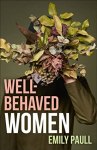 Well-behaved women is a debut collection of short stories by Western Australian writer Emily Paull. It is one of those collections that has a unique title, and what a perfect – and teasing – title it is for a collection of stories focused on women.
 Emily Paull
 If you are not Australian, and not parents, grandparents or teachers of young children, you may not know about “the famous Treehouse series”. It started with the book,
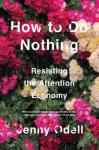 August’s starting book is yet another I haven’t read. Indeed, not only have I not read it, I’ve never heard of it or its author, which is not surprising because, as far as I can tell, it’s a sort of critique of how capitalist forces are driving us all more and more to perform, produce, to be forever doing something, or, as one GoodReads reviewer wrote, on “on how the attention economy and hustle culture is affecting our lives”. The book is Jennifer Odell’s How to do nothing: Resisting the attention economy.
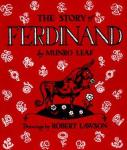 Now, I’m going to break with my usual practice and start with a book I’ve read but not reviewed on my blog, because this book is the. perfect. book. about. doing. nothing. What’s more, it was published in 1936, so this idea is not new, folks! The book is Munro Leaf’s now classic children’s book, The story of Ferdinand. Why don’t you take a moment to stop and smell the flowers before you read on!
 Tracy Chevalier’s Remarkable creatures (
 Keeping with the nature theme, and a coastal setting, I’m going to take us to William Lane’s The salamanders (
 The story of The salamanders is founded in an artist’s colony, and all the relationships and dysfunctions that such groups can generate. In a very loose link, I’m taking us to David Mitchell’s The thousand autumns of Jacob de Zoet (
 Another book which deals with European trading in the East Asian region – this time by Britain’s East India Company – is Amitav Ghosh’s River of smoke (
 Whispering Gums