Canberra Writers Festival 2022: (My) Session 2, Her last words: The inspiring life and legacy of Ruth Bader Ginsburg

My second choice of sessions was, partly, sentimental, because Ruth Bader Ginsburg is such an inspiration for feminists like me and I also wanted to see ABC journalist Fran Kelly strut her stuff in person. I wasn’t disappointed. The session was subtitled, Amanda Tyler In Conversation With Fran Kelly, and was framed as follows:

Justice Ruth Bader Ginsburg’s passing last year — just as her book, co-authored with her former law clerk Amanda Tyler — was heading into production, was met with a public outpouring of grief. Tyler shares RBG’s optimistic vision of a just society and a ‘more perfect union’.

This is slightly incorrect, and stems from the fact that the session had been scheduled for last year’s cancelled festival. Ginsburg, “the notorious RBG”, or just RBG as I will call from here on, didn’t die last year, 2021, but in 2020. As a result, Ginsburg and Tyler’s co-written book, Justice, justice: Thou shalt pursue: A life’s work fighting for a more perfect union, instead of being relatively new off the press has now been out for well over a year. That, I think, changed somewhat the session’s focus from the book (though it was still the cornerstone of the discussion) to something wider – to RBG’s legacy and America today, as much as the book itself.

This session, unlike my first, was in the largest space in Kambri, and it was packed. RBG has a huge following. I have written briefly about her before, in a Literary Week post where I mentioned seeing the documentary RBG. I wrote that RBG “is a fascinating woman with an inspiring capacity for clarifying the complex”.

This was another engaging session, in a different way.

Amanda Tyler and Fran Kelly, Manning Clark Hall, August 2022

Kelly leapt right in with a big question: given RBG’s “wonder-woman status”, did Tyler feel pressure working on this book with her! Well yes, admitted Tyler, even though she’s in her late 40s now! But working with RBG was “so special” and the work was so important.

Regarding RBG’s health, Tyler said, answering another question, that yes, they were aware that “her death was coming” but RBG had tried so hard “to stay alive through the election and to the inauguration” so that, hopefully, a Democrat would win and be responsible for her replacement. (Those of you who follow American politics will appreciate all this.)

Kelly asked what Tyler saw as RBG’s most important role or characteristic. She responded that RBG recognised that she was talented and she used her talent not to make money but to make the world a better place. This was a point she would make to young graduates whenever she spoke at graduations. This theme of improving the world, improving America, improving the lot of others, recurred throughout the session.

RBG had graduated at the top of her class but couldn’t get a job in a law firm – because she was a woman. This resulted in her ending up in the court system, which, Tyler said, turned out to be a good thing. (As it was for Sandra Day O’Connor, the first woman to serve on the US Supreme Court. RBG was the second.)

Next up was discussion about RBG’s early court work. Her first gender law case was Moritz v. Commissioner in 1970, concerning a man who’d been refused a tax deduction for hiring a nurse to care for his elderly mother, a deduction he would have received had he been a woman. The important thing about this – besides that the law also discriminated against men – is that when the case was won the Government appealed, which got it to the Supreme Court.

RBG fought many sex discrimination cases during the 1970s – her favourite being the Stephen Wiesenfeld case. All this, said Tyler, would have made her significant even if she’d never been appointed to the Supreme Court.

The discussion identified many of RBG’s skills and strategies. She had a capacity for consensus; she chose multi-directional cases; and her superpower was taking cases as a litigator to the Supreme Court.

Kelly asked whether RBG was disappointed about being “the great dissenter”. Tyler, as she was wont to do, answered in a round-about way. (Is this lawyer style?) RBG, she said, wanted to be a judge, she wanted to be in public service. And, she did write some great majority decisions. But yes, she was disappointed to be in the minority at the end of her Supreme Court career. She wanted to leave a “road map”.

Kelly then asked what she thought of her celebrity status, “the notorious RBG”. No one would have predicted it, Tyler said, but it was the result of her dissent in a Voting Rights case – Shelby County vs Holder. Tyler quoted RBG from this case:

Throwing out preclearance when it has worked and is continuing to work to stop discriminatory changes is like throwing away your umbrella in a rainstorm because you are not getting wet.

RBG loved, said Tyler, that she was inspiring a younger generation. She also saw the significance of an older woman becoming a superstar!

Then Kelly got to the sensitive question: should RBG have stepped down earlier to prevent what ended up happening – her replacement being chosen by Trump and the Republicans. Tyler replied that during Obama years, she was given clean bill of health, she was in her stride, and Republicans had hold of Senate so she felt they may not have supported the “right” replacement.

Tyler then turned to something that she mentioned many times during the rest of the session, the vote. She said that exit polls in the 2016 election (the Trump one, of course!) found that the no. 1 reason Republicans gave for voting was the Supreme Court, but this was barely mentioned by Democrat voters.

Tyler hadn’t answered Kelly’s question! So she pushed a little more! Tyler said she believes that RBG (like most people) anticipated Hillary Clinton would win.

Kelly turned to the Supreme court’s overturning of Roe V. Wade. Tyler said – meaninglessly, really – that if Hillary Clinton had won everything would be different! She said that she thinks RBG would be “apoplectic” at what was happening, because RBG believed that true gender quality depended on women having control of their reproduction.

There was more discussion about this, and then Kelly turned to the fear that other rights could fall, as hinted by Justice Clarence Thomas. Tyler does fear that rights like contraception and same-sex conduct, for example, are at risk. It is, she said, a difficult time for this county that sees itself as “a country of opportunity”.

Kelly asked whether this can be stopped, to which Tyler returned to her mantra: the vote. People must vote “as if we care about these issues”. The issue is the Senate and the filibuster rules, and she’s not seeing enough impetus for changing Federal law. The problem is that the US is becoming less unified – life is becoming increasingly different from state to state. So, for example, the abortion law changes are causing young women to seriously think which state they choose to go to college in. All this risks entrenching the spilt in American society.

The current Supreme Court is young, so will have its current make-up for decades. Biden has considered a commission to look at expanding the number of justices. Congress could do it but there are obvious ramifications to this. Another idea is that of staggered terms, but this requires changing the Constitution.

Kelly asked about RBG’s “striving for a more perfect union”. This, said Tyler, comes from the Constitution. It invites ongoing struggle and effort to improve American life. RBG saw there was so much to be done. The Constitution, said Tyler, is based on people being able to live their lives “based on individual capacities”, but the equality implicit in this is not enshrined.

Kelly asked Tyler for her favourite RBG quote – there are many out there – but Tyler responded with a personal experience. When, as a nervous new mother she was planning to return to work, she asked RBG for advice. The email response was one line: “Where there’s a will, there’s a way”. Love it.

Finally, Tyler commented that RBG lived a balanced life, and loved opera.

Q&A

The Q&A covered a few issues which I’ll just dot point:

  • Compulsory voting: Tyler is interested in this idea, but said even just making election day a public holiday would help. Kelly, said, what about a Saturday (as we do)!
  • Conflict of interest issue in Supreme Court (eg re Clarence Thomas’ wife): the Supreme Court is not bound by same rules of ethics as the rest of court system. Thomas has not recused himself so far in conflict of interest situations.
  • RBG’s advice for new generation of law students: Tyler gave two: Don’t just think about the courts, also think about electoral and legislative arenas; and Play the long game.
  • ERA (Equal Rights Amendment): RBG wanted this in the Constitution.
  • Favourite moments with RBG: both related to opera!

Tyler said that in her last conversation with RBG – August 2020 – RBG expressed concern about how the pandemic would affect the world’s children. Even at the end of her life, Tyler said, RBG was thinking about others and the future.

Canberra Writers Festival, 2022
Her last words: The inspiring life and legacy of Ruth Bader Ginsberg: Amanda Tyler In Conversation With Fran Kelly.
Saturday 13 August 2022, 12-1pm
Canberra Writers Festival 2022: (My) Session 1, Writing the precipice

A preamble

After a long pandemic-caused hiatus during which it didn’t, like many others, “pivot” to an online format, the Canberra Writers Festival is back. Unfortunately, it clashed with a time we could visit our Melbourne family, so the best I could do was reduce that trip by a day so I could at least attend some Saturday sessions. Sunday, the festival’s last day, was long ago booked – an afternoon theatre booking to see the Sheku Kaneh-Mason Musicians. Life is just too busy.

So, with just one day, what to attend out of a plethora of choices, given they are held over several venues on either side of “the lake.”(Those who know Canberra know that “the lake” is a major mental divide in Canberra, as much as a physical one. We laugh about it, because it is ridiculous, but it’s there!) The point, though, is that I didn’t want to book sessions that would involve a lot of travel.

As I have written before, the Canberra Writers Festival’s tagline is “Power Passion Politics”, but I mostly seek the more literary focused ones. I found one on Saturday morning at ANU’s new-ish Kambri Centre, so decided that would be my venue. There were still choices to be made, and you can see what I decided in this and the following posts …. though in another twist of fate, a late important appointment saw me missing my last booked session of the day, Chloe Hooper with Richard Fidler. Darn it! The choices were hard, as there were many interesting people to see and hear, but that’s Festival life.

Writing the precipice: Panel discussion with Kathryn Heyman, Chris Hammer and Diana Reid

The moderator was Nicole Abadee, a writer and podcaster about books, a literary judge, and a literary event moderator. She ran the panel more as a interview-each-author style rather than a free-flow discussion between the panelists. Both styles have their advantages, and in this case we did hear some excellent ideas from each of the writers.

The panel was titled “Writing the precipice”, which the program described as:

Our best-selling authors reveal how they tackle their characters’ pivotal moments when they stand on the precipice of life-changing disclosures and discoveries, and how they navigate the decisions beyond.

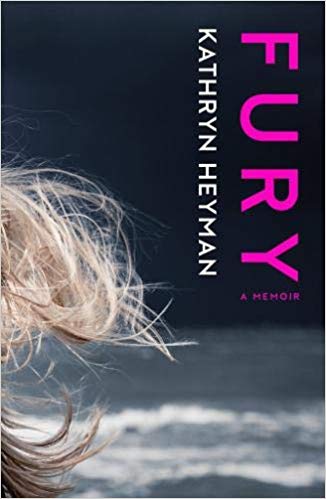
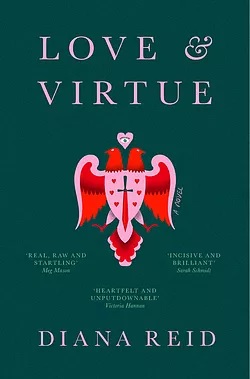
After introducing the authors and their latest works – Kathryn Heyman’s memoir Fury, Diana Reid’s campus novel Love and virtue, and Chris Hammer’s crime novel Treasure and dirt – Abadee asked them to briefly set the scene of their books, and then got into the nitty gritty!

Heyman was a little uncertain about Abadee’s suggestion that she’d actually stood on the precipice from her childhood. Heyman didn’t really see it that way, though she had, she said, grown up in poverty in a single-parent family.

She was keen to focus on the idea of “precipice” which she defined as “an edge that you can fall or leap from”. It’s a moment where everything is lost, but, paradoxically there’s everything to gain. She felt that, despite growing up in the underclass, her cleverness opened doors. Class is an issue that she and others mentioned and to which we returned later in the panel.

Abadee was keen to follow the childhood precipice point, saying that she was referring to the fact that both Heyman’s father and step-father had been violent. While agreeing with this, Heyman returned to her precipice idea. She said Fury is about making decisions that from the outside look dangerous. It is set in the context of her having faced major and minor bombardments as a female. 

Fury is not about Heyman’s assault, but about what she did after the court case. However, Abadee briefly explained that Heyman had been assaulted by a taxi driver, had reported it to the police, but the taxi driver had been acquitted. Heyman said that her experience of the social justice system had been brutal, and that she’d realised that the places where she should be safe, she was not. She returned to the precipice idea. Basically, she said, it’s about what is there to lose. There is nothing to do but leap. This she did, into something that looked dangerous – taking a job on a boat as a cook, with four strange men.

Why put herself at harm, is the question she gets frequently, but she said that she was physically, psychologically, mentally on a threshold, and decided to look at it differently, at how would it be if she were “one of the boys”?

Abadee quoted back to her her reference to a Larkin poem from which she’d taken the idea that when you are removed from the familiar, you perceive things differently, and thus perceive yourself differently. In other words, when removed from what you know you can transform yourself. Like in a story, you can rewrite yourself. She wanted, she said, to build “physical and psychological muscle”.

While at sea she was frequently in danger, but not from the men – from the bad weather and the crew’s incompetence! She came back changed.

She ended on an interesting point. She’d come to realise, she said, the value of naming the mess, naming the trauma. Stay with me here … she said books had taught her to name seabirds by learning to see their differences. And so, she learnt “to put language to the precise trauma”. If you can name it, she said, you become bigger than it.

Reid was asked to start by talking about the friendship between the two women protagonists in her book. Michaela is from a single parent family in Canberra, and finds herself in a Sydney university residential college where most of the residents are well-to-do, with private school backgrounds. One of these is Eve, who is self-confident, articulate, and a model for Michaela.

There are, she said, some fundamental philosophical questions behind the novel, one being the idea expressed by Gore Vidal which is that is it not enough to succeed, that to succeed, others must fail. Michaela comes to see this. So the book is about a rivalry more than a friendship.

Reid said much contemporary literature is about women being supportive but there are toxic relationships too. She clarified, though, that this book has a very particular context – a competitive academic environment, in the male-dominated subject of philosophy. Unfortunately, Michaela equates success with male attention, and thinks getting an older man to love her would endorse her as a person.

Abadee asked her about the prologue which, Reid explained, is written in third person. It’s a sex scene in which the woman is so drunk she remembers nothing. That woman, it turns out, is Michaela, who is the first person narrator of the rest of the novel. This incident becomes a critical point between the two women. Here is a precipice. Eve tells her she should report it.

This situation said Reid, goes to the power of storytelling as process of invention: I don’t remember it so it’s not in my story. When Michaela is encouraged to report, she’s being asked to put it in her narrative. The tension exists in her being deprived of her autonomy, her ability to control her narrative. What is the impact for her versus for feminism of telling the story. Who has the right to tell the story?

Regarding Eve, the question is whether she’s a good person or just looks like one. Is it ok to betray a friend for social good? Reid saw Eve in terms os performative activism. She ultimately leaves the place better, but there is tension between being morally correct and feeling superior, about not using “morals as sticks to beat other people down”. Although Eve does good work, she does it for herself.

Another philosophical question Reid explores then concerns the definition of goodness. Does it reside in your impact on the world or your reasons for doing so. Is it less “good” if you do it for yourself?

Later, Reid commented that her book came partly out of self-criticism (with Eve being an exaggerated her) and out of observation.

When we got to Hammer, Abadee noted that each of his novels starts with a hook. His latest, Treasure & dirt, opens with a miner being found dead, crucified. All his protagonists, she suggested, are on a precipice.

Hammer said that his openings are typical of crime books: you need to capture people as quickly as you can. The discussion then focused on the detectives, Ivan and Nell, who are both flawed, both on a precipice.

They are not hands-off detectives. He said there are plenty of crime books where the detective mechanistically solve crime, with much violence and sex involved. And there are those cosy crime novels where you know nothing about detective. However, he is interested in how characters change. Both his detectives find their careers at risk, are unsure about their status in police force. Will they throw the other under bus to save themselves?

Hammer described the different issues confronting each of the detectives – creating the precipice each is on – and said that solving the crime is important to both their careers. Each is on a career precipice, but also important is how they see themselves. They have choices. Hammer said that as a reader he likes to immerse himself in the characters, to think what he’d do. He likes to write such characters.

Heyman then said that all the books deal with class and shame, and asked the writers to talk about class. Heyman simply said, class plays a huge role, and that in addition to “class” and “shame”, the three books are all about “characters in extremis”.

Reid made two points about class. One is that moral judgements depend on context. Eve finds it easy to judge but finds it hard to acknowledge her power over Michaela because of her class. The other is that universities are places of privileged people who go on into privileged roles. What they see as culturally normal thus becomes the norm affecting everyone. Great point. Heyman added that people from the underclass and billionaires have a freedom because they are outside the middle class which establishes the norms.

Hammer said that his novel is set in a hardscrabble place, but that there are two powerful, rich men in it. Will they get away with massive illegality? Will Ivan and Nell, who are there for a homicide, do anything about it?

Abadee, picking up the shame thread, referred to Heyman’s title, Fury, and her idea that the best antidote to shame is anger. Heyman said that shame breeds in silence, in buying into others’ stories of who you are. It doesn’t do well when out in the open. By contrast, fury has energy, so the idea is to convert shame to anger (and energy).

Reid said shame involves lack of control; it arises when others judge you by facets of yourself you can’t control.

Hammer said that Nell is found in a compromising situation. She feels she’s been duped, but as a young woman in male-dominate police force, she has to decide whether she will fold or stand up.

An insightful session, which found some fascinating coherence between three very different books.

Canberra Writers Festival, 2022
Writing the precipice
Saturday 13 August 2022, 10-11 am

Monday musings on Australian literature: Supporting genres, 7: Poetry

As with the last post in this series, which was on novellas, poetry isn’t so much a genre as a form. However, to repeat what I said then, when I started this sub-series, I couldn’t find one all-inclusive word to cover all the types of literary works I thought I’d cover, so settled on “genres”. With August being National Poetry Month, it seemed a good time to do the poetry post.

I’ll start by saying that over the years of this blog, I have written several posts that could be seen to cover ways in which poetry is supported in Australia … so I’m going to begin with some of those posts, all Monday Musings:

  • Australian Poetry Library: In 2011, I wrote on a wonderful initiative, the online Australian Poetry Library which was launched that May. Unfortunately, as those of you who have read last week’s Monday Musings comment trail will know, the site is off-line at the moment. It’s a fabulous site, and we believe the hiatus is technical rather than permanent. We urge that “fixing” it be given priority.
  • National Poetry Month: This has to be a major initiative for supporting Australian poets and poetry and I have written two Monday Musings posts on it, one in 2021 and one in 2022.
  • Poetry Awards: In 2014, I wrote a Monday Musings on Poetry Awards, in which I listed many of Australia’s best-known poetry awards.

Publishers

In my 2021 National Poetry Month post (linked above), I mentioned two publishers which focus specifically, or heavily, on poetry – Giramondo and Pitt Street Poetry – so you can read more about those there. Other more general publishers also support poetry. There are too many for me to include here, but I will exemplify with a few:

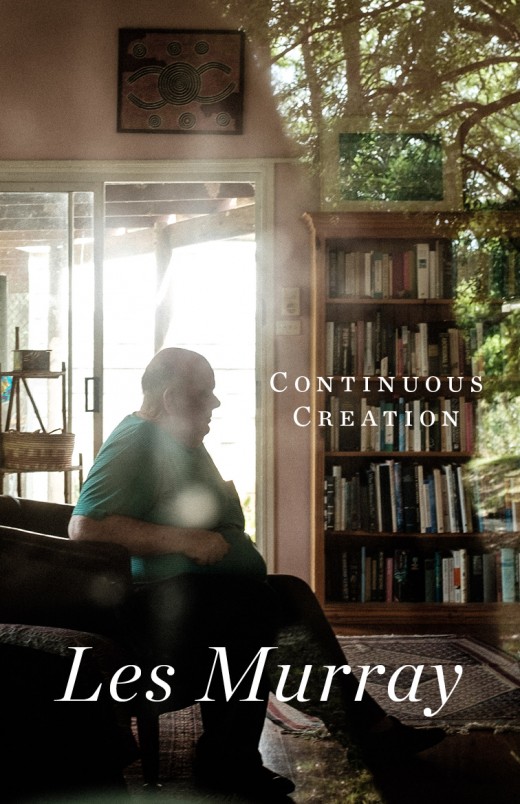
  • Black Inc: an independent Melbourne-based publisher which supports poetry, with a focus (I’d say) on established poets. They have published annual Best Australian poems anthologies (though not since 2017 it seems); they publish The best 100 poems of [poet, like Dorothy Porter] series, and they also publish poetry collections, including, most recently the posthumous Les Murray collection, Continuous creation.
  • Fremantle Press: an independent Western Australia-based publisher which publishes poetry regularly, both as single poet collections (including John Kinsella and Tracy Ryan) and anthologies.
  • UQP: a university-based publisher in Queensland, which is also a strong publisher of poetry. Not surprisingly, given their track record in publishing First Nations writing, they are a major publisher of First Nations poets, like Evelyn Araluen, Tony Birch, Jazz Money, and Ellen van Neerven, alongside many other new and established poets.

I have reviewed poetry from all of the above. For more publishers, check out this Poetry Sydney page which includes these, plus more, like Ginninderra Press, Magabala Books, and Wakefield Press.

Awards

I covered several of Australia’s significant poetry awards in my dedicated Monday Musings post linked above, and Wikipedia has a useful list too. I love that the majority of poetry awards are named for poets. Here I will share a few that I didn’t include in my 2014 post:

  • Anne Elder Award has gone through some changes since its establishment in 1976 by the Victorian Branch of the Fellowship of Australian Writers. It goes to the best first book of poetry published in Australia, and since 2018 has been managed by Australian Poetry.
  • Biennial Helen Anne Bell Poetry Bequest Award is a more recent poetry prize, with the inaugural award being made in 2013. The original prize was $7,000 but it’s now described as Australia’s richest poetry prize, with $40,000 going to the 2021 winner. It is “dedicated to celebrating women poets”, with, says AustLit, the award going to “an Australian woman poet for a collection of previously unpublished poems”. It is managed by the University of Sydney.
  • Mary Gilmore Award has gone through a number of permutations and slight name changes since it was established by the ACTU (Australian Council of Trade Unions) in 1956. Love this. It is currently an annual prize for a first book of poetry published in Australia, and is managed by the Association for the Study of Australian Literature. The 2022 winner was Jelena Dinic’s In the Room with the She Wolf published by Wakefield Press.

Festivals

Many writers festivals include a poetry panel or two, and those of you who attend folk festivals will know that these festivals often include poetry sessions (mostly, in my experience, of the bush verse variety).

However, there are some specialist poetry festivals, like the following:

  • Perth Poetry Festival, is an annual festival with this year’s being its 18th. Its webpage is brief but you can read more about it there. It is run by WA Poets Inc.
  • Poetry on the Move is a festival that was established in Canberra in 2015 by the University of Canberra. Its website describes its aims as being “to promote poetry as a vibrant art form through the engagement with international, national and local poetry communities”.
  • Queensland Poetry has operated as an incorporated association, the Queensland Poetry Festival Inc, since 2007. Their aim, according to their home page, is “Supporting poets on page and stage across Queensland”. Check out their website for the range of their activities, but as far as I can tell, this year’s festival, Emerge, ran from June 3rd to 6th.
  • Red Dirt Poetry Festival has already appeared on this blog, through Glen Hunting who often comments here. As its website says, it is a “4-day International poetry and spoken word celebration in Mparntwe/Alice Springs”. It’s a hybrid festival offering both in-person and digital sessions, and involves national and international poets. The sessions include “presentations, workshops, showcases and exclusive commissioned works”.
  • Tasmanian Poetry Festival is a longstanding festival which started in 1985 ran its 37th event in 2021.

It goes without saying that many festivals, including these, have been significantly affected by COVID and so what were annual, in-person events, have in some cases missed a year or two, recently, and/or become hybrid events. Some are run by poetry associations which offer many more programs than “just” the festival. You can find out more by navigating the links I’ve provided.

Do you like poetry and, if so, how do you engage with it?

Previous supporting genre posts: 1. Historical fiction; 2. Short stories; 3. Biography; 4. Literary nonfiction; 5. Crime; 6. Novellas.

Six degrees of separation, FROM The book of form and emptiness TO …

Last month, as I wrote this post, I had just got back from Melbourne, and this month I am back in Melbourne. Next Six Degrees, I should be in Sydney, all being well. Life is busy at the moment, but we are enjoying catching up with family and friends after two years of limited opportunities. All that’s well and good, do I hear you say, but what about the main point of this post? It’s the Six Degrees meme, of course, and if you don’t know how it works, please check meme host Kate’s blog – booksaremyfavouriteandbest.

The first rule is that Kate sets our starting book, and for August it is another book I’ve not read, Ruth Ozeki’s The book of form and emptiness. GoodReads says it’s a “inventive new novel about loss, growing up, and our relationship with things”. Sounds interesting, but that doesn’t help me right now …

When I haven’t read the starting book, I prefer not to link on content because, you know, I might get it a bit wrong. So, for my first link I’m going with title, and another book that starts with “The book of”. My book is Australian author Leslie Cannold’s The book of Rachael (my review).

Book cover

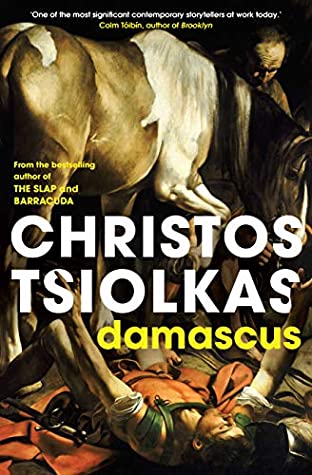
Cannold’s book is about biblical characters, although the title character is a fictional one. Another book about biblical characters, though in this case the protagonist is real, is Christos Tsiolkas’ Damascus (my review) about Saul who became Paul, in the New Testament.

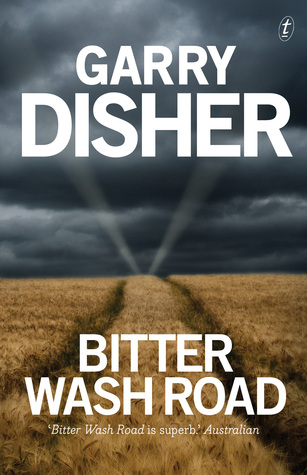
My next link is weak – I know it – but I’m going there anyhow. Tsiolkas’ Saul became the Apostle Paul, though throughout the novel he remains known as Saul. Garry Disher’s detective in Bitter Wash Road (my review) is Paul Hirschhausen, but throughout the novel he is Hirsch. No-one would ever know he was a Paul!

And now it’s time, after three links, to leave Australia, and the best way I can think of is to go to a much beloved detective of recent decades, Alexander McCall Smith’s Precious Ramotswe from Botswana. I’m choosing one of the two novels I’ve reviewed from this long series, The Saturday big tent wedding party (my review). You’ll have to forgive this very loose link, because Precious is a female private detective whilst Hirsch is a male police detective.

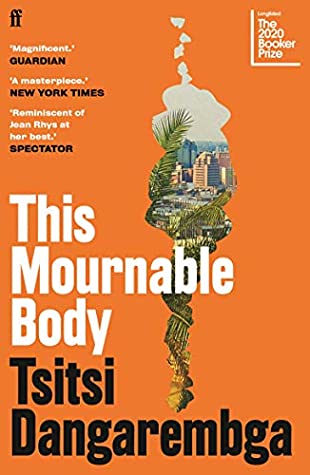
Now, if there is someone who could have done with some of Precious Ramotswe’s common-sense and warmth, it’s Tambu in Tstitsi Dangarembga’s This mournable body (my review). Again my link is very loose, based as it is on the fact that the two novels are set in neighbouring African countries, Tambu living in Zimbabwe bordering Precious’ Botswana.

And now, having found myself here, I can’t resist returning to Australia, linking this time on authors who also make films. Tsitisi Dangarembga has an impressive resume, having won multiple literary awards while also being an active filmmaker of feature, short and documentary films. While she’s not as prolific, Australia’s Leah Purcell is also known as a novelist and filmmaker. I’m linking to her latest production, The drover’s wife (my review), which she’d also written as an award-winning play and a novel.

This month, then, we’ve managed to travel through history and place, from biblical times in the middle east to modern times in Africa and Australia. And we have a 50:50 split in authors, three male and three female.

Now, the usual: Have you read The book of form and emptiness? And, regardless, what would you link to?

Peter Wegner’s Centenarians

In 2021 Australian artist Peter Wegner won Australia’s prestigious portrait painting prize, the Archibald, with his painting of the Australian artist Guy Warren, who also happened to be a centenarian. That year also happened to be the prize’s centenary. Coincidence? Who knows! Regardless, the portrait was in fact part of a Centenarians project which Wegner has been working on since 2013.

As it so happens, on our drive down to Melbourne a few days ago we stopped, as we often do, at the lovely Benalla Art Gallery. It has a great cafe overlooking the Broken River (a tributary of the Goulburn); it has three exhibition spaces offering varied programs; and its little gift shop is also excellent. On this visit, the smallest space, the Simpson Gallery, was occupied by an exhibition titled Peter Wegner: The Centenarians. This exhibition comprises pencil and beeswax sketches of 20 centenarians made by Wegner between 2015 and 2019. (Given some of the subjects we saw were born in 2021, this means that “centenarians” includes those nearly 100 as well as those who were actually 100 when they were drawn).

The exhibition notes quote Wegner on the process and his aims:

Each drawing was completed from life in an afternoon or morning with little alteration to that first impression, they are moments captured within a time allowed.

The exploration of ageing and how well we age is central to this project. Maintaining human dignity and independent living are important issues as we age, alongside the question of what it means to have a productive and meaningful life. One’s good fortune in life was acknowledged by nearly all of my sitters—sometimes bewilderment about having reached such an age was expressed.

I loved them, partly for the art work which seemed to capture their subjects beautifully (though of course, I don’t know them), but also for the centenarians’ little commentaries which Wegner incorporated into the sketches.

Boz Parsons (b. 1918, sketched 2018)

Most of these commentaries reflected on how they’d lived to an old age – and here’s the probably-not-surprising thing, there was no consensus. For example, some never drank, some had a glass of wine with a meal, while one had beer before dinner and wine with dinner. A couple mentioned genes, though not many. A few mentioned work and/or attitude, like not worrying. As Boz Parsons said, “there is no secret to living a long life”!

So, for example, when sketched in 2019, Jack Bullen (born 1921) had two glasses of wine every night, and still had his driver’s licence but didn’t have many “close friends” because “they didn’t see the distance”. Sylvia Draeger (also born 1921) reckoned “the secret to a long life – take one day at a time”. Married twice, she says “I’m not looking for another husband”. Maisie Roadley, another born in 1921, says “I never worry. Hard work and a glass of wine every night”.

Erwin Fabian (b. 1915, sketched 2017)

But my favourite is Mim Edgar (born 1914, sketched 2018) who said “I don’ feel very old. When I’m sitting down I feel 16. When I then stand up I feel 100”. Haha, know the feeling!

Gallery Director, Eric Nash, introduces the exhibition in its catalogue. He comments that the portraits have both a “stillness, and a sense of energy and vitality”. He’s right. The life is there in the expressions, while the poses have a lovely stillness.

Nash also suggests that the portraits have lasting value for two reasons. One is that they preserve “the sitters’ accumulated knowledge and insights”. He notes that the artist has ensured this by dipping the drawings in beeswax “to protect the pencil markings”. This also gives the work an effective sepia tone. The other reason, Nash says, is that the works

could inform how we as a society support our older residents to continue enjoying enriching lives. Wegner has particularly sought sitters who “are still living lives with my mobility, curiosity and purpose … the exploration of ageing and how will we age is central to this project”.

Colin being congratulated on his 100th by two grandchildren.

To conclude, I thought I would include a photograph of my own centenarian, my Dad, who was born in 1920 and died in 2021. I’m not sure what he would have said to living a long life. He did have a whisky every night until his mid-90s; he was an optimist; and he valued good friends and family. He was alert until the end. Vale, again, dad.

Peter Wegner: The Centenarians
Benalla Art Gallery
1 July -28 August 2022

Note: For copyright reasons, I have not included images of complete portraits here, but you can see Wegner’s winning painted portrait of Guy Warren at Wikipedia.

Monday musings on Australian literature: Poetry Month 2022 and Verse novels

Having launched their Poetry Month in 2021 which I wrote about at the time, Red Room Company (or, Red Room Poetry) clearly felt it was successful, because they are back again this year with another Poetry Month. Its aim is to “increase access, awareness and visibility of poetry in all its forms and for all audiences”, and it will run throughout the month of August.

From what I can tell, they are following a similar plan to last year with their 30in30 daily poetry commissions, poetry ambassadors, online workshops, prizes and residencies, and more. Do check their page, which includes a link to a calendar, to find ways in which you can take part, or, simply, introduce yourself to some new poets and poems.

Meanwhile, I thought I’d celebrate the month by writing a little tribute to verse novels.

Verse novels

When I decided to write this post, I found a good introduction to verse novels at The Australian Poetry Library. However, when I checked the link I’d saved, it said “currently unavailable”. I will share what it said, but you may not be able to find it online any more. (They do still have a Facebook page.)

A verse novel tells a long and complex story with many characters, much as a prose novel would, through the medium of narrative verse. The verse may be blank verse in the manner of Shakespeare, or free verse, or (less often) formal rhymed verse of any type.

The ancient epics were verse novels, of a sort, and so were the Alexandrian epyllia such as Apollonius’ Argonautica, but the modern verse novel, like the novel itself, is a fashion that found a large audience in the nineteenth-century: Don Juan (Byron), Amours de Voyage (Arthur Hugh Clough), The Ring and the Book (Robert Browning).

Movies, paperback novels and television seem to have killed it off in the early twentieth century, but it found a strong revival after the 1970s: Another life (Derek Walcott), The golden gate (Vikram Seth) and The changing light at Sandover (James Merrill).

Notable Australian verse novelists are Alan Wearne, Dorothy Porter, Les Murray, Steven Herrick and John Tranter.

A selection of Australian verse novels

Susan Hawthorne, Limen, book cover

Wikipedia’s article on the form provides a brief history, going back to epics like Gilgamesh. After appearing to have declined with Modernism, it has, Wikipedia continues, “undergone a remarkable revival” since the 1960s-70s, and is particularly popular in the Caribbean, Australia and New Zealand. I wonder why these particular regions?

I should add, though, that verse novels do have a longer history in Australia than this later 20th century revival suggests. CJ Dennis’ The songs of a Sentimental Bloke (1915) and The moods of Ginger Mick (1916)(my post) are earlier, and very popular, examples.

Of course, I did a little search of Trove, but, given the form’s apparent recent revival and the fact that Trove is not so useful yet for recent decades, I didn’t find much. However, I was intrigued to find reference to a satirical work called Solstice, by 20-year-old Matt Rubenstein. It was shortlisted for The Australian-Vogel award (in 1994, I presume). Sen, writing in The Canberra Times, was reasonably positive, saying that “the narrative has its share of sentimental blokes as well as philosophers like the homeless Arthur, and the relationships and issues it explores are treated relevantly as well as entertainingly. It could start a verse-novel cult. Could, I said.”

I’m not sure that there’s been quite a cult, but my little list below confirms some level of ongoing popularity in Australia. But, back to Rubenstein’s Solstice, I also found through Trove that it had been adapted by the author into a play to be performed at the Adelaide Festival of Arts in 1996, with Kate Ceberano as the featured singer. That says something about the quality of the work. I note that the play is available from Ligature Digital Publishing.

Anyhow, I do enjoy a verse novel, and have reviewed several on my blog, as have some other Aussie litbloggers. Here is a selection of some of the verse novels we have reviewed on our blogs:

  • Ali Cobby Eckermann, Ruby Moonlight (2012) (my post, and Lisa’s): this is particularly interesting because it is a First Nations historical fiction verse novel. It is a moving, and generous read.
  • Lesley Lebkowicz, The Petrov poems (2013) (my post): also historical fiction, this work tells the story of the Petrov affair providing a personal perspective on a very political event.
  • Susan Hawthorne, Limen (2013) (my post): Hawthorne’s quiet yet forceful work explores women going camping, the threats and vulnerabilities that confront them, and how they navigate the lines that appear.
  • Geoff Page, The scarring (1999) (my post): Page has written other verse novels, including Freehold, which I have also read, but The scarring is particularly strong and gut-wrenching about war, the mistakes people make, and the power men can wield over women.
  • Dorothy Porter, El Dorado (2007) (Brona): Porter’s last verse novel is described by Brona as “another dark crime story with a psychological twist”.
  • Dorothy Porter, The monkey’s mask (1994) (Brona): Porter’s most famous verse novel is also a psychological crime story, and, says Brona is “gritty, exciting & passionate”. It surely qualifies now as a classic, particularly given it is taught in schools and universities. It was also adapted for a feature film.
  • Alan Wearne, The night markets (1986) (Bill): this book was highly praised when it came out, and won significant awards including the ALS Gold Medal and the National Book Council Award. Bill knew Wearne at school, and has read this book a few times “because it feels so intensely familiar”. The Canberra Times reported on its ALS Gold Medal win, saying the judges ‘were impressed by the ambition and confidence with which Wearne approached his task. The novel’s subject, political and social change in the past two decades, had rarely been approached, they said, and its verse form was “bold and exciting”‘.

Readings Bookshop has provided lists of Australian and non-Australian children’s and YA verse novels, for those of you interested in these audiences.

Do you read verse novels? And if so, care to share your favourites (Aussie or otherwise)?

#54321 Challenge – Just for fun

Lisa posted this challenge, which she got from Lizzy Siddal, who nicked it from somewhere on Instagram! Love the provenance here!

Each of us has interpreted it in ways that suits us. For me, my interpretation is to draw on authors who have died (except for #1) because there are too many living authors that I love for me to choose from. So, with that proviso, here goes …

#5 Books I love

In author’s birth order:

Jane Austen, Persuasion
  • Pick an Austen any Austen, let’s go with Persuasion (my post), which has such a lovely, mature heroine who, nonetheless, had to learn to make her own decisions. 
  • Edith Wharton’s The house of mirth, which I read before blogging, but which has left a lasting impression for its story of a woman who was torn between love and integrity, and (what she thought would be) security.
  • Patrick White’s Voss, which I read in my teens, long long before blogging. It was the book that turned me on to White.
  • Albert Camus’ The plague/La peste (my post) which I also first read in my late teens, which I encouraged my reading group to read many years later, and which continues to resonate with me.
  • Thea Astley’s Drylands (my post), which is just one of Astley’s novels that has stuck with me for its expressive writing and intellect.

#4 Autobuy authors

Albert Camus, The plague

After the 19th century classics, my first autobuy author was

  • Albert Camus

who was followed by …

  • Edith Wharton, whom I discovered in the 1980s during our first posting in the USA, and
  • E.H. Young, who was recommended to me by a Kiama, NSW, bookseller, in the late 1980s. I subsequently bought, or was given, all of her books that were published by Virago.

And then an Aussie, but which one? Perhaps the first Aussie, besides Patrick White, whom I wanted to autobuy was

#3 Genres I love

Most of you could probably guess this:

  • Literary fiction
  • Classics
  • Literary biographies

#2 Places I like to read

Where else but stretched out on a sofa, or in bed.

#1 Book I’m Going to Read Next

I haven’t quite decided, but my next reading group book is Audrey Magee’s The colony. This will not be my next review, however, as I am currently reading a First Nations’ book, and will probably read a couple more before I read my reading group book!

Larissa Behrendt, After story (#BookReview)

Larissa Behrendt’s latest novel After story has been on my wishlist since it came out last year, so I was thrilled when my reading group chose it as our 2022 NAIDOC-Week read. What self-respecting reader, after all, doesn’t like a literary tour?

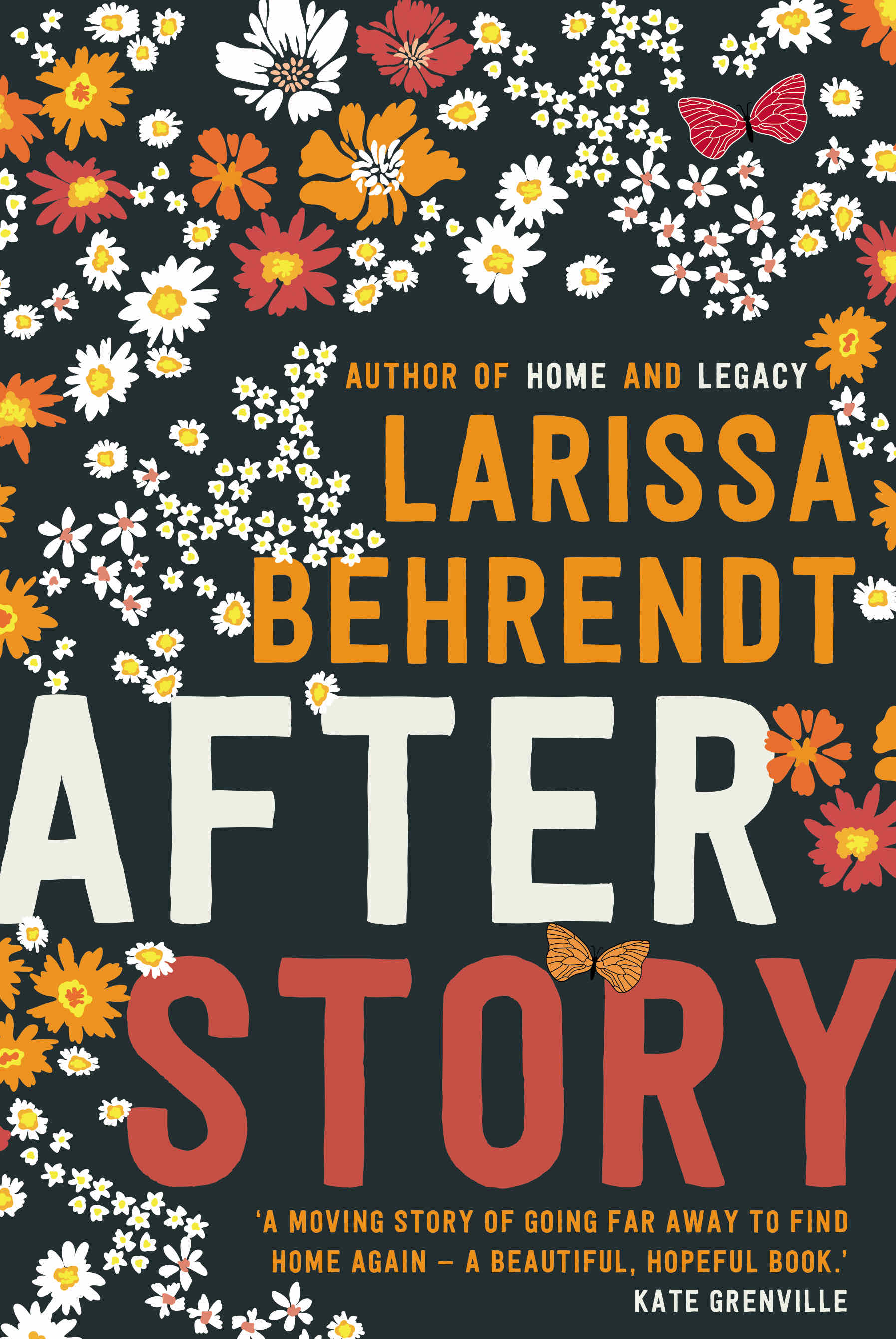
After story, for those who haven’t caught up with it yet, is framed around a ten-day literary tour of England that is undertaken by a First Nations Australian mother and daughter, Della and Jasmine, whose relationship is fraught. Through this plot device, Behrendt marries her two storytelling loves – English literature and Indigenous Australian storytelling. In doing so, she draws comparisons between them, and explores ways in which both can reflect on and enhance our lives. She also shows how travel can be an engine of change for people.

Although it contains some very dark matter concerning grief and abuse, After story is a gentle and generous read – for two reasons. First, there’s the characters. Della and Jasmine, are strong, thoughtful and, importantly, real. Both have made mistakes in managing the challenges in their lives, but both genuinely want to have better relationships with those they love. Della, the less educated and more naive of the two, is particularly engaging for her honesty and lack of pretension, for her open-mindedness, and for the rawness of her pain. The other reason is the novel’s tone. It is clear and passionate about the wrongs done to Australia’s First Nations peoples but it is not angry. This is not to say that anger doesn’t have its place – it certainly does – but it’s not the only approach to telling the story of dispossession and dislocation.

What is particularly striking about this book is its structure and voice. After a prologue in Della’s voice telling of the disappearance twenty-five years ago of her 7-year-old daughter Brittany, the novel is structured by the tour, with each day being told, in first person, by Della and then Jasmine, until Day 8, when Della’s built-up grief overcomes her. After that, the order changes and Jasmine goes first. This change marks a turning point in their relationship – albeit not an immediate, epiphanic one. It also jolts the narrative out of a pattern that had risked becoming a little too rigorous. Like a coda, it makes the reader sit up and wonder what will happen next?

What does happen, however, as I’ve already implied, is not particularly dramatic. Rather, this book emulates something Virginia Woolf said, as Jasmine shares:

The great revelation perhaps never did come. Instead, there were little daily miracles, illuminations, matches struck unexpectedly in the dark.

Like life.

But, back to the structure. After story is one of those books in which the structure mirrors or supports its intention – and Jasmine, again, explains it well. Talking about Jane Eyre and Jean Rhys’ response to it in Wide Sargasso Sea, she says, “it’s compelling, the uncovering of the other side of the story”. “Uncovering the other side of the story” is the nub of this novel – personally, in terms of Della, Jasmine, and their relationship with each other and the rest of their family, and politically, in terms of the conflicting views and experiences of the colonisers and colonised. What Behrendt aims for in this novel, I believe, is to bring people together through improved mutual understanding.

Lest this sound too earnest, though, let me reiterate my earlier comment that this novel has a light touch. To balance the heavy material, which includes a number of losses including those related to abandoned and lost children, Behrendt creates a cast of typical tour participants. There’s the white male know-it-all professor and his seemingly mouse-like wife; the feminist young lesbian couple willing to take him on at every turn; the recently retired, educated middle-class couple; the bossy woman and her down-trodden sister; Della and Jasmine; and of course Lionel, the long-suffering tour guide, and bus-driver Brett. Behrendt handles these almost-stereotypical characters well, so that, by the end, even the arrogant Professor Finn is softened for us.

There is much humour in the telling, such as this, for example, from Della as she enters the British Museum, which, she has just discovered, still holds Aboriginal remains:

As we walked into the imposing white building there was a big glass bowl with money in it and a sign asking for donations.
“We already gave,” I said to the guard who was standing next to it.

Comments and asides like this are used throughout the novel to draw our attention to the truths we may not otherwise see. Truth, in fact, is a recurring idea in the novel – the withholding and the sharing. Della, reflecting on Thomas Hardy’s first wife being written out of history, remembers stories of erasure told by her community’s elder Aunty Elaine, and thinks “Sometimes the truth matters and you shouldn’t try to hide the facts”. A little later, Jasmine is also reminded of Aunty Elaine’s wisdom:

Aunty Elaine would remind me that there is more than one way to tell a story; there can sometimes be more than one truth. ‘The silences are as important as the words,’ she’d often say. There is what’s not in the archive, not in the history books – those things that have been excluded hidden overlooked.

Throughout the novel, Aunty Elaine’s stories and wisdom, shared through the memories of Della and Jasmine, provide the First Nations’ foil to the literary tour, sometimes enhancing, sometimes counteracting the messages and lessons of English literature.

I did, however, have one issue with the novel, one shared by a few in my reading group. This concerned its occasional didactic tone. Frequently, for example, the characters tell us what they’d learnt at various sites, such as about Jane Austen’s life or Virginia Woolf’s death. While we could see the point, the way the information was imparted did feel teachy at times. Fortunately, this tone did not extend to the novel’s underpinning ideas which are conveyed through the narrative rather than “told”.

In a Sydney Writers’ Festival panel, Behrendt said something that appeals to me, which is that the goal of being a great writer is to say something important. In After story, she has written an engaging, accessible novel, that also says important things – some subtle, some more overt, but all stemming, ultimately, from the traumas First Nations people have suffered, and continue to suffer, at the hands of the settlers.

Jasmine comes to a significant realisation near the end:

Suddenly I found the museum stuffy. When Aunty Elaine would talk about it, our culture felt alive – the sewing of possum cloaks … the gift of telling stories. They were living and breathing, not relics of the past, frozen in time. Looking at the artefacts surrounding me, I couldn’t help but feel I missed an opportunity with Aunty Elaine to capture her knowledge.

She had, she continues, “rightly valued education” but she had also “taken Aunty Elaine and her knowledge for granted”.

This is the call Behrendt makes in her novel. She wants both cultures given equal respect for what they can offer us. She knows the value of stories in bringing people together. Wouldn’t it be great if her story here achieved just that?

Larissa Behrendt is a Eualeyai/Kamillaroi woman

This book has been reviewed by several bloggers including Lisa, Brona and Kimbofo.

Larissa Behrendt
After story
St Lucia: UQP, 2021
307pp.
ISBN: 9780702263316

Monday musings on Australian literature: on 1922: 6, Great Australian novel (again)

The things you find in Trove! As l was trawling Trove for my 1922-project earlier this year, I came across a reference to the Great Australian novel. Just one. So, I put it aside, thinking it would be a neat, quick little post for a busy week like this one. Little did I know …

Before writing this post, I thought I should do one more quick little search. Nothing much came up, except that buried in one of the few articles my search retrieved was a reference to a book titled The luck of 1825 by Horace B. Pithouse. Launceston’s Daily Telegraph (18 November), wrote that “the rough draft of the MS was originally sent for sake of a criticism to the de Garis Great Australian novel competition”. The de Garis Great Novel Competition? Ever heard of it? I certainly hadn’t.

So, I decided to do an Internet search, and up popped the Australian Dictionary of Biography (ADB) with an article on one Clement John De Garis (1884-1936). Heard of him? I certainly hadn’t.

However, he was quite a character, and you can read about him at the link on his name above. In a nutshell, ADB lists his occupations as aviator, financier/investor, novelist, produce merchant, and short story writer, and describes him as “a man of effervescent charm and superhuman energy—a ‘prince of ballyhoo'”. Born in Mildura, he got involved in the dried fruit industry and was entrepreneurial in developing and promoting the product. But, it didn’t stop there. ADB writes that his “ambitions took on a manic quality and he began to see himself as all things to all men. A self-constituted patron of the arts, he launched a Great Australian Novel Competition”. This competition was advertised in 1919 with a closing date in early 1920. Hobart’s World (3 January 1920) promoted the competition, which had three prizes (£300 for first, £150 second, and £100 third). The goal was a “really great Australian novel”; the writer had to be Australian born; and “the story must be typically Australian”, which did not mean that ‘”local color” must be that of a shearing shed, or of the thirsty tracks in the Never Never.’

A humorist named “Dip-Tin” in Western Australia’s The Moora Herald and Midland Districts Advocate (5 May 1920) promoted it in verse, and included this on the potential subject matter:

There’ll be yarns about Ned Kelly. 
And Judge Bevan, and Oenpelli— 
Bet your life! 
And be sure each central figure 
Will become a dinkum digger, 
Plus a wife. 

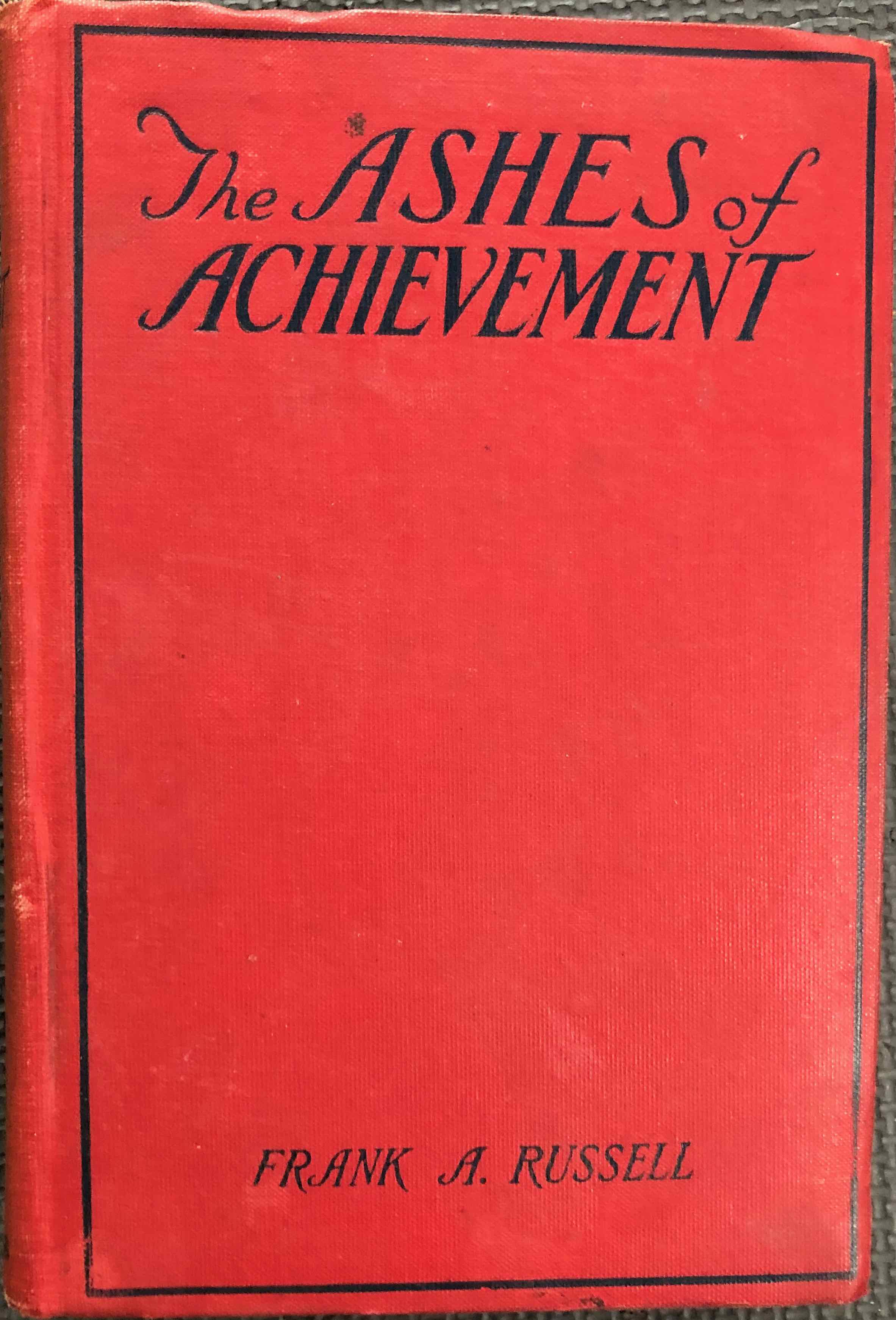
Late in 1920, the winner was announced – Frank A Russell’s The ashes of achievement. Heard of it? No, nor have I! And that’s not surprising because the reviews, overall, were poor. Take this one (with an unreadable by-line) in Perth’s The Call (31 December 1920), titled ‘When DeGaris slept! The prize Australian novel candidly reviewed. A literary “Dud” – which isn’t brilliant – and isn’t even Australian’. You get the gist. The writer critiques the book’s failure at length, exposing its weaknesses in subject-matter, characterisation and language. If you’d like to know how to thoroughly pan a book, here is a good example, and if what he (I think it’s a Hector) says about it is right, his assessment is fair enough. Hector (?) concludes that:

With the publicity that has been given it The ashes of achievement will probably be widely read. But it will not be remembered.

The Queenslander (1 January 1920) agrees with The Call, albeit with brevity:

The C.J. DeGaris Publishing Company is worthy of commendation for its courage and confidence, because the work of publishing in these days is a very expensive business, but if the remaining novels are not better than The ashes of achievement the effort to enhance the literature of Australia will not be very considerable. There is more real Australian atmosphere in a few chapters of a score of other Australian novels than in the whole of Mr. Russell’s very long and mediocre production. The test of a novel lies in its atmosphere and character studies, but while in the 30 chapters of “The Ashes of Achievement” one is continually meeting new characters, and as suddenly dropping them, there is none of any outstanding merit …

I did find one positive report – in Perth’s The Southern Argus and Wagin-Arthur Express (8 January 1920) – but it was cursory:

Under such circumstances [that is, winning this prize] one would naturally expect a good novel, and one is not disappointed. The ashes of achievement is an Australian novel, by an Australian author, and not flavored with gum leaves to make it so. It maintains the reader’s interest from beginning to the end, and will rank amongst the best of international novels.

Fair point about the “gum leaves”, but …

I’ll leave De Garis here, and will get to the article from Smith’s Weekly (16 December 1922) that inspired this post. It starts by saying that ‘about once a week in our “esteemed contemporaries,” Australian authors are adjured to write the Great Australian Novel’ and goes on, tongue-in-cheek, to explain why it’s so difficult. It’s because, for example, Australian heroes and heroines can’t match the English versions with their titles and valets, and rose-leaf skin. Further,

No British hero or heroine has to work. Readers dislike working heroes and heroines. They know all about work without reading about it. 

Smith’s writer concludes:

Instead of picturesque characters, ivy-clad ruins and dear old London, we have galvanised-iron, bank managers, kerosene-tins, gum-trees, the golden wattle-bloom, shearers’ strikes, drought, the W.C.T.U., the blue, blue sky (over-worked), the last-lady-help-but-one, Old Pardon the son of Reprieve, Clancy of the Overflow, and dear old Woop Woop.

That is all the material we have. Personally, I don’t see how we can make the Great Australian Novel out of it. 

Love it … the less said about the Great Australian novel the better, I reckon.

This was the sixth post in my 1922 series.

Previous 1922 posts: 1. Bookstall Co; 2. Reviewers on Australianness; 3. ALS Women’s night; 4. Adventure novels; 5. Art books

Jeanne Griggs, Postcard poems (#BookReview)

If you love travel, you would enjoy Jeanne Griggs’ poetry collection, Postcard poems, which comprises postcard-sized poems ostensibly sent from locations around the USA, and further afield. Like all good travel writing, though, these poems offer more than just simple travel.

However, before I discuss them, I should introduce the poet. Some of you will already know her, because Jeanne Griggs is the blogger behind the wonderfully titled Necromancy Never Pays … and other truths we learn from literature. How could a reader not love this? You can read about her and her blog’s name on the blog, so I’ll just add that at the back of the collection we are told that besides writing her blog she directs the Writing Centre at Kenyon College, and plays violin in the Knox County Symphony.

So, the collection. It’s divided into three parts, and each poem occupies a page – on the left of the page is the poem and on the right is the addressee (like “To Allen/Crystal Lake, IL”) plus that little rectangular box you get on postcards for the stamp. It’s a clear, simple layout, which maintains our focus on the poems’ context. The titles of the individual poems ground us further, with each referencing its subject, such as “Note on a postcard of Cypress Gardens” or “A postcard of Antelope Canyon” or “A postcard with ornamental pear tree”. There is also an epigraph, and I’ll share it because it’s perfect. It’s from Tennyson’s Ulysses: “I am a part of all that I have met; / Yet all experience is an arch wherethro’ / Gleams that untravell’d world whose margin fades / For ever and forever when I move.”

Regarding the trigger for this collection, besides the obvious travel that is, Griggs wrote on GoodReads that “I was writing poems and fitting them onto the back of actual postcards and then sometimes I would send them to my friends and family. Very soon it became clear that this was a collection, that together the poems told a kind of story”.

Now, all this might sound a little cute, but the idea has not resulted in something formulaic or overly structured. Indeed, the poems roam through place and time, and encompass a variety of holidays and trips, some overseas to, say, the Alhambra in Spain (“Note on a postcard of the Alhambra”), and others closer to home, like visiting a child at college (“Note on a postcard of Wellington, Ohio”).

What captures the attention, however, is that alongside the expected description of a place, most poems contain more. There are reflections, some delightfully wry and some pointedly ironic, on the experience of travel – the joys and challenges, the misses and triumphs, the surprises and the ordinary – and their impact on the traveller. I enjoyed, for example, poems about attending festivals, like:

We’ve come to hear about books,
drink bourbon, and eat crawfish,
casting aside our inhibitions
like layers of clothing, extraneous
in the bloodworm Louisianna night.

(from “Note on a postcard of the St Francisville Inn”)

There are also the personal stories that made these trips worth writing about, such as memories of family holidays followed later by cards to children now grown up. There’s the mother remembering her own mother, only to recognise the pattern is repeating:

and thinking about my mother
how she would take me
to fancyhotels and
sit, saying she was content
with the view, watching me
disappearing over the horizon,
like my daughter, now.

(from “Note on a postcard from the El Tovar hotel”)

Letting go isn’t as easy when it’s you doing the letting go!

… so it was the first trip
we took without you. I missed you,
loosing my regret out of earshot,
drowned out by water roaring,
wishing I could watch you
see this …

(from “Notes on a postcard of Niagara Falls”)

The Contents list, in which a poem on Santa Monica Pier, for example, is followed by one containing a piece of the Berlin Wall followed by one from Waikiki, might suggest, on the surface, something quite random. However, reading the poems reveals subtle segues in nearby poems, from simple things like mentions of cereals (Froot Loops and Cheerios anyone?) to concepts like growing older. Books feature too. Few are named, but keen readers will spy the likes of Tolkien and Shakespeare within these pages.

There’s also some politics. One, “Note on a postcard of the Mount Vernon public square”, documents weeks of protesting, of wanting neighbours to realise that their congressman “is voting against / their health benefits, our water supply”, while another, “Note on a postcard of the Marie Laveau Voodoo Museum”, shares how a human skeleton brings to mind “desperate people feeling / no control over their lives, / the deck stacked against them”.

A couple of the poems particularly resonated with me – in addition to those dealing with family, ageing and children growing up. “Notes on a postcard of Mesa Verde”, for example, captured my own wonder about that amazing place and the people who lived there, while the opening poem, “A postcard of a mirrored room”, makes that poignant (there’s no other word for it) point about

… all the places
we’ve been, until
we get to the last one
and who will know
where that is until after
we reach a final destination.

The last poem, “A postcard from the Getty Museum”, offers a different sort of finality – the arrival of the pandemic. It’s not named, but when Griggs writes of not thinking about the crowds until “After, when the press of all / those people became unimaginable” followed by “all future plans suspended”, we know what she means.

Postcard poems is an engaging and accessible collection that uses something as relatable as writing postcards to explore things that matter. It’s nicely crafted, but also accessible. Well worth reading.

Jeanne Griggs
Postcard poems
Frankfort, KY: Broadstone, 2021
56pp.
ISBN: 9781937968885

(Review copy courtesy the author)