Monday musings on Australian literature: Local colour, 1920-style

Back in June I wrote a post on the Australian Literature Society’s Women’s Night that they held in 1922. This Society, which was formed in Melbourne in 1899, has played an important role in supporting and promoting Australian literature for well over a century – first as itself, and then as part of the Association for the Study of Australian Literature (ASAL) with which it merged in 1982. As I’ve written before, ASAL continues to award the ALS Gold Medal which was established by the Society in 1928.

Now, I had in fact planned a different post for today, but I have had a busy weekend, and am still away from home, so have not had the time to work on that post. I therefore thought I would share another one of the delightful snippets I found some months ago about about the work of the society. The wonderful thing is, you see, that this Society’s meetings were often written up in the newspapers of the day, which provides us with an interesting insight into what the literati of the time were thinking and caring about.

And, one of those things was what made “Australian” literature. In 1920, Melbourne’s The Herald (July 10), reported on the meeting that marked the Society’s attaining “its majority”. That is, it turned 21! The meeting’s topic was “Local Color in Women’s Work”, with a paper was presented by Mrs Hilda Vroland. She argued that Australia’s women writers “did not portray very vividly those features of our life which were distinctive”. The report went on to explain what she saw as local color:

What was meant by local color was certain incidents, scenes and language which were characteristic of a particular country, and not only that, but a portrayal of an outlook on life which was typical of the class of people dealt with. Our local color was derived from incidents which immediately suggested Australian life — scenes that were truly Australian, and traits of character which had been developed by the freedom of this new land and the broader outlook.

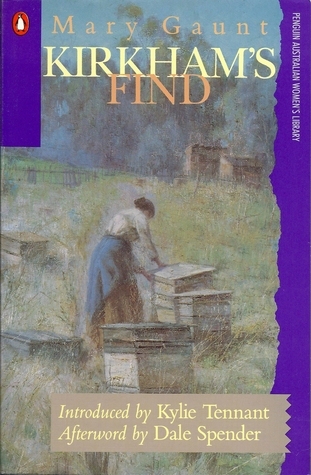
Mrs Vroland named some writers whom she thought did produce good local colour – Doris Egerton Jones, Marie Pitt and Mary Gaunt (the last of whom Brona of Brona’s Books wrote about for the new AWW). Brona notes that some of Gaunt’s attitudes are problematical now, but nonetheless,

her short stories show a writer concerned with the role of women in society. Mary’s privileged colonial upbringing may be apparent in her writing at times, but her focus was clearly on how double standards, lack of agency and patriarchal practices negatively impacted on the lives of women.

Sounds like excellent local color to me …

Anyhow, the poet and journalist Bernard O’Dowd, who presided over the meeting, clearly agreed with the importance of Hilda Vroland’s subject, arguing that

Australians had as much right to see the universe in our honeysuckle and wattle blossom or even in the opossum’s burrow as the Englishman had to see his world in the oak-tree.

Furthermore, he was concerned, said The Herald, that Australian literature was not valued unless it “received the hallmark of the English papers”. (The old cultural cringe.) Local journals, he apparently said, “dealt almost exclusively with American literature, and ignored Australian writers”. Another speaker at the meeting, a Charles Carter, is reported as having “said that he “was gratified to know that the women writers quoted did not wholly rely upon the use of slang, horse-racing or bush-ranging for local color”. According to Brona, Mary Gaunt’s stories did include bush-ranging, among other topics. But was Carter being sexist about what “women” writers should write about, or simply complimenting them because these were not truly local color?

I will close here … and simply say that I enjoyed reading about the passion of these Australians for our own literature, even if (not surprisingly) the idea of First Nations people contributing to that literature doesn’t seem to have crossed their minds. I hope you all have enjoyed this little insight too.

Six degrees of separation, FROM The drover’s wife TO …

Spring at last – in the southern hemisphere anyhow. Winter seemed to start early this year so many of us, in my corner of the world anyhow, have been desperate to see its end. Yes, I know many of you have much more severe winters than we do, but it’s all relative! And on that, before I dig myself into a hole, I’ll just confirm that it’s the Six Degrees time again. As always, if you don’t know how it works, please check meme host Kate’s blog – booksaremyfavouriteandbest.

The first rule is that Kate sets our starting book, but for September she threw us one of those curve balls and told us to use the last book we linked to in our last chain. For me, that was Leah Purcell’s film/book/play The drover’s wife (my post). Lisa reckoned I’m lucky to have that to start with. Perhaps so, and, cross-my-heart, I wrote and scheduled my post before I saw what Kate planned!

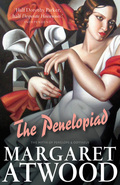
Margaret Atwood, The Penelopiad

There are so many ways I could go with this – another multiply adapted work? Another another “wife” title, because there are many of those? Or, a riff on a classic or well-known work? And this last is the way I’ve decided to go, because I enjoy seeing what later writers makes of a loved work, particularly when they look as it from the perspective of a minority or disempowered perspective – as Purcell did with Henry Lawson’s “The drover’s wife”. My first link, then, is Margaret Atwood’s Penelopiad (my review), which looks at Odysseus’ story from the perspective of his wife and the hanged maids.

From here, let’s go to another adaptation of that original work, The Odyssey. This time, I’ve chosen a BBC4 full-cast dramatisation (or, “dramatic retelling”) by Simon Armitage (my post) – which I experienced in audiobook form. (Consequently, my post, like many of my audiobook posts, is more minimal than most).

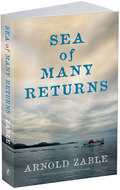
Sea of Many Returns cover

Odysseus’ goal is, of course, Ithaca, and in my post linked above, I added a little postscript referencing Arnold Zable’s Sea of many returns (my review) which, I said, focuses on Ithaca, and its literal and mythological contexts of “home”.

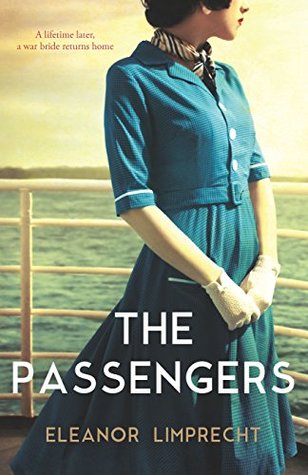
Sea of many returns is a dual point-of-view novel, with the two points of view being grand-daughter Xanthe and her Ithacan-born grandfather whose journals she is translating. The book is about all the leavings and returnings in their family, for work, adventure, war or, simply, to find a better life. Eleanor Limprecht’s The passengers (my review) is also a point-of-view novel involving a grandchild and grandparent, and leaving and returning. Here, though, both voices are female, and they are travelling together, as the grandmother returns to America after a 68-year absence. She had come to Australia as a war-bride.

Book cover

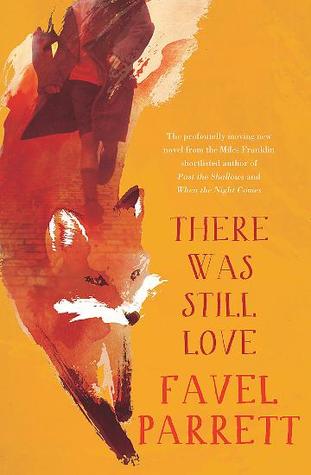
I’m going to stick to grandchildren and grandparents, and the impact of war, by linking to Favel Parrett’s There was love (my post). In this novel we have two grandchildren and two grandmothers. It revolves around two Czech sisters, one who ended up in Melbourne with the other remaining in Prague, after their lives had been disrupted by the Second World War and the 1968 Czechoslovakian Revolution.

Anthony Doerr, All the light we cannot see

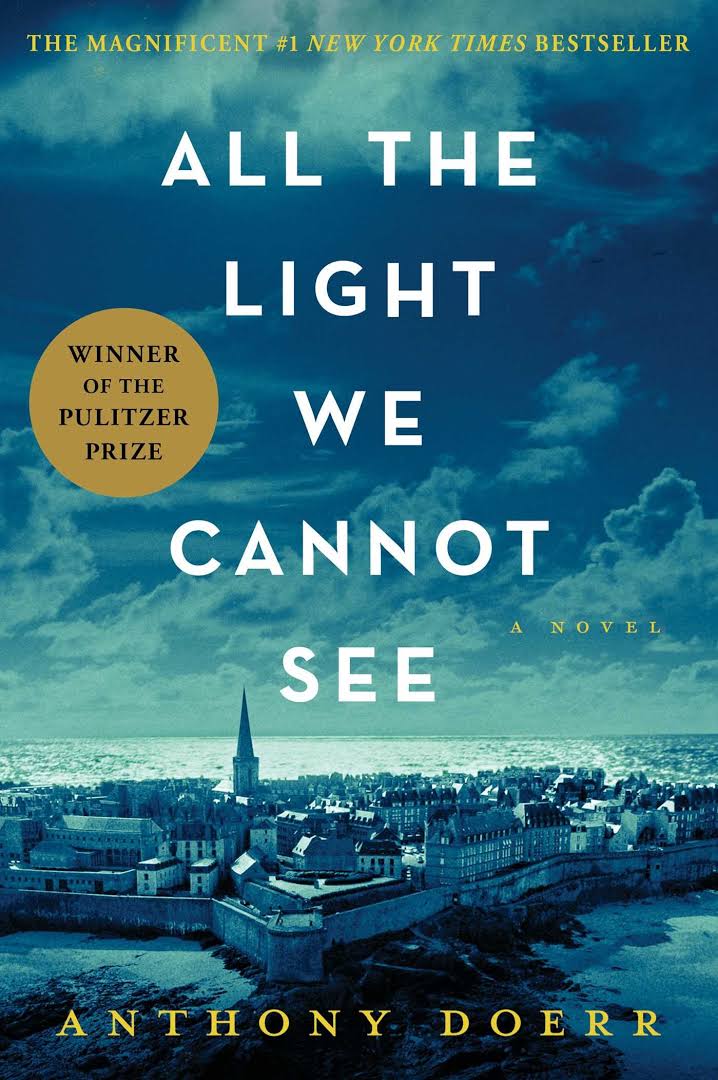
Another dual point-of-view novel – but one in which the stories operate in parallel until near the end – is Anthony Doerr’s Pulitzer prize-winning All the light we cannot see (my review). It too is a war story, telling of the Second World War through the eyes of a young blind French girl and a young orphan German boy.

This month, we’ve traveled from mythical Greece to modern Australia, via Europe and Greece, but somehow war has dogged us every step of the way, starting with a background of the Frontier Wars in Purcell’s The drover’s wife.

Now, the usual: Have you read or seen The drover’s wife? And, regardless, what would you link to – except, hmm, I asked that last month of course, so let’s choose something else! Do you have any favourite grandparent-grandchildren novels?

Audrey Magee, The colony (#BookReview)

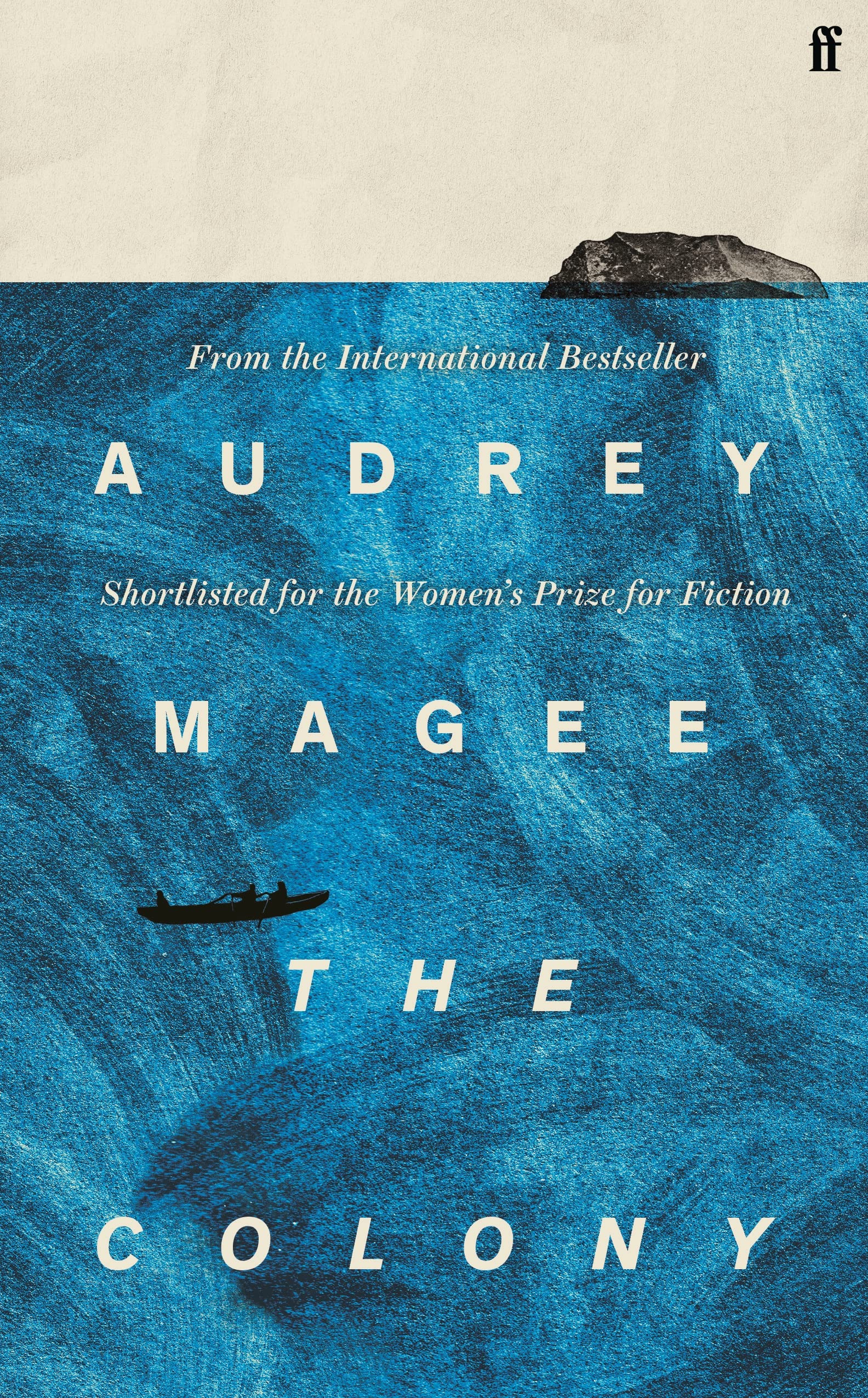
Irish novelist Audrey Magee’s second novel, The colony, was my reading group’s August book, and it proved an excellent choice. Literary and highly readable, with vivid characters and a sophisticated exploration of its subject matter, The colony engaged us on all levels. It was longlisted for the 2022 Booker Prize (and may yet be shortlisted. We will know next week.)

The novel’s overall subject is, as the title implies, colonisation – and Magee teases out its personal, cultural and political ramifications through a small island colony off the west coast of the Republic of Ireland. The word colony, like much in this book, is multi-layered. The novel is set over the summer of 1979, easily dated for readers by reporting of the assassination of Louis Mountbatten in August 1979.

“the battle of the colonisers”

The colony is carefully structured, with chapters about what’s happening on the island alternated with reports of sectarian killings from the Troubles in the north. These reports are brief, stark, and devastating, and serve as a constant reminder of what colonisation can do. But these reports are just one of the layers in the novel, which starts with the arrival of the ambitious British artist Lloyd (whose name is not random. He has plenty of money!)

Lloyd is coming to the island to make his name. He is a modern colonialist in the way he assumes he can buy what he needs, and manipulate others, to achieve his goal. He promises, for example, to respect the islanders’ wishes that he not paint them, but this doesn’t last. The way Magee unfolds his role is clever and subtle, because the islanders, whose numbers have dwindled to twelve families, want and need his money to survive. His perspective is told through terse, poetic language.

Arriving soon after Lloyd is the French linguist, JP Masson. He has been visiting this Gaelic-speaking island for years, undertaking a longitudinal study of the island’s linguistic patterns for his PhD. JP is fierce about the need for the islanders’ language to preserved as is. He resents the infiltration of any English into the island, so Lloyd’s appearance is the last straw. It will, he believes, force a “sudden and violent ” shift to English, instead of the slow “linguistic evolution” to bilingualism that was under way:

The Irish here was almost pure, Lloyd, tainted only by the schoolchildren learning English, by the intermittent visits of emigrants returning from Boston and London with their sophisticated otherness, and by mercenaries in linguistic mediation, men like [islander] Micheál who want only to communicate, indifferent to the medium or its need for protection  …

JP’s perspective is told through the carefully thought prose of a writer, though when he is writing his paper on colonisation and language, I found it a bit heavy-handed, a bit too much of the telling not showing.

However, this issue of maintaining language – and its relationship to the colonial project – is intelligently explored. JP argues uncompromisingly for preserving the language, because it “carries their history, their thinking, their being”, and resists the fact that languages change. He rides roughshod over the islanders, insisting that they must use their language. Lloyd, on the other hand, wipes his hands of the issue, “not my concern” he says. Meanwhile, the islanders go about their business, continuing to speak their language with each other, while being willing to use English where it benefits them. They are no fools, for all JP’s exhortations:

What do you think, Micheál? said Masson. Are you less Irish when you speak English?
I don’t talk politics, Masson. You know that.
We’re talking about language, Micheál.
Same thing

Just this topic alone, and how Magee uses it to expose colonialism’s short, medium and long tail, could take up a whole review.

Throughout the novel, the islanders are caught in the middle, but maintain a healthy perspective:

Imagine that, said Mairéad. A Frenchman and an Englishman squabbling over our turf. 
They’ve been squabbling over our turf for centuries, said Francis. 

There is a wonderful, dry humour in this novel. And much of it comes from the islanders, who have their own way of dealing with things. But they, too, are not united. The matriarch, 89-year-old Bean Uí Fhloinn supports the old ways, and is a perfect subject for JP’s research, while her granddaughter Mairéad tends to be the voice of humane or sometimes just resigned reason. Her son James sees Lloyd as his way out. He doesn’t want to be a fisherman, as all the men before him have been (including his drowned father, grandfather and uncle). He shows real talent as an artist, and believes Lloyd’s promise to take him back to England at the end of summer.

And so, as summer progresses, tensions increase, between Lloyd and JP (who both come from colonising nations, for all JPs attempts to ignore his own complicated origins), but also between the islanders as they respond to what’s happening on the island and up north. They comment on the violence in the news reports. In one telling moment, Mairéad and her brother-in-law Francis discuss the Mountbatten assassination in which two teenage boys were also killed. For Mairéad this is wrong, whilst for Francis it’s “collateral damage”:

Where does this end, Francis?
In a united Ireland, Mairéad. One free of British rule.
And you’ll blow up innocent children to get it. Mairéad swallowed the last of her whiskey. You’re pathetic, Francis Gillan.

Violence is a constant presence in the book, from the relentless news reports to young James’ brutal killing of rabbits for food. Francis hangs over the novel ominously. What does he do on the mainland? What will he do to “get” Mairéad, for whom, she knows, he is “Waiting. In the long grass. Waiting for me to fall flat on my face so that he can pick me up and make me his.”

I am interested in this issue of violence and how it permeates society. It’s what I think Tsiolkas was on about in The slap (my review). When people are confronted with violence on a regular basis, how do they respond? How should they respond?

Another issue Magee explores is art. While Lloyd hides away, painting his magnum opus – which draws inspiration from Gauguin (another artist who worked in a colonial, exploitative environment) – the islanders discuss whether they should be worried. Is it “just” art, or something else?

James clearly understands that art has meaning, and recognises the message in Lloyd’s final painting:

It’s me as you want me to be seen, Mr Lloyd. As you want me to be interpreted.

It’s certainly not James as he wants to be seen. It’s a cruel scene, particularly given Lloyd’s earlier lofty dreams of showing “that art is greater than politics. Art as peacemaker, as bridge builder.”

Truly, The colony is, to use a favourite word of the islanders, a “grand” book. The writing is expressive, with various motifs running through it – like rabbits, apples, smells – and refrains, like “young widow island woman”. There are gorgeous descriptions of landscape and nature, and of daily life. There’s rhythmic variation, finely evoking different characters and tones. And there’s the shifting of perspectives, sometimes within paragraphs, which brought to mind Damon Galgut’s The promise (my review).

The colony recognises some of the fundamental ironies in the situation the islanders find themselves in. Both JP and Lloyd, who look like they might (or, at least could) do good, are ultimately there for their own aggrandisement. The little island colony, to which they come, functions then as a perfect microcosm of the colonised. With dwindling numbers, those remaining need to do what they can to survive, but the odds are stacked against them. It’s an all too common story, and Magee tells it skilfully, giving her novel an ending which makes its point without going for the high drama I half expected. It’s all the more powerful for that.

Coincidentally, Lisa and Jacqui (JacquiWine’sJournal) both reviewed this book last month, and both are worth reading.

Audrey Magee
The colony
London: Faber & Faber, 2022
376pp.
ISBN: 9780571367627 (Kindle ed.)

Monday musings on Australian literature: The new AWW, six months on

In February, a new AWW (Australian Women Writers blog) team, comprising its founder, Elizabeth Lhuede, Bill Holloway (The Australian Legend) and me, published our first post in our revamped blog. Six months on we have settled into a nice little routine which I’d like to share with you, but first …

Let me recap what I explained in my last AWW Challenge post for 2021. This challenge was, as many of you know, instigated in 2012 in response to concerns in Australian literary circles about the lack of recognition for women writers. By 2021, things had changed significantly with women writers seeming to be well-established on Australia’s literary scene, at least by observable measures. Because of this and some additional practical reasons, it was agreed that the challenge would change tack in 2022 and focus on past, and often under-recognised or overlooked, women writers from the 19th- and 20th-centuries. The new team decided that we would write articles about and reviews of earlier writers, and publish their actual writings – in full or excerpt form, as appropriate. Our reasoning was that Australia’s rich heritage of Australian women’s writing hasn’t been fully explored and we wanted to nudge it into the limelight.

So, what have we done? We have established the following routine:

  • on Wednesdays we publish essays or articles on relevant writers, works, or topics; and
  • on Fridays we publish actual writings, related, where possible, to that Wednesday’s post.

Bill is our commissioning editor, which means he sets up our posting timetable and approaches others (mostly bloggers we know) to contribute to our Wednesday articles, while Elizabeth schedules the Friday posts, drawing from the work she’s done, and is still doing, on locating and listing online content for past women writers. I have the easy job, being part of the ongoing consultations and keeping an eye on some of the background issues like our category and label policy and practice. Each of us also writes one Wednesday article a month, with the other week/s (given there are three of us) being a guest post.

We have not imposed a structure over the content of the posts. That is, we have not decided to explore past Australian women writers chronologically or geographically or thematically. Instead, we have drawn on contributors’ interests and experiences. This has resulted in an eclectic mix of posts, but, we believe, an interesting one, that should appeal to a variety of tastes and interests.

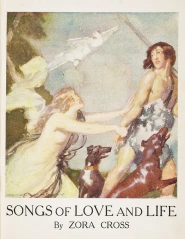
So, for example, Jonathan Shaw (Me fail? I fly!), who contributed many poetry reviews to the original blog, agreed to write articles on past women poets. His first was on Zora Cross. Brona (Brona’s Books) posted on Mary Gaunt, while author and blogger Michelle Scott Tucker posted on the children’s writer Patricia Wrightson and the issue of appropriation. We have also been thrilled to have contributions from overseas bloggers interested in classic Australian literature, like French blogger Emma (Book Around the Corner) on Catherine Helen Spence’s Mr Hogarth’s will, and Canadian Marcie McCauley (Buried in Print) on Katherine Susannah Prichard’s Goldfield’s trilogy.

Meanwhile, Elizabeth has focused specifically on our goal of finding forgotten and overlooked writers. Putting her research skills to work, she has unearthed writers we really never have heard of – and, along the way, has discovered some fascinating stories. Netta Walker, for example, took her on a merry chase, as did another wonderful find of hers, the case of Eucalypta (or, Mrs H.E. Russell). As for Bill, in between tracking down guest posters, he has been contributing posts on works by some of his favourite independent women, like Miles Franklin and Ada Cambridge.

Posts on topics other than individual writers and works include guest poster and literature honours student Stacey Roberts on Using the AWWC Archives, and mine on Primary and Secondary Sources.

So, six months in, we seem to be going strong, though there’s not a lot of comment engagement on the blog. More of that would be lovely.

We’d love to know whether you’ve looked at the blog. If you have, what have you liked or not liked, and is there anything you would particularly like to see? (We are open to offers too!)

My literary week (17), musicals, movies and more

Spring is springing

It’s been over two years since my last literary week, which is weird given I enjoy writing these posts that explore the literary content or implications of other parts of my life. I am writing this one, for a number of reasons, prime of which is that I’ve not written a review this week and need to write something! I have been reading, just not enough to write about – yet. There’s been too much going on.

Now, an admission … this literary week is more like literary season, which I hope you agree is fair enough. Who says bloggers can’t invoke artistic licence, after all? By season, I mean winter, which ends this week, here downunder. Thank goodness.

Musicals

Mr Gums and I enjoy musicals and have seen two this month, one this week in fact. The first, which we saw earlier this month, was Hamilton. We must be among the last musical enthusiasts in Australia to see it, but we finally got there. I loved it. Besides its colour-blind casting, I loved its Shakespearean quality. It has the hallmarks of great Shakespearean tragedy, from the great man brought down by his own flaws to the fool (in this case King George III) who provides comic relief while also saying some wise things. And, the political machinations have such relevance to today. I loved, for example, the reference to transparency, or lack thereof: “I want to be in the room where it happens”. A real treat – though we were briefly thrown when, after Interval, the actor playing George Washington changed from an average-build white man to a thinner, younger looking black man. There had been an announcement but in the rustle of everyone returning to seats, we’d missed the crucial piece of information about who was “now being played by”? We worked it out soon enough.

The other musical, the one we saw this week, also has strong literary content, The Girl from the North Country, which, as many of you will probably know, features Bob Dylan’s songs and tells a Depression era story. Given Dylan – albeit controversially – won the Nobel Prize for Literature in 2016, it’s hard to deny the “literary week” credentials of this one. I didn’t engage with it as quickly as I did with Hamilton, mainly because the story and characters were not familiar, but by the end, the characters had won me over with their stories and the actors with their performance.

Movies

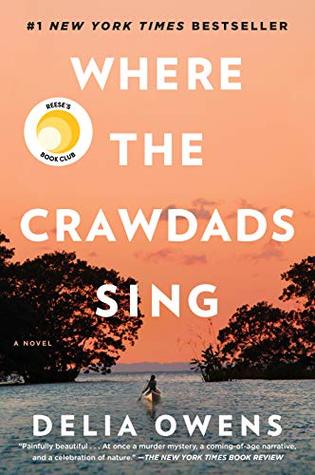
I’m just going to mention one of the movies I’ve seen in recent times, Where the crawdads sing. Yes, a popular movie, though I have been to some more arthouse and classic fare too (like John Farrow’s gorgeous-to-look-at The Big Clock just last night). But I want to mention a conversation (by letter) with my American friend Carolyn, on Crawdads. Both of us enjoyed the movie. It’s beautiful to look at, well-cast overall, and the adaptation felt true to the book. Any problems it has, we agreed, are due more to the book – the stretching of credulity and generally stereotyped characterisation – than with the film itself. (My review of the book explains why I felt I could accept some of these challenges in the book.)

Now is the winter of our discontent…

This section is the saddest part of this post, because here I want to pay brief tribute to some special people who died this season and who also happen to have some literary or arts relationship with me.

The first occurred at the beginning of winter and was, in some ways, the most shocking – because it came with no warning, and because she was the youngest of the people I’m talking about. It was my reading group’s fabulous member Janet Millar who died, suddenly, of a heart attack in early June. She had moved to Sydney but, once a reading group member aways a reading group member and we had stayed in contact over the years. A journalist by training, Janet was warm, intelligent, funny, subversive and could be relied on to enliven any group. So sad, so missed.

Then there were two people who were not as close to me personally, but who were meaningful acquaintances, Liz Lynch who was in Mr Gums’ Advance German Conversation class and with whom I’d discussed reading group experiences, and Geoffrey Brennan, who was on our local Musica Viva committee and hosted, with his wife, many lovely musical afternoons in their home. These afternoons were equally about socialising as about music, because Geoff, like Liz, was a people person. They will be so missed too.

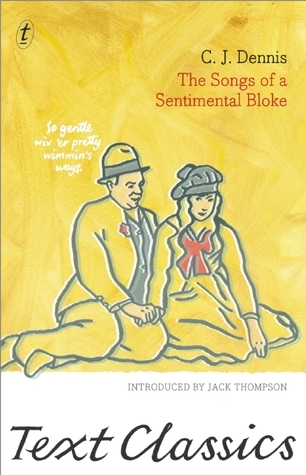
And finally, there was ex-work colleague and friend, Richard Keys. The oldest of the four here, Richard was in his 80s. He was a loyal, warm-hearted and fun colleague and friend, whom I met him through work at the National Film and Sound Archive. We quickly connected over literature as well as film, because both were dear to Richard. After he retired, we stayed in contact, and frequently ran into each other at film events, literary events and folk festivals. I would also occasionally find a letter from him in my mailbox – containing some newspaper clipping or other about Jane Austen! Richard could also quote Shakespeare at the drop of a hat, and may or may not have approved of my heading for this section! I’m going to close here, though, not with Shakespeare, but with a quote Richard had over his desk at work. It was from The sentimental bloke which is both an Australian film and literary classic. I used it in my last message to him:

Sittin’ at ev’nin’ in this sunset-land,
Wiv ‘Er in all the World to ‘old me ‘and,
⁠A son, to bear me name when I am gone.…
⁠Livin’ an’ lovin’—so life mooches on.

“so life mooches on” … on that note, I’ll mooch off and try to finish the unfinished books next to my bed, so I can bring you some reviews next week. Meanwhile, vale Janet, Liz, Geoff and Richard. You will all be remembered.

Monday musings on Australian literature: The Australian girl’s annual

Some time ago I posted on an old School friend annual that I found during my decluttering. Today, I bring you a much older annual for girls, The Australian girl’s annual. It came not from my childhood, but from my aunt’s house when I was working on her estate, and it is undated. As far as I’ve been able to ascertain the series was published annually from 1910, when editions were apparently dated, until around 1935, when they weren’t. 1935 is the last time I found it mentioned in Trove’s newspaper index.

Trove’s cataloging records for it are incomplete. As far as I can tell, it was first called The Australian girl’s annual. It was then published as The Australasian girl’s annual (and perhaps The Australiasian girl’s annual), before returning to its original name. It was originally published by Cassell in London and Melbourne, but one Trove record notes that volumes from [1929]* on have the imprint “[Sydney] : Gordon & Gotch (A’sia) Ltd. for the Amalgamated Press Ltd.” My edition says “Published in Australasia by Gordon & Gotch (Australasia) Ltd.” but it also credits “The Amalgamated Press Limited Fleetway House, London, E.C.4”

So, I have two challenges. First, what is the date of mine? From Trove’s records, and from the contemporary-story illustrations, I’m guessing it comes from the 1929 to 1935 period. Second, who did it belong to? My aunt was born in 1930, when my grandmother was 37, making the book not really age-suitable for either – given it was geared, says The Australasian (21 December 1912), to “those who have passed childhood”. However, my aunt had a big sister who was born in 1918. Perhaps the book was hers?

I was intrigued when I picked it up, because here’s this book called The Australian girl’s annual, but it was clearly generated from England. In my search of the Internet, I found reference to some research published in 2014. It was done by Kristine Moruzi, and her paper is titled “The British Empire and Australian Girls’ Annuals”. The abstract says:

This article explores two series of girls’ annuals: the Empire Annual for Australian Girls (1909–30), published by the Religious Tract Society, and the Australian Girl’s Annual (1910–3?), published by Cassell. Although both series were seemingly targeted at Australian girls, they were published in Britain before being given a new title and sent to the colonies. This article examines the implications of these British models of girlhood for their explicitly colonial girl readers. The British publishers of these annuals addressed an apparently homogenous readership comprised of girls from white settler colonies and Britain without attempting to customize the contents of their books for different audiences. In both fiction and illustrations, the annuals simultaneously employed and produced a British model of girlhood that was attractive to Australian girl readers.

“Before being given a new title and sent to the colonies”? This suggests that the very same content was published for English girls under a different title. Certainly, the volume I have contains 26 stories with not one written by an Australian, though one author, Violet M Methley (b. 1882 in Kent), might have had some Australian connection. She is listed in AustLit, because, as a blogger writes, “she may have spent time in Australia, as many of her books are set on that continent”. Then again, as this blogger’s blog is “Tellers of Weird Tales”, Methley may just have had a vivid imagination! She has two stories in this volume, one being “Mademoiselle Miss: a story of the French Revolution”. (As little aside, this story is illustrated by H.M. Brock whose brother was C.E. Brock, famous for his Jane Austen illustrations.) Her other story is “Celia: A thrilling story”, which is set in the Hebrides.

Anyhow, the 26 stories are written pretty much 50:50 by male and female writers. None are known to me, but many were prolific writers in their day. Pleasingly, the illustrators are identified along with the authors in the table of contents. Most of the stories are fiction, and they include traditional “girls’ stories” like school stories, but there are also historical and adventure stories, and non-fiction, such as editor H. Darkin Williams’ travel piece, “On top of the world: Sun and ice at mid-summer on the heights of Switzerland” and naturalist Mortimer Batten’s “The adventure land of wild nature: And how YOU can become a Member of a Famous Camp Circle”. Batten’s heart is in the right place but how relevant were his “stories about hedgehogs, and stoats, and hares, and wildcats, and eagles, and deer …” to his Australian readers?

Of course, my next step was to see if the annual was written about in Australian newspapers, and it was, most often in end-of-year lists as a gift suggestion. Here are some of the mentions:

For softer tastes quieter themes are chosen; but the stories by Mrs. G. Vaizey, Katherine Newlin, Bessie Marchant, Doris Pocock, and others, are well written, and have nothing of the vapidity which was once thought a proper characteristic of fiction intended for girls [my emph]. – The Australasian (21 December 1912.

a very attractive and beautifully printed volume, with illustrations in colour and in black and white. It contains many short stories by writers popular with girls, and one complete book-length story, ‘The Girl from Nowhere,’ by Nancy M. Hayes. An excellent present for a girl. – Sunday Times, 13 December 1925.

… It has four color-plates, a profusion of other pictures, and as for the stories and reading matter, generally—well, a very high standard is reached. – The World’s News, 19 December 1925.

The “Australian Girl’s Annual” is another publication that puts the girls quite level with the boys in diversity of reading matter and illustration. It has all those features which girls like, and a lot of others that boys will turn to—on the quiet, of course [my emph]. It is really a very fine compilation of first-class serial and short stories. – The World’s News, 18 December 1926.

fills that very much-needed requirement of the girl-child who has passed the ‘toys’ standard, and is yet too young to be interested in the sentimentality of the average best seller in the fiction field, or carried beyond her age by the classics. – Sunday Times, 15 December 1929.

But what did the girls themselves think? Well, thanks to the letters section in some newspapers’ Children’s Pages, we do know something:

Dear Uncle Jeff … I have been reading a very interesting book, ‘The Australian Girl’s Annual.’ It is just the thing. – The Albury Banner and Wodonga Express, 10 October 1913.

Dear Aunt Mary … I had a book called “The Australian Girl’s Annual” given to me for my birthday. There are some nice stories in it. – Western Mail, 22 September 1916.

Dear Aunt Georgina … We got book prizes, and the name of my book is ‘”The Australian Girls’ Annual.” It has nice stories in it. – Toowoomba Chronicle and Darling Downs Gazette 25 January 1930.

You can see how these Children’s Pages worked. Some of the correspondents even signed off “your niece”! These writers aren’t exactly effusive about the annual, but these were spontaneous comments in letters to a newspaper, so may not mean much.

Meanwhile, I would love to read what Moruzi found.

* Square brackets donate the lack of date on the volume.

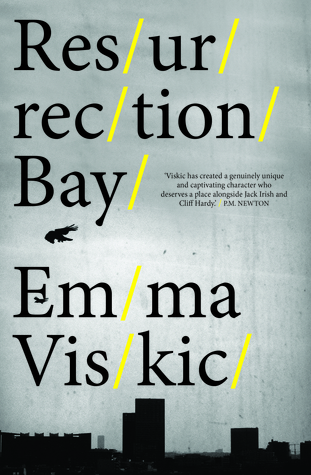
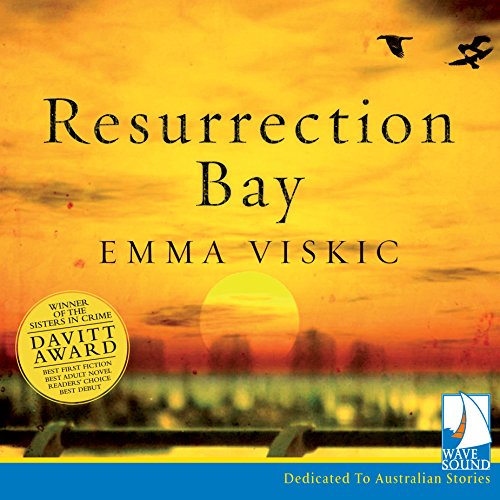
Emma Viskic, Resurrection Bay (#BookReview)

Back in February, I said I planned to “read” more audiobooks this year, and slowly I’m achieving that goal with Emma Viskic’s Resurrection Bay being my third for the year. In fact, it makes a particularly special contribution, because it is the first book I wanted to hear when we bought our new car with Apple CarPlay functionality back in 2019. That might sound strange for someone who claims to not read crime, but here’s the thing …

While I don’t, as a rule, read crime, I do like to keep up with new Australian works. Emma Viskic’s 2015-published debut crime novel featuring a deaf investigator captured my interest at a time when we were looking for more fiction featuring differently abled protagonists. I wanted to read it, but I thought my best bet would be in audiobook form, because crime is the sort of writing that can work well in the car. The problem was that every time I checked my library audiobook catalogue there was no Emma Viskic, until a couple of months ago. Consequently, Resurrection Bay was the novel of choice for our last road trip. And it was a good choice, except …

There are certain things you need in a car audiobook, we’ve found. One is that straightforward narratives work best. After all, one of the listeners is a driver who should be focusing mostly on the road. Drivers do not need to be trying to follow multiple strands or unpicking abstract language, for example. Viskic’s novel worked well in this regard. However, another is that the sound needs to be good, and easy to hear above road and car noise. Here is where we struck problems. The reader for this audiobook, Lewis Fitz-Gerald, was a great reader – and I am fussy about audiobook readers – but he used a wide dynamic range to convey emotion and meaning through his voice. This made hearing in the car very difficult at times. It would not be a problem, I expect, if you were listening to it through ear-pods while walking.

And now, I really should get to the book – but one more proviso. Because I experienced it in audio form, my comments will be general and briefer than usual.

Resurrection Bay is the first in Viskic’s Caleb Zelic series. He is a private investigator who has been profoundly deaf since early childhood – from meningitis (which was also behind author Jessica White’s deafness). Unlike Jessica, though, Caleb did learn to sign. GoodReads describes the plot as follows:

When a childhood friend is murdered, a sense of guilt and a determination to prove his own innocence sends Caleb on a hunt for the killer. But he can’t do it alone. Caleb and his troubled friend Frankie, an ex-cop, start with one clue: Scott, the last word the murder victim texted to Caleb. But Scott is always one step ahead.

“silence safer than words”

Fictional detectives, I have come to learn, are not usually easy people. They tend to be loners, or to have some personal problem/s which add to the challenge and interest of the narratives featuring them. Caleb, of course, has his deafness. He’s an outsider, not because deafness necessarily makes him so, but because he, as his Koori ex-wife Cat tells him, lets it make him so. He refuses to admit his hearing impairment to others when communication difficulties occur, and this desire to “appear normal” not only impacts his ability to do his job, but it impacts his relationship with her. He also, frustratingly, refuses to “hear” what she is saying, jumping to the wrong conclusion because he is not listening. His deafness, in other words, is more than physical. It is also mental and emotional. Communication is, then, an underlying theme or motif in the work.

However, I’ve gone off on a tangent, because of course the main story is the crime investigation, which Caleb undertakes with his business partner, the aforementioned Frankie. She has her own difficult past which includes having been an alcoholic. This Caleb knows. Their investigations take them from Melbourne to Caleb’s childhood home, the fictional Resurrection Bay, and in the process Caleb discovers things he didn’t know about his friend, the murder victim; jumps to conclusions about his brother Anton; and learns more about Frankie.

Resurrection Bay is a page-turner, as you would expect. It’s well-written, with good crime-characterisation, and vivid evocation of place. It’s emotionally moving because Viskic makes you invest in her characters, but it also has some very violent and bloody moments. I guessed what the twist might be, but I was never completely sure until the end – and how it all actually fell out contained surprises.

Now, though, I want to address the elephant in the room – the deaf protagonist, the Koori wife, and the whole whose-story-is-it-to-tell issue? Here’s the gen, from The Age. Viskic

says being half-Slav gave her an outsider status that honed her power of observation.
Her husband was raised in a Koori family and they have two grown daughters. One of her primary school classmates was deaf and the disability – and particularly the refusal to accept it as a disability by the deaf community – has always intrigued her. She learned Auslan for the novels.

Later in the article, she is quoted as saying that

writing from outside your own experience is dangerous … not just because people can shoot you down, but because you can do the wrong thing by people. But I wanted my nieces and nephews to have characters like them in a book. And also, it would have felt cowardly not to have done it.

I am not a hard-and-faster on this whose-story issue. I do think that where longterm disempowerment is involved, own-stories are the better and fairer way to go, but it’s grey. If writers have reasons for writing a particular story that is not their own, then they wear the consequences, as Viskic is clearly aware. Ultimately, it’s not for me to say, but I felt Resurrection Bay was written with sensitivity and respect. The rest is up to those who own these stories.

In 2016, Resurrection Bay won the Ned Kelly Award for Best First Fiction; and the Davitt Award for Best Adult Novel. An impressive debut.

Kimbofo enjoyed this novel too, and Bill has posted on Viskic’s fourth Caleb Zelic novel, Those who perish.

Emma Viskic
Resurrection Bay
(Read by Lewis Fitz Gerald)
Wavesound from WF Howes, 2017 (Orig. pub. 2015)
Duration: 7hrs 9mins
ISBN: 9781510064140

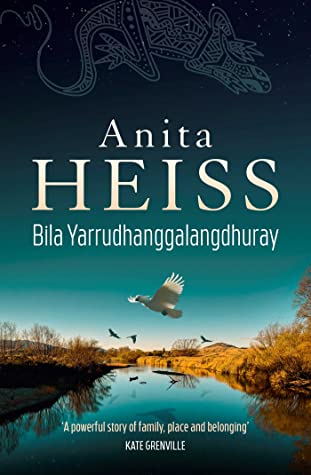
Anita Heiss, Bila Yarrudhanggalangdhuray (#BookReview)

Bila Yarrudhanggalangdhuray/River of dreams is Anita Heiss’ second work of historical fiction, her first being Barbed wire and cherry blossoms about the 1944 Cowra breakout in which she imagines a relationship between a Japanese escapee and a young First Nations Australian woman. I have not read that novel, but I have read, over the last year or so, other First Nations Australia historical novels, including Julie Janson’s Benevolence (my review) and the collaborative novel by non-Indigenous Australian Craig Cormick and First Nations writer Harold Ludwick, On a barbarous coast (my review). Long before these, though, was Kim Scott’s unforgettable The deadman dance (my review).

The value of these, and like books, to offering a First Nations perspective on the one-sided history that most of us grew up with cannot be under-estimated. Heiss, in fact, wrote in her Author’s Note and Acknowledgements, that through re-engaging with her Wiradyuri homelands in her early 50s,

I realised very quickly I had to honour those Ancestors who for millennia have lived, loved, and nurtured the land and each other. And I wanted to pay tribute to those who carry on culture, knowledge and language still today. I felt I had a responsibility as an author to write our Wiradyuri heroes – our men and women – into the Australian narrative where they had been ignored or forgotten too long.

Bila Yarrudhanggalangdhuray is her response to that realisation. It is of particular interest to me because it is set around Gundagai and Wagga Wagga, which are within three hours’ drive from where I live. Although I have been visiting the Gundagai region since the mid-1970s, it was only in recent years that I became aware of the story which is central to Heiss’ novel. This story concerns Gundagai‘s flood of 1852. As Wikipedia describes, the Murrumbidya flooded, killing at least 78 of the town’s population of 250 people. Using bark canoes, four local Aboriginal men, including Yarri, Jacky Jacky, and Long Jimmy, saved somewhere between 40 and 68 people. They were minimally recognised at the time, but, finally, in 2017 (2017!), a bronze sculpture of Yarri and Jacky Jacky, with canoe, was unveiled in Gundagai. Heiss’ novel concerns the life of a young Wiradjuri woman, Wagadhaany, the imagined daughter of Yarri.

The novel is told, like many historical novels, chronologically, and starts with a Prologue set in 1838, some 14 years before the main narrative starts. This prologue is important. It introduces Wagadhaany who, as a 4-year-old, is with her babiin, Yarri, as he tells a “White man” that the place they are standing on is “not a good place to live, Boss, too flat”, that it’s a “flood area”. Of course, the White man ignores this local knowledge and so the stage is set for 1852 when the devastating flood comes. By this time, Wagadhaany, now 18, is working as a servant for that very White man, Henry Bradley.

The flood and its immediate aftermath occupy the first five chapters of this 29-chapter novel. Only two sons of the Bradley family of six survive, along with Wagadhaany. The rest of the novel follows their lives over the next couple of decades, showing how little the White settlers learnt from the experience – practically, in terms of how to live on the land, and morally, in terms of their behaviour to the true owners of the country. Wagadhaany, who is bound, she is told, by the Master and Servants Act of 1840, has no agency in such a world.

“a witness without a voice”

Into this situation comes the young Quaker widow, Louisa, who, like the Bradley men, lost her family in the floods. I was surprised by the appearance of a Quaker, but Heiss also explains in her Note that there were Quakers in early colonial Australia, and they were interested in “the treatment of the convicts and the Aborigines”.

Louisa is an interesting character because she tries to treat Wagadhaany well. She calls her by her actual name, rather than Wilma, as James Bradley does; she works alongside her in the kitchen and garden; she gives her a bedroom in the house; and she converses with Wagadhaany as a friend. But, she has her blind-spots. She is oblivious to Wagadhaany’s lack of agency over her life, to the fact that, when the Bradleys (now including Louisa) move to Wagga Wagga, she thoughtlessly over-rides Wagadhaany’s wish to stay in the Gundagai area where her family is.

As the novel progresses, Wagadhaany’s homesickness for her family, and her country, increases. We are privy to Wagadhanny’s thoughts, to her awareness that there are limits – albeit unconscious ones – to Louisa’s concept of equality. Louisa is, after all, a product of her time and her culture – and Wagadhaany notices that, for all their “equality”, it is Wagadhaany who does the hardest, dirtiest, heaviest jobs, and that she is not paid a wage.

What the presence of Louisa does, though, is to add richness and nuance to the depiction of colonial society. She is a foil to the brutal, racist attitudes of James Bradley. She does not mitigate them but shows that his were not the only views around. Wagadhaany, on the other hand, tells it as it is from the First Nations’ perspective. In the early days after the flood, Heiss writes that Wagadhaany

feels like a witness without a voice. She was there, she lived through the horror of the flood, the fear, the physical exhaustion, the loss of those she knew. But no-one asks how she is, what she thinks or knows, or how she feels.

For all Louisa’s kindness, there is much Wagadhaany feels she can’t say, and so throughout the story she continues as a silent witness. Here she is reflecting on Louisa and work:

She wondered why Louisa had to be protected from hard work but the Wiradyuri women didn’t. And she wondered if that thought ever crossed Louisa’s mind, because that made them different, unequal …

Gradually, though, she starts to stand up for herself:

“I know I will have to work for you, I know about the masters and servants law, but you cannot keep me living here in the homestead against my will if you honestly believe I am your equal and that I should be as free as you”.

And Louisa, to her credit, “lets” her live with the river family.

Bila Yarrudhanggalangdhuray has strong characters, but it is also a genre novel with a strong plot, including of course, romance. I don’t want to spoil what is a good page-turning story, so I will leave the story here.

Heiss has several novels under her belt now. She knows how to tell a good story, and she is also very clear about her message. She uses her fiction to show what she wants the rest of us to know. In this novel, it’s the way First Nations people lived, the way they tried to work with the settlers, and the way they were gradually pushed off their land. She also, through Louisa, forces us to confront what really is being “a good White person”. So, not only does the novel tell some truths about Australia’s settler history but it is also immediately relevant to today.

In this novel, Heiss also, as First Nations writers are increasingly doing, incorporates language into the writing. There is a glossary at the back, but you rarely need it because most words are self-explanatory in context. Seeing “our” nation’s words in Australian literature is a truly exciting development.

Bila Yarrudhanggalangdhuray isn’t a perfect novel – and I struggled particularly with Louisa’s falling in love with the man she does. But this is a genre novel, and a bit of belief-stretching is allowed. The end result is a book that engages the reader with its strong protagonist in Wagadhaany, that wraps its vital messages in a compelling story, and, significantly, that ends authentically.

Lisa (ANZ LitLovers) has also recommends this book.

Anita Heiss is a Wiradyuri woman from NSW.

Anita Heiss
Bila Yarrudhanggalangdhuray
London: Simon & Schuster, 2021
393pp.
ISBN: 9781760850449

Monday musings on Australian literature: Supporting genres, 8: Science fiction

Unlike my last two posts in this “supporting genres”series, today’s is a true-blue genre. The problem is, as many of you will realise, that it takes me way, way out of my comfort zone. However, with this week being National Science Week in Australia, I decided that it was a good time to tackle this oh so popular genre. I will just add that, this not being my area of expertise, today’s post will be even more introductory than usual for this series.

I hope to hear from aficionados, who will hopefully fill in gaps and correct any misconceptions. Meanwhile, I’ll start with Wikipedia’s statement that

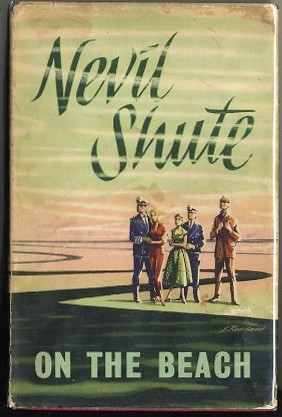
Nevil Shute, On the beach

Australia, unlike Europe, does not have a long history in the genre of science fiction. Nevil Shute’s On the Beach, published in 1957, and filmed in 1959, was perhaps the first notable international success.

Does international success define a genre’s history? This seems to be the implication of the opening paragraph, but I see it more as “a” measure of success rather than necessarily indicative of activity. Anyhow, the opening paragraph also suggests that the situation may have been worse in Australia had not importing American pulp magazines been restricted during World War II, “forcing local writers into the field”. “Forcing”?

Wikipedia then shares that pre-Second Word War Australian science fiction tended to be racist and xenophobic by today’s standards. This was due, it continues, to contemporary worries about invasion and foreigners. By the 1950s, as in other countries, the genre became influenced by technological progress and globalisation. I guess what all this is saying is that science fiction – perhaps more than most genres – is closely affected by contemporary issues and concerns. Even I know that current science fiction is drawn to issues like climate change and environmental degradation!

Definition

Must I? Science fiction, I suspect, though you can prove me wrong, is one of the most difficult genres to define. When we Australian Women Writers Challenge volunteers were establishing our genres, this area took some thinking. In the end, we called it Speculative Fiction, and incorporated “genres” like fantasy, horror, paranormal, into it.

Wikipedia calls Science Fiction a “genre of speculative fiction which typically deals with imaginative and futuristic concepts …”. It continues that SF “can trace its roots back to ancient mythology, and is related to fantasy, horror, and superhero fiction, and contains many subgenres” and then says that “its exact definition has long been disputed among authors, critics, scholars, and readers”. So, I’m not going to argue with that. The Awards below tend to encompass a broad church under the banner.

Conventions

Interestingly, Science Fiction followers seem to have conventions rather than festivals. Here are a few:

  • Australian National Science Fiction Convention (ANSFC) has been an annual event since 1952! That’s impressive, surely. Even more impressive is that, as Wikipedia explains, “each convention is run by a different committee unaffiliated with any national fannish body”. This speaks to the passion of its followers, I’d say. It even ran through the pandemic, as the Wikipedia article shows.
  • Conflux is an annual science fiction convention held in Canberra, since 2004, building on the CSFcons (Canberra Science Fiction Conventions), held in the early noughties. Its website says it encompasses “sci fi, fantasy, alternative history and horror”. It was not held during the pandemic, but, if I read its website correctly, it will host NatCon (ie the ANSFC) in 2022.
  • SwanCon is an annual science fiction convention held in Perth, since 1976. It has often hosted the Australian National Science Fiction Convention.

Awards

Australia has two main science fiction awards:

  • Aurealis Award for Excellence in Speculative Fiction was established in 1995 by the publishers of Aurealis Magazine. It’s an annual award for Australian science fiction, fantasy and horror fiction, and its categories are different to the Ditmar, below, being based on subgenre (like fantasy, horror) and age (young adult, children’s, for example). It now also has categories for form – anthologies, short stories, novellas, etc. If you want a sense of this award, check out its website.
  • Ditmar Award has gone through a few permutations since its establishment in 1969 (which makes it our longest standing science fiction awards). It is announced at the ANSFC, and, says Wikipedia, aims to recognise “achievement in Australian science fiction (including fantasy and horror) and science fiction fandom”. The fandom aspect is interesting. It encompasses a number of awards which are defined by form rather than content, like novel, novella, short story, fan artist, fan writer.

The notable thing about some genre awards, and we see it here, is that they often recognise various forms, like short stories and novellas.

Publishers

There seems to be a plethora of science fiction publishers in Australia. Many of them pride themselves on supporting inventive works and forms. Here are just a few, which I think are currently active:

  • Brain Jar Press: “Brisbane’s scrappiest, weirdest, and most genre-friendly small press, publishing outstanding and unexpected works of fantasy, science fiction, horror, and crime”. Their authors include Angela Slatter and Kaaron Warren.
  • Clan Destine Press: publishes “genre fiction in its myriad and wondrous forms: crime, mystery, historical fiction, thrillers, adventure, speculative fiction, fantasy, science fiction, horror, urban fantasy, paranormal, steampunk, and ah-ha! “
  • Sunburnt Fox Press: only publishes Australian science fiction and fantasy, mainly, it seems, through Etherea Magazine.
  • Twelfth Planet Press: aims “to elevate minority and underrepresented voices with books that interrogate, commentate, inspire. Challenging the status quo through provocative science fiction, fantasy, horror, and cosy crime”.

Of course, the general publishing houses also publish science fiction.

Science fiction and me

Bill recently responded to a comment of mine on his blog that “I think that if I ever got you started on reading women’s SF you would never stop”, because, he said, “the great majority are of the inner lives of women in unusual situations. The story is only rarely about the SF premise”. He’s right – to a degree. From my youth, I have read a smattering of science fiction – John Wyndham (and Nevil Shute) in my teens, and in my twenties and early thirties I read Huxley’s A brave new world, Orwell’s 1984 and Vonnegut’s Cat’s cradle. (All by men!)

Claire G Coleman, Terra nullius

I read no Australian science fiction through those years. However, in recent years I have read several Australian dystopian and cli-fi novels. Not all of these, though, are, technically, science fiction because not all are “futuristic”. However, some are, such as Jane Rawson’s A wrong turn at the Office of Unmade Lists (my review) and Claire G Coleman’s Terra nullius (my review). I loved both of these, and remain open to the genre – but I’m unlikely to ever become an aficionado.

Do you like science fiction and, if so, care to share why?

Previous supporting genre posts: 1. Historical fiction; 2. Short stories; 3. Biography; 4. Literary nonfiction; 5. Crime; 6. Novellas; 7. Poetry

Canberra Writers Festival 2022: (My) Session 3, Germaine Greer in conversation with Rick Morton

My third choice of sessions was also somewhat sentimental, because, with Germaine Greer now in her 80s, I wasn’t sure how many more opportunities I’d get to see her in the flesh. But, I was disappointed because, the night before the event, the following email was sent out:

Sadly, Ms Greer has had a fall though now released from hospital. She says she is fine but doctor’s orders are that she is not to travel. Ms Greer said “I am so sorry to let everyone down, I so wanted to be there with you and I would have, except my doctor and family would not allow. Since when have I been told what to do and agreed? Please accept my sincere apologies and I hope this Zoom thing will make it up to you.”

That sounds so Germaine (if I can be so bold as to presume to know her and to use her first name)! The good thing for her is that she is ok, and for us that she was well enough to still do the session. And, in a way, it was great because via Zoom Greer appeared to us in full larger-than-life glory – as you can see from the pic. Poor Rick Morton was quite dwarfed.

Anyhow, as I’ve done with the previous post, I’ll start with how the program described the session:

Almost 90% of the direct care workforce in residential aged care are women, as are 70% of people who live in residential aged care. Germaine Greer speaks frankly about why aged care remains one of the most pressing feminist issues today.

That’s what the program said! What we got was more amorphous than that, something that kept both Rick Morton and us on our toes. Anyone who has read or seen Germaine Greer will understand what I mean. It’s hard to describe exactly what we got, but I think I’d describe it as a charming almost-ditziness crossed with an acute intelligence overlaid with a deep sense of humanity.

So, here goes. Rick Morton was clearly chosen for the interviewer role because of his work in covering our recent Royal Commission into Aged Care Quality and Safety, and Greer as interviewee because of her recent one-year experience in Aged Care in Murwillumbah. (I must say that I was a little stunned – and then sort of thrilled – when I read about this experience a few weeks ago. It makes her so real!)

Morton introduced Greer, who needed not introduction really, and then launched into the aged care issue. Here, the fun started because Greer rarely directly answered the question. She talked about how she has ended up living with her brother (in the suburbs), that she’s been diagnosed with PMR, and she shared that she’s “more trouble than she used to be”! Really?

She then talked about selling her rainforest property, on which she’d planted “zillions of trees” in a landscape regeneration project. (It’s the subject of her book, White beech.) Eventually, we got to her taking herself to that Aged Care place in Murwillumbah. Morton then referred to the story I had read about Greer blitzing word-bingo there, always putting her hand up first! (Funny that!) Greer said that she kept telling herself to shut up, but she also felt that she owed it to Dimity, who’d put such work into creating the puzzles, to kick it along. (Fair enough.)

At this point, there was discussion about her Huntsman (spider) phobia and loss of cooking skills, before we returned to Aged Care.

Morton suggested that a fundamental problem regarding Aged Care is our attitude to ageing and our attitude to the elderly, at which Greer quipped that ‘Yes, everyone calls you ‘love’ or ‘darling’ but  I’m ”Professor Greer”‘.

Morton then said that in her book, The change, she had suggested that there are positive things about being “a scary old woman”. Greer, who is not afraid to change her mind, responded that now being 83, she’s reconsidering that positiveness!

However, she’s not about reassessing what she’s said in the past, she said. Instead, she’s focussing on trees and insects! She may not like spiders, but she does like snakes, which are “so sagacious and beautiful”. Morton suggested that this new passion for learning about trees and insects suggests she’s an autodidact. Is this a new phase in her life, he asked. She thought so, she said, until she found some old childhood papers which revealed an early interest in nature. 

After this little interlude, Morton returned to Aged Care, this time asking for her impression of staffing. This gave Greer a platform for her feminist position on women’s role as carers: caring has always been woman’s job, and these jobs are gendered. She referred to the Renaissance Courts, describing them as structured like a family. There, too, serving jobs were gendered. Even where the worker is male, the treatment is feminised. Those who serve are spoken to/treated disparagingly, and are paid a “derisive amount of money”. We import “a bunch of people from elsewhere”, like Indonesia and Nepal, she said, and pay them at the bottom of the rung, with no chance of progression.

Morton said that we don’t regard the caring job as important, and we don’t regard the people being looked after as important.

Greer said that she thinks about these issues all the time, though at this point her response seemed a bit tangential, as she referenced Sir Thomas More’s belief that the best way of living was in a college – you have bed, food, and laundry. All this house-business is too labour-intensive!

Morton then asked whether we need an ageing revolution. After an entertaining description of ladies who, released from the daily grind, discover golf in their 6Os, she went on to say that when you are older, “the world becomes your oyster – only if you are well”, and, added Morton, “have money”.

And again, we returned to Aged Care. Are you getting a flavour of this, possibly-frustrating-to-Morton but nonetheless fascinating, conversation? There were so many asides and digressions – like a big baggy 19th century novel, where you realise at the end that those digressions meant something. You just have to go with it! So, here, she talked about the domestic staff in Aged Care. They tend to be older women and they are doing the heaviest work. (Then they become ill). The government is wasting the goodwill of these people.

Morton responded by asking how do we care for the people, many of them women in their 50s and 60s, who do the caring. Again, Greer’s response seemed tangential. It’s about how we live, she said, “there’s too much house”. Houses use up time and money. Think Thomas More, think more about communal dwelling – and she then shared some communal living experiments she knew of.

She also said, re “nursing homes”, that she doesn’t like the term “home”. There should be specialised housing for specific needs. And shared another example, this time a Welsh plan for single mums which involved women helping each other. They never last, she said, because a war or something happens and they are the first to go! That is, these social initiatives are always the lowest priority, even when they work. Can we think of ways where we don’t leave women struggling?

Morton noted that all this stems from our western individualist culture, but there are other more collectivist cultures. Greer agreed and returned to the Welsh example, where the men saw what was happening, and “felt left out” so they initiated a security group and patrolled the grounds. This, thought Greer, was rebuilding family in a different shape.

Then we turned to more a more traditional feminist stance – the need to get men away from the position where they can exert strength over weaker members of family because if they can they will.

Morton returned again to Aged Care asking her whether she’d go back to a residential aged care facility. Greer said she dreaded losing her mobility, and is enjoying the suburbs and getting to know her family, but knows it won’t last forever.

Morton asked her whether she thinks about death. She’s not afraid of death she said, she’s more afraid of living too long, and of not paying back! He asked her to assess how her life has unfolded. She said that she “spends a fair amount of time in a rage”. We are so mean to each other. But she doesn’t think in terms of mistakes. She’s a fatalist.

Q&A

The Q&A was a bit wild like the interview, but I’ll try to dot point:

  • On the younger generation re-discovering The female eunuch: She’s grateful, she said. She was lucky to be born at that time when all this was coming to the fore. She hopes we get better at looking after women’s health.

Then she threw in another idea, identity, which she says is a non-existent problem. Morton asked what it mattered to her if someone has an identity. She responded that there have been five biographies about her, and she’s never met any of those subjects in her life!

  • On the sex vs gender debate being so toxic. Again, Greer answered her version of the question: she doesn’t get why domestic violence is sexualised, have we forgotten elder abuse, why are people’s lives as difficult as they are, and we haven’t got far with women!

She then returned to identity. Identity is not the issue that is causing the problem, she said. At this point I wrote in my notes that Greer was the portrait of a woman aways thinking, connecting, and questioning – and that she also had a lot of ideas she wanted to share.

Meanwhile, our questioner clarified her question, which concerned our inability to debate sex vs gender without toxicity, and people shutting down the debate? Greer responded that sex runs the planet, and that gender is fun, because you can make it up! Oh dear … she knew exactly what she was doing here, because she then said that “part of my job is to get hate mail”.

  • On outliving one’s time, and being valued: she returned to the communal/village idea where old people have a place. People she said need places to get to know each other.

  • On getting the balance right (re “having it all”): “buy 57 hectares of forest” she said.

  • On where satisfaction comes from. She doesn’t know the answer, but suggested it’s when you find your work.

Then, she ended with:

Mistrust me if I present myself as having them [the answers, she meant].

As another attendee said, as we were leaving, “just when you think she’s a bit demented, she goes boom!” That’s Germaine!

Canberra Writers Festival, 2022
Germaine Greer in conversation with Rick Morton
Saturday 13 August 2022, 2-3pm