Kyung-sook Shin’s Please look after mom (or mother) wins the Man Asian Literary Prize, 2011

In late October last year, twelve books from across Asia were longlisted for the Man Asian Literary Prize, and in January, they were whittled down to an unusually long shortlist of seven. Today, one emerged the winner: And woo hoo! It’s our Shadow team’s pick, Kyung-sook Shin’s Please look after mom (or mother).

Shadow Man Asian Literary Prize 2011 Badge
Image: Matt Todd, A Novel Approach

Now, I’ll have to wait to see what the judges say about their choice, but there you have it!

In the meantime, below is just a little info about the judges … and, in particular, about the chair, Razia Iqbal.

Judges

The judges for the 2011 prize were Razia Iqbal (Chair), BBC Special Correspondent; Chang-rae Lee, Pulitzer-prize finalist & author of The Surrendered; and Vikas Swarup author of Q&A, the movie adaptation Slumdog Millionaire.

Iqbal said recently that her criteria for judging were:

the quality of the reading experience; that you feel that the book coheres, that the structure of the novel was coherent.

The books she liked most when growing up were, she said, those with links to the Asian continent, such as books by Salman Rushdie and Hanif Kureishi who

wrote about what it meant to be Asian in a globalised world, what it meant to come from a multi-cultural city like London, which I could relate to. Their writing incorporated elements of polyphony and hybridity which were part of my own experience, whilst people like James Baldwin and Richard Wright reflected what it was to be an outsider. Literature allows you to navigate your place in the world in a profound way for a lot of people.

For reviews of all books by our Shadow Man Asian Literary Prize team, see my Man Asian Literary Prize page.

Amitav Ghosh, River of smoke (Review for the Shadow Man Asian Literary Prize, 2011)

I’m rather sorry that I haven’t read Amitav Ghosh‘s Sea of poppies because, while River of smoke does work on its own, I think my experience would have been richer had I read the beginning of the trilogy. This shouldn’t affect its Man Asian Literary Prize chances, but you never know.

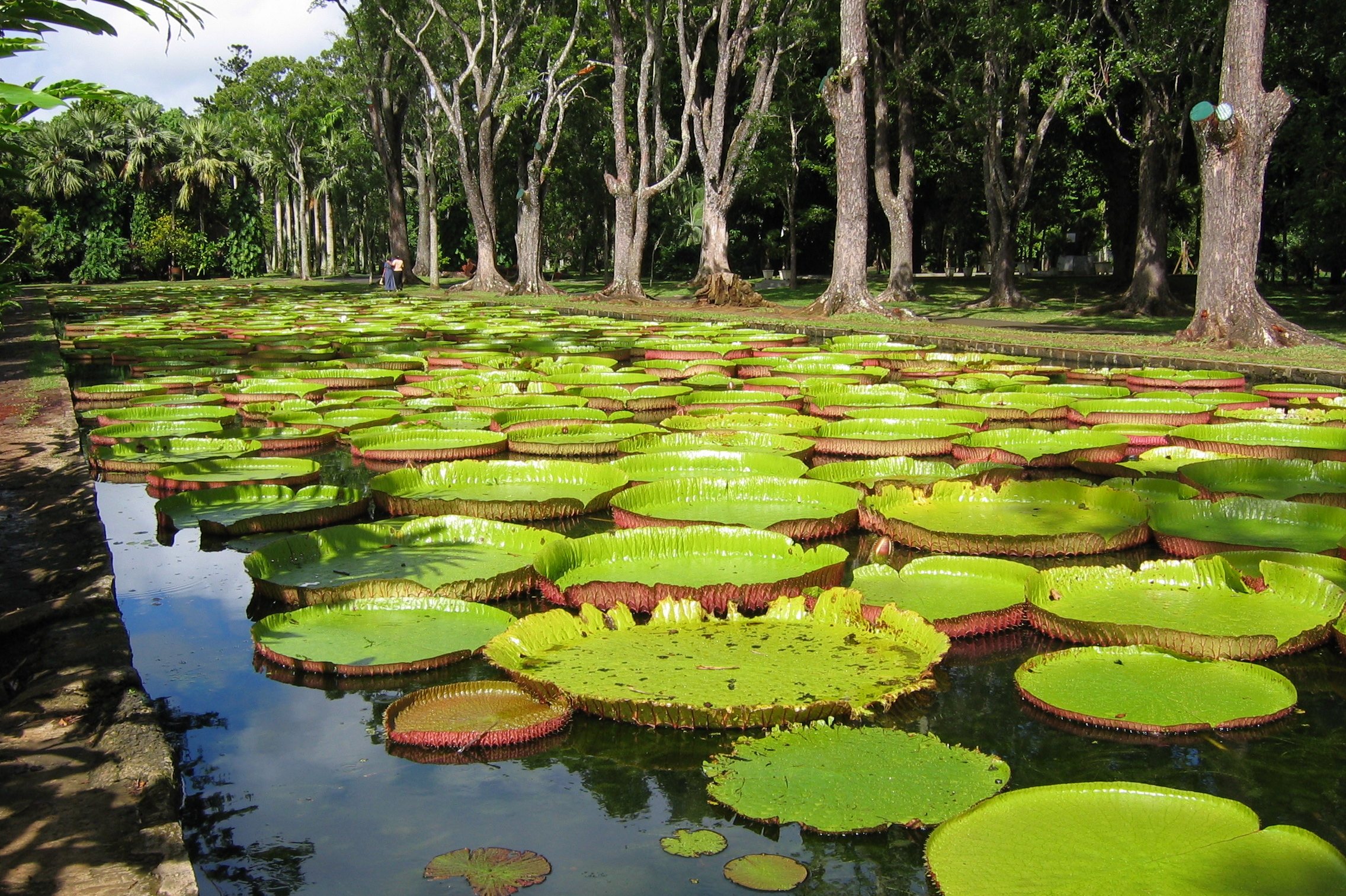
Giant water lilies, Pamplemousses

Giant water lilies, Pamplemousses Botanical Garden

I loved that the book starts in the gorgeous island of Mauritius which I visited for a couple of weeks in 2004. Pamplemousses Botanical Garden was one of the first sights we visited. It is full of wonderful exotic plants, particularly spices, that we hadn’t seen before. This sounds a bit nostalgic but it is relevant to a book that is, as the artist Robin Chinnery writes, about “flowers and opium, opium and flowers”.

Let me explain. The story centres on three boats – the Ibis, the Anahita and the Redruth. The first two are involved in the opium trade – one English owned, one Indian owned – while the Redruth is involved in plant collecting and trading. The novel is primarily set in Canton in the lead up to the first Opium War of 1839-1842. At the time of the novel, the Chinese are in the process of trying to ban the opium trade and consequently have forbidden foreign ships to enter the port. The result is that the traders are all in Fanqui-town (Canton’s foreign enclave) waiting for the situation to resolve in their favour, while their boats are moored in the Hong Kong-Macau area. The novel reminded me a little of Dickens, not just because of its length but also because of its large cast of characters, its plot encompassing nefarious deeds, conspiracies and adventures, the comic relief, and its socio-political themes. There is also colourful language, satire and irony. Of course, Ghosh is writing historically while Dickens was exploring his own place and time, but that’s a minor difference.

The story is told from two main points of view. One is a traditional third person story of the opium traders, seen mainly (but not only) through the life (and eyes) of the Indian opium trader, Bahram Modi. The other combines the opium story with the plant story, through letters written from a young gay artist in Fanqui-town to his botanist friend, Paulette and her employer Mr Fitcher, on Redruth. He, Robin Chinnery, describes the hunt for the elusive golden camellia, while also providing a (semi)outsider’s perspective on the unfolding events in the opium trade crisis. I enjoyed Robin’s generally cheery voice and his colourful descriptions of life in Fanqui-town but I wonder whether the novel needed this extra layer to provide this added perspective? Paulette, the recipient of his letters, is largely silent and seems to add little to the narrative.

When a novelist writes a work of historical fiction, I wonder s/he has chosen to set a story in a past time – and look to see whether there is some application to the story in the novelist’s own time. In this case there is, for Ghosh’s target is the complexities of international trade, and the hypocrisies and fallacies that are still evident in the notion of “free trade”. He shows that “free trade” is rarely free or equal to all parties. The opium trade (and the British East India Company’s involvement in it) is perfect for this with its additional moral problem involving trading (or is it smuggling – the line is a fine one) a product that is injurious and that was, in fact, banned in England. Towards the end of the novel, the traders discuss their response to the Chinese Commissioner Lin’s demand that they give up their opium cargoes. The American Charles King appeals to their “better” natures:

‘ … Are you not aware that with every shipment you are condemning hundreds, maybe thousands of people to death? Do you see nothing monstrous in your actions?’

‘No, sir,’ answered Mr Burnham coolly. ‘Because it is not my hand that passes sentence upon those who choose the indulgence of opium. It is the work of another, invisible, omnipotent: it is the hand of freedom, of the market, of the spirit of liberty itself, which is none other than the breath of God’.

Guess who wins the argument?

Shadow Man Asian Literary Prize 2011 Badge

Image by Matt Todd of A Novel Approach

The most interesting character in the book is Bahram, the Indian opium trader who is only just accepted by the British traders. He is a complex character whose nature, motivations and flaws we come to know well. His flaws as a husband, father and businessman are many, but so are his strengths as an employer and friend. We  feel for him as he has to make a difficult decision and wish he were a little braver, a little wiser. He is testament to Ghosh’s ability to draw a flawed but sympathetic character.

A major pleasure in the book is the writing. Ghosh is a versatile writer who can slip from the breezy, colloquial vernacular of Robin to the formal tones of the English merchants. His grasp of the period is breathtaking. I gave up “Googling” the unfamiliar words and just let them flow over me, because the context made them clear:

On reaching the enclave the lascars and lime-juicers had gone, as was their custom, straight to the shamshoo-shacks of Hog Lane, so as to get scammered as quickly as possible.

In other words, as soon as they got off the boats, the sailors went to the pubs and got drunk (by drinking too much “stagger juice”).

There were, though, occasional lapses into didacticism. They were rare but they jarred when they occurred. An example is a little aside describing the Spanish silver dollar.  Mostly, though, Ghosh does show rather than tell and the novel is full of colourful detail about food and dining, art, plants, boats and business.

River of smoke is not a perfect novel but is a great read – for its description of a fascinating period in history, for its lively portrayal of characters you would recognise today, and for its exploration of issues (still) relevant now. My overall assessment? Read it.

For reviews by other team members, please see my Shadow Man Asian Literary Prize 2011 page.

Amitav Ghosh
River of smoke
London: John Murray, 2011
522pp.
ISBN: 9780719568992

Announcing the “Shadow” Man Asian Literary Prize 2011

Shadow Man Asian Literary Prize 2011 Badge

Image by Matt Todd of A Novel Approach

Our announcement …

In a carefully co-ordinated announcement across three continents – Europe, North America and Australia – I am now able to announce that the Shadow team’s winner for the 2011 Man Asian Literary Prize is: Please Look After Mother (or Mom) by Kyung-sook Shin.

It was – and was not – an easy decision. It was an easy decision because some of the Shadow team loved the book, and it was not because others did not. However, when we tallied our individual rankings Kyung-sook Shin’s book came out on top. I’m not sorry, of course, because I liked it. Members of our team described it as ‘a heart-warming story of family’, ‘a deceptively simple novel’,  and ‘a splendid work of literary fiction.’

I managed to read 6 of the 7 shortlisted books. (My review of Amitav Ghosh’s River of smoke will be posted in a day or so). I did find it somewhat hard to rank them as, I think, did most of our members. Here is my assessment of their prize chances (which, funnily enough, roughly equates with my rankings):

  • My top choices: Please look after mother (or Mom) and Dream of Ding Village. 
  • My runners up: Rebirth and River of smoke
  • Dark horse: Wandering falcon
  • My long shot: The lake

Unfortunately, I only managed to read a few pages of The sly company of people who care.

The formal stuff…

The ‘Shadow’ MAN Asian Literary Prize is entirely independent of the official MAN Asian Literary Prize, whose winner will be announced on Thursday March 15, and of the MAN Group. The ‘Shadow’ Prize is intended to highlight the main Prize by broadening the discussion about the long- and short-listed titles via the social networking community. Links to all ‘Shadow’ Jury reviews and interviews can be found on my Shadow Man Asian Literary Prize page.

I would like to thank all the members of the Shadow team: Lisa at ANZLitLovers; Matt at A Novel Approach; Fay at Read, Ramble; Stu (who is now hosting a Shadow International Foreign Fiction Prize) at Winston’s Dad, and Mark at Eleutherophobia.

Special thanks to:

  • Kevin from Kevin from Canada whose concept of the Shadow Giller Prize provided our inspiration;
  • Matt who designed the Logo;
  • Mark who has coordinated the press releases across the globe; and last but not least
  • Lisa for asking me to join the group.

All we have to do now is wait until Thursday to see what book the official jury chooses! And whichever it is, it’s sure to be a good’un!

NOTE: There will be no Monday Musings this week: the announcement of our Shadow Man Asian winner has overshadowed it! Watch this space again next week!

Tafelmusik anyone?

Galileo

Galileo (Courtesy: tonynetone, using CC-BY 2.0, via flickr)

Tafelmusik = table (or banquet) music, and has been used since the mid-16th century for music played at feasts and banquets.

AND …

Tafelmusik = a Canadian Baroque orchestra specialising in early music, performed on period instruments.

BUT WAIT, THERE’S MORE …

197856 Tafelmusik = an asteroid discovered in 2004 and named for the orchestra.

You learn something new every day, don’t you? But why am I sharing this particular learning of mine? Well, because this week we attended our first Musica Viva subscription concert of the year and it happened to be The Galileo Project: Music of the Spheres, created and performed by Tafelmusik. It’s been some time since I wrote about a music concert. As I’ve said before, I love music but am no expert. This concert, though, was one-of-a-kind and I can’t resist sharing it with you, Whispering Gums style.

Baroque music was my first “classical*” music love – and so I was predisposed to enjoy this concert but I wasn’t expecting to enjoy it quite as much as I did. The concert was a musical performance something like we’ve seen before with groups like The Song Company (and their Venetian Carnival). The Galileo Project was performed by 17 musicians and an actor. It incorporated music (of course), visual images, narration and movement. And, unusually for ensembles, the whole program was performed from memory. If there were any hiccoughs I didn’t hear them.

So, why Galileo? Through the program and post-concert Q&A, we learnt that The Galileo Project was Tafelmusik’s contribution to the International Year of Astronomy in 2009, which was the 400th anniversary of Galileo’s use of the astronomical telescope. We were told that Canadian astronomers had a goal for 2009: that every Canadian would get to look at the stars through a telescope! I don’t think they quite achieved that, but it never hurts to aim high.

Anyhow, the program. It was divided into sections:

  • The Harmony of the Spheres I (Vivaldi)
  • Music from Phaeton (Lully)
  • Music from the Time of Galileo (Monteverdi, Merula, Galilei, Marini)
  • Henry Purcell
  • The Dresden Festival of the Planets (Rameau, Handel, Telemann, Zelenka, Lully, Weiss)
  • The Harmony of the Spheres II (Bach)

The music was linked by a narration drawn from contemporary writings (by Shakespeare, astronomers/scientists – who also included Newton and Kepler – and musicians) exploring the relationship between science, mathematics and music. Galileo’s father, Vicenzo Galilei, was a lutenist. One of his interests was testing lute strings to find “the mathematical formulas that express the relationships among length, tension and musical pitch” (program notes). Galileo, himself, was also a lute player, as well as a mathematics teacher and astronomer.

The concert program contains extensive notes on how astronomy and music intersected during the period, including:

  • the 1719 Festival of the Planets, which was a month-long event comprising operas, balls, outdoor events and special concerts designed to commemorate each of the known planets of the time – Mercury, Venus, Earth, Mars, Jupiter and Saturn**. Handel, Telemann and other musicians were involved in the Festival.
  • Johannes Kepler‘s Harmonices Mundi (Harmony of the World) in which he outlined his theory regarding harmonies (musical intervals and short melodies) that can be derived from planetary motion using mathematical formulae. The orchestra played some of these tunes from the planets.

All this was fascinating, but if you want to know more, here is a link to a Teacher Resource Guide which will give you more info than I ever could.

Meanwhile, I’ll just dot point my highlights of the concert:

  • the engaging rapport between the members of the ensemble. They clearly know each other well and enjoy playing together. That, or they are good actors!
  • the gorgeous sound. Llewellyn Hall should have good acoustics but I have never noticed quite how beautiful the sound is until this concert. It was warm and lush but also oh-so clear.
  • perfection that wasn’t cold and technical. They played from memory, they “orbited” or otherwise moved around the stage – and the hall – as they played their violins and oboes (which was impressive in itself but also enhanced our experience of the sound), and they made it feel spontaneous.
  • the sensitive incorporation into the narration of an indigenous Australian story about tracking Venus, from the Yolngu people.
  • beautiful, varied pieces of music played on authentic instruments.

We were told last year that if we only came to one Musica Viva concert in 2012, this should be it. We have, as usual, subscribed for the year, and we plan to attend them all, but this was a concert to remember. We hope Tafelmusik comes back.

* Using “classical” in its generic, not specific, meaning.
** Did you know that Uranus was discovered in 1781 by Sir William Herschel who was an oboist, organist, composer and amateur astronomer?

Raising my consciousness: Thoughts of a reader on International Women’s Day

Australian Women Writers Challenge 2012 Badge

Australian Women Writers Challenge (Design: Book’dout – Shelleyrae)

I am not, and never have been, scared to use the “F” word – that is, I call myself a Feminist. My philosophy is a simple one: women are not the SAME as men, but women deserve EQUAL rights and respect as men. This is not to say that the interpretation and application of this philosophy is simple but it is to say that all our thinking on how we live, how we (as humans) should be treated and how we should treat others needs to start from this fundamental principle.

Books and reading have of course fed my thinking on this issue … and so today I’m listing a few books that have meant something to me. They are not, all anyhow, the usual suspects, but they are books that have remained in my consciousness years after I read them.

Germaine Greer‘s The female eunuch (1970)

I read this a year or so after it was published. It provided an underpinning to my thoughts from that point on. Greer’s analysis of how women are objectified fundamentally changed how I viewed myself and it informed how I have dressed and presented myself ever since. She politicised my decisionmaking and gave me permission to not spend time and money (that I could better spend elsewhere) on unnecessary grooming and uncomfortable, or demeaning, clothing. She said much more besides about women’s self-actualisation but it all stemmed for me from this basic premise …

Margaret Atwood‘s The handmaid’s tale (1985)*

Most of the books I’m going to list here are non-fiction but we litbloggers know the value of fiction in presenting and analysing human thought and behaviour, in showing us how we are and/or how we could be. Atwood’s The handmaid’s tale depicts with horrific clarity how we could be. It’s a dystopian novel, a cautionary tale; it describes with horrendous, gob-smacking clarity what could happen if we don’t remain vigilant about women’s right to equality. If you haven’t read it and you wonder whether Feminism’s for you, read this book before you make up your mind!

Diane Bell‘s Generations: Grandmothers, mothers and daughters (1987)

I recently read an article written in 1905 about Jane Austen, in which the author, William James Dawson, wrote:

It is often deplored that professional historians, who are capable enough of describing the pageantries of a court, the contests of politicans, the sumptuous lives of the rich, or even the miserable conditions of life among the disinherited and the criminal, appear incapable of producing any accurate picture of the average kind of life lived by those distinguished by neither great  wealth nor great poverty …

Lives, for example, lived by women. Dawson goes on to say that Jane Austen provides “a picture of England itself”. I love his recognition that fiction can provide us with social history … even though the rest of my list is non-fiction.

Anthropologist Diane Bell describes objects in women’s lives and how women pass them down from generation to generation. If I tell you that one of the chapters is titled “Darryl got the farm and mum got the pearls” you’ll get the picture. The book draws from interviews she conducted with several families of women. The women talk about pianos, sewing machines, textile crafts, jewellery, china, books, and so on, describing not only how they are passed down through the female line but also the memories these objects invoke – and what they tell us about women’s lives then and now. It’s a beautiful book, that I’d love to quote from if I had the time. I read it when it came out, and I think of it often.

Katie Holmes’ Spaces in her day: Australian women’s diaries, 1920s-1930s (1995)

Holmes is an historian and this book, like Bell’s, provides an insight into women’s lives – but through their diaries rather than through interviews. The book, also like Bell’s, is organised thematically but instead of by type of object hers is by women’s roles and life stages. The descriptions of women’s work (in the days before labour saving devices) are exhausting!

Start work 8 o’clock finish 11pm, feel awfully fed up, this life is much worse than the farm was even if I didnt have any clothes, here I do not have time to wear them, so it is worse, dont know what to do about it, but I am fed up. (Mabel Lincoln, 21 January 1930)

She also describes the way women were expected to give up their dreams to help others – to take over a family when a sister dies or becomes sick, for example. Unmarried women, in particular, were only “allowed” a life of their own for as long as someone else in the family didn’t need them. Another book I haven’t easily forgotten.

Helen Garner‘s The first stone (1995)

This is, probably, a strange book for me to include, mainly because Garner made me so MAD. Garner is a feminist but her response to the incident at Ormond College did not sit well with many feminists, me included. As I recollect, the incident involved the master of the College, the man in power that is, making untoward (read, unwanted) sexual advances to two students at a College party. When the students complained to the College hierarchy, they did nothing, so the two young women went to the police. Garner argued they should not have done that, that they should have simply, literally or metaphorically, “slapped” the man and got on with their lives, leaving him and his reputation secure. She felt their reaction was not mature and was taking the issue of harassment to unnecessary levels. But, for me, there were two significant issues that made me disagree vehemently with Garner. Firstly, the young women tried to complain within the College system and got nowhere. Had the College taken their complaint seriously, the situation could very well have been handled quietly and with a rationality that could have worked for all parties. But, the College didn’t. And secondly, this was a situation of power. It’s (depending on the situation) one thing to receive an unwanted advance at a party from a peer. Garner’s suggested response could very well be the appropriate one BUT, and I think it’s a big BUT, it’s quite another thing to receive such an advance from someone with real power over you. I’ve listed this book, though, because Garner is a great writer and so very honest about her views and feelings. We need more honesty like this, and more willingness to confront the issues and tease them out … and that, of course, is the other reason I’ve listed it. It got some issues teased out, albeit, for some, in an emotionally charged and hurtful way.

… and that, as they say, is that. I’d love to know what books have contributed to your thinking on women’s rights (or, indeed, on any issue of importance to you).

* Most of the books I’ve listed here are Australian but, given the topic is International Women’s Day and given the significance (to me) of Atwood, I had to include her here.
Monday musings on Australian literature: Australian Living Treasures

English: Kate Grenville, Australian author.

Grenville, 2011 (Courtesy: Kathleen Smith, via Wikipedia, using CC-BY-SA 3.0)

Over the weekend, the list of Australian Living Treasures was updated. This has to happen every now then because, you know, our living treasures have a habit of dying eventually, which rather disqualifies them from the list!

I’ve chosen to write this post this week for two reasons. The most obvious one is the updating of the list over the weekend, but the other reason is that this week that contains International Women’s Day, which is a good week to highlight the place of women in our culture. And for me a good place to start is our women writers.

Well, now, how many Australian women writers – and by writers I mean novelists and poets, those people who use their imagination to hold a mirror up to humanity – do you think appear in the current list? ONE*! Yep, Colleen McCullough is the ONLY female novelist included in the list. FOUR men are included, novelists Thomas Keneally, David Malouf and Tim Winton, and poet Les Murray. (I won’t discuss here the other significant fact, that only around 30 of the 100 treasures are women.)

I have no problems, of course, with the inclusion of Keneally, Malouf and Winton. Good writers all, who have excellent track records not only with their writing but with their wider contribution to public thought on significant political, ethical and environmental issues. But, only one woman? And that, a woman who, though popular, would not be the first to spring to our lips when we think of significant Australian women novelists. Moreover, she’s had her share of controversy that may suggest her contribution to our society is not of the ilk of Keneally et al. But that’s something you can check out yourselves to make up your own minds. She is though, to use a word commonly applied to women, feisty, and that is not a bad thing.

Australian Women Writers Challenge 2012 Badge

Australian Women Writers Challenge (Design: Book'dout - Shelleyrae)

But where, for example, is Helen Garner? Her body of fiction and non-fiction has, from the time she first hit the bookstands a few decades ago, made us think and argue about literature, values and ethics. And what about Kate Grenville? Or, Marion Halligan? Or … well there are many other Australian women writers with significant bodies of work but they are JUST NOT WELL KNOWN and there’s the rub … because this list is a popularly voted list coordinated by the National Trust of Australia. And so the story continues … if you don’t get the airplay, you don’t get well-known and if you don’t get well-known, you don’t get the airplay …

This is, I know, a simplistic post on a complex issue … but sometimes simple does the job.

* Two excellent women writers have been removed from the list due to their deaths, Elizabeth Jolley and Judith Wright. Thea Astley, though, has not been removed – because she was never there. Why!

Yan Lianke, Dream of Ding village (Review for Shadow Man Asian Literary Prize, 2011)

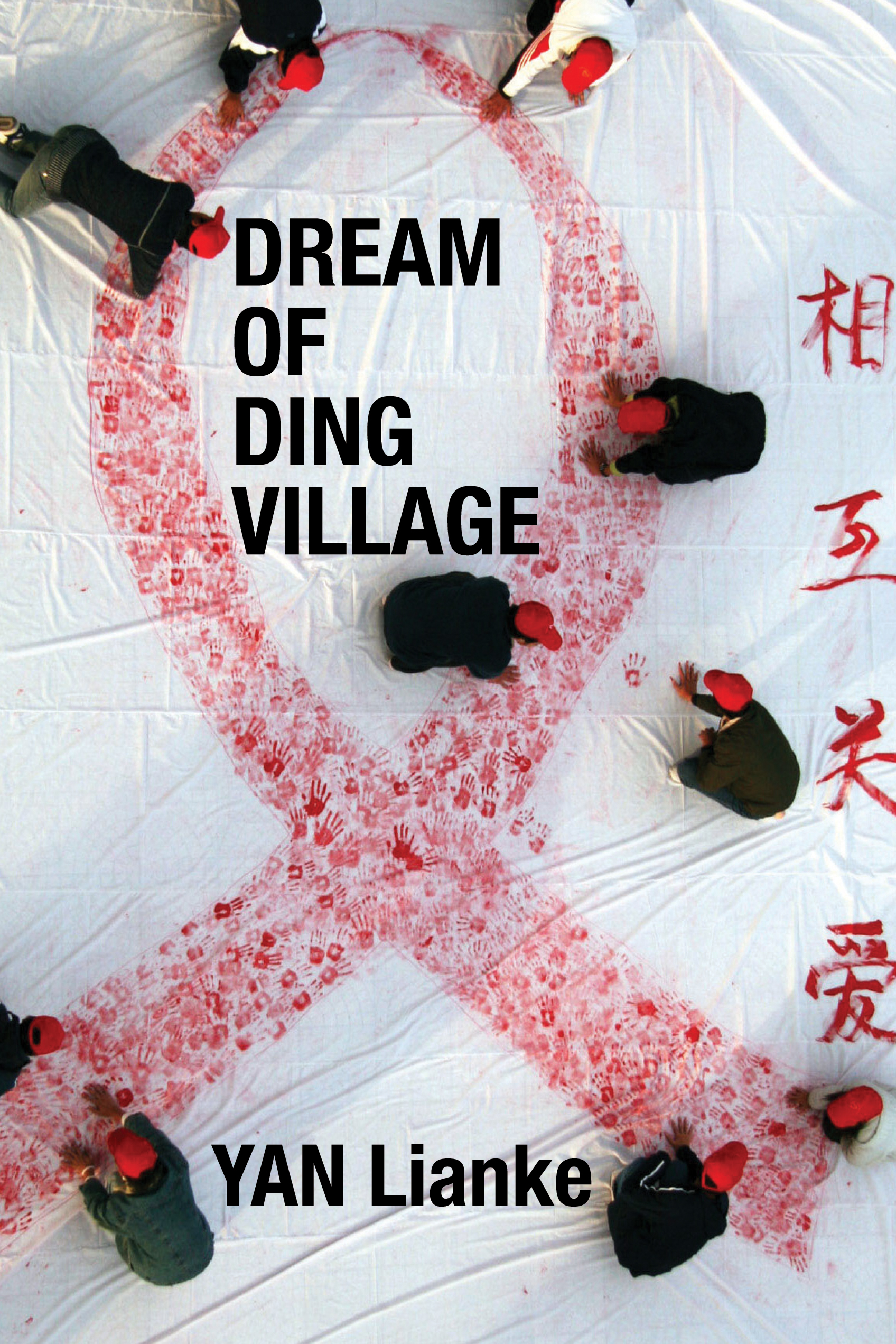
Yan Lianke's Dream of Ding Village

Bookcover courtesy Grove / Atlantic Inc.

As I started reading Yan Lianke‘s Dream of Ding Village, I was reminded of a favourite novel of mine, Albert CamusThe plague. However, as I read on, the similarity started to fade – or, perhaps it’s just that the particularity of Lianke’s conception took over. Both books explore a community living with a highly contagious, deadly disease, and both can be “read” through the lens of a wider political interpretation, but the two stories are told differently. For a start, Camus does not make his political “reading” literal while Lianke closely intertwines the political with the personal in his novel. No wonder this novel was published in Hong Kong and banned in China!

The story was inspired by the fallout that occurred from Henan Province‘s plasma economy, 1991-1995, in which Chinese were encouraged to sell their blood plasma. According to the Wikipedia article, it is estimated that over 40% of the blood donors (sellers) contracted AIDS, due to the low health and safety standards applied to the campaign. It’s a tragic story and Lianke uses it to tell a cautionary tale about a rush to progress that seems to cast humanity to the winds.

So, how does he tell it? The story is narrated by the dead son of “blood kingpin” Ding Hui. Qiang was poisoned in an act of revenge for his father’s role in bringing “the fever” (HIV/AIDS) to Ding Village. In the clear, non-judgemental voice of a child, Qiang proceeds to chronicle events in the village as the disease takes hold, using occasional flashbacks to fill in the gaps. His is not a schmaltzy or sentimental voice. It’s simply the voice of an omnipotent narrator who happens to have also been part of the story, before the novel starts, and whose “existence” initiates its dramatic denouement. It’s an interesting device that nicely balances involvement with distance. We get close, but not too close, to the people and events.

Shadow Man Asian Literary Prize 2011 Badge

Image by Matt Todd of A Novel Approach

The novel is told in 8 Volumes, and progresses chronologically from the appearance of the fever to when its impact on Ding Village is complete. Qiang tells his story primarily through the actions and behaviour of his grandfather, a man who hangs onto his ethics throughout the crisis while trying, mostly against his better judgement, to remain loyal to his two self-centred sons. A difficult task for the hard-working man entrusted with caring for the school and being its teacher when qualified teachers couldn’t be found. While Grandpa does his best to support the villagers in their darkest time, his oldest son Ding Hui engages in scam after scam (such as selling the government’s “free” coffins and organising “marriages” between dead people) to feather his own nest and further climb the greasy pole of bureaucracy.

Along the way, the stories of other villages are told, such as that of the adulterous couple Ding Liang and Lingling who, having uninfected spouses, decide to find affection in each other’s arms. It’s hard to feel they deserved the disapprobation they received (from most, though not all, in the village), but, speaking novelistically, they usefully represent the breakdown in normal codes of behaviour. Early in the novel, there is a respite from the horror when Grandpa invites all infected villagers to live at the school – and for a while a real community develops among the sick and dying. It doesn’t last of course and, as in The plague, bad things start to happen as the villagers respond to their disastrous situation. Graves are robbed, buildings ransacked, and, in a terrible scenario, the village is denuded of all its trees by villagers needing to make coffins. Black humour is never too far from the tone, and this tree-felling scene provides a perfect example.

It’s all powerful stuff and is conveyed through strong writing that uses physical description to underscore the devastation occurring in the village. I particularly liked the paradoxical use of the sun, gold and yellow throughout the novel to convey on one hand, warmth, prosperity and harmony, and on the other drought, desiccation and oppression, with the latter becoming precedent as “the fever” and associated corruption take hold:

Translucent, pale yellow and green leaves shimmered in the sunlight like golden offerings.

BUT LATER

… leaving Grandpa standing in the middle of the road, beneath the blazing sunshine, like a small clay figure of a man that someone had left to dry in the sun. Like an old wooden hitching post bleached by the rotting wood that no one wanted any more.

Other colours also pervade the book such as blood-red suns and green leaves and grass, continuing the disconnect between life and death that characterises Ding Village in the throes of “the fever”.

There’s something about the form though that puzzled me and that’s the use of italics. Sometimes they are used for Grandpa’s dreams – dreams that are often prescient, occasionally surreal – and sometimes they are used for flashbacks. But sometimes I couldn’t quite work out the reason, other than that they were possibly for ideas or events slightly out of kilter with the narrative point at which they occur. I’m not sure that the differentiation, except perhaps to delineate Grandpa’s dreams, serves the novel well.

This is a minor quibble though in a book that explores how greed leads to skewed values (“I spent my whole life doing philanthropy” says the serial scammer Ding Hui) and provides an opening for political corruption. Fast economic progress, Lianke seems to be saying, cannot be simply or easily pasted over cultural traditions that have taken centuries to build … but his vision is not, I think, completely hopeless. “A cool breeze”, he writes near the end, “carried the mingled scents of rotting plants and newly sprouted grass across the plain”. Let’s hope that “newly sprouted grass” gets the upper hand.

For reviews by other members of the Shadow Man Asian Prize jury, please click on my Man Asian page.

Yan Lianke
Dream of Ding Village
(trans. by Cindy Carter)
New York: Grove Press, 2009 (2005, orig. Chinese ed.)
341pp.
ISBN: 9780802145727

Gillian Mears, Foal’s bread (Review)

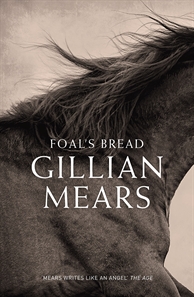
Gillian Mears' Foal's bread

Foal's bread cover (Courtesy: Allen & Unwin)

Foal’s bread is Gillian Mears’ first novel in around 16 years, though she has published short stories in the interim. This is a shame because she is a beautiful writer, particularly when she writes about the place she knows best, the farms of the New South Wales north coast.

Foal’s bread is about the Nancarrow family. Most of it takes place between 1926 and around 1950, as it follows the fortunes of Noah (Noey/Noh), her husband Roley (Rowley), and the extended family with which they live. Their main business is dairying, but their passion is the sport of horse high jumping. At the beginning of the novel, Roley is an Australian high jump champion and Noey a young 14 year-old girl with promise. They meet, marry (early in the novel, so no spoilers here) and start working hard to achieve their dream of having their own high jumping team. Hope on, Hope ever, is their motto. That’s the broad plot; the story is far more complex.

This is an archetypal story of strong country people coping (or not) with “luckiness and unluckiness” in life. In its depiction of hardship, stoicism and the will to survive in rural families, it reminded me – in tone if not in story – of Geoff Page’s The scarringThe hardship may come from different quarters, but in both there is a sense of forces out of one’s control combining with things of the characters’ own making. That mix – of characters’ judgement or behaviour clashing with luck (usually bad) – tends to make for a good story, in the right hands. It’s a bit Shakespearean in a way, the clash of character with “the elements”.

Australian Women Writers Challenge 2012 Badge

Australian Women Writers Challenge (Design: Book'dout - Shelleyrae)

In Foal’s bread, the “bad luck” has many sources, some human and some natural, such as incest, lightning strikes, giving birth to a disabled child, war and drought. How the characters cope with the trials confronting them is the core of the novel. Unfortunately, more often than not, they don’t cope very well. Why? Mainly due to their very human failings. Noey and Roley, whose marriage commences with great love and big dreams, don’t know how to communicate when calamity hits. Noey’s mother-in-law, Minna, lets her jealousy (“of the happiness she’d never seen before”) get the better of her and prefers to increase the tension between her son and his wife rather than to ameliorate it.

By now you’ll be thinking this sounds like a miserable story, and in some ways it is. But it’s not all darkness. While the novel has an almost elegiac tone, its movement is towards light. It has a three-part structure. There’s a very short Preamble which sets a tone of harshness and brutality with its references to incest, bushfires, floods, and animal cruelty.”Watch out you don’t cry” we are warned. Then there is the bulk of the novel in which the story of Noey and Roley is played out. This is followed by a Coda, set some 50 years later, in which we learn that “the old voices remain … funny, flinty, relentless”. These voices are carried into the future by Lainey, the strong, resourceful daughter of Roley and Noey, “her mother’s daughter through and through”.

A strong story, but what gives this novel its real power is the writing. Mears mixes the rough, ungrammatical country-speak of the era with glorious, rhythmical language describing the magpies, butcherbirds, trees, creeks and hills of One Tree Farm. The “one tree” is a jacaranda, and it features throughout the novel. It could almost be, dare I say it, a character. Early in the novel, when all is full of hope, it quivers “to create the feeling of a big bosomed woman wanting to waltz”. Later, as things start to collapse, it loses its leaves, but at the end “the old tree lives on … like a huge purple cloud hiding the rooflines”.

And then, of course, there are the horses. Reading this book reminded me a little of reading Tim Winton’s Breath. Mears does for horse high-jumping what Winton did for surfing. She made me feel the joy and beauty of the jump, of pushing oneself to achieve just that little bit more in a risky sport, of having a dream that keeps you going, of doing “the impossible”. Mears, like Winton, knows her subject inside out, and you feel it in her writing.

I fear I haven’t done the book justice. I’ve not really described its complex plot. I’ve named only a few of its large cast of colourful characters. It’s an ambitious book with big themes and a big style. Not everyone loves it. Some find the dialogue tricky or some descriptions overdone; some think the ending is disappointing; some think it’s stereotypical in places. I think none of these things. I’d love to know what you – if you’ve read it – think!

Gillian Mears
Foal’s bread
Sydney: Allen & Unwin, 2011
370pp.
ISBN: 9781742376295

(Uncorrected proof copy received from Lisa of ANZLitLovers in a blog giveaway)

Monday musings on Australian literature: Guest post from Tony of Tony’s Book World

As with most of my guest posters to date, I came across Tony (of Tony’s Book World) not long after I commenced blogging. He stood out like a beacon because he was a non-Aussie blogger who had read a significant amount of Australian literature, including Patrick White no less. If you check his blog, you will find that he even has a page listing his favourite Australian fiction. He (so far, anyhow) doesn’t have any other nationally focused pages. How could I not ask him to write a guest post here! Thanks Tony, it’s been great getting to know you through blogging. Not only have I enjoyed getting to know my own literature through other eyes but you’ve introduced me to some writers – like Dawn Powell – that I know will be up my alley.

Tony has chosen for his topic one of the grand dames of Australian literature …

Henry Handel Richardson and The Fortunes of Richard Mahony

English:

Henry Handel Richardson, 1945, by Coster (Presumed Public Domain, via Wikipedia)

It is terrific and I am grateful to Sue for having this opportunity to guest write in “Whispering Gums”. It took me long enough to figure out that a Whispering Gum is a tree, an Australian (eucalyptus?) tree.

I have never been to Australia. In fact I live about as far on Earth from Australia as you can get in Minneapolis, Minnesota, US, where most of our trees are either oaks or pine trees. Yet over the years I’ve developed a passion for Australian literature starting with Christina Stead and Patrick White (whom I consider probably the greatest novelist ever, just to give you an idea where I’m coming from). My appreciation of Australian literature has continued through the years with many writers including such recent writers as Tim Winton, M. J. Hyland, and Joan London.

Today I want to write about the “The Fortunes of Richard Mahony” trilogy by Henry Handel Richardson which I consider the high point of Australian literature along with Patrick White’s novels. Henry Handel Richardson was the male pseudonym of woman writer Ethel Florence Lindesay Richardson who lived from 1870 to 1946. I read this entire trilogy back in 1991 and 1992, and it was one of my most moving reading experiences.

Each of her (Henry Handel Richardson’s) novels is an effort to understand and to make us understand the complexities of a human situation, and this is in itself an invigorating and sometimes subversive exercise in following truth along unexpected paths. — Karen MacLeod, Henry Handel Richardson (1985)

Richardson later wrote that the character of Richard Mahony was based on her own physician father. What makes this trilogy so moving is the complexity and unsparing honesty that Richardson brings to the character of Richard Mahony. Just as perceptive parents know their own children, faults and all, better than anyone else in the world, children as they grow up observe their parents closely. Most children love their parents, but that does not mean they aren’t aware of their faults. From your own children, you can run but you can’t hide. Richardson gives the reader the full portrait of Richard Mahony entirely free of sentimentality. In fact Richardson said that so much had been written about the great successes among the Australian people, she wanted to give a picture of one of the many failures, and so we have this story of the slow decline of Richard Mahony.

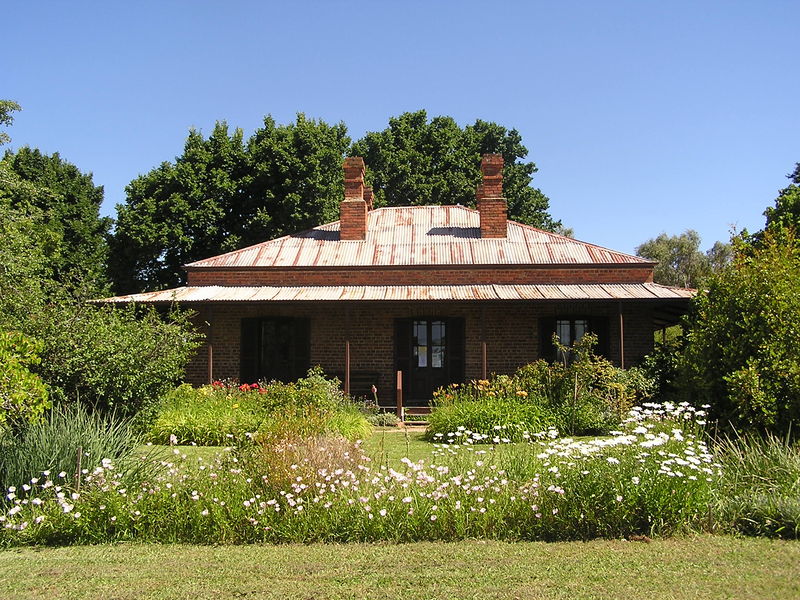
Lake View House, Chiltern

Lake View House, Chiltern, where Richardson lived when young (By Golden Wattle, via Wikipedia, using CC-BY-SA 2.5)

The first volume of the trilogy, “Australia Felix” begins at the goldfields near Melbourne in 1852. Richard is a young man just arrived from Dublin, Ireland and he is running the Diggers Emporium on the goldfields. He is more interested in reading philosophy than drinking and socializing, and most of his neighbors dislike him, thinking he is arrogant. He does meet fifteen year-old Polly whom he marries. Polly, later known as Mary, becomes a strong female figure in the trilogy. After losing his store due to accidentally selling spoiled flour, Richard takes up his original profession as a doctor

In the second volume, “The Way Home” Richard and Mary go back to the British Isles, this time to Glasgow, but soon Richard decides they can never be successful there and the couple returns to Australia and locate in the goldfields in Ballarat where he establishes a practice as a doctor. Here they finally have a daughter.

When the first two volumes of The Fortunes of Richard Mahony were originally published, there was little fanfare and few sales. All that changed when the third volume, “Ultima Thule”, was published in 1929. It was greeted with a chorus of praise from the critics, had good sales, and overnight Richardson became famous. Readers finally latched on to the tragedy of Richard Mahony and his family.

As the story in the trilogy continues, a strange thing happens. As I mentioned before, Richardson’s portrayal of Richard Mahony is honest and unsparing. Yet the reader is sympathetic and cares more about what happens to this man because of his faults and failures, not in spite of them. Richardson presents a total human being defects and all, and this complete blunt account gives the trilogy its power. Richardson applies these same forthright techniques to the wife Mary and the daughter.

Another distinctive feature of the trilogy is the style of the writing. Richardson’s writing has a visceral natural quality that puts you in to whatever scene she is depicting. I still remember some of the intense goldfield scenes vividly. There are similarities in her style to that of Patrick White, and I can’t help but think that White had read The Fortunes of Richard Mahony carefully sometime before writing his own novels.

One of Richardson’s literary heroes was Leo Tolstoy. “This is not a novel, it is a world”, wrote W. D. Howells of Tolstoy’s War and Peace, and the same line applies to The Fortunes of Richard Mahony. All of life is in these pages. As an unknown English critic said of The Fortunes of Richard Mahony, it is “one of the great inexorable books of the world’’.

The book Henry Handel Richardson – A Study by Nettie Palmer (1950) was very helpful to me in writing this article.

Why did Jane Austen?

What is it about Jane Austen? We all know the basic dichotomy. You know, the division between those who dismiss her as being slight, inconsequential, fluffy, chicklit and those who read her again and again swearing that each time they do they find something new to enjoy and appreciate. But, do you know about the dissensions that rage amongst the ranks of the latter? I often wonder how a writer so loved and admired can engender such huge and ongoing debates amongst those very ones who love and admire her!

English: Fanny sewing (detail from File:Mp-Bro...

Fanny sewing in Mansfield Park (Illus. Brock, Public Domain, via Wikipedia)

Here are some of the issues Janeites debate ad infinitum:

  • Fanny should have married Henry Crawford, not Edmund (Mansfield Park)
  • Marianne and Colonel Brandon could never be happy (Sense and sensibility)
  • Emma’s relationship with Mr Knightley is too “incestuous” to be acceptable (Emma)
  • Fanny is a weak and boring heroine (Mansfield Park)
  • Henry Tilney didn’t really love Catherine but married her out of honour for his father’s poor treatment of her (Northanger Abbey)
You would think, wouldn’t you, that fans of her books, those who read them multiple times, would agree at least on basic plotting and characterisation? But not so.
Why is this? That is, how can readers disagree with Austen and yet love her? Well, I would argue that it’s her wit and humour, her comedy – and the fact that her comedy is pointed, wicked even, but not bitter. Mr Collins (of Pride and prejudice), for example, is one of her silliest, most comic creations. He’s a snob, he’s tactless, he’s boring, but does he get his come-uppance? No. He ends as he always was, sublimely unaware of his failings – and fortunately (for him) married to the tolerant, sensible Charlotte. Then there’s Mr Wickham, the villain of the same novel. Far from getting his come-uppance for his dastardly deed – other than being stuck in a marriage with a silly girl – he receives help from the families he wronged:
Though Darcy could never receive him at Pemberley, yet, for Elizabeth’s sake, he assisted him farther in his profession.
Perhaps I should rephrase this. It probably is a come-uppance for Wickham to be stuck with the silly Lydia. Likewise, for Maria Bertram (in Mansfield Park) to end up as she did:
It ended in Mrs. Norris’s resolving to quit Mansfield and devote herself to her unfortunate Maria, and in an establishment being formed for them in another country, remote and private, where, shut up together with little society, on one side no affection, on the other no judgment, it may be reasonably supposed that their tempers became their mutual punishment.
But these punishments are mild by comparison with what happened to “villains” in most novels of the 18th and 19th centuries. This comes about because Austen’s characters exhibit a psychological realism that is somewhat unusual for the time. Her characters aren’t archetypes. They are fully realised creations who move and act in a comprehensible way. We’ve all known (or been!) an over-emotional Marianne, a proud and reserved but reliable Darcy, a silly boy-chasing Lydia, a mine-is-bigger-than-yours John Thorpe, a too-willing-to-judge Elizabeth Bennet. To so accurately render humanity was Jane Austen’s aim, as she most clearly expressed in Northanger Abbey when she described a novel as something
in which the greatest powers of the mind are displayed, in which the most thorough knowledge of human nature, the happiest delineation of its varieties, the liveliest effusions of wit and humour, are conveyed to the world in the best–chosen language.
And this is why we Janeites keep reading – and arguing about – her.