Delicious descriptions from Down Under: Jahnavi Barua on reading

In my recent review of Jahnavi Barua’s Rebirth I quoted the following line: “No, I will not buy a book today. I will try and live in my life instead”. I really wanted, though, to quote the entire preceding paragraph, but it didn’t really suit the direction of my review. And so, instead, I’m posting it today.

The protagonist, Kaberi, is in a bookshop (as you will have guessed):

I begin with the As and work my way down the bookshelves. I stop at C; I have not read Disgrace yet and would have liked to have browsed through it but somehow today my heart is not in it. Still, I wander down the aisle looking at the familiar names; I am compelled to stop at K, Kawabata. I caress the spine of the book as if stroking the hand of an old and beloved friend. I cannot forget the girl in his book, The sound of the mountain. Her relationship with her father-in-law haunts me; is it possible that there can be only friendship between a man and a woman unrelated by blood? I had been so deeply unsettled by the book when I first read it; your father had only laughed. He said I had lived so little in the real world that the fictional appeared so significant to me.

I love this paragraph for so many reasons. Let me count the ways! No, let’s not be quite so mechanical but I will say that I like it for personal and structural reasons. Personal because I’ve read and loved the two books she describes, and because I can relate to her need to caress a loved book and her being unsettled by a great book.  And structural because this paragraph contains several clues to character and even plot in the book … but I won’t give those away (beyond of course what you’ve already gleaned from this piece of text itself).

Monday musings on Australian literature: Judging a book by its cover

“Don’t judge a book by its cover” is one of those mantras that we’ve all heard. It’s a pretty valid one too – literally and metaphorically – but that doesn’t mean that we can’t enjoy looking at bookcovers and handling beautifully produced books, does it? At least that’s how I see it as a reader. For sellers, it’s a different matter. For them, there is everything to be gained and nothing to be lost in having beautiful looking and feeling books on their shelves. They know that even a nerdy reader like me will be attracted by a gorgeously produced book, will want to pick it up and fondle it and, if content matches the form, will then go ahead and buy it.

I am not going to go into the art and economics of book design here, but there is some new thinking afoot with the rise of the ebook. Publishers are starting to think again about form (and content, of course!). If you are interested in the topic, read this Guardian article by Kathryn Hughes.

Monday Musings though is about Australian literature and so I’m just going to talk about a few Australian book designers. This will be completely serendipitous because, while I do love to handle a beautiful book, I’m one of those readers who tends to be oblivious to the hard work of those behind its production. So, here goes, with apologies to all those wonderful designers I’ve overlooked.

Dean Gorissen

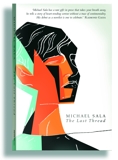
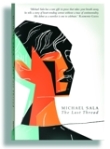
Michael Sala The last thread bookcover

The last thread (Courtesy: Affirm Press)

I discovered Gorissen only recently through the books he has designed for Affirm Press. I’ve reviewed three books in the Long Story Short Series and Michael Sala’s The last thread, all of which were designed by Gorissen. On his blog he has announced that he received a Bronze award in New York’s 3×3 Illustration Annual for the Long Story Short series and that the last three books in this series – the three I reviewed – won Gold in the Illustrators Australia Awards for 2012. What can I say? These are beautiful books – just a little smaller than the usual paperback which makes them nice to hold and tote around, and with intriguing cover designs that make you think.

On his blog Dean says this about designing his cover for The last thread:

It’s an inspiring often disturbing book and its challenge to me was to try and bring out the qualities of loneliness, sorrow, hope and ultimate strength of Michael’s story

Sandy Cull (gogoGinkgo)

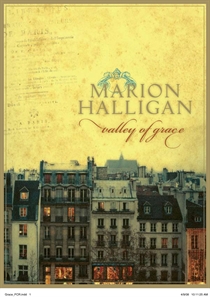
Valley of Grace book cover (Courtesy: Allen & Unwin)

One of my favourite recent(ish) paperbacks – to read and hold – is Marion Halligan‘s Valley of Grace. It’s one of those books that falls open beautifully, making it easy to read. Its font type and size is – yes – easy to read. It has a rich, yellow cover that almost glitters, and yet is subtle at the same time. And, it has flaps, like a hardback. In other words, lovely to hold and read.

Cull, who has twice won the APA Best Designed Book of the Year award, worked for Penguin for many years, before setting up her own company, gogoGinkgo, in 2005. In 2010 she started a blog, aboutbookdesign, to “chinwag about designing for the publishing industry in Australia”. It’s worth a peek. Oh, and she judged the Illustrators Australia Awards in 2011, for which Dean Gorissen designed the “call for entries”.

WH Chong

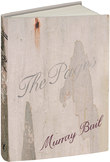
Murray Bail, The pages

The pages (Courtesy: Text Publishing)

My third example of a book I like is a hardback.  I tend to prefer paperbacks, mainly because they are smaller and lighter to carry. You won’t be surprised to hear, then, that my favourite hardbacks, from a design point of view, tend to be short books. Murray Bail‘s The pages is such a book. The cover was designed by WH Chong, who apparently works regularly with Susan Miller, an “internal designer”. Chong is a long time designer with Text Publishing, and he too, like Cull, writes a blog, called Culture Mulcher. And, like Gorissen and Cull, he has won awards for his covers. One of his awards was for John Marsden’s Hamlet. You might like to read his comments about it on this Book Design blog.

Anyhow, back to The pages. I like it because the cover is subtle and understated, which works well for this spare book about a man’s attempt to write a new philosophy. It has rough cut pages. At least some of the pages are, which works well because they give the book a lovely tactility without making it too tricky to open and turn the pages …

… which brings me to my reader’s manifesto about book design. A book must function well as a book. I do wish more publishers would think about that when they choose binding, paper edges, paper type, and font type and size.

There’s so much more to explore about book design – and particularly about how designers are meeting current challenges, not only those presented by the e-book phenomenon but also by the demand for sustainability. Meanwhile, though, you know what I’m going to ask! How important is book design to you, and what are your favourite books from a design perspective?

Jahnavi Barua, Rebirth (Review for the Shadow Man Asian Literary Prize, 2011)

Shadow Man Asian Literary Prize 2011 Badge

Image by Matt Todd of A Novel Approach

What a shame Jahnavi Barua‘s novel, Rebirth, is, to the best of my knowledge, available “for sale in the Indian Subcontinent only” (backcover). Our Shadow Man Asian team had real problems tracking this one down, but I’m very glad we did manage to obtain some copies, eventually, because this is a beautiful book.

The title, Rebirth, might give you a sense of its subject matter – but, then again, it mightn’t! The novel – novella really – is a first person monologue by a mother to her unborn child. The child is waiting to be born – not reborn – but there is a sense that for the mother, Kaberi, a rebirth might be in the offing as she explores the state of her shaky arranged marriage, and of some tricky or unresolved relationships with family and friends.

While set in India – in Bangalore and Guwahati (in the troubled province of Assam) – this novel does not have the noise and energy that often accompanies stories from the subcontinent. It’s quiet and contemplative. Moreover, while it is imbued with gorgeous descriptions of the plants and landscapes of India, and while it refers to the ongoing political unrest in Assam, it is not specifically Indian in theme. Its story is universal, that of the desire for love between husband and wife, and of the love of a mother for her child. And here is the difficult part, because it is hard to describe this largely plotless novel without making it sound twee or mawkish, but somehow it is not that at all. Barua manages to find a voice for Kaberi that is tender but matter of fact, that is tentative but also confident. The progression is chronological, commencing with her husband leaving her for another woman at the beginning of the novel just as she discovers she is pregnant (after many years of trying). She doesn’t tell him – or her family and friends – for some long time as she considers her life. In the opening paragraphs we are given a picture of her as somewhat passive and inward-looking. Before her husband left, she says she

had been partial to the large soft sofa in front of the television, from where I had a good view of the screen, but from where I also looked inwards, into the heart of the house. I did not see much of the sky or buildings clustered around our own, but all that, anyway, did not cross my mind very often, so focused was I on your father and myself and the home we had fashioned together.

Ah, we think … a person ripe for “rebirth”. And yes she is, but it is slow and undramatic as she gradually, by meeting friends, remembering her old childhood friend who’d died in a bombed bus in Assam, and reflecting on her marriage past and present, comes to a better understanding of who she is. Early in the novel she, a keen reader, says:

I will not buy a book today. I will try and live in my life instead.

As the novel progresses, we find that she is, in fact, stronger and more directed than we (and, more to the point, even she) had realised. She has, for example, written a book and organised for her friend Preetha to illustrate it. This is no simple thing, but her husband, “whose public manners were always nice”, knows nothing of this. Ah, we wonder, what is she saying about his private manners, the way he treats her? We learn, through more stories in the next few pages, that what she hasn’t received from him is tenderness and love. But we also receive a clear sense of strength growing in her:

I demand love. Now, especially now, at least now.

This comes about a quarter of the way through the novel … the rest explores, in the same quiet tone, how things fall out for Kaberi, how she confronts her fears and insecurities. Things do happen – her father dies and she returns home to Guwahati, she eventually tells her husband, family and friends about her pregnancy. You can’t hide that forever after all! In other words, there is a plot of sorts, but the story is mostly an internal one and the ending is appropriately open albeit also with some sense of things resolved.

A little over halfway though the novel Kaberi says:

Birds wheel around slowly in the cloudless sky. Seemingly aimless, but I know better; little happens in nature accidentally.

And, I’d say, little happens accidentally in the writing of this book. It has been carefully and subtly structured to lay the foundations for Kaberi’s growth, and this makes it an absolute pleasure to read.

For other reviews by the Shadow Man Asian team, please click on my Man Asian Literary Prize page.

Jahnavi Barua
Rebirth
New Delhi: Penguin Books, 2010
203pp.
ISBN: 9780143414551

(Review copy supplied by Penguin Books via Lisa of ANZLitLovers)

Shadow Man Asian Literary Prize 2011 Update

Shadow Man Asian Literary Prize 2011 Badge

Image by Matt Todd of A Novel Approach

The observant among you will have noticed that I haven’t done a Man Asian Literary Prize weekly round-up of reviews and news for a couple of weeks now. This is because our reviews have slowed down now to a crawl and hardly warrant a weekly post from me. The most recent reviews posted have been:

  • Jahnavi Barua’s Rebirth by Matt, of A Novel Approach and Lisa, of ANZLitLovers, both of whom are positive about the book.
  • Kyung-Sook Shin’s Please look after mom by Fay, of Read Ramble. She’s written a rather passionate defence of the book, addressing the negatives put forward by some reviewers. This is probably the most controversial of the shortlisted books …

While I stopped posting regular roundups, I have been updating my page of reviews* as new reviews have (dribbled) come in. Please check it out whenever you wand to find team members’ reviews of the longlisted books. Some of our reviewers have been very assiduous, reading and reviewing most if not all of the books. As for me? I am currently reading two of the books and hope to review them before …

We make our shadow winner announcement. We plan to do this a few days before March 15, which is when the official announcement will be made.

Watch this space …

* Shortlisted books are indicated by an asterisk in this page.

Monday musings on Australian literature: Favourite first (Australian) lines

This is a bit of a copout, I know, but I’m travelling this week and don’t have a lot of time to write a seriously considered post. So, I’ve decided to simply do a list – of some of my favourite first lines from Australian literature. Like most readers I think, I do love a good first line, and the way it can get you into the story from the get-go. We all know the famous ones from books like Pride and prejudice, Moby Dick, A tale of two citiesAnna Karenina but these books haven’t cornered the market on great first lines. Here are some of my favourites from Australian works (in alphabetical order by author):

“I’m losing my nouns”, she admitted. (from Thea Astley‘s Coda)

“I’ve never sailed the Amazon.” (from Thea Astley’s Drylands)

No one knew or cared where the Newspaper of Claremont Street went in her spare time. (from Elizabeth Jolley‘s The newspaper of Claremont Street)

What have you brought me Hester? (from Elizabeth Jolley’s The well)

The sea has many voices. (from David Malouf‘s Ransom)

Breed ’em tough, the old man says … (from Geoff Page‘s verse novel, The scarring)

There was movement at the station, for the word had passed around/That the colt from old Regret had got away … (from Banjo Paterson‘s poem, “The man from Snowy River)

“There is a man here, miss, asking for your uncle,” said Rose. (from Patrick White‘s Voss)

What makes a great first line? Here are some of the features that grab me – though not every great first line has all of these:

  • Is brief or spare (though there are some good long ones like A tale of two cities)
  • Reads well, particularly in terms of rhythm
  • Surprises me, shocks me or makes me laugh
  • Is puzzling or mysterious
  • Contains wordplay or intriguing imagery

There are practical things good first lines may do too, such as give an idea of what the novel is about and/or its theme/s (even if this isn’t immediately clear), set the tone and, perhaps, introduce the main (or, a significant) character. But these are additional benefits. I don’t think they are essential to grabbing the first-time reader.

How important is a first line to you? Guy Dammann, writing in The Guardian bookblog argues they are critical:

They say you should never judge a book by its cover, but they didn’t say anything about opening lines, which are surely fair game. For it seems to me that if the author can’t take the trouble, or hasn’t got the nous, to sculpt those words from which all the rest flow, then they probably won’t have taken the trouble in all those other key moments of the text when the interpretative pressure is at its highest, when the duty to capture a whole fictional world in a single breath is at its most pressing. Screw up the opening, screw up the book.

Do you have favourite first lines? I’d love to hear them – and your reasons if you’d like to share that too.

On the literary road: Omeo, Omeo, wherefore art thou Omeo?

The Omeo Plains near Benambra from Mount Blowhard

Omeo Plains (Released into Public Domain, by John O’Neill, via Wikipedia)

Ok, that’s a pretty weak beginning I know, but hands up if you’ve ever heard of Omeo in Victoria, Australia? I must say that I hadn’t until recently when I started planning our latest foray into Victoria. We decided to  travel to Melbourne via the Great Alpine Road, in Victoria’s High Country … and in that gorgeous region we found a very pretty little town called  Omeo.

And so, I checked my literary guide* and I discovered some interesting literary connections for the town. It was part of the big Gold Rush of the 1850s, and the area features in novels by Rolf Boldrewood and Henry Kingsley. I’m a bit embarrassed that I really hadn’t been aware of Kingsley until a year or so ago, but Omeo features in his best-known novel, The recollections of Geoffrey Hamlyn (1859), and in another of his novels The Hillyars and the Burtons (1865). This latter novel apparently incorporates a story inspired by the Omeo Disaster of 1854 in which a number of diggers rushed over the Great Dividing Range from Beechworth searching for gold. It was not successful, however, and some of the diggers did not survive their return trip.

Boldrewood is a better known writer, primarily for his novel, Robbery under arms. It is another novel of his, though, Nevermore (1892), that features this area, which he saw as wild and lawless. In this novel he recreates three real events that rather support his assessment – the murder of Cornelius Green, the Ned Kelly Gang cattle rustling, and the Tichborne Claimant affair. All of these had connections with Omeo. Cornelius Green was a gold-buyer who was hatchetted to death by two bushrangers in 1859. The Tichborne claimant, who made a fake claim on a fortune and a title in England, had worked around Omeo in the 1850s. It was a well-known case at the time in both England and Australia. And the Kellys, well, if you don’t know them, click the link to Wikipedia and all will be revealed!

By 1900 Omeo had become far more respectable and was recognised for the beauty that we saw on our visit. Poet Bill Wye wrote:

There’s a wild charm in the mountains that is not met elsewhere,
Free as the vagrant winds, and pure as snow
There are songs in fountains, bubbling in the hills up there,
That echo the name of ‘Omeo’…

Not great poetry perhaps, but you get the picture, as you do in the following which was included by one RH Croll in his 1928 book on bushwalking:

As I came over Livingstone
The day was like a flame,
But suddenly I saw below,
Far and far and far below,
The shining roofs of Omeo
And said its singing name.

Ah, Omeo, Omeo, methinks you deserve better poets than these!

*Peter Pierce (ed)
The Oxford Literary Guide to Australia
Oxford: Oxford University Press, 1983 (rev ed)
501pp.
ISBN: 0195536223

Michael Sala and truthful fictions

Michael Sala The last thread bookcover

The last thread (Courtesy: Affirm Press)

Michael Sala doesn’t actually use the term “truthful fictions”. That was a character in Jessica Anderson’s Tirra Lirra by the river. But he could have.

Yesterday I heard Sala interviewed on ABC Radio National‘s Life Matters about his debut novel The last thread, which I reviewed last week. Presenter Natasha Mitchell commenced by mentioning the transitions, secrets and traumas that characterise Michaelis/Michael’s life in the novel. She asked why he had chosen the fictional, rather than memoir, route. He responded that he had started writing his story in first person but got swamped by emotions, and then he read J.M. Coetzee’s autobiographical novel*. He realised, he said, that he could write about the child he used to be “as if he were someone else”. (I love hearing how writers – as I also reported in my Jessica Anderson post – learn from other writers.)

This is fair enough I think. There are those who like a “memoir”, as it were, to be a “memoir”, but in our post-postmodern world in which we know that truth is a slippery beast at best, what difference does it really make? How important is it to be able to say Michael Sala did this, felt that, experienced such-and-such versus, for example, how does a child navigate abuse and how does such a child translate those experiences into functional adulthood? How important are questions of fact against exploration of these emotional “truths”?

In other words do we need to know the “facts” to understand the truths? I’m thinking now of Kate Jennings. I’ve reviewed two of her books here, her autobiographical novel, Snake, and her autobiography of sorts, Trouble: Evolution of a radical. Snake is a novella that chronicles Girlie’s life in a complicated family. We know it mirrors much of Jennings’s “real” childhood but we can’t be sure what are the facts and what are scenes created to convey her emotional truths. Trouble, described as an “unconventional autobiography”, is a collection of Jennings’ writings – journalistic articles, poems and excerpts from novels – that have been put together in such a way as to convey something about her life. We may not be able to glean from these slippery books a lot of citable “facts” but both tell us a lot about who Jennings is, about where she came from and what she believes.

All this of course begs the more fundamental question of how factual memoir is anyhow? But that is something I’ll leave – for the time being anyhow. Meanwhile, there’s a scene in Sala’s autobiographical fiction in which his mother discusses his problematical father with her sister:

“He’s a wonderful man,” Elfje says. “We’ve become great friends. Oh, he makes me laugh!”
“That’s one side of him,” Mum says.
“Yes, yes, we all have versions of events, stories to tell.”
“Stories?” Mum says. “Is that what you think they are?”
(from The lost thread, by Michael Sala)

Therein lies the rub. Whatever we read, memoir or fiction, we surely must always be aware that it is “one side” we are getting. Could it be, says she provocatively, that something labelled fiction is a more honest recognition of this fact?

* Coetzee has written more than one work of autobiographical fiction but Sala wasn’t clear which he’d read. I’m assuming he at least read the first one titled Boyhood: Scenes from a provincial life.

Monday musings on Australian literature: Jessica Anderson

Every now and then I feature a specific writer in my Monday Musings – and they’ve usually been women because they tend to be overlooked. Take Jessica Anderson (1916-2010), for example. Most keen AusLit readers will know her because her novel Tirra lirra by the river made quite a splash when it was published in 1978, but my sense is that her “fame” doesn’t go much past this.

She is, however, one of our great writers:

  • She won the Miles Franklin Award award, twice: Tirra lirra by the river in 1978, and The impersonators in 1980.
  • The impersonators also won the New South Wales Premier’s Literary Award in 1981.
  • Her book of short stories, Stories from the warm zone and Sydney stories, won The Age Book of the Year in 1987.
  • Tirra lirra by the river was included in Australian classics: 50 great writers and their celebrated works, by Jane Gleeson-White.
  • Tirra lirra by the river was also included in the admittedly eclectic, but international, The modern library: The 200 best novels in English since 1950, by Carmen Callil and Colm Tóibín
  • She is taught in many university (and, I believe, high school) literature courses.
  • She’s a good example of a late bloomer, with her first novel, An ordinary lunacy, being published when she was 47.

An ordinary lunacy was, in fact, published in England, having been rejected by Australian publisher, Angus and Robertson. Gleeson-White quotes Anderson saying that she didn’t think Australian publishers in the 1960s would like her novel about “how a utilitarian society treats those with unserviceable gifts”. Ouch!

Of course, like most late bloomers, Anderson had been writing long before she was first published. It was probably the increased focus on women stemming from the second wave of feminism in the 1970s which resulted in authors like her getting their chance. There’s that fashion thing again, eh? But this doesn’t mean that she didn’t deserve it. Beatrice Davis, one of the Miles Franklin judges, said that Tirra lirra by the river “has an unpretentious elegance, an individual quality so different from the realistic documentary that still dominates the field in Australian novels”. Here is the opening sentence:

I arrive at the house wearing a suit – greyish, it doesn’t matter. It is wool because even in these sub-tropical places spring afternoons can be cold. I am wearing a plain felt hat with a brim, and my bi-focal spectacles with the chain attached. I am not wearing the gloves Fred gave me because I have left them behind in the car, but I don’t know that yet.

I love this opening, which introduces us to the narrator, Nora Porteous, late in her life, as she returns “home” after many decades away. It’s so precise, and yet with tantalising hints of uncertainty. Oh dear, as I pick it up, I feel I want to read it all over again and follow Nora as she reviews her life, and the decisions she made in search of “her place”, only to end up back where she started, thinking, processing and wondering.

Most of Anderson’s work was contemporary, but she did write one historical novel, The commandant (1975), which she calls her favourite. I reviewed it as part of Sydney University Press’s Australian Classics Library. Like Nora in Tirra lirra, the main character here, Frances, is not in her “place”. She’s with family, but her views, her aspirations, are different to those around her. She must navigate this family, this society, to develop her self.

According to Gleeson-White, Anderson greatly admired the novelist, Henry Green (recently featured by Stu at Winston’s Dad) for his “poetic brevity”. I think this brevity is partly what draws me to Anderson. Stories of women feeling at odds with their lot are not, after all, unusual, but it takes some skill to cover several decades in less than 150 pages, as Anderson does in Tirra lirra. Anderson was also, says Gleeson-White, inspired by Christina Stead for showing her “there was an Australian background I could use: the urban background of For love alone“. I’d love to understand this a little more … what was it about Stead’s urban background that differed from that of other Australian writers?

Near the end of Tirra Lirra, Nora says:

I find myself thinking that we were all great story-tellers at number six. Yes, all of us, meeting in passages or assembling in each other’s quarters or in the square, were busily collating, and presenting to ourselves and the other three, the truthful fictions of our lives.

“Truthful fictions”. An intriguing concept that we can read several ways … but that is for another day. In the meantime, I commend Jessica Anderson to those of you who haven’t read her. Meanwhile, I must read her One of the wattle birds which has been languishing on my TBR for far too long.

Note: This post is not a review for the Australian Women Writers 2012 challenge, but I plan this year to write a number of posts supporting the challenge’s promotion of Australian women writers … which is not a hard ask given my reading priorities!

Dorothy Porter, On passion (Review)

Do you read “little” books? You know those small books that are carefully placed on bookstore sales counters where you are buying the book you really came for? I don’t often, but every now and then one catches my eye. Today’s review is of such a book from Melbourne University Press‘s Little books on big themes series. It’s by Dorothy Porter and is titled On passion. She finished it just before she died in December 2008. I think I could be justified in calling that poignant, don’t you?

Australian Women Writers Challenge 2012 Badge

Australian Women Writers Challenge (Design: Book’dout – Shelleyrae)

Dorothy Porter was (is, really) a well-regarded, successful Australian poet. I reviewed her last collection, The bee hut, a couple of years ago. It’s a wonderful collection full of the pains and joys of living. It is, you could say, a passionate book. One of the poems I quoted in that review is about the passion for writing, for finding the perfect way to express an idea:

and your pen slashes ahead
like a pain-hungry prince
hacking through
the bramble’s dragon teeth
to the heart’s most longed for
comatose, but ardently ready
princess.
(“Blackberries”)

So, writing, of course, was one of her passions but in this little essay Porter explores all sorts of meanings of the word (for her). She starts with her adolescent passions – her youthful religious faith which was replaced by her “dark gods, Janis Joplin, Jim Morrison and Jimi Hendrix” whose “daemonic songs” were her “new hymns”.

From here she explores the various ways passion has been part of her life … woven always with poetry, hers and others, and music:

Music has been my draught of intoxication since the very moment I first heard the Beatles in early 1964 […] I have been a Beatles pop/rock music maniac ever since, and have written virtually all my poems to rock riffs and rhythm – the catchier, the darker, the louder, the gutsier the better.

She talks in one section of Dionysus and moderation, strange bedfellows, eh? She argues that Euripides best understood the Dionysian, by exploring “how best to respect and live with it”. She admits, though, that “moderation was not something I embraced with Delphic calm, but something I gutlessly and gracelessly caved into” because, for example, she and drugs did not mix!

Nature too features, snakes in particular. “Real and living snakes are sacred to me” she says and then explores Minoan snake worship versus “the debased and diabolical serpent-demon of the Judaeo-Christian Garden of Eden”. She talks of the Rainbow Serpent in Australian Aboriginal Dreaming but admits that, when she actually confronts a King Brown snake in the desert, her worship did not stop her getting “the shock of my life”. She also refers to DH Lawrence‘s poem “Snake”, which I fell in love with in my teens. Lawrence describes the visit of the snake  as “a sacred event”. Porter says she always forgets the ending, how Lawrence’s fear gets the better of him so that he scares the snake away. She remembers only the vision of the wild thing being watched (and appreciated) by the poet.

There are other passions, but I’d like to conclude on the one dear to the heart of readers. She writes

I wonder if some of the most deeply passionate experiences of my life have happened between the covers of a book.

Not only do I love the idea that books have such an effect on us, but I also like her qualification: “some”, she says! Life is, after all, important too!

She describes Wuthering Heights as “the most scorching novel in the English language”; says that “there is, paradoxically, much more convincing grown up sex in Jane Austen than in Emily Brontë“. Oh, yes! She talks of Sappho’s love songs; admires one of my favourite poets, Gerard Manley Hopkins, for “pushing language as hard as it will go into ecstasy – and despair”; and describes Ginsberg as convincing her “of the power of language to shock”. She talks of love and desire, of wanting “to find and deliver scenarios, characters and poems that are magnetic with sexual energy” but asks, provocatively,

… how many readers have we lost because we have ignored the ancient silent cry: ravish me.

Near the end she wonders if reading had been the greatest passion of her life. She says – reminiscent of Francesca Rendle-Short and Michael Sala’s comments that writing/reading is dangerous – that

… at a more profound level I recognise that there is something very unsettling about a book.

Absolutely … but what say you about books, reading, passion?

Porter, Dorothy
On passion
Carlton: Melbourne University Press, 2010
(Series: Little books on big themes)
96pp.
ISBN: 9780522858358

Michael Sala, The last thread (Review)

Michael Sala The last thread bookcover

The last thread (Courtesy: Affirm Press)

It’s clear why Affirm Press chose a comment by Raimond Gaita for the front cover of their latest publication, Michael Sala’s autobiographical novel, The last thread. Gaita, for readers here who don’t know, wrote an award-winning memoir, Romulus, My Father, about growing up as a migrant with mentally unstable parents. Sala’s story is different but both boys suffered emotional deprivations that they chronicle in their books … except, and this is a big one, Sala’s book is classified as “fiction”, and we must therefore read it as such. A bit, in fact, like Francesca Rendle-Short’s Bite your tongue!

So, what is his story? The novel is told from Michaelis’ (later Michael’s) point of view. It is divided in two parts: Bergen Op Zoom and Newcastle. It starts, then, in the Netherlands when Michael is around three or four years old, and his brother, Con (Constantinos) three years older. But it’s not quite this simple, as in the first part which is told third person we follow them from the Netherlands to Australia to the Netherlands and then back to Australia. The family’s unsettled state physically – they also move multiple times in Australia – works metaphorically too because there is little emotional stability in the boys’ lives. At the start of the novel, the mother has left the boys’ father, the Cypriot Phytos, and is living with the physically and emotionally abusive Dutchman, Dirk. (“There’s no problem”, Michael writes of this handyman stepfather, “that he can’t solve with his hands”.) By the end, when the boys have grown up, the mother has been married a couple more times. She is skilled, you would say, at choosing wrong men: “The men in my life take advantage of me”, she says.

What makes this somewhat age-old story compelling is the writing. It is told more or less chronologically but in little vignettes. The two parts are divided into chapters, but the chapters themselves are broken into smaller sections that provide an eye into scenes from Michael’s world. It’s a child’s eye, until near the end, so we readers must try to fill the gaps between what Michael describes and what we know could be the meaning behind what he’s seeing. Why, we must ask ourselves, would a young boy think this:

Michaelis can’t imagine anything more frightening than living forever.

And Michael’s eye, though a child’s one, is very observant. He particularly notices faces, watching them it seems for signs of warmth and connection, but

Each time light blazes from the screen, it washes across Con’s face and reveals it like something carved from stone.

and

She [mother] holds her belly and sighs, and there’s a look in her eyes as if she might burst into tears.

I could be mistaken but it felt to me that as we moved through the second part, Newcastle, which is told first person by the adult Michael, the chronology became more disjointed, mirroring I think Michael’s growing awareness of what lies behind the dislocations in his family, and of its impact on him.

As you’ve probably gathered by now, there are secrets in this family that contribute to the dysfunctional behaviour. These secrets are not mentioned on the backcover, so I won’t mention them either. Sala handles them well. He doesn’t labour them but rather lets them hover in a way that we know they are there but that doesn’t let them occupy centre-stage. We learn to live with them, the way the family has to. In the way of modern novels, there’s no dramatic denouement …

In talking of the writing, I’ve mainly discussed the narrative style but I should also mention the language. It is, in a word, gorgeous. Here are just two descriptions that convey Sala’s ability to capture the essence of things. First, being dumped by a wave:

There is such strength in the sea. He has forgotten it until now. It pulls at his limbs so that his feet touch nothing and only his desperate grip keeps him there. A sensation comes to him of being separate, of seeing it all from a great distance as if he cannot reach out and touch the world. Then the noise dies in his ears, the sky appears again above him.

And next, of his mother’s house:

The rooms and corridors of my mother’s house became like the arteries of a heart attack victim, all clogged up. Even the breeze had to bend in half to get through.

I’ve read quite a bit of autobiographical/biographical fiction, fiction-cum-memoirs, and memoirs in recent months, and some I’ve found a little wanting here and there. This, though, is hard to fault – if, that is, you like reading more for the interior than the exterior, for what’s going on inside rather than for what’s happening in the material world.

In the very last pages of the book, Michael’s mother says that “words and stories can be dangerous” (echoing Francesca Rendle-Short’s “to think, to write, is dangerous”). They can indeed, but sometimes that danger can have positive outcomes. I hope that, for Sala, the dangers of putting his story, his truths, on the page will be restorative. There’s no guarantee though that such bravery will have its just rewards … in life or in fiction.

Michael Sala
The last thread
Mulgrave: Affirm Press, 2012
238pp
ISBN: 9780987132680

(Review copy supplied by Affirm Press)