Woo hoo, a new year – and a Happy New Year to you all – but our old-faithful Six Degrees meme continues on. I’d like to thank Kate for keeping on with this meme as it’s the only one I like to do, and I do like being part of the Six Degrees community. Now having done that little bit of emotional blackmail, on with the show … as always, if you don’t know how the #SixDegrees meme works, please check Kate’s blog – booksaremyfavouriteandbest.
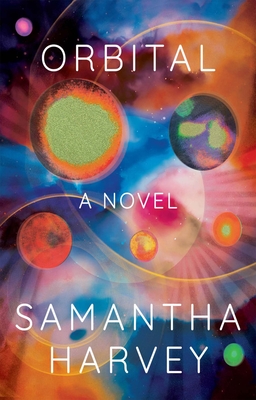
The first rule is that Kate sets our starting book. This month, it’s another book I haven’t read. I did buy it with the best of intentions when Kate announced it, but then forgot to bring it to Melbourne with me. The book is last year’s Booker Prizewinner, Samantha Harvey’s Orbital. As most of you surely know it is a novella about six astronauts orbiting the earth in their spacecraft.
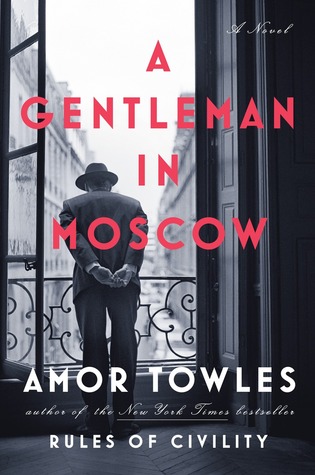
I had many thoughts about this one, starting with another prize-winning novella with a single-word title, Arboreality. However, in the end I chose another novel about confined protagonists, though in this case it’s one confined protagonist. The book is Amor Towles’ A gentleman in Moscow (my review), whose aristocratic protagonist is under house arrest in a hotel in Moscow (in Bolshevik Russia).

Towles’ novel is an intriguing book. Why did an American investment banker write such a book. Towles, whether you believe him or not, said he had no central theme. He simply wanted to create a work that would be “satisfyingly cohesive” but “prompt varied responses from reader to reader, and from reading to reading.” One of my responses was that the novel belonged at least in part to the comedy-of-manners tradition – and, no, I am not linking to Jane Austen but to another recent-ish comedy-of-manners, Madeleine St John’s The women in black (my review).
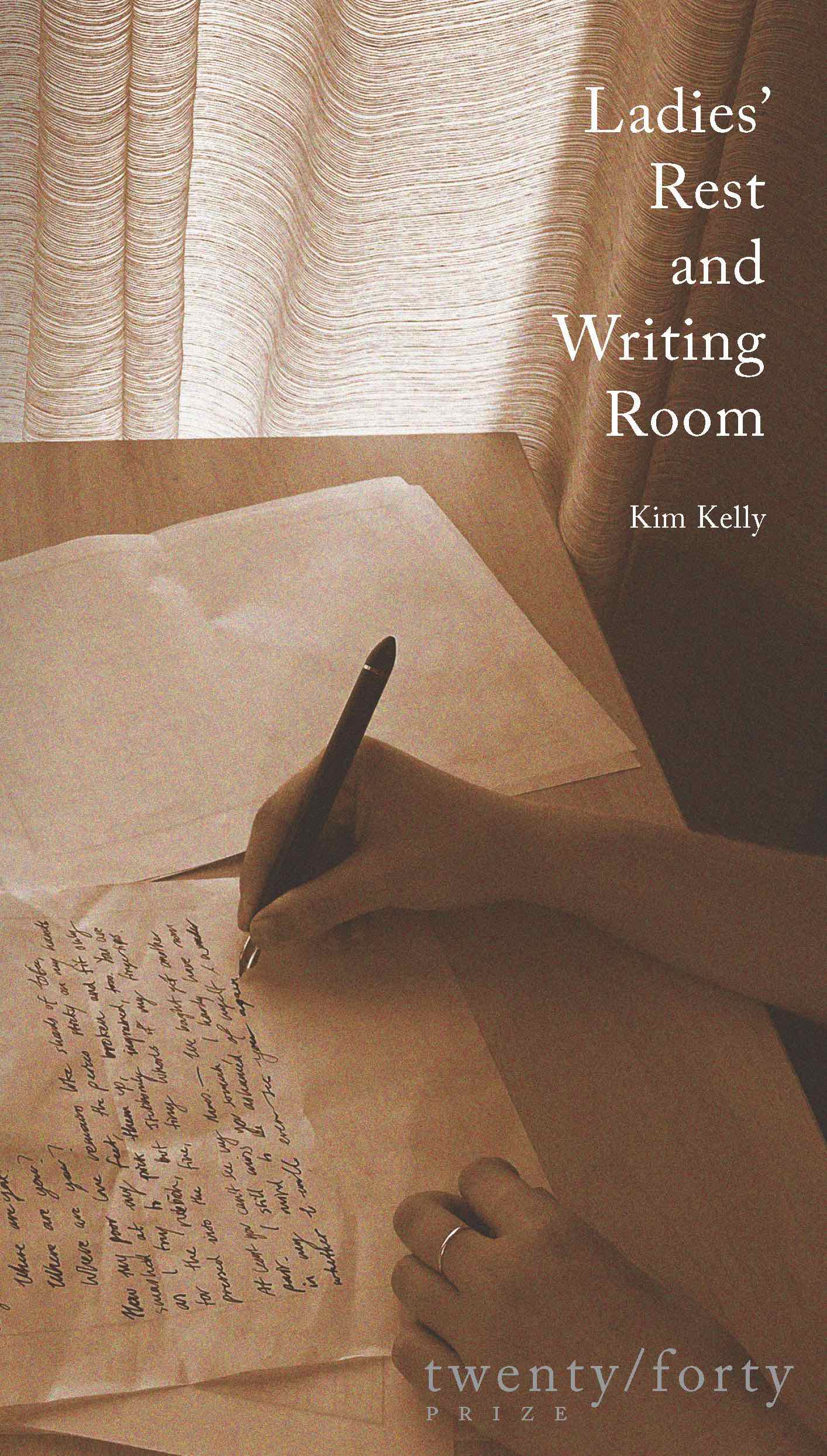
Setting is my next link, because The women in black is set in a Sydney department store. Kim Kelly’s Ladies’ Rest and Writing Room (my review) is also set in a Sydney department store, albeit three decades earlier, in the 1920s.
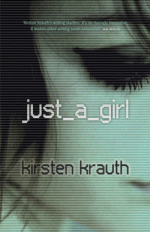
OK, so now my next link might irritate some, but Kim Kelly’s name is alliterative on “K”, and so is my next author Kirsten Krauth. I’m linking to her debut novel just-a-girl (my review). GoodReads describes it as “A Puberty Blues for the digital age, a Lolita with a webcam”. It’s one of the first novels I read that looked at social media and its (potentially dangerous) use by teenage girls.
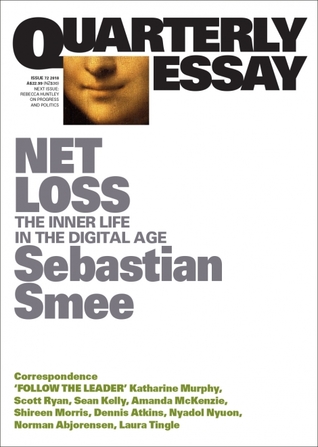
My next link picks up on the issue of the digital age and its impact on our lives, though Sebastian Smee‘s main interest is our inner lives. I’m linking to his Quarterly Essay, “Net loss: The inner life in the digital age” (my review). Among many things, he talks how modern digital media encourages children to “present performative versions of themselves online”, which links nicely with Krauth.
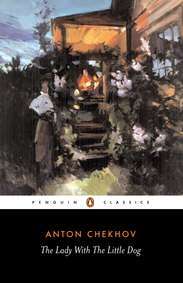
However, it’s the inner life issue that is the basis of my final link. The reason I read Smee’s essay is because it inspired a member of my reading group to recommend we read Anton Chekhov’s short story “The lady with the little dog” (my review). As I wrote in my Smee post, Chekhov’s Gurov discusses his inner and outer lives, making clear that the inner life is where “everything that was essential, of interest and of value to him, everything that made the kernel of his life, was hidden from other people”. This is the inner life that Smee explores.
So, we’ve gone from outer space to inner lives this month! And my links have been three male and three female authors. We’ve spent time in some confined spaces, and, without planning it, I started and ended in Russia.
Have you read Orbital and, regardless, what would you link to?





 Whispering Gums