Mike Ladd, Invisible mending (Review)

Mike Ladd, Invisible mendingI think … how all our best art is free; as complex as that, as simple as that. (Gaudi and the light)

I rather liked this statement from Mike Ladd’s collection Invisible mending, even though I’m not totally sure what he means! Does he mean freely available, that is, we don’t have to pay to access it? Or does he mean it frees the spirit, takes us away from ourselves? Either way, he has a point, though perhaps “best” might be arguable in the first sense.

But now, that ongoing conundrum: how to review a collection, particularly a rather strange collection comprising poetry, short stories, memoir, essays and photographs, too. The two common choices are to summarise the range of the stories – like, you know, the stories take us from Adelaide to Japan to Chile and tell us about broken relationships, environmental destruction and living with dementia – or to pick a few stories (as I did with Cassie Flanagan Willanski’s Here where we live) and discuss them. Neither approach is completely satisfactory, but what can you do?

Interior, La Sagrada Familia

In the forest, La Sagrada Familia

Overall, I enjoyed the collection, though I did have a couple of quibbles, which I’ll get out of the way now, before I talk about what interested me. One of these quibbles relates to a pet hate, the use of “utilise” rather than “use”. In “Gaudi and the light”, Ladd writes that Gaudi “utilised spirals, honeycombs, the planoid surfaces of magnolia leaves”. There are some who argue that “utilise” adds another layer to “use”, meaning “put to good purpose”, but unfortunately its over-use spoils any special meaning it “might” have for me. Also in “Gaudi and the light” is this sentence:

There had always been an aestheticism within him: his reverence of nature combined with an early drive towards utopian socialism, ongoing vegetarianism and a sometimes dangerous tendency to fast.

He goes on to talk about Gaudi embracing “a Franciscan concept of holy poverty”. Did he mean “aestheticism” or “asceticism”? Actually, my quibbles are all in this story, because my third one is surely a typo: “in the shadows was an agonising crucifixion figure, the body a taught bow”. Taut, methinks? Maybe this story was rushed, which is a bit of a shame because Gaudi’s life is intriguing and Ladd reminded me of the wonderful time we had seeing his work and learning about him when we visited Barcelona three years ago.

There is a lot in this collection to enjoy, including, for me, learning about pantun poetry. I know about Japanese haiku and tanka, but had never heard of “pantun”. Ladd discusses them in his travel essay, “Pantuns in the orchard” which describes his stay in Malaysia with his wife who was working on an art project. There are different types of pantuns he tells us but his favourite is the “tunggal” which comprises four iambic lines with an abab rhyme. Like haiku, pantun is strict about content as well as form: the first two lines “draw their imagery from the outside world” while the last two lines “turn inward toward human relationships and psychology”. Ladd includes a collection of his, in the piece called “A book of hours at Rimbun Dahan”. I’ll share a couple that tickled me:

I start the great four-bladed ceiling fan.
Seconds later, a gecko drops to the floor,
stunned. Yes, the world’s like that,
We all hang on as long as we can.

AND

Under the mosquito net, settling to sleep
you feel safe from the world’s attacks.
Then you hear the needling, invisible whine
of that one mosquito inside the net: the mind.

These don’t have the traditional rhyme pattern, but they work for me.

Superficially, the book looks like a disparate collection, in form and content, but running underneath are some recurring ideas addressing contemporary concerns (such as human rights at home and abroad, and the environment) and family (including the dementia-related death of his father, and the return of a travelling son).  The story “A neighbour’s photo” tells of the loneliness and uncertainty of a 14-year-old Sudanese who has migrated to Australia with his 18-year-old brother. In the poem “Learn to speak our language”, the narrator turns the statement on its head by suggesting the complainer might learn Kauna or Pitjanjatjarra. Sometimes the politics is more stark, as in the short “Gasoline flowers” in which four self-immolators, starting with Mohamed Bouazizi, are likened to flowers.

Nearly halfway through the book is a little series of pieces about health, the narrator’s own experience in hospital and his father’s with dementia. He captures well that eerie world – a hospital – in “The edge of the lake”. He describes the strange camaraderie that can occur in a hospital ward as four men experience their illness. He writes of his experience of surgery:

Though my legs are cut to blazes, I’m enjoying myself. I feel cradled, it all makes glowing sense to me: the hospital system with its rituals and meals and machines, its steel surface and pecking orders.

I know what he means. It’s a weird, weird world – with its own time and laws – and yet it can feel cocooning, with the outside world far away. Sadder though are the pieces about his father, the man with dementia who is “aghast at the rate the world is leaving him” (“My father at the clothesline”).

One of the longest pieces in the book is “Traffik”. It features the unnamed Student and Middleman, as well as a named Japanese man, Morii, and is about the illegal smuggling of orang-utans. I don’t think I’ve read a fiction piece on this topic before. I liked the complexity of Ladd’s story, the careful way he develops it and the fact that our Student smuggler and orang-utan buying Morii are not simplistic stereotypes of the “parts” they play.

Two other pieces I particularly enjoyed were the story about indigenous pensioner “Ken” and the memoir “Gaps” about parents catching up with their son who has returned from a trip to Columbia. I loved the wordplay on gaps – generation gap, the gaps in knowledge you experience when you return from being away for awhile, and gaps in the hearts of people who may never know that their family members drowned on the Siev X.

There was more that I enjoyed too, including the pointed “Skiing in Dubai” and the satirical “Radio News”, but I’ll finish here.

The back cover describes the collection as “based loosely on the ideas of scarring and healing”. As you can probably tell from the pieces I’ve shared, it is certainly about that. However, it is also about the business of being an artist, and so I’ll close with the last lines of the poem “Back again”:

Our magpie (we call it ours)
tries its run of notes, falters, and repeats;
like our writing and art careers.

Well, perhaps there was the odd falter in this collection but that didn’t stop me being impressed by the versatility and passion of Mike Ladd, and enjoying my time with him. Oh, and it has a beautiful cover, too.

Mike Ladd
(with photographs by Cathy Brooks)
Invisible mending
Mile End: Wakefield Press, 2016
127pp.
ISBN: 9781743054079

(Review copy courtesy Wakefield Press)
Anthony Doerr, All the light we cannot see (Review)

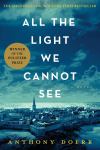
Anthony Doerr, All the light we cannot seeJust when you thought that there couldn’t possibly be another angle to writing about World War 2, up comes another book that does just that, like, for example, Anthony Doerr’s Pulitzer prize-winning All the light we cannot see. I had, of course, heard of it, but it wasn’t high on my reading agenda until it was chosen as my reading group’s September book. I wasn’t sorry we chose it, because I do, in fact, like World War 2 stories, and Doerr’s turned out to be an engaging one – warm, generous but not sentimental, and highly readable despite its alternating time-frames, locations and characters.

I’ve read several and reviewed some World War 2 novels and memoirs. Many have been about Jews and the Holocaust, such as Imre Kertesz’s Fateless, Hans Bergner’s Between sea and sky, Marcus Zusak’s The book thief, and two memoirs, Halina Rubin’s  Journeys with my mother and Anna Rosner Blay’s Sister, sister. A couple have been about the fighters, such as Alan Gould’s The lakewoman and Richard Flanagan’s The narrow road to the deep north. Some have drawn on the perspectives of children and young people – Zusak’s The book thief, Ursula Hegi’s Stones from the river and, of course, Anne Frank’s The diary of a young girl. Doerr’s book fits into this last group, but is different again. Zusak’s and Hegi’s girls are non-Jewish Germans, and Anne Frank is of course a Jewish girl in Amsterdam. These books focus on the Holocaust. Doerr’s does not. His interest is the personal experience of his young people – a blind French girl, Marie-Laure, born around 1928, and an orphan German boy, Werner, born around 1927. Their stories – Marie-Laure’s birth in Paris and flight with her father to Saint-Malo after Paris is occupied, and Werner’s childhood and youth in Germany followed by his war experience in Russia, Central Europe and France – are told in parallel until they inevitably meet.

Marie-Laure and Werner are nicely realised characters. They are ordinary young people trying to make a life for themselves in terrible times, but are extraordinary too. Marie-Laure’s childhood-onset blindness makes her initially helpless but she becomes a resourceful and imaginative young girl. Werner, the orphan, is a clever boy who develops a fascination with radios and things electrical. This leads him to a particular role in the war – tracking down partisan-resistance transmitters – that is different from most “soldier” stories.

All the light we cannot see is a big book. It has a wide, but not unwieldy, cast of characters, and a complex structure comprising two chronological sequences, within each of which the stories of our two young people alternate. This might sound difficult or confusing to read, but Doerr handles it well.

I’m not going to write a thorough review of this. Being a top-selling prize-winner, it has been reviewed widely. Instead, I’d like to share some of its themes, or ideas, because these are what interests me most. Before that though, I want to raise one issue. One review I read and some in my reading group expressed irritation at Doerr’s use of American idiom (such as people going “to the bathroom in their pants”). For some reason this sort of issue rarely worries me. Does that make me a bad reader? Perhaps. But it’s difficult, I think, to write in the language of another place and time, and when writers try to do it, it can feel forced. Some manage it (like Peter Carey’s True history of the Kelly Gang) and some compromise by relying on some well-placed words from an era. Generally, I’m happy for the author to use contemporary-to-them expression.

What you could be (Volkheimer to Werner)

What interests me most as a reader is not whether authors get these sorts of details right but questions like why is the author writing this, why has the author structured the story this way, what does the imagery mean, and so on. It is to the first of these that I’ll turn now. The novel’s overall subject matter is the obvious one – the tragedy of war, the way war destroys people’s lives – but within this are some interesting ideas.

One relates to logic and reason. Early in the novel, Marie-Laure’s locksmith father believes (or, perhaps, wants to believe) in logic:

Walk the paths of logic. Every outcome has its cause, and every predicament has its solution. Every lock its key.

This idea is reiterated in the book Marie-Laure is given by her father, Verne’s Twenty thousand leagues under the sea:

Logic, reason, pure science: these, Aronnax insists, are the proper ways to pursue a mystery. Not fables and fairy tales.

The opposing view, however, is put by Werner late in the war when he is tracking resistance transmitters:

Everybody, he is learning, likes to hear themselves talk. Hubris, like the oldest stories. They raise the antenna too high, broadcast for too many minutes, assume the world offers safety and rationality when of course it does not.

Logic and reason may work well enough in “normal” life, but during war they can stand for very little.

Somewhat related to this are the discussions about curses and luck. A major plot line concerns an ancient gem, the Sea of Flames diamond, which is said to carry a curse. It’s surely not by chance (ha-ha) that Doerr hides this stone behind the 13th door in the museum, and that his novel has 13 sections! Anyhow, here is Marie-Laure’s father on curses and luck. There are, he says:

no such things as curses. There is luck, maybe, bad or good. A slight inclination of each day toward success or failure. But no curses.

AND

Stones are just stones and rain is just rain and misfortune is just bad luck.

Later though, when her father has been arrested and Marie-Laure is scared and alone, she conducts an imaginary conversation with him:

You will survive, ma chérie.
How can you know?
Because of the diamond in your coat pocket. Because I left it here to protect you.
All it has done is put me in more danger.
Then why hasn’t the house been hit? Why hasn’t it caught fire?
It’s a rock, Papa. A pebble. There is only luck, bad or good. Chance and physics. Remember?
You are alive.

In almost every story I’ve read about war – fiction and non-fiction – luck has played a significant role. It’s one of the things that makes war so scary. You cannot expect reason to prevail.

Finally, related to these two ideas is that of choice:

Frederick [Werner’s friend at Schulpforta, the Nazi training school] said we don’t have choices, don’t own our lives, but in the end it was Werner who pretended there were no choices …

Frederick, in fact, chose to exercise his choice by refusing to follow orders and he suffered the consequences, while Werner did as he was told – at school and later in the field (“they do as they’re told”) and suffered the consequences in a different way. Late in the novel, Werner meets Marie-Laure:

He says, “You are very brave.”
She lowers the bucket. “What is your name?”
He tells her. She says, “When I lost my sight, Werner, people said I was brave. When my father left, people said I was brave. But it is not bravery; I have no choice. I wake up and live my life. Don’t you do the same?” 

These and similar discussions thread through the book. They remind us that in war survival is largely a matter of “luck”, that reason and logic will only get you so far when you confront the chaos of war, and that, perhaps paradoxically, you do have choices even if they are between two unappealing alternatives. The ultimate tragedy is that war destroys “what you could be” – all those talents, all those dreams, are subsumed into the business of survival.

This is not a perfect book. It’s a bit sprawling, trying to do a lot with imagery that I haven’t been able to completely untangle. And I wonder about the necessity of the final decades-later chapters. However, it is a page-turning read and produced a lively discussion in my bookgroup. I’m glad I read it.

Anthony Doerr
All the light we cannot see
London: Fourth Estate, 2014
531pp.
ISBN: 9780007548682 (eBook)

Monday musings on Australian literature: on Nation and people

Hodge and Whitehurst, Nation and PeopleDo you keep your old textbooks? I do, though am now starting to move them on. But some I still can’t part with, one being my high school history text. Called Nation and people: An introduction to Australia in a changing world, and first published in 1967, it was written by Brian Hodge and Allen Whitehurst who were teachers at East Sydney Technical High School. I decided for today’s Monday Musings to have a little look at what my teenage self learnt from it …

I was tickled because some of what I saw, looking at it now, had connections with my future – though, of course, I didn’t know it then. First is the fact that I went to high school in Sydney, and the teachers who wrote it were in Sydney, but the front cover is an image of Canberra, the city I moved to for my first professional job after finishing university, and where I live today. The other is that the first book listed in the student’s bibliography at the back is “F. Whyte, William Morris Hughes: His life and times“. F. Whyte (actually William Farmer Whyte), a journalist, was the grandfather of the man I married. This biography was his magnum opus. I have no idea why it is listed first though. The list is not alphabetical by author or title, and Billy Hughes was not our first Prime Minister so there’s not an obvious chronological reason. The order is quite idiosyncratic to my librarian eyes!

What is history?

These, however, aren’t what I really want to share, entertaining though they are to me. I was interested, for example, in the Preface. The authors say that

students should be encouraged to look for themes. It is important … that they understand the nature of a particular topic they are studying and why they are studying it.

In other words, history is not about dates but ideas and trends. Now, my two favourite high school teachers were my history teacher (Mrs Reynolds) and the librarian (Miss Reeve). It was the late 196os, a time of increasing interest in rights for indigenous Australians, of the Civil Rights movement in the US, and when anti-Apartheid activism was becoming stronger. These two teachers – seen as “red” by more conservative parents – encouraged us to think about what we’d now call social justice. I loved them, because for them history was a living thing about themes, ideas and values.

Indigenous Australians

Of course, in looking at this book now, I particularly wanted to see what it told us about indigenous Australians, because this was an issue we felt strongly about. There are a few references to Aborigines, as indigenous Australians were called then, but there is also a 10-page section devoted to them. It starts with some quotes – from the Constitution (1901), “A Crown Lands Commissioner to Governor La Trobe in 1840”, and writer Marjorie Barnard (from her history of 1962) – followed by their introduction:

During the nineteenth century, the white settlers of Australia extended their frontiers and finally won a continent from its former black owners. The pattern was a similar one to other regions in the world where the white civilisation had made contact with coloured races which were less powerful and culturally different. Lands had been conquered, the stability of the conquered society shattered and the coloured peoples exploited.

They talk about early contact – from seventeenth century sealers to the later farmers – and their poor treatment of indigenous people. They note that “few whites made any effort to understand” cultural differences. They describe conflict between white and black people, in which killing occurred on both sides, but in their view:

Too often in Australian history in the nineteenth century good relations were destroyed by the low standard of settler and the low standard of police.

Next, they say

After the white man had won the land, his [this was before 1970s feminism!] attitude changed. The black man became regarded as a useful stockman who could perform important duties in areas of harsh environment where white labour was scarce and expensive. Thus an extensive cheap labour force was set up for the cattle stations …

They go on to discuss other aspects of black-white history in Australia: missionaries and paternalism, and then assimilation. In 1967, a referendum was passed which amended Australia’s Constitution “to allow aborigines to be included in the census”. Hodge and Whitehurst include a photo of some “Young Australians” sitting at desks. The caption reads: “Now these young Queenslanders will be counted. But will they count?” Good question.

This section ends by suggesting that “integration” is starting to be seen as a better policy than “assimilation”, but

This means, of course, that Australians would have to accept the fact that their society is multi-racial and multi-cultured, and that two cultures would live side by side with complete equality.

Those words – “would have to accept” – suggest, don’t you think, an uncertainty that Australians would indeed accept this. Around 50 years have passed since this was written, and progress has been made but “complete equality”? Nope. How very depressing it all is.

Further reading

Finally, the authors provide a list of additional reading at the end – where I found F. Whyte – but they say “the reading list in this text is recommended as a manageable one”.  They don’t think students “should or could read all the books listed, but … are thoroughly capable of looking at quite a number of them.” They tell students not “to become a slave to one or two general texts, even if they are concise and interesting” and not to “attempt to wade though volumes that are recommended as reference books”. Instead, they say:

Perhaps your most profitable course at this stage of your study of History would be to enter into the spirit of the course through biography. This plan of action  you will find very profitable in your study of Australian development. Through reading biographies you will gain a feeling for History and insight into the spirit and problems of each decade.

How sensible is that? Don’t make students read dry recitations of historical events and facts. Better to read books that will bring history alive. Those they recommend at the end include biographies and fiction, such as George Johnston’s My brother Jack, Xavier Herbert’s Capricornia and, interestingly, Alan Paton’s Cry the beloved country.

Looking at this book, I can see the origins of my ideas about what history is and what it means. Thank you Messrs Hodge and Whitehurst, and thank you too Mrs Reynolds and Miss Reeve. You have not been forgotten.

Do you have teachers and classes that have made a lasting impression on you and your way of thinking?

Cassie Flanagan Willanski, Here where we live (Review)

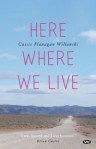
Cassie Flanagan Willanski, Here where we live“Write what you know” is the advice commonly given to new authors – and it’s something Cassie Flanagan Willanski, author of Here where we live, seems to accept. Set in South Australia, where Willanski lives, this debut collection of short stories reflects her two main interests, creative writing and the environment. The book won Wakefield Press’s Unpublished Manuscript Award a couple of years ago, and I can see why.

I wasn’t sure what to expect when I opened the book. Adelaide author and creative writing teacher Brian Castro is quoted on the front cover as saying “I was moved and I was haunted” and on the back “Her stories are as spare and understated as the harsh landscape she describes…” I’d concur. Her stories are not your typical short story. That is, they don’t have tight little plots, nor do they have shock (or even just surprising) endings. They are more like slices-of-life, or like chapters of a novel, in the way they tease out moments in people’s lives that you can imagine continuing into a larger story. And yet, they are complete in themselves and absolutely satisfying.

However, there is more to these stories than “just” slices of life. Willanski writes in her author’s note that they were written as part of her Master of Arts degree, in which she explored “the ways white Australians have written about (and for) Indigenous people in the twentieth and twenty-first centuries”. She introduces the notion of “Indigenous invisibility” which she describes as “ignoring Indigenous Australian people’s current existence, and mourning them as extinct”. She then talks about the issue we’ve discussed here before noting that as white writers became aware of this “Indigenous invisibility” they started to “write about them as characters in their books”. She says she has tried to reflect in her stories the various attitudes she found in her research. I found them authentic and sensitive, but the real judges of whether she’s been successful are indigenous people, aren’t they? There’s a reference to indigenous elder and activist Sue Haseldine in her acknowledgements, which may suggest some acceptance?

There are nine stories in the collection, three told first person, and the rest third person, except for the last and longest story which has two alternating voices, one third, the other second. Her protagonists include a young girl, a young male teacher, a 70-something woman, and a woman grieving for her late female partner. A few stories are connected, but this is not critical to appreciating the collection. Several of the stories, Willanski says in her author’s note, were inspired by real events but in each her imagination has created something new and fictional. Some of these real events are matters of history, such as the Hindmarsh Island Bridge controversy and the Maria shipwreck, while others draw from personal experiences.

Despite the historical inspiration behind some stories, they are all set in contemporary South Australia. The first two are told first person: “This is my daughter’s country” opens the first (“My good thing”) and “The night my husband told me he was going to leave me we were in the middle of a heatwave” starts the second (“Drought core”). Straightaway we are introduced to Willanski’s nicely controlled, pensive tone, and her ongoing themes: family relationships, indigenous issues, the environment and climate change.

The first story is told in the voice of a white woman who has an indigenous husband and a daughter. They are going back to country to clean rockholes. No-one is named – “this is my daughter”, “this is my husband”, “my daughter’s grandmother” – which gives the story a universal, almost mythical sense. There are hints of challenges – subtle references to the Stolen Generations and to environmentally destructive tourism – but it’s a short, warmhearted story about the drive to connect with land and people, and sets up the collection nicely.

I can’t describe every story so I’ll jump to the fourth one, “Stuff white people like”. It is lightly, self-mockingly satirical. It tells the story of a young couple, Oliver and Clay, visiting Ceduna where Oliver is considering a job as a “Nature School Teacher”. They are both earnest, Oliver particularly so, in wanting to understand and relate to indigenous people, so they decide to attend a “healing ceremony” for “‘Maralinga, climate change, feral animals, you name it,’ said the principal vaguely.” It’s an uncomfortable experience, and Oliver doesn’t know how to react to the event which isn’t what he expected. He doesn’t want to be “like the other white people” but how should he be? Clay is able to go with the flow a bit, but not Oliver. Later, on their trip home, she is able to laugh, and take the jokes in the book Stuff white people like, while Oliver is “crippled with self-awareness”. He can’t quite match Clay’s insight. She reads from the book about white people “knowing what’s best” for others:

“Do you think I’m like that?”
“‘Cos you’re excited to get to work with Aboriginal  kids? No!” She stopped for a minute, trying to piece together her thoughts. “Well, I mean–” she said and stopped again.
“What?” said Oliver.
“Well it’s just that Aboriginal people already know about having school outside.”
“I know,” said Oliver. “What’s your point?”
Clay looked at him again, then said, almost irritably, “Well, you’re taking something they’ve been doing for thousands of years and putting the white seal of approval on it.”
“But the missionaries took it away,” said Oliver.
He didn’t say it, but it was implied, and they didn’t know what to do with the implication. Oliver would be giving it back.

I love this on so many grounds – the personal and the political, the desire and the discomfort, the sincerity and uncertainty. These underpin the collection.

Desert oaks

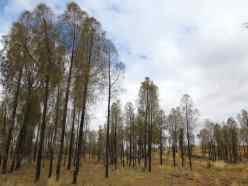
Desert Oaks, Centralia

There’s only one story in which Willanski speaks “for” or “in the voice of” indigenous people, “Oak trees in the desert”. It’s about the First International Woman Against Radioactive Racism Conference, held in Monument Valley, Utah. This is a fictional conference, but “radioactive racism” is “real” and the aforementioned Sue Haseldine is active in this area.

Willanski opens the story with an indigenous Australian woman introducing herself at the conference. It’s a strong story, with the first-person voices of various First Nation conference attendees interspersed with the third-person story of white Australian woman, 76-year-old Bev, whose late husband had worked at Maralinga and had contracted cancer. There’s also a young white woman activist-organiser providing, again, a light satirical touch. Like many of the stories, it’s very personal but also has a big political message. (I also enjoyed it because I love Australia’s desert oaks, and I’ve driven in the stunning Monument Valley.)

This is getting long so I’ll end with the last story, “Some yellow flowers”, which contrasts a mature love, through the grieving Jean whose partner Nancy has died, with the young love of two teenagers, Loretta and Jackson. This story brings together several of the collection’s themes, including developing and maintaining loving relationships, climate change and caring for the environment, and indigenous-settler relationships. There is a big storm – one of those one-hundred-years storms that are occurring more frequently these days:

The roof shrieks and the sea spray pelts against the front verandah. The separation between land and water, sea and sky, past and present and living and dead becomes more obviously a figment of daytime imagination.

Dreams are had, stories are told, relationships are resolved – not simplistically, but with a sense of continuum.

This is the sort of writing I like: undramatic, understated, reflective stories about ordinary people coping with breakups, death, new relationships, but overlaid with a strong set of values and contemporary concerns, in this case encompassing the intertwined issue of respecting indigenous people and caring for our country. While not always comfortable reading, it’s a hopeful book – and I like that too.

awwchallenge2016Cassie Flanagan Willanski
Here where we live
Mile End: Wakefield Press, 2016
146pp.
ISBN: 9781743054031

(Review copy courtesy Wakefield Press)

Monday musings on Australian Literature: The Vagabond

Quite by accident – no, I tell a lie, it was through a link sent by a good friend (thanks Kate) – I came across “The Vagabond”, a mysterious journalist who wrote for Australian newspapers – primarily in Victoria – in the late 19th century. The link was for an article he wrote on sixpenny restaurants, but that article was published in the online journal Inside Story to coincide with the publication of The Vagabond papers (ed. Michael Cannon, Monash University Publishing, 2016).

So, who was this Vagabond? Well, for a start, he is significant enough to be included in the Australian National Biography (ADB), where he is listed under the name John Stanley James (1843-1896), born in Walsall, Staffordshire, England. If, however, you read contemporary obituaries for him, as I did before I found ADB’s entry, you would think he was Julian Thomas, born in Virginia, USA! If you continued to search Trove, though, you would find articles written the year after his death identifying him as John Stanley James. Apparently, as ADB tells it, he had a few fallings-out with his father, in England, and in 1872 went to the USA where he changed his name to Julian Thomas. He arrived in Sydney in 1875.

According to John Barnes (ADB), his early articles, published in Melbourne’s The Argus, were

on ‘the social life and public institutions of Melbourne from a point of view unattainable to the majority’. The most substantial of the series were based on his first-hand reports of what it was like to be ‘inside’ certain institutions: to gather material, he spent a day in the Immigrants’ Home, was admitted to the Benevolent Asylum and worked as the porter at the Alfred Hospital, an attendant at lunatic asylums and dispenser-cum-dentist at Pentridge gaol. His accounts of these institutions combined intimate knowledge of their day-to-day working with a breadth of perspective gained from his knowledge of other societies. His shrewd observation, practical judgments and suggestions for reform reveal a compassionate spirit behind his cultivated flamboyancy.

One of the obituaries I found in Trove referred to these articles:

His series of articles for the “Argus” descriptive of life in the benevolent asylums, hospitals, and finally the Pentridge prison, created a furore which had never been eclipsed by any work of the kind done here since.

This obituarist described him as having “A clear, crisp, epigrammatic style”.

Another described him as having “a fluent pen, a versatile imagination, and an interesting manner of personal comment” and also mentioned, albeit more measuredly, his institutional pieces:

his earlier series of Vagabond papers wherein from personal experience he revealed some of the abuses in the administration of penal establishments, lunatic asylums and charitable institutions, attracted considerable attention.

John Barnes sums him up this way:

Outwardly egotistical and reckless, he had a generous and sympathetic nature. Probably his early life had helped to develop in him a keen feeling for those in need, a feeling expressed in his best work and commemorated after his death in a memorial erected by public subscription.

The process of raising money for, and the erection of this memorial, is also documented in Trove.

In 1878, he was sent to New Caledonia to report on a native uprising. Barnes writes that “he shocked readers with details of the brutality of the French colonial administration which he condemned strongly”. These reports, plus those on his experiences in the New Hebrides and New Guinea, were published in his book Cannibals and Convicts (1886). Although he travelled again – including to China, Japan, British Columbia and the South Seas – Barnes argues that it’s his early Victorian pieces and those in this book that represent his best work.

I’ll leave the story of his life there … you can read more at the ADB link above or look for his articles in Trove yourself. Instead, I’m going to end by discussing his article on the sixpenny restaurants, which was published in the Argus on 27 May 1876, his early (well-regarded) years in Victoria.

The sixpenny restaurant

Not only did I enjoy the article for itself, but it reminded me of one I discussed earlier this year, George G Foster’s “The eating-houses”. It was published in New York in 1849, and discusses various types of eating-houses, including sixpenny ones. The articles are different overall, but both provide a picture of an active eating-out scene in 19th century western countries. Fascinating.

So, the Vagabond’s article. Interestingly, the version published in Inside Story starts about two paragraphs into the original published in The Argus. These first two paragraphs make a political statement about Australia’s need for labour, and the Vagabond has a proposition:

I would have printed one million handbills, exactly similar to those which any day, from 12 till 2, you will have thrust into your hands in the principal streets of Melbourne, and the wonders of which will strike an English labourer or mechanic dumb. Imagine poor Hodge, who lives on bread and bacon, and whose only idea of spending six-pence is to purchase a quart of ale, reading from the bill of fare that a breakfast with a choice of 10 hot dishes of meat, bread and butter ad libitum, and “two or three cups of tea or coffee;” a dinner with choice of six soups, 12 kinds of meat, including such epicurean luxuries as “beef steak pudding” or “stuffed ox-heart;” and six puddings or pies, with tea, coffee, and bread and butter, as at breakfast, may be had in Melbourne for 6d. a meal. The supper (which he reads may be had “both before and after closing of the theatres,” pleasantly suggesting that it is the custom for his class to patronise those places of amusement) is even more bewildering” stewed rabbit, “haricot mutton,” “curries,” and some 15 other dishes, with salad, beet-root, and tomatoes. A land which can furnish such delights for 6d., must surely be the working man’s paradise (my emph).

This argument leads into the article proper, which starts by stating that “Most men have to suffer a perpetual combat between their tastes and their exchequer”.

Vagabond describes his surprise at the quantity of food he can buy for 6d. at these sixpenny restaurants. It resulted in his doing a tour of cheap restaurants. He found they are pretty much alike – “the dishes tend to be stereotyped, and the cooking is much the same in all”. There can be, particularly in summer, “more flies in the dishes than refined prejudices might fancy”, and sausages, he writes, are such “bags of mystery” that the “enormous consumption” of them is “convincing proof that faith is strong in the colonies”. Love it!

Workers Cafe, Porto

Workers’ cafe, Porto, Portugal

After discussing the food in some detail, he then describes the establishments, making an interesting observation:

Sixpenny restaurants vary a good deal in style; there are some in the principal thoroughfares which shine with plate-glass, white linen, and pretty waiter girls. But all this extra display, and the cost of the handbills which are so freely circulated, cause perceptible diminution in the quantity or quality of the viands. The places where one really feeds best are the smaller restaurants, kept by married couples, who do the cooking themselves … These are chiefly patronised by working men.”

This brought to mind my experience as a traveller: we’ve often had the best meals in little ma-and-pa run restaurants, in worker-patronised restaurants. We tend not to frequent those places at home because they offer the sort of food we might cook ourselves but when we travel, these places can be the best for learning about local food and life.

But, I digress … Vagabond continues to discuss the experience of dining in cheap restaurants. He notes the “tricks” customers employ to obtain more food, and suggests dining after the rush makes it easier for diners to chat together. He then describes the patrons – and it’s a fascinating, multicultural bunch – before moving on to the staff, the waiters who “are refugees from all classes” and the cooks, most of whom began “with making damper”.

He concludes by mentioning that some taverns are setting themselves up as rivals to the sixpenny restaurants. They give “hot lunches with pint of ale, from 12 to 2 daily, for 6d”, but the food mostly comprises “a plate of corned beef and potatoes” and “you get altogether about half the amount of food you would at a sixpenny dinner”. However, these places are frequented by young clerks, who, he says, are too proud to be seen in a sixpenny restaurant. He concludes his article with:

It would be far better for them if they would put their dignity on one side, and take a dinner in a sixpenny restaurant, which up to this time I consider to be the most wonderful example of Victorian progress and prosperity which I have met with.

I can see what Barnes means by “a compassionate spirit behind his cultivated flamboyancy”. I could read more of Vagabond.


More from David Marr …

To write my recent post on David Marr, I did some research, as I usually do when I take notes at a lecture or seminar, because I need to make sure that the book title or author name or quote that I recorded in my notes are correct. That’s how, for example, I found the exact quote from Cavafy that I used in my post.

However, when doing this research I sometimes uncover items that don’t relate to the topic I’m researching but are too good to not share. In the case of Marr, one of the pieces I found was an interview with Marr conducted by the National Library not long before the lecture. It’s not long but contains a couple of comments that I loved.

The full interview is available online at the NLA, but I’m just going to share his responses to three questions.

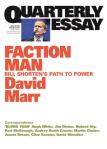
David Marr, Quarterly Essay Faction ManThe first question asked what was “the best part of writing” his latest book, his Quarterly Essay on Bill Shorten titled “Faction man”. Marr answered

Learning what I didn’t know then explaining it to readers as baffled as I once was.

I liked this because in the lecture we attended he described himself as an “explainer”. Makes sense to me. In fact it’s what we want writers like Marr to do for us, isn’t it?

The next question I want to share asked him for “the strangest piece of advice” he’d “ever been given as a writer”. He responded:

When you’re cutting, never cut the jokes. The old newspaper editor who told me this wasn’t inviting me to be trivial. He was saying: delighting readers matters and humour is a way to the truth.

I totally agree. We can be too earnest at times. A good sense of humour never gets in the way of the truth, in my experience.

The last question I’m sharing asked him for “the strangest question” he’d been asked about his writing. He said

My mother rang one day years ago and asked: ‘Are you working today or just writing?’ I’ve celebrated that ever since.

Besides making me laugh, it brought me back to his Seymour lecture and why he wrote his biography of Patrick White: it was inspired by a contradiction between White’s statement that his parents never wanted him to be a writer and the fact that his parents apparently bankrolled a publisher in order to encourage them to publish White’s poems. (Interestingly, Bill, commenting on my Seymour post, said that his parents didn’t want him to be a truck drive but they still helped him by his first truck. So, perhaps White’s parents’ action doesn’t contradict White’s statement about their wishes for him!)

Here I stand: David Marr’s Seymour Biography Lecture

This week Mr Gums and I went to our second Seymour Biography Lecture, an annual lecture devoted to life-writing which was endowed by the Seymours in 2005. Our first, last year, was given by Robert Drewe who discussed memoir as a form of life-writing that is differentiated from but as valid as autobiography. It was a wonderful lecture, so we were keen to attend this year’s, and particularly when David Marr was announced as the speaker.

David Marr, NLA, Sept 2016

David Marr, NLA, Sept 2016

David Marr, as you may know, is one of Australia’s most recognisable contemporary public intellectuals. He wrote a biography of controversial politician and Chief Justice Sir Garfield Barwick (Barwick) and the multi-award-winning biography Patrick White: A life. In recent years he has written several biographical essays for the Quarterly Essay: on John Howard (2007), Kevin Rudd (2010), Tony Abbott (2012), George Pell (2013), and Bill Shorten (2015). The National Library of Australia’s Director-General, Anne-Marie Schwirtlich said, when introducing him, that these essays represent “a new form of biography”. That sounded interesting, but it turned out not to be the subject of his lecture. Oh well … a topic for another day, perhaps?

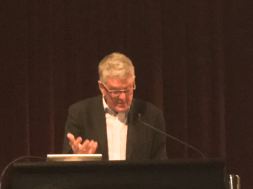
At this point David Marr got up to speak … I’ve seen him many times on television, but I greatly enjoyed seeing him in person. He has a lovely, natural speaking style – articulate, but informally formal if that makes sense. He started by saying how good it was to be giving a lecture in someone’s name, not in their memory but in their presence! (The Seymours were in the audience).

What’s the story?

Marr commenced by describing how he was called to Patrick White’s place in 1988 during one of White’s “near-death” experiences. When he got there, other family and friends were already there, waiting for the ambulance. Eventually, Wendy the ambo arrived, walked in, and asked, very appropriately Marr said, “What’s the story?” As it turned out White lived through more episodes like this, before dying in 1990. He told us all this, not so much because it was an interesting story, but to make the point that although he was present at these occasions, and although he wrote about them in his White biography, we will not find him there. That is, he did not put himself in the room with the others. In fact, he did not put himself in the book anywhere (although he admitted, slyly, that of course he is everywhere in the book – the words, the judgements, are his).

Marr then gave us his rules for biographers, but I’m afraid I only got four of the five down. They are:

  • The voice of the subject must be clear;
  • The biography must not “muck around with time”;
  • The biographer must spare the reader his/her “homework”; and
  • The biographer must stay out of the life.

This last “rule” would be the theme of his lecture …

Be an invisible biographer

Before exploring this, however, Marr said that it is the biographer’s truth that everybody’s life is open to writing about, that no-one owns his/her life. True, yes, he said, but “mighty obstacles can be put in your way”. Subjects can:

  • Stop their friends talking to you
  • Block access to their papers
  • Withhold copyright consent. He expanded here on family ownership of copyright, and the typical family view that “what’s hidden in life must be hidden in death”. (Hence, methought, sisters like Cassandra Austen destroy precious letters!)
  • Place a curse on their biographers. Here he mentioned Greek poet, Cavafy, who wrote “From all I did and all I said/Let no one try to find out who I was” (“Hidden things”). Cavafy also said that sometimes it is better to wait, that some things cannot be understood until time has passed.

Marr said he feared every one of these obstructions when he approached White – particularly the curses! But the timing was right for White, and Marr’s biography project was, amazingly, accepted. Marr described his aims as absolutely conventional: “I was  born in Pymble after all,” he said! They included finding out who White was, where his books came from, his impact on the world and world’s on him, and so on. But White – the irascible White – saw it quite differently. He saw it as his “last reckoning”, his last chance to see where all his life passions had ended up, his last chance to see which of his many and diverse arrows had hit their mark.

Marr spent four years (I think) on the project, meeting with White, visiting places he’d been, meeting people he knew, and so on, but he is not in the book. Editors today, he said, would “tell me to get in there”, to write of his adventures in research. He described this style as “quest biographies”, and he doesn’t (generally) like them. They “inflict their homework on readers” and “they also bugger around with time”. For example, the biographer may write about being in Greece researching the subject’s life while simultaneously describing the subject’s life in that place in some time past. Biographers can also, inappropriately in Marr’s view, foreshadow aspects of the subject’s life, as in “that was the last time X ever went to Y”. He argued that it is the great drama of our lives that we don’t know what is going to happen. Great biographers make the future unknown, he said. Even though we usually know the fate of the subject, a good biographer can make it a surprise.

He gave examples of visible biographers that he doesn’t like, but admitted that rules can be broken. The “quest biography” is, for example, suitable for the life of a fraud. And there are cases where the biographer has “absolutely earned the right” to be in the biography, the perfect example being Boswell in his Life of Johnson. Boswell’s world was Johnson. He spent twenty years talking, living, arguing with Johnson. Do the work, said Marr, put in the years, and deal with yourself as ruthlessly as Boswell does!

David Marr, Power TripThen Marr admitted that he has broken his own rule – when there’s been a purpose for him to be there in the work. His Quarterly Essay on Kevin Rudd is an example. He told of dining with Rudd who, late in the meal, asked Marr what his essay was about. When Marr told him, Rudd lost his temper, in a very controlled way. He was “astonishingly eloquent”, Marr said, speaking from his “angry heart” and Marr had to be there to be able to describe the experience.

So, there are no rules, but overall he’d like to see an end to biographers in the text. They should be in the shadows, “manipulating everything”, and saving their stories about themselves and their research for writers’ festivals and, when they’re old, for lectures!

Q&A

We had about 15 to 20 minutes of Q&A but some of the questions, interesting though they were, ranged wider than the focus of Marr’s lecture, so I’ll keep this brief.

  • How do you choose who to write about? Marr chose White because he read something contradictory about White’s parents. White had always said that they did not want him to be a writer, but then Marr read somewhere that White’s parents had bankrolled a publishing project on the condition they published a book of White’s poems. He wrote his Barwick biography because he was enraged by what Barwick was getting away with. He’s an explainer he said, rather than a creator.
  • Do you as a biographer ever withhold information? Yes, said Marr. There are some private matters that have no place in biography. His deal with Patrick White, he hastened to say, was that it was his (i.e. Marr’) book and he would write what he wanted to write. Any information he withheld, then, was withheld because it was not, in his opinion, essential to our understanding of White. Legal issues, too, can sometimes result in information being omitted, as has happened with his various Quarterly Essays on contemporary politicians.

During the book signing at the end of the evening, Marr commented that his was “a craft lecture”, meaning I suppose that it wasn’t a theoretical or philosophical one on the form and its meaning. Well, “craft” it may have been but I enjoy hearing from writers about their craft and, anyhow, amongst the “craft”, as you can probably tell, we got a bit of theory and philosophy too. Another wonderful Seymour lecture, with another thoughtful, inspiring writer.

Monday musings on Australian literature: Inga Clendinnen

I cannot let this week pass without adding my voice to the tributes made by my blogger friends to anthropologist-historian Inga Clendinnen (1934-2016), who died last week at the too-young age of 82. It seemed fitting to delay my tribute for a couple of days to make her a Monday Musings topic. Clendinnen deserves no less (says she, applying a gravitas to her Monday Musings that they don’t really warrant!)

Now, I wonder how many of my non-Australian readers have heard of or know much about this rather significant Australian public intellectual? Clendinnen’s first area of speciality – and the subject of her first two books – was the Aztec civilisation. I haven’t read those books. She then wrote another which is on my TBR, Reading the Holocaust (1998). Her next was the first I read, her memoir Tiger’s eye (2000). Critic Morag Fraser described it as follows (the back blurb):

This is a rare book … it is memoir, history, fiction, a documenting of filial gratitude and ingratitude, and a record of the cauldron of a near-fatal illness, all bundled coherently – that’s the miracle – between covers.

The book was inspired by her experience with liver disease (and her ensuing transplant) … but this disease in turn inspired her to contemplate all sorts of things about life – hers and life in general – about the things that interest her, like writing, for a start, and of course about the experience of being seriously ill. (Oh dear, I’ve always wanted to reread this, and am now becoming distracted from the task at hand by dipping into it!) She talks about how writing is her way of understanding herself. Much of what she says is thoughtful, serious, philosophical, but there are also light touches:

Meanwhile, I wrote. I was in a big mixed ward and discovered when I pulled out my writing pad that in such a ward writing is ‘letter-writing’, and therefore a collective activity. Topics and items of local interest were offered by patients and by nursing staff. If I said, defensively, that I was writing stories, passing strangers–chaplains, orderlies, tea-ladies–would stop to empty a bucket of tales about their dogs or their ex-wives over me, or would say that they are writers too, or would be when they could get around to it. When they weren’t too busy living.

I love how she captures that special world that is the hospital.

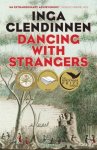
Inga Clendinnen, Dancing with strangersAnyhow, moving on. The book that really brought her to wider attention in Australia was her multi-award-winning book, Dancing with strangers (2003). In her Introduction she describes it as “a telling of the story when a thousand British men and women, some of them convicts and some of them free, made a settlement on the east coast of Australia … and how they fared with the people they found there.” “A” telling, she writes. I like that. She also explains how she aimed to apply the disciplines of history (which can be “culture-insensitive”) and anthropology (which can be insensitive to “temporal change”) to an analysis of episodes recorded in primary resources in order to understand better what people did and why they did it. In other words, she teases out possible cultural assumptions, expectations, and, even, aspirations which might have underpinned the behaviours and events that have too often been simplified in the historical record we all know.

So, in this history, we have Clendinnen, our historian, saying things like “I think Baneelon believed he had fully instructed Phillip as to what was in store for him”, and

There is another possibility in this hall-of-mirrors world: that Barangaroo’s funeral rites were muted not because of Barangaroo’s social isolation, but because of Baleen’s ongoing ambition to impress the British, in this case with the reverent sedateness of his mourning. After all, he has watched enough British burials.

She concludes by arguing, logically it seems to me, that “to understand history we have to get inside episodes, which means setting ourselves to understand our subjects’ changing motivations and moods in their changing contexts, and to tracing the devious routes by which knowledge was acquired, understood and acted upon.” This is the sort of history I enjoy reading …

Every time, in fact, that I read Clendinnen on history I am mystified all over again about her strong criticism of Kate Grenville’s comments regarding The secret river. I keep thinking I’m missing something. In Dancing with strangers Clendinnen uses her knowledge of culture and human beings to fill gaps or find different explanations for how people behaved which is, in a different but to me related way, what “literary” historical novelists do. We could get caught up in semantics here, in arguing exceptions and rules, and so on, but my feeling (with no evidence I admit) is that Grenville’s over-exuberant-at-the-time way of explaining what she was doing “got up Clendinnen’s nose”. I read (and enjoyed) Clendinnen’s Quarterly Essay on “The history question: Who owns the past (QE23)” (2006) and the section in which she discusses novelists and historians is replete with my marginalia! I’ll leave it there!

Finally, the last book of hers that I’ve read is her essay collection, Agamemnon’s kiss (2006). One of the dedicatees is “my unknown [liver] donor, April 1994”. Not surprisingly, the collection includes essays on health, life and death. It also includes writings on reading fiction, writing history, the history wars, the Holocaust. And she writes about other writers, such as Hilary Mantel and Penelope Fitzgerald. In the last titular essay, she writes (yet again) about reading and writing. I’ll end with something that I think we’d all agree with:

Rewarding reading is like being luxuriously absorbed in intimate conversation with a person not previously known, but whose words somehow interweave with the lonely interior monologue we conduct inside our heads. In real life we might encounter such a conversation in five, ten or twenty years, or possibly not at all. In a world of libraries and bookshops it is forever at our fingertips …

Vale Inga Clendinnen. Thank you for all your wonderful books, and for the intimate conversations we can now, because of them, continue to have with you.

For tributes from other bloggers, please see

  • Michelle’s of Adventures in biography (who brought Clendinnen’s death to my attention last week)
  • Lisa’s of ANZLitLovers
  • Janine’s of the Resident Judge of Port Phillip

John Muir, Save the redwoods (Review)

Giant Sequoia, Yosemite

Giant Sequoia, in the Sierras

Any fool can destroy trees. They cannot defend themselves or run away. And few destroyers of trees ever plant any; nor can planting avail much toward restoring our grand aboriginal giants. It took more than three thousand years to make some of the oldest of the Sequoias, trees that are still standing in perfect strength and beauty, waving and singing in the mighty forests of the Sierra.

“A wind-storm in the forests” by American naturalist/environmentalist John Muir (1838-1914) was the first Library of America (LOA) story of the week that I ever reviewed here. I was consequently keen to read his short essay “Save the redwoods” when it popped up as an LOA story-of-the-week three weeks ago. It’s an interesting piece, partly because it was found amongst his papers, posthumously, so was not published during his lifetime.

As LOA’s notes say, Muir spent four decades writing articles for the national press which argued for the “protection of such natural wonders as the Petrified Forest, the Grand Canyon, and—above all—Yosemite.” Yosemite was a particular love of his. LOA tells how it was his and Robert Underwood Johnson, associate editor of The Century Magazine, alarm about the “substantial damage caused by lumbering, sheepherding, and tourism” there that eventually resulted in the creation of Yosemite National Park.

It is this issue of lumbering that Muir takes up again in “Save the redwoods”. It was apparently written around 1900 when there were concerns that the Calaveras Grove of Big Trees or Giant Redwoods (Sequoiadendron giganteum) was at risk of being sold and cut down for timber because the owner, James Sperry who had protected them, was old and no longer able to maintain it. A lumberman, Job Whiteside, planned to buy it – but there was a public outcry. This is when Muir apparently wrote his piece, arguing that the various scattered groves of redwoods not included in Sequoia National Park should be protected..

In his piece Muir, as was his style, draws on religious imagery, analogy and personification, amongst other devices, to argue his case. He discusses the destruction of a couple of Big Trees in the grove back in the 1850s:

Forty-seven years ago one of these Calaveras King Sequoias was laboriously cut down, that the stump might be had for a dancing-floor. Another, one of the finest in the grove, more than three hundred feet high, was skinned alive to a height of one hundred and sixteen feet from the ground and the bark sent to London to show how fine and big that Calaveras tree was—as sensible a scheme as skinning our great men would be to prove their greatness. This grand tree is of course dead, a ghastly disfigured ruin, but it still stands erect and holds forth its majestic arms as if alive and saying, “Forgive them; they know not what they do.”

He then comments on the new plans to mill this grove, saying

No doubt these trees would make good lumber after passing through a sawmill, as George Washington after passing through the hands of a French cook would have made good food.

That’s an analogy to get our attention! He argues that if one of these

Sequoia kings [could] come to town in all its god-like majesty so as to be strikingly seen and allowed to plead its own cause, there would never again be any lack of defenders.

He describes the proliferation of sawmills and the ongoing destruction of these big trees, and sets this activity against Mr Sperry’s protection of the sequoias in his Calaveras Grove. Muir notes that when news starts to come through of this Grove being bonded to the lumberman, there is suddenly a “righteous and lively indignation on the part of Californians”. This, he says, seems strange given “the long period of deathlike apathy, in which they have witnessed the destruction of other groves unmoved”. However, he writes, public opinion had been rapidly changing in recent years and there had always been a special interest in the  “Calaveras giants [because] they were the first discovered and are best known”.  Moreover:

  • they have a worldwide reputation;
  • they are visited and admired by “travelers from every country”; and
  • the names of great men have long been associated with them (including Washington, Humboldt, Torrey and Gray, and Sir Joseph Hooker)

He argues that “these kings of the forest, the noblest of a noble race, rightly belong to the world” but, as they are in California, Californians “cannot escape responsibility as their guardians”. Then comes some patriotism and buttering up! He writes:

Fortunately the American people are equal to this trust, or any other that may arise, as soon as they see it and understand it.

It is here that we find the excerpt I opened my post with. It’s followed by his brief description of a bill being put before congress to protect the Calaveras Grove. He argues that not only will the bill protect this particular grove of trees but the resultant/concurrent “quickening interest in forest affairs in general” will result in improved chances for other groves and forests.

The piece feels a little rushed and unfinished, which is probably why he never submitted it for publication, but the work of Muir and others did eventually result in most of the west coast’s major sequoia and coastal redwood groves being “gathered under the jurisdiction of the National Park Service”. I saw many of these trees in the 1980s and again in the 1990s. They are unforgettable.

“Any fool”, Muir wrote, “can destroy trees”. Saving them is much harder. It takes passion, patience and persistence, something Muir exemplified in his life-time. Luckily, a long succession of environmentalists – around the world – continue this tree-saving work today.

John Muir
“Saving the redwoods”
First published (posthumously): In Sierra Club Bulletin, January 1920.
Available: Online at the Library of America

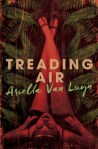
Ariella Van Luyn, Treading air (Review)

Arielle Van Luyn, Treading air

It wasn’t until I reached the end of Ariella Van Luyn’s debut novel, Treading air, that I discovered it was loosely based on the life of a real person. I’m glad it happened that way. I like introductions, but I always read them last because I like to come to my reading as unencumbered as possible – and totally unencumbered I was with this one. Even the title gives nothing away.

So, I was pleasantly surprised to find the first page labelled “Brisbane 1945”, because I spent some of my formative years in Brisbane, albeit rather later than 1945. I was even more surprised, a couple of chapters in, to find a section labelled “Townsville 1922”, because my Mum was born in Townsville at the end of that decade, and I visited it a few times in my youth. There, see how I’ve sneakily given you the historical setting –  and implied the structure – without specifically saying so?

Now, let’s get to the story. As Van Luyn explains in her acknowledgements at the end of the novel, it concerns Elizabeth (Lizzie) O’Dea, aka Betty Knight/O’Brian/Stewart/Johnson, who was born in Brisbane around the turn of the 20th century*. She married Joe O’Dea and moved to Townsville in 1922 where Joe was promised a job. However, as Van Luyn tells it, Joe soon loses that job, and Lizzie, with few work skills, becomes a prostitute, which she sees as far more lucrative, and yes, less demeaning, than the domestic work her mother had done. From there, life becomes increasingly challenging … but, I’ll leave the plot here, because there are other things to discuss.

The novel opens in Brisbane’s lock hospital where Lizzie’s been sent by a magistrate. This opening set-up gives me a great opportunity to discuss how Van Luyn uses fiction and history to construct her character and story. Brisbane’s Courier Mail and the Townsville Daily Bulletin both report on a case at that time: Lizzie is accused of “attempting to steal £20” which brings about a “bond” (deferred) sentence on 8 May 1945. The Courier-Mail writes

“It is rather remarkable,” said Mr. Wilson, “that in this long list of stealing convictions she has never been given a chance to see if she could reform. “We will just try it for an experiment. …” Mr. Wilson ordered O’Dea to enter into a bond to come up for sentence if called upon within six months. “We will both thank you, sir,” said the woman as she left the dock.

Mr Wilson’s “experiment” idea resulted from O’Dea arguing that she wanted a chance to be there for her husband Joe’s imminent release from his 20-year prison sentence.

However, the “crime” Van Luyn uses in the opening of her novel is Lizzie’s stealing “tins of bully beef and some US army blankets”. This crime actually occurred in 1944 and the court case in October of that year resulted in a fine of £5. Here is Van Luyn’s story of the court case in her opening chapter:

At first, in the police court, surrounded by dark wood, she couldn’t make sense of what Mr Wilson was saying about Joe. In a wig that hung down his cheeks, he looked at her medical report and decided to be generous: only six weeks in the lock hospital to recover [because she’d been found to have “the clap”]. He said when Joe got out a few days after she had, they could start a new life together. “We’ll try it for an experiment,” Wilson said, and Lizzie wanted to stick her fingers in his eyeballs. She isn’t a bloody lab rat.

My marginalia here is: “feisty, independent”. So, I have two points to make. One is that Van Luyn shifts a crime of which Lizzie was accused to a different time because, presumably, it’s a more interesting time, narratively speaking. And the other is that, instead of having Lizzie thank Mr Wilson, Van Luyn has her responding (internally, anyhow) in a feisty manner to establish Lizzie as an independent woman, a survivor. For an historian, these “plays” with the facts would be unforgivable, but for Van Luyn, they enable her to engage the reader in the story and quickly establish the sort of person she believes, from her research, that Lizzie was. In other words, Van Luyn plays with the “facts” to create her “truth”. As she is writing fiction, I have no problem with that! Do you?

The other main point I want to make about this book draws from Sulari Gentill’s comments at the Canberra Writers Festival. She said she likes to find interesting but forgotten people. I understood this to mean working class people and minorities, that is, the “little” people, the women, and those disadvantaged by culture, race, and so on. This is certainly what Van Luyn does here. In addition to Lizzie, a working class woman, she also has Chinese and indigenous characters in Townsville. In this focus on the “forgotten people”, her book reminds me of others I’ve reviewed recently, including Eleanor Limprecht’s Long Bay (my review) about abortionist Rebecca Sinclair, and Emma Ashmere’s The floating garden (my review), which uses fictional people to tell the story of a real situation, the removal of marginalised people from their Milson’s point community to make way for the Sydney Harbour Bridge.

“Her life has twisted away from her”

Back to the story. It’s told third person, but from Lizzie’s perspective, and alternates between the 1920s and the mid 1940s, so we know at the beginning that Lizzie’s been “on the game” and is a survivor. Several dramas occur during the novel – including a murder, a shooting, an attempted suicide  – and all these can be found in court records of the time. Van Luyn doesn’t over-sensationalise these, any more than she does Lizzie’s life as a prostitute. She is, though, explicit in her descriptions, giving us a picture of a lusty, resourceful young woman who’s determined to survive. Life is tough going, however. Lizzie, like Townsville, is “unformed”, but Joe, she comes to realise, “can’t look after her” as she’d hoped, so “she has to look after herself”. Moreover, although prostitution is more lucrative than domestic work, she’s not very good at saving – not surprisingly, given her upbringing – so the gap between the dream of an independent future and the reality stays wide for much of the novel.

It’s to Van Luyn’s credit that she has managed to create out of a scrappy historical record a character who, petty criminal though she is, not only comes alive but engages us fully. This is not a sentimental story, but it nonetheless reminds us that not everyone gets a lucky start in life. There are Lizzies still amongst us today. This is the sort of historical fiction I enjoy.

awwchallenge2016

Ariella Van Luyn
Treading air
South Melbourne: Affirm Press, 2016
282pp.
ISBN: 9781925344011

(Review copy courtesy Affirm Press)

* Researching Trove, I found several court reports in which her age wanders around wildly, suggesting birthdates anywhere between 1893 to 1902.