Monday musings on Australian literature: Novels about objects

This weekend I went to the National Museum of Australia’s current visiting exhibition, A History of the World in 100 Objects from the British Museum. The promo describes it thus: “Explore the history of humanity — how we have shaped the world, and how the world has shaped us — in this major exhibition. Witness compelling stories expressed through a beautiful collection of artefacts from across the globe.” It’s a beautiful, and, to be clichéd, thought-provoking exhibition. I expect I’ll visit it again.

Funerary stela, Egypt

Funerary stela, Egypt, 100BCE-100CE

The texts associated with the objects varied in the sorts of information they conveyed, depending of course, on the sort of object, and its purpose and meaning. I was particularly interested in those where the object has thrown light on our understanding of people’s lives and social structures. For example, the Egyptian funerary stela is inscribed in three scripts enabling it to be read by “multiple levels of Egyptian society”. That says something about the wish to communicate to all, doesn’t it? Another point the exhibition curators make is that objects have their own biography which may depart from their original role or purpose. They exemplify this by the very first object: an Egyptian mummy FOR x but when it was x-rayed was discovered to contain a male. Why the woman was replaced by a man at some time in the object’s history is a matter of conjecture, though they have some ideas.

Anyhow, all this made me think about novels which focus on an object – and I thought it would be a fun topic for a Monday Musings. It turned out not to be easy – though I suspect it would be easier if I decided to include crime fiction! Objects – weapons, serial killer trophies, and so on, aren’t hard to find there! But literary fiction? Hmm… However, here goes … and of course I’ve made it harder for myself because I am going to focus on Australian novels (listed in alphabetical order by author)

Geraldine Brooks’ People of the book: I read this book before I started blogging. It’s not my favourite Brooks’ novel but it does have an intriguing premise which matches the themes of the exhibition because in this novel Brooks tracks the history of the book, the Sarajevo Haggadah, the people who have owned and handled it through history, its impact on their lives and on history. Parallel to this story is a contemporary thread about the conservator whose job is to prepare the book for exhibition and who is anxious to retain (i.e. not restore away) its history. (I must say though that I’m with the readers who found conservator Hanna’s story the problematic part of this otherwise good read.)
Peter Carey Chemistry of tears bookcover

Peter Carey’s The chemistry of tears (my review):  This was the first book that popped into my head, the one, in fact, that inspired me to write this post. It’s hard to forget the father travelling to Germany to have an automaton made for his ailing son, and the grieving museum conservator given the project of reconstructing it a century later. (I hadn’t thought until now of the loose similarity with Brooks’ book!). The object plays multiple roles: it represents what a father will do for love of a child; it plays a role in the resolution of grief; and, it contains a clever little mystery/irony/message within itself.

Gary Crew’s Strange objects: I haven’t read this novel, a young adult crime novel which won a few awards including the Victorian Premier’s Literary Award in 1991, I but decided to include it because its title, for a start, is a perfect fit. Here is the Wikipedia article‘s description of the book: “Using the framing device of a collection of papers made by a missing boy, Steven Messenger, it is a mystery story that explores the construction of history. When Steven discovers relics from the wreck of the Batavia while on a school camp, (a diary and a mummified hand with a gold ring on it, the two inside an iron pot), he investigates the media frenzy surrounding them …” Wikipedia states that this book was a response to Australia’s bicentenary which, as we Aussies know, brought about quite a revival of interest in exploring Australian history.
Sarah Kanake, Sing Fox to meSome other books in which objects feature, but not as strongly as those above, are Sarah Kanake’s Sing fox to me (my review) in which a Tasmanian Tiger pelt plays a major role in the way various characters manage grief, take agency, accommodate wildness, and Marcus Zusak’s The book thief (my review) in which books in general, starting with The gravedigger’s handbook, and words, in particular, become the focus of our young protagonist’s attempt to understand the Nazi-controlled world she finds herself in. Murray Bail’s The pages (my review) is also framed by an object, by a dead man’s papers (pages) containing his “philosophy”. In fact, when I started thinking about fiction which focuses on objects, the most common object turned out to be books or papers! Not really surprising, eh? But, to conclude my little perfunctory survey, I’ll go for something very different, a bridge. It features in one of my favourite Kate Grenville books, The idea of perfection. It’s at the centre of conflict in a country town, but it also becomes the means of bringing two lonely people together. (And it features on the cover of my edition!)

Have you read any books in which an object is central to the story and the meaning, in which it plays some role in explaining or resolving people’s feelings and lives? I’d love to hear about them – Aussie or non-Aussie of course.

Or, would you like to answer the question our ABC RN asked listeners in a competition related to the exhibition: What object has shaped your history — and why?
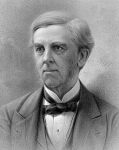
Oliver Wendell Holmes, The deacon’s masterpiece: Or the wonderful “one-hoss-shay” (Review)

Oliver Wendell Holmes 1879

C1879, By Armstrong & Co. (Boston, Mass.), Public domain, via Wikimedia Commons

Oliver Wendell Holmes is one of those wonderful names that, once you hear it, you can’t really forget it – at least, I can’t. But, the thing is, I often hear wonderful names of people who’ve “done things” without actually knowing what they’ve done. Oliver Wendell Holmes is one of these, and so when he popped up in the Library of America’s Story of the Week series a few months ago I made a note to check it out. The story – actually a narrative poem – has the title heading this post, with the additional subtitle, “A logical story”.

Holmes Sr – his son, Oliver Wendell Holmes Jr, became a Supreme Court judge – was one of those multi-talented men. Wikipedia says that he was a “physician, poet, professor, lecturer, and author” and that “his peers acclaimed him as one of the best writers of the day.” His friends included Ralph Waldo Emerson and Henry Wadsworth Longfellow, which helps me put him into perspective. He was a medical reformer, and was dean of the Harvard Medical School. Indeed, Wikipedia reports that “his essay on puerperal fever has been deemed ‘the most important contribution made in America to the advancement of medicine'”. With this focus on medicine, there was a big gap between his early published writings in early to mid 1830s and his return to writing in the late 1850s, but he returned to it with vigour, so much so that, as Wikipedia says, he is now best known as “a humorist and poet”.

So now let’s get to the post’s topic. He returned to writing around the age of 50, encouraged by a friend to become a founding contributor to a new magazine, The Atlantic Monthly. He wrote a monthly column reviving his earlier creation, Autocrat of the Breakfast-Table. LOA’s notes describe the column:

each piece is written as a table conversation monopolized by the unnamed Autocrat, with interruptions (including poetry, stories, and jokes) from other residents—including the Professor, the Landlady’s Daughter, the Schoolmistress, the Poet, the Old Gentleman, the Divinity-Student, “the young fellow called John,” and others. The new and improved “Autocrat of the Breakfast-Table” appeared in the debut issue of The Atlantic (November 1857) and immediately became the most popular feature in a magazine that boasted works by such celebrities as Emerson, Whittier, and Longfellow.

The eleventh column is the one the LOA published as their story of the week. It describes a “one-horse chaise” (the “one-hoss shay”) that is built to last. The poem became so popular, apparently, that it was published separately in 1892 as an illustrated book.

As the story goes, a deacon builds a one-hoss shay “in such a logical way” to ensure it would not break down. He uses the very best of materials – “the strongest oak/that couldn’t be split or bent or broke” – and makes sure there is no weak spot. The shay lasts for a hundred years:

Colts grew horses, beards turned grey,
Deacon and deaconess dropped away,
Children and grandchildren–where were they?
But there stood the stout old one-hoss-shay
As fresh as on Lisbon earthquake-day!

Built, then, on the day of the Lisbon earthquake, 1 November 1755, it breaks down while being ridden by the current parson on 1 November 1855:

How it went to pieces, all at once,–
All at once, and nothing first,–
Just as bubbles do when they first.

It is a delightful read in terms of tone, voice and rhyme. I particularly love that the rhyming pattern varies, which helps keep it fresh and the reader interested, and prevents it, I think, from reading like doggerel.

Conceptually, though, it’s also interesting: this idea that you could logically work out how to build something that won’t break. You find, as Holmes describes in his introduction to the illustrated edition, “what point any particular mechanism is likely to give way” and make sure that part/point doesn’t. Then you “find the next vulnerable place, and so on”, until you arrive “logically at the perfect result attained by the deacon”.

LOA describes the work as a “semi-farcical ode to Yankee ingenuity and New World rationality”, but also says it’s been seen “as an allegory on the demise of Calvinism”. LOA also says that “the poem’s fame was such that one-hoss shay became a term used in economics and statistics, designating ‘a capital asset that exhibits neither input decay nor output decay during its lifetime’.” However, in terms of economics, I can’t help thinking about his image of what “bubbles do when they burst”.

Describing his old age, and the fact that his friends – like Emerson, Longfellow and Nathaniel Hawthorne – predeceased him, he apparently said “I feel like my own survivor … We were on deck together as we began the voyage of life … Then the craft which held us began going to pieces.” I wonder if in saying this he thought about his “one-hoss shay”!

Oliver Wendell Holmes
“The deacon’s masterpiece: Or the wonderful ‘one-hoss-shay’”
First published: The Atlantic Monthly, September 1858.
Available: Online at the Library of America

Anna Spargo-Ryan, The paper house (Review)

Anna Spargo-Ryan, The paper-houseI hadn’t heard of Anna Spargo-Ryan’s novel, The paper-house, when it was sent to me for review, which is not surprising given it’s a debut novel. However, I loved the cover – designed by one of Australia’s top book designers, Sandy Cull – and so was more than willing to give it a go. It traverses some familiar ground, grief and loss, and  mental illness, but it did so differently enough to keep me well engaged.

The novel starts with a young couple, Heather and Dave, in a strong, happy relationship. They decide to have a child and that this means buying a house to accommodate their new family. They see one south of Melbourne and immediately know that’s it. And already here, by page 4, as she describes the end of their house-hunting, we have garnered a good sense Spargo-Ryan’s clear but evocative writing:

After six weeks of looking and imagining, we ate teacakes on the western side of the peninsula and our hearts stayed behind when we left.

So simply said – no florid adjectives – but so arresting in its clarity. And it also encompasses two motifs which feature strongly in the novel, hearts and imaginings. Indeed the book opens with the line “My heart fell out on a spring morning”. We know, right then, that this is going to be a story about feelings – not to mention, also, that our writer has a wonderful turn of phrase!

Another strong thread in the novel is that of gardens. Their new house, of course, has a garden:

And the garden: a maze of established trees and crouching shrubs and flowers with bees on them and the faint trickle of water. A garden in which to wander, in which to get lost. For picnics and parties. It breathed in time with me and spat me out into the afternoon air, where the sea caught on the updraft and shot through the corridors. I watched it heave and change as it became night.

It’s a big garden, one which disappears from view behind a “row of pittosporums with their straight backs”, one with “good solid pittos … [which] keep the neighbours out of your business”. These pittosporums become a sort of reference point in the novel for her experience of the garden and, in a way, for her mental state, because this is a story about mental states. It’s about suffering a deep, deep loss, and how this new loss brings back a similarly deep past loss that has remained unresolved.

But now, I don’t want to give away this loss, though perhaps if you’ve heard of the book you already know. The story is told chronologically but, interspersed with this main narrative which chronicles around 6 months in the couple’s lives, are flashbacks in which Heather remembers life with her mentally ill mother Shelley, with her father and her older sister Fleur, and with her Gran. It was clearly a loving family but one under immense stress which each member handled in slightly different ways. As the contemporary story exposes Heather’s increasingly unstable state, we are also inexorably led to the tragedy that occurred in Heather’s teenage life. The resolution has a certain predictability to it, but Spargo-Ryan builds it so well that it doesn’t feel clichéd.

One of the pleasures in reading this sad but ultimately hopeful book lies in the characters around Heather. Her sister and father, and elderly neighbours Sylvia and Ashok, in particular, are colourful but human, and they create a warm, engaging but not sickly-sweet community which tries to shore up Heather. There’s husband Dave too, but he is a little more shadowy, off working as a teacher during the day when much of the action takes place.

The story is told first person by Heather, and as her mental state worsens we find ourselves a little destabilised, uncertain about what is real and what isn’t. She’s reliable only in the sense that she’s telling us what she is seeing and believing, but what she sees and believes is not always “real”. This is where the garden becomes significant. Initially the focus of her dreams for her little family, it becomes escape and refuge:

I threw myself from the bed and into the air. Nightlife moved in silhouette and shadow: the broad wings of a fruit bat against the sky, the low call of the boobook owl that always spoke in couplets – mopoke, mopoke. In the garden the pittosporums stood to attention and the moon pooled at their feet.

Shhh, said my body, folding around me.

But gradually it enables her imagination to run amok – and it plays an important role in the resolution.

The book is beautifully produced – creatively presenting text and white space to mirror and convey the disarray of Heather’s mind. However, what I most liked about it is the way it conveys the impact of mental illness on family members, the way it explores how family members, neighbours and friends can work together to nurture an ill person, and, importantly, the way it shows how carers can get lost in the focus on the ill person. It’s all done through language that shines and shows, rather than didactically tells and exhorts. By the end I had real tears in my eyes, and that doesn’t happen often.

AWW Logo 2016Anna Spargo-Ryan
The paper house
Sydney: Picador, 2016
295pp.
ISBN: 9781743535202

(Review copy courtesy Picador Australia)

Monday musings on Australian literature: Patrick White (Literary) Award

I was thrilled to hear on the radio this morning that Carmel Bird had won this year’s Patrick White (Literary) Award. Bird is such a worthy winner for this award, but more on that anon.

The Patrick White Award* is named, obviously, for one of Australia’s most significant writers and only, to date, Nobel Laureate in Literature. But, more than this, it was established by the man himself, using the proceeds of his Nobel prize money. White, for all his famed grumpiness, was a principled and generous person. Having won two Miles Franklin Awards, among others, he stopped entering his work for awards in 1967 to provide more opportunity for other less-supported writers. His award, established a few years later, continues this desire to support his fellow writers. David Carter, writing in the Australian Book Review, says this about it:

White was no friend to literary prizes and, in some ways, no friend to Australian literature, but he proved himself a friend to Australian writers. The ‘Patrick White’ is in many ways a writer’s award, created by a writer for other writers, and highly valued by them even if it hits the headlines less than the Miles Franklin.

The Canberra Times reported on the creation of this award in October 1973, stating:

Professor Geoffrey Blainey, of the University of Melbourne, said in a statement yesterday that the prize would be awarded annually to “a distinguished Australian writer — preferably an older writer whose life’s writings have not received adequate recognition or reward”.

David Foster, who won the award in 2010, said that White had intended it as ”as a kind of literary loser’s compo”! I guess it’s all a matter of perspective, of how you define “loser”, but it is good to have an award which goes to those writers who, though I wouldn’t call them losers, have fallen into the gaps. Carmel Bird is one of these.

Carmel Bird and Marion Halligan

Carmel Bird and Marion Halligan at the NLA

Before I talk about Bird, though, I’d like to share a little anecdote from Patrick White’s memoir/autobiography, Flaws in the glass. It is about a dinner party he was giving for the second winner of his award, the poet David Campbell:

It was again the evening of a dinner party, this time in honour of David Campbell the poet, who had won the award I set up with the money from my Nobel Prize. I was drudging away in the kitchen about five o’clock when I switched on the radio hoping for distraction from the boredom brought on by chopping and stirring. Like a stream of lava, out poured the news of what was happening in Canberra: that the Governor-General [Sir John Kerr] has dismissed the Government elected by the Australian people …

White goes on to say that he then rejected the Order of Australia that Kerr had recently persuaded him to accept, despite his professed antipathy to such awards, by saying his refusing it “would ruin everything”. Awards, then, are tricky beasts, and I know there are readers of this blog who are not keen on them. I understand their reasons, but I also understand that for many writers the money, regardless of any kudos that may or may not accrue, is very important.

(BTW Note the timing. White wanted his annual Award announced in the week following the Melbourne Cup, which occurs on the first Tuesday in November, “to give literature a brief chance of ousting sport from the nation’s mind”. The dismissal occurred on 11 November, suggesting that in 1975 the David Campbell announcement had been made in White’s time-frame. However, given this year’s announcement date of mid-October, White’s wish seems to have fallen by the way-side.

POSTSCRIPT: This point re timing has caused some discussion in comments and behind the scenes. I have now received in writing from the Trustee’s PR that “Perpetual as Trustee of The Patrick White Literary Award confirms that there is no stipulation in the Trust Deed in regards to the timing of the announcement of the winner.” It seems like it may have been something White talked about but never actually enshrined, which is good really. I believe that the fewer restrictions the better. Times change and donors can never be sure that what they stipulate in their times will have the desired result in later times.)

So now, Carmel Bird. Her Wikipedia article provides an excellent list of her literary output – her novels, her short story collections, the anthologies she’s edited, her non-fiction, and so on. It’s an impressive output ranging across a wide variety of forms and styles, over a long period of time. And yet, under the list of awards and nominations, you’ll see that she’s been shortlisted several times but hasn’t won any of Australia’s major literary awards. Now, at last, she has!

I last saw Bird at the Canberra Writers Festival when Marion Halligan launched her latest novel Family skeleton. On the back of my copy is a quote from the Australian literary critic, Peter Craven:

Carmel Bird is a literary artist to her fingertips … She writes prose that has the precision of poetry and that uncanny quality poetry has of making the inner life speak.

I agree, but the thing that I really like about Bird is the way her mind works. At the risk of sounding cliched, which she never is, she is fresh, original, unafraid to follow the connections her mind makes and certainly unafraid to depart from the expected. You just have to attend a live event involving her to realise this. I mean, this is an author who creates characters who then take on lives of their own, like Virginia O’Day who writes letters of advice to authors in Dear writer. And this is the author who creates a writer, Carrillo Mean, whose work she then uses as epigraphs for her novels! Have you got all that? I wasn’t surprised, therefore, to read that another idiosyncratic writer on the recognition-fringe of Australia’s literary firmament, Gerald Murnane, has described one of her books, The woodpecker toy fact, as “my kind of book”.

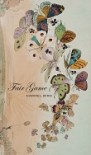
FL Smalls 7: Carmel Bird's Fair Game

FL Smalls 7: Carmel Bird’s Fair Game

I’ve reviewed here her cheeky fl small Fair game: A Tasmanian memoir, and I’ve read other work of hers before blogging. I also have the revised ebook edition of her book on writing, Dear writer revisited (featuring the aforesaid Virginia O’Day)I’m not a writer – that is, I have no ambitions to write fiction – but I often dip into this book because the advice is applicable to all writers.

For example, Letter Two discusses “the use of adverbs and adjectives”. Although she is referring to a piece of fiction, Bird’s advice works for any sort of writing. This, for example:

Perhaps you thought that you, as the writer, were the one who had to do all the imagining, and that the reader was to get every detail of the picture from your words. The reader of fiction takes pleasure in doing some of the work, and will more readily believe you and trust you if there is work to do. Strangely enough, the strength of fiction seems to lie as much in what is left out as in what is included, as much in the spaces between the words as in the words. This is one of strange powers at the heart of good writing. The writer’s skill likes perhaps as much in creating the spaces as in finding the words to put down.

Now, when I write my posts I regularly bother about adjectives. I seem to feel that I need them but I rarely like the ones I use. Perhaps I don’t need them at all! The other reason I like to check this book out is for the examples and advice she includes from other writers – from the likes of Helen Garner and Fay Weldon, David Foster Wallace and Frank Moorhouse, to name just a few.

She also quotes Ernest Hemingway:

There is nothing to writing. All you do is sit down at the typewriter and bleed.

Oh dear. This is from Letter Fifteen, “Writers are different”. I think they are – but too often we take them for granted and do not give them the recognition they deserve for the ways they enrich our lives. I’m so glad Bird has received this award and I sure hope she is too.

* I am not sure what this award is called. In some places, including Wikipedia, it is the Patrick White Award, while in others it is the Patrick White Literary Award. Take your pick it seems.

The Griffyns meet Red Note

Some Griffyn Ensemble concerts are intellectually challenging and some are educational, some are musically innovative and some are simply good fun, but some, like this week’s Castles of Refuge, are just plain beautiful.

Castles of Refuge was the third concert of this year’s four-concert season and was presented in collaboration with Scottish new music group, the Red Note Ensemble. In fact, it’s been a bumper week for Griffyn Ensemble followers, as they presented three events involving the Red Notes, though unfortunately we missed the first one:

  • Noisy Nights, Wednesday 12th October, The Front Gallery Café: Red Note premiered four works by Canberra composers, and hosted a 10-minute composers challenge.
  • Red Note Ensemble, Thursday 13th October, Belconnen Arts Centre: From the minimalist calm of Arvo Pärt to the wild imaginings of Witold Litoslowki, from the romance of Robbie Burns to the folk sounds of the Hebrides and Morocco, this concert included works by Pärt, Lutosławski, Béla Bartók, Luciano Berio, and lovely music written by Red Note members, cellist Robert Irvine and violinist Jackie Shave. It was a delightful concert, and wonderful for us to hear this skilled, personable group strut their usual stuff.
  • Castles of Refuge, 14th/15th October, National Portrait Gallery.

Castles of Refuge is the concert I’ll focus on here, as it was the Griffyn Ensemble’s subscription concert. It took the form of a more traditional chamber music concert, that is, it comprised three pieces of reasonable length, with the only “non-standard” component being recorded audio in the last piece. There were no audiovisual images or dancers or artists or outside-speakers. Just music. Once again, I love the way the Griffyns mix it up, the way they comfortably present different concert formats to suit different goals.

Michael Sollis introduced the concert, suggesting that the concert’s three Australian and British pieces explored isolation. He then left it to us, the audience, to ponder how, as the concert progressed.

The concert commenced then with the Red Note quartet and Griffyn’s soprano, Susan Ellis, performing Australian composer Paul Stanhope’s five-movement song cycle “Sea chronicles”. Ellis introduced the piece, speaking a little about the two ensembles’ recent experience of the sea during their workshop at Four Winds in Bermagui, and reading a couple of excerpts from poems she’d be singing. The piece, our program notes said, “celebrates various dimensions of our coastal environment”. The songs are drawn from Australian poems: Victor Daley’s “The nightingale”, Rex Ingamell’s “Sea chronicles”, George Essex Evans’ “By the sea”, Elizabeth Riddell’s “Life-saver”, and Adam Lindsay Gordon’s “The swimmer”.  

This was so beautiful. At times Ellis’ voice united almost completely with the strings and at other times rose powerfully above them, her lovely clear voice sometimes conveying melancholy and calm, and other times power and drama. The program notes said:

Most of the texts in this piece (all by Australian poets) emphasize the celebrative and reflective qualities of the sea rather than following the European tradition of the sea as a metaphor for human struggle. 

I take the point about this distinction but yet, as we Aussies know, the sea isn’t always benign, and Ellis told stories of death and body bags as her sea claimed the life of a lifesaver.

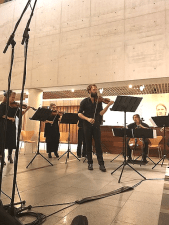
The concert’s middle piece, Seavaigers”, was composed by Scotland’s Sally Beamish and was written, our notes said, “for and with two of the foremost soloists in the Celtic tradition, Chris Stout and Catriona Mckay”. Griffyn’s Chris Stone introduced the piece, calling it a “double concerto”. He would play the fiddle solo, while Kiri Sollis on flute and Michael Sollis on mandolin would represent the harp! Fair enough. The rest of the two ensembles’ musicians, sans soprano, completed the performing group for this three-movement (“Storm”, “Lament”, and “Haven”) work. The notes explained that the region which inspired the work comprises some of the world’s “most beautiful and romantic seascapes” but has also “claimed countless lives”. The piece roams over various emotions, some mournful, some more up-beat, as the movement titles imply.

Seavaigers

Chris Stone on violin, “Seavaigers”

The playing here, as in the previous piece, was tight and evocative. Amazingly so for musicians who had only been working together for two weeks. Clearly their Four Winds workshopping alongside what seemed to be a level of simpatico between the players was at work here. There was a lovely ensemble sound, with the solo parts, fiddle and flute, playing confidently, lyrically, but never completely stealing the show. This was Mr Gums’ favourite work of the evening and it was beautiful, but fence-sitter me would find it hard to name one above the others.

The concert concluded with the whole ensemble, in a semi-circle, performing Gavin Bryar’s mesmeric “Jesus blood never failed me yet”, which, as you may know, was written to accompany a repeating loop of an unknown homeless man’s song recorded in London. Running for 23 minutes, it has a simple structure, commencing with the audio loop of the man singing, quietly at first and becoming louder while gradually, starting with, in our case, cello then viola, the instruments joining in one by one, with soprano Susan Ellis last in. Again, I loved how her voice at times merged almost completely with the recorded voice and instruments, and would then rise in a subdued yet powerful harmony. She, then the instruments in reverse order, slowly dropped away again, until we were left with the recorded voice on its own, fading away. So simple, so sombrely repetitive, and yet so emotive.

And that, folks, ended yet another wonderful Griffyn concert. Mr Gums and I repaired to our favourite after-concert supper spot, Muse (Food Wine Books), to ponder what we’d just experienced – and to look forward to the last concert of the year featuring the work of Alec Wilder.

Other YouTube versions of some of the music:

  • Paul Stanhope’s Sea Chronicles IV, performed by Jane Sheldon and the Ironwood Chamber Ensemble
  • Sally Beamish’s Seavaigers, performed by Chris Stout (violin), Catriona McKay (harp) and the Scottish Ensemble ·
  • Gavin Bryars’ Jesus’ blood never failed me yet, from the album for The sinking of the Titanic (1975)

Griffyn Ensemble: Michael Sollis (director), Holly Downes (double bass), Susan Ellis (soprano), Kiri Sollis (flute) and Chris Stone (violin).

Red Note Ensemble: Tom Hankey (viola), Jackie Shave (violin 1), Kathy Shave (violin 2) and Robert Irvine (cello).

Willa Cather, The enchanted bluff (#Review)

I’ve reviewed a few Willa Cather stories on this blog now, as well as her gorgeous novel, My Antonia, but as I love her stories, I can’t resist reviewing the latest to have been shared by the Library of America (LOA), albeit that was a couple of months ago now. The story is titled “The enchanted bluff” and was published in 1909, making it the latest of the stories I’ve reviewed to date. Between the previous latest story, “A Wagner matinee” published in 1904, and this one, Cather had moved to New York and started working for, writes LOA, “the notoriously difficult” editor, S.S. McClure, at the eponymously named McClure’s.

LOA explains that her years working there were “both rewarding and gruelling”, but that she “proved a perfect foil to her boss’s temperament and was even ghostwriter of his 1914 autobiography. McClure praised her as “the best magazine executive I know”. However, the downside was that she had little time left for her own writing. A common author-problem eh? The work you do to keep you alive takes you away from the work for which you live!

Enchanted Mesa
Enchanted Mesa, By Ethan (orig. posted to Flickr as Enchanted Mesa) using CC BY-SA 2.0, via Wikimedia Commons

She did though manage to write several short stories, of which “The enchanted bluff” is regarded the best. It appealed to me, not just because it is a Cather story and is imbued with her wonderful description of place and landscape, but because its focus is the legend of the lost tribe of the Enchanted mesa, a high sandstone butte in New Mexico. LOA tells us that “like the boys in her story, Cather had been fascinated by the legend” since childhood but had never been there (at least not by the time she wrote this story). Now, I’ve been to New Mexico and fell in love with its culture and landscape, so reading this story took me back to a most enjoyable time in my life …

“Enchanted bluff” feels a bit different from many of Cather’s stories. It has the nostalgic or melancholic tone common to many, and it has what I’ve described before as “her evocative, careful use of landscape and nature”, but it is more reflection than even a character-driven story. This however didn’t bother me because it does what I most like: it presents a bunch of ordinary people (in this case 6 boys and young men) going about their ordinary lives (in this case a last summer camping trip before they all head back to school.)

Camping trip, do I hear you say? Surely something dramatic happens there? Well, no, not really. The six boys, ranging in age from around 10 to 17, swim, cook their supper, and sit around the campfire talking. There’s an “angry” moon, and the loud “scream” of a whooping-crane, but nothing untoward happens. However, there is a point, to which I’ll come soon.

Cather starts her story by setting a rather idyllic scene. It’s Nebraska, where many of her stories are set, and the “brown and sluggish river”, contains little sand islands created during spring turbulence:

It was on such an island, in the third summer of its yellow green, that we built our watch-fire; not in the thicket of dancing willow wands, but on the level terrace of fine sand which had been added that spring; a little new bit of world, beautifully ridged with ripple marks, and strewn with the tiny skeletons of turtles and fish, all as white and dry as if they had been expertly cured. We had been careful not to mar the freshness of the place, although we often swam out to it on summer evenings and lay on the sand to rest.

You can feel the boys’ love of and joy in the place can’t you?

Anyhow, having set the scene, Cather then describes the boys – brothers Fritz and Otto, sons of the German tailor, and the youngest in the group at 10 and 12; fat Percy Pound who loved to read detective novels; hard-working Tip Smith, the “buffoon” in their games; tall 17-year-old Arthur Adams whose “fine hazel eyes … were almost too reflective and sympathetic for a boy”; and our narrator who would soon be leaving “to teach my first country school in the Norwegian district”. Quite a diverse group, but this is common perhaps in small country towns.

Having set the physical scene, and described her boys, Cather then shares their conversation. We soon realise that this is a story – as many of Cather’s are – being told about the past. Our narrator, in other words, is reminiscing about this last summer camp. And here is where the point starts to become apparent, because after general talk, including discussing the mystery of where the river goes after leaving their area, they start to talk about where they’d like to go. Tip tells them about Enchanted Bluff. They are all fascinated by its “dolorous legend” and discuss, as boys do, various possibilities. All are intrigued and would like to visit it, so agree that whoever “gets to the Bluff first” must tell the rest “exactly what he finds”. The summer ends, the following Christmas the boys catch up and renew their resolution, and then it’s twenty years later, from when the narrator is telling this story. None of them, he tells us, had climbed the Enchanted Bluff. Instead …

It’s a beautifully rendered story about the dreams of youth and the reality of adulthood. There’s a nostalgic glow, a sense of “enchanted youth”, but it’s offset by the reality of what happened to the boys. And this is supported by the language in which warmth and beauty are counterpointed by hints of other forces, not malevolent ones but ones which remind us that few things are as they seem or turn out the way we might dream. A good read.

Willa Cather
“The enchanted bluff”
First published: Harper’s Magazine, April 1909.
Available: Online at the Library of America

Monday musings on Australian literature: 2016 awards season dragging to a close

As the year draws to a close, our final major literary awards are being announced. We’ve seen this month the winners of the Queensland Literary Awards and the Western Australian Premier’s Book Awards. The Barbara Jefferis Award has announced its shortlist, but we are still waiting for the Prime Minister’s Literary Awards shortlist.

All but one of these awards have had somewhat problematic trajectories in recent years. The Queensland Literary Awards were established in 2012 when the then Queensland Premier, Campbell Newman, abolished the Queensland Premier’s Literary Awards. The awards were managed for two years by a volunteer committee, before negotiation with the State Library of Queensland saw the Library take over management in 2014. In 2015, new Premier Anastasia Palaszczuk announced that the government would again support the awards. However, they are now a more collaborative venture than they’d been under the abolished regime, which should ensure a more secure future for them. The Western Australian Premier’s Book Awards, on the other hand, which had been awarded annually from 1996 to 2014, were downgraded to a biennial timetable starting in 2016. Disappointing, really.

Meanwhile, what has happened to the Prime Minister’s Literary Awards (PMLA)? Established in 2008 after Kevin Rudd became Prime Minister, they expanded quickly from comprising just two prizes (fiction and non-fiction) to several, so that by 2102 there were six prizes with young adult fiction, children’s fiction, poetry and Australian history being added to the mix. However, there seems to be no established timetable. In 2008, the winners were announced in September, while in 2009 and 2010, we had to wait until early November. Then, in 2011 and 2012, they were announced in July, and in 2013 it was August. The last two years, 2014 and 2015, the winners were announced in December, with their shortlists announced in October and November, respectively. Given there’s been a call for entries this year, they must be happening, so presumably we’ll see this year’s shortlist soon! The PMLA people play it very close to their chest, despite having a Facebook page on which they share all sorts of literary news, because this year, as in recent ones, I’ve not been able to find a timetable. I guess we just have to have faith.

The Prime Minister’s Literary Awards have other issues, though, besides erratic timetabling, including a lack of transparency regarding the process, poor marketing and promotion, and, most serious of all, political interference in the judges’ decisions. The best known example of this occurred in 2014 when the then Prime Minister Tony Abbott over-ruled the fiction judges’ choice of Stephen Carroll’s A world of other people to award the fiction prize to Richard Flanagan’s The narrow road to the deep north. But, according to Patrick Allington in The Conversation and past non-fiction judge Colin Steele, such interference has occurred a few times in the Awards’ short history. This is not good enough. As Allington writes, the stipulation that a Prime Minister has the final say about winners “compromises the Awards’ credibility, purpose and depth.”

The fun stuff … some winners

But enough of that. Let’s talk about some of the winners. I’m not going to list them all because the Queensland Literary Awards offers prizes in twelve categories and you can see them all at the site. Similarly, the WA Premier’s Book Awards has about eleven categories, and you can see those winners too at their site. I’m just going to share the few winners I’ve read and reviewed!

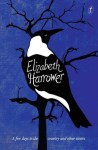
Elizabeth Harrower, A few days in the country and other stories

First up, the Queensland Literary Awards. The award which pleased me most is Elizabeth Harrower’s A few days in the country and other stories (my review) sharing the Steele Rudd Award for Australian short story collections sponsored by the University of Southern Queensland. This is a wonderful collection of short stories, which has been shortlisted for a couple of awards, so I’m thrilled to see Harrower receive the recognition she deserves. (And I’m pleased for Text Publishing too given the work they’ve done to bring Harrower to our attention through their Text Classics).

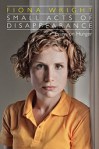
Fiona Wright, Small acts of disappearanceAnother a winner at these awards was Fiona Wright’s honest, insightful collection of essays, Small acts of disappearance (my review), about her experience of an eating disorder. Wright was the Non-fiction Book Award, also sponsored by the University of Southern Queensland.

Meanwhile, over in the west, at the newly biennial Western Australian Literary Awards, it all felt a little old because many of the winners have been around for a couple of years now and most of them featured in the 2015 shortlists and awards. This is not their fault of course, but it certainly brought home the impact of the awards only being two-yearly. The fiction award, for example, was won by Joan London’s The golden age, which was shortlisted and/or won several awards in 2015.

Helen Garner, This house of grief book cover

Courtesy: Text Publishing

The big news at these awards, from my point of view, is that Helen Garner’s non-fiction work This house of grief (my review) won not only the Non-fiction prize, but also the overall Premier’s Prize. A fascinating choice, because mostly, though not exclusively I know, these overall awards tend to go to works of fiction.

Western Australia, like Queensland, quarantines an award or two to writers from their states. Queensland has awards for “a work of state significance” and “emerging Queensland writer”, while Western Australia offers awards for “Western Australian history” and “Western Australian emerging writer”. The winner of this last award is a book I’ve reviewed here, Lost and found by Brooke Davis.

And so, by my reckoning, we have three more literary awards to go – the Prime Minister’s (on a yet-to-be announced date), the biennial Barbara Jefferis Award (on 25 October), and the always interesting MUBA (Most Underrated Book Award (on 11 November). Good luck everyone.

Leah A, Ten silly poems by a ten year old (Review)

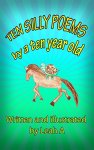
Leah A, Ten silly poems by a ten year oldPREFACE AND DISCLOSURE: As some of you know Son Gums is a primary school teacher. One of the programs he likes to run with his class is “the Passion Project”. Part of the theory behind this project is that kids don’t always get to do in class the things that really interest them so, over one 10-week term in the school-year, each student chooses a project s/he is passionate about to work on. Some time is allocated in class each week, and the rest is done at home. At the end of term, the students present what they’ve produced or created, which I understand can (and has) included games, computer programs, websites, artworks, live or animated films/videos, novels and cookbooks. This year, one girl wrote, illustrated and then published on Amazon a book of ten poems. I have bought and read the book and been given permission to write about it here.

NOW, THE FUN PART, THE BOOK: I titled my brief Amazon comment/review, “Edward Lear watch out”, because this gorgeous little (in size, not value) book reveals a lively, cheeky mind just like, I imagine, Edward Lear’s was. And like Edward Lear, Leah (hmm, I didn’t notice that homophone until now) is both writer and illustrator. Her ten silly poems are written in a variety of styles, including Lear’s favourite, the limerick.

The first two poems are not limericks, however, but 8-line rhyming couplets about her parents. They reminded me of when our children (one being, of course, Leah’s teacher) were growing up and showing an interest in writing. I decided then that I needed to let go of my ego and be prepared for my less endearing qualities to be revealed to all. Leah’s parents have clearly realised they must do the same, if they are to encourage her talent. Mum gets away with it this time, but Dad doesn’t come out quite so well:

You’re very handsome and oh so cool
Even though you sleep and drool.
(from “Dad”)

Lucky Mum eh?

Several of the poems are about animals and their adventures, usually involving food. “Lightning”, with its nicely controlled a-b-c-b rhyme, tells of the secret behind this horse’s speed (“All his speed and fastness/Was due to eating sauerkraut”)! Isaac the dog, on the other hand, finds that he needs to be a little careful about what he decides to “bite, bite, bite”. Like many of the poems, “Isaac” also uses the a-b-c-b rhyming pattern, but here Leah changes the form a little by ending most of the stanzas with the refrain “bite, bite, bite”. This use of a refrain comprising repeated words enhances the poem’s mood of silliness, but Leah also has the confidence to break the pattern in the middle of the poem, before taking it up again, to provide a needed change of pace. She’s not afraid, in other words, to mix it up a bit.

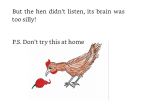
Leah A, Ten Silly Poems, hen imageMost of the poems are narrative, and tell humorous little stories, as you’d expect of the nonsense verse tradition within which Leah is writing. “Carolina Reaper”, for example, tells of a birthday girl who ignores the advice of a Mexican restaurant waiter, to her detriment, while the two delightful “Turbo Turtle” poems play with the commonly held assumption that turtles are slow.

Turbo Turtle, Turbo Turtle
How fast can you go?
Compared to me a cheetah
Is oh so very slow.
(from “Turbo Turtle”)

Occasionally the rhythm falters, but this is offset by the sure sense of story, the cheeky sense of humour, a clever use of language, not to mention the delightful illustrations. And anyhow, what can you expect when you have to write, illustrate and publish a book in ten weeks! Ten silly poems by a ten year old is not only an entertaining read but an impressive achievement. If you have a mind to support young authors, and you have a Kindle (or the Kindle app on your tablet), you might like to buy a copy for yourself at the Amazon link below. At AUD1.31, it’s a steal.

awwchallenge2016A, Leah
(Illus. by Leah A)
Ten silly poems by a ten year old
2016
26pp.
ASIN: B01LY4LZ1J

Available at Amazon (Kindle only) for the amazing price of AUD1.31

Six degrees of separation, FROM Extremely loud and incredibly close TO The women’s pages

I have never played this #6Degrees “meme” before but when Kate (BookasAreMyFavouriteAndBest) announced that Jonathan Safran Foer’s Extremely loud and incredibly close (her response) would be the October starter, I knew I had to do it. Read on to see why …

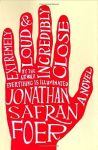
Jonathan Safran Foer, Extremely loud and incredibly closeI have read Extremely loud and incredibly close and as I recollect I enjoyed it. I don’t remember the details now, but I did think that Foer managed well that fine line between warmth and sentimentality. However, the book is memorable to me for another reason, which stems from the fact that one of my online reading groups discussed it. A member of that group had great trouble with the title. It is, after all, not only a bit of a mouthful, but rather abstract, with nothing that you can particularly hang your memory on. Anyhow, in one email my online-bookgroup friend described it as “Foer’s Amazingly and Suddenly (I’m sorry I can’t keep that title straight)”. Every time I think of Foer, I think of her and smile! Hello, Susan!

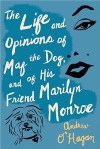
Andrew O'Hagan Book CoverAnd this makes me think of other books with long or hard to remember titles. One I’ve reviewed here is Andrew O’Hagan’s The life and opinions of  Maf the dog and of his friend Marilyn Monroe (my review). This book entertained me at the time because of the way it plays with reality, art and the imagination. Maf, the dog, suggests that “we are what we imagine we are: reality itself is the true fiction.” I love this paradoxical way of viewing ourselves, of seeing the artifice in “reality”. However, the point is that while I usually remember Foer’s title, I always have trouble with this one. I had to do a keyword search on my blog to get it exactly. All I knew was that it had “dog” and “Marilyn” in it!

But now, where to go? I could move to a book whose cover design comprises mostly words. There are a few of those around. But I really can’t go past another “life and opinions” book, Laurence Sterne’s The life and opinions of Tristram Shandy, gentleman. It’s been many a decade since I read this book – back in my university days – but its tongue-in-cheek-take-the-reader-along-for-a-ride style, its purporting to be what it isn’t, that is, a biography, was an eye-opener to my young literature-student self. It also introduced me to the picaresque style of novel. This is a style I always look a bit askance at, and yet usually enjoy when I get down to it, because it tends to be satirical – and I’m never averse to a bit of satire.

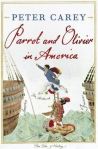
Peter Carey, Parrot and Olivier in AmericaAn Aussie example of the picaresque – though it’s not set in Australia – is Peter Carey’s Parrot and Olivier in America (my review). The object of Carey’s satire, that “great American experiment, democracy”, seems rather apposite given the current presidential race shenanigans. Donald Trump represents the very values and attitudes – the unquestioning belief in capitalism – which Carey satirises. Another issue Carey questions in this novel is whether “high” art and “total” democracy are mutually exclusive? Do you let the majority decide what art they will support and fund? If or when you do, what art will they choose, he ponders.

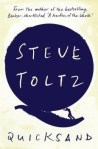
Steve Toltz, Quicksand, soverArt, the making of it, is also one of Steve Toltz’s targets in his satirical novel Quicksand (my review) but his angle is slightly different. Part of it is the way people plunder the lives of others to make art, and part is an exploration of why we make art. Is life easier with or without art is one of his questions. Protagonist Liam at one stage desires a life “unencumbered by art” whereas art teacher Morell suggests we make art to understand who we are and why we’re here. In the end, though, like many good satires, there’s no simple answer.

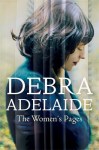
Debra Adelaide, The women's pagesBut, shock, horror, my first five books are all by men, even though women writers comprise well over 50% of my reading. How did this happen? I’m not sure, but I can’t end without one woman writer! Debra Adelaide’s protagonist, Dove, in The women’s pages (my review) is, like Liam in Quicksand, writing a novel – but Adelaide’s is not a satirical novel. It’s a more personal drama about the urge to write fiction (create art, in other words), about how fiction might illuminate life’s meanings, and about how we tell and use stories.

I’ve come a long way from Jonathan Safran Foer’s Extremely loud and incredibly close, a 9/11 story, and yet not so far really, because both books – Foer’s and Adelaide’s – are about grief and loss, and both, one indirectly the other directly, are about how art might play a role in resolving the tragedies that confront us. That seems to make a rather nice circle, albeit comprising 6° not 360°!

If you’d like to read other responses to this “meme” check out Lisa’s (ANZLitLovers) and Jenny Ackland’s (Seraglio).

Monday musings on Australian literature: Australian Arts, mid-1960s style

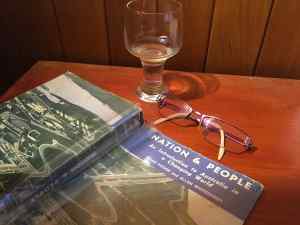
Hodge and Whitehurst, Nation and PeopleLast week’s Monday Musings discussed my high school history book, Nation and people, published in 1967. I don’t plan to labour this book, but I would like to share its chapter on the Arts.

The authors, Brian Hodge and Allen Whitehurst, dedicate 8 pages to “The Arts” which is pretty good, I think, for a school history book. The chapter is divided into sections: Slow growth of Australian culture; Poetry; Drama; The novel; Music; and Painting. There are gaps here – nothing on film or sculpture, for example – but what can you do in 8 pages after all!

They start by arguing that “a distinctive Australian cultural tradition has been slow to grow”. Now, before you jump at me and say “But, but, but, what about indigenous culture?”, they do mention this, albeit with the paternalism that was typical of the time:

True culture is probably the product of a deep and intimate relationship with one’s country, something that occurs over centuries. The original owners of the land, the aborigines, certainly evolved an individual culture that was part of the spiritual core of their existence. Although nothing was written they formulated their legends to explain to the young the marvels of the universe, they composed and sang their simple and sometimes haunting melodies, they carved in primitive fashion, they danced superbly.

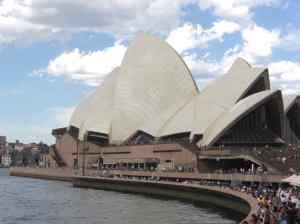
Sydney Opera HouseThere’s a lot that’s wrong with this statement from our 21st century eyes, but at least they recognise the “original owners” and the fact that culture comes from “a deep and intimate relationship with one’s country”. They then go on to describe how the early settlers tended to rely on “the old culture” and that even the balladists telling stories about the new land used “the tunes of their forefathers”. However, they say, “a vigorous development in all the arts” happened after the second world war “coinciding with remarkable economic progress”. Government increased its patronage of the arts, and “in Sydney”, they write, “there is being constructed an Opera House which architectural histories describe as a major achievement of architecture in the twentieth century”. It sure was.

Poetry

I’m just going to briefly share their points on poetry and the novel, given these are the topics most relevant to my blog. Regarding poetry, they point particularly to Judith Wright and AD Hope whose poetry “has been distinguished by a vigour and their imagery noted for its immediacy of impact”. How I wish I could be so succinct! Seriously though, I like their assessment of Wright, that she has “perhaps more poignantly than any other poet”

expressed the nation’s new-found spiritual awareness of its past … Her poetry is the deep expression of the feelings of women: to love, to old age, to decay, to the past, to war, to the future. JB Priestley, prominent English novelist, dramatist and critic, has claimed that Judith Wright is one of the best poets writing in English today.

How fabulous, even though their reference to “the feelings of women” does sound a little reductive?

As for  AD Hope, he too, they say, has “been highly acclaimed by overseas critics”. See that cultural cringe? Clearly, the fact that overseas critics praise Wright and Hope proves their worth! Anyhow, they describe him as “a satirist concerned with Man and his frailties.” (Note the uppercase Man to imply both genders but they can’t avoid the “his”). They quote Hope as describing “Australia as a place ‘where second-hand Europeans pullulate timidly on the edge of alien shores’.” They also say:

In no way does he resemble Wright. Rather he has consciously tried to lead Australian poetry away from a preoccupation with its environment, a savage reaction to the school of Australian poetry that concentrated on gum trees, koalas, kookaburras, kangaroos and boomerangs. His satire has an acidity, a near tragic note and a technical mastery new to Australian poetry.

They name a few other poets, including Douglas Stewart (a favourite from my schooldays), David Campbell, and Gwen Harwood whom they describe as “perhaps one of the most promising contemporaries … whose poetry is deeply personal, with original and compelling imagery”. They were right. She did become important, and one of Australia’s most significant poetry prizes is named for her.

The novel

I’d like to talk about drama, music and painting, but I don’t have the time and energy for that right now, so I’ll move onto “the novel”, which, interestingly, receives far less space than poetry and drama.

They start by saying that “during the 1930s Australian novelists tended to concentrate on the family saga, digging into Australia’s past to reveal the rise of egalitarianism.” They name Miles Franklin’s All that swagger (1933) and the unknown-to-me Landtakers (1934) by Brian Penton. They say that their novels are about pioneers who, as they “gained wealth … seemed to die spiritually.” We can read Landtakers at Project Gutenberg Australia. I’m surprised that they don’t mention works by Katharine Susannah Prichard, M. Barnard Eldershaw, and the other women who made quite a splash in the 1920s-40s. Some of their work was in this “pioneer” mould, but some also turned to the urban landscape, particularly Marjorie Barnard and Flora Eldershaw.

Anyhow, they go on to say that “the writing of historical novels of this pattern continued in the 1940s” but that developments occurred in the 1950s, heralded particularly by Patrick White’s Voss in 1957. They quote an unnamed critic saying:

White has opened up in a startling way the range of Australian fiction, not only by his experiments in form and language (which are sufficiently striking in themselves) but by conceiving and acting out the dramas of his characters in an imaginative world with one more dimension than our novelists have genuinely recognised as existing.

Fascinating, but a little mystifying. “One more dimension”. Is that the telepathic communication experience between Voss and Laura? And “genuinely recognised”? What does that exactly mean? However, I do like their suggestion that the result has been “a turning away from the violence of nature to a deeper study of man himself, with his depths of hidden passion and violence”. They quote Xavier Herbert, Morris West and Hal Porter as writing books reflecting this development.

Points to ponder

At the end of each chapter, Hodge and Whitehurst include some discussion questions. I can’t resist sharing those for this chapter:

Do you consider the Arts important for man? Why?
Do you think the Arts could be an important source for historians? Why?
Which of the Arts are most important in your family?
Do you believe future generations of Australians will regret the enormous expense of the Sydney Opera House?
Do you think Australians yet regard culture as an integral part of their existence

You don’t have to answer them all!