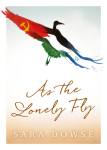
Sara Dowse, As the lonely fly (#BookReview)

Sara Dowse, As the lonely blySome books grow out of their author’s desire to engage the reader in an issue they feel passionate about, such as Jane Rawson on climate change in A wrong turn at the Office of Unmade Lists (my review) and Charlotte Wood on the scapegoating of women in The natural way of things (my review). Sara Dowse’s latest book, As the lonely fly, falls into this category, but for Dowse the issue is the Israel-Palestine problem, the “rightness” or otherwise of establishing a Jewish state. This doesn’t mean, however, that books so inspired are boringly earnest or stridently polemical. It’s a risk, of course, but in the hands of good writers, like the three mentioned here, issues are turned into stories that engage us, while simultaneously raising our consciousness.

Unlike Rawson and Wood’s more dystopian novels, Dowse uses historical fiction, with a hint of mystery/thriller, to explore her ideas.  The novel is set in the first half of the twentieth century, and follows the lives of two Russian-Jewish sisters, Clara and Manya, and their niece, Zipporah. We start, theoretically at least, with Clara (who changes her name to Chava when she arrives in Palestine), but are immediately introduced to her younger sister Manya (who had migrated to the US with their parents and who becomes Marion).  Niece Zipporah, the committed Zionist who followed Clara to Palestine, opens Part Two.

The story is divided into 6 parts in fact, the first labelled “Clara begets Chava 1922-1925” and the last “Tikkun? 1967” (“tikkun” being, significantly, a Hebrew word for “fixing/rectification”). The narrative has an overall forwards momentum, but the chronology is not linear and the perspectives change. Following all this requires an alert reader, but it enables Dowse to fill in backstories at the relevant moment (such as Clara’s experience of the 1905 Odessa uprising) and to link various characters and ideas. Her goal is to explore the difficult situation confronting Eastern European Jews in the early 20th century and the concomitant creation of Israel. In so doing, Dowse raises bigger questions about idealism and justice, and exposes the challenges of migration, particularly of migration that is politically charged.

While Part One is labelled 1922-1925, the first chapter is headed “Marion 1967”, ensuring an important, comparative, role for the American experience. However, the bulk of this part tells of socialist Clara/Chava’s early days working to create a new Jewish state. It’s not long before the hard-working Chava starts to question what they are doing, to see the difference between the political Zionism of Herzl and the cultural (or spiritual) one of Ahad Ha’am. She starts to agree with Ha’am, as she writes to Marion,

that there shouldn’t even be a state like the one Herzl advocated, but a centre in Palestine where Jews reconnect with our culture and from there would disseminate it through the Diaspora. That the land wasn’t empty as Herzl had us believe, that it would be difficult to find land that wasn’t already cultivated, and the Arabs wouldn’t be overjoyed about the space we’d taken up in what happened to be in their land too. Or ecstatic about losing their jobs. The Marxist in me is increasingly uneasy about this … (Pt 2, Ch. 11, Uncorrected proof copy)

If you are an Australian, this idea of taking up space that’s not empty will resonate, as I’m sure Dowse intends it to do!

… too much head …

Eventually Chava finds occupying this already occupied land too difficult and, after supporting an Arab uprising, willingly returns to Russia where, unfortunately, she finds anti-semitism on the rise. Meanwhile, Zipporah provides a foil to Chava, retaining her commitment to the Zionist ideal, albeit seeing the trauma that can be caused by commitment to a political idea. The story of her student, Talli, provides this insight. Dowse, in other words, provides no easy answers, but forces us to face, through stories of real human beings with whom we fully engage, the complexity of the situation.

Chava meets in Jerusalem, a cobbler, Ha-Kohen, a spiritual rather than a political Hebrew man. He says to her:

You and your chaverim, those pals of yours, can you really believe all those things you read? It’s all from the head. And the source of all evil on this earth is too much head, my dear, and not enough heart. (Pt 2, Ch. 10, Uncorrected proof copy)

A little more empathy, in other words, is what is needed.

As the lonely fly could be described as a family saga. There are many characters besides the three women I’ve introduced here – including another sister (Zipporah’s mother) and her family, various friends and colleagues, and a love interest or two – and the novel spans six decades from 1905 to 1967. There’s also a thriller element including some espionage, and a nod to the mystery genre too. What is wrong with Talli, and what does happen to Clara? Through these Dowse explores her themes while involving us in real lives – via lovely domestic details of rooms, meals and close relationships, and vivid descriptions of place. By the end of the novel I was deeply engaged with her characters and their dilemmas, whether or not I agreed with all their decisions.

… the passion for justice …

Manya/Marion is a somewhat more shadowy character than Clara and Zipporah, and yet, as the one who migrated to America, the land of the free, she provides an important counterbalance to the lives of the other two. On the surface, her ambition to be an actor, and her oh so western focus on colouring her hair, on “the showering, the creaming, the makeup’, are as “exasperating” to us as they are to Zipporah, but she is the character who opens and closes the novel, so we need to heed her. Her idealistic, bookish husband, Sidney, dies a very American death, and leaves her with two young sons. It provides a counterpoint to the high drama that was occurring in Israel.

In the loneliness of her later years, she finds herself still struggling to understand him, but she comes to see that both his and Clara’s idealism was really “a passion for justice”. In the book’s final chapter, she and Zipporah, whom she visits in Israel, attend a Hebrew performance of a favourite play of hers, O’Neill’s The iceman cometh. Now, I don’t know this play – besides knowing of its existence – but I presumed Dowse had chosen it for a reason, so I checked Wikipedia. It told me that the play’s main themes are the self-deceptions, the pipe-dreams – the lies, in other words – that we tell ourselves to keep going. The play references, apparently, political ideals such as anarchism and socialism. Certainly, Clara discovers her socialist ideals being undermined when the factory managers in Soviet-era Moscow start employing capitalist techniques to increase production. However, I’m sure Dowse intends us to read O’Neill’s theme in terms of how we behave today – in relation to Israel/Palestine and to all the other injustices that we see around us, but try to justify away.

The past is not, in fact, the burden we thought, says Zipporah to Marion. It’s the future we need to worry about. Like all good ideas novelists, Dowse has not bombarded us with answers but, instead, has intelligently and compassionately given us plenty to think about.
aww2017 badgeSara Dowse
As the lonely fly
For Pity Sake Publishing, 2017
327pp. (Uncorrected proof edition)
ISBN: 9780994448576

To be published: June 2017

(Advanced review copy courtesy For Pity Sake Publishing)
Monday musings on Australian literature: NLA Publishing, and some free e-Books

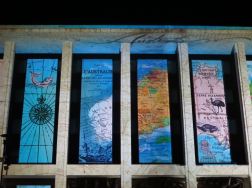
Enlighten 2014, NLA

Enlighten 2014, National Library of Australia

I was idly following links around the ‘net over the weekend and somehow ended up at NLA Publishing’s site. For those of you who don’t know, they are the publishing arm of the National Library of Australia. I first mentioned them back in 2011 when I referred to publisher Alec Bolton as the person who established the Library’s publishing program. That would have been over 40 years ago. He was a lovely man, and would surely be thrilled to see that his “baby” is still going today.

NLA Publishing is a small publisher, producing around 18 books a year. As you’d expect from a cultural institution publisher, their books draw on the Library’s collections – and they accept submissions from writers who have an idea that uses these collections. Their publications, they say, contribute to their

aims of nourishing the nation’s memory, of supporting the vitality of Australian culture and heritage, and of demonstrating a strong national focus in all of the Library’s services, products and programs.

These works “selectively interpret the Library’s collections in order to contribute to an understanding of Australian history and culture”, and are also seen as a way of disseminating and promoting the Library’s collections and services. Collecting and preserving, interpreting and disseminating is, of course, the prime function of cultural collecting institutions.

“Australian history”, defined broadly I’d say, is their main subject area, but they also cover “natural history, art, photography and literature”, and a range of children’s books including “picture books, novels and historical ‘faction’”. Their books have won, or been shortlisted for, a variety of awards.

Dymphna Cusack, A window in the darkI have bought many of their books (for myself and as gifts) over the years, and have reviewed at least one on this blog, Dymphna Cusack’s A window in the dark. Other bloggers have also reviewed their books, such as Janine’s (Resident Judge of Port Philip) review of Craig Wilcox’s Badge Boot Button: The story of Australian uniforms and Lisa’s (ANZLitLovers) review of Clive Hamilton’s What do we want: The story of protest in Australia. These are just of few of the many reviews of NLA’s books out there in cyberspace!

The exciting thing, however, is that many of their older books are now available free from the website in eBook form. Now that’s a bargain. I’ll share just a few here – literary-focused ones, naturally – to give you an idea:

  • Dymphna Cusack’s A window in the darkCusack, who also wrote novels, tells of her time as a teacher, including some of the controversies she became embroiled in while trying to offer the best, most appropriate education for her various students.
  • Rosemay Dobson: A celebration: There are several books in their Celebration series, covering such authors as Thomas Keneally, David Malouf, and Ruth Park. These small books comprise “tribute” essays on their subjects and can provide an excellent introduction to the writers. I’ve chosen the late Rosemary Dobson as my example here because as well as being a well-regarded poet, she was Alec Bolton’s wife.
  • David Foster’s (selected and introduced) Self-portraits: A selection of oral history interviews from the National Library’s wonderful Hazel Berg oral history collection. The authors Foster selected include Wilfred Burchett, David Campbell, Ion Idriess and Charmian Clift. (PS Just noticed, 10 May, that autocorrect had made her Chairman!)
  • Ann Moyal’s Alan Moorehead: A rediscovery: A biography of author, journalist, war correspondent Moorehead, who, Moyal claims, was “one of the most successful writers in English of his day” but under-recognised in his own country.
  • John Shaw Nielson’s The autobiography of John Shaw Nielson: Never published in the poet’s lifetime, the biography was included in the papers of one Harry Chaplin, a collector and “connoisseur of literary Australia”.

Presumably, over time, the list of eBooks freely available will grow, so I’ll be checking the site every now and then.

A short post this week, but I hope a useful or, at least, an interesting one.

Six degrees of separation, FROM The slap TO Persuasion

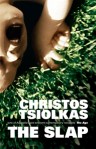
Christos Tsiolkas, The slapAnother month, another Six Degrees of Separation meme. My how quickly the months are passing! The meme is, as most of you know by now, currently hosted by Kate (booksaremyfavouriteandbest). Each month she nominates a book from which we try to create a chain of seven books, linking one from the other on whatever excuse, flimsy or otherwise that we can come up with. And, guess what, this month I have actually read the nominated book, Christos Tsiolkas’ The slap (my review). As always, I have read all the books I select for my chain.

Hanif Kureishi, The buddha of suburbiaTsiolkas’ The slap is about an extended family, of migrant background, and friends, living in suburban Melbourne. Its author, Tsiolkas, is Australian-born of Greek immigrant parents. This reminded me of Hanif Kureishi’s The buddha of suburbia (my review) to which I admit I’ve linked in this meme before. Kureishi is English-born of a Pakistani father and English mother, and his book is about the life of a multicultural family in a London suburbs. More satirical than Tsiolkas’ The slap, and more closely focused on the challenges of race and ethnicity, but both reflect the experience of immigrant generations in the ‘burbs.

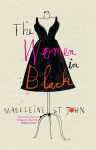
The women in black, Madeleine St John, book coverLinking now on content more than author similarity, The buddha of suburbia’s exploration of multiculturalism took me back to Australia and Madeleine St John’s The women in black (my review). It is set in the ladies fashion section of a classy department store in the 1950s, a time when the post-war influx of European refugees saw Australian society challenged by new foods not to mention new values and attitudes to life and family.

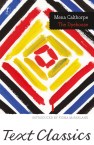
Mena Calthorpe, The dyehouseMy next link draws on multiple aspects – content, location and period. I’m talking Mena Calthorpe’s The dyehouse (my review) which is also set in 1950s Sydney, and which, like The women in black, deals with the lives of workers in one business. However, Mena Calthorpe’s intention is more strongly focused on labour conditions. Her business is the textile industry, a dyehouse, and she exposes how workers are poorly cared for, poorly paid, and have little power to do anything about it. Towards the end of the novel, though, there are intimations of the workers starting to organise.

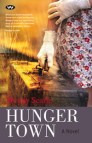
Wendy Scarfe’s Hunger town (my review) is set a little earlier, from the mid 1920s to late 1934, in Adelaide’s port district. It tells of the struggles of wharf labourers to survive as unemployment and hunger took hold. It explores the ensuing political unrest and the growing attraction of leftist political ideologies like communism and anarchism, alongside unionism, in such a volatile environment. It is also, like the books by St John and Calthorpe, historical fiction.

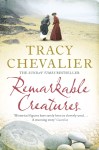
Tracy Chevalier, Remarkable creaturesAnd so, my next link is on form (genre) rather than content. I’m going to change country and era, and pop over to early 19th century England in Tracy Chevalier’s Remarkable creatures (my review). You’ll realise soon why I’ve chosen this particular piece of historical fiction, but first a little about its content. It tells the story of two women who were fossil hunters in Lyme Regis in the first half of the nineteenth century: Mary Anning (1799-1847), a poor working class woman whose fossil finds helped change the course of paleontology, and Elizabeth Philpot (1780-1857), a gentlewoman who befriended Anning and who was particularly interested in fossil fish.

Jane Austen, PersuasionAnd now, for the first time since I started doing this meme, I get to link to one of my very favourite authors, Jane Austen (1775-1817). I could link to any of her books because they are all set in early 19th century England, and I’d love to link to one I’ve reviewed here. However, I’m choosing one that I haven’t posted on yet, Persuasion, though I expect to write on it later this year. If you know your Austen, you’ll know why I’ve chosen this one: she set a critical scene in Lyme Regis for that novel. In fact, the Lyme Regis connection is the main reason I read Remarkable creatures.

And so, I started with an unruly, messy family in The slap and ended with another one, albeit of a different sort, in Persuasion. In between we went to England, back to Australia, before returning to England again. We must travel elsewhere next month!

Have you read The slap? And whether or not you have, what would you link to? 

William T Hornaday, The bird tragedy of Laysan Island (Review)

William Temple Hornaday (1854-1937), whose article “The bird tragedy of Laysan Island” was a recent Library of America (LOA) Story of the Week offering, is a tricky man to write about. Originally a taxidermist, he became one of the pioneers of the wildlife conservation movement in America after he realised, around the 1880s, the dire situation regarding the country’s bison population. In this LOA article,  published in 1913, he chronicles the bird massacre on Laysan Island and the role played by President Theodore Roosevelt in helping to end the plumage trade. But he wasn’t without controversy, of which I’ll write more a little further on.

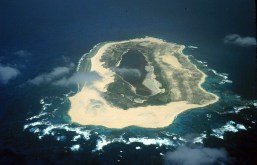
Laysan Island

Laysan Island. By Robert J. Shallenberger, U.S. Fish and Wildlife Service (http://www.doi.gov/photos/06152006_photos.html) [Public domain], via Wikimedia Commons)

“The bird tragedy” is a powerful piece which starts by describing the island as “sandy, poorly planted by nature, and barren of all things likely to enlist the attention of predatory man” but as the home of many varieties of birds, including the “Laysan albatross, black-footed albatross, sooty tern, gray-backed tern, noddy tern, Hawaiian tern, white tern, Bonin petrel, two shearwaters, the red-tailed tropic bird, two boobies and the man-of-war bird.” It was a “secure haven” for them, and, since 1891, had been viewed as “one of the wonders of the bird world”.

But, along came “man, the ever-greedy” looking for ways to make money, first via guano and egg collecting, then feathers for the plumage trade. The culprit was Max Schlemmer, who also introduced rabbits and guinea-pigs which multiplied and started to destroy the vegetation. Hornaday describes the horrendous massacre in 1909 of 300,000 birds for their wings. According to LOA, Hornaday is somewhat wrong in ascribing the massacre to Schlemmer. The say a biography of Schlemmer argues that he was ‘”cash-strapped” and sold the rights to the island to a Japanese entrepreneur. Whatever the situation, the destruction of the birdlife was massive in number and horrific in cruelty. Fortunately, it was stopped before complete destruction by a Zoology Professor who called the Government who in turn sent in the Navy – as you do!

Hornaday’s language makes clear his disapprobation of what happened and of the people who carried it out. His description of the massacre is horrifying, some of it quoted from a report by a 1911 scientific expedition to the island. This report notes that their “first impression” was that the island had been stripped of its birdlife:

Only the shearwaters moaning in their burrows, the little wingless rail skulking from one grass tussock to another, and the saucy finch remained. It is an excellent example of what Prof. Nutting calls the survival of the inconspicuous.

Hornaday says that if the Government had not intervened

it is reasonably certain that every bird on Laysan would have been killed to satisfy the wolfish rapacity of one money-grubbing white man.

Fortunately – albeit a little after the horse had bolted – Roosevelt, in 1909, created “the Hawaiian Islands Reservation for Birds” which includes Laysan and which, Hornaday writes, will ensure that

for the future the birds of Laysan and neighboring islets are secure from further attacks by the bloody-handed agents of the vain women who still insist upon wearing the wings and feathers of wild birds.

However, as Bill McKibben, the environmentalist whose memoir Oil and honey I’ve reviewed, writes in the headnote to the article, Hornaday had his own controversy. He became, in the late 1890s, the head of the New York Zoological Park (the Bronx Zoo), but, as McKibben writes,

a rough sense of the reasons why the social justice and environmental movements have often parted ways may be garnered from the fact that he saw nothing wrong with exhibiting a live African pygmy, named Ota Benga, in the zoo’s monkey house, later remarking that it was the “most amusing passage” in the institution’s history. His 1913 book Our Vanishing Wild Life … has a strongly nativist edge: immigrants and negroes are singled out as villains for their hunting of indigenous fauna.

According to Wikipedia, he was criticised, including by African-American clergymen James Gordon, who said that “Our race … is depressed enough, without exhibiting one of us with the apes … We think we are worthy of being considered human beings, with souls.” With the controversy, Benga was released to roam the zoo, even though Hornaday did not see anything wrong with what he’d done. Benga was later released to Gordon’s custody, but eventually committed suicide at the age of 33 when the start of World War 1 prevented his return to Africa.

Another wonderful LOA offering in a genre I always enjoy reading – nature or environmental writing.

William T Hornaday
“The bird tragedy of Laysan Island”
First published: Our vanishing wild life, 1913
Available: Online at the Library of America

Monday musings on Australian literature: ABDA 2017 Shortlist

Five years ago, I wrote a Monday Musings on book design, in which I featured three book designers. I’ve mentioned book design occasionally since then but, having just seen the shortlist for this year’s ABDA (Australian Book Design Awards) which are sponsored by the ABDA (the Australian Book Designers Association), I’ve decided to write another post on this aspect of the thing we love – books!

ABDA describes the awards as celebrating “the bravest and brightest, the most original and beautiful books published in Australia each year”. This year’s awards are the 65th! 65 years of celebrating book design! That’s wonderful, really. They make awards in sixteen categories, including four awards in Children’s and YA categories, and awards for specialist areas like Cookbooks, Fully-illustrated books, and Educational books.

I couldn’t possibly list all these, but if you are interested you can find them at the link I gave in the first paragraph. I will just focus on two categories, Literary Fiction and Non-fiction:

Heather Rose, The museum of modern loveLiterary Fiction

  • George Orwell’s 1984 (Text): WH Chong
  • Ellen van Neerven’s Comfort food (University of Queensland Press): Josh Durham (Design by Committee)
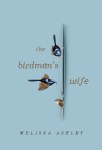
  • Melissa Ashley’s The birdman’s wife (Affirm Press): Christa Moffit
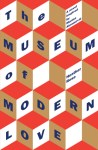
  • Heather Rose’s The museum of modern love (Allen & Unwin): Sandy Cull (GoGo Gingko)

Maxine Beneba Clarke, The hate raceNon-fiction

  • Ashleigh Wilson’s Brett Whiteley: Art, life and the other thing (Text): WH Chong
  • Damon Young’s The art of reading (Melbourne University Press): Mary Callahan
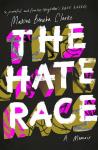
  • Maxine Beneba Clarke’s The hate race (Hachette Australia) (my review): Allison Colpoys
  • Andrew Hankinson’s You could do something amazing with your life (Scribe): Jenny Grigg

I’m impressed by the number of smaller publishers here. Seems they support good design too, and carefully “curate” the whole work. Certainly Melissa Ashley seems to think so …

Melissa Ashley,The birdman's lifeMelissa Ashley, author of the shortlisted The birdman’s wife, has posted on her blog about the shortlisting of her book’s cover. The novel, historical fiction, is about Elizabeth Gould the wife and accomplice of the famous ornithologist and artist, John Gould. Ashley writes:

It was my secret hope that Elizabeth Gould’s iconic, hand-coloured lithograph of the superb fairy wren featured in the cover design for The Birdman’s Wife. You can imagine how chuffed I felt when my editor, publisher, and book-designer felt the same way.

Authors don’t always have a say in their covers, but clearly Ashley did, and she was thrilled with the result. She praises “the visionary generosity of Affirm Press”. She loves not just the cover but the book’s whole design because, of course, book design is not just about the cover.

Back in 2012, I named three book designers – Dean Gorissen (who was one of the designers used by Affirm Press), WH Chong (who worked for Text Publishing – and still does, as their Design Director) and Sandy Cull (who has her own company, GoGoGingko). You’ve probably noticed in the lists above that Affirm Press is still employing great designers, and that Chong and Cull are still producing quality, award-attracting designs.

As well as sponsoring these design awards, ABDA also maintains a hall of fame, whose eight members include:

  • Alec Bolton (an independent publisher whom I’ve mentioned here before)
  • W.H. Chong (link above)
  • Patrick Coyle (the first nominee to the Hall of Fame, in 1994)
  • Sandy Cull (link above)
  • Arthur Stokes (a book designer and previous judge of the awards. A report on the 1978/9 awards, commented on the “lively” two days of judging, and that “Arthur Stokes kept remarkably calm but did complain that the other judges ‘kept sitting down and reading the books'”.)

Interestingly, while I was researching the hall-of-famers, I found a report on the 1972/73 design awards. Apparently the judges that year were disappointed in the quality, and they named some of the issues. For example, they said that “there was little awareness of contemporary design” and a lack of imagination. “Typography,” they said, “lacked detailed decisions” particularly regarding “sans serif and serif type faces – sans serif was often used inappropriately”. I was once told to use serif type for text, and sans serif for headings. I wonder if that’s what they were referring to, and whether this is still recommended practice?

They talked about the jackets, and the type used being either “out of character with the book” or comprising “a multitude of different faces”. Yes! I remember, years ago, reading an article titled “Font shock”. It was when word processing first became a tool used by all of us and the temptation was to throw every font available in the one document, but it reminded me once again that “less is more” or to “kiss“.

They also commented on poor cropping and sizing of photographs. Hmm, I hope they never look at my blog!

I found all this fascinating.

I briefly mentioned (or inferred) what I like in a book design in my 2012 Monday Musings post so won’t repeat it here. Instead, I’ll say what I don’t like! I don’t like:

  • small print (because my eyes aren’t as good as they used to be)
  • low contrast between paper and print so that the print is not easy to read
  • cheap paper that feels nasty
  • binding that stops the book falling open easily
  • tiny margins (which prevent easy marginalia writing)
  • no index (in non-fiction books)
  • covers that stereotype
  • covers that mislead regarding their content

I’d love to know what you like or don’t like in book design, and if you want to name a recent favourite or two, do go ahead and share it with us.

AS Patrić, Black rock white city (Review)

AS Patric, Black rock white cityWith that extended conflict known as the Yugoslav Wars (1991-2001) now over for more than a decade, we are starting to see books written about them. I’ve reviewed two on this blog to date, Aminatta Forna’s novel The hired man (2013) (my review) on the Croatian War of Independence, and Olivera Simić’s memoir Surviving peace (2014) (my review) on the Bosnian War. AS Patrić’s Miles Franklin Award winning novel, Black rock white city, (2016), which also draws from the Bosnian War, now makes three.

Like The hired man, Black rock white city explores the aftermath of war, but unlike Forna’s book, which is set within the war-torn country, Patrić’s book is set in Australia, and tells of refugees, Jovan and his wife Suzana. The novel starts about four years after their arrival and, although both were academics in Sarajevo, they, like so many refugees, work in their new country as cleaners and carers. It soon becomes clear that they have not recovered from their war experience. Gradually, over the course of the book, Patrić reveals the horrors of their experience. We learn that, like so many who suddenly find their country at war, they had to face that awful question, “should I stay or should I go”. As it turned out, they stayed too long, and Jovan feels he failed his wife by not going early. When we meet them, their relationship is stressed, and they seem unable to provide each other the love and emotional support they so badly need. It’s excruciating to read, because it’s so real, so believable.

I found this book particularly enlightening because I worked with a woman who was damaged by this war. Like Patrić’s two protagonists, she was Bosnian Serb, but unlike them she left early. However, the impact on her of this forced loss of her country, her culture, was immense.

But, I digress … back to the book. It opens with hospital cleaner Jovan cleaning graffiti in an examination room. We soon discover that the hospital is experiencing a bout of graffiti-writing, and that Jovan is the graffiti cleaning expert. No-one knows who is creating the graffiti, which becomes increasingly bizarre. It appears on all sorts of surfaces (such as a corpse’s back, a menu blackboard, the optometrists’ charts) and comprises a variety of seemingly random, though often pointed, words and phrases (such as “The/Trojan/Flea”, “Obliteration”, “Dog Eat Dog” and “Masters of Destiny Victims of Fate”), which Jovan starts to read as messages to him. The graffiti artist is dubbed Dr Graffito. This storyline gives the book the patina of a mystery or even, perhaps, a thriller.

However, while the graffiti provides a plot-line for the novel, the main narrative concerns Jovan and Suzana, their relationship with each other and with other people, including a lover (for Jovan, because Suzana, in her pain, has withdrawn sex), work colleagues, friends and neighbours. Underpinning this narrative is the ongoing trauma of war. Jovan, for example, is frequently dogged by “the black crow”. He “feels as though he uses a rail for a pillow – always listening to the vague rumblings of oncoming annihilation”. Once, Suzana remembers, he could

turn almost anything over to a new perspective, see something deeper, redeeming, more beautiful even if painful. It was what made him such a superb poet back in Yugoslavia … He doesn’t write anymore and it’s as though he never did.

There is poetry in his head though – including a mantra that gets him through his days: “Maroochydore and Mooloolaba, Noosa and Coolum”. Language – the loss of his own, his inability (or is it refusal?) to speak proper English, not to mention the disturbing graffiti – functions as a metaphor for his sense of displacement.

Meanwhile, Suzana, notes Jovan,

is spending more of her time scribbling into her notebooks. The only place safe for her in the time since Bosnia, was somewhere buried underground. Coming to the surface isn’t going to be easy.

Patrić crafts the story skilfully. It’s a debut novel, but Patrić has published two short story collections and is a teacher of creative writing. It shows. The story is told third person, initially from Jovan’s perspective, but later Suzana’s is alternated with his, which fleshes out our understanding of Suzana, while keeping the perspective tightly focused on their experience. The plot unfolds stealthily, as we shift between two questions: will the graffiti artist be discovered, and can Jovan and Suzana pull through? By the end, the strands come together – so cleverly, so shockingly. And then there’s the sure, controlled writing. The pacing, the wordplay and touches of humour, the imagery, the dialogue, and the changing rhythms, make it delicious to read, even while the content confronts and distresses.

Late in the novel, Suzana suggests to Jovan that Dr Graffito is “putting his pain into someone else”, and that seeing his “madness in someone else might make it feel more bearable”. I don’t want to spoil the novel, but Suzana seems to be right, until the end where Dr Graffito’s actions force a confrontation that bring it all to a head.

What is Patrić’s motive for writing this? Early in the novel, Jovan finds one of the many notes Suzana loves to leave around, a quote from her favourite author, Nobel-prize winner, Ivo Andrić:

You should not be afraid of human beings. I am not, only of what is inhuman in them.

Jovan, on the other hand, says that “so much of what happens, shouldn’t happen”. These two ideas form the crux of the book. We have a cast of human beings, who are all real, all flawed in some way. They muddle on, some better than others, some needing a bit of “moral flossing”, some a bit of “ethical cleansing” (and what a clever wordplay that is, keeping war’s horrors close to our minds.) We see what happens, during and after war, when people let hate get the better of themselves and release the “inhuman” within, thereby wreaking what “shouldn’t happen” on others. This is a big book, for all its mere 250 pages, because it tackles the fundamental question of how are we imperfect humans to live alongside each other.

Fiction, Suzana says, is writing for the soul. If that is so, Black rock white city is one soul-full book – and a worthy winner of the Miles Franklin.

Lisa (ANZLitLovers) was also impressed by this book, as was Bill (the Australian Legend).

AS Patrić,
Black rock white city
Melbourne: Transit Lounge, 2015
248pp.
ISBN: 9781921924835

Book Buying Habits (Another meme)

I really don’t like doing memes – except for the Six Degrees of Separation to which I’ve become addicted. But when I came across this Book Buying Habits one via Lisa (ANZLitLovers) and Karen (Booker Talk), I decided it would be a good opportunity to explain myself, so here goes …

1. Where do you buy your books?

Muse bookshop

Muse (Cafe and Bookshop)

I prefer independent bookshops, of which we have a few in my city, including Muse (a wonderful bookshop-cum-cafe-cum-literary event venue), Paperchain and the National Library of Australia bookshop. When I travel, I like to visit independent bookshops. These shops can usually be guaranteed to have the sorts of books I like to read, and staff who love to talk books.

I do some online purchasing, but less so than I did a few years ago, and I spread myself around a bit. Fishpond, Booktopia, Bookworld, Book Depository and AbeBooks (particularly for out-of-print books) are the ones I’ve used.

2. Do you ever pre-order books and if so do you do this in store or online?

No. I have enough to read without seeking out books before they come out.

3. On average, how many books do you buy a month? 

I used to buy four or more a month (including books as gifts), but these days I have reduced that rate because I am trying to catch up on reading books I have for review and books on my TBR. So, over the last year or so I’d say I only buy a couple a month. If it’s an Australian book I want to read, I’ll buy it in print, and if it’s non-Australian I prefer e-version. This is my little attempt at decluttering – or at reducing the clutter!

4. Do you use your local library?

Rarely these days. I’m a librarian by training, and I love libraries, but I also love to own the books I read – and, yes, you can yell at me, I also write in my books (in pencil). This is the main reason why I prefer to buy books – not borrow them from friends or libraries.

5. If so – how many books can you/do you borrow at a time?

I only borrow if it’s the only way I can locate a book I really want to read, which means I usually only borrow one at a time.

6. What is your opinion on library books?

Libraries are essential to a free, democratic society. I would fight for their existence. I have no problems reading library books. I just have problems keeping my pencil away from them, so … see q. 4 above!

7. How do you feel about charity shop/second-hand books?

I regularly donate to charity bookshops which, here in my city, means to Lifeline. I occasionally offer books to secondhand bookshops for sale but I don’t really find it worthwhile. They never take all I offer, and the money I’m offered (not that I’m complaining, they have to make a living) makes it not worth the effort. So, I’ve decided recently that when I declutter books, I’m donating them.

I will buy secondhand books if the book I want is out-of-print and I can find it in one of these shops. I do enjoy browsing Australiana sections of those secondhand shops which specialise in older literature. I tend to avoid those focusing on contemporary genre/bestseller books.

8. Do you keep your read and TBR pile together/on the same book shelf or not?

Book stacks

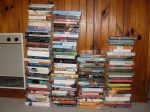
Part of an old TBR pile before they were sorted and weeded of books I’ll never read.

On the same bookshelf. Shelf? Not shelves? Hmm, no, they are separated, and they occupy their own bookcases, with Australian TBR books separated from non-Australian. My review copies are in a shelf of their own, with a little notebook in which I list them when they come in, and tick them off when I read them.

9. Do you plan to read all the books that you own?

What I plan and what I expect are two different things …

10. What do you do with books that you own and that you feel you’ll never read/felt you didn’t enjoy?

If they’re fiction and I’ve read them, I keep them, as they are part of my reading life and history. One day, though, I will weed them, starting with the non-Australian books. Oh dear, it rather sounds like I’m a nationalist. I’m not really, but it’s all part of my desire to support our small but wonderful industry here.

However, if I haven’t read them, and I really don’t think I’ll get to them, I have just recently started to move them on – by offering them to people who I think will enjoy them or by donating them. See under q. 7 above!

11. Have you ever donated books?

Yes, see under q. 7 above, again!

12. Have you ever been on a book buying ban?

No. Sometimes I go-slow, which I am doing now for the reasons I’ve given under q. 3. I see no reason for having a ban. If I want to read a book – if I need to read a book, say for my reading group – I’ll buy it. I am lucky enough, I know, to be able to afford this. Reading, after all, is my prime hobby so of course I’m going to support that hobby in whichever way best suits me at the time – and this means reading books I have, or buying a book I “need”. Some people like going to the gym or love skiing. Do we ever ask them about going on a gym- or skiing-ban?

13. Do you feel that you buy too many books?

Yes – and no. Yes, because my eyes are at times too big for my stomach (hmm, that’s a cliché that would horrify George Orwell) and because I have bought books in the past that I realise now I will not manage to read. No, because I’m not sorry about supporting authors, publishers and booksellers.

Monday musings on Australian literature: Aussie novels titled with foreign place names

I’ve done two Monday Musings posts inspired by Tony (from Tony’s Book World) – one on novels with real place names in their titles and one with fictional. To complete the trifecta, I thought why not look at Australian novels with foreign place names in their titles.

This turned out to be rather fun to do. Many Australian writers have set books overseas – more perhaps than I had superficially expected. They include, to name just a few that sprang to mind, Sara Dowse’s Schemetime (Los Angeles), Kate Grenville’s Dreamhouse (Tuscany and Milan, with the film adaptation set in Vietnam), Eva Hornung’s Dog boy (Moscow), Hannah Kent’s Burial rites (Iceland), Henry Handel Richardson’s Maurice Guest (Leipzig), Christina Stead’s For love alone (Sydney and London), Tim Winton’s The riders (Ireland, mostly), and Marcus Zusak’s The book thief (Germany). The list goes on and on in fact. It’s probably not surprising, therefore, that I found it relatively easy to find books titled with foreign place names, but I’ve limited myself to six.

I’ve read four of the books I list here – and, as with the first post in this series, I’m listing them alphabetically by the name of the place.

America

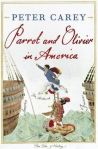
Peter Carey, Parrot and Olivier in AmericaWhen talking place names, it would be hard to get bigger than a country, so here I am starting the list with a very well-known country in the title of a book by a well-known Australian author, Peter Carey’s Parrot and Olivier in America (my review). Not only is America in the title, but America is very definitely the book’s subject because what Carey explores here is that country’s grand experiment with democracy. The epigraph is: “Can it be believed that the democracy which had overthrown the feudal system and vanquished kings will retreat before tradesmen and capitalists? (Alexis de Tocqueville)”.

Barbados

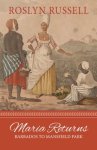
Roslyn Russell, Maria Returns Barbados to Mansfield ParkMy second place-name is another country, Barbados in the West Indies. It’s probably not the first place that would spring to mind as one an Australian author would write about, but Roslyn Russell’s Maria returns: Barbados to Mansfield Park (my review) does, in fact, make perfect sense. Russell is a museum professional who has spent a goodly amount of time working in Barbados. She is also a Jane Austen fan, and if you know your Jane Austen well, you’ll know that there are references to slavery in Mansfield Park. It was, as they say, a match made in heaven and Russell found herself irresistibly drawn to writing a piece of historical fiction drawing on these two enthusiasms of hers.

Berlin

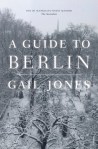
Gail Jones. A guide to BerlinFrom countries we move to cities, and a good example is Gail Jones’ recent, well-reviewed A guide to Berlin. Its title is that of a short story by Vladimir Nabokov. It is, as you’d expect – though you know I’m sure that this expectation of titles can’t always be relied on – set in Berlin. It’s about six international travellers, from various countries and all Nabokov lovers, who meet in empty apartments in Berlin where they share stories. It’s still on my to-read list.

Paris

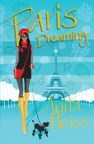
Anita Heiss Paris DreamingOf all the places authors might choose to write about, that most romantic of cities, Paris, would surely have to be up there, and sure enough I found one quickly, one, in fact, that I’ve read, Anita Heiss’ Paris dreaming (my review). It’s a delightful piece of chick-lit (or, as Heiss calls it, choc-lit) and is about a young museum professional who goes to Paris to mount an exhibition of indigenous Australian art. It’s an aspirational book as well as a fun read. Heiss fans will also be aware that she has written another book titled with a foreign place-name, Manhattan dreaming.

Shanghai

Brian Castro, Shanghai dancingShanghai is one of the most exotic places on this list, depending of course on what each of us means by exotic! Hong Kong-born Australian writer Brian Castro’s Shanghai dancing is, I believe, set mostly there. Castro, in an Author Note, describes it as follows: ”Shanghai Dancing is a fictional autobiography. Told from an Australian perspective and loosely based on my family’s life in Shanghai, Hong Kong, and Macau from the 1930s to the 1960s.”

Tuvalu

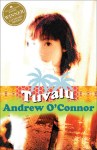
Andrew O'Connor, TuvaluRemember what I said under Berlin regarding expectations of titles? Well, Andrew O’Connor’s Vogel Prize-winning Tuvalu, which I read a couple of years before blogging, is a perfect example. It is, in fact, set primarily in Japan, not in Tuvalu which is a Polynesian island nation in the Pacific. Indeed, as I recollect, the characters, never go to Tuvalu. It is, instead, the dream-place or goal, the place where you imagine your life will be best and which therefore acts as a motivator to keep you going. I can’t think of a better place or concept on which to end this list of novels titled with places other than one’s own!

So now, once again, over to you. Can you add to my list of Aussie books with foreign places in their titles, or tell us about books from your country’s writers titled with places from elsewhere?

George Orwell’s Politics and the English language

George Orwell, 1933 (Presumed Public Domain, from Wikipedia)

I was reminded of George Orwell’s rules for writing this weekend while reading an article about the German architectural historian, Nikolaus Pevsner (1902–1983). In her article, “New guides to Bath: Society and scene in Northanger Abbey, Judy Stove-Wilson wrote that

Pevsner noted the strong tendency of English towards monosyllables. He regarded this as symptomatic of ‘understatement, the aversion against fuss, the distrust of rhetoric’ (Pevsner, The Englishness of English art, 1956, p. 13).

The reason I was reading this article, as you’ve probably guessed from the title, is because my local Jane Austen group is currently discussing Northanger Abbey. Pevsner wrote in 1968 an oft-quoted article on Austen, “The architectural setting of Jane Austen’s novels”. He, keenly interested in architecture, was critical of Austen’s minimal descriptions of buildings in her novels, though he was impressed with her knowledge of and use of Bath in her novels – and of course much of Northanger Abbey is set in Bath.

But, I’m digressing. My inspiration for this post is his comment on “the strong tendency of English towards monosyllables”. It made me chuckle given the German language’s predilection for multisyllabic words. It also reminded me of Orwell’s 1946 essay, “Politics and the English language” and his 6 rules:

  1. Never use a metaphor, simile, or other figure of speech which you are used to seeing in print.
  2. Never use a long word where a short one will do.
  3. If it is possible to cut a word out, always cut it out.
  4. Never use the passive where you can use the active.
  5. Never use a foreign phrase, a scientific word, or a jargon word if you can think of an everyday English equivalent.
  6. Break any of these rules sooner than say anything outright barbarous.

No. 2, of course, is the one I was remembering.

However, on returning to the essay to check Orwell’s actual rules, I realised that the whole essay is worth reading again, because in our world of “alternative facts” Orwell’s words on the relationship between politics and language are as relevant today as when he wrote them 70 years ago. He writes that, paradoxically, our language

becomes ugly and inaccurate because our thoughts are foolish, but the slovenliness of our language makes it easier for us to have foolish thoughts.

This is reversible, he believes, and reversing it is critical because good writing enables clear thinking, and the ability “to think clearly is a necessary first step toward political regeneration”. I should clarify, if you don’t already know, that his target is factual, and particularly “political writing”, not “the literary use of language” by which, presumably, he means creative or fictional writing.

Later in the essay he makes very clear why he is writing it, and you’ll quickly see why I’m sharing it now:

In our time, political speech and writing are largely the defence of the indefensible. Things like the continuance of British rule in India, the Russian purges and deportations, the dropping of the atom bombs on Japan, can indeed be defended, but only by arguments which are too brutal for most people to face, and which do not square with the professed aims of the political parties. Thus political language has to consist largely of euphemism, question-begging and sheer cloudy vagueness. Defenceless villages are bombarded from the air, the inhabitants driven out into the countryside, the cattle machine-gunned, the huts set on fire with incendiary bullets: this is called “pacification”. Millions of peasants are robbed of their farms and sent trudging along the roads with no more than they can carry: this is called “transfer of population” or “rectification of frontiers”. People are imprisoned for years without trial, or shot in the back of the neck or sent to die of scurvy in Arctic lumber camps: this is called “elimination of unreliable elements”.

Hmm … I bet everyone reading this can think of their own contemporary examples. Please share them if you like!

I won’t write more on the essay, as my main aim was simply to share its continuing relevance. I’ll just leave you with a sentence from his last paragraph:

Political language — and with variations this is true of all political parties, from Conservatives to Anarchists — is designed to make lies sound truthful and murder respectable, and to give an appearance of solidity to pure wind.

That George Orwell. He really was something.

George Orwell
“Politics and the English language” 1946

Maxine Beneba Clarke, The hate race: A memoir (Review)

This is how it changes us. This is how we are altered.

Maxine Beneba Clarke, The hate raceMaxine Beneba Clarke’s Stella Prize short-listed memoir, The hate race, is one powerful book. I’ve been reading about racism since my teens during the Civil Rights years, and have read many moving novels and memoirs. Clarke’s book holds its own in this company.

The book chronicles Clarke’s life from early childhood through to the end of high school, but she bookends this chronological story with a prologue and epilogue which are set later, during her son’s first year of school. This approach to structuring her story is effective, because it enables her to reflect on what’s changed a generation later. And the answer is, not much, which is such an indictment on Australian society.

Before saying more, though, I need to back-pedal a bit, and make sure you know who Clarke is – besides being the writer of a well-reviewed collection of short stories, Foreign soil. She’s the Australian-born daughter of West Indian-born parents who migrated to Australia from England in 1976. As a young girl she was mystified by people asking her where she was from, and confounded when these same questioners became angry when she responded, honestly, Australia. This is, I know, a common story, but is not, I think, well-documented in our literature. However, as Clarke would say, what’s a story for, if not to tell how it went.

And that’s what she does, tells us how it went – and went, and went. The bulk of the story is, as I’ve said, told chronologically but Clarke hangs each chapter, each step in her chronology, around a specific topic, such as her involvement in sport or debating, or that transition period between primary school and high school. She captures beautifully the trajectory of thirteen years of schooling from the early 1980s to the mid 1990s. Although everyone’s experience is different, much of what she describes is universal: the first day of school, the yearning for a specific toy (like a Cabbage Patch Kid), parties, first love, getting braces, and so on. What isn’t universal, though, is her experience of being a child of colour.

This is how …

Reading her story is gut-wrenching. She faces racism – direct and indirect, intended and unintended – from her first day of pre-school to the end of high school. One high school class-mate, who ranks the girls in the class (as if that’s an acceptable thing to do anyhow), doesn’t rank her at all “because animals didn’t count. Greg Adams said that would be bestiality”. She’s called every name you could possibly think of – and more you probably couldn’t. She’s spat at and threatened. Luckily, she has friends too – otherwise it’s hard to imagine how she could have survived.

The disappointing thing is the inept handling by the schools, because it’s clear that for all the work ostensibly being done in schools to promote tolerance and harmony, only some of it is getting through*. There’s only so much schools can do, of course, given students’ main role models are their parents, but the least teachers can do is take the racist behaviour seriously and respond in a meaningful and supportive way. This, however, is not always the case: “He’s trying to wind you up. It’s just a little bit of nonsense. Don’t give him the satisfaction, Maxine”, says one high school principal, for example. That’s not good enough. Writing about her early primary school years, Clarke says this:

I knew before I started big school that, for me, the playground would always be a battlefield: a world divided into allies and enemies. At five and a half, racism had already changed me.

After a while, you start to breathe it. Another kid’s parents stare over at our family on the first day of school with that look on their faces. You make a mental note to stay away from that kid … You tell a teacher someone is calling you names. Blackie. Monkey girl. Golliwog. The teacher stares at you, exasperated, as if to say: Do you really expect me to do something about it? The next time you have a grievance, you look for a different teacher. This is how it changes us. This is how we’re altered.

Towards the end of the book, her boyfriend asks her to come to his place to swim in his family’s pool. She’s uncertain:

I had no reason to believe Marcus’ family would have an issue with the two of us, based on what I knew of them, but I wasn’t sure I wanted to put myself through the stress of finding out.

This is how we edit our lives.

How we brace against the blows.

The book isn’t unmitigated misery. Clarke mixes up the tone, sometimes using humour to make her point – it never hurts, after all, to see the absurd side of things – but the book is a memoir, not an autobiography. This means that it is not about the whole life but a part of it, and in Clarke’s case the part that she wants to share, to expose, is her experience of racism while growing up. Her goal was not vindictive. She writes in her Acknowledgements that she loves Australia, but she wanted to show “the extreme toll that casual, overt and institutionalised racism can take: the way it erodes us all”. That, she certainly does.

There are things about the book that I could quibble about, but they are petty in the face of its overall power. I don’t like to describe books as “important” or to say that everyone must read them, but for a readable and devastating understanding of how racism, in all its guises, impacts on a personal, rather than a theoretical or historical level, The hate race is essential. It’s a story that needs, as indeed Clarke aimed, to be “written into Australian letters”. It deserves the accolades it has received.

Kim (Reading Matters) also admired this book.

aww2017 badge

Maxine Beneba Clarke
The hate race
Sydney: Hachette Australia, 2016
261pp.
ISBN: 9780733632280

* This is the 1980s and 1990s I know, but I use present tense here about schools because it’s pretty clear that not a lot has changed.