Monday musings on Australian literature: Aussie novels titled with fictional place names

Last week, inspired by Tony (from Tony’s Book World)’s post, I posted on novels with places in their titles. I limited my titles then to “real” places, but in my research I came across many books with fictional places in their titles, so, well, you know what I decided to do with that!

There are good reasons for making up a place. For a start, readers can’t complain about inaccuracies – about a street being in the wrong place, for example. Moreover, it gives writers the opportunity to create place names that mean something thereby contributing to the work’s overall meaning.

Last week, I listed my small selection of books by the name of the place, but here I’ll list under the author’s name. I’ve read four of my five chosen books, but have only blogged two, unfortunately.

Thea Astley
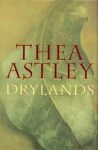
Thea Astley, DrylandsDrylands (1999, my review) is set in

a God-forgotten tree-stump of a town halfway to nowhere whose population (two hundred and seventy-four) was tucked for leisure either in the bar of the Legless Lizard or in front of television screens, videos, Internet adult movies or PlayStation games for the kiddies.

Such an evocative fictional town name suits Astley’s purposes for her dystopian novel about desiccating lives. It’s one of those books I haven’t forgotten, and would willingly read again.
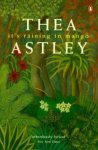
Thea Ashley, It's raining in MangoIt’s raining in Mango (1987) is set in a completely different environment to Drylands – as the title itself makes clear – but all that rain doesn’t make it much cheerier! It’s set in the fictional town of Mango, in the tropical rainforest area of northern Queensland where Astley set several novels, including her first, Girl with a monkey. The novel follows the Laffey family through four generations, from the 1860s to the 1980s. It also tells the story of an indigenous family whose path crosses the Laffeys. Astley chronicles lawlessness, violence and dispossession, and yet, as I recollect from my long-ago reading, it has its warm, comic moments too. One I should read again.

David Malouf
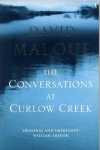
David Malouf, The conversations at Curlow CreekThe conversations at Curlow Creek (1996) is not, I think, one of Malouf’s best known or most popular books, but I really liked it. It’s set in 1827, and concerns the conversations between two Irishmen, a prisoner, who is to hang in the morning, and the man guarding him. It has that mesmeric, reflective quality that I love in many of Malouf’s novels. As I was researching the book to see if I could find why Malouf chose this place name, I came across an interview with Malouf in which he says, “I’m aware of the number of times I really want to use the novel to stop time, to slow things up. You can slow up the narrative so that a second is something that can be explored maybe over pages. I like that play between movement and stillness in the novel.” I still haven’t found the origin of the name – perhaps it’s just intended to be an Irish-sounding name that was fairly typical in colonial Australia – but this statement tells me a lot about what drives his writing.

Kylie Tennant

Kylie Tennant, TiburonTiburon (1935), which won the S.H Prior Memorial Prize, was Tennant’s first novel. It is set in the fictional Australian country town of Tiburon during the Depression, and centres on the poor and unemployed. I’ve read a couple of Tennant’s novels, but not this one. She’s a great teller of stories about the lives of “ordinary” people, often in extraordinary times, like the Depression (here) and the War (Tell morning this, which I have read.) According to the Australian Dictionary of Biography, the man she ended up marrying obtained a job in the country, so Tennant walked hundreds of kilometres from Sydney to see him. “On the journey,” ADB says, “she witnessed the hardship and suffering of the rural unemployed. It was the first of the many arduous, punishing walking tours Tennant undertook in the early 1930s that would form the background to her rural Depression novel Tiburon.” Apparently, she based Tiburon on Canowindra, and the residents were none too happy!

Tennant, commenting on rumours of unhappiness in the town, suggested they could raise money for the following headstone for her:

KYLIE TENNANT. Once a student of Brighton College.
Unwisely wrote Tiburon and was speared by the natives of a town that does not exist.

Clearly, if you are going to make up a place, you should make it up good and proper!

Patrick White

Patrick White, Happy ValleyHappy Valley (1939, my review) is set in a fictional town called, yes, Happy Valley, in the Snowy Mountains-Monaro region of New South Wales where Patrick White had worked as a jackeroo for a year. The town’s name, as you’ve probably guessed, is ironic, because White’s people are rarely happy. Life, as I wrote in my review, tends to be, for his people, disappointing at best, sterile, depressing and/or meaningless at worst. In other words, like Thea Astley’s Drylands, White’s titling is pointed.

So now, over to you … do you have any favourite (or, even, not so favourite) novels titled with fictional places?
Ellen N. La Motte, Alone (Review)

I decided to read Ellen N La Motte’s story “Alone” from recent Library of America (LOA) Story of the Week offerings because it was a war story, but as I read LOA’s notes I became more and more intrigued. I hadn’t heard of La Motte (1873-1961) before, but she was an American nurse. Two years before the US formally joined the First World War in 1917, she offered to work at the American Hospital of Paris.

She wasn’t pleased by what she saw. Rather than a serious “warzone” she found a bunch of “alleged do-gooders crowding out the recuperating soldiers”. In an essay written at the time, “An American Nurse in Paris,” she described the workers, as follows:

nearly all are dressed in the becoming white gowns of the French Red Cross and a few are pearled and jeweled, rouged and scented till they are quite adorable. . . . This system floods the institution with a mass of unskilled labor, some of which is useful, much superfluous, and some a positive menace to the patients themselves.

Not surprisingly, La Motte decided to move on, and worked for a year in a military hospital in Rousbrugge outside Dunkirk. She was little prepared, LOA writes, for the horror she witnessed. She herself described it as “beyond and outside and apart from the accumulated experience of a lifetime.”

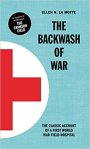
Ellen N LaMotte, The backwash of warWhile working at the hospital, she wrote of her experiences, and upon her return in 1916 published a dozen or so sketches in The backwash of war: The human wreckage of the battlefield as witnessed by an American hospital nurse. However, it was withdrawn in 1918 by her publisher, due to government pressure. It was too “unpalatable”, and wasn’t published again until 1934!

“Alone” is one of the sketches in the book. It tells the story of injured soldier, Rochard, who has gas gangrene. It’s a straightforward story – story-wise, anyhow. Rochard is brought into the hospital within six hours of being injured, but his wounds are inoperable and all know he will die. All they can do is offer pain relief and nursing care to keep him as comfortable as possible. What impressed me about the piece was La Motte’s insight, her humanity, and her ability to write, all of which turn this sad story into something more powerful.

La Motte describes the doctors in the hospital as comprising, primarily, young recent graduates from medical schools, and old doctors who had graduated long ago. She writes that

all those young men who did not know much, and all those old men who had never known much, and had forgotten most of that, were up here at this field hospital, learning. … there were not enough good doctors to go round, so in order to care for the wounded at all, it was necessary to furbish up the immature and the senile.

Oh dear. She describes the initial treatment given to Rochard in rather gruesome detail – which I won’t share here – and then describes his dying. He is given morphia, which “gives a little relief, at times, from the pain of life, but it is only death that brings absolute relief”. She never mentions euthanasia but, from her description of Rochard’s horrendous pain, you sense she’d support it. His death is a long and painful one. She writes, after one trying night:

So when the day nurse came on in the morning, there was Rochard strong after a night of agony, strong after many picqures of strychnia, which kept his heart beating and his lungs breathing, strong after many picqures of morphia which did not relieve his pain. Thus the science of healing stood baffled before the science of destroying.

As Rochard nears death, the screams of pain reduce and he becomes quiet. She writes that:

he had been decorated with the Médaille Militaire, conferred upon him, in extremis, by the General of the region. Upon one side of the medal, which was pinned to the wall at the head of the bed, were the words: Valeur et Discipline. Discipline had triumphed. He was very good and quiet now, very obedient and disciplined, and no longer disturbed the ward with his moanings.

Bitter, eh. The piece moves to its inevitable end – Rochard’s death – but the language La Motte uses to describe it and the way she controls the narrative to deliver a punch at the end, is impressive. This woman could have been a writer – well I suppose she was! – but her passion lay elsewhere, nursing and public health.

After the war La Motte, who wrote many books and articles on her nursing experiences, travelled in Asia and saw the devastation caused by opium addiction. According to the Johns Hopkins Medical Institutions, where her papers are stored, she became an authority on opium trafficking, and reported to the League of Nations. She was awarded the Lin Tse Hsu Memorial Medal by the Chinese government in 1930 and received the Order of Merit from the Japanese Red Cross.

But, she did more, too, so I’m going to conclude with the final paragraph from the American National Biography Online:

Ellen La Motte’s professional life was devoted to causes she analyzed through the lens of public health advocacy. Her efforts on behalf of the antituberculosis campaign, woman suffrage, and the anti-opium crusade emerged from a firm belief that promoting ways to improve the health of the larger community could create a more equal and just society for all.

Someone well worth knowing about … I’m glad I decided to read this LOA story.

Note: The backwash of war is available in entirety at Project Gutenberg.

Ellen L. La Motte
“Alone”
First published: The backwash of war: The human wreckage of the Battlefield as witnessed by an American hospital nurse (1916)
Available: Online at the Library of America

Carmel Bird, Family skeleton (Review)

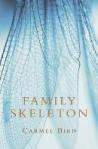
Carmel Bird, Family skeletonI love a cheeky writer, and Carmel Bird must be the doyenne of cheeky writers, so it goes without saying, really, that I thoroughly enjoyed her latest novel Family Skeleton. The cheekiness starts with the epigraph, which, as she is wont to do, is a quote from her fictional character Carillo Mean. As Bird has said in an interview, “he always has something interesting to say”. But that’s just the start of the cheekiness. The story is narrated by “the skeleton in the wardrobe”. Now, I know many readers don’t like what they see as cute or contrived narratorial devices – like girls in heaven or dead babies – but please don’t let that put you off here, because in the hands of a skilled writer such a device can lift a story to a whole new level.

So, when I tell you that the novel’s framing idea is an obsession with family history, you might start to understand where our narrator comes in – except that the story is not really about the skeleton, whose identity is never divulged, nor is it about family history. What it’s about, really, is family secrets and betrayal, and the tipping point. It’s about the recently bereaved and well-to-do Margaret O’Day, whose family, through her husband, has been involved in the funeral business for generations. Such a setting is, of course, ripe for black comedy and that’s what we get in this novel. But, back to Margaret. Her husband Eddie, “a philistine” according to our skeleton, was also a philanderer and died in the arms of his mistress. Margaret had been betrayed – more than once, in fact – but she knew this, and even accepted this last mistress, and her children with Eddie, at the funeral.

From this set up, the story progresses, mostly chronologically but with a couple of significant time-shifts along the way. It is mainly told by our omniscient skeleton, but Margaret starts a journal, which she calls – hmm, note this – “The Book of Revelation”. Her entries in it form some of the book’s chapters. This title, “The Book of Revelation”, is another of Bird’s jokes, for the novel is about things revealed and not revealed – particularly the latter, because as the story progresses Margaret discovers an even bigger betrayal than her husband’s, and she is desperate to hide it from visiting O’Day family historian Doria Fogelsong.

The novel, then, as I said, is about secrets and betrayals. For the “virtuous” Margaret, who has put up with much throughout her marriage and who has become very good at “concealing her true feelings from people”, this lately discovered betrayal is the last straw. It takes all her resources to keep going. The family history motif compounds the tension. Will the story come out? Will Margaret be able to keep Doria (“with her iPhone on her left, iPad on her right”) from finding it out.

There’s satire here, surely, on the current obsession with family history. Our skeleton tells us

I happen to know that one of the little violinists was the son of Eddie O’Day and a gorgeous Hungarian dress-designer. Evan didn’t realise that, not that it makes any difference to anything, although it is a nice detail for a family tree. Doria missed out there.

So cheeky, these little jibes dropped in. Bird also skewers fashions in family history – such as how it is now a positive thing to uncover a convict or an Indigenous ancestor – while also exposing its underbelly, that is, the pain discovery can cause. The obvious question, of course, is whether it is better to know the truth or not.

However, it’s not only family history which catches Bird’s eye, but the pretensions and self-absorption of contemporary middle-class life, from designer clothes to electronic devices, from shallow parties to theme park cemeteries. It’s all here, providing background to the main fare.

But there’s more to the novel too, because it is also about writing and reading fiction, a storytelling masterclass in a way. The skeleton does more than narrate. S/he engages with the reader, reminding us of things we’ve already read, making sure we are keeping up with any plot hints or twists. Oh, how I loved this. I felt Bird was right there, having fun, playing games with us, while at the same time teaching us about how writers write and, more significantly, how we should read. Early on, for example, our skeleton presents us with a future auction advertisement for Margaret’s house, Bellevue, and says:

I realise that the eye of the reader can easily slide carelessly across such elements of the text. However, I suggest you take your time and study this document carefully.

The joke, though, is on us because at this stage in the story we have no idea what “secrets” are contained within. (At least, that’s my reading of what Bird is doing.) At another point, after telling us that “nothing bad ever happened at Bellevue these days”, the skeleton teases us with, “I trust you are alert enough to hear a faint bell ringing”.

Bird also plays with the archetypes of popular fiction – the betrayed wife, the philandering husband, and “the archetypal stranger who rides into town … the harbinger of fate” – but she gently subverts our expectations. The betrayal that most disturbs Margaret is not her husband’s, and it’s not Doria, the stranger, who brings the news that so distresses Margaret, albeit, given Margaret’s discovery, Doria can certainly ramp up the pain.

And then there’s the writing, with its gorgeous descriptions, pert sentences, delicious irony, entertaining word-plays and its smart, cheeky tone which leaves you in no doubt about who or what is being targeted but is good-humoured rather than bitter. Here is Margaret preparing to have Doria for lunch:

When Margaret asked for just a plain omelette, Lillian [her housekeeper] understood that the guest was someone who gave Margaret no joy, and who was to be more controlled than entertained. It was control by omelette. A sliver here, a sliver there, and a quiet soft squashing with the tongue against the palate. Desultory conversation, meaningless smiles. Plain omelette.

What more can I say? Family skeleton delights on so many levels. It is in fact quite a shocking story, but one told with a spoonful of sugar that has just the right amount of spice. I can’t help thinking that Bird chuckled and chuckled as she wrote it. I certainly did reading it.

Lisa (ANZLitLovers) also enjoyed the novel.

aww2017 badgeCarmel Bird
Family skeleton
Crawley: UWA Publishing, 2016
228pp.
ISBN: 9781742588902

Monday musings on Australian literature: Aussie novels titled with place names

I was searching around for a light, fun idea for this week’s Monday Musings, as life is a bit busy at present, when up popped in my inbox Tony (from Tony’s Book World)’s post on novels with city or town names in their titles. That seemed like just the thing: it demanded a little thinking but not a huge amount of research, and you can all join in with your favourite books (from anywhere in the world).

Tony explained his post by saying that “fiction allows you to travel throughout the world without leaving your own house.” A cliché, he admits, but I’d respond that it’s a cliché because it contains a truth, n’est-ce pas? Tony’s list included fictional towns, but I’m going to stick to real Aussie places – and I’m using “place” here rather than city or town to allow more flexibility. Because I like to have some order, I’m listing my books alphabetically by the name of the place.

Alice Springs

Nevil Shute, A town like AliceNevil Shute, as some of you know by now, was one of my favourite writers in my youth. I particularly loved his World War 2 stories, of which A town like Alice (1950) is his most famous. Alice Springs is the second largest town in Australia’s Northern Territory, and the closest to one of our most famous tourist attractions, Uluru. However, what it is not is the main setting of Shute’s novel. The story concerns young English POW Jean who migrates to Australia to find Aussie soldier and POW Joe whom she’d met during the war. She visits Alice Springs, which impresses her, but ends up in a fictional town which she’d like to make – yes, wait for it – “like Alice”.

Carpentaria

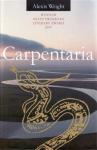
Alexis Wright, CarpentariaCarpentaria, in northwest Queensland, is a shire named for the Gulf of Carpentaria on which it is located. It also provides the one-word title for Alexis Wright’s Miles Franklin award-winning novel, Carpentaria (2005) (my review). However, although the novel is set in a real shire called Carpentaria, it largely takes place in a fictional town called Desperance. You can probably guess, from that, why she made up the town name. The novel explores black-white relations in the town – relations between the indigenous inhabitants and white settlers, and between the town’s different indigenous groups. It’s about dispossession and its ongoing, destructive impact on people, generation after generation.

Castlemaine

Kerry Greenwood, The Castlemaine murdersCastlemaine is a small city a little north of Melbourne in Victoria. Like many places in Victoria it made its name as a city during the 1850s gold rush and now sports many historic buildings, as well as an active cultural life. The book which features it is in a genre that I don’t read much – but if I did, it would provide, I think, more titles for this post than any other genre. I’m talking crime, and the book is Kerry Greenwood’s The Castlemaine murders (2003). It’s in her popular Phryne Fisher series, which has been made even more popular by a gorgeous (delicious-to-watch) television series.

Mullumbimby

Melissa Lucashenko, MullumbimbyI haven’t read Melissa Lucashenko’s Mulllumbimby (2015), but I have read (and reviewed) the short story which preceded (and I think is incorporated in) the novel, “The silent majority”. Mullumbimby – I love the sound of it – is a small town in the northeastern rivers region of New South Wales. According to Wikipedia, its name is of indigneous origin and means “small round hill”. Lucashenko, in her story, exposes some of the town’s struggles, particularly for poorer people and indigenous people. Her character Jo considers the town’s early white settlers who “had tried to slash and burn their way to freedom here”, and wonders what the place was like before these settlers came.

Surfers Paradise

Helen Garner, Postcards from SurfersAs its name suggests, Surfers Paradise is a seaside resort. Technically it’s a suburb in a city called the Gold Coast, which is the closest thing Australia has to the retirement areas of Miami, Florida. Helen Garner, who primarily focuses on Australia’s southern states, published a collection of short stories titled Postcards from Surfers (1985) (my review). The titular story is about an adult woman coming to visit her retired parents and aunt at Surfers Paradise, having left a broken relationship and a not fully successful life behind her. She, beautifully, as I recollect anyhow, evokes the retired life of her parents and aunt.

Sydney

Christina Stead, Seven Poor Men of SydneySydney is not, as many think, Australia’s capital but the capital of New South Wales. It is, though, where white settlement in Australia commenced. There are several books with Sydney in their titles, but the first that came to my mind was Christina Stead’s Seven poor men of Sydney (1934), her first novel and one I would like to read some time. Luckily, Lisa (ANZLitLovers) has read it. Stead wrote vividly about Sydney in For love alone, which I’ve reviewed here, but that novel moved overseas, whereas this first novel is fully set in Sydney, and particularly explores its poorer side. I gather it focuses on the tenuous lives of workers, much like Mena Calthorpe did in her Sydney-based (but not titled!) novel, The dyehouse (my review).

Next week, I might look at novels with fictional places in their titles. For one thing, they seem more numerous. I’m not sure that this (if my little hypothesis is right) means that more books are set in fictional places, but it feels like fictional places are more comfortable title material.

So now, over to you? What novels with place names in their titles do you like?

Janette Turner Hospital, Orpheus lost (Mini-review)

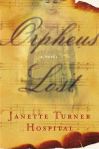
Janette Turner Hospital, Orpheus lostLast year I did a mini-review of Elizabeth Jolley’s An innocent gentleman using some scrappy notes from when I read the book long before blogging. This post on Janette Turner Hospital’s Orpheus lost has similar origins. I’m keen to add it here because I’ve read several of her novels, but none since blogging, and I really want her represented here.

Orpheus lost commences in Boston and is about Leela, a mathematician from the South, and the Australian musician, Mishka the subway-playing violinist, whom she meets.  They become lovers, until suddenly, after a subway explosion in which terrorism is suspected, Leela is taken to an interrogation centre where an old friend Cobb tells her that Mishka isn’t who she thinks he is. Meanwhile, Mishka is looking for his missing father, and heads off to the Middle East. The scene is set for what becomes, in fact, a literary thriller.

In a conversation* with Jason Steger on The Age online book club, Hospital said she had no political agenda but was interested in how people emotionally handle the shock of being randomly caught up in political action, and in what moral decisions they make. In other words, she’s interested in the moral and emotional repercussions of what happens when people get caught up because what they do looks dangerous but actually isn’t. (This is similar, in fact, to what happens in Richard Flanagan’s The unknown terrorist). It’s nightmarish stuff. Hospital talked about the trading of civil liberties for safety in the post-9/11 world, something she sees as a dangerous response. It makes it rather relevant still today doesn’t it?

However, she also talked about Orpheus and Eurydice being one of the great love stories of all time, and suggested that it is as much about loss, grief and yearning, as it is about love. But she was tired, she said, of the women always being the rescued ones. So she decided to give it a feminist twist and invert it. Consequently, in Orpheus lost, the man’s the one snatched away, and she’s the rescuer. Now that’s surely political!

The novel is a multiple-point-of-view novel and opens with Leela’s voice. We learn that she is fascinated by maths (numbers) and on the second page she quotes a seventeenth century mathematician saying ‘Obsession….is its own heaven and hell’. This theory is played out in the novel. The three main protagonists all have obsessions: Leela is obsessed with maths (which she believes always provides an answer to things) and with Mishka; Mishka is obsessed with music and with his identity (which involves his missing ‘father’); and Cobb is obsessed with Leela. There are other obsessions in the novel, though, too – the Islamic fundamentalists, Leela’s father with his religious fundamentalism, and other obsessive musicians and mathematicians.

Into this world of obsessed people, comes terror – and alongside terror, as we all know only too well, is the desperation for safety. Safety is a constant issue throughout the book. For example Cobb describes two types of people – those who take safety for granted and those who know it’s a precious thing. He suggests that the former create risks for the latter.

Unfortunately, I seem not to have the book anymore – which is unusual for me. Perhaps I’d borrowed it! So what I want to focus on is my experience of reading Hospital, rather than on the plot. She’s one of our more structured or tightly-styled writers. This means that I read her with my head as much as with my heart because she always has a lot going on. There is, for example, her strong use of recurring motifs and metaphors, such as, in this novel, photographs. They play several roles: they represent love, connections between people, surveillance, evidence, and the idea of truth vs fiction. I enjoy teasing out these sorts of things. Music and maths are other significant motifs. For some readers, and for me on occasions, Hospital can push her metaphors too hard but I thought they worked here.

And then, alongside multiple points of view and these recurring motifs and metaphors, there are structural devices, such as her use of parallels to set up points of likeness and tension between her characters. The three main protagonists all lost a parent early (Cobb and Leela their mothers, and Mishka never knew his father); Cobb and Leela both have ‘damaged’ fathers; the main characters all have small town upbringings in ‘odd’ places (the Deep South in a town called Promised Land, and the Daintree which is described as ‘the promised land’). The whole idea of “promised lands” is rich for exploration in our modern world of nationhoods!

Anyhow, to conclude this mini-review, lessons are learnt in the novel. Cobb, who initially wants to make Leela fear, comes to regret his actions. And Leela, who has to confront the reality of fear, also learns that random events which you can’t always control do occur. Steger says the book is about redemption – but, despite what Hospital says, I can’t help thinking it is also about politics. Like most of her novels, it’s challenging to read, because she’s a writer who extends, probes and pushes – occasionally, perhaps, a little too much – but that, to me, makes her always worth reading.

Bill (The Australian Legend)‘s review will fill you in nicely on more of the details.

aww2017 badgeJanette Turner Hospital
Orpheus lost
Sydney: Fourth Estate, 2007

* I couldn’t get the actual conversation to load when I checked this old link, but I’m adding it here in case it was just a temporary gremlin.

Monday musings on Australian literature: 5 Australian novels to theatre

Having recently posted on Alana Valentine’s adaptation of Frank Moorehouse’s Cold light, I thought I’d explore other theatrical adaptations of Australian novels, because we tend, when thinking of adaptations, to focus mostly on movies – at least, I think we do.

Now, I haven’t seen many theatrical adaptations of Aussie novels. We get some theatre in my city, but my live performance outings tend to be more dance and music focused, so I’ll be talking here about productions I mostly haven’t seen. There, disclosure done!

Interestingly, I did read an article that bemoaned theatrical directors’ recent focus on adaptations – though the main issue was more about the adaptation of overseas plays (including classics, like Chekhov’s works, et al). The article quotes Andrew Bovell, whom you’ll see mentioned below, on “the rise of adapted plays”:

WRITE your own plays and stop effing around with everybody else’s. It’s lazy. It’s easy. It’s conservative. And it ignores the vibrancy of the contemporary voices that surround you.

Apparently, some of these adapted classics are being called, in some quarters anyhow, “new Australian works”. I’m not going to go there in this post, but do read the article cited above if you’re interested.

Meanwhile, here’s my little set of five original Australian stories adapted to theatre, in chronological order of adaptation…

Cloudstreet

Tim Winton’s 1991 award-winning novel, Cloudstreet, has seen many adaptations – to radio play (1996), theatre (1998), television miniseries (2010, which I’ve seen), and opera (2016). That gives you a sense of the importance (and reputation) of this novel, even if all the other accolades don’t! The stage adaptation was done by Nick Enright and Justin Monjo, who won an AWGIE Award for their adaptation, and the play was directed by one of Australia’s best-known and most successful theatre directors, Neil Armfield. It has not only been staged in Australia but also in London, Dublin, New York and Washington DC. It received the Helpmann Award for Best Play and for Best Direction of a Play in 2002.

The Guardian’s reviewer, writing of the 2001 London production, had some quibbles with the adaptation, but loved Armfield’s production and likened one particular scene to a John Ford film. He continued:

Ford, of course, directed The Grapes of Wrath, and there is more than a hint of Steinbeck’s earthy realism and epic vision in this unfolding saga. But in the end the show is pure Australian, and one hopes it might do something to erode our patronising ignorance of that country’s drama.

I wonder if it has!

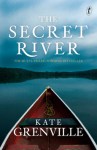
The secret river

The secret River cover

Adapted by one of Australia’s current best-known dramatists, Andrew Bovell, and premiered in 2013, the theatrical version of Kate Grenville’s award-winning novel The secret river was hugely successful, and I’m embarrassed that I didn’t organise myself to see it. I did see the later miniseries adaptation, but that doesn’t count in the context of this post. The production was nominated for – and won – several awards in Australia’s main theatre awards, the Helpmann Awards.

Bovell commented on the process of adaptation:

Sometimes the best approach to adapting a novel is simply to get out of the way. This proved to be the case with The Secret River. The novel is much loved, widely read and studied. It has become a classic of Australian literature. My task was simply to allow the story to unfold in a different form. It took me sometime to realise this.

He talks about the contributions to the adaptation made by the play’s director (the aforementioned) Neil Armfield, Bangarra Dance Treatre director Stephen Page, and the Artistic Directors of the Sydney Theatre Company which staged the play, Andrew Upton and Cate Blanchett. These people are the royalty of Australian theatre so it’s not surprising the play was successful, both critically and at the Box Office!

Storm boy

The oldest novel in my selection this post is Colin Thiele’s 1964 children’s novel Storm boy, which was made into a very successful film in 1976. The play adaptation, however, is far more recent, being premiered in 2013. It was adapted by a writer I don’t know – but I’m no theatre expert – Tom Holloway, whom the play’s director John Sheedy called “one of my favourite Australian playwrights.” Sheedy said Holloway was faithful to Thiele’s story and his style.

For those of you who don’t know, the story is about a boy, whose mother had died, and the pelican he befriends (or, who befriends him). The Canberra Times article (linked above) on the play says this about the pelicans:

The pelicans were crucial to the story and Sheedy said, “For three seconds we thought of bringing real ones in.” But then the decision was made to use puppets, carefully crafted to be the size of real pelicans and operated by two Indigenous performers, Tony Mayor and Phil Dean-Walford.

The play was performed in Canberra, Sydney and other eastern state cities in 2015 and 2016.

Jasper Jones

Jasper Jones, by Craig SilveyCraig Silvey’s 2009 novel (my review) has, like Winton’s Cloudstreet and Grenville’s The secret river, became one of Australia’s most popular contemporary novels. It was adapted for theatre in 2014 and for film in 2017. The play adaptation was done by versatile actor and writer, Kate Mulvany. Being a Western Australian-based story, the play was first performed in Perth, with productions following in Sydney and Melbourne in 2016.

The Sydney Morning Herald’s reviewer, Jason Blake, said the following of the Sydney production:

I finished the book off this morning, just before writing this review. I think Mulvany has done a fine job in creating a play that stands on its own feet, though I do feel slightly cheated of the fiery, cleansing climax Silvey has provided his readers.

But whether you know the book or not, this piercing adaptation is very much worth seeing for the way it depicts – and shows ways across – some of the deep and enduring divides in our society.

The women in black/Ladies in black

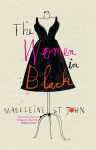
The women in black, Madeleine St John, book coverMusician Tim Finn and writer Carolyn Burns’ 2015 adaptation of Madeleine St John’s 1993 novel, The women in black (my review) is an exception in this list for three reasons: it’s the only one whose title differs from the book’s, it’s a musical comedy rather than a drama, and I’ve seen it! It won Best New Australian Work for Finn and Burns at the 2016 Helpmann Awards.

I’ve been pondering the name change, and my guess is that Finn and Burns felt, probably validly, that the word “Ladies” better conjures the 1950s fashion-section-of-a-department-store setting of the story. Anyhow, I enjoyed the adaptation, and loved that Finn took words from the book for the songs, as in “He’s a bastard, a bastard, a standard issue bastard” (“The Bastard Song”).

The Wikipedia article on the musical quotes the ArtsHub reviewer:

a comedy of mid-20th century manners, Ladies in Black is a paean to an optimistic future – the future of an uncomplicated gender equality and seamless multiculturalism. But Finn’s canny lyricism transports the play from its late 50s context to a subtle but salient comment on social issues of today.

While we have certainly moved on since the setting of this novel, this reviewer has a point – but I’m not sure that message will be the show’s lasting impression. It’s probably a bit too light and fun for that.

An aside: Australian film director Bruce Beresford, and friend of Madeleine St John, has been wanting to adapt the novel to film for a couple of decades now. I’d love to see what he did with it.

Is there any Aussie (if you’re an Aussie) or other (if you’re not) novel that you’d love to see adapted (jn any form)?

Six degrees of separation, FROM Room TO The children’s Bach

I’m going to take you on a bit of a wild ride this month, bouncing from title to genre, from setting to risk-taking, and more, so hang onto your hats, because here we go …

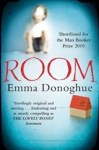
Emma Donoghue, RoomExcept, oops, I do need to tell you what this is all about. It’s the Six Degrees of Separation monthly “meme” again, of course, and it’s currently hosted by Kate (booksaremyfavouriteandbest). Each month she nominates a book from which we create a chain of seven books, linking one from the other as the spirit moves. Yet, again, I haven’t read the starting book, Emma Donoghue’s Room. However, as usual that didn’t daunt me. At least I can promise to have read all the books I select for my chain.

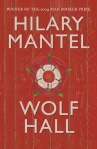
Hilary Mantel, Wolf HallSo, my first link is on the title, and I’m choosing a title with a “room” in it, in this case a “hall” as in Hilary Mantel’s Wolf Hall (my review). It was, as I recollect, a somewhat controversial Booker Prize win because it was, shock! horror!, a so-called genre book. To confirm my memory of this I did a bit of a Google search and found this wonderful commentary from The Guardian at the time of its win:

She’s also, by the by, managed to sneak a ‘genre’ novel into the Booker winners’ notoriously literary paddock – and recalibrated the arena of historical fiction in the process. The accusation that this year’s shortlist was weighted too heavily towards the historical has dogged the debate surrounding it, but even those who found Wolf Hall mannered or boggy …  agreed that Mantel’s novel was a far more exciting proposition than the usual ladies-and-lances epics that the genre turns out.

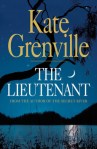
Kate Grenville, The lieutenant book coverHaha, I’ve always called them “bodice-rippers”, but I love commentator Sarah Crown’s “ladies-and-lances”.

Anyhow, moving right along, it is genre – historical fiction about a real historical figure – that I’m using for my next link, Kate Grenville’s The lieutenant (my review). It’s the second book in Grenville’s Secret River early-contact trilogy and was inspired by astronomer Lieutenant William Dawes, who came to Australia on the First Fleet. He befriended a young indigenous girl and took interest in the local language, which he documented in his notebooks. A good read.

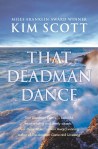
Kim Scott That Deadman DanceAs, it would be unjust to include a non-indigenous writer on first contact without also giving voice to an indigenous author, my next link is to Kim Scott’s Miles Franklin Award winning That deadman dance (my review). While Grenville’s book is set in the first years of the Sydney colony, Scott’s novel is about the establishment of the British colony in southwest Western Australia in the 1820s-1840s. It’s a significant and unforgettable book.

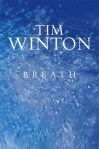
Tim Winton, BreathMy next link is to another Miles Franklin award-winning book, though that’s not the reason I’m linking it. The link is the setting, Western Australia, and the book is Tim Winton’s Breath (my brief review). I loved this book. I loved its evocation of surfing, which is something I have no desire to do but Winton helped me understand its thrall. I also loved its exploration of male risk-taking behaviour. Tim Winton knows his subject so well.

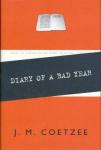
JM Coetzee, Diary of a bad yearAnd now, I’m going to draw a long bow, and move from a book about risk-taking to a book in which the author took big risks, JM Coetzee’s Diary of a bad year (my review). It’s a strange book to read, because it has three (two to begin with) concurrent strands running across the top, middle and bottom of the page, with each strand representing different voices. How do you read such a book? Coetzee is a writer who seeks new ways of confronting us with ideas that he thinks matter. Oh, and note that even though South-African born Coetzee now lives in Australia, he is this month’s non-Australian contribution, because I always like to have at least one.

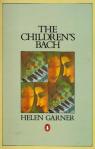
Helen Garner, The children BachMy last link is perhaps even more spurious. Late in Diary of a bad year, Coetzee refers to his love of Bach. I suggested in my review that the book itself could be seen as pæan to Bach, because its three-part structure, in which each part counterpoints the others, could be seen as a textual representation of Bach’s polyphony. This brings me to Helen Garner’s novella The children’s Bach (my review). There are references to Bach’s music in the book. However, I’m linking again on the structural element because, even though Garner’s narrative is not so formally divided as Coetzee’s, she tells her story about Dexter and Athena and their family tightly, through multiple vignettes which also reflect Bach’s contrapuntal, polyphonic approach to music.

And so, here we are at the end – and somehow, although I’ve linked via various concepts and strayed a few centuries in time, we’ve returned in the end to a story about parents and children.

Have you read Room? And whether or not you have, what would you link to? 

Madelaine Dickie, Troppo (Review)

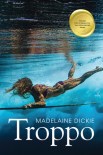
Madelaine Dickie, Troppo“Write what you know” is the advice commonly given to writers, and this is exactly what Madelaine Dickie has done in her debut novel, Troppo, which won the City of Fremantle TAG Hungerford Award. For readers, on the other hand, the opposite could be true, as in “read what you don’t know.” This is certainly what I’ve done by reading Dickie’s novel because I’ve barely travelled in southeast Asia, where the novel is set, and all I know about that risky business of surfing, which frames the novel, comes from Tim Winton’s Breath (my review).

So, where to start? Well, to begin with, it’s a while since I’ve read what I might call a “youth culture” novel. I’ve read novels by young authors, such as Hannah Kent’s Burial rites (my review), Brooke Davis’ Lost & found (my review) and Tara June Winch’s Swallow the air (my review), but these novels have different drivers. One is historical fiction, one was inspired by grief over a mother’s death, and the other explores indigenous identity issues. The closest to Troppo that I can recollect reading is Andrew O’Connor’s The Australian/Vogel Award-winning Tuvalu, about a young Australian teaching English in Japan, but I read that long before blogging.

I say all this to give Troppo a context – a sort of sub-genre, if you will – of young writers writing about a young person’s experience of the world, an experience that is post-coming-of-age but encompasses a degree of uncertainty about one’s place. I don’t intend this to mean, though, that the novel is autobiographical. While it obviously draws on Dickie’s knowledge of southeast Asia and surfing, for example, I wouldn’t presume to say protagonist Penny is she. Indeed, in an interview on the publisher’s website, Dickie says that:

Some of the anecdotes are almost true, certainly stemming from my own experiences as a traveller and surfer … The texture of Troppo is also very true, the intoxicating smell of kretek cigarettes, the nights bleary on Bintang beer, and the way the call to prayer from the mosques drift down through mountain valleys.

Further, “the characters are entirely fictional”, she says, as is the setting, Batu Batur.

But now, preamble done, let’s get to the book. Set in southwest coastal Sumatra, it starts a couple of months after the bombing of the Australian Embassy in Jakarta in September 2004 and ends just after the tsunami hit Aceh on 26 December 2004. Penny, around 22 years old, had lived in Indonesia as a teen, but is returning to have “a break” from her significantly older boyfriend Josh. She has lined up a job on a surfing resort run by expat Shane, but arrives early to have a holiday. That’s the set up. The novel then explores the personal and political relationships that develop (or pre-exist) between the locals and the expat community, and within the expat community itself, in a tense situation where corruption and bullying is rife, and fundamentalist Islam is on the rise, threatening a culture that has traditionally accommodated different values and beliefs.

Troppo is a good read that gets you in quickly. Its fresh, lively but also reflective, first-person voice is engaging, and the various supporting characters are well-drawn. They include Ibu Ayu, the manager of the tourist bungalows where Penny stays in the beginning; young Cahyati, her niece; Penny’s soon-to-be-boss, Shane; and the “hot” but somewhat mysterious expat Matt. We soon sense mystery, with the locals not liking Shane, and the expats suggesting he won’t be around much longer. There’s a thriller element to the novel, but it’s not “just” thriller.

The novel’s over-riding concern is Penny’s uncertainty about her life. She’s not sure, exactly, why she’s fled Josh (except that his routine stultifies her), or why she’s “always jerked along by whim and the conviction there’s something better just ahead”. And yet, we readers know why, just as Belle in Disney’s (original and recently remade) Beauty and the Beast does!

I want much more than this provincial life,
I want adventure in the great wide somewhere.
(lyrics by Howard Ashman)

It’s not our culture (Matt)

In addition to the personal, however, the novel also explores social and political themes. One concerns tourists and cultural differences, expats and First World guilt. Penny sees “men whose bodies are halved over new rice” and “old women buckled under bundles of sticks” while she and friends are “off to surf, off to play and play and play, for months if we want.” It’s two-edged of course: the tourists bring money but their lives can inspire resentment.

Another theme concerns changing politics in Indonesia. When asked in the interview (linked above) about the novel’s timing, Dickie responded that:

Troppo is set two years after the Bali bombings, a year after the bombing outside the JW Marriott Hotel, and two months after the bombing of the Australian embassy in Jakarta. This context is important for Troppo, as some of the themes explored are the rise of fundamental Islam and the coexistence of Islam and traditional beliefs. … I was also aware of the two dimensional depictions of Islam in the media, and wanted to create rounded characters and discussions based on some of the stickier topics I liked to discuss with my Muslim friends. Has the relationship changed? Of course, things are always in a state of flux. However, our news media is now less concerned with Jemaah Islamiyah, and more concerned with the rise of Islamic State, which no one had heard of ten years ago. So the shape of fundamental Islam has also changed.

This theme pervades the novel through a growing sense of menace, not only against the corrupt expat, Shane, but against the “bule” (foreigner) in general. Moreover, Marika, a young New Zealander who runs an internet cafe, tells Penny that “the vibe has changed”, Matt tells her “there are bigger issues at play”, and locals in a bar tell her of imams “only wanting mosques, not churches”. Dickie handles this well. Suspense builds slowly – in fits and starts – and the plotting is sure. The crisis, when it comes, is swift but believable because the groundwork has been done.

Overall, in fact, Dickie proves to be a skilled writer. The novel feels tight and honed. Sometimes first-time novelists can overdo imagery, but Dickie keeps it under control, mixing up evocative descriptions with dialogue and action. It’s the lovely little descriptions that pop out of nowhere which delight the most, like this of a middle-aged expat’s hands being “like sea-creatures that have been left out on the sand. Dried out and peppered with sunspots”. Or this, “The night is young. The mozzie coil has only just begun its inward inch.”

Dickie also handles well that challenge of writing a story about a place whose language is different from her own. Her strategy is to sometimes translate Indonesian words and phrases, but other times to let the context make it clear. This can be an effective approach, and Dickie makes it work, using enough local language to convey place, but not enough to stall our reading.

Partway through the book, Penny says that “Risk always makes things sharper, throws into contrast the highs and lows, gives clarity”. Troppo, in the end, is about this. Yes, it comments on tourist and expat life, and yes, it exposes the beginnings of a dark political underbelly in the region, but the main point, really, is the personal. Penny recognises by the end that she is “living, by choice, on a fault line”. She finds living in “extreme places, among extreme people”, “intoxicating”. The challenge, I’d say, is how to live such a life authentically and respectfully. I’d love to see Dickie explore this theme further.

aww2017 badge

Madelaine Dickie
Troppo
Fremantle: Fremantle Press, 2016
263pp.
ISBN: 9781925163803

DISCLOSURE: I have not met Madelaine Dickie, but her fiancé is the son of one of the founding members of my bookgroup (not to mention of my now long-past playgroup and babysitting groups).

Monday musings on Australian literature: Boosting women’s entries on Wikipedia

Have you heard or read about the large discrepancy in Wikipedia between biographical entries (or “individual profiles”) for women and for men? The actual figure is a bit fluid because, of course, Wikipedia is a dynamic site, but most researchers on the topic come up with a figure of around 15-20% as the percentage of biographical articles on women (versus men) in Wikipedia. Why is this? Well, the point Austen so succinctly made in the early nineteenth century seems as true today, 200 years later:

Men have had every advantage of us in telling their own story. Education has been theirs in so much higher a degree; the pen has been in their hands.

In other words, men are also the main contributors to Wikipedia (about which I’ve written before). In fact, the percentage of women editors is less than or similar to the percentage of women’s biographical articles. The Sydney Morning Herald (SMH) reports that Wikipedia had “failed to meet its goal of increasing women’s participation on the website to 25 per cent by 2015”.

Now, it is probably true that men feature more heavily in the public sphere – more politicians, more world leaders, etc etc, are men. Consequently, we might expect some gender imbalance in biographical articles. But, we also know that many women of achievement are under-recognised and under-reported. Feminists have been highlighting this since Feminism’s Second Wave in the 1970s – and yet here, in 2017, we can identify large numbers of women in every field of endeavour who are not in Wikipedia.

Gender symbols

Courtesy: CKSinfo.com

Consequenlty, in recent years women have been taking action, by holding, for example, “edit-a-thons” to support and encourage the creation and upgrading of women’s entries in Wikipedia. On December 8 last year, as reported by SMH (linked above), some 400 new entries were created for women in an international edit-a-thon. Specific events were held, SMH says, in “Istanbul, Cairo, Dhaka, Jerusalem, Delhi, Abuja, London, Cardiff and Washington DC” and individuals also worked “from their own computers across the world”.

But, what about Australia?

Australia has not been missing from this action. In fact, in 2014, as reported by another SMH article, Sydney’s Museum of Contemporary Art hosted an edit-a-thon during which “volunteers gathered to edit and expand the paucity of Wiki pages on Australian female artists”. As well as creating new entries they worked on “improving their academic rigour by providing citations and references”. This is important work, because it enables Wiki’s users to be confident about what they read.

In August 2016, the ABC reports, a group of Australian female scientists took “part in a Wikibomb in an effort to be recognised for their contribution to Antarctic research”. The event took place “at the Scientific Committee on Antarctic Research conference in Malaysia, 93 Wikipedia profiles were created and 20 were improved upon.” There was apparently also a Wikibomb-edit-a-thon event held in Melbourne in November last year.

Significant indigenous Australian women (Enlighten 2017)

Some significant indigenous Australian women (Enlighten 2017)

And now, tomorrow, 28 March, Sydney University Press (SUP) and the university’s Fisher Library are holding an edit-a-thon “to improve the representation of Australian women in the world’s favourite reference work.” They’ve chosen March because it’s Women’s History Month. They have a Facebook page and a Twitter account, and they are building an accessible document listing “notable” women in a wide variety of fields who need Wikipedia entries or whose entries need upgrading. It’s a wonderful list, including scientists, artists, activists, historians, botanists and even the odd writer! SUP urges people to come, even if they have no experience or training in Wikipedia editing, as they

will have roving helpers and a cheatsheet with everything you need to know to become a Wiki champion in just a few minutes. It’s going to be a collaborative and fun exercise that will involve EVERYONE.

I’d be there in a flash if I lived in Sydney. You do need to RSVP, so if you are in Sydney and are interested, do check the Facebook Page link I’ve given to see whether it is still possible to join. But, if you can’t, there’s nothing to stop you having a go at home. They give advice on how to do that too on their Facebook page, with links to various useful tutorials.

So, I wish them a very successful day and look forward to hearing the results.

Meanwhile, I would love to know if any of you contribute to Wikipedia – and, if so, what your experience has been? (I have written on this blog about one of my early experiences.)

PS: SUP shares on its Facebook page an Inside Story article reporting that the Australian Dictionary of Biography (ADB) is looking for nominations for women to include in its online database, but that’s a topic, perhaps, for another day because the articles raises some interesting issues about “who” to include.

Noah Webster, On the absurdity of a Bill of Rights (Review)

Noah Webster

By James Herring (1794 – 1867) [Public domain], via Wikimedia Commons

If you’ve read my last post you may have guessed from the title why I’ve chosen Noah Webster’s “On the absurdity of a Bill of Rights” as my next Library of America (LOA) Story of the Week to discuss. For those of you who haven’t read that post, or who, like me, have a memory like a sieve, I discussed the play adaptation of Frank Moorehouse’s Cold light, and protagonist Edith Campbell Berry’s desire for government (or, those governing) to act according to the Universal Declaration of Human Rights.

Now, before I briefly share Webster’s arguments, a little background to this clearly very tricksy man! I’ll start by admitting that my main knowledge of Noah Webster was as the creator of America’s best known dictionary, Webster’s of course. It wasn’t initially, or even in his lifetime, called that, though. He published his first dictionary in 1806 under the title, A compendious dictionary of the English language, but his first big, comprehensive dictionary, An American Dictionary of the English Language, wasn’t published until 1828.

All this, though, came after the writing I’m talking about here, but it is related because it was through his writing and publishing work that he became interested in federation, and thus the Bill of Rights issue. You see, as LOA’s notes tell us, in 1783, when he was a twenty-five-year-old schoolteacher, Webster “began publishing his Grammatical Institute of the English Language, the first part of which became The American Spelling Book”. A spelling book leading to the Bill of Rights? How, you might wonder? Well, here’s LOA again:

Less familiar to many readers is the pivotal role Webster played in the founding of the American republic and the adoption of its new constitution—and his advocacy was very much related to the success of his publications. The difficulty of securing copyrights from thirteen separate state governments for each subsequent edition of his spelling book convinced him of the need for an effective national government, and he became an advocate for the Federalist cause.

He started campaigning for the federalist cause in 1785, and here comes the particularly “tricksy” bit because when the new constitution was proposed in 1787, he wrote articles supporting its ratification under various pseudonyms! One of these was Giles Hickory under which he wrote the article I’m discussing here. As LOA writes,

One of the main objections to the new constitution was that it did not include a bill of rights, an argument Webster dismisses in his first Hickory letter by responding that such documents are only needed as protection against tyrants and would become unnecessary in a government elected by the people.

This is one of the main arguments he puts in “On the absurdity of a Bill of Rights”. He argues that a Bill of Rights [like the “Magna Charta”] against “the encroachment of Kings and Barons, or against any power independent of the people, is perfectly intelligible” but that a Bill of Rights in a democracy would essentially be the people guarding against the people. In other words, in an elected legislature “the rulers have the same interest in the laws, as the subjects have” so, he argues, “the rights of the people will be perfectly secure without any declaration in their favour”. Hmm, that sounds perfectly good in theory, but in practice, well, it doesn’t always seem to quite work out that way does it?

Anyhow, as it turned out, those in favour of a Bill of Rights won the argument, as Massachusetts, for example, only agreed to ratify the Constitution with the addition of “ten amendments”. These became known as the “Bill of Rights“, and were adopted in 1791.

Webster’s second argument, which he calls his “principal point”,  is also, given how the Bill of Rights has played out in the US, very interesting:

I undertake to prove that a standing Bill of Rights is absurd, because no constitutions, in a free government, can be unalterable. The present generation have indeed a right to declare what they deem a privilege; but they have no right to say what the next generation shall deem a privilege.

He argues, in other words, that times change, and what one generation might see as a right may not be appropriate to another generation, and that it is therefore inappropriate to set such rights in stone. He uses, as an example, “trial by jury”:

The right of Jury-trial, which we deem invaluable, may in future cease to be a privilege; or other modes of trial more satisfactory to the people, may be devised. Such an event is neither impossible nor improbable. Have we then a right to say that our posterity shall not be judges of their own circumstances? The very attempt to make perpetual constitutions, is the assumption of a right to control the opinions of future generations; and to legislate for those over whom we have as little authority as we have over a nation in Asia.

Would the US be different now, if, for example, they did not have the “perpetual”, enshrined right to “bear arms”?

Webster suggests that:

There are perhaps many laws and regulations, which from their consonance to the eternal rules of justice, will always be good and conformable to the sense of a nation. But most institutions in society, by reason of an unceasing change of circumstances, either become altogether improper or require amendment …

He makes some excellent points, but I’d like to believe there are some rights which stem from “the eternal rules of justice”. However, I can also see how temporal and cultural it all is. Australia, rare for a western democracy, does not have a federal bill of rights – the issue arises occasionally – but my state (well, territory) did pass one in 2004, and was followed by Victoria in 2006.

What do you think?

Noah Webster (as Giles Hickory)
“On the absurdity of a Bill of Rights”
First published: American Magazine, December 1787
Available: Online at the Library of America