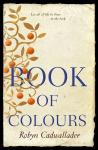
Robyn Cadwallader, Book of colours (#BookReview)

Robyn Cadwallader, The book of coloursWhat makes historical fiction worth reading for me is the exploration of universal ”truths”. Fortunately, Robyn Cadwallader’s second novel, Book of colours, does this, albeit I wish that some of the universals – gender inequity, class (meaning social and economic inequity), and fear of foreigners – were no longer universal! The book explores other more general universals, too, such as love, friendship, loyalty, courage, suspicion, fear. However, historical fiction needs something more of course. It needs to authentically evoke an historical time and place, preferably through engaging characters. Cadwallader does this too.

Book of colours is set in mediaeval England, specifically between 1320 and 1322, and concerns an illuminated book of hours. The narrative is structured into two main chronological threads – the story of the book’s creation and the people creating it, from late 1320 to 1322, and that of the noblewoman who commissioned it, Lady Mathilda Fitzjohn, after she has it in her hands, from May to September 1322. She lives in Hertfordshire, while the limners’ atelier is located in London, so we also see city and country life during this period. As the limner Gemma writes:

…let all of life be there in the book, from high to low, animal and monster, story and joke, devotion and dance … (from The art of illumination)

Now, I particularly like it when historical fiction writers provide some historical context to their story, preferably in an afterword, along with some references or sources. This Cadwallader does, with a four-page Author’s Note and two-plus pages of Further Reading. She explains the historical background, including that the period she chose encompasses the Great Famine and the Dispenser War, and she discusses where the facts are less well documented. The meaning of those bawdy or confronting marginal images in books of hours, for example, is little understood. Also, says Cadwallader, no women limners are listed in this period, but there is evidence that women did, in fact, undertake illumination. These notes support the novel’s political, socioeconomic and sociocultural context.

The story is told third person through three main perspectives: Mathilda’s and those of two of the atelier workers, journeyman-near-master Will Asshe and master-in-work-if-not-in-name Gemma Dancaster. The atelier is owned by Gemma and her husband John – well, actually, given the times, it is “owned” by her husband, but he inherited it from her father. Prefacing the atelier-based chapters are sections from the book The art of illumination which Gemma secretly writes for her apprentice son Nick.

“both beauty and chaos”

Towards the end of the novel, the widowed Mathilda – her rebel Marcher husband having been killed while fighting the Dispensers – realises that life is not “ordered” as she had thought but is, like the “delicate, bawdy and capering creatures” in her book, “both beauty and chaos.” It is this “beauty and chaos” that Cadwallader captures through her vivid characters. The atelier thread starts with the arrival in London of Will, a limner who is escaping something that happened in Cambridge where he had lived and done his training. As the story progresses we discover, of course, what that was, but all I’ll say here is that he’d been associating with a student named Simon who had filled his head with ideas about equality. These ideas make Will angry about “the rich and their ambitions” and resentful about “the marks of privilege” requested for the book of hours. He’s a bit fiery, our Will, and gets himself into several scrapes, all the while watched over by an animated gargoyle who represents, I’d say, Will’s conscience.

Meanwhile, Gemma, the would-be master limner, is frustrated about the inequalities she faces as a woman – particularly a woman having to cover for her husband who is, we soon discover, no longer able to draw and paint. Gemma, too, is aware of economic inequities. Southflete, the stationer and middleman who handles the commission, tells them that

the calendar pages must be beautiful scenes of life on the demesne, you understand … Chubby infants, well-fed peasants, colour, beauty …

Gemma is not impressed:

Beautiful. How, in a village farmer’s wife, would January be beautiful? Snow if the weather was kind, ice if it was not. And this past year, colder than ever. Frost that rarely lifted, and then only to snow or rain. London had clenched its teeth, frozen to the marrow, too cold to move. At least the cramped lanes and houses blocked some of the wind; what it was like in the country, she couldn’t bear to think.

She, like Will, makes her assumptions about their patron Mathilda’s life and values, but as is often the case, assumptions aren’t always completely right – and these too Cadwallader teases out as the book progresses.

There are other characters – including Gemma’s gentle husband, their quietly wise apprentice Benedict, and their son and beginning apprentice Nick. These, plus other residents of London’s book trade area, Paternoster Row, flesh out the story, adding depth to the narrative and to the history of this fledgling industry struggling to establish itself as a guild.

So, there’s beauty and chaos in life, but it is through their drawings that the limners convey their feelings and ideas. As the world changes around them – for reasons I can’t fully divulge – the limners draw and paint their reflections and reactions, their messages even, into the book. Both Gemma and Will remind Mathilda of who she is and of her responsibilities to herself and others, responsibilities that become more nuanced and more personal than their original simplistic view of the world at the start of the novel. The interplay between the artists’ ideas as they paint and Mathilda’s reflections as she considers their paintings is one of the joys of the book. It is as much through these, dare I say, “virtual communications” as anything, that our three main characters grow in understanding. It is through them, for example, that Gemma shares her feelings – feelings Mathilda doesn’t recognise as coming from any sermon she knows – about women’s need to stand strong in the face of men’s power.

Book of colours, in other words, is a delicious read, imbued with the life of a long-ago time but filled with people whose emotions, hopes and frustrations are very much our own. Latish in the novel, Mathilda realises that Will’s friend “Simon’s simple borders of right and wrong won’t hold. They leave no space to breathe.” This is the book’s message: to grow and change we need to expand beyond simple conceptions of right and wrong. We need to let each other breathe and be. Only then can true selves, true relationships and, hopefully, a true understanding of equity develop.

Note: Lisa (ANZLitLovers) loved this book, and Angharad Lodwick (one of last year’s Litbloggers) was also impressed. I also reported, back in April, on a Conversation with Robyn Cadwallader about this book.

AWW Badge 2018Robyn Cadwallader
Book of colours
Sydney: Fourth Estate, 2018
360pp.
ISBN: 9781460752210

(Review copy courtesy HarperCollins)
Monday musings on Australian literature: Writing NSW

Today’s Monday Musings is the fifth in my little series on Australia’s writers centres, and it’s New South Wales’ turn. Originally called the NSW Writers Centre, it was renamed this year as Writing NSW.

Writing NSW was founded (under its original name) in 1991, as a not-for-profit organisation providing services to writers. On its Our History page, it says that it was created when writer Angelo Loukakis and others from the literary community “lobbied the government to establish a facility for the development of writers.” Clearly they were successful – and the Centre was officially opened in Garry Owen House in Callan Park in 1991.

Angelo Loukakis, The memory of tides

I’m embarrassed to say that I don’t really know Angelo Loukakis, but Wikipedia does! Besides being a writer, and besides being the Centre’s founding Chair, he was also Executive Director of the Australian Society of Authors from 2010 to 2016. He’s been a teacher, editor, publisher and scriptwriter, and has written three novels, two collections of short stories, as well as several non-fiction works.

But now, let’s get to the centre itself. Like other writers centres, Writing NSW is largely a membership organisation, but also obtains funding from the government and donations. Its aim from the start was to support writers, particularly emerging writers. Emily Maguire (whose An isolated incident I’ve reviewed here) and fantasy/historical fiction writer extraordinaire, Kate Forsyth, credit it as playing a significant role in their early development.

Here are some of the things the centre does:

Courses

Courses – whether on-line or in-person, single workshops or over a period of time – seem to be the main services offered by writers centres, and Writing NSW is no different. Some of the courses coming up are:

Bianca Nogrady, The best Australian science writing 2015
  • The Year of the Novel, Phase 3 (with Emily Maguire, no less!): it starts tomorrow, and runs for 8 sessions. Members get a whopping 30% off the price, which more than covers the annual membership fee! The course is about making “your very good novel … brilliant.”
  • Finding the Detail: Research Tools for Writers (with Eleanor Limprecht whose novels Long Bay and The passengers I’ve reviewed): a 2 1/2 hour seminar about research (for fiction and non-fiction). The description says it will cover “how to organise your research, the ethics of research and how to put your research aside and just start writing.”
  • The Secrets of Science Writing (with Bianca Nogrady who has also appeared in my blog):a 6-hour course on such topics as finding good science stories, the basic principles of science writing, and interviewing and pitching to editors.

These are just three of many, many courses, workshops and seminars they offer on topics that include, in addition to the above, playwriting, poetry, comedy, writing for schools, marketing, speculative fiction … you name it, in other words …

Events

  • Festivals: Writing NSW runs various festivals, including, the new biennial Boundless Festival, first held in 2017 and focusing on” Indigenous and culturally diverse Australian writers and writing”, and, coming up, Quantum Words, a one-day festival on the meeting of science and writing. Its speakers include astronomer Fred Watson (who has appeared here a few times, with the Griffyn Ensemble) and cli-fi novelist James Bradley.
  • First Friday Club: a monthly, free, members-only event that runs on the first Friday of the month from March to October. The event involves a guest speaker – such as an author, editor, publisher, journalist – and, they say, “a delicious morning tea.” October’s speaker is Bronwyn Mehan from the innovative Spineless Wonders.
  • Talking Writing: ad hoc panel discussions (as far as I can tell) on various subjects relating to writing. One held in April this year, for example, was called Make it Funny.
  • Ad hoc events: such as an all-afternoon Open House event with publishers HarperCollins and Harlequin at which members will get an opportunity “to meet one-on-one with a publisher to get feedback on your submission.”

Prizes and Grants

  • Quantum Words Poetry Prize: established in 2018 this prize is for “science poems”, that is, they must “include or address some aspect of science.” Pretty broad.
  • Boundless Indigenous Writer’s Mentorship: supported by Writing NSW and Text Publishing, for “an unpublished Indigenous writer who has made substantial progress on a fiction or non-fiction writing project.” It pairs the “emerging Indigenous writer (from anywhere in Australia) with a senior Indigenous writer in the same genre for a structured year-long mentorship.”
  • Writing NSW Varuna Fellowships: awarded annually for writers with a work that is “ready for the next stage of development.” It involves a week-long residency at Varuna (Eleanor Dark’s old home which I’ve mentioned here before.) Two will be awarded this year, with one specifically for a writer under 30.

The above is just a selection of what Writing NSW offers. Like most writers centres they offer a wide range of services, including a library, newsletter, manuscript assessment, all sorts of mentorships, space for writers groups to meet. They aim to specifically support regional writers, Indigenous writers, and writers with a disability. A lovely service that I suspect not all writers centres have the resources to provide is their Space to Write. This enables writers who have trouble finding quiet places in which to write the opportunity to book space or a room at Gary Owen House (some are free, and some involve rent.)

Oh, and they have run workshops on blogging (such as Power Your Blog), since at least 2012, though I couldn’t find any for this year. It’s good to see this type of writing and publishing also being recognised by writers centres.

… and that’s about it for another busy, active Writers Centre.

Writers Centres covered to date: the ACT, the Northern Territory, Queensland, and Tasmania.

Vance Palmer, Battle (#Review)

Meanjin AnthologyVance Palmer’s short piece “Battle” is the first piece in this special Meanjin anthology. Meanjin is one of Australia’s longest lasting literary journals. It was founded by Clem Christesen in 1940. As publisher Melbourne University Press says, it has, since then, “documented both the changing concerns of Australians and the achievements of many of the nation’s writers, thinkers and poets.” This anthology contains, they say, “a broad sweep of essays, fiction and poetry published in Meanjin since the magazine began” which will give its readers “a sense of the debates waged in print over those seven decades and the growing confidence of the Australian written voice.”

I read Vance Palmer’s piece when I bought this anthology a few years ago, but planned then to review the anthology as a whole. Now, though, I think that some of the writers are worth featuring here on their own – just like those writers I choose to read from the Library of America offerings – so here is Vance Palmer!

I was first introduced to Palmer in my first year of high school when I read and enjoyed his best known novel, The passage. I have not, however, reviewed Palmer’s writing here (except in a Monday Musings), but he has appeared in this blog many times because of the significant contribution he (and wife Nettie) made to Australian literature in the first half of the twentieth century. They vigorously supported and defended the development of an Australian literature. They were also political – egalitarian, anti-Fascist. There’s a good introduction to him in the Australian Dictionary of Bibliography (ADB), which describes him as “a liberal socialist of the broad left.”

So, “Battle”. ADB’s biographer describes “Battle” as “a noble statement of war aims”. It is interesting to look at “Battle” now, from today’s perspective. Published in 1942, at the height of World War 2, its main point is to define what makes Australia and to argue that it is worth fighting for – all of which ties in with his interest in encouraging and promoting Australian literature.

However, despite his documented interest in and awareness of indigenous Australians, he falls into the trap of many of his time of thinking that Australia is a “young” country:

We have no monuments to speak of, no dreams in stone, no Guernicas, no sacred places. We could vanish and leave singularly few signs that, for some generations, there had lived a people who had made a homeland of this Australian Earth. A homeland? To how many people was it primarily that? How many penetrated the soil with their love and imagination? We have had no peasant population to cling passionately to their few acres, throw down tenacious roots, and weave a natural poetry into their lives by invoking the little gods of creek and mountain. The land has been something to exploit, to tear out a living from and then sell at a profit. Our settlements have always had a fugitive look, with their tin roofs and rubbish-heaps. Even our towns . . . the main street cluttered with shops, the million-dollar town hall, the droves of men and women intent on nothing but buying or selling, the suburban retreats of rich drapers! Very little to show the presence of a people with a common purpose or a rich sense of life.

“We have had no peasant population to cling passionately to their few acres, throw down tenacious roots…” No, we don’t but we have something more … we have indigenous people who have clung passionately to, and tended, this land for 60,000 plus years. (This is something that a young non-Indigenous Aussie school girl stood up for last week by refusing to stand for the Australian national anthem with its lines “for we are young and free.”)

It would have been good if Palmer had recognised this point too, but … that was then, I suppose.

Anyhow, he goes on to describe what makes Australia and Australians. There is, he says,

an Australia of the spirit, submerged and not very articulate, that is quite different from these bubbles of old-world imperialism. … And it has something to contribute to the world. Not emphatically in the arts as yet, but in arenas of action, and in ideas for the creation of that egalitarian democracy that will have to be the basis of all civilised societies in the future.

And here’s the other point I want to make – his faith in Australia as an example of “that egalitarian democracy that will have to be the basis of all civilised societies in the future.” That caught my eye, because it is something I believed of Australia, something that I thought, back in the 1970s and 1980s, we were actively working towards and achieving. Not so anymore, it seems.

Palmer concludes that he believes Australia will survive the war,

that we will come out of this struggle battered, stripped to the bone, but spiritually sounder than we went in, surer of our essential character, adults in a wider world than the one we lived in hitherto.

I wonder what he would think now? Perhaps he would remember that in the penultimate paragraph he admitted that we have “a share of the decadent that have proved a deadly weakness in other countries – whisperers, fainthearts, near-fascists, people who have grown rotten through easy living.” Some of these “have had power in the past and now feel it falling away from them.” However, “we will survive,” he believes, “according to our swiftness in pushing them into the background and liberating the people of will, purpose, and intensity.” Who are those people “of will, purpose, and intensity” now?

Vance Pamer
“Battle”
in Meanjin Anthology
Melbourne University Press, 2012
ISBN: 9780522861563 (eBook)

Delicious descriptions: Laurie Steed’s divorced mum

Laurie Steed, You belong hereI don’t do many Delicious Descriptions these days, but I did want to share another quote from Laurie Steed’s You belong here which I reviewed recently. The book concerns a marriage break-up and its impact on the family. This quote comes from the point-of-view of the daughter, Emily, who’s around 19 at the time, thinking about her mum:

Her mum hit-and-miss, since, well, the break-up. Better than before, but still not great. Emily thinking maybe she’d turn a corner. But she’s a mum, not a Transperth bus, and so she never made the left, the right, or the shift to second gear. Instead, she’d stalled, middle lane, hazards flashing, with her daughter and two sons in the back; the family coping, surviving as you do, when you’ve broken a window, but you don’t yet have the money to fix it.

I enjoyed so many of Steed’s metaphors throughout the book, not to mention the way he captures the vernacular of the time. Such enjoyable reading despite the subject matter (as I think I’ve said before!)

(And, isn’t it a great cover? All credit to the lovely little Margaret River Press)

Monday musings on Australian literature: The Copyright Agency’s Cultural Fund

Australia’s Copyright Agency has been referenced here several times in this blog, mostly regarding the work it does via its Cultural Fund, but I wonder how many of us (besides artists) know just how much it does to support Australian writing and writers?

The Copyright Agency is a non-profit organisation (company) which describes its mission as being:

to provide simple ways for people to reproduce, store and share words, images and other creative content, in return for fair payment to creators. We are committed to encouraging the development of lively and diverse markets for published works…

Its main services to authors are to:

  • collect and distribute copyright fees for educational and government use of works. It manages, on behalf of the government, the education and government copying sections of the Copyright Act which allows educational institutions and governments to use content without permission, provided they make fair payment.
  • license writer’s content to corporations and others (though writers can also license their works themselves.)

It does other things too, one of which is to fund “writers’ projects and skills development” through its Cultural Fund, which is my focus for this post.

Cultural Fund

The Cultural Fund is the Agency’s philanthropic arm, and aims to support “cultural projects and creators’ professional development.” Its priority includes “to ensure that artists are better supported and are paid appropriately for their creative endeavours.” It is funded by members agreeing to 1.5% of the licence fees collected on their behalf being retained for the Fund. In the financial year, 2016-2017, they disbursed well over $2m through the Cultural Fund to “114 projects, 23 professional development grants and 5 fellowships.”

Fellowships

The fund offers various annual fellowships, with this year’s including:

  • Author: one offered each year, worth $80K. Open to novelists, playwrights, poets, non-fiction writers, children’s and young adult writers, and journalists to develop and create a new work. (Non-Fiction writers, this year could also apply for the non-fiction writing fellowship.) I noted in a previous post that the inaugural author fellowship went to Canberra-based author Mark Henshaw (who wrote The snow kimono.)
  • Non-fiction writing: worth $80K, and with more specific requirements than the author fellowship above. It’s “to develop and create a new work of creative non-fiction writing which will engage with key issues and topics for a broad readership” which means it’s not for academic or scholarly writing. They list the acceptable genres, which include biography, memoir, autobiography, environment, and history.
  • Publisher: two were offered in 2018, each worth $15K.
  • Reading Australia Fellowship for Teachers of English and Literacy: worth $15K, and self-explanatory from the title I’d say.

CREATE Grants

This year’s CREATE grants were recently announced, five going to writers and one to a visual artist, from over 135 applications. The writers were Peggy Frew ($20K), Jennifer Mills ($20K), Josephine Rowe ($10K), Jane Rawson ($15K), Lenny Bartulin ($20K).

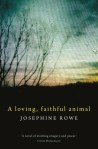
Josephine Rowe, A loving faithful animalThe works of fiction these authors will be creating cover a variety of topics, “from xenophobia, self-interest and individualism to post-war migrant life in Tasmania during the 1950s, to cross-cultural friendships and ghost stories.”

Two of these authors have appeared here before, Jane Rawson with A wrong turn at the Office of Unmade Lists (my review), and Josephine Rowe with A loving, faithful animal (my review).

IGNITE Grants

These are smaller grants, of up to $5K each. They are “to support individuals working in the writing, publishing and visual arts sectors to develop skills and progress their careers.” They include things like “mentorships, internships, residencies, leadership opportunities, and strategic promotional opportunities” but not academic or tertiary study.

Grants for Organisations

These seem to be more ad hoc grants – at least in the dollar-amounts offered, because they are not always specified. The grants themselves are not ad hoc, however, in the sorts of things that qualify, as the Agency defines on the webpage the sorts of things it will fund. These grants can be for single projects or for up to 3 years. They spread far and wide, from the Djilpin Arts Aboriginal Corporation (in the Katherine region of NT) to the Melbourne Writers Festival, from theatrical companies to libraries, from community groups to education departments, from supporting fiction to history. No wonder they have popped up regularly in my Monday Musings posts!

Some of the grants awarded under this banner, as far as I can tell from their 2017 Annual Report include:

  • Festivals and the like: These range from small symposiums and workshops to the big festivals, and include Australian Authors Week 2017 (by the Australia’s Embassy in Beijing), a craft and design writing symposium (by Craft ACT, in my town), the AALITRA Symposium (Australian Association for Literary Translation), the StoryArts Festival (by the Ipswich District Teacher Librarian network), the Canberra Writers Festival, and the Melbourne Writers Festival. Sometimes the grant is for a specified aspect of the festival, such as the “Getting it Write” workshop in Geelong Regional Library’s Word for Word Festival.
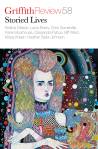
  • Griffith Review 58 Novella Project (2017)

    Griffith Review 58 Novella Project (2017)

    Journals: Several journals are listed as receiving grants – including The Big Issue, Griffith ReviewInside Story, Island magazine (to increase payments to writers), Meanjin, Westerly. Some of these are for specific editions, such as the Big Issue’s fiction edition and Griffith Review’s novella project.

  • Prizes: Some of these grants seem to support the administration of the prize rather than the prize purse itself, such as a three-year grant to the Stella Prize for “promotion of the winners.” Also listed are the David Unaipon Award, the Miles Franklin Award (also three years), and the National Indigenous Story Award. In the past, they’ve supported the CAL Scribe Fiction Prize (which seemed to only run from 2009 to 2012), and the Finch Memoir Prize (which is not being offered in 2019 because of lack of funding)
  • Writing projects: Like many other of their grants, these cover a variety of forms, such as Belvoir Theatre’s “Investing in Australian Stories” commissions.
  • Other: Such as supporting a stipend for the Children’s Literature Laureate, or the Early Career Researcher Scheme (organised by the Australian History Association). Smaller fellowships, in addition to the large ones listed above are also supported through organisations such as Queensland University Library’s Creative Writing Fellowship, the Sydney Review of Books Emerging Critics Fellowships, and the Eleanor Dark Foundation’s Fellowships for Indigenous Writers.

Reading Australia

Reading Australia is a service established by the Agency and partly (mostly?) funded through the Cultural Fund. Its focus is the education sector, aiming “to create in depth teaching resources on Australian literature, to encourage homegrown stories to be taught in schools.” Among other activities, they produce book lists, and resources for the primary, secondary and tertiary education sectors.

I first wrote about Reading Australia five years ago, and again last year when I posted on the Reading Australia-Magabala Books partnership. Education is so fundamental to the health of our literature (and our culture) that this seems a good point on which to conclude this post.

If you’re Australian, are you aware of the Copyright Agency and/or its Cultural Fund? I’d love to know how well-known it is.

Laurie Steed, You belong here (#BookReview)

Laurie Steed, You belong hereMy first reaction as I started reading Laurie Steed’s debut novel, You belong here, was, “oh dear, another novel about a dysfunctional family”, but I was quickly disabused of that prejudice because while that is indeed the book’s “genre”, Steed writes it in such a fresh and engaging way, albeit seriously so, that I was soon engrossed in his Slater Family.

You belong here is an ambitious novel, spanning over four decades from 1972, when Jen and Steven are 16 years old, to 2015 when their grandchild turns 13. This is the span you’d normally find in a family saga of 400 pages or so, but Steed does it in under 250 pages. How does he do it?

First, though, the basic plot. It concerns the marriage and its subsequent breakdown, of the above-named Jen and Steven, and the impact on their three children, Alex, Emily and Jay. Australian author Melanie Cheng, whom I’m yet to read, says on the back cover that the family has “all the dysfunction of an Anne Tyler novel, but with a distinctly Australian feel.” Having read and loved Tyler’s novels (before my blogging days), I’d say this is a good call. Steed, like Tyler, deals with a very particular family – its idiosyncrasies, and shifting individual relationships – while also speaking to universals like love and loyalty, betrayal and breakdown, closeness and distance.

Now, back to the time span. The book is organised by chronological parts: 1972-1984; 1985-1995; 1996-1999; 2000-2002; and, 2015. To cover this ground it is, necessarily, episodic*. Each part comprises short, evocatively titled chapters, which contain scenes from a life, switching the point-of-view between the five main characters. These time-shifts (which aren’t all clearly signposted within the parts) and changing perspectives demand a level of concentration from us readers, but I didn’t find they slowed me down significantly. On the contrary, they kept me engaged and focused on the matter at hand – that is, on whose story I was reading now, what was happening to them and why.

A hairline crack. Small, but spreading.

So, the early parts of the book focus on Jen and Steven’s relationship, their falling in love and the subsequent stresses – three children in quick succession for Jen, and failure at work for Steven – which drive a wedge between them. Steed’s writing is evocative and tight – it has to be really – and I enjoyed it immensely. Take this description of Steven’s commute to his job at the airport:

Steven had lost track of time. Moments, hours, left scattered along the Great Eastern Highway while driving to and from work. Seconds entered in the till by an underpaid, overworked cashier. A day maybe two, left hanging in the change room at the airport. (Before a fall)

Or this of Jen, in the bedroom with Steven, after we discover she’s been having an affair:

She stared past him at the wall, beneath the windowsill. She’d seen it before, maybe weeks, months earlier. A hairline crack. Small, but spreading. (Wallpaper)

The staccato rhythm here is perfect. And Jen’s sadness is palpable.

As the novel progresses, the children grow up and we shift to their lives, with Jen and Steven receding somewhat from the narrative focus. Each child struggles in his or her own way to navigate the family and their place in the world. We are frequently devastated for them, while also applauding their will to survive. There are some lovely vignettes, such as a cricket innings played by Alex and his friend Walker. The whole is underpinned by pop-culture references to music and video games that were only vaguely familiar to me as a baby-boomer parent of late Gen-X early Gen-Y children. Knowing these better might have added to my appreciation of the novel, but I didn’t feel my lack greatly. That is, the novel seemed to work well for me anyhow.

The jerky, episodic structure may have grown out of the original short story concept, and for some it could result in frustration at not “knowing” the characters as fully as they’d like. But I thought it effectively mirrored both the family’s fractured relationships and the way they stick together despite it all. Over time, allegiances switch as particular stresses develop for one person or another, but the love between them, while it falters at times, comes through.

But then, Alex couldn’t make head or tail of any of it. He felt sad and sorry for his sister, his brother, and the fraught, familiar way that the family closed ranks when one began to sink. It felt tender if he touched upon it, like he’d picked up a peach and felt the bruise. (Skin I’m in)

Lest this sound a bit corny, let me say that this is a serious book. The impact on the children of their parents’ separation is unflinchingly exposed, particularly through mental health issues and the difficulties they face in forming long-lasting relationships. It isn’t a pretty picture, but the end, without giving too much away, suggests that with love, perseverance and loyalty, families can and do muddle through.

And so, a book that I thought at the beginning was just another novel about a dysfunctional family surprised me with its insights, warmth, relevance to us all, and above all, its writing pizzazz. Well-worth reading.

* WA writer-blogger Nathan Hobby’s review tells me that the book started as a short story collection, which makes sense. Lisa (ANZLitlovers) featured Laurie Steed in her occasional series on Debut authors.

Laurie Steed
You belong here
Margaret River Press, 2018
250pp.
ISBN: 9780648203902

(Review copy courtesy Margaret River Press)

Raphaël Jerusalmy, Evacuation (#BookReview)

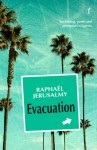
Raphael Jerusalmy, EvacuationRaphaël Jerusalmy, for those who, like me, hadn’t heard of him, is a French-born and educated writer living in Tel Aviv. He had a career in the Israeli military intelligence services, worked in humanitarian and educational fields, and is now an antiquarian book dealer in Tel Aviv, where his novella, Evacuation, is set. In some ways, the book is a love letter to Tel Aviv – but it is more than that, too …

Evacuation is a short, quick, but powerful read. The narrative is structured around a road trip, in which twenty-something Naor is driving his mother from her kibbutz home to Tel Aviv. As they drive he tells her what happened in Tel Aviv, after he, his girlfriend Yaël, and his grandfather Saba, had jumped off the bus that was taking them out of the city, as part of a mandatory evacuation process.

The thing about this book is that although we realise the war is part of the ongoing Middle-eastern conflict, no specifics are given. No dates, no enemy, just, later on in the story, that peace negotiations were taking place in Geneva. By the time the novel starts, that peace had been achieved (for the moment anyhow) and Naor is dealing with the aftermath. The lack of specificity universalises the story, focusing us on the characters’ experience more than on the whys and wherefores, rights and wrongs, of the war.

So, their experience. Firstly, I should explain that it was Saba and Yaël who had decided not to evacuate, with Naor feeling obliged to stay with them. They are all artists – Naor a filmmaker, Yaël a visual artist, and Saba a writer – so there is also an underlying thread about art and resistance. They go to friend Yoni’s house in the already evacuated part of the city, and from there they learn how to survive – how to find food, water, clothes – and how to occupy their time. They roam further and further, taking risks to enjoy a dip in the sea; they enjoy strolling down Tel Aviv’s beautiful Rothschild Boulevard; and, they decide to make a film, titled Evacuation, to Naor’s script and with Saba and Yaël acting.

It’s while filming a critical scene in a synagogue that a long-range missile attack occurs, forcing them to take cover. After this attack, Yaël decrees that they are not going to let air-raid sirens disturb their peace again – “From now on, we were going to behave as if there was no war” – setting us up for the tragedy that we have been sensing through Naor’s narration.

Now, I said that the novel focuses more on the characters and their experience, than the war. However, there are occasional references to Zionism and the ongoing political situation, including this on Saba’s opinion:

Deep down Saba wasn’t unhappy about what was happening to Tel Aviv … He said it did no one any harm to get a kick up the arse from time to time. And that we Israelis badly needed it. Because we had got stuck in a stalemate. Not only with the Palestinians, which was of course unfortunate. But also and especially with ourselves, which was much worse.

So the evacuation was timely. It gave us an undreamt-of chance to wipe the slate clean. To start again. In his mind, Zionism as an idea was not a failure. But it was stagnant. It had come unstuck in its application. Because of this and that. Those were his exact words. This and that. He spoke about restarting our attempts at Jewish socialism. About the importance of education. ‘Everything stems from that.’ And about being kinder in general. To poor people, and to Arabs.

There’s also Yaël’s stronger statement that Tel Aviv was the only place she “felt safe. From those at war with us. From those who have morality and justice on their side.” [my stress]

All this is narrated by Naor to his mother as they continue their trip – and as he does, certain things become clear. One is that there’s been some falling out between his mother and Saba, her father, and that this trip is partly a peace-making one (subtly paralleling the political war-and-peace background to the story.)

Now, I daren’t say any more for fear of giving the whole lot away. While it’s written nicely (albeit I read it in translation), its main appeal, besides the story, is its engaging narrative structure and gentle tone. I loved the way Naor’s story is interrupted regularly by comments from his mother (not to mention road signposts). These interactions, while hinting at some of the tensions needing to be resolved, also imbue the book with a lovely normal intimacy, unexpected perhaps in a book with such subject matter.

Evacuation is an open-ended book, one the reader can consider from various perspectives, including the choices we make, love and family, art and resistance, war and peace. I found it a surprisingly enchanting read, which I hope doesn’t make me sound insensitive to its seriousness, because I felt that too.

Raphaël Jerusalmy
Evacuation
(Trans. by Penny Hueston)
Melbourne: Text Publishing, 2018 (Eng. ed.)
150pp.
ISBN: 9781925603378

(Review copy courtesy Text Publishing)

Monday musings on Australian literature: National Child Protection Week 2018

National Child Protection Week 2018If you are an Australian, you will be aware of our recent Royal Commission into Institutional Responses to Child Sexual Abuse. That Commission only looked into one aspect of child sexual abuse in Australia. Arguably the bigger issue lies in the sexual abuse of children outside institutions – abuse of children by family members, by so-called family “friends” and others known to the child, and by, far less common, strangers. The bigger issue also encompasses child abuse that’s not sexual – physical abuse, emotional abuse, neglect, abandonment. This week, September 2 to 8, is National Child Protection Week. Co-ordinated by NAPCAN, it aims to encourage all Australians “to play their part to promote the safety and wellbeing of children and young people” in all ways.

What has this to do with Monday Musings? Well, as I was listening to a discussion about the week on ABC Radio National this morning, I was reminded of all the books I’ve read since blogging, which refer in some way to child abuse. Some are memoirs, and others are fiction. Some may function partly as therapy for the writer. However, because I believe that literature has an educational, awareness-raising, empathy-developing function, I thought I’d share a selected few books here. I appreciate that reading this material can be unpleasant – and I know that it can be triggering for some. If you are among these people, please stop reading now. Otherwise, I offer these wide-ranging books as my contribution to the week …

Links on the titles are to my reviews.

Memoirs and biographies

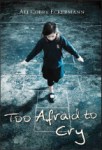
Ali Cobby Eckermann, Too afraid to cryAli Cobby Eckermann, Too afraid to cry: indigenous poet, memoirist and novelist, Eckermann beautifully (if you can use the work “beautiful” in this situation) captures the impact on her of being sexually abused from a young age by an uncle. Not knowing having the words to describe what was happening to her, she can only describe her feelings: it felt like an “icy wind”. This becomes a metaphor for the abuse, for her memory of it, and for its impact on her psyche until she can no longer cry – “the ice block had turned to stone, and now there was no moisture left inside me”.

Jelena Dokic, Unbreakable: I haven’t read this memoir but it chronicles the emotional and physical abuse she, a gifted young tennis athlete, experience at the hands of her father. The terrible thing is that much of this happened under public gaze, but nothing was done. (I attended a conversation with her about this book.)

Sarah Krasnostein, The trauma cleaner: Sandra Pankhurst, the transgender woman who is the subject of this biography, was physically and emotionally abused and neglected by her adoptive parents, after naturally born children appeared. It’s an unbelievable story of inhuman behaviour by people trusted to care for the young boy she was at the time.

Betty McLellan, Ann Hannah, my (un)remarkable grandmother: A psychological biography: A biography about McLellan’s grandmother who was born in 1881, and whose second husband was violent to and sexual abused his step-daughter, as well as Ann Hannah, herself, and one of their daughters. McLellan describes the lack of recourse women had during the time Ann Hannah lived, and concludes that her grandmother’s only choice, really, was to “accept her lot”. She reports that Ann Hannah said it was “the ‘appiest day of my life when ‘e died”!

Marie Munkara, Of ashes and rivers that run to the sea: Like Eckermann and Pankhurst, Munkara (who also happens to be a member of the Stolen Generations), grew up with adoptive parents, neither of whom gave her the love due to a child they offered to care for. Her mother was hard, unaffectionate, but her father was a pedophile who sexually molested her from a young age.

Fiction

Anne Buist, This I would kill for: a crime novel in which Buist’s ongoing character, the forensic psychiatrist Natalie King, investigates whether eight-year-old Chelsea is being abused, and if so, by whom. Chelsea is, apparently, being abused by someone she knows. As Buist, a perinatal psychiatrist who is expert in this area, says, those who abuse children are “very, very rarely a stranger.” You can read more about this book at the ABC website.

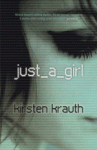
Kirst Krauth, Just a girlKirsten Krauth, just_a_girl: a modern novel about a 15-year-old girl who thinks she’s more sophisticated than she is, with a mother who is struggling with her own problems. The result is a sexualised young girl at risk.

Sofie Laguna, The choke: first-person novel about a young girl who lives in a physically and emotionally impoverished situation – albeit she is loved – and who is violently assaulted in an act of revenge. You can see it coming – and you know exactly why she’s at the risk she is, and who might be the one to help her out of it.

Mirandi Riwoe, The fish girl: a retelling of Somerset Maugham’s short story “The four Dutchmen”, which explores young women’s lack of agency, at the hands of colonial masters but also within their own traditional communities.

Lest you are unsure about the value of this post, I should tell you that there are several similar lists out there, including at the New York Public Library (2014); Wikipedia; GoodReads; and ParentBooks (Canadian organisation offering resources to use with children).

Six degrees of separation, FROM Where am I now TO …

Woo hoo, Spring has sprung (just) in the southern hemisphere, and I for one am glad to see the back of winter, albeit the real warmth is a way off yet. And this month, the first day of Spring is also Six Degrees of Separation day. You regular readers here will know what that means, but for any newbies, Six Degrees of Separation is a meme that is currently hosted by Kate (booksaremyfavouriteandbest). Clicking on the link on her blog-name will take you to her explanation of how it works.

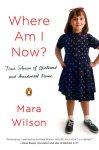
Mara Wilson, Where am I nowUnlike last month, I haven’t read the starting book. In fact, mea culpa, I hadn’t even heard of it. It’s Where am I now? by someone called Mara Wilson. Kate chose it because she would be seeing the author at the (now past) 2018 Melbourne Writers Festival. Where to start with a book I hadn’t even heard of? Aha, while searching for the cover, I discovered that she’s the actor who starred in Matilda! Silly me. She was great.

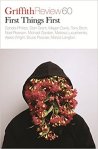
Griffith Review 60So, I could, of course, go for another memoir by an actor, but I’m not. Instead I’m going for a book that I read (well, started to read, anyhow) in preparation for my festival, the Canberra Writers Festival, which overlapped with Melbourne’s. The book is the 60th issue of the Griffith Review, and is titled First things first. You  have seen the Griffith Review mentioned here before. It’s a wonderful contemporary literary magazine that contains essays, fiction, memoirs, poems and reports on a specified subject. I have, in fact, already introduced this one, which was inspired by the Uluru Statement from the Heart.

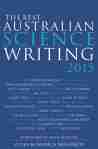
Bianca Nogrady, The best Australian science writing 2015Now, you might think that from here I’d go to something by or about indigenous Australians, but I feel like being contrary, so instead I’m going on form, and will choose a book of essays, science essays, in fact – The best Australian science writing 2015 (my review) edited by science journalist Bianca Nogrady. I was surprised by just how much I enjoyed it at the time. I still share snippets of information I read in that volume.

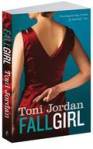
Jordan Fall GirlFor my next link, I’m sticking with science, but am turning to fiction – to Toni Jordan’s entertaining chick-lit novel Fall girl (my review). Her heroine is not your usual chick-lit heroine, but a con artist who presents herself as an evolutionary biologist and sets up a scientific expedition to attract money from a millionnaire-run foundation. It’s a bit of a hoot, as Toni Jordan can be.

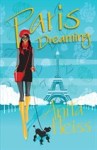
Anita Heiss Paris DreamingAnd now, since we’ve moved from essays to chick-lit – a rather wild jump, n’est-ce pas? – let’s stay with chick-lit and go to Paris with Anita Heiss’s Paris dreaming (my review). This book has, in fact, multiple connections with this post – I read it after hearing Anita Heiss at a festival and she’s an indigenous Australian author.

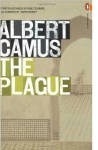
Albert Camus, The plagueSince we’ve gone to France, and since daughter Gums has just arrived in Paris, I figure we should linger there a while, so I’m going to choose one of my favourite French novels, Albert Camus’ La peste (aka The plague) (my review). This book is one of the few books I’ve read more than once – and I could very well read it again, because I love its lessons about life.

Jane Austen, Sense and sensibilityFor my final link, I’m hopping over the channel to England, and to a book by one of my favourite authors, Jane Austen’s Sense and sensibility (my review of vol. 1). I could link on the fact that, like Camus’ La peste, I’ve read it more than once, but I’m going a little more esoteric, and am linking it on the fact that, also like La peste, it contains, for me, a memorable quote – almost a personal mantra in fact. There aren’t many quotes that I remember from books, but this is one of them:

Marianne Dashwood was born to an extraordinary fate. She was born to discover the falsehood of her own opinions, and to counteract by her conduct her most favorite maxims.

When I first read this, I was brought up short, because I realised I was often like Marianne – pontificating on things I had not experienced, and then discovering how wrong I was. It was one of those lightbulb moments – though I probably still do it sometimes!

So there you have it. Another Six Degrees meme done and dusted. We’ve read serious essays and fun chick-lit, we’ve been to the US, Australia, France and England, and we’ve read a diverse set of authors.

And now, over to you: Have you read Where am I now? And, regardless, what would you link to? 

WG Sebald, Austerlitz (#BookReview)

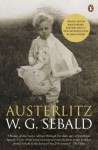
WG Sebald, Austerlitz

For the first time in my reading group’s 30-year history, we read a book recommended by a fictional character. It happened like this: after reading and discussing Rabih Alameddine’s An unnecessary woman (my review) in January, we thought it would be interesting if we all nominated which book mentioned by the “unnecessary woman”, Aaliya Saleh, that we’d most like to read. The book that got the most votes was Austerlitz. I was thrilled, because I bought my copy back in 2010 to read with one of my online reading groups, but never did, and because I had already read and been bowled over by his The emigrants.

But now where to start? A bit left field I think – which is probably not inappropriate given Sebald’s approach to literature. The “left field” happens to be one of my (few) never-forgotten book quotes. It’s from Toni Morrison’s Beloved, and is Sethe talking about “the day’s serious work of beating back the past.” Sethe is, as most of you probably know, an American ex-slave who is living with the trauma of her past life. Austerlitz, in Sebald’s book, is a man who, as a four-year-old, had been sent from Prague to England on a Kindertransporte in 1939, never to see his parents again. Indeed, he suppresses all memory of his past life – realising later

how little practice I had in using my memory, and conversely how hard I must always have tried to recollect as little as possible, avoiding everything which related to my unknown past.

This realisation comes some 50 years later, in the early 1990s, when, one day, having become “increasingly morbid and intractable” after the death of his only true friend, he is in the Ladies Waiting Room of the Liverpool Street Station – and a memory comes back of his arrival in England. At this point, his “self-censorship”, his “constant suppression of … memories” brings about a nervous breakdown. Upon his recovery, he begins researching his past life, resulting in trips to Prague to look for his mother, and to Paris to do the same for his father. Much of this is couched in discussions of architecture – because Austerlitz is an architectural historian – forcing us to consider the role architecture plays in human history and psychology. It’s compelling, but more than that, mesmerising …

However, this book has been written about with great insight and sensitivity by reviewers at, for example, the New York Times and The Guardian, so I’m going to do something a little different, and respond to that fictional woman, Aaliya, who recommended the book to my group!

“His style, drawn-out and elongated sentences that wrap around the page and their reader …”

And I will start with the seemingly mundane, the style, because it is this that confronts us most strongly with we start the book. If you’ve never read Sebald before it could be a shock. There are almost no paragraphs – well you could say there are 5 including the beginning of the book – which means there are no real chapters. The story just continues on and on, often through very long sentences containing multiple clauses and lists. We do have a narrator, the person to whom Austerlitz is telling his story and who relates it on to us.

Strangely though, I found the writing page-turning. There is something mesmerising about the almost flat, rather melancholic, tone suffusing the narration, that you want to keep reading. At least I did – and so did most of my reading group once they’d “got into it”. The style, in other words, wraps around you.

There are motifs and images which recur through the novel, making the whole cohere, creating the tone and developing the themes. There are shadows, there’s darkness more than light, and colours are muted, mostly grey. There are star-shapes, railway stations and other monumental buildings. There are references to ghosts. Places are more often empty or deserted, than heavily populated. And there’s the mysterious operation of time and memory. All these support the narrative’s mesmerising quality.

The book also includes black-and-white photographs, encouraging us to see it as non-fiction but no, this is fiction. Austerlitz is a made-up character – but, says The New Yorker, Sebald sometimes called his work “documentary fiction”. In other words, this is a very different sort of read.

“All I am is lonely. Before I go to bed, I must put away Sebald …

… both The Emigrants and Austerlitz. I can’t read him now, not in this state. He’s much too honest. I will read something else.” 

Our “unnecessary woman”, Aaliya, who lives in Beirut, has experienced war herself, been affected by its ravages. I won’t say more here, because I think what I have said about the story and it’s tone already makes clear why she feels this. Sebald is not a writer to be read at times of distress or melancholy, but his insights into what we call “the human condition” are … well, let me put it this way: this is not a book you explain, really, but one you feel. What you feel is something that affects the way you think about human history, about where we’ve been and where, unfortunately, it looks like we’re going.

“I am proud that I finished the Austerlitz project. I consider it one of the best Holocaust novels.”

Aaliya goes on to say that “I find that when a subject has been heavily tilled, particularly something as horrifying as the Holocaust, anything new should force me to look with fresh eyes, to experience previously unexperienced feelings, to explore the hitherto unexplored.” And this is why Austerlitz is powerful. Austerlitz was a young boy in a little Welsh town while the war was on so he did not experience the Holocaust directly. But, his experience of being displaced comes back to haunt him later. So this is not about a person who directly experienced the Holocaust, nor is it, though, about the second generation. It is about someone who lived at the time, but had not experienced it first-hand because his parents, who did, had removed him. He is in a sort of limbo generation – and “limbo” is probably a good description for how he feels through much of the novel.

He writes, describing his experience of another mental/physical collapse:

It was obviously of little use that I had discovered the source of my distress and, looking back over all the past years, could now see myself with the utmost clarity as that child suddenly cast out of his familiar surroundings: reason was powerless against the sense of rejection and annihilation which I had always suppressed and was now breaking through the walls of its confinement.

This statement struck me powerfully, because not only does it reflect another experience of the Holocaust – another way of looking at its impact – but it articulates the experience of our stolen generations, and, beyond that, of any children removed, for good or bad reasons, from their homes. “Reason was powerless against the sense of rejection and annihilation”. What more is there to say?

There is so much to talk about this book, so much I haven’t touched upon, but I’m going to finish with a brief reference to his discussion of time, the past and memory which underpins the novel. Here is Austerlitz late in the novel:

It seems to me then as if all the moments of our life occupy the same space, as if future events already existed and were only waiting for us to find our way to them at last, just as when we have accepted an invitation we duly arrive in a certain house at a given time. And might it not also be, continued Austerlitz, that we also have appointments to keep in the past, in what has gone before and is for the most part extinguished, and must go there in search of places and people who have some connection with us on the far side of time, so to speak?

I love this organic way of looking at time, this suggestion of how we might experience, approach or understand the events, particularly traumas, that happen to us.

Our unnecessary woman, Aaliyah, calls Austerlitz a great Holocaust novel, but I’d go one step further and simply say it is a great novel. Full stop.

WG Sebald
Austerlitz
(Trans. by Anthea Bell)
London: Penguin, 2002
415pp.
ISBN: 9780140297997